Showing posts with label nonfiction. Show all posts

Sunday, January 31, 2016

Recommended Reads, January 2016

Jumping right back into the blogosphere with my recommended reads from this month, in the order I read them. (Note that only one is actually a January 2016 release--I'm rarely quite that timely in my reading. But in a world of ebooks and libraries, all of these should still be readily available for your reading pleasure.)

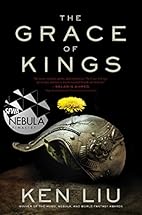
The Grace of Kings by Ken Liu.

Recommended for: Anyone who enjoys epic fantasy about the fall and rise of kingdoms, especially if they like settings outside the standard medieval European-ish swords & sorcery. (Which, thankfully, is becoming less standard. Though I enjoy a good faux-Western medieval fantasy as much as the next reader, I also enjoy variety in the genre.)

While this isn't an all-time favorite for me--I tend to prefer a somewhat tighter POV approach, either first-person narration or a limited third person with an intimate focus on just a few characters (think Jacqueline Carey, Lois McMaster Bujold, or Naomi Novik), I loved the world-building and setting, which is based on the rise of the Han dynasty and China with elements of other cultures, including Japan and Polynesia, and I plan to read more in the series as it comes out.

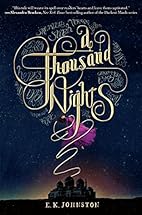
A Thousand Nights by E.K. Johnston

Recommended for: Readers of YA and fantasy who like strong world-building, strong women and girls, and fairytale and legend retellings. (And also beautiful covers. Isn't that just gorgeous?)

I noticed a couple chapters in that I didn't know the first person narrator's name, nor that of most of the other characters--it was all my sister, my mother, my great-grandmother, etc. You'd think that would make it hard to keep track of characters or feel connected to them, but it didn't at all.

I enjoyed the heroine and her sister's resilience and determination. And the part of the world-building that stood out most to me was the character's form of ancestor worship where notable ancestors were set up as "smallgods," who both answered their family's prayers and drew power from being worshipped.

Katrina: After the Flood by Gary Rivlin

Because of the subject matter, I wouldn't say I enjoyed this book, exactly, but I found it readable and engrossing, and alternately encouraging and infuriating.

I followed Hurricane Katrina and its immediate aftermath as closely as anyone living far away from New Orleans, and I thought I knew a decent amount about the recovery and the current state of the city. This book showed me how much I didn't know, and made me think long and hard about how we as a nation handle disaster and recovery--and how our culture's biases with respect to race and class come out all the more strongly in the face of disaster. Have we learned anything that will make us better prepared the next time a major hurricane or big earthquake hits the US? I'd like to think so, but I have my doubts.

New Order: A Decluttering Handbook for Creative Folks (And Everyone Else) by Fay Wolf


I heard about this book on a recent DBSA podcast. Since I am eternally looking to improve my level of organization and time management, I decided to give it a try, especially given that bringing my house's chaos level down to something more manageable is one of my chief goals for 2016. (So far my clothes, bookshelves, and pantry have been decluttered, and it really does make me feel better about life.) This book gave me some great new ideas as I start to tackle some of the tougher projects, like kitchen tools, all the stuff we've shoved into our closets, the piles and boxes of papers, most of which are probably past their retention periods, etc.

Wednesday, August 20, 2014

2014 Reading, Books 85-87

85) Six Amendments: How and Why We Should Change the Constitution by John Paul Stevens

Wherein retired Supreme Court Justice Stevens reviews what's broken in the American political system from his unique judicial perspective and proposes some constitutional remedies--e.g. undoing Citizens United, classing the death penalty as cruel and unusual punishment, and finding a way to limit gerrymandering. While I don't disagree with any of his ideas, I found the book dry going at times. And, I sadly doubt there are enough people with the power and will to make a difference who'll listen to him.

86) White Stallion of Lipizza by Marguerite Henry


I started this book a time or two as a child but never got through it. It had nothing to do with racehorses, after all, unlike my favorite Henrys, King of the Wind and Black Gold. Now I want to go back and re-read those books with an adult's eyes, because this isn't just a horse book--it's a book about dedicating yourself to an art and a craft, to creating beauty for its own sake, to perseverance, to keeping alive your culture's best traditions.

87) The Regency Underworld by Donald A. Low

A readable introduction to crime and punishment in Regency England, with a heavy focus on London.

Monday, May 26, 2014

2014 Reading, Books 55-57

FYI, I've at long last turned in the manuscript for my January 2015 historical romance (title and exact release date TBD), so I hope to resume a more regular blogging schedule from here.

55) Servants: A Downstairs History of Britain from the Nineteenth Century to Modern Times by Lucy Lethbridge

I'd hoped based on the title that there would be a lot more of the 19th century in this book. Since I write the Regency, that's my primary area of interest, after all. But this book is basically about how the role of domestic servants in British society declined from its Edwardian peak, with special attention to how the wars of the 20th century shook up the British class system. Fascinating, but not quite what I was hoping for. If you're a big Downton Abbey fan, you'd probably love this.

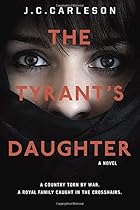
56) The Tyrant's Daughter by J.C. Carleson


A YA novel about a 15-year-old girl living with her mother and little brother as refugees near Washington DC after her father is overthrown in a coup in her unnamed Middle Eastern native country. We watch her deal with PTSD and culture shock and try to navigate her mother's ongoing political scheming. Above all, she has to come to terms with the fact her beloved, doting father was in fact an oppressive tyrant. Very well-written and compelling, though those who hate first person and/or present tense narration should stay away.

57) What Makes This Book So Great by Jo Walton.

This book is a compilation of author Jo Walton's blog posts at tor.com, mostly on her experiences re-reading classic science fiction and fantasy. (Though "classic" is a relative term--many of the books she discusses are from the 90's or the first decade of this century, so they haven't stood the test of much time yet.)

I read the book because I greatly enjoy Walton's posts about Lois McMaster Bujold and the Vorkosigan Saga--i.e. my favorite books by my current favorite author--even if we don't read them in quite the same way. E.g. I found the Miles-Ekaterin romance entirely convincing and moving, but I couldn't connect as well to Mark and Kareen. We're not total Vorkosigan-opposites, though. Like me, she's most interested in the Barrayar-focused parts of the series. I once ran across a reviewer whose rankings for the series was almost exactly the opposite of mine--he preferred the more space-operatic entries, while I prefer the Barrayar books.

Anyway. Walton's discussions of Bujold made her someone whose opinions on books I take notice of, even knowing her tastes don't entirely overlap mine. I saw a recent thread on tor.com where she was asking for recommendations, but very politely asked people to stop suggesting she read Naomi Novik's Temeraire books or Jacqueline Carey's Kushiel's Legacy, because they're just not her thing. I adore both of those series, and for me that adoration inhabits a similar region of my reader-brain as my love for Bujold, or for Walton's own Tooth and Claw. So color me baffled. It's not like I'd expect someone who shares my taste in, say, historical romance, to also like the same nonfiction popular science I'm into, but I'm used to a bit more within-genre overlap. OTOH, there are authors out there you'd think I adore who leave me cold--I can think of one whose characters spend too much time feeling sorry for themselves and wallowing in self-abasement, and another whose heroines are too passive, and WHY ARE THOSE BOOKS SO POPULAR?! and WHY CAN'T ANYONE ELSE *SEE*?!...so Walton is allowed to have a similar reaction to authors I love.

All that said, I think the best way I can review this book is to list all the "book bullets" that got added to my TBR as I read along:

Random Acts of Senseless Violence - Jack Womack
Biting the Sun - Tanith Lee
Janissaries - Jerry Pournelle
Tam Lin - Pamela Dean (this one I've read before, but it's been years)
Kalpa Imperial - Angélica Gorodischer
A Shadow in Summer - Daniel Abraham
Kindred - Octavia Butler
Fire on the Mountain - Terry Bisson
The Left Hand of Darkness - Ursula LeGuin
Midnight's Children - Salman Rushdie
Midshipman's Hope - David Feintuch
The Dragon Waiting - John M. Ford
Jhereg - Steven Brust
The Interior Life - Katherine Blake
The Discovery of France - Graham Robb (nonfiction, but sounds fascinating and relevant to some of my research interests)
Planet of Exile - Ursula LeGuin
The Chronoliths - Robert Charles Wilson

The good news is that most of these seem to be available either as reasonably-priced ebooks or at my local library. Unfortunately, I couldn't find The Dragon Waiting or The Interior Life at either place, and Planet of Exile seems to be only available as an audiobook. I don't do audiobooks, at least not for fiction. I listen to nonfiction podcasts all the time, but for fiction I want to dive in, and I can't do that just listening to something. That said, it looks like I could get all three as used mass market paperbacks. Back when Amazon, eBay, and the like were newer things, I used to order used paperbacks all the time, but I've gotten out of the habit since so many authors started putting their backlists out as ebooks.

Tuesday, November 5, 2013

2013 Reading, Books 97-99

97) Deadly Heat, by "Richard Castle."

This series continues to be enjoyable meta-fun for fans of the Castle TV series, though I doubt I'd find it particularly interesting if I didn't watch the show. This particular entry got a little convoluted for my taste, but it was still a quick, entertaining read.

98) Pauline Bonaparte: Venus of Empire, by Flora Fraser.


My research book collection, purchased to aid me in my fiction-writing career, fills a tall bookshelf and spills onto a second one. This would all be very well were it not for the fact I've only read maybe half of its contents. It's not that I don't spend a lot of time researching my manuscripts--I do. It's just that I'm greedy when it comes to used bookstores, bargain book catalogs, and the like, and I'll pick up anything even vaguely related to something I might want to write about someday. The new acquisitions get alphabetized neatly by subject, then all but forgotten about, given how busy I am.

Only lately I've been working out three times a week in front of my main research bookshelf, which happens to be right next to the computer I'm using to stream exercise videos. And all those unread research books are TAUNTING me, I swear. So one evening after my workout I made a quick list, divided into six loose subject categories, of my research TBR pile, leaving out books that aren't really designed to be read, like map collections, who's who lists, and the like. I plan to draw random books from each list, rotating through the subject divisions for variety's sake, until I've either made it through the collection or given up and accepted the lack of world enough and time to Read All the Books. While I'm shooting for two books a month, it isn't a hard and fast schedule, since some of these books are far longer and denser than others.

My first unread research book turned out to be a quick read. Pauline Bonaparte would've fit right in to a certain niche of modern celebrity culture. If she hadn't been Napoleon's sister she would've lived and died in obscurity, not having any particular greatness, intelligence, or accomplishments in her own right. But she was extremely beautiful by the neoclassical standard of her day, not to mention as well-connected as it was possible to be while her brother's power lasted. And for the most part she was just a shrewd, selfish party girl. Today she'd be all over People and Us Weekly, being famous for being famous.

I don't think I would've liked her even a tiny bit, but her life was a window into the upper echelons of Napoleonic society, and who knows when that might come in handy as I write?

99) Midnight Blue-Light Special, by Seanan McGuire.

I loved the first book in this series so much I didn't wait long to read the next one. This one expands the focus a bit away from Verity alone to include more about her family and the paranormal community of New York, especially her adopted cousin Sarah, who looks human but isn't. I enjoyed it, though I missed All Verity All the Time, and my anticipation of the next book in the series is muted a little now that I've learned the focus is to shift from her to her brother, whom we haven't met on the page yet.

Tuesday, October 22, 2013

2013 Reading, Books 94-96

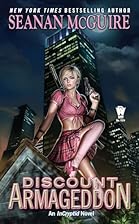
94) Discount Armageddon, by Seanan McGuire.

Wow, that was fun. Not to mention smart, sexy, hilarious, and adventurous, and generally everything you'd look for in the best kind of escapist read. If you like Buffy the Vampire Slayer, read this book. Though McGuire has her own strong voice, there's a similar sensibility at work.

For the rest of my reading in the past ten days or so, I went with nonfiction of the "We're doomed! DOOMED, I say!" variety:

95) The Attacking Ocean: The Past, Present, and Future of Rising Sea Levels, by Brian Fagan.

This book started out fascinating, with an account of how various ancient civilizations interacted with their shifting rivers and coastlines, and then turned depressing as it reached the modern era, where population growth crowds more and more people against coasts where rising sea levels lead to increased floods and deadly storm surges. I happened to read this during the waning days of the government shutdown, when it honestly looked my country was going to default on its debts and drag the world economy down with it for no good reason, which made it extra depressing. I try to feel optimistic about the world I'm bequeathing to my daughter, but sometimes it's hard.

96) Full Rip 9.0: The Next Big Earthquake in the Pacific Northwest, by Sandi Doughton.

I meant to go with something nice and light for my next book, but somehow ended up with "Oh God, Oh God, we're all gonna die," Local Edition. (It's due back at the library in a few days, so I needed to get to it.)

I moved to Seattle from the all but seismically dormant eastern half of the country in 1999 (grew up in Alabama, spent a good chunk of my 20's in Philadelphia), and experienced my first earthquake, the 6.8 Nisqually quake, in early 2001. It was scary, for sure, but did relatively light damage for its magnitude because its epicenter was so deep. We get that type of high-6/low-7 magnitude quake every few decades here, and up until very recently scientists thought that was the worst the Northwest had to worry about.

But then scientists started noticing signs of violent coastal upheaval (sand layers carried far inland by a tsunami, "ghost forests" of trees that had clearly been killed together when the ground beneath them heaved) and paying attention to Native American oral histories that hinted at a massive quake and flooding less than ten generations back. Eventually they used tree-ring analysis of the ghost forests to show that the trees had died between the 1699 and 1700 growing seasons, and found a record of an "orphan tsunami" that struck Japan on January 26, 1700. Between the local evidence in the landscape and the size of the tsunami that made it all the way across the Pacific, the 1700 quake is estimated as between 8.7 and 9.2. Very comparable to the 2011 Tohoku quake, in other words. Evidence suggests major subduction zone quakes of this type every 200-500 years.


To add to the fun, scientists also observed evidence of shallow faults all around the region, including the Seattle Fault, which cuts right through the south end of the city. These faults slip very rarely--the last Seattle Fault quake was over 1000 years ago--but are capable of producing a 7.0 or so that would do far more damage than our "usual" sort-of-big ones because it's a shallow fault. Think something similar to the 1995 Kobe quake.

So, the Northwest's worst-case scenarios are pretty damn bad. A repeat of the 1700 quake and tsunami would probably have a lower death toll than Tohoku because our coastal population density is lower, but it could easily rival the 1900 Galveston Hurricane for the deadliest natural disaster to strike the US--and it's by no means certain Portland, Seattle, and Vancouver wouldn't sustain severe damage of their own from the distant, sustained shake of a 9.0 off the coast. When our cities were built, no one even knew such disasters were a possibility, and as a region we're less prepared than Japan, either in terms of building codes or public awareness and education. But living in Seattle as I do, the Seattle Fault is my true doomsday scenario. We are SO not ready for a Kobe-equivalent quake here.

Still, this book didn't depress me as much as my last read, I think because it's such a local disaster. Even living here, I'm less spooked by "The Northwest could be DOOMED!" than "Mankind could be DOOMED, and it's our own short-sighted, over-populating, carbon-emitting fault!" After all, we're at least trying to understand the seismic hazards and mitigate them. I hope I never live to see either of our Really Truly Big Ones--not least because of the non-zero chance I wouldn't live to see anything AFTER that!--but if I do, I'll get through and rebuild. Like people do.

Monday, October 14, 2013

2013 Reading, Books 91-93

91) Pink and Blue: Telling the Boys from the Girls in America, by Jo B. Paoletti

My daughter, age 9, is a tomboy, as I myself was at her age. Given the enormous strides women have made toward fuller equality and success in traditionally male professions, it's startling how much more gendered clothes and toys are now than during my 1970's and 80's childhood. Photos of me show a kid in the same reds, oranges, greens, and yellows boys were wearing, and while boys played with GI Joe toys and girls played with dolls (I didn't--I preferred toy horses), things like blocks, Lincoln Logs, and Legos weren't gendered. Now girl clothes run heavily to pink and ruffled, and toys are gendered as can be. I'm proud to say Miss Fraser scorns these trends, and will proclaim that everyone should play with, wear, and watch whatever they like. But it's still tough to shop for her.

So this book caught my attention. It's a history of children's clothing from the late 19th century to the present--from the days when babies of both sexes wore the same white dresses and boys kept wearing skirts, albeit usually with masculine detailing, through their preschool years, to the unisex trends of the 60's and 70's, all the way up to how today's trends look to be a backlash against the unisex clothing today's generation of parents wore as children. Fascinating stuff--e.g. did you know in the early 20th century there was debate over which color belonged to each sex? Many were of the opinion blue was better for girls, being a delicate color associated with the Virgin Mary, while pink as a shade of red was the more manly color.

92) Winter Woman, by Jenna Kernan.

I've had this book on my TBR shelf for ages--it's part of my library's collection of donated paperbacks with a "please return when finished" sticker slapped on the cover...and I, um, kinda hoard them. (I also regularly donate boxes of books to be either sold at the Friends of the Library Book Sale or added to the return-when-finished collection, so hopefully it balances out.)

Anyway, I decided it was high time I started weeding through my borrowed collection and returning them to the wild, so I grabbed this one, read the first few pages to see if it was any good, and was promptly hooked. It's a Western romance, but one set in the 1830's, before the heyday of the cowboy. The heroine is a widow who survived a winter alone in the Rockies (she and her husband were left behind by their missionary wagon train who promised to return for them, only everyone but her ultimately died), and the hero is a trapper. The book is an all-around good read--fast-paced, adventurous, and romantic.

I'd never heard of Kernan before, and since the romance writer community is a smallish world, I feared that meant she was no longer active. (This book is copyright 2003.) But when I googled her I discovered she's an active and prolific writer with a good-sized backlist for me to explore. Which is why libraries are good things for authors. I tried her because I'll grab pretty much anything that halfway appeals to me of the "please return when finished" rack, but I'll be buying her works in the future.

93) Scoundrel, by Zoe Archer.

For the 2013 TBR Challenge. Detailed post to follow.

Thursday, October 3, 2013

2013 Reading, Books 88-90

Still busy busy busy, but hopefully almost to the point where I can actually announce Good Writing News. Watch this space...

88. Weird Things Customers Say in Bookstores, by Jen Campbell.

Exactly what the title says it is, and hilarious, too.

89. A manuscript by my critique partner, Rose Lerner. Assuming her publisher accepts it, y'all may be able to read it in, oh, November 2014 or so. So for now I won't say anything other than that it's beautifully written and different. However, she does have a new release scheduled for March that I can highly recommend, too.

90. The Prime of Miss Jean Brodie, by Muriel Spark.

This isn't my usual type of book--I'm more about the smart genre fiction than Noted Works of Literature. But I heard an interesting discussion of the book on NPR, and I'm glad I gave it a try. I wouldn't say I enjoyed it, exactly, but it made me think. I'm not sure what to think of the book, or of Jean Brodie, but I expect I'll be turning it over in my mind for some time to come.

Sunday, September 15, 2013

2013 Reading - Books 85-87

85) Lawrence in Arabia, by Scott Anderson.

Even though it took me a week and a half to complete and was a bit of a slog at points, I'm glad I finished this history of WWI in the Middle East. It isn't exclusively about T.E. Lawrence, though his outsized personality carries the narrative--we follow a multinational assortment of historical figures all jockeying for power and influence as the Ottoman Empire loses control of the Arab world over the course of the war. The author at once raises some intriguing what-ifs that might've given us a better and more peaceful world even today while acknowledging that even a best-case scenario would've had its share of simmering sectarian tension.

86) Sunrise Over Texas, by M.J. Frederick.

For the 2013 romance TBR challenge. Detailed post to come next week.

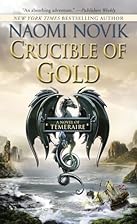
87) Crucible of Gold, by Naomi Novik.


The first book in this series, His Majesty's Dragon, is one of my favorite reads of all time, but I took a break from it after Victory of Eagles, for reasons that have more to do with me as with the book itself. You see, my proverbial Book Under the Bed (which of course does not live under an actual bed, not in 2013, but is instead a file on my hard drive and backed up to Dropbox that I get out and look at every year or two, because someday I mean to go back to it) is an alternative history/adventure story of the Napoleonic Era. And Victory of Eagles is the closest Novik's story comes to overlapping mine. Not in a way that would prevent me from publishing the Book Under the Bed--our approaches and plots are very different. No, it's more that I spent the entire read arguing with the book, particularly with her portrayal of Wellington. As those of you who've followed me around the blogosphere may know, I'm kinda fond of the Great Duke. As in, historical crush fond. He's one of the three protagonists of the BUtB, and while I hope my portrayal is true to the sarcastic, snobby, and all-around-difficult aspects of his personality, he also comes across as badass and awesomesauce (which I think is also justified by the historical record).

Which probably sounds a bit petty of me, to say I didn't like Victory as much as previous entries because I didn't like Novik's Wellington. But that's just the surface reaction. It's more that I find it weird and a little disconcerting to read anything too similar to what I'm writing--and when Victory came out, the BUtB was my beloved work-in-progress, which I was polishing for submission to editors and agents. I'm not one of those authors who can't read the same genre I write, but I find myself reading fewer Regencies now than before I started writing them. When I hear about a book that's very similar to something I'm writing or planning to write, I'm more likely to avoid it than read it--if it's too close to my approach, I worry about accidental influences, and if it's too different, I know I'll be too busy arguing with the story to really sink into it properly. With Victory, I think I had a weirdly strong reaction to the book because it was simultaneously too much like the BUtB and too different from it, unlike any book I've read before or since, so reading it induced a kind of mental whiplash.

Anyway, after reading a strong review of the latest book, I decided to go back to the series, and I'm glad I did. I got exasperated with Laurence a few times, but the dragon interactions were delightful, I liked seeing more of Emily Roland, who's always been one of my favorite secondary characters, and I was fascinated by how Novik developed an Incan society where the human population had been decimated by European diseases as in real history, but the Incan dragons had prevented European conquest. And...I certainly wasn't expecting that twist with the Incan empress. I can't wait to see what happens in the next book.

Tuesday, September 3, 2013

2013 Reading - Books 82-84

82) Cockpit Confidential, by Patrick Smith.

Patrick Smith is a commercial pilot and the author of the Ask the Pilot blog (formerly a column at salon.com). I've always been fascinated by his columns even though I'm not really a frequent flyer, typically flying 2-3 times a year for family, vacation, and writers' conferences. (I'm just frequent enough to get impatient when I'm stuck behind truly infrequent flyers who don't have the check-in and security line process down cold.) He's made me a much less nervous flyer--I finally believe that turbulence won't knock my plane out of the sky. Anyway, this book is much like his blog, informative and snarky, and I recommend it for anyone who'd like a behind-the-scenes look at air travel.


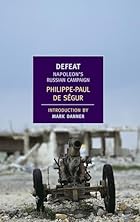
83) Defeat: Napoleon's Russian Campaign, by Philippe-Paul De Segur.

As I continue researching Napoleon's invasion of Russia for my next manuscript, I've moved on to campaign memoirs. This, written more than a decade after the fact by one of Napoleon's aides-de-camp from the campaign, is a fascinating and often horrifying read. It's a self-consciously literary saga of the Fall of the Hero, Occasioned by Hubris, but not made any less valuable as a primary source thereby--if anything, it's especially useful to see how the men of the Grande Armee made sense of their experiences, both at the time and in retrospect.

But what is up with that cover image? Would it have been so hard to find an image of a Napoleonic-era cannon?

84) Divergent, by Veronica Roth.

This seems to be the second-most popular dystopian YA series after The Hunger Games, and I picked it up out of curiosity after hearing about the upcoming movie. While I didn't completely buy into the concept of the faction-based social order (basically, your life is determined by whether you're more inclined to see courage, kindness, honesty, selflessness, or the pursuit of knowledge as the key virtue), I was able to accept the premise and let the story run with it, and me. It's compelling, and I've already put the second and upcoming third books in the series on my library holds list. That said, though I let my daughter read The Hunger Games and its sequels over the summer, I'm not going to tell her about these. It's not so much that they're more violent as that Tris feels less remorse about her kills than Katniss, and I'd rather my fourth grader stick to the latter as a role model for now.

Tuesday, August 6, 2013

2013 Reading, Books 76-78

76) A More Unbending Battle, by Peter N. Nelson.

An account of the Harlem Hellfighters (i.e. the 369th Infantry Regiment), an African American regiment who fought as part of a French division in 1917-18. They quickly gained a reputation for valor and were treated well by both their French brothers-in-arms and the civilian population--but weren't as welcome at home afterward.

77) Assassin's Gambit, by Amy Raby.

This is a fantasy romance, wherein a young woman from a conquered land has trained from childhood to assassinate an emperor, only to discover upon getting close to her target that both he and his nation's political situation are more complex than she realized. I liked it a whole lot and was intrigued by the setting--reminiscent of imperial Rome, but with magic and roughly 18th-century military technology. My only issue--and I feel guilty for saying this because I write romance novels myself and love the genre--is that I think I would've enjoyed it more if it had been a romantic fantasy instead of a fantasy romance. (By romantic fantasy I mean something like Jacqueline Carey's Kushiel series, which are both sexy and romantic, but where the romance plot comes second to the political intrigue and war.) Because there are few things I love more than a well-constructed fantasy world, and Raby hinted at so much interesting history and magic and intrigue and war that I wished she had more room for that side of the story.

(Incidentally, this book warrants a bit of a content warning. To go into detail would be to spoil a major plot point, but suffice it to say the heroine's past has some sexual trauma we eventually revisit on the page.)

78) The Bookseller's Daughter, by Pam Rosenthal.

For the 2013 TBR Challenge. Detailed post to come.

Tuesday, July 30, 2013

2013 Reading, Books 73-75

73) Mothers of Invention: Women of the Slaveholding South in the American Civil War, by Drew Gilpin Faust.

Drew Faust is currently the president of Harvard, but she was an AmCiv professor at Penn back when I was an undergraduate there. Her two classes on the American South, one covering 1607-1861, the other 1861-present, were among the most popular and highly rated in the entire university. I took the first and found it an eye-opening look at my own roots.

This book in its own way was the same kind of experience. Faust looks at the diaries and letters of elite white Southern women (who AREN'T part of my roots--my Civil-War-era antecedents fell into the "poor white" category and were probably marginally literate at best) and how the four years of the Civil War impacted their views on everything from gender roles to religion to race relations, leading, among other things, to a feminism that was both more pessimistic and conservative than that of the rest of the country during the fight for women's suffrage.

74) Blindspot: Hidden Biases of Good People, by Mahzarin R. Banaji and Anthony G. Greenwald.

This quick but thought-provoking read is all about the measure the authors, a Harvard and a UW* professor, developed to measure unconscious biases of various kinds. It's a deceptively simple measure of whether you associate a particular group with positive or negative qualities. For a sample test, the book had you go through lists of insect and flower nouns (e.g. wasp, roach, rose, lily) and negative and positive traits/things (e.g. vomit, fear, peace, heaven). On one round you sort flowers and pleasant things into Column A, insects and negative ones into Column B, while on the next you have to put flowers and negative things in Column A, insects and positive ones in Column B. Since almost everyone prefers flowers to insects, they're able to perform the first round much more quickly. (Though I noticed the insect list didn't include "honeybee" or "butterfly." I caught myself hesitating on "moth" compared to the other insects, because it's not like they're ugly or gross or fill me with a desire to either run away or squash them. I have a feeling I would've wanted to class bees and butterflies with flowers, since I expect to see them AROUND flowers and have wholly positive associations with them. Butterflies are pretty! Bees make honey and pollinate our crops, and colony collapse disorder is so scary I'm downright thrilled whenever I see honeybees at work.)

Anyway, the test takes on more serious implications as soon as you turn it to sorting human categories. It turns out that even people who wouldn't be considered racist or bigoted by any conscious measure tend to associate whites with more positive qualities than blacks or with more American traits than Hispanics or Asians. Even committed feminists associate women more with home and men more with work, and so forth. I'm appalled but not exactly surprised to say that despite trying my best to perform on the tests as the unbiased, egalitarian person I aspire to be, I showed my share of unconscious bias--though at least my anti-bug bias is stronger than any of my human ones. :-/

The book raises more questions than it answers, but the author's main points are that A) these biases matter, because even though most of us want to be unbiased and therefore wouldn't consciously discriminate, our unconscious biases show up in small ways that over time add up to real harm in peoples lives, and B) if we know our biases exist, we can take conscious steps to counteract them.

*Since I live in Seattle and actually work at the U-Dub in question for my day job, this means University of Washington, not Wisconsin or Wyoming. When I was at the RWA conference, a couple of lunch tablemates, strangers to me, were talking about UW and its hospital system, and I was all ready to jump in with my insider opinion until I took a closer look at their name tags and saw they were from Wisconsin.

75) The Turncoat, by Donna Thorland.

A fast-paced, sexy spy novel set mostly in British-occupied Philadelphia in 1777-78. Recommended for fans of Lauren Willig's Pink Carnation books, with the caveat that it's darker and grittier--if you like Willig but also like, say, Diana Gabaldon or Bernard Cornwell, you should definitely pick this book up. (Though it comes with a trigger warning for depictions of rape, mostly off-page but in one case fairly graphic.)

Saturday, July 27, 2013

2013 Reading, Books 64-72

Catching up on everything I read while traveling...

64) Decisive, by Chip Heath & Dan Heath.

An extremely useful look at how to short-circuit some of the issues that commonly lead to bad decision-making. It gave me some good ideas for how to evaluate my writing career and whether my current path will take me where I want to go and how to balance competing priorities in my life as a whole. This was a library copy, but I'll definitely be buying my own soon.

65) Sprig Muslin, by Georgette Heyer.

For the 2013 TBR Challenge. Detailed comments here.

66) My Life Next Door, by Huntley Fitzpatrick.

A sweet YA romance about the daughter of a perfectionist single mother (who also happens to be a state senator) who falls for the boy next door--from the big, crazy, chaotic family with 8 kids her mother completely disapproves of. A fun story, though I found the heroine's mother and her campaign manager just a bit over-the-top compared to the other characters.

67) An Heiress at Heart, by Jennifer Delamere.

For my Rita finalists challenge. Detailed comments here.

68) Always and Forever, by Farrah Rochon.

An enjoyable contemporary romance set in a small Louisiana town that managed to get past my "no small American towns" filter with its engaging hero and heroine and by not forcing the hero to give up his dream of opening a business in New Orleans to show that Real, Authentic American Life belongs in a small town.

69) Captain Ingram's Inheritance, by Carola Dunn.

Old-school Regency romance that focuses as much on the hero and heroine's community and families as their relationship. I liked it a lot, but if you haven't read Lord Roworth's Reward you'll be pretty lost.

70) What Kings Ate and Wizards Drank, by Krista D. Ball.

A guide to help writers of historical fiction and historically based fantasy write more realistically about what their characters would've eaten and how they would've obtained and prepared it.

71) Swept Off Her Stilettos, by Fiona Harper.

A perfectly delightful confection of a friends-to-lovers story. I couldn't imagine a better book to while away several hours of a long, turbulent plane ride.

72) Avatar: The Last Airbender - The Search, Part 2, by Gene Luen Yang, Michael Dante DiMartino, Bryan Konietzko, Dave Marshall.

The latest entry in the graphic novels filling in some of the gaps between Avatar: The Last Airbender and The Legend of Korra. It didn't give me as many answers as I'd hoped for about Zuko's mother, but it's visually beautiful and kept me interested enough to immediately go preorder the final book in the trilogy.

Thursday, July 4, 2013

Favorite reads of the year so far

Happy Independence Day to my fellow Americans! I'm off from the day job today, but I have to work Friday--which, looking on the bright side, means this week feels like it has two Fridays. I'll be having a low-key celebration with my family. Mr. Fraser is making waffles for breakfast, a tradition for almost every holiday we're not traveling, since they taste just as good on Labor Day or Presidents' Day as they do in July. Then we'll grill hot dogs and I'll bake Miss Fraser's favorite cake, which has white icing transformed into an American flag with strawberry stripes and blueberry stars.

It just occurred to me that the year is half over. (Insert ritual "How did THAT happen?" comment here.)  That means it's time to post my top ten reads of the year so far, in the order I read them:

1) Julie's Wolf Pack

Third in Jean Craighead George's beautiful YA series about a young Inuit girl who finds refuge among a wolf pack and keeps ties with them even after being reunited with her family, this one is almost all from the POV of the wolves themselves, and it works surprisingly well. She doesn't quite anthropomorphize them but still makes them extremely relatable, somehow.


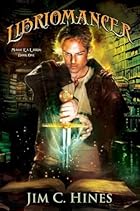
2) Libriomancer, by Jim C. Hines.

First in a fantasy series with a really clever concept for its magic--basically, books make magic by the collective belief of readers in the stories' worlds, and libriomancers can pull objects out of those books temporarily. This doesn't give the unlimited power you might think--among other things, too much magic use wrecks both the libriomancer and the book, and you can only pull out objects that would fit through an ordinary-sized physical copy of the book. E.g. if I were a libriomancer carrying a copy of a book from the Sharpe series, I could pull out Sharpe's sword or the telescope Wellington gave him, but a cannon wouldn't fit. The story and characters are as good as the concept, and I'll be eagerly awaiting the sequels. I've already preordered the sequel, Codex Born.

3) A Year of Biblical Womanhood, by Rachel Held Evans

I'm easily hooked by the type of memoir where someone spends a year trying to live a lifestyle that's foreign to them, cooks their way through a famous cookbook, or whatever. This one was both hilarious and unexpectedly moving. Evans comes from a background almost identical to my own--I'm ~10 years older, but we grew up within 40 or 50 miles of each other, and the biggest obvious difference between our good Alabama Baptist families is that mine roots for Auburn in college football while hers supports Alabama. (I was really disappointed that the month she was trying not to be contentious was October 2010 rather than November of that year, because she talked about her struggles during the South Carolina game rather than the epic Auburn comeback. And yes, I know Bama has since won two more national championships. 2010 was still awesome.)

Anyway, Evans is also like me in having wrestled with the increasing conservatism of the evangelical church, though AFAIK she hasn't yet gone as far as I have in running away from it--I'm now Episcopalian, which I suspect has some of my Baptist ancestors spinning in their graves. So for this book she spends each month of a year trying to live out one of the biblical commands to women literally, both to show the absurdity of a hyper-literal approach and to find God in unexpected places. She also talks a lot about women's power and strength, in the Bible and through history to the present. I think what will stick with me most is her discussion of the Proverbs 31 woman, which I was taught to think of as the perfect homemaker--someone I hoped to become during my more conservative days and now rebel against. But Evans discovers that in the Jewish tradition, that text isn't used prescriptively, but as praise for whenever a woman shows courage, generosity, integrity, and like virtues. In Hebrew the words the King James Bible translates as "a virtuous woman" are "eshet chayil"--a woman of valor. I'll never be a Proverbs 31 homemaker, but on my best days I can be a woman of valor.

4) Miss Jacobson's Journey, by Carola Dunn

This one is a traditional Regency, with a PG, kisses-only sensuality rating, but with a decidedly non-traditional heroine and setting. The heroine, Miriam Jacobson, is an English Jew who's been living on the Continent with her doctor uncle for nine years after having become estranged from the rest of her family by rudely rejecting the suitor the matchmaker brought for her. Now she wants to go home, but at the height of the Napoleonic Wars, journeying from France to England isn't a simple task. She and her maid/duenna are recruited by Jakob Rothschild to help two men smuggle gold to Wellington in Spain, with the promise of help getting home once she completes her mission. Naturally, one of the men in her party is the suitor she rejected all those years ago, and he's grown and matured in the intervening years into a far more attractive man than she ever would've dreamed possible...

From the time I started reading traditional Regencies in high school, I've always loved any non-traditional setting. (Not that I don't love a nice country house party or London Season tale, too.) Following the drum in the Peninsular War? I'm there. Congress of Vienna? Fascinating. Canada? More, please. Brussels just before Waterloo? Wonderful! America, before, during, or after the War of 1812? Why not? So this book had me halfway to hooked from the beginning because of the setting, and the story delivered on its promise. I enjoyed all the characters, the sweet romance worked beautifully for me, and I've already bought more of Dunn's backlist.


5) Whose Names Are Unknown, by Sanora Babb.

I heard about this book while watching Ken Burns' Dust Bowl documentary. It was originally written and accepted for publication in the 1930's, then rejected after The Grapes of Wrath came out because the acquiring editor figured there wasn't room for TWO Dust Bowl/Okie migrant stories. (Which is so laughably different from today's market, where every hit spawns a dozen imitators.)

I'm glad I read this book. It's more literary than my usual taste, but it has a kind of subtle, deceptively simple beauty, and it sort of rounded out my understanding of the Dust Bowl era, I think, in the way that good fiction can bring the past to life better than documentary alone.

6) Things I Can't Forget, by Miranda Kenneally.

I've been a Kenneally fan ever since I read the query letter for her first YA romance, Catching Jordan, (her agent posted it on a blog as an example of an effective query), but I think this book may be my favorite so far just because I identified with the heroine so much. I've been told that's a simplistic reason to enjoy a book, but oh well. I was Kate when I was 18, and for several years afterward. Painfully good, afraid to break the rules, convinced that my beliefs were the only right ones and therefore pretty dang judgmental even if I was better than Kate at keeping my mouth shut about it. So I enjoyed watching Kate begin to come to terms with life's complexities and ambiguities, and I loved seeing a character like her (and my younger self) grow and change.

7) Help, Thanks, Wow: The Three Essential Prayers, by Anne Lamott.

Anne Lamott's books don't always work for me, but this one blew me away. The Thanks and Wow chapters in particular helped me remember to stop and revel in the Eternal Now of the current moment, instead of always straining toward a longed-for future when I might be able to quit my day job and write full-time, or else flinching away from the inevitable future in which someday I must die. I found myself reveling in the life all around me, even in the spring pollen that makes me sneeze and coats my pretty black car with an unsightly yellow film. I remembered my favorite lines from For I will Consider My Cat Jeoffry:

For he counteracts the Devil, who is death, by brisking about the life.
For in his morning orisons he loves the sun and the sun loves him.
For he is of the tribe of Tiger.
For the Cherub Cat is a term of the Angel Tiger.

...and also quoting one of my favorite lines from a character in the Vorkosigan saga: "Every day is a gift. Me, I tear open the package and wolf it down on the spot," not to mention, of all people, Bon Jovi: "I just want to live while I'm alive."

So I guess you might say the book made an impression on me. Thanks, Anne Lamott!


8) Sacred Games, by Gary Corby.

Third in a series of light, fun, yet richly researched mysteries based in Periclean Athens. This entry is set at the Games of the 80th Olympiad in 460 BCE, and our sleuth, Nicolaos, a fictional elder brother to Socrates, has to pair up with a Spartan to investigate the death of a star Spartan athlete the night after the opening ceremonies. (The primary suspect is an Athenian, and everyone agrees the only fair solution is to have one man from each city investigate, because at that point in history there was no such thing as a neutral city in any dispute between the two rival powers.) Corby does an excellent job bringing the bloodthirsty, superstitious, and quirky aspects of Greek culture to life, while simultaneously making his characters and their world human and relatable. I recommend this especially for fans of Lindsey Davis's Falco series, as the tone is quite similar.

9) The Strange History of the American Quadroon, by Emily Clark.

The book that made me withdraw a submitted manuscript so I could fix its utter historical inaccuracy. See more detail here.

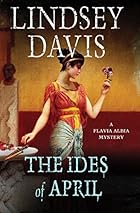
10) The Ides of April, by Lindsey Davis.

First in a new series of mysteries set in Ancient Rome, this book is linked to the Davis's Falco series, but it takes place about a dozen years after the last one, and we never actually see Falco and Helena. The sleuth is their adopted daughter, Flavia Albia, an independent young widow who's taken up her father's old profession and lives on her own. Falco and Helena are evidently doing fine, and Albia drops in to visit regularly--it's just that all those meeting are told rather than shown. Hopefully that won't be the case throughout the series, though I can understand wanting to establish Albia as an interesting character in her own right.

The book got off to rather a slow start, and I might not have stuck with it were it not for my long-standing love for the Falco series. But about 40% in, the story took off and I started caring about Albia for her own sake. I guessed the whodunnit fairly quickly, not to mention the love interest, though there was a sort of mini-mystery about the latter I must confess to being totally oblivious to until it was spelled out for me. In any case, I'm looking forward to book two next year.

(Incidentally, this one wins my favorite cover of the year to date. So pretty!)
Friday, May 31, 2013

2013 Reading, Books 52-54 (wherein Susanna decides to withdraw a manuscript from submission)


52) Sacred Games, by Gary Corby.

Third in a series of light, fun, yet richly researched mysteries based in Periclean Athens. This entry is set at the Games of the 80th Olympiad in 460 BCE, and our sleuth, Nicolaos, a fictional elder brother to Socrates, has to pair up with a Spartan to investigate the death of a star Spartan athlete the night of the opening ceremonies. (The primary suspect is an Athenian, and everyone agrees the only fair solution is to have one man from each city investigate, because at that point in history there was no such thing as a neutral city in any dispute between the two rival powers.) Corby does an excellent job bringing the bloodthirsty, superstitious, and quirky aspects of Greek culture to life, while simultaneously making his characters and their world human and relatable. I recommend this especially for fans of Lindsey Davis's Falco series, as the tone is quite similar.


53) 2K to 10K: How to Write Faster, Write Better, and Write More of What You Love, by Rachel Aaron.

I bought this on a whim a few days ago (since one can afford to be whimsical with $0.99 e-books), because I'm always interested in ways to improve my writing efficiency and generally make better use of my limited time. And I happen to be sort of between projects, waiting for my editor's feedback on a recently sold novella while researching two new ideas, so it's a timely read.

I've been known to disagree vehemently with writing advice, since there is no One True Path, but I'm going to try Aaron's methods with my next story. I tend to be what's known as a "pantser"--i.e. I just sort of plunge into my first draft, flying by the seat of my pants, with a lot of backtracking and rewriting upon discovering my first idea or two doesn't really work. The opposite type of writer is a plotter, whose techniques I've always found off-putting, at least in the extreme versions, like the writing class I heard about where the instructor wouldn't let the writers start actual drafting until they'd produced fifty-page outlines.

Aaron is a plotter, but not at the extreme end of the scale. She seems to take an organic approach to plot and character development, letting them sort of feed off each other, which feels right to me, like an extension of how I already write the last quarter or so of my manuscripts. There's usually this point I describe as "And DOWN the stretch they come!" (you have to imagine this in an excited, racetrack caller voice), where I can suddenly see everything that needs to happen between where I am now and the end. I jot down every scene, every emotional turning point, on post-it notes, slap them on my office door, and write them, one after the other. I know exactly what I need to do and do it FAST, but it doesn't feel robotic or paint-by-numbers at all. Aaron's advice feels like it might give me a way to write entire manuscripts in Down the Stretch They Come mode. I just need to get past my self-identity as a pantser, along with my bad habit of thinking that only time spent drafting is Real Writing, even if spending a particular hour researching or planning would've enabled me to write faster and better the next day.


54) The Strange History of the American Quadroon, by Emily Clark.

This is by the same author who wrote Masterless Mistresses, which I read at the beginning of the month. I stumbled across this brand-new book--I'm the first person to check out the UW Library's copy--by accident on Amazon, and I'm glad I did. You see, I started a manuscript set in the aftermath of the Battle of New Orleans whose heroine was a free woman of color, a fourth-generation native of the city, and I made her a placee (i.e. a white planter's mistress with a long-term contract for an almost marital relationship) who had followed in her mother's footsteps in adopting such a life. I'd heard about such arrangements all my life, and I found info in my initial research that seemed to confirm what I'd been told. So I started writing, figuring I'd research as I wrote to flesh out my setting and my character's background.

I went ahead and submitted a proposal (i.e. opening chapters and synopsis) to my publisher, but the more I researched, the more nervous I felt about my heroine's placee status. While there were plenty of interracial relationships going on in 18th and early 19th century New Orleans, I just wasn't finding anything that matched the backstory I'd written for my heroine. And this book turned out to be the final nail in my manuscript's coffin. By the time I'd read a few chapters, I knew I had to withdraw my proposal from consideration, and I emailed my editor to do so. Because it turns out the whole placee system is little more than an urban legend, and insofar as it existed at all, it wasn't a long-established local tradition in 1815. And while I don't claim perfect historical accuracy (what novelist could?), I'm not so brazen as to try to tell a story I know couldn't have happened, especially not when the false foundation is a lurid, titillating, racist stereotype.

What really happened? Well, there were quite a few life partnerships, marriages in all but name, between white men and free women of color in early New Orleans. Both groups had skewed sex ratios, with white men far outnumbering white women and free black women outnumbering free black men in similar proportions, so such pairings were all but inevitable. But there wasn't a formalized system for how the relationships were managed, and the women didn't groom their daughters to follow in their footsteps. If anything, as the sex ratios started to even out among the free black population, they encouraged them to marry and live in middle-class respectability with free black men--all the more so as American inheritance law made it harder for white fathers to leave property to their illegitimate mixed-race children from 1808 forward. There was an uptick in concubinage and high-class prostitution among free black women in the early decades of the 19th century, but it mostly took place among the Haitian refugees who came to the city starting around 1809--another group where women outnumbered men, and one lacking the long-term connections within the city and dowries to make them desirable brides. It still didn't look quite like placage as it's been handed down to us in fiction and legend, but it was close enough to start that legend--and by the middle of the 19th century to create in a self-fulfilling prophecy a particularly unsavory sort of sex tourism. E.g. if you were a slave dealer in, say, Virginia, and you happened to have in your inventory a beautiful, light-skinned young slave woman, why would you sell her locally when she'd fetch a far higher price in New Orleans?

I'm still going to write a post-Battle of New Orleans story, and its heroine will still be a free woman of color. But I'm aiming for a far less stereotypical portrayal--I'm thinking I'll take advantage of those troublesome inheritance laws--and will hopefully write a far better book as a result.


Saturday, May 25, 2013

2013 Reading, Books 49-51

All non-fiction this time out, since the library delivered me a huge stack of holds I'm trying to work my way through...


49) Help, Thanks, Wow: The Three Essential Prayers, by Anne Lamott.

I read this book after Bloodlands through sheer coincidence; they came from the library at the same time. But I'm glad it worked out this way, since Lamott's book was the perfect spiritual refreshment after the long, bleak reminder of the worst humanity is capable of that I'd just completed. It's also perfect for the kind of faith I've been assembling for myself after having lost the airtight certainty of my youthful beliefs--more about holding on to hope and wonder, and, since I've chosen to join an Episcopal church, about experiencing a beautiful tradition and liturgy. The Thanks and Wow chapters in particular helped me remember to stop and revel in the Eternal Now of the current moment, instead of always straining toward a longed-for future when I might be able to quit my day job and write full-time, or else flinching away from the inevitable future in which someday I must die. I found myself reveling in the life all around me, even in the spring pollen that makes me sneeze and coats my pretty black car with an unsightly yellow film. I remembered my favorite lines from For I will Consider My Cat Jeoffry:

For he counteracts the Devil, who is death, by brisking about the life.
For in his morning orisons he loves the sun and the sun loves him.
For he is of the tribe of Tiger.
For the Cherub Cat is a term of the Angel Tiger.

...and also quoting one of my favorite lines from a character in the Vorkosigan saga: "Every day is a gift. Me, I tear open the package and wolf it down on the spot," not to mention, of all people, Bon Jovi: "I just want to live while I'm alive."

So I guess you might say the book made an impression on me. Thanks, Anne Lamott!


50) The Normal Bar, by Chrisanna Northrup, Pepper Schwartz, and James Witte.

This is a book of marriage/long-term relationship advice, based on a voluntary survey of couples in long-term relationships. It both describes what's normal in the population surveyed and suggests ways to improve your own relationship's "normal." It's a quick, light read, but gave me enough to think about that I'm thinking of buying my own copy (the one I read is the library's) and trying out some of the suggestions and exercises with Mr. Fraser.


51) The Year Without Summer: 1816 and the Volcano that Darkened the World and Changed History, by William Klingaman and Nicholas P. Klingaman.

This book's two authors, who I believe are father and son, hold PhDs in history and meteorology, and their expertise comes together perfectly in this fascinating account of the 1815 Tambora eruption--the largest volcanic eruption in recorded history--and its disruption of the climate for several years thereafter, but most notably in 1816, when the young United States and much of Western and Central Europe had no summer to speak of. (I understood the history better than the meteorology, but, basically, Europe was unseasonably cold all year and hammered with rain from North Atlantic storms, leading to crop failures, while America got pounded by unseasonable arctic storms--snow in June and July!--interspersed with a cold yet severe drought, again leading to crop failures.) We follow various well-known figures ranging from Lord Byron to John Quincy Adams as they live through a disastrous season in nations already reeling from a severe postwar recession, and get a glimpse of how various governments and their citizens/subjects responded to the crisis. I kept finding parallels to the present day--the British government's debates about how much they could and should help their people were depressingly reminiscent of the current drive for austerity at all costs, and there was apocalyptic fervor, most notably over a prediction that the sun was going out and would die entirely on July 18, ending life on Earth. You see, it was a high sunspot year, and all the ash in the atmosphere made it easer to spot the spots, so...panic! No one at the time realized the real cause of the bad weather, though Benjamin Franklin had speculated decades earlier that volcanic ash could lead to temporary cooling.

As the subtitle states, the world was changed. The crop failures in New England sped the settlement of the Old Northwest--Ohio, Indiana, and Illinois. Mary Shelley wrote Frankenstein. The expectations of what a government should do for its people shifted. The cycle of hunger and disruption in Ireland that culminated in the 1840's potato famine began. And while we don't know as much about the eruption's impact on the Asian climate, the authors speculate that the first cholera pandemic might have been connected to it, when a disease that had evidently been endemic to India already began to spread in early 1817.


Tuesday, April 23, 2013

2013 Reading, Books 37-39


37) Things I Can't Forget, by Miranda Kenneally.

I've been a Kenneally fan ever since I read the query letter for her first YA romance, Catching Jordan, (her agent posted it on a blog as an example of an effective query), but I think this book may be my favorite so far just because I identified with the heroine so much. I've been told that's a simplistic reason to enjoy a book, but oh well. I was Kate when I was 18, and for several years afterward. Painfully good, afraid to break the rules, convinced that my beliefs were the only right ones and therefore pretty dang judgmental even if I was better than Kate at keeping my mouth shut about it. So I enjoyed watching Kate begin to come to terms with life's complexities and ambiguities, and I loved seeing a character like her (and my younger self) grow and change.


38) Consider the Fork, by Bee Wilson.

If you enjoy culinary history or the history of everyday things, you'll probably love this book. It's a history not of what we eat, but of the technology we use to prepare and consume our food, from pots to refrigerators to the kitchen space itself. It's too general an overview if you're looking for, say, what a French kitchen was like in 1780, but it's packed with fascinating anecdotes, and it made me think about any number of things I usually take for granted.


39) Lord Roworth's Reward, by Carola Dunn.

This is a sequel to Miss Jacobson's Journey, which I read earlier in the year. It's a sweet, chaste traditional Regency romance set during and immediately after the Waterloo campaign and featuring a hero who's so sure he's found his perfect future countess that he doesn't notice just how much love is involved in his friendship for another, less suitable, young lady until it's almost too late. I enjoyed it a lot, with two small caveats: 1) The sheer number of famous Waterloo quotes and incidents referenced in the story came across as a bit of an infodump, especially since the hero heard about most of them secondhand and they weren't necessary to move the plot forward. 2) The story treats the urban legend that Nathan Mayer Rothschild used his advance knowledge of the outcome of the battle to make a fortune on the London stock exchange as fact, when actually there's no contemporary evidence for it and it seems to be an anti-Semitic tale that sprang up later in the 19th century. That said, a lot of histories cite it as fact, Dunn herself clearly isn't anti-Semitic, and Rothschild is portrayed in a positive light. So I don't hold it against her--I just feel compelled to point out the issue, since I'm pedantic like that, especially given the roots of this particular legend.


Sunday, April 7, 2013

2013 Reading, Books 31-33


31) The Generals: American Military Command from World War II to Today, by Thomas Ricks.

I caught part of an author interview on NPR and determined to read this book, even though in general the second half of the 20th century isn't a corner of history that holds much interest for me. (Part of that is because it doesn't really seem like history--I was born in 1971, so I remember world events from, oh, 1979 or so on pretty clearly, albeit with the skewed perspective of having been a kid and therefore having absorbed unquestioningly my family and community's beliefs until I left home at 18.)

I'm glad I made the effort to read it. I feel like I have a much better understanding of the Korean and Vietnam Wars, which I've never much studied, and even of the First and Second Gulf Wars and the war in Afghanistan, which I lived through as an adult but focused on the politics rather than how effective the military was and what caused its weaknesses.

To sum up very succinctly, the WWII US Army was about as effective as an army could be, largely due to the leadership of Marshall and Eisenhower. But it imploded quickly, with the nadir of Vietnam, largely because of failures of leadership--the Army tended to award organization men who knew how to go along to get along rather than thoughtful, assertive leaders who understood strategy and where each war fit into national and world interest, and they failed to quickly relieve generals who couldn't hack it. After Vietnam the Army recovered tactically, such that the enlisted personnel and lower-ranking officers are excellent, but the system is still largely failing to produce gifted strategists to fill the rank of general.

Definitely a worthwhile read for anyone interested in military history or who wants to look at the last 60-70 years from another angle.

32) The Midwife, by Carolyn Davidson. My April read for Wendy the Super Librarian's 2013 TBR challenge. More detail to come April 17.


33) Suffering Succotash: A Picky Eater's Quest to Understand Why We Hate the Foods We Hate, by Stephanie V.W. Lucianovic.

I'm a recovering picky eater. As a child, I practically lived on Campbell's Chunky Chicken Noodle Soup, fried chicken (only I mostly ate the crust and left the meat behind), black-eyed peas (but all other legumes, especially lima beans, were GROSS), white bread wadded up into a ball (WHY, child me, WHY?), biscuits, chocolate milk, and a very narrow range of other foods. I still can't figure out how I managed to grow up 5'7" (average for a woman in my family), intelligent, and healthy rather than stunted, dull, and brittle-boned. Who knows? Maybe I was meant to be 6'0", have Nobel-prize-winner brains, and never to suffer from mild asthma. Or maybe the human body is more resilient than we generally think.

Now if anything I'm a foodie, though I still have some aversions I'm fighting to overcome--e.g. to me most fish has an off-puttingly squishy texture and tastes like a beach town smells on a hot, windless day--and I've decided I'm really not missing anything by avoiding brussel sprouts, asparagus, and desserts with raisins in them. I've never been tested for it, but given my dislike of coffee and beer (seriously, how can anyone stand anything that bitter?) I suspect I'm a supertaster. But within those constraints I'm an adventurous eater who'll try just about any cuisine, spice, or flavor combination.

And now I'm raising a picky 9-year-old. She's better than I was with fruits and vegetables--as long as they're raw and plain--but I worry how little protein she eats. She barely eats meat and doesn't like beans, which leaves her with peanut butter, yogurt, and milk. I want her to eat more variety so it'll be easier to feed her and take her to restaurants, and so she'll enjoy the pleasures of the table--and also because despite the fact she's tall for her age, has only had to stay home sick once this year, and just tested into the gifted program, I'm still afraid she'll turn up stunted, dull, and brittle-boned. I parent, therefore I worry.

This is more a light, quick read than an in-depth study with step-by-step recommendations for overcoming your own and your child's pickiness, but I liked its emphasis on never treating pickiness--your own or others'--as a character flaw. I mean, it's not like I find fish squishy and smelly on purpose, it just IS for me. I didn't choose my taste buds and my sense of smell any more than I chose to have brown eyes, straight hair, or astigmatism. It also made me realize how much of Miss Fraser's pickiness seems to be about control, so I'm going to phase out our one-bite rule, because she always and only takes one bite of ANYTHING not on her narrow preferred list. Even if she thinks it's OK, she never eats more. So I think that's control--we can make her eat one bite, but she won't let us convince her to LIKE cheese or steak or cooked broccoli or whatever. I think from now on we just put new foods on her plate along with at least one food we know she'll eat, even if that's just a slice of wheat bread or a handful of cherry tomatoes, and talk about the meal, how it was cooked, and how it tastes to us. When she's ready, she'll try more. If health becomes an issue, that's a different story, but for now her picky diet seems to be enough to keep her growing, and slightly on the slim side but not unhealthily thin, so I should probably worry less. (Heh. Yeah, right.)

Wednesday, March 13, 2013

2013 Reading, Books 25-27

I'm overdue to respond to Veronica Scott's tagging me for a Five Favorite Books post, but it'll have to wait until I a) finalize and submit a manuscript that's due on Friday and b) write my next Risky Regencies post, also due on Friday.

Meanwhile, I've managed to squeeze in a few reading hours--nonfiction, because that's what my library holds list has been hitting me with of late:


25) Rick Steves' Portugal.

As with other travel books I'm counting toward my total this year, I didn't read this one cover to cover. I figure I'll have about a week, maybe a little less, for Portugal on my big 2015 trip, and that I'll therefore have to focus on Lisbon, Porto, and the Douro Valley, so those are the parts I read about in detail. Rick Steves was my go-to writer for figuring out where to visit in Britain and Ireland the year I lived in England, mostly because he assume you're not rich (correct!) and therefore provides a lot of budget options, and also because he's thorough without being encyclopedic. Anyway, I now feel like I know where to begin planning the Portuguese leg of the trip, which is all I need two years in advance. Once it's six months away I'll buy the most current guidebooks and start booking hotels.


26) The Wild Life of Our Bodies, by Rob Dunn.

A wide-ranging survey of the current state of the science about how humans evolved as part of an ecology that still impacts us today--from the more-or-less beneficial bacteria that live in our guts to having a fear response more suited to our ancestral status as prey than to our current role as ultimate apex predator to the speculative, but suggestive, theory that the reasons humans, along with other African primates, see so very well and in such a wide, discerning range of color relative to most mammals is that the African forest where those primates evolved teemed with a wide variety of poisonous snakes. (Sounds wacky, I know, but think about it--unlike, say, a lion or leopard that you might smell or hear coming from a distance, the primary defense against snakes is being able to see them in time. And the primates with the best color vision are the ones from the snakiest environments--there are no poisonous snakes native to Madagascar, for example, and lemurs have poor color vision compared to primates from the African mainland.)

Anyway, this is a fascinating, thought-provoking book I'd recommend to anyone interested in evolutionary biology or ecology.


27) French by Heart, by Rebecca Ramsey.

This memoir of an American family spending four years in France after the husband gets a job there is fun, though I wish there'd been a bit less focus on one irascible neighbor with a heart of gold and a bit more, well, France.


Thursday, March 7, 2013

2013 Reading, Books 22-24

Incidentally, my random cooking posts are on a brief hiatus while I deal with writing commitments and deadlines. I expect to return to them sometime in April.

Three very distinct types of book this time out, all of which I enjoyed very much:


22) Whose Names Are Unknown, by Sanora Babb.

I heard about this book while watching Ken Burns' Dust Bowl documentary. It was originally written and accepted for publication in the 1930's, then rejected after The Grapes of Wrath came out because the acquiring editor figured there wasn't room for TWO Dust Bowl/Okie migrant stories. (Which is so laughably different from today's market, where every hit spawns a dozen imitators.)

I'm glad I read this book. It's more literary than my usual taste, but it has a kind of subtle, deceptively simple beauty, and it sort of rounded out my understanding of the Dust Bowl era, I think, in the way that good fiction can bring the past to life better than documentary alone.

23) Hot Under Pressure, by Louisa Edwards. My March entry for Wendy the Superlibrarian's TBR challenge, to be posted on in more detail on the 20th.


24) The Antidote: Happiness for People Who Can't Stand Positive Thinking, by Oliver Burkeman.

I am by nature, culture, and upbringing a goal-oriented person who hungers for certainty in life. So I struggle when my cherished certainties crumble in the face of reality, or when I fail to meet my goals--or even when I meet them, but the happiness I expected doesn't come as a sort of trophy. Lately I've been realizing that I get so busy striving that I forget to revel in the now. I tend to almost "marry" my goals, becoming so attached to even short-term, trivial plans that having them thrown awry, even for GOOD reasons (e.g. a sudden offer of babysitting from a friend enabling Mr Fraser and I to have a date night when I'd already planned out a quiet evening writing at home) is severely discombobulating.

I've been trying to learn to strike a balance between planning, making schedules, and setting goals--because if I didn't, I'd never finish books or learn new cooking techniques or meet deadlines--and being able to let go of those plans when circumstances warrant. I'm also trying to savor the moment more--the joy of a new story idea without dwelling on whether a publisher will buy it or how well it fits my career plan, the joy of creation in the kitchen without feeling like *I* am a failure if the the dish doesn't turn out well, etc. So this book hit home, with its examination of how self-help and positive thinking techniques often fail, but Stoicism, meditation, and generally accepting mortality, failure, and uncertainty paradoxically lead to a happier and even a more productive life.

There's even a chapter about that goal marriage habit I have, though the terminology is different. One of the examples cited was the catastrophic 1996 Everest expedition famously chronicled in Into Thin Air. A persuasive theory for why so many climbers died was that they were unable to turn back from the summit when common sense and their predetermined plans dictated doing so was that their goal of summiting had become too critical a part of their identity. I think that example is going to stick in my mind next time I have trouble letting go of a goal in the face of changing circumstances. If nothing else, it gives, "Is this hill worth dying on?" a whole new meaning.