Showing posts with label graphic novels. Show all posts

Sunday, May 31, 2015

2015 Reading catch-up post, books 46-54

So, getting ready for the Europe trip, along with some personal writing projects, has taken over my life for the past month. My reading pace has slowed down, way down, though I'm hoping to be able to make up some time what with all the hours I'll be spending on airplanes and the occasional train in June and July!

46. The Lowland by Jhumpa Lahiri

With this book I ventured into the rare-for-me genre of literary fiction as part of a recent commitment of mine to seek out more books by nonwhite authors. As part of a discussion about people trying to read more books by women, I reflected that that wasn't an issue for me, given that almost all of the fiction I read is woman-authored, along with maybe half the nonfiction. But I could easily go months without ever reading a nonwhite author and not even notice I'm doing it.

So, at least once a month, I plan to read a book by an author of color. And I can't count the same author more than once a year, since it would kind of defeat the purpose of exposing myself to a broader range of voices if I find an author with, say, a nice long mystery series and read one per month.

Anyway, while this was a fascinating book, it was also dark and depressing enough to remind me why I generally prefer genre to literary fiction. I am glad I read it, though.

47. The Underground Abductor by Nathan Hale
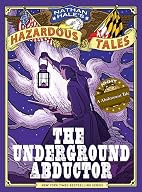

The latest in Nathan Hale's series of graphic novels for upper elementary readers about American history looks at Harriet Tubman's childhood and youth, her escape from slavery, and her work on the Underground Railroad. This wasn't my favorite in the series--Donner Dinner Party has a tighter narrative arc (probably because it covers a shorter time period and was just a more linear historical incident), and Treaties, Trenches, Mud, and Blood impressed me by actually making WWI comprehensible to young readers like my daughter without trivializing it. But an average Nathan Hale's Hazardous Tale is still an awesome book, and I learned quite a bit from it, since I didn't know much about Harriet Tubman beyond her name and the fact she was involved with the Underground Railroad.

48. How We Got to Now by Steven Johnson

A quick, fascinating read looking at how innovations in six different areas have built on each other in unexpected ways over the past few centuries. Definitely recommended for those who like history of science books.

(As a side note, I'm way too prone to describing books as "fascinating." Memo to self: find new adjectives for "this book was cool and really held my attention.")

49. In Real Life by Cory Doctorow & Jen Wang

Another graphic novel read to be shared with my daughter, though this one was a Message Book, and one that was too heavy-handed for my taste despite my agreeing with its views.

50. The Dirt on Clean by Katherine Ashenburg

An interesting, readable social history on the history of cleanliness in the western world from ancient Greek days to the present.

51. Pocket Apocalypse by Seanan McGuire

Fourth in the InCryptid series. I haven't liked the last two books as much as the first two--I enjoyed Verity Price's New York adventures more than her brother Alex's role as zookeeper to creatures both ordinary and paranormal--but this one did have a good bit of the family's Aeslin Mice, which are my favorite magical creatures EVER.

52. Cheated by Jay Smith and Mary Willingham

A detailed account of a long-running academic scandal at the University of North Carolina involving the funneling of academically ill-prepared athletes, especially in the "money" sports of football and men's basketball, into courses whose requirements were basically nonexistent. Basically, it's the kind of thing I always kinda assumed was going on with elite collegiate sports programs, but it's depressing to see it spelled out.

I love football especially so much, but lately between the head injury issues, the stunted educations of young men who are unlikely to ever see the NFL (or play long enough to amass a fortune to last them their lifetimes if they do), and the fact the sport's powers that be seem to think I should be happy to ignore rampant domestic violence and sexual assault issues, I'm finding it harder and harder to justify that love.

53. Heirs to Forgotten Kingdoms by Gerard Russell

What with how busy and travel-focused I've been, it took me two weeks to finish this book, though it's fascinating--an account of the (mostly) obscure minority religions of the Middle East--Druze, Samaritans, Yazidi, Zoroastrians, etc.

54. Dead Wake by Erik Larson

An account of the last Atlantic crossing and sinking of the Lusitania. A good read if you like historical disaster tales, and IMHO Larson's best work to date. It's remarkable in a way that the loss of so many American civilian lives didn't expedite our entry into WWI--and, I have to admit, it speaks well of Woodrow Wilson, who isn't my favorite of the well-known POTUSes for several reasons. But the book's focus, and where it shines, is in the stories of all the individuals aboard the ship (mostly the survivors, though in some cases I guessed wrong about who was going to survive because some particularly vivid account turned out to be from a survivor's memory of a dead companion or from papers recovered from a body).

Sunday, April 19, 2015

2015 Reading, Books 43-45

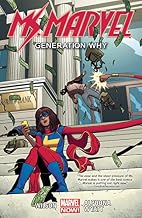
43. Ms. Marvel Volume 2: Generation Why by G. Willow Wilson, Jacob Wyatt (Illustrator), Adrian Alphona (Illustrator)

What a fun series, and how awesome to have something like this to share with my geeky tomboy 11-year-old daughter!

44. Roller Girl by Victoria Jamieson

...And I continue to raid my daughter's graphic novel collection. This one got me right in the feels. I seriously almost cried reading it. It's about a 12-year-old girl navigating changing friendships and trying to forge her own identity...and between having a preteen daughter and my own vivid memories of that age, this one was a direct hit.

45. American Apocalypse by Matthew Avery Sutton

A history of fundamentalist and evangelical Christianity in America from the late 19th century through the present day (though the strongest focus is ~1900-1950). Sutton focuses heavily on the importance of apocalyptic belief in an imminent Tribulation and Second Coming and its impact on fundamentalist political engagement. It's a dense but fascinating read. I was surprised to see how deeply rooted the criticisms I've seen of current politicians and policies are--e.g. I hadn't realized FDR came in for similar venom to what Clinton and Obama have been on the receiving end of in my lifetime.


Monday, March 23, 2015

2015 Reading, Books 34-36

34. Animal Weapons: The Evolution of Battle by Douglas Emlen

More popular biology, this time comparing animal weapons to human weapons across military history. An interesting, quick read, though not the best book of its kind I've ever read. I could've done with fewer pictures and realistic line drawings of insects (you know how I mentioned above that I hate spiders? I really prefer my animals with four legs or fewer, thank you), but that was unavoidable given that the author's research specializes in dung beetles!

35. When Britain Burned the White House by Peter Snow

And my non-fiction binge continues, though I really need to get on the stick if I'm going to make ten books on the month... ::looks around for some SHORT books, whether fictional or otherwise::

Anyway, I recommend this book for anyone who'd like to know more about the War of 1812--though it doesn't get into the causes, the overall sweep of the war, or the peace negotiations except tangentially--it's strictly about the invasion of Washington and the bombardment of Baltimore. It's even-handed and sympathetic to both sides, which you'd think would be easy to do 200 years after the fact when writing about countries who are now firm allies, but you'd be surprised how many War of 1812/Napoleonic histories can't pull it off.

It's also a contrast to a lot of the military histories and biographies I've read because both sides were so plagued with indecisiveness, mediocre or downright incompetent commanders, etc. A nice reminder that the Napoleons and Wellingtons, the Hannibals and Scipio Africanuses, etc. are the exception rather than the rule! (Though it's an interesting exercise to imagine how the campaign would've played out if Andrew Jackson had commanded the American forces and Wellington had been persuaded to take on the British command. IMHO Wellington was by far the better commander, but Jackson was no slouch and home-field advantage counts for a lot in war.)


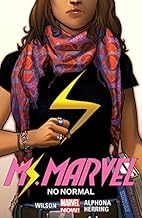
36. Ms. Marvel Vol 1: No Normal by G. Willow Wilson and Adrian Alphona

Maybe I'm finally getting the hang of reading graphic novels, because this one completely blew me away. It's about a 16-year-old Pakistani-American girl in Jersey City who's suddenly bestowed with shape-shifting superpowers--and then has to figure out how to control them and make use of them even while grounded. And the characters and setting are SO vivid.

Thursday, December 4, 2014

2014 Reading, Books 124-126

124) Manga Shakespeare: A Midsummer Night's Dream adapted by Richard Appignanesi and illustrated by Kate Brown

This one didn't work quite so well for me as the manga Much Ado About Nothing because the adaptation choice seemed to fight with the glorious language rather than enhance it--a sort of classical yet futuristic version of Athens that just didn't quite work for me. Still, Shakespeare.

125) All the Truth is Out by Matt Bai

I was a teen when the Gary Hart scandal broke in 1987, too young to vote still but more than old enough to pay attention. The scandal horrified me to the depths of my young Baptist soul--I didn't have any idea then just how commonplace adultery was among the powerful throughout history.

Now...what would appall me as a wife I can tolerate as a voter. Hart was certainly no worse morally than earlier politicians whose affairs were ignored by the press (Kennedy, etc.), or than later ones who survived scandal and were forgiven by enough voters to win elections (Clinton, etc.). He was just caught at the exact point in history WRT journalism, mass media, and celebrity culture to be destroyed by it, and we probably lost a capable president in the process. At the very least, the last quarter century or so would look very different if Hart rather than Bush Sr. had been elected in '88.

Bai also makes a case that we've lost something in how the Hart scandal led to much more packaged and trained candidates--it makes it easier for shallower, less competent men and women to win high office, because anyone can learn the right sound bites, and it's probably easier for someone who isn't that intelligent, thoughtful, or insightful to stay "on message" and consistent.

126) Avatar: The Last Airbender - The Rift Part 3 by Gene Luen Yang and Gurihiru

The final book in a trilogy and therefore interesting to fans of the series but utterly obscure to anyone else. I enjoyed this outing for a glimpse into the kind of mature avatar Aang became and some more hints at the roots of the technological and political changes that led to Korra's world decades later.

Saturday, November 29, 2014

2014 Reading, Books 121-123

Ah, the joys of a long holiday weekend with plenty of time to read!

121) A Countess Below Stairs (aka The Secret Countess) by Eva Ibbotson

A fairytale of a historical romance originally published in 1981. By fairytale I mean that the good people are too good to be true while the villains are cartoonishly evil, but the writing is so elegant I was able to accept the story on its own terms and enjoy it thoroughly. If you enjoy stories set in Britain during the interwar period (this one is in 1919-20, so immediately after WWI), give this one a try.

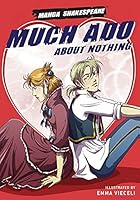
122) Manga Shakespeare: Much Ado About Nothing adapted by Richard Appignanesi and illustrated by Emma Vieceli

A fun adaptation of my favorite of Shakespeare's comedies. The graphic novel format works well with the sheer exuberant absurdity of the story and with Beatrice and Benedick's banter.

123) Eight Tiny Flames by Crista McHugh

Yesterday afternoon I chose to read the Hannukah novella from this holiday historical anthology. Set in 1944 with a nurse heroine and a doctor hero sharing the celebration of Hannukah just a few miles from the front lines in WWII Belgium, it's a well-executed, romantic take on an unusual setting.

Wednesday, October 29, 2014

2014 Reading, Books 109-11

109) The World of Jennie G. by Elisabeth Ogilvie

A re-read of a childhood favorite that holds up quite well, all things considered. It's the middle book of a trilogy, but it's always been my favorite because it's the one where the protagonists fall in love.

110) Organizing from the Inside Out by Julie Morgenstern

Another re-read, this time of a book I first read in 2010 when we were in the process of buying and moving into our current home. I could tell it had great principles, but Morgenstern advised NOT applying them in the midst of a move, because you need to settle in to your new space a bit to get a feel for how best to organize it. Mind you, I don't think she would've advocated waiting 4+ years, but here we are. I'm thinking of making 2015 the Year of Getting Organized, and maybe even beginning with my office or a closet or two this year. OTOH, next month is NaNoWriMo, then there's Christmas, AND I have books releasing 11/24/14 and 1/5/15...so maybe January is soon enough to start.

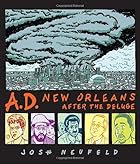
111) A.D.: New Orleans After the Deluge by Josh Neufeld


A nonfiction graphic novel (which sounds like nonsense, but calling it a "graphic history" makes it sound like it's a particularly gory history instead of one told largely through illustrations, you know?) following the experiences of several survivors of Hurricane Katrina--both those who evacuated and those who stayed and rode out the storm. A short but intense read, and one that brought the nine-year-old memories of watching the storm from afar vividly back to life.

Tuesday, September 2, 2014

2014 Reading, Books 91-93

91) 1177 B.C.: The Year Civilization Collapsed by Eric H. Cline

A more accurate title for this book would be ~1200-1150 B.C.: The Decades Civilization Collapsed in the Near East, but that's not half as eye-catching, so I don't blame the author for picking a specific, non-round-numbered year.

I was vaguely aware before reading this book that many of the great societies of the ancient world collapsed, or at least went into severe decline, a bit over a thousand years ago, and that a couple of centuries went by before you started to see the rise of Classical Greece, Persia, and the like. What I hadn't realized is how interconnected the empires of the Late Bronze Age, ~1500-1200 B.C., really were, nor how close to simultaneous their decline was.

Down through the years researchers have looked for a single cause for the collapse--famine caused by climate change, earthquakes, invaders, etc.--but Cline posits that it was a perfect storm of all those things plus a few other factors, and that the societies in question were sufficiently interconnected as trading and diplomatic partners, especially when it came to such key resources as bronze, tin, and even grain, that once one society collapsed, the others fell like dominoes.

If you're interested in ancient history, you'll enjoy this book. If not, it's probably a bit too dry to spark such an interest.

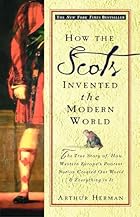
92) How the Scots Invented the Modern World by Arthur Herman


A history of the Scots of the 18th and 19th centuries, focusing heavily on the Scottish Enlightenment and its lasting contributions to to philosophy, economics, political science, medicine, architecture, and the like, but also ranging into such topics as the Scottish military tradition and its importance to the British army, along with the foundational role of Scots--Highland, Lowland, and Ulster/Scots-Irish alike--in America, Canada, and Australia. Definitely an interesting read, and while I would've said I knew a great deal about both Scotland and the British 18th and 19th centuries, it exposed some gaps in my knowledge of their intersection. Definitely a time and place I'd like to explore further.

93) The Shadow Hero by Gene Luen Yang & Sonny Liew

I borrowed this graphic novel from my daughter because I've enjoyed other Gene Luen Yang works. It's a superhero origin story with a twist--Yang and Liew took a short-lived comic from the 40's about a superhero called the Green Turtle whose Chinese-American creator supposedly wanted to portray as Asian and whose publishers supposedly wouldn't allow it. So we never quite saw the Green Turtle's face.

Fast forward 70 years or so, and Yang and Liew portray the Green Turtle as emphatically Asian--the son of Chinese immigrants growing up in an alterna-San Francisco--and have all kinds of fun with classic superhero origin tropes. It's playful without ever descending to parody, and I enjoyed it a lot.

Saturday, August 9, 2014

2014 Reading, Books 79-84

79) Avatar: The Last Airbender - The Rift Part 2 by Gene Luen Yang


The latest graphic novel showcasing the further adventures of Aang, Katara, Sokka, Toph, and Zuko (though Zuko has so far been absent from this trilogy). Deeply interesting if you're a fan of Avatar and The Legend of Korra, but would undoubtably be baffling if you aren't.

80) Thank You For Your Service by David Finkel

A harrowing, heartbreaking book following several soldiers who served multiple deployments in Iraq as they struggle to reintegrate into society and cope with PTSD, traumatic brain injury, and their impacts on their families and futures. I'm glad I read it, though a big part of me hated it.

81) The Improbable Primate by Clive Finlayson

A quick read, though I wouldn't recommend it if you haven't read anything else on the current state of the science with respect to human evolution since it assumes a certain familiarity with major fossil finds and the various theories about humanity's spread across Africa, Eurasia, and Australia. Finlayson's main focus is on our species' preference for environments combining access to fresh water, some trees and/or rocks/caves, and some open space, and how the most successful early humans were those who developed lighter builds and longer limbs for covering longer distances between water sources. I'm not sure I agree with all his theories, but he raises some interesting points. He takes what I believe is the unusual view of seeing every hominid from Homo erectus on as the same species. I'll admit my gut reaction is, "But we can't be the same species as H. erectus. They had TINY LITTLE BRAINS."

82) The Rise of Rome by Anthony Everitt

A history of Rome from its legendary foundations to the fall of the Republic. I think it would be good for a reader unfamiliar with the history in question (though it would help to have a broad sense of the course of ancient history). I found it a useful refresher on what I learned from listening to the early sections of Mike Duncan's wonderful History of Rome podcast.

83) The Little Girl Who Fought the Great Depression by John F. Kasson

This one is more interesting than I expected, really. It's a blend of celebrity biography and social history of the Depression and Shirley Temple's impact as the biggest child celebrity of the age by far. To me the most interesting chapter was the one about Bill "Bojangles" Robinson and the complex racial issues of his career and his dances with blonde little Shirley.

84) Written in My Own Heart's Blood by Diana Gabaldon

If I had to describe this book in one word, I'd choose "rambly." If you've been following the series, enjoy Gabaldon's voice, and are interested in the doings of the extended and often interwoven Fraser, Mackenzie, and Grey families, you will happily plow through this book (as I did). If not...give the first book a try and see if you want to keep going from there. This is NOT a series you'd want to start in the middle. In some ways I wish these books had more focus...OTOH, there's something to be said for a good chatty ramble through characters' lives.

Thursday, June 26, 2014

2014 Reading, Books 64-66

Incidentally, I'll go back to food/cooking blogging once the following two conditions have been met:

1) Our dishwasher has been repaired (part is on order, Sears repair person scheduled for July 5).

2) I've turned in the edits on my 2015 historical romance, now titled The Freedom to Love. They ended up more extensive than expected, since the editors want me to add material I'd planned to make part of a sequel, and they're due July 14.

But I'm still reading, at least.

64) Steal Like an Artist by Austin Kleon

(I'm not counting this one toward my summer reading competition, mostly because it took me about 45 minutes to read it, but also because a certain daughter of the house needs to get her butt in gear and start finishing books already, and I don't want to get so far ahead she gets discouraged. But it will count toward my year's tally, because, dang it, I'm still shooting for 150.)

My husband, who's also a creative type (UX designer by trade, but also an occasional blogger and regular podcaster) loaned me this quick little set of essays on creativity. Much of it resonated with me--the idea that ALL work is derivative in the sense of having antecedents, but our uniqueness arises in how we combine our lifetime of influences into something our own, along with combining analog and digital processes, since despite my love for my computer, part of my writing process always involves notebooks and index cards and whiteboards.

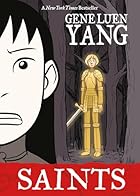
65) Saints by Gene Luen Yang


This is part of a two-book set of graphic novels telling the story of the Boxer Rebellion from both sides...and I read it out of order, since apparently the other book, Boxers, gives fuller context. But my daughter had this one with her at the baseball game today, I started paging through it while waiting for the game to start...and here we are. 

It's a moving story of an unwanted child who finds refuge in a Christian community. I thought it handled the character's faith especially well, managing the tricky balance of neither being preachy nor Christian-bashy (yes, I know that's not a word).

66) Boxers by Gene Luen Yang

The other part of the Boxer Rebellion graphic novel set. While it definitely gives you the fuller context of the story, I think Saints is the one I'm more likely to re-read, since Vibiana in that book is a more relatable and sympathetic character than Bao in this one, who does terrible things even though I completely understood the motivation behind them.

Tuesday, May 13, 2014

2014 Reading, Books 49-54

49. Secrets of a Bollywood Marriage by Susanna Carr.

A quick, relaxing read that hit the spot during a stressful, busy time. That said, it's definitely a "fight-fight-kiss" romance, and the last fight came so close to the end of the book I wasn't sure I believed they'd learned how to communicate well enough for the kissing to be more frequent than the fighting in their future.

50) Time Warped: Unlocking the Mysteries of Time Perception by Claudia Hammond

If you like popular science or psychology books, I recommend this exploration of how we experience time. It's fun and readable without feeling dumbed down, and it closes with a practical chapter on how to better manage your experience of time, if not time itself.

51) Range of Ghosts by Elizabeth Bear.


Epic fantasy (which I love) with a twist (something I also generally love). The setting is recognizably similar to our world--something like Jacqueline Carey's Kushiel series in that the map will look really familiar, though the fantastical elements are more forward. However, rather than being set in an alternate Europe, this story centers on an alternate central Asia. It ranges across a large chunk of its globe through the eyes of multiple characters, but its focus is a young man named Temur, grandson of a Genghis Khan-like figure, though he's surrounded by a cast of strong women. I enjoyed it very much and plan to read the sequels.

52) Only Human by Gareth Roberts.

A Doctor Who novel, and one that felt like reading an average episode of the show...in a good way. Another fun, relaxing read as I fight my way through my current writing deadline.

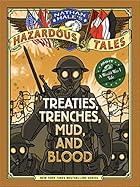
53) Nathan Hale's Hazardous Tales: Treaties, Trenches, Mud, and Blood by Nathan Hale.


The fourth in this series of graphic novels about American history manages, at least in my opinion, to make WWI palatable and understandable for its middle grade audience without dumbing down the material or treating the war lightly. FWIW, my 10-year-old pronounced it good, though not as funny as the previous three. If you've got a child in the right age group, get them these books. Schools don't teach enough history these days, in my not at all humble opinion, and this series strikes the perfect balance of informative and fun.

54) The Marathon Conspiracy by Gary Corby.

This must be my week for just-released Books 4. I enjoyed this latest entry in Corby's series about Nicolaos, a fictional elder brother of Socrates solving crime in Periclean Athens. Especially recommended for fans of Lindsey Davis's Falco series, since it has a similar combination of humor and modern tone with rich historical detail.

Thursday, March 13, 2014

2014 Reading, Books 28-30

Most of my energies continue to be focused on the post-Battle of New Orleans book, but I do manage to squeeze in some reading time.

28) Daughter of the Sky, by Michelle Diener.

I tend to be wary of self-published books unless I have a lot of experience with the author. There's too much poorly edited or downright unedited work out there, and I'm sensitive to such things. As noted in my post on Rita Book #7, for me bad grammar or inept writing in a good story is like a singer who doesn't have the range for it attempting "O Holy Night" or "The Star-Spangled Banner." It's nails-on-a-chalkboard painful, and I can't hear past the voice to the story or song.

But Daughter of the Sky got a positive review from a site I trust, and I decided to give it a try largely for the sake of the unusual setting. I'm glad I did. While my inner copyeditor "tsk-tsked" in a few spots, it was smoothly written overall, and the story of an English girl orphaned in a shipwreck, taken in by the Zulu, and then caught in the middle of the Anglo-Zulu war is thoughtfully told. At least to my white, American eyes it seemed to avoid the most obvious pitfalls--the British are clearly in the wrong as the colonialist power invading a sovereign nation under a flimsy pretext, but the individual British characters are varied and often sympathetic, and the Zulu are portrayed sympathetically without ever seeming like Noble Savages.

My one major issue with the book echoes that of the review I linked above--the resolution feels a bit too hasty, and I would've liked to see more about how the hero and heroine coped with the trauma they experienced in the war and built a life together.

29) Journal of a Residence on a Georgian Plantation - 1838-1839, by Fanny Kemble.

In 1834 the noted English actress Fanny Kemble left her stage career behind to marry an American, Pierce Butler, apparently unaware that he was heir to plantations in Georgia, and therefore to slaves--or at least without having fully thought through the implications. I'm not clear on that part. In any case, they spent the winter and spring of 1838-39 on their rice and cotton plantations on the Georgia Sea Islands, and Kemble was appalled by what she saw and learned. I don't have time or space to do the book justice here, but I'd recommend it to anyone interested in a first-person account of American plantation life and the conditions of slavery by a thoughtful, sensitive observer. (Though in proper 19th-century style, she often stereotypes and patronizes even when she's being remarkably forward-thinking. E.g. when she's saying there's every reason to believe blacks could take their place as equal, self-supporting and upstanding free citizens if only they had more education, better nutrition, etc., she says something along the lines of, "Look at the Irish! You should hear how they're talked about in England, and just a generation or two in your country makes them a thrifty, industrious addition to your laboring class!" And as a descendant of Southern "poor whites" myself, I bristled a bit at some of her descriptions of my people.)


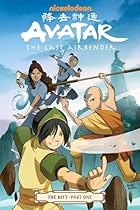
30) Avatar: The Last Airbender - The Rift Part 1, by Gene Luen Yang, Michael Dante DiMartino, Bryan Konietzko, Dave Marshall.

An altogether lighter read...albeit still focused on culture clashes. More filling in the gaps between Avatar and The Legend of Korra, and it looks as though this series will focus on Toph as the previous one did on Zuko.

Wednesday, November 13, 2013

2013 Reading, Books 100-102

My reading pace has slowed down with the fall, but I'm finally past the century mark!

100) Avatar: The Last Airbender: The Search, Part 3, by Gene Luen Yang, Michael Dante, Bryan Konietzko, Dave Marshall (Editor).

The biggest mystery left open at the end of the original Avatar: the Last Airbender series was the fate of Zuko's mother. It was SUCH a mystery, and speculated about SO much by fans of the show, that its ultimate resolution in this graphic novel series was all but doomed to disappointment. And...I was a little disappointed. I'm glad her story wasn't as dark as it could be, but the resolution felt almost too easy--except for the part where there was no sign of resolution for Azula's character. But maybe there will be another series that redeems her, or at least reveals her eventual fate.

Non-Avatar viewers, I'm sorry for all the random babble, but this is the kind of story you'd only be into if you know the series backwards and forwards.

Incidentally, when I went to Amazon for the link, I saw that the book has an average rating of 2 stars. At first I thought, "Wow, people must've been SERIOUSLY disappointed with the ending," but it turned out lots of people who preordered the Kindle version got an entirely different book delivered. Which...that's extremely annoying, but is the star system really the right way to deliver that message? It seems to me the rating is about the quality of the product, and that it's not fair to the creators to have their rating dragged down because Amazon bollixed its delivery. That said, as an author I'm not without bias in how I evaluate rating systems, their purpose, and their effects.

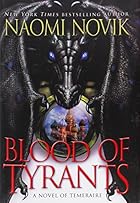
101) Blood of Tyrants, by Naomi Novik.


Eighth in what apparently will be a nine-book series. I raced through it breathlessly in two days. It's always good to see Temeraire again, and I was fascinated to see how Novik kept the general outline of Napoleon's Russian campaign while working in both sides' dragon armies. It was also cool to finally meet American dragons, though I did question her world-building a bit. We've seen all along that dragons in the non-European world are better treated than the Aerial Corps of the European powers (at least before Temeraire and Lien came along), and I can sort of buy that even by the early 19th century the British wouldn't have a clear understanding of how the draconic and human communities coexisted in, say, Africa or East Asia. But since it's clear America's colonial history played out at least somewhat similar to that of the real world (albeit clearly with Native Americans maintaining more power and autonomy because of their alliance with American dragons), I can't see why Britain and France couldn't have learned to treat dragons better from their experiences here.

But that's nitpicking, and I do love this series. I'm only annoyed at Novik for ending on such a cliffhanger! I hope Book 9 won't be too long in coming.

Incidentally, isn't that a beautiful cover?

102) French Napoleonic Infantry Tactics 1792-1815, by Paddy Griffith.

I realized early on upon starting to draft my current work-in-progress, which is set during the French invasion of Russia in 1812, that due to my relative lack of knowledge about the French army compared to the British army of the same era, I'm floundering for humanizing details of my French military characters' lives. So I've set my manuscript aside for the time being and am giving myself a crash course on all things French and Napoleonic. This particular book is as basic a survey as you could find, but it busts some of the myths about the French army (they did not inevitably attack in column rather than line!), and gives me a sense of what my French hero would've experienced serving during the heights of the Grande Armee's glory 1805-07 and how much it had gone downhill by 1812.

Monday, August 19, 2013

2013 reading, books 79-81

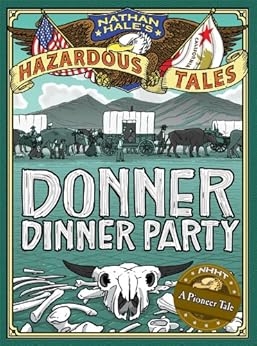
79) Donner Dinner Party, by Nathan Hale.


Miss Fraser and I are having a contest this summer to see who can read the most books from June 1 - Labor Day weekend. The winner gets an Amazon gift card. (Of course I'm not actually trying to beat my 9-year-old. I am trying to make sure she reads instead of spending the entire summer watching TV and playing video games by making the contest as close as possible.) Anyway, my husband, in his role as arbiter of the contest, has decreed that she gets to count this book toward her summer reading tally, but I don't, since it's a middle grade graphic novel. I read it as soon as Miss Fraser finished it anyway because these irreverent takes on famous incidents in American history are just so fun. Of course, any book about the Donner Party is going to be awfully grim in spots. Hale's snarky take actually pulled far fewer punches than the earnest novelization of the same events I read back when I was 9 or 10.

If you've got a middle grade child, I can't recommend the Hazardous Tales series highly enough. My daughter, though smart and geeky, isn't particularly interested in history, but she eats them up. I just wish there was a similar series on European history so I could get her interested in the stuff I write!

(The author really is named Nathan Hale, and the historical Nathan Hale narrates the series--he sees into his future through a Scheherezade plot device wherein as he's about to be hanged he's "taken up into history" and is therefore able to tell stories from America's future to delay his execution. You can read all about it at the series blog, and have I mentioned how awesome these are? Don't have your own middle-grade child? Get the series for your friends' kids, for your nieces and nephews, or to donate to your local library. Or just read them yourself.)

80) Borodino 1812, by Philip Haythornthwaite.

A detailed account of the Battle of Borodino framed by a brief summary of Napoleon's Russian campaign as a whole. I learned little I didn't already know, since I've been reading detailed accounts of the campaign, but I expect I'll refer to this book a lot once I settle into writing my manuscript that's set in Moscow and on the retreat for the sake of the maps, timelines, illustrations, and summary bios of important people on both sides.

81) From Father to Son, by Janice Kay Johnson.

A 2013 Rita finalist in Long Contemporary Series. See more detailed comments in yesterday's post.

Saturday, July 27, 2013

2013 Reading, Books 64-72

Catching up on everything I read while traveling...

64) Decisive, by Chip Heath & Dan Heath.

An extremely useful look at how to short-circuit some of the issues that commonly lead to bad decision-making. It gave me some good ideas for how to evaluate my writing career and whether my current path will take me where I want to go and how to balance competing priorities in my life as a whole. This was a library copy, but I'll definitely be buying my own soon.

65) Sprig Muslin, by Georgette Heyer.

For the 2013 TBR Challenge. Detailed comments here.

66) My Life Next Door, by Huntley Fitzpatrick.

A sweet YA romance about the daughter of a perfectionist single mother (who also happens to be a state senator) who falls for the boy next door--from the big, crazy, chaotic family with 8 kids her mother completely disapproves of. A fun story, though I found the heroine's mother and her campaign manager just a bit over-the-top compared to the other characters.

67) An Heiress at Heart, by Jennifer Delamere.

For my Rita finalists challenge. Detailed comments here.

68) Always and Forever, by Farrah Rochon.

An enjoyable contemporary romance set in a small Louisiana town that managed to get past my "no small American towns" filter with its engaging hero and heroine and by not forcing the hero to give up his dream of opening a business in New Orleans to show that Real, Authentic American Life belongs in a small town.

69) Captain Ingram's Inheritance, by Carola Dunn.

Old-school Regency romance that focuses as much on the hero and heroine's community and families as their relationship. I liked it a lot, but if you haven't read Lord Roworth's Reward you'll be pretty lost.

70) What Kings Ate and Wizards Drank, by Krista D. Ball.

A guide to help writers of historical fiction and historically based fantasy write more realistically about what their characters would've eaten and how they would've obtained and prepared it.

71) Swept Off Her Stilettos, by Fiona Harper.

A perfectly delightful confection of a friends-to-lovers story. I couldn't imagine a better book to while away several hours of a long, turbulent plane ride.

72) Avatar: The Last Airbender - The Search, Part 2, by Gene Luen Yang, Michael Dante DiMartino, Bryan Konietzko, Dave Marshall.

The latest entry in the graphic novels filling in some of the gaps between Avatar: The Last Airbender and The Legend of Korra. It didn't give me as many answers as I'd hoped for about Zuko's mother, but it's visually beautiful and kept me interested enough to immediately go preorder the final book in the trilogy.

Wednesday, March 27, 2013

2013 Reading, Books 28-30


28) Sidelines, by Lois McMaster Bujold.

Last week was an exhausting week in a stressful month--and, in probably not unrelated news, a week of both writer's block and reading drought. Reading this collection of essays, talks, blog posts, etc. by one of my favorite authors helped me break out of both problems. The short pieces on already-familiar works held my attention, and Bujold's thoughts on writing helped me look at my WIP with a new eye.


29) Riders of the Purple Sage, by Zane Grey.

I don't consider myself a fan of Westerns, and I've read very little in the genre. But some readers whose taste I trust mentioned this as an interesting book, so I gave it a try. And...it's interesting. It has a lush, old-fashioned style that kept me at something of a distance from the characters and their story. Though I'm not sure "old-fashioned" is the best way to describe it--I mean, Jane Austen wrote a good century earlier, and I never feel distanced from HER characters, nor do I from LM Montgomery's, who was a contemporary of Grey's. Anyway, Riders of the Purple Sage was interesting as an artifact of its time and a classic of its genre, but I'm not champing at the bit to read more like it.


30) Avatar: The Last Airbender - The Search, Part 1, by Gene Luen Yang, Michael Dante DiMartino, Bryan Konietzko, Gurihiru, Dave Marshall.

First volume in a new series of graphic novels set between Avatar: The Last Airbender and The Legend of Korra, and promising to solve the biggest mystery in the series--the fate of Zuko's mother. I enjoyed it and can hardly wait for the next volume in July...but mainly I'm dying to find other readers who've finished it so I can talk about the big wham reveal/cliffhanger on the last page and what it means for Zuko and the Fire Nation. (I'm torn between, "Wow, that explains so much," and "Wow, what a cop-out," and I can't decide whether I like the message of the story and Zuko's Hero's Journey better or worse with the new information in hand.)


Sunday, March 17, 2013

Five favorite books you've (probably) never heard of

A couple of weeks back, fellow Carina author Veronica Scott challenged me to a Five Favorite Books meme. Since I find it all but impossible to narrow it down to just five for all time out of all the books I've ever read, I toyed with various ways to limit the list. Five Favorite Historical Romances. Five Favorite Non-Historical Romances. Five Favorite Classics. Five Favorite Kids' Books. Five Favorite Research Sources. Etc. (And now that I think about it, I can do just that for future posts, whenever I'm stuck for something to blog about. Win!)

But for this challenge I decided to do Five Favorite Books You've (Probably) Never Heard Of. OK, it's not like I'm the only literary omnivore out there, so you may have heard of some of them. But if anyone else out there has read and loved all these books, you're my long-lost sister or brother, and I want to compare libraries with you next time I'm stuck for what to read next.

1) In This House of Brede, by Rumer Godden.

I'm a married Episcopalian romance novelist, so you wouldn't expect me to be the target market for a book about a woman who leaves behind a high-powered career (at least, by 1950's standards) in her 40's to become a Benedictine nun. But this is a gorgeously written book whose characters and their community spring to life on the page. I've re-read it more times than I can count, and I expect to go back to it again and again in the years to come.

2) The Jennie trilogy, by Elisabeth Ogilvie.

This trilogy, sadly, is out-of-print and unavailable as e-books, but there seem to be plenty of affordable used copies on Amazon. I read and adored the first two books from my hometown library when I was in high school and later picked up the whole trilogy at a library book sale. 

If you like my books (and maybe you do, since you're reading my blog!), there's a good chance you'll like these, even though they're historical fiction with romantic elements rather than romance. They're Regency in time period but not in tone, the heroine is gentry rather than aristocratic, and the hero...well, I'm not going to give you spoilers! The first book is largely set in Scotland, and Scottish culture pervades all three. 

3) Wellington: The Years of the Sword, by Elizabeth Longford. 

My favorite Wellington biography. (Between being a military history geek and research I did for the alternative history that's my book-under-the-bed, I own several. I know. I'm quite aware what a big geek I am.) It's a beautifully written, human portrait of a fascinating man.

4) The Old Buzzard Had It Coming, by Donis Casey.

This one you can buy for your Kindle or Nook, and right now it's only $0.99 as an e-book! First in a mystery series set in rural Oklahoma in the early 20th century, with an amateur sleuth who's the mother of nine children on a farm. It sounds too unlikely to work, but IMHO it does. The voice is lovely, with lots of historical detail and texture.

5) Nathan Hale's Hazardous Tales, by Nathan Hale (and yes, that's his real name).

Donner Dinner Party (available for preorder)

These fall into the select category of books Miss Fraser and I love equally, though at age 8 she's the one in their target market. They're graphic novels about American history, with the conceit that Nathan Hale (the spy one, not the author) as he's about to be hanged is taken up into a history book, where he sees what's to come for the new nation. With his newfound knowledge, he delays his execution by telling stories to his hangman and the British officer there to supervise. They're equal parts hilarious and historical. I'm not sure I'd recommend them if you don't have a kid (or niece, nephew, grandchild, etc.) to share them with, but if you do, buy them now.


Sunday, December 23, 2012

I have a title! (And also a reading update)

My 2013 interracial historical romance novella now has a title--A Dream Defiant. I just finished my first round of edits, and I'll have much more to say about the story as its July 29 release date draws closer.

I've been busy with edits and Christmas prep, but I've managed to squeeze in a little reading time, and now that I'm off work till Jan. 2, I plan to fit in a lot more before the new year. Tune in 12/31 for my last reading update of the year, plus my top ten reads of 2012.

101) The Nine Tailors, by Dorothy Sayers. I read this once before, years ago, but I didn't remember the details. Not the best Lord Peter book by a long shot, and I kinda skimmed most of the bell-ringing arcana, but an enjoyable read. Right now it's available as a Kindle book for $2.99, so a good deal if you're looking to fill out your digital Wimsey collection.

102) Tim Gunn's Fashion Bible, by Tim Gunn with Ada Calhoun. A combination brief history of most commonly worn articles of clothing and guidelines on choosing appropriate and flattering modern versions of said articles.


103) The Worst Hard Time, by Timothy Egan. I recently watched Ken Burns' Dust Bowl documentary and wanted to learn more, and this book was highly recommended. It's a gripping, horrifying read, and it's stunning to think such a disaster, both ecological and economic, happened in my country less than a century ago, within my parents' lifetimes, albeit barely (Dad was born in 1929, Mom in 1932). And while my parents grew up in rural poverty, at least they had the blessing to grow up in a place (central Alabama), that's actually endowed by nature with a climate suitable for farming and rich, quick-growing forests. It also gave me a better appreciation, not that I ever truly doubted it, that FDR and the New Deal saved this country and that we ought to be using the current downturn to reinforce and strengthen the safety net, not tear it down in pursuit of debt-cutting and austerity that any sensible reading of our own history, not to mention the current state of much of Europe, shows would only make things worse.

Sorry. Got a little political there...

104) The Betrayal of the Blood Lily, by Lauren Willig. Book 6 in the Pink Carnation historical spy-romance series, which are always great fun, though I often find myself skimming past the modern framing story. I particularly enjoyed this entry, since I'm fascinated by late 18th/early 19th-century India.

105) Ichiro, by Ryan Inzana. A graphic novel about a boy with an American father and Japanese mother learning about the Japanese side of his heritage, considering questions of war, peace, and atrocities committed by both nations, and, oh, getting pulled into the spirit world. Not my usual reading, but thoughtful and beautifully illustrated.

Sunday, November 18, 2012

Blog tour, reading, and no more NaNo

Just a few stops on the blog tour this week, since I'm taking the four-day Thanksgiving weekend off from promo:


In other writing news, my 2013 novella now has a release date--July 29.  That's a bit earlier than my editor and I had been anticipating, which is entirely a Good Thing. Between my shoulder and hand issues and my full-time day job, I'm just not going to be the world's fastest writer, but I'm trying to put myself in a position where my new releases are no more than 8-9 months apart.

However, it also means editing the novella is now my highest writing priority, with completing a proposal for its sequel a close second, so I'm abandoning my goal of 25,000 new words this month. One of the hardest lessons I've had to learn as a writer is the importance of flexibility, of being able to change plans when your circumstances change. In this case it makes no sense to pursue an arbitrary goal at the expense of focusing my energy on what my publisher needs next from me.

One personal goal I am continuing to pursue is that of reading 100 books this year. Here's what I completed this week:

94) The Dark Vineyard, by Martin Walker. Second in Walker's mystery series, and while I didn't like it quite as much as the first book, Bruno, Chief of Police, I expect I'll keep reading these, if for nothing else to see what happens to Bruno and his assorted friends and lovers and to take more mental vacations to the Perigord.

95) The Wrong Hill to Die On, by Donis Casey. Sixth in a series of mysteries featuring early 20th century Oklahoma farmwife and mother of many, Alafair Tucker. While this isn't my favorite of the series--that would be either Hornswoggled or Crying Blood--I still enjoyed visiting the familiar characters again.


96) A Case for Solomon: Bobby Dunbar and the Kidnapping that Haunted a Nation, by Tal McThenia and Margaret Dunbar Cutright. 100 years ago, 4-year-old Bobby Dunbar disappeared on a family camping trip in Louisiana swamp country. Though the most logical explanation was that the child drowned or fell prey to an alligator, no body or sign of a struggle was ever found, so the grieving parents clung to the possibility that he'd been kidnapped instead. Then, many months later, a little boy who looked a bit like their son turned up in the company of a wandering piano tuner and repairman, so the Dunbars claimed him as their own.

I'd heard a version of this story on This American Life, so I already knew the outline and what a DNA test on the boy's descendants would bring to light. But I enjoyed reading the more fleshed-out version, though it's for the most part just a detailed history that leaves it to the reader to draw conclusions about the motivations of all involved and the role politics and class divisions played.

97) Marathon, by Boaz Yakin and Joe Infurnari. A graphic novel account of the Battle of Marathon and the legendary messenger whose feats gave rise to the race that bears that battle's name. I enjoyed it, and was glad to see a story of the Greco-Persian Wars where Athens gets her due--I'm sick of it being all about Sparta and Thermopylae, when Athens managed to be pretty dang badass without having to be a completely militaristic state to do so.

Tuesday, October 9, 2012

Susanna's week of reading, graphic novels edition

What can I say? I've been busy, and sometimes nothing hits the spot quite like a book with lots and lots of pictures.

82) Avatar: The Last Airbender - The Promise, Part Three. The final book in what it's now clear will be the first of at least two trilogies set between The Last Airbender and The Legend of Korra. I knew where this story had to be going for The Legend of Korra world to make sense, but it was still fun to see how it plays out. In this story in particular, Aang and Zuko both come across as the extremely powerful, extremely well-intentioned teenagers that they are, with all the emotional volatility that means for them and their world. This is my favorite Avatar comic to date, and I look forward to the next trilogy about the search for Zuko's mother.

83) A Wrinkle in Time: The Graphic Novel. Normally I find graphic novel versions of books I've already read in prose form distracting and a bit off-putting, so I doubt I would've read this book if my husband hadn't bought it for himself and left it lying around. But in this case the format actually worked for me, and left me with a clearer picture of the story and themes than I had when I first read the book, 20 years ago or so. Very well done. I've now left it lying around in my 8-year-old's room, hoping it will become an almost unique case of a book our whole family can enjoy. The only others I can think of so far are Harry Potter and Narnia.

Saturday, July 21, 2012

What I've been reading lately

So, I've had a bit of a reading drought the past couple weeks, partly because I went back and read Captain Vorpatril's Alliance again slowly, to savor it properly after bolting through it the first time around.  I do that a lot with Bujold's books--they just get richer on re-reading.

That said, I have a few novellas and graphic novels to add to my 2012 reading count:

59) Slow Summer Kisses, by Shannon Stacey. A contemporary romance novella with a heroine decompressing from a downsizing at her grandparents' summer cabin and a hero who downsized himself a long time ago. I'm not usually a huge fan of small town contemporary romances, but this story really worked for me, and also did a great job convincing me of the characters' compatibility and hopes for happiness despite the relatively short length--I finished it in three half-hour sessions over lunch last week.


60) Serenity: Better Days, by Joss Whedon, Brett Matthews, and Will Conrad. This graphic novel read just like an episode of Firefly--a fun one, but not one of my all-time favorites from that 'verse.

61) Serenity: The Shepherd's Tale, by Joss Whedon, Zack Whedon, and Chris Samnee. Shepherd Book's backstory. I liked this one better than the previous one, but it still felt a bit...incomplete, I guess. I would've liked a bit more of Book's post-conversion life, and some of his childhood hardships seemed a little obvious, but I still enjoyed it.

62) Kilts & Kraken, by Cindy Spencer Pape. Another Carina novella, this one a mid-19th century steampunk romance set in Scotland. I'm not inherently into steampunk, but I enjoyed this book, which like Slow Summer Kisses managed plenty of character development in its short length. (I'm working on a novella now myself, so I suppose I'm studying the form.)