Showing posts with label military history. Show all posts

Monday, March 23, 2015

2015 Reading, Books 34-36

34. Animal Weapons: The Evolution of Battle by Douglas Emlen

More popular biology, this time comparing animal weapons to human weapons across military history. An interesting, quick read, though not the best book of its kind I've ever read. I could've done with fewer pictures and realistic line drawings of insects (you know how I mentioned above that I hate spiders? I really prefer my animals with four legs or fewer, thank you), but that was unavoidable given that the author's research specializes in dung beetles!

35. When Britain Burned the White House by Peter Snow

And my non-fiction binge continues, though I really need to get on the stick if I'm going to make ten books on the month... ::looks around for some SHORT books, whether fictional or otherwise::

Anyway, I recommend this book for anyone who'd like to know more about the War of 1812--though it doesn't get into the causes, the overall sweep of the war, or the peace negotiations except tangentially--it's strictly about the invasion of Washington and the bombardment of Baltimore. It's even-handed and sympathetic to both sides, which you'd think would be easy to do 200 years after the fact when writing about countries who are now firm allies, but you'd be surprised how many War of 1812/Napoleonic histories can't pull it off.

It's also a contrast to a lot of the military histories and biographies I've read because both sides were so plagued with indecisiveness, mediocre or downright incompetent commanders, etc. A nice reminder that the Napoleons and Wellingtons, the Hannibals and Scipio Africanuses, etc. are the exception rather than the rule! (Though it's an interesting exercise to imagine how the campaign would've played out if Andrew Jackson had commanded the American forces and Wellington had been persuaded to take on the British command. IMHO Wellington was by far the better commander, but Jackson was no slouch and home-field advantage counts for a lot in war.)


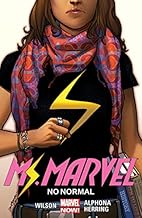
36. Ms. Marvel Vol 1: No Normal by G. Willow Wilson and Adrian Alphona

Maybe I'm finally getting the hang of reading graphic novels, because this one completely blew me away. It's about a 16-year-old Pakistani-American girl in Jersey City who's suddenly bestowed with shape-shifting superpowers--and then has to figure out how to control them and make use of them even while grounded. And the characters and setting are SO vivid.

Sunday, September 21, 2014

2014 Reading, Books 100-102

So I made it to 100 books on the year! I'm on pace for something like 140, but I'm going to try to push for 150 by 12/31.

100) The Scorpion's Sting by James Oakes.

This book was taken from a series of lectures the author gave at LSU, and it reads like it--quick, scholarly yet informal, and a good read if you come into it with a reasonably strong background on the American 19th century, in particular the Civil War and all the battles of abolitionism vs. slave state expansionism that made it inevitable.

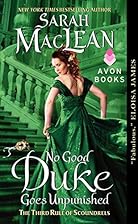
101) No Good Duke Goes Unpunished by Sarah MacLean


This isn't my usual kind of historical romance. I tend to prefer realistic, history-geek historicals, while this is more of a fantasy romp (though with enough angst that "romp" isn't quite the right word). I'm even wary of cute play-on-words titles and monochromatic covers featuring really big dresses--though I know very well how little control most authors have over titles and cover design, so that's not really fair of me.

But I decided to read it anyway, since it won this year's Rita for Best Historical Romance and because I enjoyed an interview the author gave on the Dear Bitches, Smart Author podcast. And I'm glad I did. It's a big, romantic, angsty story where the hero and heroine's chemistry and attraction are perfectly balanced by the difficult history between them (she went missing, presumed dead, and he fell under heavy suspicion for her murder). As such it was the perfect read for unwinding after a hectic week at work.

102) On Killing by Dave Grossman

Lately I've been listening to some of Dan Carlin's Hardcore History podcasts, and he recommended this book. I'm glad I read it, though I took some of the author's conclusions with a grain of salt based on multiple reviewer comments stating that his statistics on infantry soldiers not firing their weapons in WWII are dubious and/or subject to more than one interpretation. (And I'm really, REALLY inclined to disagree with the amount of blame he lays on video games and violent movies and TV for desensitizing civilians to violence. I think in some cases it may be AMONG the factors, but I doubt it's the major one leading to Columbine, VA Tech, etc.) But I found the many quotes from soldiers on their memories of combat illuminating, especially as someone who writes a lot of soldier characters in my fiction.

Thursday, July 24, 2014

2014 Reading, Books 73-78

73) The Third Plate: Field Notes on the Future of Food by Dan Barber

At first I wasn't sure whether I wanted to read yet another book about sustainable agriculture, getting back to our culinary roots, etc., but I'm glad I did. I found this book both illuminating and moving, and it strengthened my commitment to eating mindfully, being a patron of my local farmer's market, and generally supporting organic and/or sustainable agriculture whenever I can.

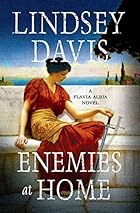
74) Enemies at Home by Lindsey Davis


The second book in the Flavia Albia series about Marcus Didius Falco's adopted daughter still doesn't have the wit and energy of the original series...but I still enjoy Albia as a character and visiting Davis's Rome, even this darker version under the Emperor Domitian. (The Falco books are set during Vespasian's reign.)

75) War! What is it Good For? by Ian Morris

An interesting and often thought-provoking "big picture" history whose basic thesis is that there's such a thing as "productive war" that despite its violence and atrocities leads to the formation of large, stable states and empires in which subjects/citizens are less likely to die violent deaths than they were in the tribal or small-state societies that preceded them. I'm not sure I agree with everything he says, but I'm glad to have his ideas added to my own big picture view of the world.

76) Sisterhood Everlasting by Ann Brashares

A "10 years later" sequel to the Sisterhood of the Traveling Pants YA series. At 29, the girls are still figuring out how to be adults--and while in some ways this made them feel unrealistically immature, hell, I'm...a fair bit older than 29, even if a really kind waitress at 74th Street Ale House did card me last month, and some days I feel like I'm still sorting it out. Anyway, it was good to drop in on these characters and see how they're doing with their lives, though I can't say much more than that without venturing into spoiler territory. And as for spoilers, I'll just say that while it has what we romance writers call an emotionally optimistic ending, it has enough sadness in it that the best the ending can do is be bittersweet.

77) The Shambling Guide to New York City by Mur Lafferty

There are so many urban fantasy and/or paranormal romance series out there these days wherein a human discovers a varied community of paranormal beings that it takes some doing to make such a series fresh and interesting, but this one about a human travel writer who goes to work for a vampire publisher to produce travel guides for the paranormal community pulls it off.

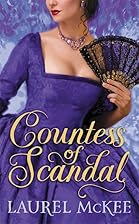
78) Countess of Scandal by Laurel McKee.


This is one of the best historical romances I've read in quite awhile. Set against the backdrop of the Irish Rebellion of 1798, it's a poignant, gritty and gripping tale of star-crossed lovers.

I just wish the cover and title gave any hint of that. If I hadn't known the author (Laurel also writes as Amanda McCabe, and we both blog at Risky Regencies), I never would've picked up this book because nothing about the branding and packaging says Ireland, poignant, or strongly grounded in real history. Which I feel does the book a disservice, because it's not finding readers like me, while it maybe would draw readers who enjoy the lighter, frothier historical romances, who'd then be disappointed to get something so gritty and angsty.

Sunday, June 15, 2014

2014 Reading, Books 61-63

61) The Girls of Atomic City by Denise Kiernan

A rambling yet absorbing look at the lives of the women--and some of the men--who helped develop the atomic bomb, focused heavily on Oak Ridge, TN, but with occasional side trips elsewhere. I'd never paid much attention to this aspect of WWII. Most of my interest, such as it is, has focused on the war in Europe and the Holocaust.

Growing up I was taught that the bombings of Hiroshima and Nagasaki were necessary to end the war because Japan just wasn't going to surrender, that the only other alternative was invading Japan at the loss of maybe 100,000 American lives. Now...well, I don't suppose I should be surprised to learn that this history wasn't as simple as I was taught in school and at my very patriotic mother's knee when nothing else is, either. Those weren't the only two alternatives--to name just one simple possibility, there was at least some talk of having Japanese envoys see a test of a nuclear weapon so they'd know what we could do. I suppose once the science was out there, development of atomic bombs was inevitable, and I'm pragmatist enough to accept that meant America had to have its own arsenal. For all the madness of it, Mutually Assured Destruction did keep the Cold War from going hot. But we could've won WWII without unleashing it.

That's not what this book is really about, though. It's a story about young women coming of age and building a community in a time of crisis, and I admired them and their spirit. Still, I set the book down sputtering about how there was a better way, not to mention my indignation at the account of testing the effects of radioactive materials on a patient who neither knew nor consented to such a test (NATURALLY a black construction worker at the site who'd come into the Oak Ridge hospital with broken legs but otherwise healthy), along with disbelief that the general in charge of the project recommended that the bomb's first target be Kyoto.

What a brilliant and appalling species we are.

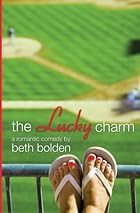
62) The Lucky Charm by Beth Bolden


I tend to be wary of both self-published books by authors without a traditional publishing background and sports romances. Too many of the former don't even have a nodding acquaintance with grammar, and too many of the latter don't seem driven by the love of the game itself. I've read baseball books where the author apparently didn't grasp how a pitching rotation works, and I've read reviews of football books where I'm not sure the author had ever watched an entire football game, much less one featuring the extremely famous team she was writing about.

But this book was talked up a few weeks ago on the Dear Bitches Smart Author podcast, and since I trust Jane and Sarah, I decided to give it a try. I'm glad I did. It's a sweet, engaging romantic comedy about a reluctant sideline reporter and a second baseman desperate to get the (obviously fictional) Portland Pioneers to a playoff spot for the first time. As a fan desperate to see the Seattle Mariners make it to the World Series for the first time, I found the premise entirely relatable, and the baseball felt real enough that I was never thrown out of the story as a serious fan.

63) Quiet: The Power of Introverts in a World That Can't Stop Talking by Susan Cain

I live in an entire household of introverts. I'm not the most extreme introvert in the world--and am arguably the most extroverted member of my immediate family--but I still come home every night exhausted from all the social engagement in my very pleasant job with fun coworkers that happens to be in a noisy, open-plan office. This book is a lovely affirmation of who introverts are and how challenging it can be to function in extroverted Western culture.

Tuesday, June 3, 2014

2014 Reading, Books 58-60

58) That Weekend... by Jennifer McKenzie

A nice, light contemporary romance that won my affection by being set in a big city (Vancouver) and having a character briefly return to his hometown (ANOTHER big city, namely Toronto), only to decide to come back to Vancouver as part of the happy ending. Yay big cities! Yay happiness being found outside of one's hometown! True, I could see the characters' Big Misunderstanding coming a mile away and wanted to scream at them to communicate already, but did I mention BIG CITY? In a contemporary romance?

59) The War in the Peninsula: Some Letters of a Lancashire Officer by Lt. Robert Knowles

This brief volume of letters written home by a British officer serving under Wellington in the Iberian Peninsula from 1811 till his death in battle in 1813 at the young age of 24 was originally published in 1913. The letters themselves aren't especially interesting--if you're looking for primary sources on the Peninsular War, you'd be better off with Harry Smith, Private Wheeler, Rifleman Costello, Wellington's own dispatches, and so on. Lt. Knowles wasn't given to vivid descriptions of his surroundings or the battles he fought in, so the letters are basically, "Dear Dad: Took a minor wound, don't worry about me, tell everyone hi and my brothers and sisters I love them, and, oh, by the way, send money because our pay is still behind." Only in early 19th century English, of course.

No, the most interesting thing about this book is the 1913 framing describing the battles and explaining what took place in between each battle. It's so clearly a document of its time, contrasting with both the mentality of the Napoleonic Era and our own with its fulsome praising of British glory and manhood and its assurances of the valor, honor, and cleverness of the French enemy. It's as if, oh, I dunno, the two nations had become allies in the interim, and everyone could see another war coming and was, like, foolishly spoiling for a fight.

60) His Uptown Girl by Liz Talley

Another big city contemporary romance, this one set in New Orleans. The hero is a musician looking to open a jazz nightclub across the street from the heroine's antique store, and she fears a nightclub will be bad for the classy, secure atmosphere their street has been trying to establish for itself...but that's the least of their conflicts. Both still bear scars from Katrina, and the heroine in particular is burdened with a ton of family baggage from her late husband's demise. A good book on hope and new beginnings.

Monday, November 11, 2013

For Veteran's Day...

In honor of all who served and in hopes of lasting peace, I'll let some of the most famous words written during WWI speak for themselves:

In Flanders Fields
by John McRae

In Flanders fields the poppies blow
      Between the crosses, row on row,
   That mark our place; and in the sky
   The larks, still bravely singing, fly
Scarce heard amid the guns below.

We are the Dead. Short days ago
We lived, felt dawn, saw sunset glow,
   Loved and were loved, and now we lie
         In Flanders fields.

Take up our quarrel with the foe:
To you from failing hands we throw
   The torch; be yours to hold it high.
   If ye break faith with us who die
We shall not sleep, though poppies grow
         In Flanders fields.

And, because I can never read it without tears, Kemal Ataturk's memorial to the ANZACs at Gallipoli:


Heroes who shed their blood and lost their lives! You are now lying in the soil of a friendly country. Therefore rest in peace. There is no difference between the Johnnies and Mehmets to us where they lie side by side here in this country of ours. You, the mothers, who sent their sons from far away countries wipe away your tears; your sons are now lying in our bosom and are in peace. After having lost their lives on this land they have become our sons as well.

Tuesday, September 3, 2013

2013 Reading - Books 82-84

82) Cockpit Confidential, by Patrick Smith.

Patrick Smith is a commercial pilot and the author of the Ask the Pilot blog (formerly a column at salon.com). I've always been fascinated by his columns even though I'm not really a frequent flyer, typically flying 2-3 times a year for family, vacation, and writers' conferences. (I'm just frequent enough to get impatient when I'm stuck behind truly infrequent flyers who don't have the check-in and security line process down cold.) He's made me a much less nervous flyer--I finally believe that turbulence won't knock my plane out of the sky. Anyway, this book is much like his blog, informative and snarky, and I recommend it for anyone who'd like a behind-the-scenes look at air travel.


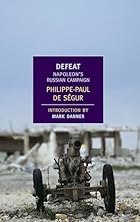
83) Defeat: Napoleon's Russian Campaign, by Philippe-Paul De Segur.

As I continue researching Napoleon's invasion of Russia for my next manuscript, I've moved on to campaign memoirs. This, written more than a decade after the fact by one of Napoleon's aides-de-camp from the campaign, is a fascinating and often horrifying read. It's a self-consciously literary saga of the Fall of the Hero, Occasioned by Hubris, but not made any less valuable as a primary source thereby--if anything, it's especially useful to see how the men of the Grande Armee made sense of their experiences, both at the time and in retrospect.

But what is up with that cover image? Would it have been so hard to find an image of a Napoleonic-era cannon?

84) Divergent, by Veronica Roth.

This seems to be the second-most popular dystopian YA series after The Hunger Games, and I picked it up out of curiosity after hearing about the upcoming movie. While I didn't completely buy into the concept of the faction-based social order (basically, your life is determined by whether you're more inclined to see courage, kindness, honesty, selflessness, or the pursuit of knowledge as the key virtue), I was able to accept the premise and let the story run with it, and me. It's compelling, and I've already put the second and upcoming third books in the series on my library holds list. That said, though I let my daughter read The Hunger Games and its sequels over the summer, I'm not going to tell her about these. It's not so much that they're more violent as that Tris feels less remorse about her kills than Katniss, and I'd rather my fourth grader stick to the latter as a role model for now.

Monday, August 19, 2013

2013 reading, books 79-81

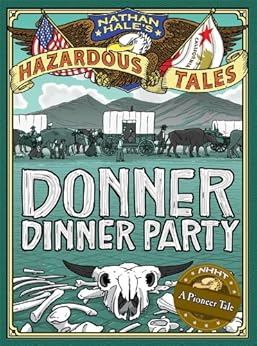
79) Donner Dinner Party, by Nathan Hale.


Miss Fraser and I are having a contest this summer to see who can read the most books from June 1 - Labor Day weekend. The winner gets an Amazon gift card. (Of course I'm not actually trying to beat my 9-year-old. I am trying to make sure she reads instead of spending the entire summer watching TV and playing video games by making the contest as close as possible.) Anyway, my husband, in his role as arbiter of the contest, has decreed that she gets to count this book toward her summer reading tally, but I don't, since it's a middle grade graphic novel. I read it as soon as Miss Fraser finished it anyway because these irreverent takes on famous incidents in American history are just so fun. Of course, any book about the Donner Party is going to be awfully grim in spots. Hale's snarky take actually pulled far fewer punches than the earnest novelization of the same events I read back when I was 9 or 10.

If you've got a middle grade child, I can't recommend the Hazardous Tales series highly enough. My daughter, though smart and geeky, isn't particularly interested in history, but she eats them up. I just wish there was a similar series on European history so I could get her interested in the stuff I write!

(The author really is named Nathan Hale, and the historical Nathan Hale narrates the series--he sees into his future through a Scheherezade plot device wherein as he's about to be hanged he's "taken up into history" and is therefore able to tell stories from America's future to delay his execution. You can read all about it at the series blog, and have I mentioned how awesome these are? Don't have your own middle-grade child? Get the series for your friends' kids, for your nieces and nephews, or to donate to your local library. Or just read them yourself.)

80) Borodino 1812, by Philip Haythornthwaite.

A detailed account of the Battle of Borodino framed by a brief summary of Napoleon's Russian campaign as a whole. I learned little I didn't already know, since I've been reading detailed accounts of the campaign, but I expect I'll refer to this book a lot once I settle into writing my manuscript that's set in Moscow and on the retreat for the sake of the maps, timelines, illustrations, and summary bios of important people on both sides.

81) From Father to Son, by Janice Kay Johnson.

A 2013 Rita finalist in Long Contemporary Series. See more detailed comments in yesterday's post.

Friday, May 17, 2013

2013 reading, books 46-48


46) Rick Steves' France 2013

More early scouting for my 2015 European trip, which continues to fill me with wistfulness that my 4-6 week dream trip of a lifetime (at least half of which will be spent in France) is going to fly by in an instant, and at best I'll see a tiny fraction of what I'd like. At this point the France plan, assuming I'll be coming in from Spain and working my way up to Belgium in time for the Waterloo anniversary, is to settle in to the Dordogne for at least 4 days, where I will eat amazing food and tour every prehistoric cave site open to visitors, head to Paris for another several days of museum and sightseeing, and then see either Normandy and the D-Day beaches or WWI battlefields around Verdun, because I probably won't have time for both. Maybe if money and work leave allow the 6-week trip, I'll be able to add Provence...or just spend more time in Paris!

47) The Way Back Home, by Barbara Freethy.

Chosen for my 2013 Rita-finalist reading challenge. Detailed commentary here.


48) Bloodlands: Europe Between Hitler and Stalin, by Timothy Snyder.

A dense, dark recounting of the mass murder of fourteen million people in twelve years (between 1932 and 1945) by Stalin's Soviet Union and Hitler's Germany in what the author describes as "the bloodlands"--i.e. those parts of Eastern Europe that fell under both Hitler's and Stalin's sway over the course of the era, basically Poland, the Ukraine, Belarus, Lithuania, Latvia, Estonia, and western Russia. Where most histories treat the various waves of murder as separate events, Snyder shows them as a kind of continuous flow from the collectivism famine in the Ukraine in the early 30's on through to the Holocaust. It's hard to take in, too horrific to make sense of, but I'm glad I read it nonetheless. And I like Snyder's closing point that it's not so much fourteen million victims dead as fourteen million times one lives ended--that each one of those people was an individual with a unique life and aspirations cut short, and the best way to honor them is to remember that, to not let them become a mass of dead as Stalin and Hitler wanted them to be.

Sunday, April 7, 2013

2013 Reading, Books 31-33


31) The Generals: American Military Command from World War II to Today, by Thomas Ricks.

I caught part of an author interview on NPR and determined to read this book, even though in general the second half of the 20th century isn't a corner of history that holds much interest for me. (Part of that is because it doesn't really seem like history--I was born in 1971, so I remember world events from, oh, 1979 or so on pretty clearly, albeit with the skewed perspective of having been a kid and therefore having absorbed unquestioningly my family and community's beliefs until I left home at 18.)

I'm glad I made the effort to read it. I feel like I have a much better understanding of the Korean and Vietnam Wars, which I've never much studied, and even of the First and Second Gulf Wars and the war in Afghanistan, which I lived through as an adult but focused on the politics rather than how effective the military was and what caused its weaknesses.

To sum up very succinctly, the WWII US Army was about as effective as an army could be, largely due to the leadership of Marshall and Eisenhower. But it imploded quickly, with the nadir of Vietnam, largely because of failures of leadership--the Army tended to award organization men who knew how to go along to get along rather than thoughtful, assertive leaders who understood strategy and where each war fit into national and world interest, and they failed to quickly relieve generals who couldn't hack it. After Vietnam the Army recovered tactically, such that the enlisted personnel and lower-ranking officers are excellent, but the system is still largely failing to produce gifted strategists to fill the rank of general.

Definitely a worthwhile read for anyone interested in military history or who wants to look at the last 60-70 years from another angle.

32) The Midwife, by Carolyn Davidson. My April read for Wendy the Super Librarian's 2013 TBR challenge. More detail to come April 17.


33) Suffering Succotash: A Picky Eater's Quest to Understand Why We Hate the Foods We Hate, by Stephanie V.W. Lucianovic.

I'm a recovering picky eater. As a child, I practically lived on Campbell's Chunky Chicken Noodle Soup, fried chicken (only I mostly ate the crust and left the meat behind), black-eyed peas (but all other legumes, especially lima beans, were GROSS), white bread wadded up into a ball (WHY, child me, WHY?), biscuits, chocolate milk, and a very narrow range of other foods. I still can't figure out how I managed to grow up 5'7" (average for a woman in my family), intelligent, and healthy rather than stunted, dull, and brittle-boned. Who knows? Maybe I was meant to be 6'0", have Nobel-prize-winner brains, and never to suffer from mild asthma. Or maybe the human body is more resilient than we generally think.

Now if anything I'm a foodie, though I still have some aversions I'm fighting to overcome--e.g. to me most fish has an off-puttingly squishy texture and tastes like a beach town smells on a hot, windless day--and I've decided I'm really not missing anything by avoiding brussel sprouts, asparagus, and desserts with raisins in them. I've never been tested for it, but given my dislike of coffee and beer (seriously, how can anyone stand anything that bitter?) I suspect I'm a supertaster. But within those constraints I'm an adventurous eater who'll try just about any cuisine, spice, or flavor combination.

And now I'm raising a picky 9-year-old. She's better than I was with fruits and vegetables--as long as they're raw and plain--but I worry how little protein she eats. She barely eats meat and doesn't like beans, which leaves her with peanut butter, yogurt, and milk. I want her to eat more variety so it'll be easier to feed her and take her to restaurants, and so she'll enjoy the pleasures of the table--and also because despite the fact she's tall for her age, has only had to stay home sick once this year, and just tested into the gifted program, I'm still afraid she'll turn up stunted, dull, and brittle-boned. I parent, therefore I worry.

This is more a light, quick read than an in-depth study with step-by-step recommendations for overcoming your own and your child's pickiness, but I liked its emphasis on never treating pickiness--your own or others'--as a character flaw. I mean, it's not like I find fish squishy and smelly on purpose, it just IS for me. I didn't choose my taste buds and my sense of smell any more than I chose to have brown eyes, straight hair, or astigmatism. It also made me realize how much of Miss Fraser's pickiness seems to be about control, so I'm going to phase out our one-bite rule, because she always and only takes one bite of ANYTHING not on her narrow preferred list. Even if she thinks it's OK, she never eats more. So I think that's control--we can make her eat one bite, but she won't let us convince her to LIKE cheese or steak or cooked broccoli or whatever. I think from now on we just put new foods on her plate along with at least one food we know she'll eat, even if that's just a slice of wheat bread or a handful of cherry tomatoes, and talk about the meal, how it was cooked, and how it tastes to us. When she's ready, she'll try more. If health becomes an issue, that's a different story, but for now her picky diet seems to be enough to keep her growing, and slightly on the slim side but not unhealthily thin, so I should probably worry less. (Heh. Yeah, right.)
Sunday, February 17, 2013

2013 Reading, Books 16-18


16) The Accidental City, by Lawrence Powell.

This was research for one of my works-in-progress, which isn't yet contracted but I hope will be a first half of 2014 release. My book starts in the aftermath of the Battle of New Orleans, and my heroine is a fourth-generation native of the city, so this book on New Orleans' first century of existence was extremely useful research and reasonably interesting to boot. If nothing else, I learned a lot more about French and Spanish 18th century imperial concerns than I ever knew before, not to mention some ripple effects of events I already knew well--e.g. a big part of the French population of New Orleans originated not from the original 18th century settlement, but from early 19th century refugees from the Haitian Revolution. They'd gone to Cuba first and were welcome there until Napoleon invaded Spain and set his brother on the throne, at which point French nationals were persona non grata in Spanish colonies, so they fled to the culturally familiar but by then American-held refuge of New Orleans.


17) The Caves of Perigord, by Martin Walker

An unusual book, sort of a braided novel set in the present (well, really around 2002, when the book was published), in the spring of 1944, and 17,000 years ago. It opens with a 30-something British officer, the son of a WWII veteran, turning up in an art auction house with a small rock painting of a bull he found among his late father's effects. The ancient art specialist recognizes it as being of the style and on the same type of stone as the Lascaux cave paintings, but no known cave is missing such a painting. As the modern characters investigate the mystery, we go back in time to see how the bull was painted and how it came to be in the possession of a British war hero.

I enjoyed it, but the interwoven story lines had the strange effect of slowing my reading by making it easier to put the book down between chapters, somehow. Though at the 2/3 point I did skip forward just to see how the prehistoric plot line would come out (semi-spoiler: not as tragically as I feared, but not happily enough to please my romantic side, either), then going back to catch up the two more modern threads.


18) The British at the Gates, by Robin Reilly.

More research for my work-in-progress, a detailed study of the New Orleans campaign of the War of 1812 and a solid general overview of the war as a whole. I liked this book because it seemed more sober and grounded in reality than most sources I've read on the battle--mostly they run to very pro-American, very eager to lionize Andrew Jackson as a human being as well as a general (which, American that I am, I still tend to gag on because of his role in Indian removal and the Trail of Tears), and to portraying the British as a bunch of bumbling incompetent idiots. (Which doesn't make much sense, because then where would the glory be in defeating them?)

This book's more measured approach left me far more willing to acknowledge that Jackson managed the defense of the city brilliantly. As for the British...well, the soldiers didn't lack for courage, and there are a few times where with 20-20 hindsight, one can imagine them winning. But what it comes down to is there are only so many brilliant commanders around at any given time, and I'd say Britain and America had one apiece in 1815. America's was in New Orleans, while Britain's, fortunately, was right where he needed to be in Europe, since Waterloo was a hell of a lot more important for Britain to win.


Monday, December 31, 2012

Best reads of 2012

When I looked over the 109 books I read in 2012, I couldn't come up with a tidy top ten. Instead, here are some books I especially enjoyed and would recommend to anyone who likes the genre in question. Note that few of them are 2012 releases. Except in a few cases, e.g. a new book by a favorite author in a series I love, I don't make it a priority to read books immediately after release.

Favorite Historical Romance (New)
My Fair Concubine, by Jeannie Lin (2012). My Fair Lady in Tang Dynasty China, and my favorite of Lin's books to date.

Favorite Historical Romance (Old But Now Available as an Ebook)
The Wives of Bowie Stone, by Maggie Osborne (1994). The hero is the most heroic and admirable bigamist you'll ever meet.

Favorite Contemporary Romance 
Doukakis's Apprentice, by Sarah Morgan (2011). I'm not usually a Harlequin Presents reader--I'm just not into wildly rich, wildly alpha heroes outside of SF or history, and even then I want them to be extra-awesome, brave, honorable, and brainy--we're talking Aral Vorkosigan or the Duke of Wellington here. But I've enjoyed Morgan's medical romances, and this book came so highly recommended that I tried it anyway. And I'm glad I did, hence its placement on this list.


Favorite YA Romance/Debut Book
Catching Jordan, by Miranda Kenneally (2011). Just a well-written book all around, and one of the few sports-themed romances I've read where I came away convinced the author thoroughly knows and loves the sport in question.

Wildly Popular Book That Actually Didn't Disappoint Me
The Hunger Games, by Suzanne Collins (2008). No need to say more, since I figure y'all have already heard of this one...


Favorite Mystery Discovered Randomly When I Heard Its Author Interviewed on NPR
Bruno, Chief of Police, by Martin Walker (2009). Lovely, leisurely-paced mystery that will make you wish yourself in France.

Favorite New Entries in Long-Running Series
Captain Vorpatril's Alliance, by Lois McMaster Bujold (2012). A lovely science fiction romance, albeit one that I doubt would have the same impact for readers lacking a long history with the characters and their world. Those readers should go grab Shards of Honor or The Warrior's Apprentice and start building that history!

The Scottish Prisoner, by Diana Gabaldon (2012). I really appreciate how Gabaldon writes soldiers. Jamie Fraser and John Grey remind me of the officers in my family and the ones I meet in my historical research in a way military heroes in historical romances often do not.

Most Useful Psychology/Self-Help Book
The Willpower Instinct, by Kelly McGonigal (2011). Explains why it's so hard to change and ways you can make it easier.

Best Food for My Inner History Geek
Moscow 1812, by Adam Zamoyski (2004). Gripping tale of Napoleon's invasion and retreat.

Guest of Honor, by Deborah Davis (2012). Race relations 100 years ago viewed through the lens of Teddy Roosevelt and Booker T Washington.

1493, by Charles C. Mann (2011). A history of the Columbian exchange and how it altered the course of the world in the past 500 years.

The Worst Hard Time, by Timothy Egan (2006). If you watched Ken Burns' The Dust Bowl and want to learn more, go here.


Sunday, November 11, 2012

Updates--reading, half NaNo, and blog tour

Wow, last week was quite a ride. Having a book release on Monday and a presidential election on Tuesday is...kind stressful, actually. I didn't get as much writing done as I'd hoped, though I've plenty of time to catch up and meet my November goal of 25,000 new words.

I did, however, get quite a bit of reading time in. Here are the latest on my trek to 100 books read in 2012:

90) Off Balance: A Memoir by Dominique Moceanu. Back when I was watching the 1996 Olympics, I remember disliking Dominique Moceanu because she came across in the media coverage somehow as a cutesy little spoiled brat. I feel like I should apologize for how severely I misjudged her, when actually she was stuck in an abusive coaching and home situation. I'm happy that she's developed a remarkable amount of resilience and seems to have a happy, stable life with her husband and two young children. I'm impressed, too, that she still loves gymnastics in spite of how its luminaries treated her and is trying to make it a better, healthier sport for the next generation.

91) New Orleans 1815: Andrew Jackson Crushes the British, by Tim Pickles. Research, as my current WIP features a British officer wounded at the Battle of New Orleans. A basic overview, heavily focused on the British experience and POV, which happens to be useful for my purposes.

92) Stealing Parker, by Miranda Kenneally. Earlier this year I read, and raved about, Kenneally's debut novel, Catching Jordan, about a girl quarterback good enough to realistically strive for a football scholarship. This book worked for me in a big way, too. I don't think I loved it quite as much--the whole "elite girl QB" plot of Catching Jordan gave me the same "somebody wrote a book just for ME?!" happiness I got when I first heard about His Majesty's Dragon. But Stealing Parker moved me. We meet the heroine in full crisis mode. Her mother left her father for a woman, and in their small, Southern, deeply religious town, the resulting scandal has thrown Parker's life into a tailspin. In some ways this is a painful read--17-year-old Parker gets involved with a 23-year-old teacher, and it's very much a slow motion train wreck on the page--but there's a certain saving grace and humor that kept it from ever getting unbearably dark.

93) Julie of the Wolves, by Jean Craighead George. A Newberry Award winner that I somehow missed reading in my own childhood--I read it yesterday to try to judge if it would be appropriate for my wolf-loving 8-year-old daughter. I think she's still a bit too young to understand and appreciate it, but in another year or two I bet she'll love such a tale of survival and finding your identity. I'm intrigued enough myself that I think I'll seek out the sequels.

As for writing...well, let's just say I didn't get any done Monday-Thursday, between An Infamous Marriage finally being out and the election. And when I went back to it this weekend, I realized the second scene had wandered off into the weeds, so I went back and rewrote.


Doesn't look too impressive, I know, but there's still plenty of time to get to 25K, especially with the 4-day holiday weekend coming up. We don't have any big plans--we live so far from our extended families that it's become a tradition to do a restaurant Thanksgiving dinner as our little family of three and travel at Christmas--so then I can write, write, write.

And, last but not least, the blog tour continues this week.

Monday 11/12 - Manga Maniac Cafe

Tuesday 11/13 - History Hoydens

Wednesday 11/14 - The Season for Romance

Thursday 11/15 - Book Lovers, Inc.

Friday 11/16 - The Romance Dish

Monday, July 2, 2012

Six months of reading

Now that we're halfway through 2012, I thought I'd list my top five reads of the year so far.  I feel like I've been reading a lot that, were I to grade them, would get B's--good, enjoyable books, or I wouldn't be finishing them but not memorable "wow" reads.  These five, however, are solid A's.  I'll have to see how many make my top ten at the end of the year.

In the order I read them...

1. Catching Jordan, by Miranda Kenneally. YA romance, about a girl who happens to be the best high school quarterback in Tennessee (her football pedigree reads like a fictionalized version of the Manning family) and dreams of landing a college scholarship--only to have her plans for her senior year put in jeopardy when one of the best h.s. quarterbacks in Texas moves to her town. As a tomboy (albeit a klutzy, non-athletic one) who grew up in SEC country, I'm the target audience for this one, but I'd recommend it for anyone, teen or adult, who enjoys YA romance.

2. The Hunger Games, by Suzanne Collins. Post-apocalyptic YA. I'm late to the party on this one, so I'll just say this was a case where I thought a wildly hyped book fully deserved its popularity.

3. Moscow 1812, by Adam Zamoyski. Nonfiction (history). Dense with human detail and never dry, this is what historical nonfiction should be, IMO.

4. The Scottish Prisoner, by Diana Gabaldon. Historical fiction with a touch of mystery. I blogged about this one just the other week, so all I'll say here is that Jamie Fraser and Lord John Grey are something I rarely encounter in fiction--officers and combat veterans who actually remind me of the Army men in my family and those I've read about in my military history research--and that I love the way they work together with grudging respect despite all the tensions and fault lines in their relationship.

5. Captain Vorpatril's Alliance, by Lois McMaster Bujold. Science fiction with a touch of crime caper and more than a touch of romance. This book doesn't officially release until November, but as soon as I heard Baen had the eARC up for purchase, I bought it. While it didn't topple Memory or A Civil Campaign from my all-time-favorite Vorkosigan books pedestal, it's a lovely, fun story and a worthy entry in one of the best series that's out there.

Monday, March 12, 2012

A reading post

I'm in deadline mode, so posting will probably be a wee bit sparse for the remainder of March, though I'll try to catch up on my cooking posts and keep up my reading diary. On that note, here's what I've read so far this month. Told you my 2012 reading pace would slow down!

31) A First-Rate Madness, by Nassir Ghaemi. The author, a psychiatrist, contends that in times of crisis the most effective leaders are often those who show some degree of mental illness, or at least highly atypical personalities, including conditions such as depression, which Winston Churchill and Abraham Lincoln among others seem to have had, and bipolar disorder, which seems a likely explanation for some of William Tecumseh Sherman's odd behavior over the course of his life. On the other hand, leaders with more typical, "sane" behavior patterns can be ineffective in a crisis–his examples include George McClellan, George W. Bush, and Tony Blair.

It's an intriguing book, but I'm not sure how much I buy his thesis. He contends that “normal” personalities are often closed to change or exploring new options, while those who struggle with depression are often more realistic and given to empathy, and those with manic symptoms can be more creative. It's not that he minimizes the real problems caused by mood disorders, but I have my doubts that George McClellan's failure, for example, was caused by his being too sane. I do, however, agree with what Ghaemi says about the importance of resilience, which often results from facing and overcoming a crisis or challenge–whether that is surviving a depressive episode as Winston Churchill did on several occasions, or becoming president despite major health problems as both Franklin Roosevelt and John F. Kennedy did, or any number of other options. By that token, I think McClellan's real problem is that for the first 35 years of his life everything came so easily to him that he had no resources for facing a challenge when one arose, which he might have developed even with a completely typical personality if he hadn't had the bad luck of so much early good luck, as it were.

Ghaemi's historical examples are all from the American Civil War and later, but with my historical interests I couldn't help but try to apply them to some of the more familiar figures of the Napoleonic Era. I know Wellington better than anyone else from that time, since he's a major character in an as-yet-unpublished alternative history manuscript I wrote, and I couldn't make him fit any of Ghaemi's boxes. He doesn't have a typical, conformist sort of personality, and he certainly fits Ghaemi's mold of being a better crisis leader (as wartime commander) than a peacetime leader (as prime minister). But he doesn't come across as depressive or manic, either. Resilient, certainly. He had a few traits of hyperthymia, another good-for-crisis-leadership personality type Ghaemi cites, but by no means all of them. (Prototypical hyperthymic leaders include FDR, JFK, and Bill Clinton. Wellington had the energy, ability to function on next to no sleep, and arguably the libido of the type, but NSM the extroversion and charm.) But if there's a name for that hyper-cool, hyper-controlled, no-drama-except-that-which-I-choose-for-effect personality that Wellington had, it's not in this book.

32) Dancing Into Battle: A Social History of the Battle of Waterloo, by Nick Foulkes. An interesting overview of the social milieu before and immediately after the great battle, focusing largely on the British in Brussels in the months, weeks, and days before the battle. Fascinating stuff, though I can't really find it shocking that people chose to party on the verge of war. What are they supposed to do, compose battle plans in their every waking hour or sit around contemplating their mortality? And it's a subtle thing, but Foulkes focuses more on how much was different 200 years ago than universal commonalities.

Tuesday, January 31, 2012

Books read, week of 1/31

I had a busy week of reading, though most of these books were extremely short.

13) Book Which Must Not Be Named (#2 of 8). Another Rita entry, like #11 a book filled with words collected into sentences, about which I will not comment.

14) Catching Jordan, by Miranda Kenneally. If this book was one of my Rita entries, I'd give it a perfect 9. It's a YA romance that I loved despite being, oh, 20-25 years older than the target audience. Aside from that, it could've been written for me. The heroine, daughter of an NFL quarterback, happens to be the best high school quarterback in her state, and she dreams of playing for an elite program in college. Given my love for college football (War Eagle!) and the fact I was always more one of the guys than a typically girly girl, I couldn't NOT enjoy this book.

15) Book Which Must Not Be Named (3 of 8): Another Rita entry.

16) Wellington's Generals, by Michael Barthorp. This one wouldn't be of interest to anyone who isn't a devoted scholar of Wellington's army, but for me it was a useful reminder of how the command structure worked and what divisional and brigade commanders did. (The hero of my current manuscript is a fictional major-general.) Also, I'll probably be scanning the color plates of generals in uniform to include with my cover art information sheet once the book is finished and in production. Not that I get too worked up over whether every single detail is right, but I'm hoping I can keep my streak of heroes actually wearing clothes on my covers going for at least a couple more books...

17) Book Which Must Not Be Name (4 of 8): Halfway through my Rita entries! Since I'm avoiding any hint of identifying information, I think I'm safe in saying this one was an especially sweet, satisfying mini-gem of a story. And it's NOT one of the ones I expected to enjoy based on the cover blurb. The one I thought I'd like best in fact got my lowest score so far.

18) Avatar: the Last Airbender - The Promise Part 1, by Michael Dante DiMartino, Brian Konietzko, Gene Luen Yang, and Bryan Gurihiru. I was late to the party on Avatar:TLAB, only discovering it last summer because my daughter is into anime, manga, and anime-esque shows and I thought she might like it. I'm glad I found it, because IMHO the storytelling is on par with Buffy or Deep Space 9 at their best (i.e. my all-time favorites). I'm even more excited for The Legend of Korra this summer than I am for the second season of Game of Thrones. So naturally I got the first entry in the comic book series bridging the two as soon as Amazon would bring it to my doorstep.

Tuesday, January 10, 2012

What I've read so far in 2012

LibraryThing has a 75 Books in 2012 Challenge. Before I went back to work full time when my daughter was 18 months old, I used to read 125-150 books a year. Since then, I haven't counted, because I've been afraid the number would depress me with its smallness. But this year I decided to shoot for 75. Surely that's doable.

Anyway, here's what I've read so far in 2012, shamelessly copied from my LibraryThing thread. Lest you think, "Of course you'll make 75. You're on pace for around 200," I was home sick with a bad cold for a good chunk of last week and had more reading time than normal.

1) Chain Reaction, by Simone Elkeles. It's the third book in a YA trilogy. Unusually gritty, sexy, and violent for its genre, but in a good way--at least to read. When I reflect that my daughter will be the age of the main characters in just 10 years, I hope that her life, like mine, will be tame, peaceful, and boring by comparison!

2) The Hundred Days, by Edith Saunders. This is only one of several Waterloo books I plan to read in the next couple months, since my current novel-in-process is partially set there. Saunders takes more of a big picture view than a lot of the Waterloo books on my shelves, so you don't get a play-by-play of the battle, but she includes more of the behind-the-scenes political machinations in France before and after the battle, which gives you a better sense of the context. And during the battle sections, she does a good job of showing what was happening with the Prussians, the French under Marshal Grouchy, etc. throughout the day, so you see their impact on the final outcome. She's no great lover of Napoleon, but neither am I, so that didn't bother me.

3) How Few Remain, by Harry Turtledove. An alternate history of a world where the South won the Civil War that held my interest, though somehow the characters (all real historical figures re-imagined) never quite hooked me. I don't know if there were too many point-of-view characters and plot threads or what, but instead of looking for the next book in the series, I was satisfied to find plot synopses online to see how Turtledove's version of the world plays out.

4) Heat Rises, by "Richard Castle." Castle is my current favorite TV series (mm, Nathan Fillion), and I've enjoyed the three "Nikki Heat" tie-in novels for all the meta references to the show. Obviously not the deepest book I've ever read, but in my view there's nothing wrong with reading purely for entertainment (I won't call it a guilty pleasure, even, because AFAIC there's nothing to be guilty about), and this was a perfect read for a day spent curled up in bed between doses of DayQuil.

5) Eat that Frog, by Brian Tracy. As a writer not yet in a position to quit my full-time day job, I tend to collect time management books. This one, picked up on the cheap a few days ago as a Kindle Daily Deal, is nothing I haven't heard before, but it was a quick read with some useful tips. Its focus is on identifying your most critical tasks and doing them first, since you really DON'T have time to finish everything.

6) Waterloo 1815 - Captain Mercer's Journal, by Cavalie Mercer, edited by WH Fichett, introduction by Bob Carruthers. Almost every nonfiction work on Waterloo I've read contains quotes from Cavalie Mercer, a British artillery captain with a gift for vivid, descriptive writing who took part in the battle. I didn't realize when I bought this book that it's an abridged version of his journal, and I'll probably keep digging around until I find the whole thing. For research purposes I was hoping for more details of day-to-day life in the weeks and days leading up to the battle than the abridgment provided.

Tuesday, December 13, 2011

Books read, week of 12/13

Even as I scramble my way through a hectic holiday season, I'm finding time to read. (I'm also waiting with eager anticipation to see what my LibraryThing Secret Santas got me and Miss Fraser. Neither of my Santees was much of a romance reader, but I'm hoping they'll like my fantasy choices. I got both of them some Bujold and one His Majesty's Dragon, which apparently was one of the top ten most-given books this year.)

In the meantime, I've been reading...

The Deception of the Emerald Ring, by Lauren Willig. I'm not always the biggest fan of spy Regencies, but I love this series because it never takes itself too seriously and yet is very intelligently written--not an easy combination to find.

Bold, Brave, and Born to Lead: Major General Isaac Brock and the Canadas, by Mary Beacock Fryer. As I'm sure the title reveals, I got this book as research for An Infamous Marriage. It's YA military history/biography. Not sure how wide a readership that gets, but it's just right for what I'm looking for--information to give my hero, a protege of Brock's, a backstory without getting bogged down in minutiae. (Brock, for those of you who've never heard of him--a group that would've included me until a few months ago!--was probably the most talented British commander in the War of 1812 and is regarded as a hero in Canada for blocking American attempts to invade in the summer and fall of 1812. Unfortunately for the British and their Native American allies, he died less than a year into the war.)

Raised Right, by Alisa Harris, is a memoir by a young woman raised in the Religious Right who's kept her faith but changed her politics...and that's really all I can say about it without saying more about religion and politics than I like to do on this blog. Suffice it to say that if it sounds relevant to you, you'd probably enjoy reading it.

Tuesday, December 6, 2011

Two weeks or so of books read

Now that I'm back in blog-land, here's what I can recall reading the last two weeks or so:

Hark! A Vagrant, by Kate Beaton. Just the best history geek and all-around geek comics going. If you don't already ready the web comic, you should, and if you do, you'll enjoy the book. (Here's one of my favorites that didn't make this collection.)

The Lady's Secret, by Joanna Chambers. I enjoyed this book (a debut historical romance from Carina Press), despite never 100% warming up to the hero, for the lovely writing and well-evoked period atmosphere. Mind you, there was nothing WRONG with the hero. He was just a bit too much the quintessential bored aristocrat for my taste, keeping in mind that my ideal of an aristocratic hero, real-life division, is Wellington, while the fictional division is a three-way tie between Peter Wimsey, Aral Vorkosigan, and Miles Vorkosigan. And obviously it's not every hero who can solve murders or help save Europe, Barrayar, or half the galaxy.

The Lady's Scandalous Night, by Jeannie Lin. A long short story/short novella set in Tang Dynasty China. The hero has been ordered to track down his best friend, now turned rebel, but the friend's sister will do whatever it takes to delay him and give her brother a chance to escape. Lin does a great job packing a lot of characterization into a story you can read in a single sitting.

To End All Wars, by Adam Hochschild. There's something uniquely appalling about World War I. Other wars have been senseless, and other wars have had appallingly high casualty rates, and I'm sure others set up the conditions for future conflicts, but I can't think of any other that combines all three factors to such a horrific degree. I find it almost too painful to read about, but Hochschild's history of those who fought the war and those who resisted it is too compelling to put down.

Thursday, September 8, 2011

What I've been reading lately

My library's summer reading challenge is over, but of course that doesn't mean I'll stop reading (though I probably won't try as hard as I did during the challenge to never read two books from the same genre in the same week, because sometimes I get in a mood where I only want nonfiction, or where nothing hits the spot like reading six trad Regencies in a row).

Anyway, here's my reading from the last week or so:

1) Rules of Attraction, by Simone Elkeles
Genre: YA romance

A sequel to 2010's Perfect Chemistry, also featuring a Mexican hero with gang ties he'd like to break and a privileged white girl heroine. A quick, page-turning read, and I liked how the hero and heroine sort of unpacked each other's protective layers to find the real person underneath.

2) You Are What You Speak, by Robert Lane Greene
Genre: Nonfiction (linguistics/history/current events)

I'll always pick up a book on linguistics, and I found this book especially interesting in discussing how language interacts with political identity, social class, and the like.

3) In the Garden of Beasts, by Erik Larson
Genre: Nonfiction (history)

Larson looks at Nazi Germany before WWII through the eyes of the American ambassador at the time (a history professor with no previous diplomatic experience) and his family. Reading it, I was for the first time able to do something with 1930's Germany I've been able to do fairly easily for other places and times--put myself in the place of people living through it who had no idea how it would turn out.

4) The Olympic Games: The First Thousand Years, by MI Finley & HW Pleket
Genre: Nonfiction (ancient history)

I've been renewing my interest in classical Greek history of late, hence this book. I liked it, but it'd be a bit dry for someone just starting to explore the period. If that's you, I'd suggest The Naked Olympics if you're interested in the early Games, or Persian Fire for the Greco-Persian Wars, or Lords of the Sea for the rise and fall of Athens.