I know I've been neglecting my planned weekly recipe and making-me-happy posts--currently the issue is I've caught yet another Doom Cold, one that's had me laid up since last Saturday night.
I am, however, starting to improve, at least enough to sit up at the computer for a few minutes to pass along my recommended reads from March, in the order I read them:
Revisionary by Jim C. Hines
The final entry in Hines's Magic Ex Libris series. If you haven't read any of it yet, you'll want to go back to the beginning and start with Libriomancer. And if you're a fan of the series but hadn't realized this book was out, now you know.
It's hard to say much about a book deep in a series without giving too much away, but the general concept is our contemporary world, but with magic fueled by the shared belief of readers in fictional worlds--i.e. a magic wielder could pull Lucy's healing cordial from the Chronicles of Narnia, the invisibility cloak from the Harry Potter series, and so on. If that sounds intriguing to you, you'll most likely love these books.
The Horse by Wendy Williams
If, like me, you were the kind of kid who read all the Black Stallion books and all your hometown library's Marguerite Henry (my favorites were King of the Wind and Black Gold because RACEHORSES), you'll love this book. Especially if, also like me, you have a lifelong interest in evolutionary biology and like to keep up with its latest developments. Maybe a narrow target market after all? But if you're in it, read this book.
Chaos Choreography by Seanan McGuire
Like Revisionary, I only recommend this book if you've read what's gone before--it's Book 5 in a series about a family from a society of monster hunters gone rogue after they realized that not all, nor even most, of said "monsters" were actually deserving of slaughter. Instead, they're cryptozoologists, who study and protect the cryptids of the world, but with plenty of action fighting their old monster-hunting colleagues and such cryptids as really do pose a threat. The books are funny, playful, fast-paced and exuberantly inventive. If you're a fan of Buffy the Vampire Slayer or Sleepy Hollow (especially in its crazy-good Season 1 incarnation), you need to read these books. Start with Discount Armageddon.
This latest entry returns to Verity, protagonist of the first two books, after spending Books 3 & 4 with her brother Alex, and IMHO it's the strongest story yet.
Showing posts with label science. Show all posts
Thursday, March 31, 2016
Monday, March 23, 2015
2015 Reading, Books 34-36
34. Animal Weapons: The Evolution of Battle by Douglas Emlen
More popular biology, this time comparing animal weapons to human weapons across military history. An interesting, quick read, though not the best book of its kind I've ever read. I could've done with fewer pictures and realistic line drawings of insects (you know how I mentioned above that I hate spiders? I really prefer my animals with four legs or fewer, thank you), but that was unavoidable given that the author's research specializes in dung beetles!
35. When Britain Burned the White House by Peter Snow
And my non-fiction binge continues, though I really need to get on the stick if I'm going to make ten books on the month... ::looks around for some SHORT books, whether fictional or otherwise::
Anyway, I recommend this book for anyone who'd like to know more about the War of 1812--though it doesn't get into the causes, the overall sweep of the war, or the peace negotiations except tangentially--it's strictly about the invasion of Washington and the bombardment of Baltimore. It's even-handed and sympathetic to both sides, which you'd think would be easy to do 200 years after the fact when writing about countries who are now firm allies, but you'd be surprised how many War of 1812/Napoleonic histories can't pull it off.
It's also a contrast to a lot of the military histories and biographies I've read because both sides were so plagued with indecisiveness, mediocre or downright incompetent commanders, etc. A nice reminder that the Napoleons and Wellingtons, the Hannibals and Scipio Africanuses, etc. are the exception rather than the rule! (Though it's an interesting exercise to imagine how the campaign would've played out if Andrew Jackson had commanded the American forces and Wellington had been persuaded to take on the British command. IMHO Wellington was by far the better commander, but Jackson was no slouch and home-field advantage counts for a lot in war.)
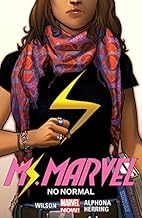
36. Ms. Marvel Vol 1: No Normal by G. Willow Wilson and Adrian Alphona
Maybe I'm finally getting the hang of reading graphic novels, because this one completely blew me away. It's about a 16-year-old Pakistani-American girl in Jersey City who's suddenly bestowed with shape-shifting superpowers--and then has to figure out how to control them and make use of them even while grounded. And the characters and setting are SO vivid.
More popular biology, this time comparing animal weapons to human weapons across military history. An interesting, quick read, though not the best book of its kind I've ever read. I could've done with fewer pictures and realistic line drawings of insects (you know how I mentioned above that I hate spiders? I really prefer my animals with four legs or fewer, thank you), but that was unavoidable given that the author's research specializes in dung beetles!
35. When Britain Burned the White House by Peter Snow
And my non-fiction binge continues, though I really need to get on the stick if I'm going to make ten books on the month... ::looks around for some SHORT books, whether fictional or otherwise::
Anyway, I recommend this book for anyone who'd like to know more about the War of 1812--though it doesn't get into the causes, the overall sweep of the war, or the peace negotiations except tangentially--it's strictly about the invasion of Washington and the bombardment of Baltimore. It's even-handed and sympathetic to both sides, which you'd think would be easy to do 200 years after the fact when writing about countries who are now firm allies, but you'd be surprised how many War of 1812/Napoleonic histories can't pull it off.
It's also a contrast to a lot of the military histories and biographies I've read because both sides were so plagued with indecisiveness, mediocre or downright incompetent commanders, etc. A nice reminder that the Napoleons and Wellingtons, the Hannibals and Scipio Africanuses, etc. are the exception rather than the rule! (Though it's an interesting exercise to imagine how the campaign would've played out if Andrew Jackson had commanded the American forces and Wellington had been persuaded to take on the British command. IMHO Wellington was by far the better commander, but Jackson was no slouch and home-field advantage counts for a lot in war.)
36. Ms. Marvel Vol 1: No Normal by G. Willow Wilson and Adrian Alphona
Maybe I'm finally getting the hang of reading graphic novels, because this one completely blew me away. It's about a 16-year-old Pakistani-American girl in Jersey City who's suddenly bestowed with shape-shifting superpowers--and then has to figure out how to control them and make use of them even while grounded. And the characters and setting are SO vivid.
Sunday, October 26, 2014
2014 Reading, Books 106-108
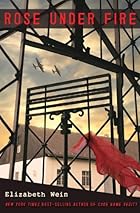
106) Rose Under Fire by Elizabeth Wein
I think this book is even better than Code Name Verity, which I read last month. The heroine, Rose, is a an American girl just out of high school who uses family connections (she has an English uncle who's a high-ranking officer) to get a job with the British Air Transport Auxiliary in 1944. After she's captured in France, she's taken to Ravensbruck--in what's probably an unlikely scenario, but one that makes a certain sense given the chaos of the late stages of the war. What follows is a moving story of survival and then bearing witness.
107) City of God: Faith in the Streets by Sara Miles
Sara Miles is one of my favorite Christian writers, not least because she found the Episcopal Church a few years before I did, albeit coming from the opposite direction--she wasn't a believer of any kind, while I was raised Southern Baptist and spent some time as two different flavors of Presbyterian along the way.
While I didn't love this book as much as I did Take This Bread or Jesus Freak, I still found it a very moving account of finding God in the midst of a city (San Francisco) all culminating in a public Ash Wednesday service--after all, in the Bible, Heaven is the city of God, not the floaty cloud-land of popular imagination nor the cross between New Zealand, the Scottish Highlands, and the more spectacular bits of the Pacific Coast I tend to picture.
108) Cat Sense by John Bradshaw
I got this book from the library after hearing the author interviewed on NPR because it sounded like the kind of practical science-geeky book I enjoy. And it proved to be what I was expecting--an account of how the domestic cat has evolved to live alongside humans, along with biological explanations of their behavior. The only downside is it left me a little wistful, because Mr Fraser is so severely allergic to cats that we can't have one in our household. (And yes, I know there are hairless cats. I just don't think it'd be that satisfying to own a cat without nice soft fur to stroke.)
I think this book is even better than Code Name Verity, which I read last month. The heroine, Rose, is a an American girl just out of high school who uses family connections (she has an English uncle who's a high-ranking officer) to get a job with the British Air Transport Auxiliary in 1944. After she's captured in France, she's taken to Ravensbruck--in what's probably an unlikely scenario, but one that makes a certain sense given the chaos of the late stages of the war. What follows is a moving story of survival and then bearing witness.
107) City of God: Faith in the Streets by Sara Miles
Sara Miles is one of my favorite Christian writers, not least because she found the Episcopal Church a few years before I did, albeit coming from the opposite direction--she wasn't a believer of any kind, while I was raised Southern Baptist and spent some time as two different flavors of Presbyterian along the way.
While I didn't love this book as much as I did Take This Bread or Jesus Freak, I still found it a very moving account of finding God in the midst of a city (San Francisco) all culminating in a public Ash Wednesday service--after all, in the Bible, Heaven is the city of God, not the floaty cloud-land of popular imagination nor the cross between New Zealand, the Scottish Highlands, and the more spectacular bits of the Pacific Coast I tend to picture.
108) Cat Sense by John Bradshaw
I got this book from the library after hearing the author interviewed on NPR because it sounded like the kind of practical science-geeky book I enjoy. And it proved to be what I was expecting--an account of how the domestic cat has evolved to live alongside humans, along with biological explanations of their behavior. The only downside is it left me a little wistful, because Mr Fraser is so severely allergic to cats that we can't have one in our household. (And yes, I know there are hairless cats. I just don't think it'd be that satisfying to own a cat without nice soft fur to stroke.)
Tuesday, May 13, 2014
2014 Reading, Books 49-54
49. Secrets of a Bollywood Marriage by Susanna Carr.
A quick, relaxing read that hit the spot during a stressful, busy time. That said, it's definitely a "fight-fight-kiss" romance, and the last fight came so close to the end of the book I wasn't sure I believed they'd learned how to communicate well enough for the kissing to be more frequent than the fighting in their future.
50) Time Warped: Unlocking the Mysteries of Time Perception by Claudia Hammond
If you like popular science or psychology books, I recommend this exploration of how we experience time. It's fun and readable without feeling dumbed down, and it closes with a practical chapter on how to better manage your experience of time, if not time itself.
51) Range of Ghosts by Elizabeth Bear.
Epic fantasy (which I love) with a twist (something I also generally love). The setting is recognizably similar to our world--something like Jacqueline Carey's Kushiel series in that the map will look really familiar, though the fantastical elements are more forward. However, rather than being set in an alternate Europe, this story centers on an alternate central Asia. It ranges across a large chunk of its globe through the eyes of multiple characters, but its focus is a young man named Temur, grandson of a Genghis Khan-like figure, though he's surrounded by a cast of strong women. I enjoyed it very much and plan to read the sequels.
52) Only Human by Gareth Roberts.
A Doctor Who novel, and one that felt like reading an average episode of the show...in a good way. Another fun, relaxing read as I fight my way through my current writing deadline.
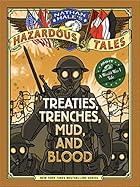
53) Nathan Hale's Hazardous Tales: Treaties, Trenches, Mud, and Blood by Nathan Hale.
The fourth in this series of graphic novels about American history manages, at least in my opinion, to make WWI palatable and understandable for its middle grade audience without dumbing down the material or treating the war lightly. FWIW, my 10-year-old pronounced it good, though not as funny as the previous three. If you've got a child in the right age group, get them these books. Schools don't teach enough history these days, in my not at all humble opinion, and this series strikes the perfect balance of informative and fun.
54) The Marathon Conspiracy by Gary Corby.
This must be my week for just-released Books 4. I enjoyed this latest entry in Corby's series about Nicolaos, a fictional elder brother of Socrates solving crime in Periclean Athens. Especially recommended for fans of Lindsey Davis's Falco series, since it has a similar combination of humor and modern tone with rich historical detail.
A quick, relaxing read that hit the spot during a stressful, busy time. That said, it's definitely a "fight-fight-kiss" romance, and the last fight came so close to the end of the book I wasn't sure I believed they'd learned how to communicate well enough for the kissing to be more frequent than the fighting in their future.
50) Time Warped: Unlocking the Mysteries of Time Perception by Claudia Hammond
If you like popular science or psychology books, I recommend this exploration of how we experience time. It's fun and readable without feeling dumbed down, and it closes with a practical chapter on how to better manage your experience of time, if not time itself.
51) Range of Ghosts by Elizabeth Bear.
Epic fantasy (which I love) with a twist (something I also generally love). The setting is recognizably similar to our world--something like Jacqueline Carey's Kushiel series in that the map will look really familiar, though the fantastical elements are more forward. However, rather than being set in an alternate Europe, this story centers on an alternate central Asia. It ranges across a large chunk of its globe through the eyes of multiple characters, but its focus is a young man named Temur, grandson of a Genghis Khan-like figure, though he's surrounded by a cast of strong women. I enjoyed it very much and plan to read the sequels.
52) Only Human by Gareth Roberts.
A Doctor Who novel, and one that felt like reading an average episode of the show...in a good way. Another fun, relaxing read as I fight my way through my current writing deadline.
53) Nathan Hale's Hazardous Tales: Treaties, Trenches, Mud, and Blood by Nathan Hale.
The fourth in this series of graphic novels about American history manages, at least in my opinion, to make WWI palatable and understandable for its middle grade audience without dumbing down the material or treating the war lightly. FWIW, my 10-year-old pronounced it good, though not as funny as the previous three. If you've got a child in the right age group, get them these books. Schools don't teach enough history these days, in my not at all humble opinion, and this series strikes the perfect balance of informative and fun.
54) The Marathon Conspiracy by Gary Corby.
This must be my week for just-released Books 4. I enjoyed this latest entry in Corby's series about Nicolaos, a fictional elder brother of Socrates solving crime in Periclean Athens. Especially recommended for fans of Lindsey Davis's Falco series, since it has a similar combination of humor and modern tone with rich historical detail.
Sunday, March 23, 2014
2014 Reading, Books 31-33
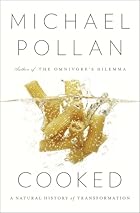
31) Cooked: A Natural History of Transformation, by Michael Pollan.
Michael Pollan is known for his writings about food, but before writing this book he didn't consider himself much of a cook. So he apprenticed himself to an assortment of culinary masters of the ancient elements of fire (in the form of whole-hog barbecue), water (braised meats and stews), air (yeast bread), and earth (fermented foods, e.g. sauerkraut, cheese, and beer). As always, he's an engaging storyteller, and reading his description of North Carolina whole-hog barbecue while eating a particularly dire Healthy Choice meal at lunch was almost enough to make me weep. (Don't try the Healthy Choice spaghetti and meatballs. It's disgusting--the pasta is mush and the meatballs are all but flavorless.)
The book is a giant hymn to the joys of slow food. Pollan understands we can't cook like this all the time, but I still would've liked to see him acknowledge how fast-but-real food is also a legitimate use of say, fire and water--I can do a nice quick stir-fry, f'rex. I'd also LOVE to see one of these writers who claim you can cook a meal in the time it would take to heat enough frozen meals for a family or wait for your pizza to be delivered factor in the time it takes to clean up your kitchen afterward. I love cooking. I hate cleaning up and washing dishes.
All that said, I did enjoy this book quite a bit. I can hardly wait till my current writing deadline is past, not least because I'll have time to do a lot of cooking again. And one of these days I want to invest in the right technology and take the time to learn to make my own barbecue. There is NO place in Seattle that makes 'cue that fully lives up to my Alabama definition of the word.
32) A Song at Twilight, by Pamela Sherwood.
One of the better historical romances I've read in a long time. It's set in the 1890's, an era that doesn't inherently grab my interest--if I go outside my Regency home turf I'd rather go earlier than later--but this is just a lovely, romantic story with beautiful writing. I especially liked the three-dimensional feel of the hero and heroine's world. They and the secondary characters felt solid and developed, and there was more to the characters' lives than just their romance--something you don't always get in the genre, but that I always appreciate for making the story feel more textured and plausible.
33) Catching Fire: How Cooking Made Us Human by Richard Wrangham.
Wrangam posits that the key to our transformation from relatively small-brained upright apes to humans may have been triggered by learning to master fire and use it to cook food. Cooked food is much easier to digest than raw--which means we spend less time chewing and digesting to get the calories we need. This allows us to "afford" a small gut and use that energy toward big brains instead. He also sees cooking as a key to the human social structure and as possibly more important to the development of marriage than sexual exclusivity. I.e. men may have wanted wives not so much to be sure of the paternity of their children (since that's never reliably worked and isn't even important in some hunter-gatherer societies) as to be sure of having a cooked meal waiting for them regardless of how the hunting went that day. By the same token, the woman with a husband gained a protector of her hearth and a share of any big kills the hunters made for herself and her children.
Certainly thought-provoking, and it's a short, quick read for a book on science.
Michael Pollan is known for his writings about food, but before writing this book he didn't consider himself much of a cook. So he apprenticed himself to an assortment of culinary masters of the ancient elements of fire (in the form of whole-hog barbecue), water (braised meats and stews), air (yeast bread), and earth (fermented foods, e.g. sauerkraut, cheese, and beer). As always, he's an engaging storyteller, and reading his description of North Carolina whole-hog barbecue while eating a particularly dire Healthy Choice meal at lunch was almost enough to make me weep. (Don't try the Healthy Choice spaghetti and meatballs. It's disgusting--the pasta is mush and the meatballs are all but flavorless.)
The book is a giant hymn to the joys of slow food. Pollan understands we can't cook like this all the time, but I still would've liked to see him acknowledge how fast-but-real food is also a legitimate use of say, fire and water--I can do a nice quick stir-fry, f'rex. I'd also LOVE to see one of these writers who claim you can cook a meal in the time it would take to heat enough frozen meals for a family or wait for your pizza to be delivered factor in the time it takes to clean up your kitchen afterward. I love cooking. I hate cleaning up and washing dishes.
All that said, I did enjoy this book quite a bit. I can hardly wait till my current writing deadline is past, not least because I'll have time to do a lot of cooking again. And one of these days I want to invest in the right technology and take the time to learn to make my own barbecue. There is NO place in Seattle that makes 'cue that fully lives up to my Alabama definition of the word.
32) A Song at Twilight, by Pamela Sherwood.
One of the better historical romances I've read in a long time. It's set in the 1890's, an era that doesn't inherently grab my interest--if I go outside my Regency home turf I'd rather go earlier than later--but this is just a lovely, romantic story with beautiful writing. I especially liked the three-dimensional feel of the hero and heroine's world. They and the secondary characters felt solid and developed, and there was more to the characters' lives than just their romance--something you don't always get in the genre, but that I always appreciate for making the story feel more textured and plausible.
33) Catching Fire: How Cooking Made Us Human by Richard Wrangham.
Wrangam posits that the key to our transformation from relatively small-brained upright apes to humans may have been triggered by learning to master fire and use it to cook food. Cooked food is much easier to digest than raw--which means we spend less time chewing and digesting to get the calories we need. This allows us to "afford" a small gut and use that energy toward big brains instead. He also sees cooking as a key to the human social structure and as possibly more important to the development of marriage than sexual exclusivity. I.e. men may have wanted wives not so much to be sure of the paternity of their children (since that's never reliably worked and isn't even important in some hunter-gatherer societies) as to be sure of having a cooked meal waiting for them regardless of how the hunting went that day. By the same token, the woman with a husband gained a protector of her hearth and a share of any big kills the hunters made for herself and her children.
Certainly thought-provoking, and it's a short, quick read for a book on science.
Labels:
cooking,
evolutionary biology,
historical romance,
science
Tuesday, October 22, 2013
2013 Reading, Books 94-96
94) Discount Armageddon, by Seanan McGuire.
Wow, that was fun. Not to mention smart, sexy, hilarious, and adventurous, and generally everything you'd look for in the best kind of escapist read. If you like Buffy the Vampire Slayer, read this book. Though McGuire has her own strong voice, there's a similar sensibility at work.
For the rest of my reading in the past ten days or so, I went with nonfiction of the "We're doomed! DOOMED, I say!" variety:
95) The Attacking Ocean: The Past, Present, and Future of Rising Sea Levels, by Brian Fagan.
This book started out fascinating, with an account of how various ancient civilizations interacted with their shifting rivers and coastlines, and then turned depressing as it reached the modern era, where population growth crowds more and more people against coasts where rising sea levels lead to increased floods and deadly storm surges. I happened to read this during the waning days of the government shutdown, when it honestly looked my country was going to default on its debts and drag the world economy down with it for no good reason, which made it extra depressing. I try to feel optimistic about the world I'm bequeathing to my daughter, but sometimes it's hard.
96) Full Rip 9.0: The Next Big Earthquake in the Pacific Northwest, by Sandi Doughton.
I meant to go with something nice and light for my next book, but somehow ended up with "Oh God, Oh God, we're all gonna die," Local Edition. (It's due back at the library in a few days, so I needed to get to it.)
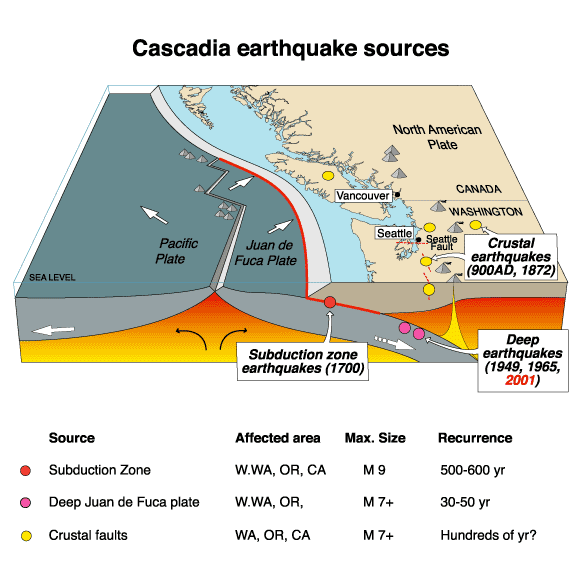
I moved to Seattle from the all but seismically dormant eastern half of the country in 1999 (grew up in Alabama, spent a good chunk of my 20's in Philadelphia), and experienced my first earthquake, the 6.8 Nisqually quake, in early 2001. It was scary, for sure, but did relatively light damage for its magnitude because its epicenter was so deep. We get that type of high-6/low-7 magnitude quake every few decades here, and up until very recently scientists thought that was the worst the Northwest had to worry about.
But then scientists started noticing signs of violent coastal upheaval (sand layers carried far inland by a tsunami, "ghost forests" of trees that had clearly been killed together when the ground beneath them heaved) and paying attention to Native American oral histories that hinted at a massive quake and flooding less than ten generations back. Eventually they used tree-ring analysis of the ghost forests to show that the trees had died between the 1699 and 1700 growing seasons, and found a record of an "orphan tsunami" that struck Japan on January 26, 1700. Between the local evidence in the landscape and the size of the tsunami that made it all the way across the Pacific, the 1700 quake is estimated as between 8.7 and 9.2. Very comparable to the 2011 Tohoku quake, in other words. Evidence suggests major subduction zone quakes of this type every 200-500 years.
To add to the fun, scientists also observed evidence of shallow faults all around the region, including the Seattle Fault, which cuts right through the south end of the city. These faults slip very rarely--the last Seattle Fault quake was over 1000 years ago--but are capable of producing a 7.0 or so that would do far more damage than our "usual" sort-of-big ones because it's a shallow fault. Think something similar to the 1995 Kobe quake.
So, the Northwest's worst-case scenarios are pretty damn bad. A repeat of the 1700 quake and tsunami would probably have a lower death toll than Tohoku because our coastal population density is lower, but it could easily rival the 1900 Galveston Hurricane for the deadliest natural disaster to strike the US--and it's by no means certain Portland, Seattle, and Vancouver wouldn't sustain severe damage of their own from the distant, sustained shake of a 9.0 off the coast. When our cities were built, no one even knew such disasters were a possibility, and as a region we're less prepared than Japan, either in terms of building codes or public awareness and education. But living in Seattle as I do, the Seattle Fault is my true doomsday scenario. We are SO not ready for a Kobe-equivalent quake here.
Still, this book didn't depress me as much as my last read, I think because it's such a local disaster. Even living here, I'm less spooked by "The Northwest could be DOOMED!" than "Mankind could be DOOMED, and it's our own short-sighted, over-populating, carbon-emitting fault!" After all, we're at least trying to understand the seismic hazards and mitigate them. I hope I never live to see either of our Really Truly Big Ones--not least because of the non-zero chance I wouldn't live to see anything AFTER that!--but if I do, I'll get through and rebuild. Like people do.
Wow, that was fun. Not to mention smart, sexy, hilarious, and adventurous, and generally everything you'd look for in the best kind of escapist read. If you like Buffy the Vampire Slayer, read this book. Though McGuire has her own strong voice, there's a similar sensibility at work.
For the rest of my reading in the past ten days or so, I went with nonfiction of the "We're doomed! DOOMED, I say!" variety:
95) The Attacking Ocean: The Past, Present, and Future of Rising Sea Levels, by Brian Fagan.
This book started out fascinating, with an account of how various ancient civilizations interacted with their shifting rivers and coastlines, and then turned depressing as it reached the modern era, where population growth crowds more and more people against coasts where rising sea levels lead to increased floods and deadly storm surges. I happened to read this during the waning days of the government shutdown, when it honestly looked my country was going to default on its debts and drag the world economy down with it for no good reason, which made it extra depressing. I try to feel optimistic about the world I'm bequeathing to my daughter, but sometimes it's hard.
96) Full Rip 9.0: The Next Big Earthquake in the Pacific Northwest, by Sandi Doughton.
I meant to go with something nice and light for my next book, but somehow ended up with "Oh God, Oh God, we're all gonna die," Local Edition. (It's due back at the library in a few days, so I needed to get to it.)
I moved to Seattle from the all but seismically dormant eastern half of the country in 1999 (grew up in Alabama, spent a good chunk of my 20's in Philadelphia), and experienced my first earthquake, the 6.8 Nisqually quake, in early 2001. It was scary, for sure, but did relatively light damage for its magnitude because its epicenter was so deep. We get that type of high-6/low-7 magnitude quake every few decades here, and up until very recently scientists thought that was the worst the Northwest had to worry about.
But then scientists started noticing signs of violent coastal upheaval (sand layers carried far inland by a tsunami, "ghost forests" of trees that had clearly been killed together when the ground beneath them heaved) and paying attention to Native American oral histories that hinted at a massive quake and flooding less than ten generations back. Eventually they used tree-ring analysis of the ghost forests to show that the trees had died between the 1699 and 1700 growing seasons, and found a record of an "orphan tsunami" that struck Japan on January 26, 1700. Between the local evidence in the landscape and the size of the tsunami that made it all the way across the Pacific, the 1700 quake is estimated as between 8.7 and 9.2. Very comparable to the 2011 Tohoku quake, in other words. Evidence suggests major subduction zone quakes of this type every 200-500 years.
To add to the fun, scientists also observed evidence of shallow faults all around the region, including the Seattle Fault, which cuts right through the south end of the city. These faults slip very rarely--the last Seattle Fault quake was over 1000 years ago--but are capable of producing a 7.0 or so that would do far more damage than our "usual" sort-of-big ones because it's a shallow fault. Think something similar to the 1995 Kobe quake.
So, the Northwest's worst-case scenarios are pretty damn bad. A repeat of the 1700 quake and tsunami would probably have a lower death toll than Tohoku because our coastal population density is lower, but it could easily rival the 1900 Galveston Hurricane for the deadliest natural disaster to strike the US--and it's by no means certain Portland, Seattle, and Vancouver wouldn't sustain severe damage of their own from the distant, sustained shake of a 9.0 off the coast. When our cities were built, no one even knew such disasters were a possibility, and as a region we're less prepared than Japan, either in terms of building codes or public awareness and education. But living in Seattle as I do, the Seattle Fault is my true doomsday scenario. We are SO not ready for a Kobe-equivalent quake here.
Still, this book didn't depress me as much as my last read, I think because it's such a local disaster. Even living here, I'm less spooked by "The Northwest could be DOOMED!" than "Mankind could be DOOMED, and it's our own short-sighted, over-populating, carbon-emitting fault!" After all, we're at least trying to understand the seismic hazards and mitigate them. I hope I never live to see either of our Really Truly Big Ones--not least because of the non-zero chance I wouldn't live to see anything AFTER that!--but if I do, I'll get through and rebuild. Like people do.
Labels:
Cascadia,
climatology,
earthquakes,
nonfiction,
oceanography,
science,
Seattle Fault,
seismology,
urban fantasy
Subscribe to:
Posts (Atom)