97) Good God, Lousy World & Me by Holly Burkhalter
This was a quick read, sort of a faith memoir of a human rights activist who grew up Christian, but lost her faith over the problem of believing in a powerful, loving God in a world full of suffering an evil. She came back to the church in midlife even though she still doesn't feel she has all the answers, basically because she came to see God's presence in fighting for justice and against suffering. I'm always interested in such books because of my own faith journey (though I struggle more with the problem of the vastness of the universe and the insignificance of this one tiny planet), though this book didn't resonate so strongly with me as, say, Take This Bread.
98) The Napoleonic Revolution by Robert B. Holtman
Short enough to be a quick read, dry enough that you'll spread that quick read across multiple sessions, this is an overview on Napoleon's impact on 19th and 20th century France, Europe, and the wider world. While it's not going to make any of my best-reads lists, it was a useful reminder to me as someone who tends to come at the Napoleonic era with a military historian's bias and an Anglocentric perspective that I'm often only looking at one section of the puzzle.
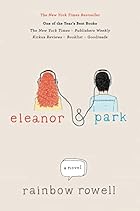
99) Eleanor & Park by Rainbow Rowell
This book received so many rave reviews I was almost afraid to try it lest my high expectations be disappointed. I shouldn't have worried. This is a beautifully written story of first love, heartbreaking but with just enough hope that I finished it smiling rather than weeping. I was looking at my reading list for the year and thinking I'd read a lot of enjoyable books but very few that had blown me away. This blew me away. Definitely will be on my top ten list for the year.
Showing posts with label Napoleon. Show all posts
Wednesday, September 17, 2014
Tuesday, September 3, 2013
2013 Reading - Books 82-84
82) Cockpit Confidential, by Patrick Smith.
Patrick Smith is a commercial pilot and the author of the Ask the Pilot blog (formerly a column at salon.com). I've always been fascinated by his columns even though I'm not really a frequent flyer, typically flying 2-3 times a year for family, vacation, and writers' conferences. (I'm just frequent enough to get impatient when I'm stuck behind truly infrequent flyers who don't have the check-in and security line process down cold.) He's made me a much less nervous flyer--I finally believe that turbulence won't knock my plane out of the sky. Anyway, this book is much like his blog, informative and snarky, and I recommend it for anyone who'd like a behind-the-scenes look at air travel.
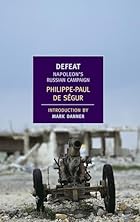
83) Defeat: Napoleon's Russian Campaign, by Philippe-Paul De Segur.
As I continue researching Napoleon's invasion of Russia for my next manuscript, I've moved on to campaign memoirs. This, written more than a decade after the fact by one of Napoleon's aides-de-camp from the campaign, is a fascinating and often horrifying read. It's a self-consciously literary saga of the Fall of the Hero, Occasioned by Hubris, but not made any less valuable as a primary source thereby--if anything, it's especially useful to see how the men of the Grande Armee made sense of their experiences, both at the time and in retrospect.
But what is up with that cover image? Would it have been so hard to find an image of a Napoleonic-era cannon?
84) Divergent, by Veronica Roth.
This seems to be the second-most popular dystopian YA series after The Hunger Games, and I picked it up out of curiosity after hearing about the upcoming movie. While I didn't completely buy into the concept of the faction-based social order (basically, your life is determined by whether you're more inclined to see courage, kindness, honesty, selflessness, or the pursuit of knowledge as the key virtue), I was able to accept the premise and let the story run with it, and me. It's compelling, and I've already put the second and upcoming third books in the series on my library holds list. That said, though I let my daughter read The Hunger Games and its sequels over the summer, I'm not going to tell her about these. It's not so much that they're more violent as that Tris feels less remorse about her kills than Katniss, and I'd rather my fourth grader stick to the latter as a role model for now.
Patrick Smith is a commercial pilot and the author of the Ask the Pilot blog (formerly a column at salon.com). I've always been fascinated by his columns even though I'm not really a frequent flyer, typically flying 2-3 times a year for family, vacation, and writers' conferences. (I'm just frequent enough to get impatient when I'm stuck behind truly infrequent flyers who don't have the check-in and security line process down cold.) He's made me a much less nervous flyer--I finally believe that turbulence won't knock my plane out of the sky. Anyway, this book is much like his blog, informative and snarky, and I recommend it for anyone who'd like a behind-the-scenes look at air travel.
83) Defeat: Napoleon's Russian Campaign, by Philippe-Paul De Segur.
As I continue researching Napoleon's invasion of Russia for my next manuscript, I've moved on to campaign memoirs. This, written more than a decade after the fact by one of Napoleon's aides-de-camp from the campaign, is a fascinating and often horrifying read. It's a self-consciously literary saga of the Fall of the Hero, Occasioned by Hubris, but not made any less valuable as a primary source thereby--if anything, it's especially useful to see how the men of the Grande Armee made sense of their experiences, both at the time and in retrospect.
But what is up with that cover image? Would it have been so hard to find an image of a Napoleonic-era cannon?
84) Divergent, by Veronica Roth.
This seems to be the second-most popular dystopian YA series after The Hunger Games, and I picked it up out of curiosity after hearing about the upcoming movie. While I didn't completely buy into the concept of the faction-based social order (basically, your life is determined by whether you're more inclined to see courage, kindness, honesty, selflessness, or the pursuit of knowledge as the key virtue), I was able to accept the premise and let the story run with it, and me. It's compelling, and I've already put the second and upcoming third books in the series on my library holds list. That said, though I let my daughter read The Hunger Games and its sequels over the summer, I'm not going to tell her about these. It's not so much that they're more violent as that Tris feels less remorse about her kills than Katniss, and I'd rather my fourth grader stick to the latter as a role model for now.
Labels:
aviation,
dystopia,
invasion of Russia,
military history,
Napoleon,
nonfiction,
reading,
travel,
YA
Saturday, June 8, 2013
2013 Reading, Books 55-57
55) Heart of a Knight, by Barbara Samuel.
For the 2013 TBR Challenge. Detailed post to come on the 19th.
56) Napoleon in Russia, by Alan Palmer.
My newest work-in-progress is about Napoleon's invasion of Russia--really, more about his retreat from it--so I'll be reading many books in this vein in the coming months. This is one I'd recommend just as much for readers with an interest in the era as Moscow 1812. Both are highly readable narrative histories with just the right level of detail to make a good story, and I found myself reading Palmer's book just as feverishly as if I didn't know what happened at Borodino or the Berezina.
57) Jenna Starborn, by Sharon Shinn.
Jane Eyre IN SPACE! Literally. It's a plot point by plot point, character by character retelling of Jane Eyre set in a future world with stratifications in status and wealth much like those of Victorian England. It worked for me, though more as a way of revisiting my youthful love for Jane Eyre than as a story in its own right. Do note that I got it from the library--I wouldn't pay $18.99 for the Kindle edition of any book that's been out since 2002, though in general I'm happy to pay about the same price as I used to for a mass market paperback, and I wouldn't complain about $18.99 if I wanted to read, say, the new George R.R. Martin whenever he finishes writing it the instant it releases. But for an eleven-year-old book? I don't get it.
For the 2013 TBR Challenge. Detailed post to come on the 19th.
56) Napoleon in Russia, by Alan Palmer.
My newest work-in-progress is about Napoleon's invasion of Russia--really, more about his retreat from it--so I'll be reading many books in this vein in the coming months. This is one I'd recommend just as much for readers with an interest in the era as Moscow 1812. Both are highly readable narrative histories with just the right level of detail to make a good story, and I found myself reading Palmer's book just as feverishly as if I didn't know what happened at Borodino or the Berezina.
57) Jenna Starborn, by Sharon Shinn.
Jane Eyre IN SPACE! Literally. It's a plot point by plot point, character by character retelling of Jane Eyre set in a future world with stratifications in status and wealth much like those of Victorian England. It worked for me, though more as a way of revisiting my youthful love for Jane Eyre than as a story in its own right. Do note that I got it from the library--I wouldn't pay $18.99 for the Kindle edition of any book that's been out since 2002, though in general I'm happy to pay about the same price as I used to for a mass market paperback, and I wouldn't complain about $18.99 if I wanted to read, say, the new George R.R. Martin whenever he finishes writing it the instant it releases. But for an eleven-year-old book? I don't get it.
Saturday, June 9, 2012
Books read - start to summer reading
I've signed up for the Seattle Public Library's Adult Summer Reading Program. Every three books I read this summer, I earn another entry in a drawing to win a Kindle. Mind you, I already own a perfectly good second-generation regular Kindle AND a Fire, but this is still enough to get my competitive juices flowing. If I win, I'll just give it to Miss Fraser (who otherwise will get her first e-reader for Christmas) or use it as a raffle basket prize at ECWC. That said, I've given myself something of a handicap in speed-reading this summer in that I've started reading War and Peace on my lunch hours at work, so that's half an hour a day not going to nice short-to-medium-length novels.
Anything I finish between June 1 and August 25 counts toward the reading challenge. (August 25 because the library shuts down for a week before Labor Day because of budget cuts, which has been going on since the dot-com bust recession back in 2001 or so, and I still think it's depressing. Really, it's not helping the economy to furlough a bunch of librarians and shut down a service that for many is their only access to books, information, and the internet, and what we need is more stimulus and to save worry about deficits for when unemployment gets back down to 5% or so, but if I keep going this post will get very political very fast.)
Anyway, books. I finished #48 before the challenge started, so I've just earned my first entry in the drawing.
48) If Walls Could Talk, by Lucy Worsley. An overview of how the major rooms in our houses and their furnishings and functions have changed over the past few centuries, focusing on Britain but with occasional comments on American and French homes. It doesn't go into a lot of depth, but it makes you think on how changeable the most basic functions of everyday life actually are.
49) Moscow 1812: Napoleon's Fatal March, by Adam Zamoyski. I've never been an admirer of Napoleon's, and every time I read about that campaign I want to go back in time and just scream at him or something. So many wrong-headed choices that led to so much death. That said...I now have some story ideas based around the invasion.
50) Avatar: The Last Airbender - The Promise Part 2, by Gene Luen Yang, Michael Dante DiMartino, and Bryan Konietzko. Second in a graphic novel trilogy filling in some of the blanks between The Last Airbender and The Legend of Korra, and likely to be the only overlap point between my summer reading and my daughter's.
51) Too Hot to Touch, by Louisa Edwards. Not only does Edwards write a sexy romance, her love of food and big city life shines through. Her books are among the few contemporary romances I seek out.
Labels:
Avatar,
contemporary romance,
graphic novels,
Napoleon,
reading,
social history
Tuesday, January 17, 2012
Another week's reading
I've been neglecting this blog shamefully of late, largely due to a pinched nerve flareup. I'm trying to save my best computer time for my writing. But I never stop reading, and here are books 7-9 toward my goal of reading 75 books in 2012:
7) Margarita, by Joan Wolf. This is a traditional Regency romance--i.e. a subgenre with less sex and often a bit more history than you generally find in historical romance. They're rare in print publishing nowadays, but more and more trad authors are reviving their backlists as ebooks, as is the case with this book, originally released in 1982.
Wolf delves deeply into the actual history of the time period even by the standards of the subgenre. In this case the heroine is the daughter of a Venezuelan man and an English woman, and she loses all her family fighting in Bolivar's revolution. She goes to her English grandfather for lack of any other options, and after he dies she finds herself married to the cousin who inherited his title and estates. It contains multiple elements that would be a tough sell in today's market--very young heroine (17 when she marries), a rather distant omniscient POV, a hero who doesn't give up his mistresses until long after marrying the heroine, and a hero and heroine who are cousins (anathema to your typical American reader, though I've read Mansfield Park and Rose in Bloom often enough that I can put on a 19th century brain for the duration of the read and not be bothered by it). I enjoyed it, though I don't think I'd want omniscient POV in most of my romance reading.
8) Cinderella Ate my Daughter, by Peggy Orenstein. I heard Orenstein interviewed on Fresh Air a few weeks ago and knew I had to read this book. She's a few years older than I am, and her daughter is about the same age as mine, so we're both experiencing a certain disconnect in seeing the very pink, princessy, and girlie-girl culture our daughters are pushed to conform to--one that's in many ways more constricting than what we knew in the 70's despite all the strides women have made in the past 30-40 years.
It's a quick read, and one that doesn't pretend to have all the answers, either to why the cultural shift happened or how to raise a confident, true-to-herself daughter in the midst of it. (For the former, she points to similar moves to shelter and cherish daughters during previous economic and cultural crises.) Speaking from personal experience, one of the persistent and unexpected challenges of parenting Miss Fraser has been the fact she DOESN'T embrace her surrounding culture. She's a tomboy--not unusually so, but she reminds me of myself at the same age, more interested in animals and animal stories than dolls or fairy tales, and she doesn't like pastels or fussy, dressy clothes. One day when she was barely 2 and just starting to get really verbal, she pushed away a pink floral-print set of overalls I was trying to dress her in and said, "No flow-flers! No pink!" And she has stuck to that line ever since, though she'll wear fuchsia or raspberry shades. When her grandmother or aunts and uncles try to call her princess, she frowns and says, "I'm NOT a PRINCESS!" I wouldn't have her any other way, but it makes her surprisingly hard to shop for, given how gender-coded and branded so much children's merchandise is these days.
Obviously, this isn't a major problem. My daughter is happy and has plenty of friends at school. It just bugs me that this pattern exists and is so strong. Miss Fraser is fully aware that the mold exists and she doesn't quite fit it. We've talked a lot, at her initiation, about the different ways of being a girl, and how it's fine for her to be, as she puts it, "a little bit girlie," because she enjoys Littlest Pet Shop and My Little Pony and the like, but that above all she needs to be herself and accept other people for being themselves.
9) The Hundred Days, by Antony Brett-James. More Waterloo research, this one a compilation of various eyewitness accounts. In many cases I wished I could know more--e.g. the young Prussian volunteer who talked in a matter-of-fact way about his female sergeant, who was so brave that when she married another sergeant after the war she had three military honors pinned to her gown. And I was flabbergasted by the account of the woman hosting the ball where the Prince Regent was when the officer bringing the victory dispatches and captured French eagles caught up with him--she called it a dreadful night because everyone deserted her ball to either celebrate or try to get hold of a casualty list. She actually said she thought it would've been better for the messenger to wait quietly until the morning!
7) Margarita, by Joan Wolf. This is a traditional Regency romance--i.e. a subgenre with less sex and often a bit more history than you generally find in historical romance. They're rare in print publishing nowadays, but more and more trad authors are reviving their backlists as ebooks, as is the case with this book, originally released in 1982.
Wolf delves deeply into the actual history of the time period even by the standards of the subgenre. In this case the heroine is the daughter of a Venezuelan man and an English woman, and she loses all her family fighting in Bolivar's revolution. She goes to her English grandfather for lack of any other options, and after he dies she finds herself married to the cousin who inherited his title and estates. It contains multiple elements that would be a tough sell in today's market--very young heroine (17 when she marries), a rather distant omniscient POV, a hero who doesn't give up his mistresses until long after marrying the heroine, and a hero and heroine who are cousins (anathema to your typical American reader, though I've read Mansfield Park and Rose in Bloom often enough that I can put on a 19th century brain for the duration of the read and not be bothered by it). I enjoyed it, though I don't think I'd want omniscient POV in most of my romance reading.
8) Cinderella Ate my Daughter, by Peggy Orenstein. I heard Orenstein interviewed on Fresh Air a few weeks ago and knew I had to read this book. She's a few years older than I am, and her daughter is about the same age as mine, so we're both experiencing a certain disconnect in seeing the very pink, princessy, and girlie-girl culture our daughters are pushed to conform to--one that's in many ways more constricting than what we knew in the 70's despite all the strides women have made in the past 30-40 years.
It's a quick read, and one that doesn't pretend to have all the answers, either to why the cultural shift happened or how to raise a confident, true-to-herself daughter in the midst of it. (For the former, she points to similar moves to shelter and cherish daughters during previous economic and cultural crises.) Speaking from personal experience, one of the persistent and unexpected challenges of parenting Miss Fraser has been the fact she DOESN'T embrace her surrounding culture. She's a tomboy--not unusually so, but she reminds me of myself at the same age, more interested in animals and animal stories than dolls or fairy tales, and she doesn't like pastels or fussy, dressy clothes. One day when she was barely 2 and just starting to get really verbal, she pushed away a pink floral-print set of overalls I was trying to dress her in and said, "No flow-flers! No pink!" And she has stuck to that line ever since, though she'll wear fuchsia or raspberry shades. When her grandmother or aunts and uncles try to call her princess, she frowns and says, "I'm NOT a PRINCESS!" I wouldn't have her any other way, but it makes her surprisingly hard to shop for, given how gender-coded and branded so much children's merchandise is these days.
Obviously, this isn't a major problem. My daughter is happy and has plenty of friends at school. It just bugs me that this pattern exists and is so strong. Miss Fraser is fully aware that the mold exists and she doesn't quite fit it. We've talked a lot, at her initiation, about the different ways of being a girl, and how it's fine for her to be, as she puts it, "a little bit girlie," because she enjoys Littlest Pet Shop and My Little Pony and the like, but that above all she needs to be herself and accept other people for being themselves.
9) The Hundred Days, by Antony Brett-James. More Waterloo research, this one a compilation of various eyewitness accounts. In many cases I wished I could know more--e.g. the young Prussian volunteer who talked in a matter-of-fact way about his female sergeant, who was so brave that when she married another sergeant after the war she had three military honors pinned to her gown. And I was flabbergasted by the account of the woman hosting the ball where the Prince Regent was when the officer bringing the victory dispatches and captured French eagles caught up with him--she called it a dreadful night because everyone deserted her ball to either celebrate or try to get hold of a casualty list. She actually said she thought it would've been better for the messenger to wait quietly until the morning!
Labels:
current issues,
Napoleon,
reading,
Regency,
Waterloo
Thursday, June 9, 2011
What's in a necronym?
I’ve read several biographies of the Duke of Wellington that begin by listing certain superficial commonalities he shared with his great adversary, Napoleon. Both were born in 1769. Both were the product of island dependencies of the nations they’re most associated with--Napoleon of course was Corsican, while Wellington was Anglo-Irish. I’ve never seen a biography that mentioned the fact both men were christened with sibling necronyms, however.
In other words, both were given the same name as a dead brother.
As a woman of the 21st century, I can’t imagine doing such a thing. If, God forbid, anything happened to Miss Fraser, it would feel like the height of cruelty to both daughters to give another baby the same name--as if my second daughter wasn’t her own unique person but a replacement for her lost sister, and as if my first child could ever be replaced.
Obviously the Earl and Countess of Mornington and Carlo and Letizia Buonaparte didn’t feel the same way when they were naming their new sons back in the summer of 1769. I don’t think that’s because the higher infant mortality of the 18th century had inured them to grief at the loss of the first Arthur and Napoleone. Parents of the era before vaccinations and antibiotics were undoubtedly less shocked to lose a child than we would be today, but letters and journals of the era show the deep sorrow of fathers and mothers at the loss of babies and young children. Instead I think 18th century parents thought of names differently than we do today.
When Mr. Fraser and I named our daughter, we thought primarily of her future and our aspirations for her to be a happy, successful individual. We picked a name we believed sounded both beautiful and dignified. We tested its dignity by plugging it into the presidential oath of office and imagining how it would sound in the sentence, “And the Nobel Prize for medicine goes to...” (Or to put it another way, to me a good girl’s name is one that would sound better on a POTUS than on the pole.) We kept the nod to tradition and family heritage in her middle name, which is a feminine form of her paternal grandfather’s name.
But in the past, names were more about family connections than expressing your dreams for your unique Special Snowflake of a baby. Wellington was named for his maternal grandfather. Knowing that, it makes much more sense that his parents reused the name. If you name your second son Arthur to show him, his grandfather, and all the world that the connection matters to you and you want the name to live on in the family, of course if that boy dies, you’ll give the name to the next son born, hoping he’ll be more fortunate and live to pass the name on to sons and grandsons of his own, keeping the great chain of connections and heritage alive.
In other words, both were given the same name as a dead brother.
As a woman of the 21st century, I can’t imagine doing such a thing. If, God forbid, anything happened to Miss Fraser, it would feel like the height of cruelty to both daughters to give another baby the same name--as if my second daughter wasn’t her own unique person but a replacement for her lost sister, and as if my first child could ever be replaced.
Obviously the Earl and Countess of Mornington and Carlo and Letizia Buonaparte didn’t feel the same way when they were naming their new sons back in the summer of 1769. I don’t think that’s because the higher infant mortality of the 18th century had inured them to grief at the loss of the first Arthur and Napoleone. Parents of the era before vaccinations and antibiotics were undoubtedly less shocked to lose a child than we would be today, but letters and journals of the era show the deep sorrow of fathers and mothers at the loss of babies and young children. Instead I think 18th century parents thought of names differently than we do today.
When Mr. Fraser and I named our daughter, we thought primarily of her future and our aspirations for her to be a happy, successful individual. We picked a name we believed sounded both beautiful and dignified. We tested its dignity by plugging it into the presidential oath of office and imagining how it would sound in the sentence, “And the Nobel Prize for medicine goes to...” (Or to put it another way, to me a good girl’s name is one that would sound better on a POTUS than on the pole.) We kept the nod to tradition and family heritage in her middle name, which is a feminine form of her paternal grandfather’s name.
But in the past, names were more about family connections than expressing your dreams for your unique Special Snowflake of a baby. Wellington was named for his maternal grandfather. Knowing that, it makes much more sense that his parents reused the name. If you name your second son Arthur to show him, his grandfather, and all the world that the connection matters to you and you want the name to live on in the family, of course if that boy dies, you’ll give the name to the next son born, hoping he’ll be more fortunate and live to pass the name on to sons and grandsons of his own, keeping the great chain of connections and heritage alive.
Labels:
names,
Napoleon,
necronyms,
Of Wimseys and Wellesleys,
Regency names,
Wellington
Wednesday, February 9, 2011
At Romancing the Past...
Today I'm over on the Carina historical blog, talking about historical TMI, in the form of what I know about Wellington and Napoleon's sex lives that they probably wouldn't have particularly wanted to share with some random American woman born 200 years after them. Price of fame! Please stop by and comment.
Thursday, January 27, 2011
Research Reading Challenge: Napoleon: The Final Verdict
As I mentioned about a month ago, one of my reading vows for 2011 is to read at least a dozen research books already on my shelves, physical and virtual, before buying any more. You see, I have this jam-packed and overflowing research bookshelf that makes me feel all erudite merely by existing--until I count how many of those books are just sitting there looking pretty, never having been opened since the day I browsed through them at Powell's.
I decided to begin with Napoleon: the Final Verdict (Philip Haythornthwaite, ed., 1998). It's a set of essays by various military historians covering the course of his career.
My hands are bugging me enough tonight to keep me from going into as much detail as I'd like. (Spending 30-45 minutes per night watching TV with packs of frozen corn on my wrists and elbows obviously is helping, since skipping it last night meant more pain today.) So I'll just say I'm glad I read this book. I'm no admirer of Napoleon's, and I doubt that's going to change. My historical allegiances lie elsewhere--I carry my library books in a "Team Wellington" tote bag, even. But the book was a good reminder what an incredible mind and will Napoleon had, and that no matter how little I condone his ambitions and conquests, you've still got to shake your head in awe over how much he accomplished in so short a time.
I decided to begin with Napoleon: the Final Verdict (Philip Haythornthwaite, ed., 1998). It's a set of essays by various military historians covering the course of his career.
My hands are bugging me enough tonight to keep me from going into as much detail as I'd like. (Spending 30-45 minutes per night watching TV with packs of frozen corn on my wrists and elbows obviously is helping, since skipping it last night meant more pain today.) So I'll just say I'm glad I read this book. I'm no admirer of Napoleon's, and I doubt that's going to change. My historical allegiances lie elsewhere--I carry my library books in a "Team Wellington" tote bag, even. But the book was a good reminder what an incredible mind and will Napoleon had, and that no matter how little I condone his ambitions and conquests, you've still got to shake your head in awe over how much he accomplished in so short a time.
Wednesday, January 5, 2011
Research Wednesday: A Story I'd Like to Learn
I am inordinately fond of the 1822 David Wilkie painting "Chelsea Pensioners Reading the Waterloo Dispatch." It's so happy, you see. I don't think it's Great Art, but I find it impossible to look at without catching at least a tiny bit of the characters' jubilation. A quarter century of almost continual war is over at last, and even the dogs and the baby are thrilled.
Lately what catches my eye the most is the black man near the center of this detail from the painting:

He's there in the midst of the action, celebrating with the rest, and there's no hint I can see that he's relegated to any kind of lesser status. His features are possibly somewhat caricatured in that he's got a bit of a receding forehead, but so do some of the whites in the painting, so I'm inclined to give Wilkie a pass.
There were somewhere between 5000-10,000 blacks in London in the early 19th century, all of them free, and it stands to reason some of them must've been Napoleonic War veterans. There were also black soldiers on the French side. I recall reading that when the French army was in Egypt in the late 1790's and needed more manpower, one of the things they did was buy Sudanese slaves and offer them their freedom in exchange for military service--and that some of them fought in the Grande Armee for the duration of the wars.
There's a fascinating story waiting to be discovered...but I don't think I'm the one to write it. I'm not of the school that believes authors should be limited to their own ethnic groups for protagonists. But for someone like me who's not just white but eligible for the Daughters of the Confederacy (though I'd never DREAM of joining) to take it upon herself to tell the story of a black soldier under Napoleon or Wellington feels...presumptuous, to put it mildly. But somebody should do it.
That man in the painting and what I think he represents fascinate me so because I've been quietly following the discussions of the Confederacy, the Civil War, and their continuing repercussions in American society on Ta-Nehisi Coates's blog. And one of the recurring topics is black soldiers--how black regiments were established in the Union army, what whites on both sides thought of them, debunking the false claim that substantial numbers of blacks fought for the Confederacy, and so on. Given the rampant racism of the time, there was considerable shock, even on the Union side, to discover that blacks made just as good soldiers as whites. Even though there were presumably plenty of Frenchmen and Englishmen still in living memory who wouldn't have been surprised in the least.
Lately what catches my eye the most is the black man near the center of this detail from the painting:

He's there in the midst of the action, celebrating with the rest, and there's no hint I can see that he's relegated to any kind of lesser status. His features are possibly somewhat caricatured in that he's got a bit of a receding forehead, but so do some of the whites in the painting, so I'm inclined to give Wilkie a pass.
There were somewhere between 5000-10,000 blacks in London in the early 19th century, all of them free, and it stands to reason some of them must've been Napoleonic War veterans. There were also black soldiers on the French side. I recall reading that when the French army was in Egypt in the late 1790's and needed more manpower, one of the things they did was buy Sudanese slaves and offer them their freedom in exchange for military service--and that some of them fought in the Grande Armee for the duration of the wars.
There's a fascinating story waiting to be discovered...but I don't think I'm the one to write it. I'm not of the school that believes authors should be limited to their own ethnic groups for protagonists. But for someone like me who's not just white but eligible for the Daughters of the Confederacy (though I'd never DREAM of joining) to take it upon herself to tell the story of a black soldier under Napoleon or Wellington feels...presumptuous, to put it mildly. But somebody should do it.
That man in the painting and what I think he represents fascinate me so because I've been quietly following the discussions of the Confederacy, the Civil War, and their continuing repercussions in American society on Ta-Nehisi Coates's blog. And one of the recurring topics is black soldiers--how black regiments were established in the Union army, what whites on both sides thought of them, debunking the false claim that substantial numbers of blacks fought for the Confederacy, and so on. Given the rampant racism of the time, there was considerable shock, even on the Union side, to discover that blacks made just as good soldiers as whites. Even though there were presumably plenty of Frenchmen and Englishmen still in living memory who wouldn't have been surprised in the least.
Labels:
Civil War,
Napoleon,
Research Wednesday,
Wellington
Subscribe to:
Posts (Atom)