85) Six Amendments: How and Why We Should Change the Constitution by John Paul Stevens
Wherein retired Supreme Court Justice Stevens reviews what's broken in the American political system from his unique judicial perspective and proposes some constitutional remedies--e.g. undoing Citizens United, classing the death penalty as cruel and unusual punishment, and finding a way to limit gerrymandering. While I don't disagree with any of his ideas, I found the book dry going at times. And, I sadly doubt there are enough people with the power and will to make a difference who'll listen to him.
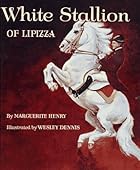
86) White Stallion of Lipizza by Marguerite Henry
I started this book a time or two as a child but never got through it. It had nothing to do with racehorses, after all, unlike my favorite Henrys, King of the Wind and Black Gold. Now I want to go back and re-read those books with an adult's eyes, because this isn't just a horse book--it's a book about dedicating yourself to an art and a craft, to creating beauty for its own sake, to perseverance, to keeping alive your culture's best traditions.
87) The Regency Underworld by Donald A. Low
A readable introduction to crime and punishment in Regency England, with a heavy focus on London.
Showing posts with label classics. Show all posts
Wednesday, August 20, 2014
Wednesday, March 26, 2014
2014 Reading, Books 34-36
34) The Up Side of Down: Why Failing Well Is the Key to Success by Megan McArdle
Using recent high-profile examples like the sub-prime mortgage crisis, along with personal anecdotes of dating relationships gone sour and the time a hospital almost misdiagnosed her mother's appendicitis, McArdle looks at failure with a view to convincing readers that being forgiving and flexible--of themselves and others--is the best way to cope. I liked it, but I was hoping for a little bit more of a self-help focus. You know, "Feeling like a failure in Area X of your life? Here's 10 questions you should ask yourself."
35) 101 Reasons to be Episcopalian by Louie Crew.
This very quick little book was a gift from our rector to everyone who was confirmed in the Episcopal Church when our bishop visited in December. Reading it A) made me regret skipping church this morning and B) reminded me why I made the right decision to become Episcopalian instead of leaving the church altogether or continuing to force myself to stay in a more conservative denomination that was no longer a good fit.
36) The Blythes are Quoted by LM Montgomery.
I still haven't decided whether I'm glad or sorry I read this book. It's the very final work of LM Montgomery, turned into her publisher on the day she died in 1942 (quite possibly suicide). This is the manuscript essentially as submitted, with very little editing, and while it wasn't badly written, it didn't have the sparkle and polish of the rest of her work that I've read. It's mostly short stories, none of them about the Blythe family, though they're regularly mentioned, usually with praise as just about the best-looking, most intelligent, and wisest people around. (Which got a little annoying, because it didn't feel natural.) Interspersed with the stories are poems, purportedly by Anne and Walter, with comments and reflections from the family, in which we see the family continue to mourn Walter and become more cynical about WWI. Just as I always calculated when reading Rilla of Ingleside, Anne and Gilbert's grandchildren are just the right age to fight WWII, and we learn that Faith and Jem's sons have joined, that Ken and Rilla's son is in the RCAF, etc.
I think I would've been more interested if this had been a novel about the Blythes instead of a bunch of short stories about people I didn't have a prior attachment to. I tend to be less of a fan of short stories for just that reason--you don't have time to really know and become attached to the characters, so they're usually more about an idea or a plot gimmick than people. Also, it's one thing to realize myself that the Blythe grandchildren will have to fight WWII. It's another thing to see it on the page, somehow.
Using recent high-profile examples like the sub-prime mortgage crisis, along with personal anecdotes of dating relationships gone sour and the time a hospital almost misdiagnosed her mother's appendicitis, McArdle looks at failure with a view to convincing readers that being forgiving and flexible--of themselves and others--is the best way to cope. I liked it, but I was hoping for a little bit more of a self-help focus. You know, "Feeling like a failure in Area X of your life? Here's 10 questions you should ask yourself."
35) 101 Reasons to be Episcopalian by Louie Crew.
This very quick little book was a gift from our rector to everyone who was confirmed in the Episcopal Church when our bishop visited in December. Reading it A) made me regret skipping church this morning and B) reminded me why I made the right decision to become Episcopalian instead of leaving the church altogether or continuing to force myself to stay in a more conservative denomination that was no longer a good fit.
36) The Blythes are Quoted by LM Montgomery.
I still haven't decided whether I'm glad or sorry I read this book. It's the very final work of LM Montgomery, turned into her publisher on the day she died in 1942 (quite possibly suicide). This is the manuscript essentially as submitted, with very little editing, and while it wasn't badly written, it didn't have the sparkle and polish of the rest of her work that I've read. It's mostly short stories, none of them about the Blythe family, though they're regularly mentioned, usually with praise as just about the best-looking, most intelligent, and wisest people around. (Which got a little annoying, because it didn't feel natural.) Interspersed with the stories are poems, purportedly by Anne and Walter, with comments and reflections from the family, in which we see the family continue to mourn Walter and become more cynical about WWI. Just as I always calculated when reading Rilla of Ingleside, Anne and Gilbert's grandchildren are just the right age to fight WWII, and we learn that Faith and Jem's sons have joined, that Ken and Rilla's son is in the RCAF, etc.
I think I would've been more interested if this had been a novel about the Blythes instead of a bunch of short stories about people I didn't have a prior attachment to. I tend to be less of a fan of short stories for just that reason--you don't have time to really know and become attached to the characters, so they're usually more about an idea or a plot gimmick than people. Also, it's one thing to realize myself that the Blythe grandchildren will have to fight WWII. It's another thing to see it on the page, somehow.
Labels:
Christianity,
classics,
religion,
self-help,
short stories
Monday, February 24, 2014
2014 Reading, Books 22-24
22) Coriolanus, by William Shakespeare.
Yesterday I saw Tom Hiddleston as Coriolanus in the Donmar Warehouse production that's being shown at various art-house cinemas. Because, Tom Hiddleston. And also Shakespeare. It was a beautiful thing. In any case, I thought it behooved me to read the play first, the better to follow the action on screen.
I can see why this isn't one of Shakespeare's most famous tragedies. To me Coriolanus (the play and character alike) doesn't have the heft of a Hamlet or Macbeth or Othello. He felt more like a caricature than a person on some levels--though, that said, he's a caricature of a recognizable type, namely the brilliant, arrogant leader who feels like his accomplishments should speak for themselves and disdains the political game of appealing to the masses. I've encountered such leaders in history and even in modern politics, and in subtler form I even tend to like them--they're better than smooth-talking demagogues, at least! And now that I've seen the performance, Coriolanus as played by Hiddleston did feel like a person--a young, arrogant aristocrat gifted at war but in over his head in politics. A recognizable type indeed.
23) The Witness Wore Red, by Rebecca Musser with M. Bridget Cook.
I've always felt a certain horrified fascination for the FLDS polygamist cult, and I've read several memoirs of women who've escaped. This was a particularly fascinating account of the young woman who in her late teens became the 19th wife of elderly cult leader Rulon Jeffs, only to decide to escape after his death when his son Warren became the leader of the group and made it even more restrictive and insane. She was a key assistant to the Texas police and witness in the trials that resulted from the raids on the YFZ Ranch a few years ago.
24) The Stolen Luck, by Shawna Reppert.
This male/male fantasy romance is a lovely, well-balanced, well-paced story. The human hero, James, wins elven slave Loren in a game of cards. Even though he is morally opposed to slavery, he needs the elf's help to win back the stolen "Luck" of the title--a talisman that ensures the productivity of his lands and therefore his family and dependents' future. He swears to free Loren so he can return to his own lands and people...but only when the Luck is back in his hands. Attraction and trust very gradually grows between the two men, but neither is willing to act on their feelings while Loren remains a slave.
I love the subtlety of this story. The fantasy world feels lived-in and plausible without a lot of extraneous detail. While the stakes are hugely important to the characters--James needs to save his estates and Loren longs to be free--this isn't a Save the World! story. I enjoy a Save the World! story as much as the next reader, but I also like variety. And I love that James and Loren never let their feelings for each other get the better of their integrity and honor.
Yesterday I saw Tom Hiddleston as Coriolanus in the Donmar Warehouse production that's being shown at various art-house cinemas. Because, Tom Hiddleston. And also Shakespeare. It was a beautiful thing. In any case, I thought it behooved me to read the play first, the better to follow the action on screen.
I can see why this isn't one of Shakespeare's most famous tragedies. To me Coriolanus (the play and character alike) doesn't have the heft of a Hamlet or Macbeth or Othello. He felt more like a caricature than a person on some levels--though, that said, he's a caricature of a recognizable type, namely the brilliant, arrogant leader who feels like his accomplishments should speak for themselves and disdains the political game of appealing to the masses. I've encountered such leaders in history and even in modern politics, and in subtler form I even tend to like them--they're better than smooth-talking demagogues, at least! And now that I've seen the performance, Coriolanus as played by Hiddleston did feel like a person--a young, arrogant aristocrat gifted at war but in over his head in politics. A recognizable type indeed.
23) The Witness Wore Red, by Rebecca Musser with M. Bridget Cook.
I've always felt a certain horrified fascination for the FLDS polygamist cult, and I've read several memoirs of women who've escaped. This was a particularly fascinating account of the young woman who in her late teens became the 19th wife of elderly cult leader Rulon Jeffs, only to decide to escape after his death when his son Warren became the leader of the group and made it even more restrictive and insane. She was a key assistant to the Texas police and witness in the trials that resulted from the raids on the YFZ Ranch a few years ago.
24) The Stolen Luck, by Shawna Reppert.
This male/male fantasy romance is a lovely, well-balanced, well-paced story. The human hero, James, wins elven slave Loren in a game of cards. Even though he is morally opposed to slavery, he needs the elf's help to win back the stolen "Luck" of the title--a talisman that ensures the productivity of his lands and therefore his family and dependents' future. He swears to free Loren so he can return to his own lands and people...but only when the Luck is back in his hands. Attraction and trust very gradually grows between the two men, but neither is willing to act on their feelings while Loren remains a slave.
I love the subtlety of this story. The fantasy world feels lived-in and plausible without a lot of extraneous detail. While the stakes are hugely important to the characters--James needs to save his estates and Loren longs to be free--this isn't a Save the World! story. I enjoy a Save the World! story as much as the next reader, but I also like variety. And I love that James and Loren never let their feelings for each other get the better of their integrity and honor.
Labels:
classics,
fantasy romance,
m/m,
memoir,
Shakespeare
Tuesday, February 11, 2014
2014 Reading, Books 13-18
13) Rick Steves' Amsterdam, Bruges & Brussels by Rick Steves.
More preparation for the 2015 European trip. Though we'll likely fly into London, then take the Chunnel over to Brussels in time for the Waterloo bicentennial, if the airfares are better we may go in through Amsterdam instead. Either way, this will very much be the military history part of the trip, since in addition to Waterloo we'd like to visit Flanders Fields.
14) Lysistrata, by Aristophanes.
I picked this Dover Thrift Edition up years ago, but only just now got around to reading it. I knew broadly what it was about--the women of Greece going on a sex strike to force an end to the Peloponnesian War--but I was surprised how laugh-out-loud funny it is nearly 2500 years later. (It helps that I've read enough on 5th-century BCE Greece to have a decent grasp on the cultural context.) The best comparison I can come up with is that it felt like I was reading the Daily Show or Colbert Report of ancient Athens.
15) A Summer Affair, by Susan Wiggs.
An enjoyable historical romance with a rather unusual setting--San Francisco in the late 19th century. A doctor who blames himself for the tragic death of his young wife a decade earlier and hasn't found a way to move on finds his life upended when he treats a self-described "lady adventurer" for a gunshot wound received in an incident she refuses to discuss.
16) Rita Book #4: This one got off to a bumpy start, and I never would've stuck with it past the first chapter if I hadn't been obliged to finish it because of my judging responsibilities. But around about p. 60 the story hooked me. Some might say the moral is that I should stop giving up on books a few pages in if I don't like the writing or characters, but in my experience this book is an exception, and books that start out dull, badly written, or otherwise problematic stay that way.
17) In This House of Brede, by Rumer Godden.
This book is my February re-read, of a book I initially read back in the mid-90's. I found it through the Hypatia recommender on Alexandria Digital Literature, a site I believe is now defunct, but that led me to several favorites--this book in particular, but also Dorothy Sayers, Lindsey Davis, and Diana Gabaldon. It also kept insisting I needed to read the Vorkosigan Saga, but I ignored it because I wasn't a science fiction reader. It took me over ten years to give in, but ever since I've been an evangelist for the series. (Have YOU met Miles Vorkosigan and accepted him as your personal Vor-lord and savior yet?)
But I digress. When I first read this book, I didn't expect to be hooked by a story about Benedictine nuns. I'm not Catholic, and at the time I'd never even met anyone in a religious order. (That's since changed due to my stint as office manager for the Spiritual Care department in one of the Seattle hospitals, since some of our chaplain trainees were nuns.) But I was drawn in by the vivid portrayals of the characters. I've always enjoyed stories about communities, whether they be towns, ships' crews, extended families, or whatever, and you can't get a much more focused community than a monastery of enclosed nuns. And it's that sense of community--of revisiting well-known friends--that makes the book so re-readable for me.
18) Rita Book #5: Average.
Labels:
ancient Greece,
classics,
contests,
historical romance,
literary fiction,
reading,
travel
Monday, January 27, 2014
2014 Reading, Books 10-12
Apparently a typical American adult reads 5 books per year. I sometimes feel like a slacker when I know readers who regularly manage 200 or more in a year, but that article puts my ~100-120/year pace in perspective...
10) Rita Book #2: Not as fun a read as Book #1, unfortunately.
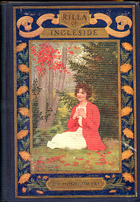
11) Rilla of Ingleside, by LM Montgomery.
I've read this book multiple times, but I decided I could count up to one re-read per month this year as long as it's a true beginning-to-end re-read rather than dipping in and out to read a few favorite scenes. Rilla is the 8th book of the well-beloved Anne of Green Gables series, but it's unique within the series for its strong and specific grounding in world events--specifically, World War I and the Canadian homefront experience.
The heroine, Anne's youngest daughter Rilla, turns 15 on the eve of the Great War's outbreak. She's finally old enough for dances, beaux, and the like and can hardly wait to experience the joys of almost-grown-up life. But instead she spends four years waiting at home while her brothers, sweetheart, and childhood playmates one by one go off to war. Over the course of the war she's transformed from a rather lazy and frivolous girl into a hardworking, capable young woman as she runs her village's Junior Red Cross and brings up a "war baby" whose mother dies while her husband is away fighting.
Reading this Kindle version, I kept encountering little snippets of description and dialogue I couldn't remember from my old paperback copy. I gave it to the library years ago, so I couldn't compare to confirm, but I was pretty sure I would've remembered exchanges like this one, where Anne is describing the time she tried to dye her hair black as a child:
That's not the kind of thing you'd read and forget, to put it mildly, and one can easily see why it would've been cut from post-WWII editions! But there were other sections I couldn't quite remember, either--some of them additional expressions of anti-German bigotry, but others that were just LM Montgomery's typical lush descriptions. So I did some googling and discovered the versions most Gen X and Gen Y girls grew up reading were indeed abridged, but the original full text is now available in both the bargain Kindle version I have and in a new print edition released in 2010.
I've had friends tell me they dislike this book because of its false portrayal of WWI--the characters swallow whole every bit of anti-German propaganda their government dishes out, both author and characters are brutal to the village's one outspoken pacifist, and the soldiers and their families somehow fondly believe despite everything that their sacrifice is worthwhile and will lead to the building of a new and better world. But to me that's why this is an important book beyond its place as part of a classic childhood series. Of course you wouldn't want to get your entire history of WWI from it, but when you remember that it was published in 1921, you see it as almost as much a primary source document as a story. It becomes poignant and heartbreaking how very wrong these brave, well-intentioned people are about the war and its aftermath.
But for all that, I still read Rilla of Ingleside as a story, too. And I'm almost embarrassed to admit it, but anything to do with Dog Monday (Rilla's brother's dog who decides to wait for him at the train station after he goes off with the very first batch of Canadian recruits) makes me get all misty-eyed.
12) Rita Book #3: Again, not a book I would've picked up on my own, but I wish all my Rita books were this strongly written.
10) Rita Book #2: Not as fun a read as Book #1, unfortunately.
11) Rilla of Ingleside, by LM Montgomery.
I've read this book multiple times, but I decided I could count up to one re-read per month this year as long as it's a true beginning-to-end re-read rather than dipping in and out to read a few favorite scenes. Rilla is the 8th book of the well-beloved Anne of Green Gables series, but it's unique within the series for its strong and specific grounding in world events--specifically, World War I and the Canadian homefront experience.
The heroine, Anne's youngest daughter Rilla, turns 15 on the eve of the Great War's outbreak. She's finally old enough for dances, beaux, and the like and can hardly wait to experience the joys of almost-grown-up life. But instead she spends four years waiting at home while her brothers, sweetheart, and childhood playmates one by one go off to war. Over the course of the war she's transformed from a rather lazy and frivolous girl into a hardworking, capable young woman as she runs her village's Junior Red Cross and brings up a "war baby" whose mother dies while her husband is away fighting.
Reading this Kindle version, I kept encountering little snippets of description and dialogue I couldn't remember from my old paperback copy. I gave it to the library years ago, so I couldn't compare to confirm, but I was pretty sure I would've remembered exchanges like this one, where Anne is describing the time she tried to dye her hair black as a child:
"I bought a bottle of dye from a German Jew peddler. I fondly expected it would turn my hair black--and it turned it green. So it had to be cut off."
"You had a narrow escape, Mrs. Dr. dear," exclaimed Susan. "Of course you were too young then to know what a German was. It was a special mercy of Providence that it was only green dye and not poison."
That's not the kind of thing you'd read and forget, to put it mildly, and one can easily see why it would've been cut from post-WWII editions! But there were other sections I couldn't quite remember, either--some of them additional expressions of anti-German bigotry, but others that were just LM Montgomery's typical lush descriptions. So I did some googling and discovered the versions most Gen X and Gen Y girls grew up reading were indeed abridged, but the original full text is now available in both the bargain Kindle version I have and in a new print edition released in 2010.
I've had friends tell me they dislike this book because of its false portrayal of WWI--the characters swallow whole every bit of anti-German propaganda their government dishes out, both author and characters are brutal to the village's one outspoken pacifist, and the soldiers and their families somehow fondly believe despite everything that their sacrifice is worthwhile and will lead to the building of a new and better world. But to me that's why this is an important book beyond its place as part of a classic childhood series. Of course you wouldn't want to get your entire history of WWI from it, but when you remember that it was published in 1921, you see it as almost as much a primary source document as a story. It becomes poignant and heartbreaking how very wrong these brave, well-intentioned people are about the war and its aftermath.
But for all that, I still read Rilla of Ingleside as a story, too. And I'm almost embarrassed to admit it, but anything to do with Dog Monday (Rilla's brother's dog who decides to wait for him at the train station after he goes off with the very first batch of Canadian recruits) makes me get all misty-eyed.
12) Rita Book #3: Again, not a book I would've picked up on my own, but I wish all my Rita books were this strongly written.
Monday, January 20, 2014
2014 Reading, Books 4-6
4) Marathon: How One Battle Changed Western Civilization, by Richard A. Billows.
It's no longer the fashion in history to talk about one person or event changing the fate of the world--most of the time that's determined by larger, less personal forces. But Billows makes a good case that the Battle of Marathon in 490 BCE is an exception. If Athens is defeated at Marathon, most likely the Persians sack the city and carry away its leadership into anonymous exile--and ultimately conquer all of Greece, because the victories of 480 BCE required the Spartan army and the Athenian navy. Break Athens, and its democracy becomes a short-lived failure, and any number of the great accomplishments in architecture, philosophy, theater, etc. that took place there over the next century or so may never have a chance to happen.
Billows doesn't idealize Athens--it was a terrible place to be a woman, much of its wealth was based on slave labor in its silver mines, and in its heyday it was as ruthless a colonial power as any. He also doesn't demonize Persia. As conquering empires go, it was one of the better ones to live under, since it allowed its subject peoples considerable local autonomy in governance, religious observance, etc. But he portrays Athens as innovative and important (correctly, in my view), and I'm always happy to see Athens get its due relative to Sparta.
5) Pugetopolis: A Mossback Takes on Growth Addicts, Weather Wimps, and the Myth of Seattle Nice, by Knute Berger.
This is a collection of Seattle journalist Knute Berger's columns about various local topics. The earliest was from 1992, I think, and the most recent from 2007 and '08, when the book was published. I moved here in 1999 and took awhile to get oriented and feel at home, so only the most recent ones recalled personal experience for me. And while some parts of the book made me laugh with rueful recognition at the foibles of my adopted city, others caused me to realize that I'm STILL a newcomer even though I'll have been here 15 years as of next month.
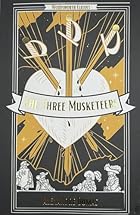
6) The Three Musketeers, by Alexandre Dumas.
One of my favorite reads in 2013 was The Black Count, Tom Reiss's biography of Alexandre Dumas's father. It left me curious enough to seek out Dumas's work, and I started with the most famous one. I didn't come into the book with strong expectations or anything beyond the vaguest notion of what the story was about, and I found it fun, readable, and full of sly wit.
It's no longer the fashion in history to talk about one person or event changing the fate of the world--most of the time that's determined by larger, less personal forces. But Billows makes a good case that the Battle of Marathon in 490 BCE is an exception. If Athens is defeated at Marathon, most likely the Persians sack the city and carry away its leadership into anonymous exile--and ultimately conquer all of Greece, because the victories of 480 BCE required the Spartan army and the Athenian navy. Break Athens, and its democracy becomes a short-lived failure, and any number of the great accomplishments in architecture, philosophy, theater, etc. that took place there over the next century or so may never have a chance to happen.
Billows doesn't idealize Athens--it was a terrible place to be a woman, much of its wealth was based on slave labor in its silver mines, and in its heyday it was as ruthless a colonial power as any. He also doesn't demonize Persia. As conquering empires go, it was one of the better ones to live under, since it allowed its subject peoples considerable local autonomy in governance, religious observance, etc. But he portrays Athens as innovative and important (correctly, in my view), and I'm always happy to see Athens get its due relative to Sparta.
5) Pugetopolis: A Mossback Takes on Growth Addicts, Weather Wimps, and the Myth of Seattle Nice, by Knute Berger.
This is a collection of Seattle journalist Knute Berger's columns about various local topics. The earliest was from 1992, I think, and the most recent from 2007 and '08, when the book was published. I moved here in 1999 and took awhile to get oriented and feel at home, so only the most recent ones recalled personal experience for me. And while some parts of the book made me laugh with rueful recognition at the foibles of my adopted city, others caused me to realize that I'm STILL a newcomer even though I'll have been here 15 years as of next month.
6) The Three Musketeers, by Alexandre Dumas.
One of my favorite reads in 2013 was The Black Count, Tom Reiss's biography of Alexandre Dumas's father. It left me curious enough to seek out Dumas's work, and I started with the most famous one. I didn't come into the book with strong expectations or anything beyond the vaguest notion of what the story was about, and I found it fun, readable, and full of sly wit.
Labels:
ancient Greece,
Athens,
classics,
Greco-Persian Wars,
history,
reading,
Seattle
Thursday, October 3, 2013
2013 Reading, Books 88-90
Still busy busy busy, but hopefully almost to the point where I can actually announce Good Writing News. Watch this space...
88. Weird Things Customers Say in Bookstores, by Jen Campbell.
Exactly what the title says it is, and hilarious, too.
89. A manuscript by my critique partner, Rose Lerner. Assuming her publisher accepts it, y'all may be able to read it in, oh, November 2014 or so. So for now I won't say anything other than that it's beautifully written and different. However, she does have a new release scheduled for March that I can highly recommend, too.
90. The Prime of Miss Jean Brodie, by Muriel Spark.
This isn't my usual type of book--I'm more about the smart genre fiction than Noted Works of Literature. But I heard an interesting discussion of the book on NPR, and I'm glad I gave it a try. I wouldn't say I enjoyed it, exactly, but it made me think. I'm not sure what to think of the book, or of Jean Brodie, but I expect I'll be turning it over in my mind for some time to come.
88. Weird Things Customers Say in Bookstores, by Jen Campbell.
Exactly what the title says it is, and hilarious, too.
89. A manuscript by my critique partner, Rose Lerner. Assuming her publisher accepts it, y'all may be able to read it in, oh, November 2014 or so. So for now I won't say anything other than that it's beautifully written and different. However, she does have a new release scheduled for March that I can highly recommend, too.
90. The Prime of Miss Jean Brodie, by Muriel Spark.
This isn't my usual type of book--I'm more about the smart genre fiction than Noted Works of Literature. But I heard an interesting discussion of the book on NPR, and I'm glad I gave it a try. I wouldn't say I enjoyed it, exactly, but it made me think. I'm not sure what to think of the book, or of Jean Brodie, but I expect I'll be turning it over in my mind for some time to come.
Labels:
classics,
coming soon,
historical romance,
humor,
literary fiction,
nonfiction,
Rose Lerner
Wednesday, July 24, 2013
Back from RWA (and July TBR Challenge post)
Yesterday I finally got back into town after my combined RWA National and family reunion trip to Atlanta, so I've got a lot of blogging to catch up on. I also need to post about my RWA experiences at some point. Suffice it to say it was a good conference, and I came out of it with a few new ideas and new connections.
For now, well, I'll start by catching up on July for the 2013 TBR Challenge.
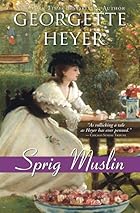
Sprig Muslin, by Georgette Heyer.
This month's theme was the Classics--a classic author, book, trope, or however you choose to interpret it. I ended up going with Georgette Heyer, since the Regency genre as we know it certainly wouldn't exist without her. I read most of her books in high school, since my library had a good collection, but I don't remember this one.
I have a confession to make. Despite her genre pioneer status, I only like Heyer's books--I don't love them. I feel the same way about Tolkien and high fantasy, incidentally, albeit for different reasons. The fact that many of my favorite books wouldn't exist without them doesn't make their books my favorites. With Tolkien, the issue is that I always feel like I'm watching his characters from a distance, that I'm observing the stories rather than connecting to and participating in them. With Heyer...well, ever since I read A Civil Contract I haven't been able to forgive her for what she did to Jenny Chawleigh. Jenny wasn't of the gentry or the aristocracy, therefore she didn't deserve a truly happy ending--at least, that's the subtext of the book as I read it. Ot She didn't get love and devotion; she got respect and contentment. And as someone whose own ancestry is FAR from genteel, I got angry about that.
I know a lot of people love Heyer and love A Civil Contract in particular for its realism. And I can totally understand and respect that. But for whatever reason, that book's ending triggered something personal for me that changed how I look at her work as a whole. And, yes, I realize I'm not being wholly consistent. I read books with aristocratic characters all the time. Two of my favorite fictional crushes are Lord Peter Wimsey and Count Aral Vorkosigan (not that either of them had any trouble conjuring up romantic feelings for a commoner, come to think). The fact that the Duke of Wellington was as elitist as can be doesn't make me admire him any the less--though there are a few quotes of his where I always shake my head in exasperation that anyone that smart could say something that stupid.
But when I'm reading fiction and I feel like the author is endorsing the idea that I ought to regard anyone as superior or inferior because of an accident of birth, I end up, shall we say, in an argument with the text. And, yes, I know, Heyer is a product of her times...but she's a contemporary of Dorothy Sayers, and while the class issues are certainly there in Sayers, they're not on anything like the level of A Civil Contract. And maybe throwing in an American author is apples to oranges, but Louisa May Alcott is decades earlier and has the Phebe-Archie secondary romance in the Rose books, where Phebe is an almost literal nobody. She started out as a servant in the family, and IIRC came from a workhouse and didn't know who her parents were. Mind you, most of Archie's family disapproved of the match just as much as you'd expect of a family with generations of money and status behind it, but you never feel like the text is telling you they're right.
Anyway...all that said, I enjoyed Sprig Muslin. It's a classic Heyer romp--frothy, madcap, and fun. I read it in less than a day, and enjoyed every word. However, I would've liked to see more interaction between the hero and heroine, and I got to arguing with the text again at the end when it was made clear that the secondary heroine, a young, headstrong beauty, belonged with her future husband because he'd keep her in check, which her doting guardians had never managed to do. I got the sense he'd be a benevolent husband/guardian, but it still gave me a bit of a squick.
For now, well, I'll start by catching up on July for the 2013 TBR Challenge.
Sprig Muslin, by Georgette Heyer.
This month's theme was the Classics--a classic author, book, trope, or however you choose to interpret it. I ended up going with Georgette Heyer, since the Regency genre as we know it certainly wouldn't exist without her. I read most of her books in high school, since my library had a good collection, but I don't remember this one.
I have a confession to make. Despite her genre pioneer status, I only like Heyer's books--I don't love them. I feel the same way about Tolkien and high fantasy, incidentally, albeit for different reasons. The fact that many of my favorite books wouldn't exist without them doesn't make their books my favorites. With Tolkien, the issue is that I always feel like I'm watching his characters from a distance, that I'm observing the stories rather than connecting to and participating in them. With Heyer...well, ever since I read A Civil Contract I haven't been able to forgive her for what she did to Jenny Chawleigh. Jenny wasn't of the gentry or the aristocracy, therefore she didn't deserve a truly happy ending--at least, that's the subtext of the book as I read it. Ot She didn't get love and devotion; she got respect and contentment. And as someone whose own ancestry is FAR from genteel, I got angry about that.
I know a lot of people love Heyer and love A Civil Contract in particular for its realism. And I can totally understand and respect that. But for whatever reason, that book's ending triggered something personal for me that changed how I look at her work as a whole. And, yes, I realize I'm not being wholly consistent. I read books with aristocratic characters all the time. Two of my favorite fictional crushes are Lord Peter Wimsey and Count Aral Vorkosigan (not that either of them had any trouble conjuring up romantic feelings for a commoner, come to think). The fact that the Duke of Wellington was as elitist as can be doesn't make me admire him any the less--though there are a few quotes of his where I always shake my head in exasperation that anyone that smart could say something that stupid.
But when I'm reading fiction and I feel like the author is endorsing the idea that I ought to regard anyone as superior or inferior because of an accident of birth, I end up, shall we say, in an argument with the text. And, yes, I know, Heyer is a product of her times...but she's a contemporary of Dorothy Sayers, and while the class issues are certainly there in Sayers, they're not on anything like the level of A Civil Contract. And maybe throwing in an American author is apples to oranges, but Louisa May Alcott is decades earlier and has the Phebe-Archie secondary romance in the Rose books, where Phebe is an almost literal nobody. She started out as a servant in the family, and IIRC came from a workhouse and didn't know who her parents were. Mind you, most of Archie's family disapproved of the match just as much as you'd expect of a family with generations of money and status behind it, but you never feel like the text is telling you they're right.
Anyway...all that said, I enjoyed Sprig Muslin. It's a classic Heyer romp--frothy, madcap, and fun. I read it in less than a day, and enjoyed every word. However, I would've liked to see more interaction between the hero and heroine, and I got to arguing with the text again at the end when it was made clear that the secondary heroine, a young, headstrong beauty, belonged with her future husband because he'd keep her in check, which her doting guardians had never managed to do. I got the sense he'd be a benevolent husband/guardian, but it still gave me a bit of a squick.
Sunday, December 18, 2011
Buried Treasures
Just in time for the last-minute holiday shopper (or anyone looking for a good airplane read), I thought I'd do a post recommending some of my favorite buried treasures. This isn't a Best Reads of 2011 list--I'm saving that for January, since I typically get a lot of reading in over the last two weeks of December between long plane rides and being away from work. These are just books I think deserve more buzz and a wider audience.
I didn't give myself any hard and fast rules for what constitutes a buried treasure. Most of them are little-known books by little-known authors, but I threw in a few lesser-known works by popular or classic authors, especially when my favorite isn't the book or series that gets all the buzz.
However, since this is meant to be a shopping guide of sorts, I limited myself to books readily available new in either print or electronic form, priced no higher than $12 or so. Which meant saying no to Clyde Edgerton's Raney, though I love his Southern voice and reading it is like stepping back into my 70's and 80's Alabama childhood. It also ruled out Pat of Silver Bush and Mistress Pat, though I swear everything else LM Montgomery wrote is readily available.
In no particular order:
Assiniboin Girl, by Kathi Wallace
Buy for Kindle
This book was originally published by the now-defunct Drollerie Press, but it looks like Wallace has re-released it as a self-published Kindle book. It's a YA coming-of-age story about a Native American girl who's grown up in New York knowing little about her heritage, but, after being orphaned and sent to live with an aunt and then her extended family on the reservation, develops a deeper connection to her past. With a certain amount of what I guess could be described as magic realism. It's a difficult book to describe or categorize, and it's not the most polished work I've ever read, but I couldn't put it down.
No Quarter, by Broos Campbell
Buy for Kindle
Buy for Nook
Buy the paperback from Powell's (though the price is above my target range)

Age of Sail (1799, to be specific), but in the American navy. First in a series following Matty Graves, a young midshipman just setting out on his career. Campbell has a wonderful American historical voice and a way for bringing little-known corners of history to light. I'd love to see the three books that are out so far become big hits so he can keep writing and follow Graves all the way through the War of 1812. If you like Patrick O'Brian or Bernard Cornwell (very different voices, I know, but Campbell's voice is different from both), do give this series a try.
And, doesn't the second book in the series, The War of Knives, have a gorgeous cover, in a badass war story way?
In This House of Brede, by Rumer Godden. (not available in ebook)
Buy from Amazon
Buy from Barnes & Noble
Buy from Powell's
If you looked at the rest of my bookshelf (or even just the rest of this list), you'd never guess that one of my favorite books of all time is this quiet, rambling story of Benedictine nuns in mid-20th century England. But it is. Almost all my favorite books share a strong sense of place and communities of characters who seem so real to me I feel like I could step into the story and know how to fit into its world. Brede Abbey and Dame Philippa, Sister Cecily, Sister Hilary, Dame Catherine, and the rest are one of those communities to me, just like Narnia, Barrayar, Terre d'Ange, Peter Wimsey's London, or Marcus Didius Falco's Rome.
Captive Bride, by Bonnie Dee
Buy for Kindle
Buy for Nook
Buy from Carina Press

(Speaking of covers, isn't this one a beauty?)
I will always at least try a historical romance with an unusual setting, and this interracial romance set in 1870 San Francisco worked for me. Dee made me completely believe her hero and heroine found true love and deep knowledge of each other despite lacking a common language at first, and also that they would find a way to make their cross-cultural relationship work despite all the challenges they would face in their place and time. Also, I would love to see more historical romances set on the West Coast, as opposed to the conventional Westerns with deserts and cowboys. Give me more of the early days of places like Seattle, Portland, and San Francisco, please!
Eight Cousins/Rose in Bloom, by Louisa May Alcott
Both free for Kindle.
Or $0.99 for both for Nook
Or you can pay a little more for the paperbacks
Not that obscure a pair of books, obviously, but I think fewer people have read them than Little Women or An Old-Fashioned Girl. They're actually my favorite Alcott books, I think because they're the only ones in which the heroine marries the same man I would've chosen myself.
The Golden Key, by Melanie Rawn, Jennifer Roberson, and Kate Elliott (not available for Kindle)
Buy from Amazon
Buy for the Nook
Buy from Tattered Cover

This book blew my mind when I first read it over a decade ago. You mean fantasy isn't just swords and sorcery? Fantasy cultures are allowed to evolve and change technologically and politically just like real ones? You mean magic could take a form other than potions or wands and spells? (In this case, paints.) Now that I've also discovered Guy Gavriel Kay, Jacqueline Carey, George RR Martin, and Lois McMaster Bujold, to name just a few, it no longer seems so unique and revolutionary, but it's still an excellent book.
The Winter King, by Bernard Cornwell (print only)
Buy from Amazon
Buy from Barnes & Noble
Buy from the Tattered Cover
Don't get me wrong, I love Sharpe and wish Cornwell would get back to the Starbuck series. But I think his Arthurian trilogy, which begins with this book, is the best thing he's ever written.
Lady Elizabeth's Comet, by Sheila Simonson
Buy for Kindle
Buy for Nook
One of the many traditional Regency romances that's gained a new lease on life as an e-book, and the most delightful and freshly written one I've found.
The Old Buzzard Had it Coming, by Donis Casey
Buy for Kindle
Buy for Nook
Buy the paperback from Powell's
First in one of my all-time favorite historical mystery series. The heroine, Alafair Tucker, a farmer's wife in early 20th century Oklahoma, is a surprisingly effective amateur sleuth, and the books have what I always love in my historical fiction, a vivid sense of place and time. The first book is only $0.99 for Kindle and Nook, so if you enjoy mystery at all, give this one a try.
I didn't give myself any hard and fast rules for what constitutes a buried treasure. Most of them are little-known books by little-known authors, but I threw in a few lesser-known works by popular or classic authors, especially when my favorite isn't the book or series that gets all the buzz.
However, since this is meant to be a shopping guide of sorts, I limited myself to books readily available new in either print or electronic form, priced no higher than $12 or so. Which meant saying no to Clyde Edgerton's Raney, though I love his Southern voice and reading it is like stepping back into my 70's and 80's Alabama childhood. It also ruled out Pat of Silver Bush and Mistress Pat, though I swear everything else LM Montgomery wrote is readily available.
In no particular order:
Assiniboin Girl, by Kathi Wallace
Buy for Kindle
This book was originally published by the now-defunct Drollerie Press, but it looks like Wallace has re-released it as a self-published Kindle book. It's a YA coming-of-age story about a Native American girl who's grown up in New York knowing little about her heritage, but, after being orphaned and sent to live with an aunt and then her extended family on the reservation, develops a deeper connection to her past. With a certain amount of what I guess could be described as magic realism. It's a difficult book to describe or categorize, and it's not the most polished work I've ever read, but I couldn't put it down.
No Quarter, by Broos Campbell
Buy for Kindle
Buy for Nook
Buy the paperback from Powell's (though the price is above my target range)

Age of Sail (1799, to be specific), but in the American navy. First in a series following Matty Graves, a young midshipman just setting out on his career. Campbell has a wonderful American historical voice and a way for bringing little-known corners of history to light. I'd love to see the three books that are out so far become big hits so he can keep writing and follow Graves all the way through the War of 1812. If you like Patrick O'Brian or Bernard Cornwell (very different voices, I know, but Campbell's voice is different from both), do give this series a try.
And, doesn't the second book in the series, The War of Knives, have a gorgeous cover, in a badass war story way?
In This House of Brede, by Rumer Godden. (not available in ebook)
Buy from Amazon
Buy from Barnes & Noble
Buy from Powell's
If you looked at the rest of my bookshelf (or even just the rest of this list), you'd never guess that one of my favorite books of all time is this quiet, rambling story of Benedictine nuns in mid-20th century England. But it is. Almost all my favorite books share a strong sense of place and communities of characters who seem so real to me I feel like I could step into the story and know how to fit into its world. Brede Abbey and Dame Philippa, Sister Cecily, Sister Hilary, Dame Catherine, and the rest are one of those communities to me, just like Narnia, Barrayar, Terre d'Ange, Peter Wimsey's London, or Marcus Didius Falco's Rome.
Captive Bride, by Bonnie Dee
Buy for Kindle
Buy for Nook
Buy from Carina Press

(Speaking of covers, isn't this one a beauty?)
I will always at least try a historical romance with an unusual setting, and this interracial romance set in 1870 San Francisco worked for me. Dee made me completely believe her hero and heroine found true love and deep knowledge of each other despite lacking a common language at first, and also that they would find a way to make their cross-cultural relationship work despite all the challenges they would face in their place and time. Also, I would love to see more historical romances set on the West Coast, as opposed to the conventional Westerns with deserts and cowboys. Give me more of the early days of places like Seattle, Portland, and San Francisco, please!
Eight Cousins/Rose in Bloom, by Louisa May Alcott
Both free for Kindle.
Or $0.99 for both for Nook
Or you can pay a little more for the paperbacks
Not that obscure a pair of books, obviously, but I think fewer people have read them than Little Women or An Old-Fashioned Girl. They're actually my favorite Alcott books, I think because they're the only ones in which the heroine marries the same man I would've chosen myself.
The Golden Key, by Melanie Rawn, Jennifer Roberson, and Kate Elliott (not available for Kindle)
Buy from Amazon
Buy for the Nook
Buy from Tattered Cover
This book blew my mind when I first read it over a decade ago. You mean fantasy isn't just swords and sorcery? Fantasy cultures are allowed to evolve and change technologically and politically just like real ones? You mean magic could take a form other than potions or wands and spells? (In this case, paints.) Now that I've also discovered Guy Gavriel Kay, Jacqueline Carey, George RR Martin, and Lois McMaster Bujold, to name just a few, it no longer seems so unique and revolutionary, but it's still an excellent book.
The Winter King, by Bernard Cornwell (print only)
Buy from Amazon
Buy from Barnes & Noble
Buy from the Tattered Cover
Don't get me wrong, I love Sharpe and wish Cornwell would get back to the Starbuck series. But I think his Arthurian trilogy, which begins with this book, is the best thing he's ever written.
Lady Elizabeth's Comet, by Sheila Simonson
Buy for Kindle
Buy for Nook
One of the many traditional Regency romances that's gained a new lease on life as an e-book, and the most delightful and freshly written one I've found.
The Old Buzzard Had it Coming, by Donis Casey
Buy for Kindle
Buy for Nook
Buy the paperback from Powell's
First in one of my all-time favorite historical mystery series. The heroine, Alafair Tucker, a farmer's wife in early 20th century Oklahoma, is a surprisingly effective amateur sleuth, and the books have what I always love in my historical fiction, a vivid sense of place and time. The first book is only $0.99 for Kindle and Nook, so if you enjoy mystery at all, give this one a try.
Labels:
classics,
fantasy,
historical fiction,
historical romance,
mystery,
reading,
Regency,
YA
Monday, October 25, 2010
Favorites Monday: The Chronicles of Narnia
As you might have guessed from my admiration of Almanzo Wilder's brown Morgans in last Monday's post, I was a horse-mad child. I read all of Marguerite Henry's books--King of the Wind was my favorite by far--all of Walter Farley's Black Stallion series, and anything else I could find with a horse on the cover.
When I was 9 or 10, the pastor of my childhood church came to me and said he had a book he thought I'd like because it was called The Horse and His Boy. Naturally I was intrigued--it had the H-word in it--so he loaned me a boxed set with all seven Chronicles of Narnia.
I read them. And when I'd finished The Last Battle, I put it down and picked up The Lion, the Witch, and the Wardrobe again. Then my mother said if I was going to read them to shreds like I had with the Little House series, I shouldn't do so with borrowed books, so we gave Brother Todd his books back and bought me my own set. Which I proceeded to read to shreds.
Of course, they weren't the horse books I was expecting, but they were even better. I'd never read fantasy before, so Narnia opened up a whole new world of imaginative possibility for me. I loved the characters, especially Lucy and Aravis. And I couldn't help getting a feel for the author's personality, his love of beauty and sense of the numinous. I even wonder if part of the reason I fell in love with the British landscape when I finally got to see it firsthand, especially the more remote, mountainous areas like the Lake District and the Highlands, is that England and Scotland look like Narnia to me.

Just these past few months I've been reading the series to my daughter. I still love them, but not quite as much as I did as a child and young adult. I can see holes in the world-building I never noticed then. E.g. why were the people of Narnia so surprised by humans in The Lion, the Witch, and the Wardrobe when there must've been humans aplenty in Archenland and Calormen the whole time? I'm far more aware now that Lewis was a man of his time when it came to race and gender issues, and while I'm too much of a historian myself to expect the people of the past to share my own values, I find myself glossing over and eliding certain sections as I read to my daughter. And I finally understand why the treatment of Susan's character annoys a lot of my friends. It never bothered me growing up that she got the short end of the stick, because I was much more an Aravis or Lucy type myself, growing up in a small-town Southern world that valued the beautiful, girly Susans more. But now I feel like it was a bit sloppy and, frankly, sexist of Lewis to equate "girliness" with being too shallow and superficial to remain a Friend of Narnia.
Still. That only puts a small dent in my love for the series.
I could talk about Lewis and Narnia at much greater length, but I've got my own books to write, dinner to cook, babysitting to find for the concert Mr. Fraser and I are going to Saturday, and so on. So I'll just say that if you'd like to read more, I enjoyed the New Yorker's Prisoner of Narnia article from a few years back.
What about you? Any childhood favorites that you look at through different eyes as an adult?
When I was 9 or 10, the pastor of my childhood church came to me and said he had a book he thought I'd like because it was called The Horse and His Boy. Naturally I was intrigued--it had the H-word in it--so he loaned me a boxed set with all seven Chronicles of Narnia.
I read them. And when I'd finished The Last Battle, I put it down and picked up The Lion, the Witch, and the Wardrobe again. Then my mother said if I was going to read them to shreds like I had with the Little House series, I shouldn't do so with borrowed books, so we gave Brother Todd his books back and bought me my own set. Which I proceeded to read to shreds.
Of course, they weren't the horse books I was expecting, but they were even better. I'd never read fantasy before, so Narnia opened up a whole new world of imaginative possibility for me. I loved the characters, especially Lucy and Aravis. And I couldn't help getting a feel for the author's personality, his love of beauty and sense of the numinous. I even wonder if part of the reason I fell in love with the British landscape when I finally got to see it firsthand, especially the more remote, mountainous areas like the Lake District and the Highlands, is that England and Scotland look like Narnia to me.

Just these past few months I've been reading the series to my daughter. I still love them, but not quite as much as I did as a child and young adult. I can see holes in the world-building I never noticed then. E.g. why were the people of Narnia so surprised by humans in The Lion, the Witch, and the Wardrobe when there must've been humans aplenty in Archenland and Calormen the whole time? I'm far more aware now that Lewis was a man of his time when it came to race and gender issues, and while I'm too much of a historian myself to expect the people of the past to share my own values, I find myself glossing over and eliding certain sections as I read to my daughter. And I finally understand why the treatment of Susan's character annoys a lot of my friends. It never bothered me growing up that she got the short end of the stick, because I was much more an Aravis or Lucy type myself, growing up in a small-town Southern world that valued the beautiful, girly Susans more. But now I feel like it was a bit sloppy and, frankly, sexist of Lewis to equate "girliness" with being too shallow and superficial to remain a Friend of Narnia.
Still. That only puts a small dent in my love for the series.
I could talk about Lewis and Narnia at much greater length, but I've got my own books to write, dinner to cook, babysitting to find for the concert Mr. Fraser and I are going to Saturday, and so on. So I'll just say that if you'd like to read more, I enjoyed the New Yorker's Prisoner of Narnia article from a few years back.
What about you? Any childhood favorites that you look at through different eyes as an adult?
Subscribe to:
Posts (Atom)