Showing posts with label social history. Show all posts

Sunday, May 31, 2015

2015 Reading catch-up post, books 46-54

So, getting ready for the Europe trip, along with some personal writing projects, has taken over my life for the past month. My reading pace has slowed down, way down, though I'm hoping to be able to make up some time what with all the hours I'll be spending on airplanes and the occasional train in June and July!

46. The Lowland by Jhumpa Lahiri

With this book I ventured into the rare-for-me genre of literary fiction as part of a recent commitment of mine to seek out more books by nonwhite authors. As part of a discussion about people trying to read more books by women, I reflected that that wasn't an issue for me, given that almost all of the fiction I read is woman-authored, along with maybe half the nonfiction. But I could easily go months without ever reading a nonwhite author and not even notice I'm doing it.

So, at least once a month, I plan to read a book by an author of color. And I can't count the same author more than once a year, since it would kind of defeat the purpose of exposing myself to a broader range of voices if I find an author with, say, a nice long mystery series and read one per month.

Anyway, while this was a fascinating book, it was also dark and depressing enough to remind me why I generally prefer genre to literary fiction. I am glad I read it, though.

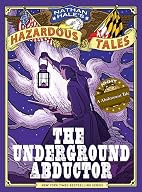
47. The Underground Abductor by Nathan Hale


The latest in Nathan Hale's series of graphic novels for upper elementary readers about American history looks at Harriet Tubman's childhood and youth, her escape from slavery, and her work on the Underground Railroad. This wasn't my favorite in the series--Donner Dinner Party has a tighter narrative arc (probably because it covers a shorter time period and was just a more linear historical incident), and Treaties, Trenches, Mud, and Blood impressed me by actually making WWI comprehensible to young readers like my daughter without trivializing it. But an average Nathan Hale's Hazardous Tale is still an awesome book, and I learned quite a bit from it, since I didn't know much about Harriet Tubman beyond her name and the fact she was involved with the Underground Railroad.

48. How We Got to Now by Steven Johnson

A quick, fascinating read looking at how innovations in six different areas have built on each other in unexpected ways over the past few centuries. Definitely recommended for those who like history of science books.

(As a side note, I'm way too prone to describing books as "fascinating." Memo to self: find new adjectives for "this book was cool and really held my attention.")

49. In Real Life by Cory Doctorow & Jen Wang

Another graphic novel read to be shared with my daughter, though this one was a Message Book, and one that was too heavy-handed for my taste despite my agreeing with its views.

50. The Dirt on Clean by Katherine Ashenburg

An interesting, readable social history on the history of cleanliness in the western world from ancient Greek days to the present.

51. Pocket Apocalypse by Seanan McGuire

Fourth in the InCryptid series. I haven't liked the last two books as much as the first two--I enjoyed Verity Price's New York adventures more than her brother Alex's role as zookeeper to creatures both ordinary and paranormal--but this one did have a good bit of the family's Aeslin Mice, which are my favorite magical creatures EVER.

52. Cheated by Jay Smith and Mary Willingham

A detailed account of a long-running academic scandal at the University of North Carolina involving the funneling of academically ill-prepared athletes, especially in the "money" sports of football and men's basketball, into courses whose requirements were basically nonexistent. Basically, it's the kind of thing I always kinda assumed was going on with elite collegiate sports programs, but it's depressing to see it spelled out.

I love football especially so much, but lately between the head injury issues, the stunted educations of young men who are unlikely to ever see the NFL (or play long enough to amass a fortune to last them their lifetimes if they do), and the fact the sport's powers that be seem to think I should be happy to ignore rampant domestic violence and sexual assault issues, I'm finding it harder and harder to justify that love.

53. Heirs to Forgotten Kingdoms by Gerard Russell

What with how busy and travel-focused I've been, it took me two weeks to finish this book, though it's fascinating--an account of the (mostly) obscure minority religions of the Middle East--Druze, Samaritans, Yazidi, Zoroastrians, etc.

54. Dead Wake by Erik Larson

An account of the last Atlantic crossing and sinking of the Lusitania. A good read if you like historical disaster tales, and IMHO Larson's best work to date. It's remarkable in a way that the loss of so many American civilian lives didn't expedite our entry into WWI--and, I have to admit, it speaks well of Woodrow Wilson, who isn't my favorite of the well-known POTUSes for several reasons. But the book's focus, and where it shines, is in the stories of all the individuals aboard the ship (mostly the survivors, though in some cases I guessed wrong about who was going to survive because some particularly vivid account turned out to be from a survivor's memory of a dead companion or from papers recovered from a body).

Wednesday, August 20, 2014

2014 Reading, Books 85-87

85) Six Amendments: How and Why We Should Change the Constitution by John Paul Stevens

Wherein retired Supreme Court Justice Stevens reviews what's broken in the American political system from his unique judicial perspective and proposes some constitutional remedies--e.g. undoing Citizens United, classing the death penalty as cruel and unusual punishment, and finding a way to limit gerrymandering. While I don't disagree with any of his ideas, I found the book dry going at times. And, I sadly doubt there are enough people with the power and will to make a difference who'll listen to him.

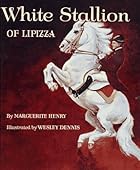
86) White Stallion of Lipizza by Marguerite Henry


I started this book a time or two as a child but never got through it. It had nothing to do with racehorses, after all, unlike my favorite Henrys, King of the Wind and Black Gold. Now I want to go back and re-read those books with an adult's eyes, because this isn't just a horse book--it's a book about dedicating yourself to an art and a craft, to creating beauty for its own sake, to perseverance, to keeping alive your culture's best traditions.

87) The Regency Underworld by Donald A. Low

A readable introduction to crime and punishment in Regency England, with a heavy focus on London.

Monday, October 14, 2013

2013 Reading, Books 91-93

91) Pink and Blue: Telling the Boys from the Girls in America, by Jo B. Paoletti

My daughter, age 9, is a tomboy, as I myself was at her age. Given the enormous strides women have made toward fuller equality and success in traditionally male professions, it's startling how much more gendered clothes and toys are now than during my 1970's and 80's childhood. Photos of me show a kid in the same reds, oranges, greens, and yellows boys were wearing, and while boys played with GI Joe toys and girls played with dolls (I didn't--I preferred toy horses), things like blocks, Lincoln Logs, and Legos weren't gendered. Now girl clothes run heavily to pink and ruffled, and toys are gendered as can be. I'm proud to say Miss Fraser scorns these trends, and will proclaim that everyone should play with, wear, and watch whatever they like. But it's still tough to shop for her.

So this book caught my attention. It's a history of children's clothing from the late 19th century to the present--from the days when babies of both sexes wore the same white dresses and boys kept wearing skirts, albeit usually with masculine detailing, through their preschool years, to the unisex trends of the 60's and 70's, all the way up to how today's trends look to be a backlash against the unisex clothing today's generation of parents wore as children. Fascinating stuff--e.g. did you know in the early 20th century there was debate over which color belonged to each sex? Many were of the opinion blue was better for girls, being a delicate color associated with the Virgin Mary, while pink as a shade of red was the more manly color.

92) Winter Woman, by Jenna Kernan.

I've had this book on my TBR shelf for ages--it's part of my library's collection of donated paperbacks with a "please return when finished" sticker slapped on the cover...and I, um, kinda hoard them. (I also regularly donate boxes of books to be either sold at the Friends of the Library Book Sale or added to the return-when-finished collection, so hopefully it balances out.)

Anyway, I decided it was high time I started weeding through my borrowed collection and returning them to the wild, so I grabbed this one, read the first few pages to see if it was any good, and was promptly hooked. It's a Western romance, but one set in the 1830's, before the heyday of the cowboy. The heroine is a widow who survived a winter alone in the Rockies (she and her husband were left behind by their missionary wagon train who promised to return for them, only everyone but her ultimately died), and the hero is a trapper. The book is an all-around good read--fast-paced, adventurous, and romantic.

I'd never heard of Kernan before, and since the romance writer community is a smallish world, I feared that meant she was no longer active. (This book is copyright 2003.) But when I googled her I discovered she's an active and prolific writer with a good-sized backlist for me to explore. Which is why libraries are good things for authors. I tried her because I'll grab pretty much anything that halfway appeals to me of the "please return when finished" rack, but I'll be buying her works in the future.

93) Scoundrel, by Zoe Archer.

For the 2013 TBR Challenge. Detailed post to follow.

Saturday, July 27, 2013

2013 Reading, Books 64-72

Catching up on everything I read while traveling...

64) Decisive, by Chip Heath & Dan Heath.

An extremely useful look at how to short-circuit some of the issues that commonly lead to bad decision-making. It gave me some good ideas for how to evaluate my writing career and whether my current path will take me where I want to go and how to balance competing priorities in my life as a whole. This was a library copy, but I'll definitely be buying my own soon.

65) Sprig Muslin, by Georgette Heyer.

For the 2013 TBR Challenge. Detailed comments here.

66) My Life Next Door, by Huntley Fitzpatrick.

A sweet YA romance about the daughter of a perfectionist single mother (who also happens to be a state senator) who falls for the boy next door--from the big, crazy, chaotic family with 8 kids her mother completely disapproves of. A fun story, though I found the heroine's mother and her campaign manager just a bit over-the-top compared to the other characters.

67) An Heiress at Heart, by Jennifer Delamere.

For my Rita finalists challenge. Detailed comments here.

68) Always and Forever, by Farrah Rochon.

An enjoyable contemporary romance set in a small Louisiana town that managed to get past my "no small American towns" filter with its engaging hero and heroine and by not forcing the hero to give up his dream of opening a business in New Orleans to show that Real, Authentic American Life belongs in a small town.

69) Captain Ingram's Inheritance, by Carola Dunn.

Old-school Regency romance that focuses as much on the hero and heroine's community and families as their relationship. I liked it a lot, but if you haven't read Lord Roworth's Reward you'll be pretty lost.

70) What Kings Ate and Wizards Drank, by Krista D. Ball.

A guide to help writers of historical fiction and historically based fantasy write more realistically about what their characters would've eaten and how they would've obtained and prepared it.

71) Swept Off Her Stilettos, by Fiona Harper.

A perfectly delightful confection of a friends-to-lovers story. I couldn't imagine a better book to while away several hours of a long, turbulent plane ride.

72) Avatar: The Last Airbender - The Search, Part 2, by Gene Luen Yang, Michael Dante DiMartino, Bryan Konietzko, Dave Marshall.

The latest entry in the graphic novels filling in some of the gaps between Avatar: The Last Airbender and The Legend of Korra. It didn't give me as many answers as I'd hoped for about Zuko's mother, but it's visually beautiful and kept me interested enough to immediately go preorder the final book in the trilogy.

Thursday, July 4, 2013

Favorite reads of the year so far

Happy Independence Day to my fellow Americans! I'm off from the day job today, but I have to work Friday--which, looking on the bright side, means this week feels like it has two Fridays. I'll be having a low-key celebration with my family. Mr. Fraser is making waffles for breakfast, a tradition for almost every holiday we're not traveling, since they taste just as good on Labor Day or Presidents' Day as they do in July. Then we'll grill hot dogs and I'll bake Miss Fraser's favorite cake, which has white icing transformed into an American flag with strawberry stripes and blueberry stars.

It just occurred to me that the year is half over. (Insert ritual "How did THAT happen?" comment here.)  That means it's time to post my top ten reads of the year so far, in the order I read them:

1) Julie's Wolf Pack

Third in Jean Craighead George's beautiful YA series about a young Inuit girl who finds refuge among a wolf pack and keeps ties with them even after being reunited with her family, this one is almost all from the POV of the wolves themselves, and it works surprisingly well. She doesn't quite anthropomorphize them but still makes them extremely relatable, somehow.


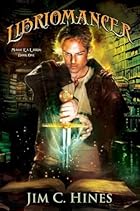
2) Libriomancer, by Jim C. Hines.

First in a fantasy series with a really clever concept for its magic--basically, books make magic by the collective belief of readers in the stories' worlds, and libriomancers can pull objects out of those books temporarily. This doesn't give the unlimited power you might think--among other things, too much magic use wrecks both the libriomancer and the book, and you can only pull out objects that would fit through an ordinary-sized physical copy of the book. E.g. if I were a libriomancer carrying a copy of a book from the Sharpe series, I could pull out Sharpe's sword or the telescope Wellington gave him, but a cannon wouldn't fit. The story and characters are as good as the concept, and I'll be eagerly awaiting the sequels. I've already preordered the sequel, Codex Born.

3) A Year of Biblical Womanhood, by Rachel Held Evans

I'm easily hooked by the type of memoir where someone spends a year trying to live a lifestyle that's foreign to them, cooks their way through a famous cookbook, or whatever. This one was both hilarious and unexpectedly moving. Evans comes from a background almost identical to my own--I'm ~10 years older, but we grew up within 40 or 50 miles of each other, and the biggest obvious difference between our good Alabama Baptist families is that mine roots for Auburn in college football while hers supports Alabama. (I was really disappointed that the month she was trying not to be contentious was October 2010 rather than November of that year, because she talked about her struggles during the South Carolina game rather than the epic Auburn comeback. And yes, I know Bama has since won two more national championships. 2010 was still awesome.)

Anyway, Evans is also like me in having wrestled with the increasing conservatism of the evangelical church, though AFAIK she hasn't yet gone as far as I have in running away from it--I'm now Episcopalian, which I suspect has some of my Baptist ancestors spinning in their graves. So for this book she spends each month of a year trying to live out one of the biblical commands to women literally, both to show the absurdity of a hyper-literal approach and to find God in unexpected places. She also talks a lot about women's power and strength, in the Bible and through history to the present. I think what will stick with me most is her discussion of the Proverbs 31 woman, which I was taught to think of as the perfect homemaker--someone I hoped to become during my more conservative days and now rebel against. But Evans discovers that in the Jewish tradition, that text isn't used prescriptively, but as praise for whenever a woman shows courage, generosity, integrity, and like virtues. In Hebrew the words the King James Bible translates as "a virtuous woman" are "eshet chayil"--a woman of valor. I'll never be a Proverbs 31 homemaker, but on my best days I can be a woman of valor.

4) Miss Jacobson's Journey, by Carola Dunn

This one is a traditional Regency, with a PG, kisses-only sensuality rating, but with a decidedly non-traditional heroine and setting. The heroine, Miriam Jacobson, is an English Jew who's been living on the Continent with her doctor uncle for nine years after having become estranged from the rest of her family by rudely rejecting the suitor the matchmaker brought for her. Now she wants to go home, but at the height of the Napoleonic Wars, journeying from France to England isn't a simple task. She and her maid/duenna are recruited by Jakob Rothschild to help two men smuggle gold to Wellington in Spain, with the promise of help getting home once she completes her mission. Naturally, one of the men in her party is the suitor she rejected all those years ago, and he's grown and matured in the intervening years into a far more attractive man than she ever would've dreamed possible...

From the time I started reading traditional Regencies in high school, I've always loved any non-traditional setting. (Not that I don't love a nice country house party or London Season tale, too.) Following the drum in the Peninsular War? I'm there. Congress of Vienna? Fascinating. Canada? More, please. Brussels just before Waterloo? Wonderful! America, before, during, or after the War of 1812? Why not? So this book had me halfway to hooked from the beginning because of the setting, and the story delivered on its promise. I enjoyed all the characters, the sweet romance worked beautifully for me, and I've already bought more of Dunn's backlist.


5) Whose Names Are Unknown, by Sanora Babb.

I heard about this book while watching Ken Burns' Dust Bowl documentary. It was originally written and accepted for publication in the 1930's, then rejected after The Grapes of Wrath came out because the acquiring editor figured there wasn't room for TWO Dust Bowl/Okie migrant stories. (Which is so laughably different from today's market, where every hit spawns a dozen imitators.)

I'm glad I read this book. It's more literary than my usual taste, but it has a kind of subtle, deceptively simple beauty, and it sort of rounded out my understanding of the Dust Bowl era, I think, in the way that good fiction can bring the past to life better than documentary alone.

6) Things I Can't Forget, by Miranda Kenneally.

I've been a Kenneally fan ever since I read the query letter for her first YA romance, Catching Jordan, (her agent posted it on a blog as an example of an effective query), but I think this book may be my favorite so far just because I identified with the heroine so much. I've been told that's a simplistic reason to enjoy a book, but oh well. I was Kate when I was 18, and for several years afterward. Painfully good, afraid to break the rules, convinced that my beliefs were the only right ones and therefore pretty dang judgmental even if I was better than Kate at keeping my mouth shut about it. So I enjoyed watching Kate begin to come to terms with life's complexities and ambiguities, and I loved seeing a character like her (and my younger self) grow and change.

7) Help, Thanks, Wow: The Three Essential Prayers, by Anne Lamott.

Anne Lamott's books don't always work for me, but this one blew me away. The Thanks and Wow chapters in particular helped me remember to stop and revel in the Eternal Now of the current moment, instead of always straining toward a longed-for future when I might be able to quit my day job and write full-time, or else flinching away from the inevitable future in which someday I must die. I found myself reveling in the life all around me, even in the spring pollen that makes me sneeze and coats my pretty black car with an unsightly yellow film. I remembered my favorite lines from For I will Consider My Cat Jeoffry:

For he counteracts the Devil, who is death, by brisking about the life.
For in his morning orisons he loves the sun and the sun loves him.
For he is of the tribe of Tiger.
For the Cherub Cat is a term of the Angel Tiger.

...and also quoting one of my favorite lines from a character in the Vorkosigan saga: "Every day is a gift. Me, I tear open the package and wolf it down on the spot," not to mention, of all people, Bon Jovi: "I just want to live while I'm alive."

So I guess you might say the book made an impression on me. Thanks, Anne Lamott!


8) Sacred Games, by Gary Corby.

Third in a series of light, fun, yet richly researched mysteries based in Periclean Athens. This entry is set at the Games of the 80th Olympiad in 460 BCE, and our sleuth, Nicolaos, a fictional elder brother to Socrates, has to pair up with a Spartan to investigate the death of a star Spartan athlete the night after the opening ceremonies. (The primary suspect is an Athenian, and everyone agrees the only fair solution is to have one man from each city investigate, because at that point in history there was no such thing as a neutral city in any dispute between the two rival powers.) Corby does an excellent job bringing the bloodthirsty, superstitious, and quirky aspects of Greek culture to life, while simultaneously making his characters and their world human and relatable. I recommend this especially for fans of Lindsey Davis's Falco series, as the tone is quite similar.

9) The Strange History of the American Quadroon, by Emily Clark.

The book that made me withdraw a submitted manuscript so I could fix its utter historical inaccuracy. See more detail here.

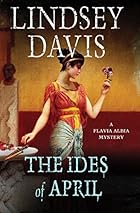
10) The Ides of April, by Lindsey Davis.

First in a new series of mysteries set in Ancient Rome, this book is linked to the Davis's Falco series, but it takes place about a dozen years after the last one, and we never actually see Falco and Helena. The sleuth is their adopted daughter, Flavia Albia, an independent young widow who's taken up her father's old profession and lives on her own. Falco and Helena are evidently doing fine, and Albia drops in to visit regularly--it's just that all those meeting are told rather than shown. Hopefully that won't be the case throughout the series, though I can understand wanting to establish Albia as an interesting character in her own right.

The book got off to rather a slow start, and I might not have stuck with it were it not for my long-standing love for the Falco series. But about 40% in, the story took off and I started caring about Albia for her own sake. I guessed the whodunnit fairly quickly, not to mention the love interest, though there was a sort of mini-mystery about the latter I must confess to being totally oblivious to until it was spelled out for me. In any case, I'm looking forward to book two next year.

(Incidentally, this one wins my favorite cover of the year to date. So pretty!)
Friday, May 31, 2013

2013 Reading, Books 52-54 (wherein Susanna decides to withdraw a manuscript from submission)


52) Sacred Games, by Gary Corby.

Third in a series of light, fun, yet richly researched mysteries based in Periclean Athens. This entry is set at the Games of the 80th Olympiad in 460 BCE, and our sleuth, Nicolaos, a fictional elder brother to Socrates, has to pair up with a Spartan to investigate the death of a star Spartan athlete the night of the opening ceremonies. (The primary suspect is an Athenian, and everyone agrees the only fair solution is to have one man from each city investigate, because at that point in history there was no such thing as a neutral city in any dispute between the two rival powers.) Corby does an excellent job bringing the bloodthirsty, superstitious, and quirky aspects of Greek culture to life, while simultaneously making his characters and their world human and relatable. I recommend this especially for fans of Lindsey Davis's Falco series, as the tone is quite similar.


53) 2K to 10K: How to Write Faster, Write Better, and Write More of What You Love, by Rachel Aaron.

I bought this on a whim a few days ago (since one can afford to be whimsical with $0.99 e-books), because I'm always interested in ways to improve my writing efficiency and generally make better use of my limited time. And I happen to be sort of between projects, waiting for my editor's feedback on a recently sold novella while researching two new ideas, so it's a timely read.

I've been known to disagree vehemently with writing advice, since there is no One True Path, but I'm going to try Aaron's methods with my next story. I tend to be what's known as a "pantser"--i.e. I just sort of plunge into my first draft, flying by the seat of my pants, with a lot of backtracking and rewriting upon discovering my first idea or two doesn't really work. The opposite type of writer is a plotter, whose techniques I've always found off-putting, at least in the extreme versions, like the writing class I heard about where the instructor wouldn't let the writers start actual drafting until they'd produced fifty-page outlines.

Aaron is a plotter, but not at the extreme end of the scale. She seems to take an organic approach to plot and character development, letting them sort of feed off each other, which feels right to me, like an extension of how I already write the last quarter or so of my manuscripts. There's usually this point I describe as "And DOWN the stretch they come!" (you have to imagine this in an excited, racetrack caller voice), where I can suddenly see everything that needs to happen between where I am now and the end. I jot down every scene, every emotional turning point, on post-it notes, slap them on my office door, and write them, one after the other. I know exactly what I need to do and do it FAST, but it doesn't feel robotic or paint-by-numbers at all. Aaron's advice feels like it might give me a way to write entire manuscripts in Down the Stretch They Come mode. I just need to get past my self-identity as a pantser, along with my bad habit of thinking that only time spent drafting is Real Writing, even if spending a particular hour researching or planning would've enabled me to write faster and better the next day.


54) The Strange History of the American Quadroon, by Emily Clark.

This is by the same author who wrote Masterless Mistresses, which I read at the beginning of the month. I stumbled across this brand-new book--I'm the first person to check out the UW Library's copy--by accident on Amazon, and I'm glad I did. You see, I started a manuscript set in the aftermath of the Battle of New Orleans whose heroine was a free woman of color, a fourth-generation native of the city, and I made her a placee (i.e. a white planter's mistress with a long-term contract for an almost marital relationship) who had followed in her mother's footsteps in adopting such a life. I'd heard about such arrangements all my life, and I found info in my initial research that seemed to confirm what I'd been told. So I started writing, figuring I'd research as I wrote to flesh out my setting and my character's background.

I went ahead and submitted a proposal (i.e. opening chapters and synopsis) to my publisher, but the more I researched, the more nervous I felt about my heroine's placee status. While there were plenty of interracial relationships going on in 18th and early 19th century New Orleans, I just wasn't finding anything that matched the backstory I'd written for my heroine. And this book turned out to be the final nail in my manuscript's coffin. By the time I'd read a few chapters, I knew I had to withdraw my proposal from consideration, and I emailed my editor to do so. Because it turns out the whole placee system is little more than an urban legend, and insofar as it existed at all, it wasn't a long-established local tradition in 1815. And while I don't claim perfect historical accuracy (what novelist could?), I'm not so brazen as to try to tell a story I know couldn't have happened, especially not when the false foundation is a lurid, titillating, racist stereotype.

What really happened? Well, there were quite a few life partnerships, marriages in all but name, between white men and free women of color in early New Orleans. Both groups had skewed sex ratios, with white men far outnumbering white women and free black women outnumbering free black men in similar proportions, so such pairings were all but inevitable. But there wasn't a formalized system for how the relationships were managed, and the women didn't groom their daughters to follow in their footsteps. If anything, as the sex ratios started to even out among the free black population, they encouraged them to marry and live in middle-class respectability with free black men--all the more so as American inheritance law made it harder for white fathers to leave property to their illegitimate mixed-race children from 1808 forward. There was an uptick in concubinage and high-class prostitution among free black women in the early decades of the 19th century, but it mostly took place among the Haitian refugees who came to the city starting around 1809--another group where women outnumbered men, and one lacking the long-term connections within the city and dowries to make them desirable brides. It still didn't look quite like placage as it's been handed down to us in fiction and legend, but it was close enough to start that legend--and by the middle of the 19th century to create in a self-fulfilling prophecy a particularly unsavory sort of sex tourism. E.g. if you were a slave dealer in, say, Virginia, and you happened to have in your inventory a beautiful, light-skinned young slave woman, why would you sell her locally when she'd fetch a far higher price in New Orleans?

I'm still going to write a post-Battle of New Orleans story, and its heroine will still be a free woman of color. But I'm aiming for a far less stereotypical portrayal--I'm thinking I'll take advantage of those troublesome inheritance laws--and will hopefully write a far better book as a result.


Tuesday, April 23, 2013

2013 Reading, Books 37-39


37) Things I Can't Forget, by Miranda Kenneally.

I've been a Kenneally fan ever since I read the query letter for her first YA romance, Catching Jordan, (her agent posted it on a blog as an example of an effective query), but I think this book may be my favorite so far just because I identified with the heroine so much. I've been told that's a simplistic reason to enjoy a book, but oh well. I was Kate when I was 18, and for several years afterward. Painfully good, afraid to break the rules, convinced that my beliefs were the only right ones and therefore pretty dang judgmental even if I was better than Kate at keeping my mouth shut about it. So I enjoyed watching Kate begin to come to terms with life's complexities and ambiguities, and I loved seeing a character like her (and my younger self) grow and change.


38) Consider the Fork, by Bee Wilson.

If you enjoy culinary history or the history of everyday things, you'll probably love this book. It's a history not of what we eat, but of the technology we use to prepare and consume our food, from pots to refrigerators to the kitchen space itself. It's too general an overview if you're looking for, say, what a French kitchen was like in 1780, but it's packed with fascinating anecdotes, and it made me think about any number of things I usually take for granted.


39) Lord Roworth's Reward, by Carola Dunn.

This is a sequel to Miss Jacobson's Journey, which I read earlier in the year. It's a sweet, chaste traditional Regency romance set during and immediately after the Waterloo campaign and featuring a hero who's so sure he's found his perfect future countess that he doesn't notice just how much love is involved in his friendship for another, less suitable, young lady until it's almost too late. I enjoyed it a lot, with two small caveats: 1) The sheer number of famous Waterloo quotes and incidents referenced in the story came across as a bit of an infodump, especially since the hero heard about most of them secondhand and they weren't necessary to move the plot forward. 2) The story treats the urban legend that Nathan Mayer Rothschild used his advance knowledge of the outcome of the battle to make a fortune on the London stock exchange as fact, when actually there's no contemporary evidence for it and it seems to be an anti-Semitic tale that sprang up later in the 19th century. That said, a lot of histories cite it as fact, Dunn herself clearly isn't anti-Semitic, and Rothschild is portrayed in a positive light. So I don't hold it against her--I just feel compelled to point out the issue, since I'm pedantic like that, especially given the roots of this particular legend.


Sunday, April 14, 2013

2013 Reading, Books 34-36

34) Ghost Planet, by Sharon Lynn Fisher. Part of my Rita-finalist reading project, and already blogged about here.


35) Race, Sex, and Social Order in Early New Orleans, by Jennifer Spear.

Friday night I left this book on the dining room table while I was getting dinner ready, and as I brought my 9-year-old daughter's plate to the table, she looked at me in some indignation and pointed to the book. I got it from the University of Washington library, and it's in the dullest academic binding imaginable, with no cover image at all. So I asked her what was wrong, and she pointed more specifically to the word "Sex" printed on the spine. I informed her that in this case "sex" just meant gender, whether you're a man or a woman, and that the book was about how being male or female and the color of your skin impacted your life in 18th century New Orleans. At that point she looked suitably bored.

That said, the book didn't bore me. It covers how interracial relationships evolved and how they were conceptualized from New Orleans' earliest years on into the mid-19th century, an extremely relevant topic for my current work-in-progress set in 1815, whose heroine is a mixed-race fourth generation native of the city. However, it is a dryly academic work that assumes its reader has a decent grounding in the city's colonial history, so it's hardly a general-interest book.


36) Hominids, by Robert J. Sawyer.

A fascinating science fiction novel wherein, in a parallel world, Neanderthals rather than Homo sapiens are the sole surviving hominids. Neanderthal physicist Ponter Boddit accidentally passes through a portal to our Earth, leading to parallel plots as our world tries to figure out what to make of him (and he, of us) and his family and friends try to figure out what happened to him--his partner is accused of murder. I read the book in one sitting this morning, and I'll definitely get the sequel. That said, I thought the Neanderthal society was almost too ideal to be believed, in contrast to our species' warring, overpopulating, and environment-degrading ways, and I thought the use of rape as a plot device was much too heavy-handed. (One of the major Homo sapiens characters is raped by a stranger early in the book, in a scene graphic enough that I expect it would be triggering for quite a few readers.)

Sunday, August 26, 2012

Books read, week of 8/25/12

Last week ended up being a slow reading week. There's a bug of some kind making the rounds of the office at my day job. While I got a mild enough case that I didn't have to miss any work, I found myself sleeping away hours I ordinarily would've spent reading, writing, blogging, and the like.

So I'm still not quite to 75 books on the year, though I should get there next week.


73) Cetaganda, by Lois McMaster Bujold. I don't always count re-reads, but in this case I read from beginning to end, rather than skipping and skimming for the "good parts." It's funny how Ivan seems like an entirely different character to me after reading Captain Vorpatril's Alliance. Now I'm a lot more alert to the intelligence he so carefully hides, and aware that in 90% of all situations, I'd be acting like Ivan--smart but kinda lazy, doing very good work but staying in the background, and avoiding danger and trouble--rather than hyper-brainy, manic, attention-seeking Miles.

Anyway, while this isn't the best of the Vorkosigan Saga, it's a fun space opera/mystery, and a welcome chance to visit some of my favorite characters and their world.

74) Hogarth's Blacks, by David Dabydeen. More research for my current work-in-progress. Dabydeen analyzes how William Hogarth and other 18th century artists used images of blacks as social commentary--to oversimplify, in contrast to then-conventional images of Africans and other people of color in their "savage" natural state, he often shows black servants observing the corruption and savagery of wealthy British society. Reading it had the interesting side effect of making me more alert to ways I could use symbolism--my own, not Hogarth's--in my WIP.

Friday, August 17, 2012

Weekly reading, 8/17/12


I'm just back from a week of vacation, during which I fully expected to get to 75 books but ended up falling short because I got bogged down in two books I expected to like but didn't--in one case a nonfiction book where the author gave a fascinating interview on NPR, but his writing turned out to be overly dry and technical, the other a well-reviewed novel whose heroine was just too flaky for my tastes. Also, this was a road trip rather than a flight, so I didn't read while in transit. I did my share of the driving, and when my husband drove, I was enjoying the scenery. It was my first trip to the high desert on the eastern flanks of the Cascades in Washington and Oregon, even though I've lived in Western Washington since 1999.  I wouldn't want to live there--I love the lush forests and mild climate on this side of the mountains too much--but it's a spectacular place.

Anyway, here's what I did finish:

70) American Nations: A History of the Eleven Rival Regional Cultures of North America, by Colin Woodard. Looks at the impacts the founding populations of each American region had on the historical development and current cultures of the areas in question. At first I was dubious, but Woodard makes a convincing case.

71) Doukakis's Apprentice, by Sarah Morgan, won the 2012 Rita for best series contemporary romance, and deservedly so, I believe. A quick, romantic read that left me believing the hero and heroine truly were destined for happily ever after.

72) Colour, Class and the Victorians, by Douglas Lorimer. I read this as research for my WIP, an interracial romance set in 1813, so my chief focus was on the "before" of the book--race relations in late Georgian England.  But it was fascinating, and depressing, to read how British society actually grew more racist in the mid to late Victorian era as part of a general trend in Western thought, and one that took many forms. Religious? You could believe that blacks were descendants of Ham, and thereby condemned to perpetual servility. Secular? Well, it's survival of the fittest, and you get to define "fittest" as "whoever is on top at this precise moment in history, and, whaddya know, that's me!"

Saturday, June 9, 2012

Books read - start to summer reading

I've signed up for the Seattle Public Library's Adult Summer Reading Program.  Every three books I read this summer, I earn another entry in a drawing to win a Kindle.  Mind you, I already own a perfectly good second-generation regular Kindle AND a Fire, but this is still enough to get my competitive juices flowing.  If I win, I'll just give it to Miss Fraser (who otherwise will get her first e-reader for Christmas) or use it as a raffle basket prize at ECWC.  That said, I've given myself something of a handicap in speed-reading this summer in that I've started reading War and Peace on my lunch hours at work, so that's half an hour a day not going to nice short-to-medium-length novels.

Anything I finish between June 1 and August 25 counts toward the reading challenge.  (August 25 because the library shuts down for a week before Labor Day because of budget cuts, which has been going on since the dot-com bust recession back in 2001 or so, and I still think it's depressing.  Really, it's not helping the economy to furlough a bunch of librarians and shut down a service that for many is their only access to books, information, and the internet, and what we need is more stimulus and to save worry about deficits for when unemployment gets back down to 5% or so, but if I keep going this post will get very political very fast.)

Anyway, books.  I finished #48 before the challenge started, so I've just earned my first entry in the drawing.

48) If Walls Could Talk, by Lucy Worsley. An overview of how the major rooms in our houses and their furnishings and functions have changed over the past few centuries, focusing on Britain but with occasional comments on American and French homes. It doesn't go into a lot of depth, but it makes you think on how changeable the most basic functions of everyday life actually are.

49) Moscow 1812: Napoleon's Fatal March, by Adam Zamoyski. I've never been an admirer of Napoleon's, and every time I read about that campaign I want to go back in time and just scream at him or something. So many wrong-headed choices that led to so much death. That said...I now have some story ideas based around the invasion.

50) Avatar: The Last Airbender - The Promise Part 2, by Gene Luen Yang, Michael Dante DiMartino, and Bryan Konietzko. Second in a graphic novel trilogy filling in some of the blanks between The Last Airbender and The Legend of Korra, and likely to be the only overlap point between my summer reading and my daughter's.

51) Too Hot to Touch, by Louisa Edwards. Not only does Edwards write a sexy romance, her love of food and big city life shines through. Her books are among the few contemporary romances I seek out.

Tuesday, April 17, 2012

Reading report, week of April 17

I'm now over halfway to my goal of 75 books read in 2012! Hopefully I'll make 100.

38) The Seduction of the Crimson Rose, by Lauren Willig. Fourth in the Pink Carnation series of Regency romance/spy romps with a modern framing story. I enjoy Willig's voice, and I can rely on her books for a fun read. I liked this book's central couple. I don't think I'd want a steady diet of such cynical heroes and heroines, but these two seemed so very well-matched, and I'm glad they're going to go be cynical together instead of her curing him with her youthful innocence or anything of the kind.

39) White Bread: A Social History of the Store-Bought Loaf, by Andrew Bobrow-Strain. An engrossing look at how America embraced industrial white bread during the early and mid-20th century, then gradually turned away from it from the 70's onward. I was born in 1971, and when I was little we had store-bought white bread on the table every night. By the time I hit middle school, Mom was buying whole wheat bread and doing some of her own baking, and there was no bread on the table at all if we had rice or potatoes with the meal. Back then I thought she was trying to eat healthier because of specific health conditions she and Dad had or were at risk for. Now I see that she was, consciously or not, moving with the trends.

And now my 8-year-old lectures us over the whiteness of the baguettes and ciabatta loafs we occasionally eat. "Don't you know whole wheat bread is more healthy?" she proclaims in all the certainty of her youth. I wonder what our grandkids will be telling HER in 30 years or so.

Tuesday, December 6, 2011

Two weeks or so of books read

Now that I'm back in blog-land, here's what I can recall reading the last two weeks or so:

Hark! A Vagrant, by Kate Beaton. Just the best history geek and all-around geek comics going. If you don't already ready the web comic, you should, and if you do, you'll enjoy the book. (Here's one of my favorites that didn't make this collection.)

The Lady's Secret, by Joanna Chambers. I enjoyed this book (a debut historical romance from Carina Press), despite never 100% warming up to the hero, for the lovely writing and well-evoked period atmosphere. Mind you, there was nothing WRONG with the hero. He was just a bit too much the quintessential bored aristocrat for my taste, keeping in mind that my ideal of an aristocratic hero, real-life division, is Wellington, while the fictional division is a three-way tie between Peter Wimsey, Aral Vorkosigan, and Miles Vorkosigan. And obviously it's not every hero who can solve murders or help save Europe, Barrayar, or half the galaxy.

The Lady's Scandalous Night, by Jeannie Lin. A long short story/short novella set in Tang Dynasty China. The hero has been ordered to track down his best friend, now turned rebel, but the friend's sister will do whatever it takes to delay him and give her brother a chance to escape. Lin does a great job packing a lot of characterization into a story you can read in a single sitting.

To End All Wars, by Adam Hochschild. There's something uniquely appalling about World War I. Other wars have been senseless, and other wars have had appallingly high casualty rates, and I'm sure others set up the conditions for future conflicts, but I can't think of any other that combines all three factors to such a horrific degree. I find it almost too painful to read about, but Hochschild's history of those who fought the war and those who resisted it is too compelling to put down.

Friday, June 10, 2011

That actually makes a lot of sense...

I just finished reading a book called The Girls Who Went Away, about teens and young women who gave up their babies for adoption, often under parental and social coercion, in the 50's and 60's--i.e. when the culture was starting to become more permissive WRT premarital sex, but before legalized abortion or readily available birth control. No personal connection for me and nothing I'm researching for a future manuscript; it just looked interesting.

One issue the author mentioned in passing was that in the 50's and 60's part of the tremendous pressure to conform came about because so many of those stereotypical 50's middle class families were newly raised in status. According to the statistics she cites, maybe 30% of Americans were middle class in the 20's and 30's, but the postwar economic boom and the GI Bill increased that percentage to 60 or 70%. (I'm pulling the numbers from memory.) So the parents of those girls who were getting pregnant were often the first generation of their families to have a college or even a high school education, to own a home and a measure of financial security, and so on. Therefore they were very anxious about losing their status or about not acting like a proper moral, middle-class family ought to act. Hence what by current standards was a conformist, repressive culture. Which, come to think of it, would be equally true of the Victorian era in America and Britain. New prosperity is a good thing, but it carries a certain amount of baggage with it.

Interesting, huh?