49. Secrets of a Bollywood Marriage by Susanna Carr.
A quick, relaxing read that hit the spot during a stressful, busy time. That said, it's definitely a "fight-fight-kiss" romance, and the last fight came so close to the end of the book I wasn't sure I believed they'd learned how to communicate well enough for the kissing to be more frequent than the fighting in their future.
50) Time Warped: Unlocking the Mysteries of Time Perception by Claudia Hammond
If you like popular science or psychology books, I recommend this exploration of how we experience time. It's fun and readable without feeling dumbed down, and it closes with a practical chapter on how to better manage your experience of time, if not time itself.
51) Range of Ghosts by Elizabeth Bear.
Epic fantasy (which I love) with a twist (something I also generally love). The setting is recognizably similar to our world--something like Jacqueline Carey's Kushiel series in that the map will look really familiar, though the fantastical elements are more forward. However, rather than being set in an alternate Europe, this story centers on an alternate central Asia. It ranges across a large chunk of its globe through the eyes of multiple characters, but its focus is a young man named Temur, grandson of a Genghis Khan-like figure, though he's surrounded by a cast of strong women. I enjoyed it very much and plan to read the sequels.
52) Only Human by Gareth Roberts.
A Doctor Who novel, and one that felt like reading an average episode of the show...in a good way. Another fun, relaxing read as I fight my way through my current writing deadline.
53) Nathan Hale's Hazardous Tales: Treaties, Trenches, Mud, and Blood by Nathan Hale.
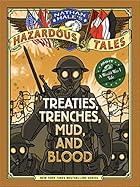
The fourth in this series of graphic novels about American history manages, at least in my opinion, to make WWI palatable and understandable for its middle grade audience without dumbing down the material or treating the war lightly. FWIW, my 10-year-old pronounced it good, though not as funny as the previous three. If you've got a child in the right age group, get them these books. Schools don't teach enough history these days, in my not at all humble opinion, and this series strikes the perfect balance of informative and fun.
54) The Marathon Conspiracy by Gary Corby.
This must be my week for just-released Books 4. I enjoyed this latest entry in Corby's series about Nicolaos, a fictional elder brother of Socrates solving crime in Periclean Athens. Especially recommended for fans of Lindsey Davis's Falco series, since it has a similar combination of humor and modern tone with rich historical detail.
Showing posts with label World War I. Show all posts
Tuesday, May 13, 2014
Monday, February 17, 2014
2014 Reading, Books 19-21
19) The War that Ended Peace: the Road to 1914, by Margaret MacMillan.
One of the many, many books on WWI coming out of late because of the war's centenary, this one looks at the twenty years or so leading up to the war, how the alliances among Britain, France, and Russia and between Germany and Austria-Hungary were built up and hardened to the point that fighting any one became fighting all, and the many crises that could've led to war but somehow just missed it. It still seems almost a uniquely pointless war, but I feel like I have a better understanding now of the tensions and instabilities that made it, if not inevitable, very difficult to avoid. That said, it could've been shorter and still gotten the point across--my eyes were starting to glaze over by the end as yet another not-competent-enough foreign minister of one power or another was introduced.
20) Shakespeare's Restless World: A Portrait of an Era in Twenty Objects, by Neil MacGregor.
This relatively quick read looks at a series of objects found in England around the turn of the 17th century--a rapier and dagger set, a glass goblet, a communion chalice, a clock, etc.--for how they illuminate the world of Shakespeare's plays. I enjoyed it and thought it gave interesting insights into the lives and mindsets of the English people as they were beginning the transition from a kingdom somewhat on the fringes of Europe to a great seafaring empire.
21) Rita Book #6: An entry I dreaded based on the cover art and back cover blurb that turned out to be the best book I've judged so far because it took tropes that normally leave me rolling my eyes and made them work.
One of the many, many books on WWI coming out of late because of the war's centenary, this one looks at the twenty years or so leading up to the war, how the alliances among Britain, France, and Russia and between Germany and Austria-Hungary were built up and hardened to the point that fighting any one became fighting all, and the many crises that could've led to war but somehow just missed it. It still seems almost a uniquely pointless war, but I feel like I have a better understanding now of the tensions and instabilities that made it, if not inevitable, very difficult to avoid. That said, it could've been shorter and still gotten the point across--my eyes were starting to glaze over by the end as yet another not-competent-enough foreign minister of one power or another was introduced.
20) Shakespeare's Restless World: A Portrait of an Era in Twenty Objects, by Neil MacGregor.
This relatively quick read looks at a series of objects found in England around the turn of the 17th century--a rapier and dagger set, a glass goblet, a communion chalice, a clock, etc.--for how they illuminate the world of Shakespeare's plays. I enjoyed it and thought it gave interesting insights into the lives and mindsets of the English people as they were beginning the transition from a kingdom somewhat on the fringes of Europe to a great seafaring empire.
21) Rita Book #6: An entry I dreaded based on the cover art and back cover blurb that turned out to be the best book I've judged so far because it took tropes that normally leave me rolling my eyes and made them work.
Labels:
contests,
history,
romance,
Shakespeare,
World War I
Monday, January 27, 2014
2014 Reading, Books 10-12
Apparently a typical American adult reads 5 books per year. I sometimes feel like a slacker when I know readers who regularly manage 200 or more in a year, but that article puts my ~100-120/year pace in perspective...
10) Rita Book #2: Not as fun a read as Book #1, unfortunately.
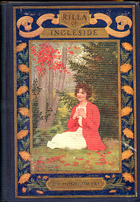
11) Rilla of Ingleside, by LM Montgomery.
I've read this book multiple times, but I decided I could count up to one re-read per month this year as long as it's a true beginning-to-end re-read rather than dipping in and out to read a few favorite scenes. Rilla is the 8th book of the well-beloved Anne of Green Gables series, but it's unique within the series for its strong and specific grounding in world events--specifically, World War I and the Canadian homefront experience.
The heroine, Anne's youngest daughter Rilla, turns 15 on the eve of the Great War's outbreak. She's finally old enough for dances, beaux, and the like and can hardly wait to experience the joys of almost-grown-up life. But instead she spends four years waiting at home while her brothers, sweetheart, and childhood playmates one by one go off to war. Over the course of the war she's transformed from a rather lazy and frivolous girl into a hardworking, capable young woman as she runs her village's Junior Red Cross and brings up a "war baby" whose mother dies while her husband is away fighting.
Reading this Kindle version, I kept encountering little snippets of description and dialogue I couldn't remember from my old paperback copy. I gave it to the library years ago, so I couldn't compare to confirm, but I was pretty sure I would've remembered exchanges like this one, where Anne is describing the time she tried to dye her hair black as a child:
That's not the kind of thing you'd read and forget, to put it mildly, and one can easily see why it would've been cut from post-WWII editions! But there were other sections I couldn't quite remember, either--some of them additional expressions of anti-German bigotry, but others that were just LM Montgomery's typical lush descriptions. So I did some googling and discovered the versions most Gen X and Gen Y girls grew up reading were indeed abridged, but the original full text is now available in both the bargain Kindle version I have and in a new print edition released in 2010.
I've had friends tell me they dislike this book because of its false portrayal of WWI--the characters swallow whole every bit of anti-German propaganda their government dishes out, both author and characters are brutal to the village's one outspoken pacifist, and the soldiers and their families somehow fondly believe despite everything that their sacrifice is worthwhile and will lead to the building of a new and better world. But to me that's why this is an important book beyond its place as part of a classic childhood series. Of course you wouldn't want to get your entire history of WWI from it, but when you remember that it was published in 1921, you see it as almost as much a primary source document as a story. It becomes poignant and heartbreaking how very wrong these brave, well-intentioned people are about the war and its aftermath.
But for all that, I still read Rilla of Ingleside as a story, too. And I'm almost embarrassed to admit it, but anything to do with Dog Monday (Rilla's brother's dog who decides to wait for him at the train station after he goes off with the very first batch of Canadian recruits) makes me get all misty-eyed.
12) Rita Book #3: Again, not a book I would've picked up on my own, but I wish all my Rita books were this strongly written.
10) Rita Book #2: Not as fun a read as Book #1, unfortunately.
11) Rilla of Ingleside, by LM Montgomery.
I've read this book multiple times, but I decided I could count up to one re-read per month this year as long as it's a true beginning-to-end re-read rather than dipping in and out to read a few favorite scenes. Rilla is the 8th book of the well-beloved Anne of Green Gables series, but it's unique within the series for its strong and specific grounding in world events--specifically, World War I and the Canadian homefront experience.
The heroine, Anne's youngest daughter Rilla, turns 15 on the eve of the Great War's outbreak. She's finally old enough for dances, beaux, and the like and can hardly wait to experience the joys of almost-grown-up life. But instead she spends four years waiting at home while her brothers, sweetheart, and childhood playmates one by one go off to war. Over the course of the war she's transformed from a rather lazy and frivolous girl into a hardworking, capable young woman as she runs her village's Junior Red Cross and brings up a "war baby" whose mother dies while her husband is away fighting.
Reading this Kindle version, I kept encountering little snippets of description and dialogue I couldn't remember from my old paperback copy. I gave it to the library years ago, so I couldn't compare to confirm, but I was pretty sure I would've remembered exchanges like this one, where Anne is describing the time she tried to dye her hair black as a child:
"I bought a bottle of dye from a German Jew peddler. I fondly expected it would turn my hair black--and it turned it green. So it had to be cut off."
"You had a narrow escape, Mrs. Dr. dear," exclaimed Susan. "Of course you were too young then to know what a German was. It was a special mercy of Providence that it was only green dye and not poison."
That's not the kind of thing you'd read and forget, to put it mildly, and one can easily see why it would've been cut from post-WWII editions! But there were other sections I couldn't quite remember, either--some of them additional expressions of anti-German bigotry, but others that were just LM Montgomery's typical lush descriptions. So I did some googling and discovered the versions most Gen X and Gen Y girls grew up reading were indeed abridged, but the original full text is now available in both the bargain Kindle version I have and in a new print edition released in 2010.
I've had friends tell me they dislike this book because of its false portrayal of WWI--the characters swallow whole every bit of anti-German propaganda their government dishes out, both author and characters are brutal to the village's one outspoken pacifist, and the soldiers and their families somehow fondly believe despite everything that their sacrifice is worthwhile and will lead to the building of a new and better world. But to me that's why this is an important book beyond its place as part of a classic childhood series. Of course you wouldn't want to get your entire history of WWI from it, but when you remember that it was published in 1921, you see it as almost as much a primary source document as a story. It becomes poignant and heartbreaking how very wrong these brave, well-intentioned people are about the war and its aftermath.
But for all that, I still read Rilla of Ingleside as a story, too. And I'm almost embarrassed to admit it, but anything to do with Dog Monday (Rilla's brother's dog who decides to wait for him at the train station after he goes off with the very first batch of Canadian recruits) makes me get all misty-eyed.
12) Rita Book #3: Again, not a book I would've picked up on my own, but I wish all my Rita books were this strongly written.
Sunday, September 15, 2013
2013 Reading - Books 85-87
85) Lawrence in Arabia, by Scott Anderson.
Even though it took me a week and a half to complete and was a bit of a slog at points, I'm glad I finished this history of WWI in the Middle East. It isn't exclusively about T.E. Lawrence, though his outsized personality carries the narrative--we follow a multinational assortment of historical figures all jockeying for power and influence as the Ottoman Empire loses control of the Arab world over the course of the war. The author at once raises some intriguing what-ifs that might've given us a better and more peaceful world even today while acknowledging that even a best-case scenario would've had its share of simmering sectarian tension.
86) Sunrise Over Texas, by M.J. Frederick.
For the 2013 romance TBR challenge. Detailed post to come next week.
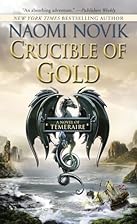
87) Crucible of Gold, by Naomi Novik.
The first book in this series, His Majesty's Dragon, is one of my favorite reads of all time, but I took a break from it after Victory of Eagles, for reasons that have more to do with me as with the book itself. You see, my proverbial Book Under the Bed (which of course does not live under an actual bed, not in 2013, but is instead a file on my hard drive and backed up to Dropbox that I get out and look at every year or two, because someday I mean to go back to it) is an alternative history/adventure story of the Napoleonic Era. And Victory of Eagles is the closest Novik's story comes to overlapping mine. Not in a way that would prevent me from publishing the Book Under the Bed--our approaches and plots are very different. No, it's more that I spent the entire read arguing with the book, particularly with her portrayal of Wellington. As those of you who've followed me around the blogosphere may know, I'm kinda fond of the Great Duke. As in, historical crush fond. He's one of the three protagonists of the BUtB, and while I hope my portrayal is true to the sarcastic, snobby, and all-around-difficult aspects of his personality, he also comes across as badass and awesomesauce (which I think is also justified by the historical record).
Which probably sounds a bit petty of me, to say I didn't like Victory as much as previous entries because I didn't like Novik's Wellington. But that's just the surface reaction. It's more that I find it weird and a little disconcerting to read anything too similar to what I'm writing--and when Victory came out, the BUtB was my beloved work-in-progress, which I was polishing for submission to editors and agents. I'm not one of those authors who can't read the same genre I write, but I find myself reading fewer Regencies now than before I started writing them. When I hear about a book that's very similar to something I'm writing or planning to write, I'm more likely to avoid it than read it--if it's too close to my approach, I worry about accidental influences, and if it's too different, I know I'll be too busy arguing with the story to really sink into it properly. With Victory, I think I had a weirdly strong reaction to the book because it was simultaneously too much like the BUtB and too different from it, unlike any book I've read before or since, so reading it induced a kind of mental whiplash.
Anyway, after reading a strong review of the latest book, I decided to go back to the series, and I'm glad I did. I got exasperated with Laurence a few times, but the dragon interactions were delightful, I liked seeing more of Emily Roland, who's always been one of my favorite secondary characters, and I was fascinated by how Novik developed an Incan society where the human population had been decimated by European diseases as in real history, but the Incan dragons had prevented European conquest. And...I certainly wasn't expecting that twist with the Incan empress. I can't wait to see what happens in the next book.
Even though it took me a week and a half to complete and was a bit of a slog at points, I'm glad I finished this history of WWI in the Middle East. It isn't exclusively about T.E. Lawrence, though his outsized personality carries the narrative--we follow a multinational assortment of historical figures all jockeying for power and influence as the Ottoman Empire loses control of the Arab world over the course of the war. The author at once raises some intriguing what-ifs that might've given us a better and more peaceful world even today while acknowledging that even a best-case scenario would've had its share of simmering sectarian tension.
86) Sunrise Over Texas, by M.J. Frederick.
For the 2013 romance TBR challenge. Detailed post to come next week.
87) Crucible of Gold, by Naomi Novik.
The first book in this series, His Majesty's Dragon, is one of my favorite reads of all time, but I took a break from it after Victory of Eagles, for reasons that have more to do with me as with the book itself. You see, my proverbial Book Under the Bed (which of course does not live under an actual bed, not in 2013, but is instead a file on my hard drive and backed up to Dropbox that I get out and look at every year or two, because someday I mean to go back to it) is an alternative history/adventure story of the Napoleonic Era. And Victory of Eagles is the closest Novik's story comes to overlapping mine. Not in a way that would prevent me from publishing the Book Under the Bed--our approaches and plots are very different. No, it's more that I spent the entire read arguing with the book, particularly with her portrayal of Wellington. As those of you who've followed me around the blogosphere may know, I'm kinda fond of the Great Duke. As in, historical crush fond. He's one of the three protagonists of the BUtB, and while I hope my portrayal is true to the sarcastic, snobby, and all-around-difficult aspects of his personality, he also comes across as badass and awesomesauce (which I think is also justified by the historical record).
Which probably sounds a bit petty of me, to say I didn't like Victory as much as previous entries because I didn't like Novik's Wellington. But that's just the surface reaction. It's more that I find it weird and a little disconcerting to read anything too similar to what I'm writing--and when Victory came out, the BUtB was my beloved work-in-progress, which I was polishing for submission to editors and agents. I'm not one of those authors who can't read the same genre I write, but I find myself reading fewer Regencies now than before I started writing them. When I hear about a book that's very similar to something I'm writing or planning to write, I'm more likely to avoid it than read it--if it's too close to my approach, I worry about accidental influences, and if it's too different, I know I'll be too busy arguing with the story to really sink into it properly. With Victory, I think I had a weirdly strong reaction to the book because it was simultaneously too much like the BUtB and too different from it, unlike any book I've read before or since, so reading it induced a kind of mental whiplash.
Anyway, after reading a strong review of the latest book, I decided to go back to the series, and I'm glad I did. I got exasperated with Laurence a few times, but the dragon interactions were delightful, I liked seeing more of Emily Roland, who's always been one of my favorite secondary characters, and I was fascinated by how Novik developed an Incan society where the human population had been decimated by European diseases as in real history, but the Incan dragons had prevented European conquest. And...I certainly wasn't expecting that twist with the Incan empress. I can't wait to see what happens in the next book.
Labels:
alternative history,
fantasy,
history,
Napoleonic Wars,
nonfiction,
World War I
Tuesday, August 6, 2013
2013 Reading, Books 76-78
76) A More Unbending Battle, by Peter N. Nelson.
An account of the Harlem Hellfighters (i.e. the 369th Infantry Regiment), an African American regiment who fought as part of a French division in 1917-18. They quickly gained a reputation for valor and were treated well by both their French brothers-in-arms and the civilian population--but weren't as welcome at home afterward.
77) Assassin's Gambit, by Amy Raby.
This is a fantasy romance, wherein a young woman from a conquered land has trained from childhood to assassinate an emperor, only to discover upon getting close to her target that both he and his nation's political situation are more complex than she realized. I liked it a whole lot and was intrigued by the setting--reminiscent of imperial Rome, but with magic and roughly 18th-century military technology. My only issue--and I feel guilty for saying this because I write romance novels myself and love the genre--is that I think I would've enjoyed it more if it had been a romantic fantasy instead of a fantasy romance. (By romantic fantasy I mean something like Jacqueline Carey's Kushiel series, which are both sexy and romantic, but where the romance plot comes second to the political intrigue and war.) Because there are few things I love more than a well-constructed fantasy world, and Raby hinted at so much interesting history and magic and intrigue and war that I wished she had more room for that side of the story.
(Incidentally, this book warrants a bit of a content warning. To go into detail would be to spoil a major plot point, but suffice it to say the heroine's past has some sexual trauma we eventually revisit on the page.)
78) The Bookseller's Daughter, by Pam Rosenthal.
For the 2013 TBR Challenge. Detailed post to come.
An account of the Harlem Hellfighters (i.e. the 369th Infantry Regiment), an African American regiment who fought as part of a French division in 1917-18. They quickly gained a reputation for valor and were treated well by both their French brothers-in-arms and the civilian population--but weren't as welcome at home afterward.
77) Assassin's Gambit, by Amy Raby.
This is a fantasy romance, wherein a young woman from a conquered land has trained from childhood to assassinate an emperor, only to discover upon getting close to her target that both he and his nation's political situation are more complex than she realized. I liked it a whole lot and was intrigued by the setting--reminiscent of imperial Rome, but with magic and roughly 18th-century military technology. My only issue--and I feel guilty for saying this because I write romance novels myself and love the genre--is that I think I would've enjoyed it more if it had been a romantic fantasy instead of a fantasy romance. (By romantic fantasy I mean something like Jacqueline Carey's Kushiel series, which are both sexy and romantic, but where the romance plot comes second to the political intrigue and war.) Because there are few things I love more than a well-constructed fantasy world, and Raby hinted at so much interesting history and magic and intrigue and war that I wished she had more room for that side of the story.
(Incidentally, this book warrants a bit of a content warning. To go into detail would be to spoil a major plot point, but suffice it to say the heroine's past has some sexual trauma we eventually revisit on the page.)
78) The Bookseller's Daughter, by Pam Rosenthal.
For the 2013 TBR Challenge. Detailed post to come.
Labels:
erotic romance,
fantasy romance,
nonfiction,
World War I
Thursday, April 5, 2012
Too many anniversaries
Had I won the Mega Millions lottery last week, I would've spent a large part of the next few years on battlefields. If you're interested in military history, as I am, our time is filled with anniversaries. We're 200 years out of the later parts of the Napoleonic Wars, a year into the American Civil War's 150th, and World War I is coming back into public consciousness as we approach its 100 year mark.
Tomorrow (April 6) my hypothetical rich self would need to be two places at once. It's the 200th anniversary of the Storming of Badajoz, which plays a significant role in my first book, The Sergeant's Lady.
Badajoz was an unusually gruesome battle for its time--the elite Light Division lost 40% of its fighting strength. The aftermath was even worse, as the victorious British sacked the city in a rampage of looting, rape, and murder.
It's also the 150th anniversary of the Battle of Shiloh, which at the time was the bloodiest battle in American history.
Badajoz and Shiloh are both grim enough to make me stop and question my own fascination with military history. I'm by no means a pacifist, because I think there are some evils that can't be stopped short of a war. World War II and the Civil War, viewed from the Union side, both strike me as just and unavoidable. But I'm also by no means unthinkingly militaristic. Few things make me angrier than seeing good men and women sacrificed for no worthy purpose in an unjust, unnecessary war. I find World War I all but unbearable to contemplate precisely because it was so damn pointless, and if it served any purpose beyond decimating Europe and making World War II all but inevitable, I've never been able to find it. And even the most just of wars...well, I'll quote William Tecumseh Sherman in May 1865:
So, I don't love war, but I can't look away from its history. Maybe it's in the blood--though I'm not an Army brat, I've got a lot of soldiers in my family, both in the present and living memory and at least as far back as the American Revolution. (Though, as noted above, I firmly believe the Union had all the right on its side in the Civil War, my roots in Alabama go deep enough that I'm the great-great-granddaughter of a Confederate soldier. I'm neither proud nor ashamed of that fact--it simply is what it is. He was a product of his place and time. If anything, my eligibility for the Daughters of the Confederacy, which I would never, ever join, is a useful reminder to occasionally ask myself what injustices I condone unthinkingly because they're normal for where and when I live.)
Whatever the cause, I expect I'll continue studying military history and writing about soldiers--the glory, moonshine though it be, and the horror, and the courage, honor, and sacrifice. And there's one anniversary I intend to make. Barring catastrophe, I'll be at Waterloo on June 18, 2015.
Tomorrow (April 6) my hypothetical rich self would need to be two places at once. It's the 200th anniversary of the Storming of Badajoz, which plays a significant role in my first book, The Sergeant's Lady.
Badajoz was an unusually gruesome battle for its time--the elite Light Division lost 40% of its fighting strength. The aftermath was even worse, as the victorious British sacked the city in a rampage of looting, rape, and murder.
It's also the 150th anniversary of the Battle of Shiloh, which at the time was the bloodiest battle in American history.
Badajoz and Shiloh are both grim enough to make me stop and question my own fascination with military history. I'm by no means a pacifist, because I think there are some evils that can't be stopped short of a war. World War II and the Civil War, viewed from the Union side, both strike me as just and unavoidable. But I'm also by no means unthinkingly militaristic. Few things make me angrier than seeing good men and women sacrificed for no worthy purpose in an unjust, unnecessary war. I find World War I all but unbearable to contemplate precisely because it was so damn pointless, and if it served any purpose beyond decimating Europe and making World War II all but inevitable, I've never been able to find it. And even the most just of wars...well, I'll quote William Tecumseh Sherman in May 1865:
I confess, without shame, that I am sick and tired of fighting — its glory is all moonshine; even success the most brilliant is over dead and mangled bodies, with the anguish and lamentations of distant families, appealing to me for sons, husbands, and fathers ... it is only those who have never heard a shot, never heard the shriek and groans of the wounded and lacerated ... that cry aloud for more blood, more vengeance, more desolation.
So, I don't love war, but I can't look away from its history. Maybe it's in the blood--though I'm not an Army brat, I've got a lot of soldiers in my family, both in the present and living memory and at least as far back as the American Revolution. (Though, as noted above, I firmly believe the Union had all the right on its side in the Civil War, my roots in Alabama go deep enough that I'm the great-great-granddaughter of a Confederate soldier. I'm neither proud nor ashamed of that fact--it simply is what it is. He was a product of his place and time. If anything, my eligibility for the Daughters of the Confederacy, which I would never, ever join, is a useful reminder to occasionally ask myself what injustices I condone unthinkingly because they're normal for where and when I live.)
Whatever the cause, I expect I'll continue studying military history and writing about soldiers--the glory, moonshine though it be, and the horror, and the courage, honor, and sacrifice. And there's one anniversary I intend to make. Barring catastrophe, I'll be at Waterloo on June 18, 2015.
Labels:
Badajoz,
Civil War,
Sergeant's Lady,
Shiloh,
Waterloo,
World War I
Sunday, November 20, 2011
Trading with the enemy
One of the more surprising things I've learned in my recent study of the War of 1812 was that, before the war, America was a major supplier of grain to Wellington's army in Portugal and Spain...and that this commerce continued DURING the war, with the approval of both governments. The British kept buying because their Peninsular army needed to eat, and a series of bad harvests in Europe around that time made America the most reliable supplier available. And the Americans kept selling because the government didn't want to turn its farmers against the war by depriving them of a valuable market for their crops. Also, just because they were at war with Britain didn't make them allied with France, and they were perfectly happy to help keep the bulk of Britain's army and its best commander in the field in Europe, fighting someone else. Makes sense, once you understand their reasoning.
However, in reading Adam Hochschild's book on World War I, To End All Wars, I discovered a far more baffling case of trading with the enemy. The British, you see, found themselves short of binoculars for their officers and NCOs, and lacking the capacity to manufacture them quickly, since it wasn't an industry they specialized in. At the same time, the British naval blockade cut the Germans off from their sources of rubber, also an important military commodity by that time. Germany, however, was well set up to make binoculars. So they set up a top-secret trade. Um...Whiskey? Tango? Foxtrot? Actively trading military technology with your direct enemy in a war brutal beyond example?
(Though I can't confirm the truth of the WWI story. Hochschild's research seems thorough to me, but googling turns up nothing but debates over whether it really happened. I hope it didn't, because WWI really doesn't need another level of senselessness. Sure, the War of 1812 was as pointless a conflict as was ever fought, but at least it was relatively small-scale, and the combatant nations have been at peace ever since. As for World War I...well, the British had more casualties on the first day of the Battle of the Somme than they had regular soldiers in the War of 1812. And we all know how well the Treaty of Versailles worked out...)
However, in reading Adam Hochschild's book on World War I, To End All Wars, I discovered a far more baffling case of trading with the enemy. The British, you see, found themselves short of binoculars for their officers and NCOs, and lacking the capacity to manufacture them quickly, since it wasn't an industry they specialized in. At the same time, the British naval blockade cut the Germans off from their sources of rubber, also an important military commodity by that time. Germany, however, was well set up to make binoculars. So they set up a top-secret trade. Um...Whiskey? Tango? Foxtrot? Actively trading military technology with your direct enemy in a war brutal beyond example?
(Though I can't confirm the truth of the WWI story. Hochschild's research seems thorough to me, but googling turns up nothing but debates over whether it really happened. I hope it didn't, because WWI really doesn't need another level of senselessness. Sure, the War of 1812 was as pointless a conflict as was ever fought, but at least it was relatively small-scale, and the combatant nations have been at peace ever since. As for World War I...well, the British had more casualties on the first day of the Battle of the Somme than they had regular soldiers in the War of 1812. And we all know how well the Treaty of Versailles worked out...)
Labels:
Peninsular War,
research,
War of 1812,
World War I
Subscribe to:
Posts (Atom)