(Insert standard cliche here about the year flying by, can't believe it's May tomorrow, etc.)
I finished 11 books in April, three of which I'm recommending today. And unlike last month, none of these are deep into a series where you'd need to read at least three other books just to know what's going on!
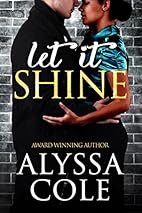
Let it Shine by Alyssa Cole
This is one of the finalists for this year's Rita Awards in the novella category, and IMHO it's extremely worthy of the honor. It's an interracial romance set in the 1960's South with a black heroine and a Jewish hero, both of them active in the Civil Rights Movement, and it's so romantic and moving, and feels so complete despite its short length. And, in a way, it made the history from ~10 years before my own birth feel more real to me than all the serious nonfiction I've read, or that college class on 1960's protest movements, just by reminding me that most of the men and women involved were very young, with all the personal dreams and passions that entails, none of which stop just because you're fighting for justice and earning a place in history.
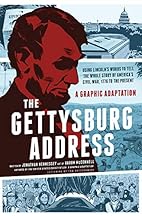
The Gettysburg Address: A Graphic Adaptation by Jonathan Hennessey
I wasn't expecting much when I picked up this book--I was mainly looking at it to see if it was accurate and interesting enough to be worth giving to my 12-year-old daughter as part of my ongoing plan to trick her into becoming a history geek like Mama and generally get a little more American history into her than the Seattle Public Schools seem to be bothering with. (I have a whole rant on that. Seattle schools are actually quite good as big city public schools go, but thus far my 6th grader has learned almost no history in school. And how do you expect kids who don't have history geek parents to even learn the basics, much less develop the nuanced understanding of how our past informs our present they need to be wise citizens and voters?)
Anyway, I ended up enjoying this book a whole lot myself for being the kind of nuanced lens on history I think we need more of--it uses Lincoln's address to look at slavery and racism, states' rights, and the ongoing tension between those rights and the need for a strong federal government, both before and after 1863.
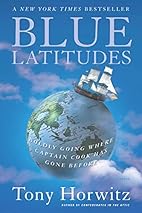
Blue Latitudes: Boldly Going Where Captain Cook Has Gone Before by Tony Horwitz
Half 21st-century travelogue, half 18th century history, and a wholly compelling read.
Showing posts with label travel. Show all posts
Saturday, April 30, 2016
Sunday, February 8, 2015
Making Me Happy, Week of 2/8
So, at the risk of oversharing, the thing that's making me happiest at the moment I type this is I think I'm FINALLY over this stomach bug I first came down with Thursday night. It's been almost two hours since dinner now, a normal-sized dinner of normal richness and spiciness (a pork and vegetable stew over polenta), and my stomach feels...totally calm. This is AWESOME.
With that out of the way, here are a few things making me happy that have nothing to do with the state of my intestines:
1) Pitchers and catchers report next week, y'all! Baseball is back, the days are getting longer, and life is good. My Mariners missed the playoffs by just one game last year, and they're considered a contender for this season. Mind you, I've been burned so many times by this team that I'll believe it when it happens and not before--meaning if they're up by 10 runs with 2 outs in the bottom of the 9th of Game 7 of the World Series, I'll still be holding my breath and not jinxing it by prematurely popping the cork and pouring champagne for my watch party or making plans for where I'll watch the parade or anything.
2) We're making serious plans for our big trip to Europe this summer. We've booked an apartment for our five nights in Paris and a cottage for our week in the Dordogne, and we should have hotels for London and Brussels within the next day or two. I'm starting to believe this is really going to happen.
3) At the risk of being a broken record of a Sleepy Hollow fangirl, if you're a fan of the show, you totally need to check out this four-issue comic series. It's set during the middle of Season 1, with tons of Abbie and Ichabod at their most awesome, and a good dose of Jenny and Frank, my favorite secondary characters, and ones we've seen far too little of in Season 2.
As long as we're on the subject of Sleepy Hollow, if you're a fanfic person at all, please give Shoqed by AmbrosiaJones a read. It was inspired by a Tumblr discussion of how the show has told us next to nothing about Abbie and Jenny's father, and wouldn't it be nice if he turned out to be an awesome demon fighter and not, you know, the stereotypical deadbeat absent black father? And it is now part of my "head canon" until the show tells me otherwise, and maybe even then, if what the show gives us is that stereotype.
To give you a feel for how good the voice is, here's a bit of Jeremiah Mills, forced to watch his beloved daughters from afar for their own safety:
Watching Gracie- no, Abbie. It’s Abbie now. Watching her had been harder. He remembered the first time he heard her ask to be called Abbie. “I hate my first name. I hate it. Grace was my dad’s idea. He called me ‘Gracie.’ He’s an asshole that I haven’t seen since I was like seven, so I use my middle name instead. Simple as that.” He didn’t leave his bed for a week after that.
She had been so sad. So closed off. So angry. So lonely. Even though Jenny had her troubles, she’d carved out a weird little family among the mercenaries and rogue archaeologists and treasure hunters she’d hooked up with. But not Gracie. Dammit. Abbie. Not Abbie. She wanted to go it alone.
Until that gangly white boy showed up in his graveyard time machine.
Then every glimpse of her was peppered with “Leftenant, why this?” and “Leftenant, why that?” He didn’t feel an awful lot of sympathy for this Ichabod Crane, though he knew he should. It probably had something to do with the way he looked at his daughter when he thought she wouldn’t notice. Plus the limey bastard was married to that magical fraud and if you really thought about it, could meet some of the qualifications of a zombie.
So. Now that I've revealed to you all the depths of my fangirling, I wish you an awesome week filled with whatever makes you the happiest.
Labels:
baseball,
comics,
fanfic,
Sleepy Hollow,
travel
Tuesday, February 11, 2014
2014 Reading, Books 13-18
13) Rick Steves' Amsterdam, Bruges & Brussels by Rick Steves.
More preparation for the 2015 European trip. Though we'll likely fly into London, then take the Chunnel over to Brussels in time for the Waterloo bicentennial, if the airfares are better we may go in through Amsterdam instead. Either way, this will very much be the military history part of the trip, since in addition to Waterloo we'd like to visit Flanders Fields.
14) Lysistrata, by Aristophanes.
I picked this Dover Thrift Edition up years ago, but only just now got around to reading it. I knew broadly what it was about--the women of Greece going on a sex strike to force an end to the Peloponnesian War--but I was surprised how laugh-out-loud funny it is nearly 2500 years later. (It helps that I've read enough on 5th-century BCE Greece to have a decent grasp on the cultural context.) The best comparison I can come up with is that it felt like I was reading the Daily Show or Colbert Report of ancient Athens.
15) A Summer Affair, by Susan Wiggs.
An enjoyable historical romance with a rather unusual setting--San Francisco in the late 19th century. A doctor who blames himself for the tragic death of his young wife a decade earlier and hasn't found a way to move on finds his life upended when he treats a self-described "lady adventurer" for a gunshot wound received in an incident she refuses to discuss.
16) Rita Book #4: This one got off to a bumpy start, and I never would've stuck with it past the first chapter if I hadn't been obliged to finish it because of my judging responsibilities. But around about p. 60 the story hooked me. Some might say the moral is that I should stop giving up on books a few pages in if I don't like the writing or characters, but in my experience this book is an exception, and books that start out dull, badly written, or otherwise problematic stay that way.
17) In This House of Brede, by Rumer Godden.
This book is my February re-read, of a book I initially read back in the mid-90's. I found it through the Hypatia recommender on Alexandria Digital Literature, a site I believe is now defunct, but that led me to several favorites--this book in particular, but also Dorothy Sayers, Lindsey Davis, and Diana Gabaldon. It also kept insisting I needed to read the Vorkosigan Saga, but I ignored it because I wasn't a science fiction reader. It took me over ten years to give in, but ever since I've been an evangelist for the series. (Have YOU met Miles Vorkosigan and accepted him as your personal Vor-lord and savior yet?)
But I digress. When I first read this book, I didn't expect to be hooked by a story about Benedictine nuns. I'm not Catholic, and at the time I'd never even met anyone in a religious order. (That's since changed due to my stint as office manager for the Spiritual Care department in one of the Seattle hospitals, since some of our chaplain trainees were nuns.) But I was drawn in by the vivid portrayals of the characters. I've always enjoyed stories about communities, whether they be towns, ships' crews, extended families, or whatever, and you can't get a much more focused community than a monastery of enclosed nuns. And it's that sense of community--of revisiting well-known friends--that makes the book so re-readable for me.
18) Rita Book #5: Average.
Labels:
ancient Greece,
classics,
contests,
historical romance,
literary fiction,
reading,
travel
Thursday, January 23, 2014
2014 Reading, Books 7-9
I'm judging Romance Writers of America's Rita awards again this year, which means I have a whole box full of books I'm counting toward my tally, but that I can't say much about without violating the contest's confidentiality rules. So...
7) Rita Book #1. In a subset of a subgenre I've never read before and wouldn't have picked up on my own, but a sweet, thoroughly enjoyable story. If all my books turn out this well, it'll be my best judging year ever.
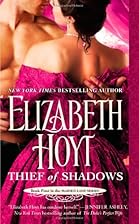
8) Thief of Shadows, by Elizabeth Hoyt.
I was home sick the day I read this book--and frankly, procrastinating, when I wasn't so sick I couldn't have been writing or doing any number of other practical things--so I read yet another book. I've heard nothing but good things about Elizabeth Hoyt's writing, but somehow hadn't gotten around to reading any of her books. I had this one on hand from what I'm pretty sure was a goodie bag giveaway at the 2012 RWA conference, and I thought I'd give it a try.
I'm glad I did. This is a fun, romantic, and sexy historical romance with a somewhat unusual setting (1730's London, and at least as concerned with the rookeries of St. Giles as high society ballrooms), a hero who's a masked avenger fighting crime by night, and a heroine with subtle masks of her own. It was a good romance to read soon after The Three Musketeers. The style and tone are obviously very different, but they're alike in not being afraid to swing for the fences in historical swashbuckling. Since if anything I think I err on the side of being too subtle as a writer, big stories are an inspiration and a challenge.
9) Rick Steves' Spain 2014, by Rick Steves.
I'm preparing for a big, month-long European trip in the summer of 2015. We're going to fly into London (or possibly Paris or Amsterdam--have to research fares and such, but those are the three best options for our itinerary where you can get direct flights from Seattle), be in Belgium in time for the June 18 bicentennial of the Battle of Waterloo, then make our way through France (Paris, then several days in the Dordogne region to unwind, eat VERY well, and see prehistoric sites) before crossing into Spain and Portugal. So I'll be reading lots of guidebooks this year, for values of "read" that equal "read the information for the places on our tentative itinerary in great detail, while skimming the rest of the country to determine what to try to fit in if we have a little more time."
For Spain, we expect to start out in Basque Country, based in either San Sebastian or Bilbao, then Madrid and Salamanca before crossing into Portugal--unless we decide to stay strictly in northern Spain and more or less follow the pilgrim route to Santiago de Compostela and then go down the coast into Portugal. I wish we had world enough and time for Granada, and my husband feels the same about Barcelona, but I know we won't want to cut the French portion of the trip short, and here's hoping there will be other chances in the future.
As always, Rick Steves writes a friendly guide for the traveler who's maybe aged out of the starving student backpacker at youth hostels stage, but who wants to avoid tourist traps and thereby save some cash while having a more authentic and intimate travel experience.
Labels:
historical romance,
reading,
romance,
travel
Saturday, January 4, 2014
Resolved
My birthday is New Year's Day, which means I get a double whammy of the impulse to change my life for the better that comes with turning over the calendar and having to write a new, bigger number on forms that ask for my age. So I have a habit of setting really ambitious resolutions for myself. Every year I declare that this year will be different! I will be so organized. I will waste no time. My house will be so neat. I will eat at least five servings of fresh fruits and vegetables every single day. My bills and paperwork will be filed, not just shoved into boxes, and each month I will clear out everything that's past its retention period.
Yeah, right. This year I'm at least attempting to be more realistic. But because it is a new year and I am a year older, I couldn't resist setting a few goals.
- I've been on Weight Watchers for a little over a year. At the start, I was 70 lbs over the top of the healthy range for my height. I've lost 40 of those pounds and by BMI am now considered overweight rather than obese. This year I want to lose the remaining 30 lbs and maintain the loss. (I'm not trying to lose any more than that because I really am big-boned. I have broad shoulders. My feet and even my head are big. As for my chest, let's just say I laughed uproariously at a book where a hero reflected on the heroine's "generous figure" by thinking she had to wear "C cups, at least." When I'm feeling poetic, I think of myself as the shield maiden type, though "sturdy peasant" is probably more accurate.)
- I will finish the manuscript I'm under contract for on time.
- I will submit proposals for two additional manuscripts--one sequel to the contracted book, and one completely unrelated work, possibly even in a whole new genre for me.
- I will read at least 120 books. (For 2013 I read 115, so this should be doable.)
- I will have a rough budget and itinerary mapped out for the European "trip of a lifetime" I'm planning for Summer 2015 to coincide with the bicentennial of the Battle of Waterloo.
- I will work with my doctor, my physical therapist, and any other specialists needed to get my bad shoulder and bad foot healthy enough to not spend the Summer 2015 trip limping and whimpering my way across Belgium, France, and Spain. (Currently I have good days and bad days with both problem areas.)
- I will work on improving my social life. I'm still figuring out what that means, but so far I think I'll invite friends to dinner more than once or twice per year, and I'll do some of the classes and activities at my new church instead of just slipping into a pew two minutes before the 10:00 AM service starts and ducking out as soon as it's over.
That's a lot, and if I pull it off I think I can legitimately feel accomplished. But it's not so far beyond what I'm already doing that I feel like I'm asking the impossible of myself.
Labels:
2014 resolutions,
reading,
travel,
Waterloo,
Weight Watchers,
writing
Tuesday, September 3, 2013
2013 Reading - Books 82-84
82) Cockpit Confidential, by Patrick Smith.
Patrick Smith is a commercial pilot and the author of the Ask the Pilot blog (formerly a column at salon.com). I've always been fascinated by his columns even though I'm not really a frequent flyer, typically flying 2-3 times a year for family, vacation, and writers' conferences. (I'm just frequent enough to get impatient when I'm stuck behind truly infrequent flyers who don't have the check-in and security line process down cold.) He's made me a much less nervous flyer--I finally believe that turbulence won't knock my plane out of the sky. Anyway, this book is much like his blog, informative and snarky, and I recommend it for anyone who'd like a behind-the-scenes look at air travel.
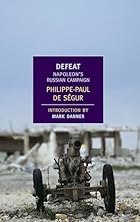
83) Defeat: Napoleon's Russian Campaign, by Philippe-Paul De Segur.
As I continue researching Napoleon's invasion of Russia for my next manuscript, I've moved on to campaign memoirs. This, written more than a decade after the fact by one of Napoleon's aides-de-camp from the campaign, is a fascinating and often horrifying read. It's a self-consciously literary saga of the Fall of the Hero, Occasioned by Hubris, but not made any less valuable as a primary source thereby--if anything, it's especially useful to see how the men of the Grande Armee made sense of their experiences, both at the time and in retrospect.
But what is up with that cover image? Would it have been so hard to find an image of a Napoleonic-era cannon?
84) Divergent, by Veronica Roth.
This seems to be the second-most popular dystopian YA series after The Hunger Games, and I picked it up out of curiosity after hearing about the upcoming movie. While I didn't completely buy into the concept of the faction-based social order (basically, your life is determined by whether you're more inclined to see courage, kindness, honesty, selflessness, or the pursuit of knowledge as the key virtue), I was able to accept the premise and let the story run with it, and me. It's compelling, and I've already put the second and upcoming third books in the series on my library holds list. That said, though I let my daughter read The Hunger Games and its sequels over the summer, I'm not going to tell her about these. It's not so much that they're more violent as that Tris feels less remorse about her kills than Katniss, and I'd rather my fourth grader stick to the latter as a role model for now.
Labels:
aviation,
dystopia,
invasion of Russia,
military history,
Napoleon,
nonfiction,
reading,
travel,
YA
Friday, May 17, 2013
2013 reading, books 46-48
46) Rick Steves' France 2013
More early scouting for my 2015 European trip, which continues to fill me with wistfulness that my 4-6 week dream trip of a lifetime (at least half of which will be spent in France) is going to fly by in an instant, and at best I'll see a tiny fraction of what I'd like. At this point the France plan, assuming I'll be coming in from Spain and working my way up to Belgium in time for the Waterloo anniversary, is to settle in to the Dordogne for at least 4 days, where I will eat amazing food and tour every prehistoric cave site open to visitors, head to Paris for another several days of museum and sightseeing, and then see either Normandy and the D-Day beaches or WWI battlefields around Verdun, because I probably won't have time for both. Maybe if money and work leave allow the 6-week trip, I'll be able to add Provence...or just spend more time in Paris!
47) The Way Back Home, by Barbara Freethy.
Chosen for my 2013 Rita-finalist reading challenge. Detailed commentary here.
48) Bloodlands: Europe Between Hitler and Stalin, by Timothy Snyder.
A dense, dark recounting of the mass murder of fourteen million people in twelve years (between 1932 and 1945) by Stalin's Soviet Union and Hitler's Germany in what the author describes as "the bloodlands"--i.e. those parts of Eastern Europe that fell under both Hitler's and Stalin's sway over the course of the era, basically Poland, the Ukraine, Belarus, Lithuania, Latvia, Estonia, and western Russia. Where most histories treat the various waves of murder as separate events, Snyder shows them as a kind of continuous flow from the collectivism famine in the Ukraine in the early 30's on through to the Holocaust. It's hard to take in, too horrific to make sense of, but I'm glad I read it nonetheless. And I like Snyder's closing point that it's not so much fourteen million victims dead as fourteen million times one lives ended--that each one of those people was an individual with a unique life and aspirations cut short, and the best way to honor them is to remember that, to not let them become a mass of dead as Stalin and Hitler wanted them to be.
Labels:
contemporary romance,
France,
history,
military history,
Nazi Germany,
Soviet Union,
travel
Wednesday, March 13, 2013
2013 Reading, Books 25-27
I'm overdue to respond to Veronica Scott's tagging me for a Five Favorite Books post, but it'll have to wait until I a) finalize and submit a manuscript that's due on Friday and b) write my next Risky Regencies post, also due on Friday.
Meanwhile, I've managed to squeeze in a few reading hours--nonfiction, because that's what my library holds list has been hitting me with of late:
25) Rick Steves' Portugal.
As with other travel books I'm counting toward my total this year, I didn't read this one cover to cover. I figure I'll have about a week, maybe a little less, for Portugal on my big 2015 trip, and that I'll therefore have to focus on Lisbon, Porto, and the Douro Valley, so those are the parts I read about in detail. Rick Steves was my go-to writer for figuring out where to visit in Britain and Ireland the year I lived in England, mostly because he assume you're not rich (correct!) and therefore provides a lot of budget options, and also because he's thorough without being encyclopedic. Anyway, I now feel like I know where to begin planning the Portuguese leg of the trip, which is all I need two years in advance. Once it's six months away I'll buy the most current guidebooks and start booking hotels.
26) The Wild Life of Our Bodies, by Rob Dunn.
A wide-ranging survey of the current state of the science about how humans evolved as part of an ecology that still impacts us today--from the more-or-less beneficial bacteria that live in our guts to having a fear response more suited to our ancestral status as prey than to our current role as ultimate apex predator to the speculative, but suggestive, theory that the reasons humans, along with other African primates, see so very well and in such a wide, discerning range of color relative to most mammals is that the African forest where those primates evolved teemed with a wide variety of poisonous snakes. (Sounds wacky, I know, but think about it--unlike, say, a lion or leopard that you might smell or hear coming from a distance, the primary defense against snakes is being able to see them in time. And the primates with the best color vision are the ones from the snakiest environments--there are no poisonous snakes native to Madagascar, for example, and lemurs have poor color vision compared to primates from the African mainland.)
Anyway, this is a fascinating, thought-provoking book I'd recommend to anyone interested in evolutionary biology or ecology.
27) French by Heart, by Rebecca Ramsey.
This memoir of an American family spending four years in France after the husband gets a job there is fun, though I wish there'd been a bit less focus on one irascible neighbor with a heart of gold and a bit more, well, France.
Labels:
evolutionary biology,
France,
memoir,
nonfiction,
Portugal,
travel
Saturday, March 2, 2013
2013 Reading, Books 19-21
19) What's the Matter with White People? Why We Long for a Golden Age that Never Was, by Joan Walsh.
Basically, a history of American politics from the Kennedy years to the present, from a Democratic perspective, filtered through the author's urban Irish-American family and their experiences. I was surprised to see how much resonance there was with my own family, which is more Scots-Irish and rural Southern than anything else. And that's all I'll say on this one, lest I get more political than I like on my writer blog...
20) Book Which Shall Not Be Named #4. My final Rita contest entry for the year, and another strong one. I'll be rooting for it and #3 to show up in the finals.
21) France (Eyewitness Travel)
Because I really am that much of a planner, I'm already reading travel guides to prepare for my Summer 2015 trip. While I'm overwhelmed by how much there is to see in France--the only way to really make it work would be to move there for several years--I finished the book with a rough idea of where I'm going to go in the few weeks I have to devote to France, and what wonderful places will have to wait for some future visit. (Must arrange to be Healthy Old Lady in 25-30 years, so I can spend my retirement years puttering around Europe!)
While I didn't read this entire book in the sense of finishing every single page (no point in reading, say, long lists of hotel rooms for a trip that's still two years away, or spending much time on the sights of parts of France I know I can't fit in my itinerary), I'm counting it anyway.
Tuesday, February 28, 2012
More books read
I'm continuing on my journey to read 75 books in 2012. At the moment I'm on pace for 180, but I expect that to slow down soon. If nothing else, all but one of my eight Rita books was on the short side, while War and Peace, which I plan to start after I turn in my manuscript for An Infamous Marriage, is...not.
24) Social Q's, by Philip Galanes. Etiquette for today's world by the author of the New York Times advice column. I heard the author interviewed on Fresh Air and decided to pick this one up at the library. Galanes doesn't have the same level of insight, wit, and elegant prose as Miss Manners, but this was a fun, quick read. Galanes's advice boils down to chill out, think before speaking, and tolerate others' foibles as you would have them tolerate your own.
25) Book Which Must Not Be Named (6 of 8). I'm going to continue to be a good judge and not say anything that might reveal the identity of this Rita entry, but suffice it to say it was a disappointment compared to the rest of my panel.
26) Season of Our Dreams: the 2010 Auburn Tigers, by Van Allen Plexico and John Ringer. As a sports fan, I have a knack for falling in love with snakebitten teams and athletes. In baseball, Mr. Fraser and I hold a 16-game plan (i.e. partial season ticket strip) with the Mariners, who in 2001 put together the best regular season EVER, only to fall short in the playoffs. Ever since, they've either outright sucked or flirted with contention only to fall apart down the stretch. My all-time favorite figure skater is Michelle Kwan, she who won everything BUT Olympic gold.

And then there's Auburn. I'm not an alumna (I went to Penn, which is not to be confused with Penn State and is not at ALL a football school), but I grew up in Alabama, in an Auburn family, and it's my oldest brother's alma mater. Living thousands of miles from my native state, I find myself asserting the Southern part of my identity on fall Saturdays, watching SEC football and cheering on my Tigers. But if the SEC West is the AL East (and really, we are--I can understand why the rest of the college football world hates us), Auburn is the Red Sox to Alabama's Yankees.
But in 2010, at last, it all went RIGHT. Improbably, awesomely right. Season of Our Dreams chronicles that year, largely by excerpting blog posts Plexico and Ringer made during the course of the year. There isn't much context in the form of game summaries--it relies on the reader to remember all that--but it made for a fun stroll down memory lane, allowing me to relive one of my teams FINALLY winning the big one during what for me is the lull between football ending and baseball starting again.
27) Book Which Must Not Be Named (7 of 8). Like my fifth Rita book, this one pleasantly surprised me. I'm not this book's target market, but I can recognize and reward tight, subtle writing and solid execution when I see it.
28) Book Which Must Not Be Named (8 of 8). My last Rita book was just plain average.

29) Avatar: The Last Airbender - The Lost Adventures. Another graphic novel, more like a graphic anthology, to tide me over till The Legend of Korra comes out. This one had some nice character vignettes, all set in the same time frame as the original TV series. I especially liked Sokka challenging Zuko to "swordbending," and really all the Zuko interactions from after he switched sides for good--there were all these tiny, subtle little touches where you could see he was simultaneously the most mature and the most fragile and damaged of the team. Mm, characterization, and in a kids' show/comic!

30) No Vulgar Hotel: The Desire and Pursuit of Venice, by Judith Martin. I picked this up because the author is better known as Miss Manners, whom I've already praised above. Now I've learned that she's a serious Venetophile, spending a portion of every year there. She writes an enjoyable, anecdotal love letter to Venice that didn't quite make me share her passion, but did give me a vicarious taste of it. (I haven't been there yet, and while it's certainly on my list of places I want to go, I don't feel the same hunger I have to finally see Paris or Rome, and I don't think I'll love it the way I do London or Edinburgh.)
24) Social Q's, by Philip Galanes. Etiquette for today's world by the author of the New York Times advice column. I heard the author interviewed on Fresh Air and decided to pick this one up at the library. Galanes doesn't have the same level of insight, wit, and elegant prose as Miss Manners, but this was a fun, quick read. Galanes's advice boils down to chill out, think before speaking, and tolerate others' foibles as you would have them tolerate your own.
25) Book Which Must Not Be Named (6 of 8). I'm going to continue to be a good judge and not say anything that might reveal the identity of this Rita entry, but suffice it to say it was a disappointment compared to the rest of my panel.
26) Season of Our Dreams: the 2010 Auburn Tigers, by Van Allen Plexico and John Ringer. As a sports fan, I have a knack for falling in love with snakebitten teams and athletes. In baseball, Mr. Fraser and I hold a 16-game plan (i.e. partial season ticket strip) with the Mariners, who in 2001 put together the best regular season EVER, only to fall short in the playoffs. Ever since, they've either outright sucked or flirted with contention only to fall apart down the stretch. My all-time favorite figure skater is Michelle Kwan, she who won everything BUT Olympic gold.

And then there's Auburn. I'm not an alumna (I went to Penn, which is not to be confused with Penn State and is not at ALL a football school), but I grew up in Alabama, in an Auburn family, and it's my oldest brother's alma mater. Living thousands of miles from my native state, I find myself asserting the Southern part of my identity on fall Saturdays, watching SEC football and cheering on my Tigers. But if the SEC West is the AL East (and really, we are--I can understand why the rest of the college football world hates us), Auburn is the Red Sox to Alabama's Yankees.
But in 2010, at last, it all went RIGHT. Improbably, awesomely right. Season of Our Dreams chronicles that year, largely by excerpting blog posts Plexico and Ringer made during the course of the year. There isn't much context in the form of game summaries--it relies on the reader to remember all that--but it made for a fun stroll down memory lane, allowing me to relive one of my teams FINALLY winning the big one during what for me is the lull between football ending and baseball starting again.
27) Book Which Must Not Be Named (7 of 8). Like my fifth Rita book, this one pleasantly surprised me. I'm not this book's target market, but I can recognize and reward tight, subtle writing and solid execution when I see it.
28) Book Which Must Not Be Named (8 of 8). My last Rita book was just plain average.

29) Avatar: The Last Airbender - The Lost Adventures. Another graphic novel, more like a graphic anthology, to tide me over till The Legend of Korra comes out. This one had some nice character vignettes, all set in the same time frame as the original TV series. I especially liked Sokka challenging Zuko to "swordbending," and really all the Zuko interactions from after he switched sides for good--there were all these tiny, subtle little touches where you could see he was simultaneously the most mature and the most fragile and damaged of the team. Mm, characterization, and in a kids' show/comic!

30) No Vulgar Hotel: The Desire and Pursuit of Venice, by Judith Martin. I picked this up because the author is better known as Miss Manners, whom I've already praised above. Now I've learned that she's a serious Venetophile, spending a portion of every year there. She writes an enjoyable, anecdotal love letter to Venice that didn't quite make me share her passion, but did give me a vicarious taste of it. (I haven't been there yet, and while it's certainly on my list of places I want to go, I don't feel the same hunger I have to finally see Paris or Rome, and I don't think I'll love it the way I do London or Edinburgh.)
Friday, August 5, 2011
Summer reading continues
I've slowed up a bit on summer reading for grown-ups, not to mention blog posting, because I've got a pair of deadlines, semi-self-imposed but important to me, this month. I'm pushing myself to write harder than I have since first developing my pinched nerve issues last November. So wish me health, and the sense to know just how much I can push myself before causing a serious setback.
But, I've still been reading. I never really stop. My latest three books:
1. The Domestic Servant Class in 18th Century England, by Jean Hecht
Genre: Nonfiction (history)
Format/source: hardcover, UW library
Purely a research rather than a leisure read, but an engaging one. (I find reading about the 18th century more useful to me as a Napoleonic/Regency writer than the 19th because most 19th century sources skew heavily Victorian. Many historians agree with me, for what it's worth, writing of a "long 18th century" spanning the period between the Glorious Revolution in 1688 and Waterloo in 1815.) It gave me a much better sense of why someone who had options might choose to go into service over what to my mind would be a much freer and therefore better way of life as an artisan or shopkeeper--namely good pay, job security that included food, clothing, and shelter, the chance to travel, and the fact that when I think ANYTHING would be better than servility, FREEEEEDOMMMM! etc., I'm projecting a bit too much of my own cultural biases onto a different place and time.
2. Lost in My Own Backyard, by Tim Cahill
Genre: Nonfiction (travel)
Format/source: Hardcover, library
This was recommended to me by the Seattle library's "your next five books" service, which gives you personalized, reader's advisory-type recommendations if you tell them a little about what you do and don't like. I mentioned Bill Bryson as a nonfiction favorite, so the librarian thought I might like Cahill's travel writing. He's not as funny and doesn't have as strong a voice as Bryson, but I enjoyed this book. It reminded me of a childhood trip to Yellowstone and made me want to go back.
3. The Masque of the Black Tulip, by Lauren Willig
Genre: Historical romance/chick lit/spy fiction
Format/source: hardcover, library
I read The Secret History of the Pink Carnation, first book in this series, ages ago, but the reader's advisory librarian reminded me of the series. (The rest of her romance recommendations didn't really work--I'd either already read the author and liked them but hadn't loved them enough to include on my list of favorites, or they were VERY old school. Like, rapist hero old school, you really thought a fan of Loretta Chase, Jo Beverley, Courtney Milan, and Rose Lerner would want to read THAT old school? Seriously, I think the romance side of their reader's advisory could use some work. Maybe I'll even mention it, politely, of course.)
But anyway, Black Tulip. Fun book. I definitely need to catch up on this series. In some ways they're not my usual thing, since my tastes skew realistic and even a bit gritty, while this series is frothy, deliberately OTT, and slyly anachronistic. I think it's the "deliberately" and "slyly" parts that make it work for me. I can tell Willig knows and loves her history and enjoys playing with it. Anachronisms and inaccuracies only bug me when I feel like the author doesn't know and/or doesn't care.
Labels:
historical romance,
research,
summer reading program,
travel
Tuesday, July 12, 2011
Summer reading: pre Dance With Dragons edition
A Dance With Dragons hit my Kindle at midnight, so there's a good chance that I'm somewhere with Tyrion Lannister, Jon Snow, or Daenerys Targaryen right now. Which I guess is a spoiler that all three survived the first four books, for those of you who've only seen the show...or maybe it isn't. They could be undead. Stranger things have happened. You'll just have to find out for yourselves.
Anyway, I continue to plug away at the Seattle Public Library Adult Summer Reading Program. I want to win that Nook, dang it. Not that there's anything wrong with my Kindle, but as an e-published author I need to be familiar with multiple formats, don't I? Or maybe I'm just competitive.
Last week's books:
1) A Reluctant Queen, by Joan Wolf
Genre: Inspirational historical romance
Format/source: trade paperback, library
A biblical novelization, but one that isn't particularly preachy or literalistic in its approach to the source text. Really, it's almost an alternative history, in that Ahasuerus is Xerxes' brother instead of another name for the same man. The action takes place between Marathon (490 BCE) and Thermopylae/Salamis (480), and as a bit of a Greek history geek I couldn't help wondering what's going to happen to, oh, world history in general and western civilization in particular if Xerxes isn't the Great King and the 480 invasion of Greece either doesn't happen or is better led. And the text invites those questions, since one of the topics the characters argue over is what to do about those troublesome Greeks. Still, I enjoyed the book. Sweetly romantic, I liked how Haman and Mordecai were humanized, and the details of Persian court life felt well-researched.
2. Ladies of Waterloo, by Charlotte Eaton, Magdalen de Lancey, and Juana Smith
Genre: Nonfiction (history)
Format/source: trade paperback, bought
Three women's experiences living through Waterloo, not at the battle itself but as friends and wives of men who were involved. Research for the WIP.
3. A Cook's Tour, by Anthony Bourdain
Genre: Nonfiction (food/travel)
Format/source: Kindle, bought
Companion volume to Bourdain's old Food Network series. Made me long to go to Vietnam, France, Morocco, and the French Laundry (where I have promised to take my husband if I ever make the NYT bestseller list). Cambodia, not so much.
Subscribe to:
Posts (Atom)