(Insert standard cliche here about the year flying by, can't believe it's May tomorrow, etc.)
I finished 11 books in April, three of which I'm recommending today. And unlike last month, none of these are deep into a series where you'd need to read at least three other books just to know what's going on!
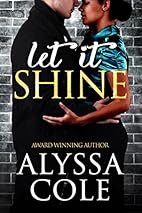
Let it Shine by Alyssa Cole
This is one of the finalists for this year's Rita Awards in the novella category, and IMHO it's extremely worthy of the honor. It's an interracial romance set in the 1960's South with a black heroine and a Jewish hero, both of them active in the Civil Rights Movement, and it's so romantic and moving, and feels so complete despite its short length. And, in a way, it made the history from ~10 years before my own birth feel more real to me than all the serious nonfiction I've read, or that college class on 1960's protest movements, just by reminding me that most of the men and women involved were very young, with all the personal dreams and passions that entails, none of which stop just because you're fighting for justice and earning a place in history.
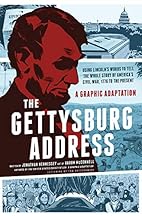
The Gettysburg Address: A Graphic Adaptation by Jonathan Hennessey
I wasn't expecting much when I picked up this book--I was mainly looking at it to see if it was accurate and interesting enough to be worth giving to my 12-year-old daughter as part of my ongoing plan to trick her into becoming a history geek like Mama and generally get a little more American history into her than the Seattle Public Schools seem to be bothering with. (I have a whole rant on that. Seattle schools are actually quite good as big city public schools go, but thus far my 6th grader has learned almost no history in school. And how do you expect kids who don't have history geek parents to even learn the basics, much less develop the nuanced understanding of how our past informs our present they need to be wise citizens and voters?)
Anyway, I ended up enjoying this book a whole lot myself for being the kind of nuanced lens on history I think we need more of--it uses Lincoln's address to look at slavery and racism, states' rights, and the ongoing tension between those rights and the need for a strong federal government, both before and after 1863.
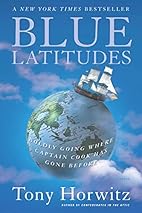
Blue Latitudes: Boldly Going Where Captain Cook Has Gone Before by Tony Horwitz
Half 21st-century travelogue, half 18th century history, and a wholly compelling read.
Showing posts with label Civil War. Show all posts
Saturday, April 30, 2016
Tuesday, July 30, 2013
2013 Reading, Books 73-75
73) Mothers of Invention: Women of the Slaveholding South in the American Civil War, by Drew Gilpin Faust.
Drew Faust is currently the president of Harvard, but she was an AmCiv professor at Penn back when I was an undergraduate there. Her two classes on the American South, one covering 1607-1861, the other 1861-present, were among the most popular and highly rated in the entire university. I took the first and found it an eye-opening look at my own roots.
This book in its own way was the same kind of experience. Faust looks at the diaries and letters of elite white Southern women (who AREN'T part of my roots--my Civil-War-era antecedents fell into the "poor white" category and were probably marginally literate at best) and how the four years of the Civil War impacted their views on everything from gender roles to religion to race relations, leading, among other things, to a feminism that was both more pessimistic and conservative than that of the rest of the country during the fight for women's suffrage.
74) Blindspot: Hidden Biases of Good People, by Mahzarin R. Banaji and Anthony G. Greenwald.
This quick but thought-provoking read is all about the measure the authors, a Harvard and a UW* professor, developed to measure unconscious biases of various kinds. It's a deceptively simple measure of whether you associate a particular group with positive or negative qualities. For a sample test, the book had you go through lists of insect and flower nouns (e.g. wasp, roach, rose, lily) and negative and positive traits/things (e.g. vomit, fear, peace, heaven). On one round you sort flowers and pleasant things into Column A, insects and negative ones into Column B, while on the next you have to put flowers and negative things in Column A, insects and positive ones in Column B. Since almost everyone prefers flowers to insects, they're able to perform the first round much more quickly. (Though I noticed the insect list didn't include "honeybee" or "butterfly." I caught myself hesitating on "moth" compared to the other insects, because it's not like they're ugly or gross or fill me with a desire to either run away or squash them. I have a feeling I would've wanted to class bees and butterflies with flowers, since I expect to see them AROUND flowers and have wholly positive associations with them. Butterflies are pretty! Bees make honey and pollinate our crops, and colony collapse disorder is so scary I'm downright thrilled whenever I see honeybees at work.)
Anyway, the test takes on more serious implications as soon as you turn it to sorting human categories. It turns out that even people who wouldn't be considered racist or bigoted by any conscious measure tend to associate whites with more positive qualities than blacks or with more American traits than Hispanics or Asians. Even committed feminists associate women more with home and men more with work, and so forth. I'm appalled but not exactly surprised to say that despite trying my best to perform on the tests as the unbiased, egalitarian person I aspire to be, I showed my share of unconscious bias--though at least my anti-bug bias is stronger than any of my human ones. :-/
The book raises more questions than it answers, but the author's main points are that A) these biases matter, because even though most of us want to be unbiased and therefore wouldn't consciously discriminate, our unconscious biases show up in small ways that over time add up to real harm in peoples lives, and B) if we know our biases exist, we can take conscious steps to counteract them.
*Since I live in Seattle and actually work at the U-Dub in question for my day job, this means University of Washington, not Wisconsin or Wyoming. When I was at the RWA conference, a couple of lunch tablemates, strangers to me, were talking about UW and its hospital system, and I was all ready to jump in with my insider opinion until I took a closer look at their name tags and saw they were from Wisconsin.
75) The Turncoat, by Donna Thorland.
A fast-paced, sexy spy novel set mostly in British-occupied Philadelphia in 1777-78. Recommended for fans of Lauren Willig's Pink Carnation books, with the caveat that it's darker and grittier--if you like Willig but also like, say, Diana Gabaldon or Bernard Cornwell, you should definitely pick this book up. (Though it comes with a trigger warning for depictions of rape, mostly off-page but in one case fairly graphic.)
Drew Faust is currently the president of Harvard, but she was an AmCiv professor at Penn back when I was an undergraduate there. Her two classes on the American South, one covering 1607-1861, the other 1861-present, were among the most popular and highly rated in the entire university. I took the first and found it an eye-opening look at my own roots.
This book in its own way was the same kind of experience. Faust looks at the diaries and letters of elite white Southern women (who AREN'T part of my roots--my Civil-War-era antecedents fell into the "poor white" category and were probably marginally literate at best) and how the four years of the Civil War impacted their views on everything from gender roles to religion to race relations, leading, among other things, to a feminism that was both more pessimistic and conservative than that of the rest of the country during the fight for women's suffrage.
74) Blindspot: Hidden Biases of Good People, by Mahzarin R. Banaji and Anthony G. Greenwald.
This quick but thought-provoking read is all about the measure the authors, a Harvard and a UW* professor, developed to measure unconscious biases of various kinds. It's a deceptively simple measure of whether you associate a particular group with positive or negative qualities. For a sample test, the book had you go through lists of insect and flower nouns (e.g. wasp, roach, rose, lily) and negative and positive traits/things (e.g. vomit, fear, peace, heaven). On one round you sort flowers and pleasant things into Column A, insects and negative ones into Column B, while on the next you have to put flowers and negative things in Column A, insects and positive ones in Column B. Since almost everyone prefers flowers to insects, they're able to perform the first round much more quickly. (Though I noticed the insect list didn't include "honeybee" or "butterfly." I caught myself hesitating on "moth" compared to the other insects, because it's not like they're ugly or gross or fill me with a desire to either run away or squash them. I have a feeling I would've wanted to class bees and butterflies with flowers, since I expect to see them AROUND flowers and have wholly positive associations with them. Butterflies are pretty! Bees make honey and pollinate our crops, and colony collapse disorder is so scary I'm downright thrilled whenever I see honeybees at work.)
Anyway, the test takes on more serious implications as soon as you turn it to sorting human categories. It turns out that even people who wouldn't be considered racist or bigoted by any conscious measure tend to associate whites with more positive qualities than blacks or with more American traits than Hispanics or Asians. Even committed feminists associate women more with home and men more with work, and so forth. I'm appalled but not exactly surprised to say that despite trying my best to perform on the tests as the unbiased, egalitarian person I aspire to be, I showed my share of unconscious bias--though at least my anti-bug bias is stronger than any of my human ones. :-/
The book raises more questions than it answers, but the author's main points are that A) these biases matter, because even though most of us want to be unbiased and therefore wouldn't consciously discriminate, our unconscious biases show up in small ways that over time add up to real harm in peoples lives, and B) if we know our biases exist, we can take conscious steps to counteract them.
*Since I live in Seattle and actually work at the U-Dub in question for my day job, this means University of Washington, not Wisconsin or Wyoming. When I was at the RWA conference, a couple of lunch tablemates, strangers to me, were talking about UW and its hospital system, and I was all ready to jump in with my insider opinion until I took a closer look at their name tags and saw they were from Wisconsin.
75) The Turncoat, by Donna Thorland.
A fast-paced, sexy spy novel set mostly in British-occupied Philadelphia in 1777-78. Recommended for fans of Lauren Willig's Pink Carnation books, with the caveat that it's darker and grittier--if you like Willig but also like, say, Diana Gabaldon or Bernard Cornwell, you should definitely pick this book up. (Though it comes with a trigger warning for depictions of rape, mostly off-page but in one case fairly graphic.)
Wednesday, June 19, 2013
2013 Reading, Books 58-60
58) The Fall of the House of Dixie, by Bruce Levine.
An excellent history of the Civil War focusing not on military strategy and tactics, but on how the conflict ultimately hastened the end of slavery even though that wasn't the Union's initial goal. I'd heard it before, but it still amazes me that so many people on both sides were surprised that blacks made as good soldiers as whites, fighting with just the courage and tenacity you'd expect of men fighting for their own and their families' freedom, and that black children given the opportunity to learn picked up reading and writing just as quickly as white children.
59) Defiant, by Pamela Clare.
For my personal 2013 Rita reading challenge, blogged about here.
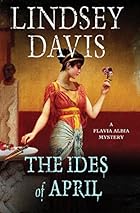
60) The Ides of April, by Lindsey Davis.
Isn't that a gorgeous cover?
First in a new series of mysteries set in Ancient Rome, this book is linked to the Davis's Falco series, but it takes place about a dozen years after the last one, and we never actually see Falco and Helena. The sleuth is their adopted daughter, Flavia Albia, an independent young widow who's taken up her father's old profession and lives on her own. Falco and Helena are evidently doing fine, and Albia drops in to visit regularly--it's just that all those meeting are told rather than shown. Hopefully that won't be the case throughout the series, though I can understand wanting to establish Albia as an interesting character in her own right.
The book got off to rather a slow start, and I might not have stuck with it were it not for my long-standing love for the Falco series. But about 40% in, the story took off and I started caring about Albia for her own sake. I guessed the whodunnit fairly quickly, not to mention the love interest, though there was a sort of mini-mystery about the latter I must confess to being totally oblivious to until it was spelled out for me. In any case, I'm looking forward to book two next year.
Thursday, April 5, 2012
Too many anniversaries
Had I won the Mega Millions lottery last week, I would've spent a large part of the next few years on battlefields. If you're interested in military history, as I am, our time is filled with anniversaries. We're 200 years out of the later parts of the Napoleonic Wars, a year into the American Civil War's 150th, and World War I is coming back into public consciousness as we approach its 100 year mark.
Tomorrow (April 6) my hypothetical rich self would need to be two places at once. It's the 200th anniversary of the Storming of Badajoz, which plays a significant role in my first book, The Sergeant's Lady.
Badajoz was an unusually gruesome battle for its time--the elite Light Division lost 40% of its fighting strength. The aftermath was even worse, as the victorious British sacked the city in a rampage of looting, rape, and murder.
It's also the 150th anniversary of the Battle of Shiloh, which at the time was the bloodiest battle in American history.
Badajoz and Shiloh are both grim enough to make me stop and question my own fascination with military history. I'm by no means a pacifist, because I think there are some evils that can't be stopped short of a war. World War II and the Civil War, viewed from the Union side, both strike me as just and unavoidable. But I'm also by no means unthinkingly militaristic. Few things make me angrier than seeing good men and women sacrificed for no worthy purpose in an unjust, unnecessary war. I find World War I all but unbearable to contemplate precisely because it was so damn pointless, and if it served any purpose beyond decimating Europe and making World War II all but inevitable, I've never been able to find it. And even the most just of wars...well, I'll quote William Tecumseh Sherman in May 1865:
So, I don't love war, but I can't look away from its history. Maybe it's in the blood--though I'm not an Army brat, I've got a lot of soldiers in my family, both in the present and living memory and at least as far back as the American Revolution. (Though, as noted above, I firmly believe the Union had all the right on its side in the Civil War, my roots in Alabama go deep enough that I'm the great-great-granddaughter of a Confederate soldier. I'm neither proud nor ashamed of that fact--it simply is what it is. He was a product of his place and time. If anything, my eligibility for the Daughters of the Confederacy, which I would never, ever join, is a useful reminder to occasionally ask myself what injustices I condone unthinkingly because they're normal for where and when I live.)
Whatever the cause, I expect I'll continue studying military history and writing about soldiers--the glory, moonshine though it be, and the horror, and the courage, honor, and sacrifice. And there's one anniversary I intend to make. Barring catastrophe, I'll be at Waterloo on June 18, 2015.
Tomorrow (April 6) my hypothetical rich self would need to be two places at once. It's the 200th anniversary of the Storming of Badajoz, which plays a significant role in my first book, The Sergeant's Lady.
Badajoz was an unusually gruesome battle for its time--the elite Light Division lost 40% of its fighting strength. The aftermath was even worse, as the victorious British sacked the city in a rampage of looting, rape, and murder.
It's also the 150th anniversary of the Battle of Shiloh, which at the time was the bloodiest battle in American history.
Badajoz and Shiloh are both grim enough to make me stop and question my own fascination with military history. I'm by no means a pacifist, because I think there are some evils that can't be stopped short of a war. World War II and the Civil War, viewed from the Union side, both strike me as just and unavoidable. But I'm also by no means unthinkingly militaristic. Few things make me angrier than seeing good men and women sacrificed for no worthy purpose in an unjust, unnecessary war. I find World War I all but unbearable to contemplate precisely because it was so damn pointless, and if it served any purpose beyond decimating Europe and making World War II all but inevitable, I've never been able to find it. And even the most just of wars...well, I'll quote William Tecumseh Sherman in May 1865:
I confess, without shame, that I am sick and tired of fighting — its glory is all moonshine; even success the most brilliant is over dead and mangled bodies, with the anguish and lamentations of distant families, appealing to me for sons, husbands, and fathers ... it is only those who have never heard a shot, never heard the shriek and groans of the wounded and lacerated ... that cry aloud for more blood, more vengeance, more desolation.
So, I don't love war, but I can't look away from its history. Maybe it's in the blood--though I'm not an Army brat, I've got a lot of soldiers in my family, both in the present and living memory and at least as far back as the American Revolution. (Though, as noted above, I firmly believe the Union had all the right on its side in the Civil War, my roots in Alabama go deep enough that I'm the great-great-granddaughter of a Confederate soldier. I'm neither proud nor ashamed of that fact--it simply is what it is. He was a product of his place and time. If anything, my eligibility for the Daughters of the Confederacy, which I would never, ever join, is a useful reminder to occasionally ask myself what injustices I condone unthinkingly because they're normal for where and when I live.)
Whatever the cause, I expect I'll continue studying military history and writing about soldiers--the glory, moonshine though it be, and the horror, and the courage, honor, and sacrifice. And there's one anniversary I intend to make. Barring catastrophe, I'll be at Waterloo on June 18, 2015.
Labels:
Badajoz,
Civil War,
Sergeant's Lady,
Shiloh,
Waterloo,
World War I
Tuesday, October 4, 2011
Weekly book post
Now that I'm settling in to my new day job, I've decided to shoot for three blog posts per week, on Sundays, Tuesdays, and Thursdays. The Sunday post will be whatever is on my mind, usually writing or research-related, or a guest post. Thursdays will be food and cooking, as I try to work my way through at least one new recipe from every cookbook I own. And Tuesdays will be my reading updates.
So, here's what I've read since the last time I blogged my reading. It's a bit heavy on the nonfiction and research books, partly because I'm working out my hero's backstory of service in and around Upper Canada during the War of 1812 and partly because my library holds list suddenly spat out a pile of nonfiction all at once.
1) The War of 1812: A Forgotten Conflict, by Donald Hickey
A fairly in-depth history. It focuses on the American point-of-view but was still useful for giving me an overview of how the war played out. At the risk of letting my contemporary political views show a bit, the War of 1812 comes across as depressingly reminiscent of the Iraq War in some ways--the party in power pulled the country into it for rather dubious reasons and damned anyone who disagreed as traitors, for example.
2) Crown and Calumet: British-Indian Relations, 1783-1815, by Colin Calloway
As the title says, a book all about relations between the British and Native Americans from the end of the American Revolution through the War of 1812. Fascinating, at least for me, because it's an aspect of Native American history I'd never run across before.
3) Love Story, by Jennifer Echols
A YA romance where the hero and heroine work out their feelings for each other and complex history together over the course of a writing seminar as college freshmen. I enjoyed it, as I always do Echols' books, though I have to admit I would've liked to see a longer last chapter or an epilogue or something just to sort of enjoy the couple together after all they went through to get there.
4) This Republic of Suffering: Death and the American Civil War, by Drew Gilpin Faust
I was lucky enough to take Drew Faust's class on the American South 1607-1861 lo these many years ago as a Penn undergrad, so when I saw this book mentioned on a blog (more than likely Ta-Nehisi Coates' place), I sought it out. It's a depressing read--naturally, since it's a book about death--but I couldn't put it down all the same. It's about how the massive carnage of the Civil War changed how Americans related to war deaths in particular and mortality in general. One of the many things that struck me was that in the 19th century, a dead soldier's family wouldn't have found any consolation in hearing that their son/husband/brother died so suddenly that he didn't have time to suffer. Instead, they valued the "Good Death," wherein the dying person knows what's happening, accepts it with a show of faith and resignation (so consoling to the family as reassurance they'll see him again in heaven), and passes on loving messages and words of wisdom for those left behind. So when soldiers did die instantly, their friends would write their families these reassuring messages about how Joe saw this coming, he had a premonition and was perfectly resigned to the possibility and had been living a good and prayerful life, and so on.
Labels:
Civil War,
reading,
research,
War of 1812,
YA
Wednesday, January 5, 2011
Research Wednesday: A Story I'd Like to Learn
I am inordinately fond of the 1822 David Wilkie painting "Chelsea Pensioners Reading the Waterloo Dispatch." It's so happy, you see. I don't think it's Great Art, but I find it impossible to look at without catching at least a tiny bit of the characters' jubilation. A quarter century of almost continual war is over at last, and even the dogs and the baby are thrilled.
Lately what catches my eye the most is the black man near the center of this detail from the painting:

He's there in the midst of the action, celebrating with the rest, and there's no hint I can see that he's relegated to any kind of lesser status. His features are possibly somewhat caricatured in that he's got a bit of a receding forehead, but so do some of the whites in the painting, so I'm inclined to give Wilkie a pass.
There were somewhere between 5000-10,000 blacks in London in the early 19th century, all of them free, and it stands to reason some of them must've been Napoleonic War veterans. There were also black soldiers on the French side. I recall reading that when the French army was in Egypt in the late 1790's and needed more manpower, one of the things they did was buy Sudanese slaves and offer them their freedom in exchange for military service--and that some of them fought in the Grande Armee for the duration of the wars.
There's a fascinating story waiting to be discovered...but I don't think I'm the one to write it. I'm not of the school that believes authors should be limited to their own ethnic groups for protagonists. But for someone like me who's not just white but eligible for the Daughters of the Confederacy (though I'd never DREAM of joining) to take it upon herself to tell the story of a black soldier under Napoleon or Wellington feels...presumptuous, to put it mildly. But somebody should do it.
That man in the painting and what I think he represents fascinate me so because I've been quietly following the discussions of the Confederacy, the Civil War, and their continuing repercussions in American society on Ta-Nehisi Coates's blog. And one of the recurring topics is black soldiers--how black regiments were established in the Union army, what whites on both sides thought of them, debunking the false claim that substantial numbers of blacks fought for the Confederacy, and so on. Given the rampant racism of the time, there was considerable shock, even on the Union side, to discover that blacks made just as good soldiers as whites. Even though there were presumably plenty of Frenchmen and Englishmen still in living memory who wouldn't have been surprised in the least.
Labels:
Civil War,
Napoleon,
Research Wednesday,
Wellington
Subscribe to:
Posts (Atom)