I missed last week's recipe and happiness posts because my daughter and I have been fighting the Lingering Cold of Doom 2016, and I spent from Tuesday night through midday Sunday doing as little as possible. This illness, however, led to me getting more reading done than I expected in February, a total of 15 books.
Here are my favorites from those books, in the order I read them. As far as I know, none were actually February releases--I'm rarely quite that up-to-date in my reading--but if your curiosity is piqued, they're all available as ebooks and/or at your local library.
Accidental Saints by Nadia Bolz-Weber
A memoir of faith by an unconventional Lutheran pastor (her congregation is the House for All Sinners and Saints in Denver) that was the perfect read for me at the beginning of Lent. It follows the rhythm of the liturgical church year--which is a big part of what drew me from my very non-liturgical Baptist roots all the way to the Episcopal Church, that whole sense of following an ancient rhythm and set of traditions to mark the patterns of the year--and also features the life-affirming grace and humor that have been a source of joy to me as a newbie Episcopalian. (Episcopalians and Lutherans have wildly different Protestant origin stories, but at least in America have grown quite a bit alike, so there's a certain similarity in style and approach, and our congregations often work together.)
The Aeronaut's Windlass by Jim Butcher
I'd never read anything by Butcher before, though I knew him for a popular and prolific author. So I didn't quite know what to expect from this book.
What I found was purely delightful. Steampunk fantasy with airships engaging in duels a la Hornblower or Aubrey/Maturin in the clouds! Swashbuckling! Talking cats! (The talking cats were my favorite part of all.)
This book is first in a new series which I expect to follow all the way through, and I plan to check out Butcher's backlist as well. There are few things more delightful as a reader than discovering a new-to-you author whose "also by..." list takes up an entire page.
In Her Wildest Dreams by Farrah Rochon
A contemporary romance novella that packed a lot of romance and character develop into a story you can read in an afternoon. It features one of my all-time favorite tropes--friends to lovers--in a pair of New Orleans entrepreneurs (he's a computer programmer turned chocolatier, and she's a high-end event planner) who support and advise each other as they struggle to balance their longing for independence and self-sufficiency with their needs for community, to care for and accept care from friends and family.
I love that this is a city story, and one where love goes hand in hand with work, ambition, and finding a sense of vocation and fulfillment in their careers for both the hero and heroine.
Forgotten: The Untold Story of D-Day's Black Heroes, at Home and at War by Linda Hervieux
This account of black American soldiers during WWII, focusing on the experience of a barrage balloon battalion who landed at Omaha Beach on D-Day, was fascinating, and it left me gibbering with rage at the culture I was born into--that of the rural white South--for the way those soldiers, American citizens fighting to defend our country and to liberate Europe from tyranny and genocide, were treated. Yes, much has changed (though much still needs to change). But the fact that German POWs were regularly given privileges, kindness, and leisure opportunities that black AMERICAN SOLDIERS were denied? It's sickening. Not surprising, sadly, but sickening. (Not that I'm saying the POWs should've been treated badly, please understand.) And it also made me realize that we're almost as far removed from WWII now as WWII was removed from the Civil War. It seems weird that we're so many decades past WWII that it's starting to feel both distant from our world and close enough to the Civil War that you can clearly see the through-lines connecting them in American race relations and military history.
Listen to the Moon by Rose Lerner
While In Her Wildest Dreams was a delicious example of one of my favorite tropes, Listen to the Moon took a trope I usually struggle with--a large age gap between the hero and heroine--and made it work for me. (He's 40 and she's 22.) It helped that they met as adults, and she was never in any sense his ward or otherwise a daughter figure to him, so while there was a gap in their maturity and life experience, they still felt like equals in their relationship.
It's also an unusual historical romance in that the hero and heroine are both servants and stay that way throughout the story. In addition to being a sexy love story is something of a meditation on work, community, and finding your true vocation--so in that way it has a lot in common with my other romance recommendation. More romances like these, please!
Showing posts with label religion. Show all posts
Monday, February 29, 2016
Sunday, May 31, 2015
2015 Reading catch-up post, books 46-54
So, getting ready for the Europe trip, along with some personal writing projects, has taken over my life for the past month. My reading pace has slowed down, way down, though I'm hoping to be able to make up some time what with all the hours I'll be spending on airplanes and the occasional train in June and July!
46. The Lowland by Jhumpa Lahiri
With this book I ventured into the rare-for-me genre of literary fiction as part of a recent commitment of mine to seek out more books by nonwhite authors. As part of a discussion about people trying to read more books by women, I reflected that that wasn't an issue for me, given that almost all of the fiction I read is woman-authored, along with maybe half the nonfiction. But I could easily go months without ever reading a nonwhite author and not even notice I'm doing it.
So, at least once a month, I plan to read a book by an author of color. And I can't count the same author more than once a year, since it would kind of defeat the purpose of exposing myself to a broader range of voices if I find an author with, say, a nice long mystery series and read one per month.
Anyway, while this was a fascinating book, it was also dark and depressing enough to remind me why I generally prefer genre to literary fiction. I am glad I read it, though.
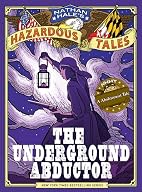
47. The Underground Abductor by Nathan Hale
The latest in Nathan Hale's series of graphic novels for upper elementary readers about American history looks at Harriet Tubman's childhood and youth, her escape from slavery, and her work on the Underground Railroad. This wasn't my favorite in the series--Donner Dinner Party has a tighter narrative arc (probably because it covers a shorter time period and was just a more linear historical incident), and Treaties, Trenches, Mud, and Blood impressed me by actually making WWI comprehensible to young readers like my daughter without trivializing it. But an average Nathan Hale's Hazardous Tale is still an awesome book, and I learned quite a bit from it, since I didn't know much about Harriet Tubman beyond her name and the fact she was involved with the Underground Railroad.
48. How We Got to Now by Steven Johnson
A quick, fascinating read looking at how innovations in six different areas have built on each other in unexpected ways over the past few centuries. Definitely recommended for those who like history of science books.
(As a side note, I'm way too prone to describing books as "fascinating." Memo to self: find new adjectives for "this book was cool and really held my attention.")
49. In Real Life by Cory Doctorow & Jen Wang
Another graphic novel read to be shared with my daughter, though this one was a Message Book, and one that was too heavy-handed for my taste despite my agreeing with its views.
50. The Dirt on Clean by Katherine Ashenburg
An interesting, readable social history on the history of cleanliness in the western world from ancient Greek days to the present.
51. Pocket Apocalypse by Seanan McGuire
Fourth in the InCryptid series. I haven't liked the last two books as much as the first two--I enjoyed Verity Price's New York adventures more than her brother Alex's role as zookeeper to creatures both ordinary and paranormal--but this one did have a good bit of the family's Aeslin Mice, which are my favorite magical creatures EVER.
52. Cheated by Jay Smith and Mary Willingham
A detailed account of a long-running academic scandal at the University of North Carolina involving the funneling of academically ill-prepared athletes, especially in the "money" sports of football and men's basketball, into courses whose requirements were basically nonexistent. Basically, it's the kind of thing I always kinda assumed was going on with elite collegiate sports programs, but it's depressing to see it spelled out.
I love football especially so much, but lately between the head injury issues, the stunted educations of young men who are unlikely to ever see the NFL (or play long enough to amass a fortune to last them their lifetimes if they do), and the fact the sport's powers that be seem to think I should be happy to ignore rampant domestic violence and sexual assault issues, I'm finding it harder and harder to justify that love.
53. Heirs to Forgotten Kingdoms by Gerard Russell
What with how busy and travel-focused I've been, it took me two weeks to finish this book, though it's fascinating--an account of the (mostly) obscure minority religions of the Middle East--Druze, Samaritans, Yazidi, Zoroastrians, etc.
54. Dead Wake by Erik Larson
An account of the last Atlantic crossing and sinking of the Lusitania. A good read if you like historical disaster tales, and IMHO Larson's best work to date. It's remarkable in a way that the loss of so many American civilian lives didn't expedite our entry into WWI--and, I have to admit, it speaks well of Woodrow Wilson, who isn't my favorite of the well-known POTUSes for several reasons. But the book's focus, and where it shines, is in the stories of all the individuals aboard the ship (mostly the survivors, though in some cases I guessed wrong about who was going to survive because some particularly vivid account turned out to be from a survivor's memory of a dead companion or from papers recovered from a body).
Sunday, April 19, 2015
2015 Reading, Books 43-45
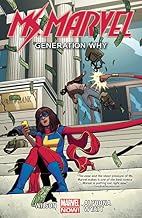
43. Ms. Marvel Volume 2: Generation Why by G. Willow Wilson, Jacob Wyatt (Illustrator), Adrian Alphona (Illustrator)
What a fun series, and how awesome to have something like this to share with my geeky tomboy 11-year-old daughter!
44. Roller Girl by Victoria Jamieson
...And I continue to raid my daughter's graphic novel collection. This one got me right in the feels. I seriously almost cried reading it. It's about a 12-year-old girl navigating changing friendships and trying to forge her own identity...and between having a preteen daughter and my own vivid memories of that age, this one was a direct hit.
45. American Apocalypse by Matthew Avery Sutton
A history of fundamentalist and evangelical Christianity in America from the late 19th century through the present day (though the strongest focus is ~1900-1950). Sutton focuses heavily on the importance of apocalyptic belief in an imminent Tribulation and Second Coming and its impact on fundamentalist political engagement. It's a dense but fascinating read. I was surprised to see how deeply rooted the criticisms I've seen of current politicians and policies are--e.g. I hadn't realized FDR came in for similar venom to what Clinton and Obama have been on the receiving end of in my lifetime.
Labels:
American history,
graphic novels,
reading,
religion,
superheroes
Saturday, February 14, 2015
2015 Reading, Books 19-21 (plus why you should watch Monday's Sleepy Hollow!)
19. Rita book #5
A tough one to rate. There were things I loved about it and things I hated. If this had been the kind of contest where you offer critique as opposed to just a numerical score, I would've filled the scoresheet with my rants and raves. As it was, I ended up assigning it a middling score, though unlike most of my midrange scores, I never thought "meh" at any point.
20. Sleepy Hollow #1-4 by Marguerite Bennett
I'm choosing to count these four comics as a single graphic novel, since they have a linked story arc and they're about the length/number of issues I usually see bound into book format.
OMG these are SO much fun. Far better than average for a TV tie-in, and filled with everything I loved about Season 1 of the show that's been too often lacking in the current season--focus on Ichabod and Abbie working together with wit, intelligence and loyalty, Katrina used minimally but effectively, plenty of Jenny and Irving. As with most tie-ins, not what you'd want as an introduction to the story and characters, but if you enjoy the show, you MUST read these.
...And if you're a Sleepy Hollow viewer who's stepped away over the way the show occasionally dragged this season with way too much Crane Family Drama and focus on extraneous characters like Nick Hawley to the exclusion of established favorite supporting characters like Jenny and Frank, I encourage you to come back for the two-part finale that starts Monday night. For that matter, I'd encourage you to tune in if you'd never seen the show before and want to know what I'm constantly babbling about of late. IMHO the writers have righted the ship and the show is moving in the right direction again. Plus we get Evil!Katrina. FINALLY.
Look, I've got excerpts from Monday! You want to watch this! You want to know what happens! I know it all sounds crazy, but that's what makes it so awesome!
21. Does Jesus Really Love Me? by Jeff Chu
Arguably yet another entry in my Year of the Memoir, but I decided to count it as a religion book, since I felt like I learned more about the churches Chu visited and the people he met than I did about his personal journey--though that was in there, too. The balance felt like 60-40, or maybe 70-30.
Homosexuality is arguably the most contentious issue in modern American Christianity. My native state of Alabama is currently making something of an exhibition of itself over it, and as someone who's evolved into a theologically liberal Christian, I feel a certain satisfaction that my chosen home state of Washington didn't have to wait for a court order, we voted for same-sex marriage. But as a straight woman, I'll always have an outsider's perspective on the issue. Chu provides an insider's view as a gay Christian from an evangelical background as he explores everything from the most extreme of extremists (he actually meets the Westboro Baptist Church people) to the most open and accepting congregations. A readable, gracious, and generous book.
A tough one to rate. There were things I loved about it and things I hated. If this had been the kind of contest where you offer critique as opposed to just a numerical score, I would've filled the scoresheet with my rants and raves. As it was, I ended up assigning it a middling score, though unlike most of my midrange scores, I never thought "meh" at any point.
20. Sleepy Hollow #1-4 by Marguerite Bennett
I'm choosing to count these four comics as a single graphic novel, since they have a linked story arc and they're about the length/number of issues I usually see bound into book format.
OMG these are SO much fun. Far better than average for a TV tie-in, and filled with everything I loved about Season 1 of the show that's been too often lacking in the current season--focus on Ichabod and Abbie working together with wit, intelligence and loyalty, Katrina used minimally but effectively, plenty of Jenny and Irving. As with most tie-ins, not what you'd want as an introduction to the story and characters, but if you enjoy the show, you MUST read these.
...And if you're a Sleepy Hollow viewer who's stepped away over the way the show occasionally dragged this season with way too much Crane Family Drama and focus on extraneous characters like Nick Hawley to the exclusion of established favorite supporting characters like Jenny and Frank, I encourage you to come back for the two-part finale that starts Monday night. For that matter, I'd encourage you to tune in if you'd never seen the show before and want to know what I'm constantly babbling about of late. IMHO the writers have righted the ship and the show is moving in the right direction again. Plus we get Evil!Katrina. FINALLY.
Look, I've got excerpts from Monday! You want to watch this! You want to know what happens! I know it all sounds crazy, but that's what makes it so awesome!
Arguably yet another entry in my Year of the Memoir, but I decided to count it as a religion book, since I felt like I learned more about the churches Chu visited and the people he met than I did about his personal journey--though that was in there, too. The balance felt like 60-40, or maybe 70-30.
Homosexuality is arguably the most contentious issue in modern American Christianity. My native state of Alabama is currently making something of an exhibition of itself over it, and as someone who's evolved into a theologically liberal Christian, I feel a certain satisfaction that my chosen home state of Washington didn't have to wait for a court order, we voted for same-sex marriage. But as a straight woman, I'll always have an outsider's perspective on the issue. Chu provides an insider's view as a gay Christian from an evangelical background as he explores everything from the most extreme of extremists (he actually meets the Westboro Baptist Church people) to the most open and accepting congregations. A readable, gracious, and generous book.
Labels:
comics,
contests,
current issues,
memoir,
reading,
religion,
romance,
Sleepy Hollow
Sunday, December 28, 2014
2014 Reading, Books 136-138
136) The Devil's Cave by Martin Walker
Another entry in a series I've become fond of because, as with many of my favorite mystery series, the discovery of a corpse serves as an excuse to visit the sleuth and his friends, enemies, and lovers again. Sure, there's a mystery to be solved. But more importantly, Bruno has a new puppy! And is still torn between Isabelle and Pamela, though I'm starting to suspect he might end up with someone else, like maybe Florence. (FWIW, I'm Team Pamela. So I guess I ship Bramela. Or maybe Pamuno.) Oh, and there are many delicious meals. I can hardly wait to get to the Dordogne region next summer myself so I can eat a bit like that myself.
137) Faith Shift by Kathy Escobar
Not quite a memoir, not quite a self-help book, and not quite a book of theology, this book explores the kind of faith crisis many Christians, especially those from an evangelical or fundamentalist background, go through when we/they discover that the world doesn't necessarily match up to their carefully held, carefully taught beliefs. I wish I'd had it when I was first beginning to go through my own faith shift, and even now it felt a bit freeing to be given permission to doubt, question, not got to church EVERY Sunday, etc. That said, for someone trying to avoid Christianese, she sure talks about "seasons" a lot for stages/phases. (It's total Christian-speak: "I'm going through a season of doubt/joy/grief/etc. right now," where "season" has nothing to do with its conventional calendar/climatological meaning.)
138) A Bollywood Affair by Sonali Dev
This book has been getting a lot of raves in the romance blogosphere of late, and I'd say those raves are deserved, though I'm not sure yet whether it's going to make it onto the Top 10 list for 2014 reads that I'll be making sometime next weekend. But it's a book that manages the neat trick of being laugh-out-loud funny without being at all slight, the characters are human and relatable, and reading it felt a bit like being an invited guest at an Indian wedding.
Labels:
contemporary romance,
France,
India,
mystery,
religion
Sunday, April 6, 2014
2014 Reading, Books 37-42
Still plugging away at the manuscript that's due April 30, but forcing myself to make time to read so I get the occasional brain break:
37) Half-Off Ragnarok by Seanan McGuire.
This book was just plain fun. At first I missed Verity, the protagonist of the two previous InCryptid novels, but once I got used to her more serious science geek brother Alex, I enjoyed this story of paranormal murders at an Ohio zoo.
38) An Heir of Uncertainty by Alyssa Everett.
Alyssa is one of my critique partners and Carina one of my publishers, so I can't be totally objective about her books. With that caveat, this book shows Alyssa's deep understanding of the Regency era and her elegant voice. It's a well-paced, romantic story with relatable characters. My one caveat is I wish there had been a little more space in the denouement to show the hero and heroine coming to terms with the identity of the murderer.
39) The Twilight of the American Enlightenment: The 1950s and the Crisis of Liberal Belief by George M. Marsden.
Marsden looks at the subtle fault lines in American culture in the 1950s--ways the consensus worldview, a mix of Protestant faith and Enlightenment philosophy, was starting to break down, ultimately creating the culture war of the past three decades. I don't usually delve so deeply into philosophy, theology, or psychology, but I'm glad I read this book. I feel like it gave me a deeper insight into the events and ideas that created the world I was born into.
40) The Luckiest Lady in London by Sherry Thomas.
A beautifully written historical romance set in late Victorian England. The hero is that staple of romance fiction, the man who won't let himself love because his parents' terrible relationship made him afraid to trust love in general or women in particular, but Thomas made the resulting conflict feel more human and believable than this trope usually is for me. That said, the heroine forgives him a lot quicker than I would've done...
41) Newton's Football: The Science Behind America's Game by Allen St. John & Ainissa Ramirez.
A quick, interesting read on some of the science behind football--everything from the West Coast offense to how improved tackling technique and better helmets could reduce concussion risk.
42) The Mountains of Mourning by Lois McMaster Bujold.
I've read this novella once before, but I'd forgotten what a strong punch it packs. It's such a perfect encapsulation of everything important about the world of the Vorkosigan series and beautifully written and constructed to boot. I...I just wish I could write like that.
Labels:
American history,
fantasy,
football,
historical romance,
reading,
religion,
science fiction
Wednesday, March 26, 2014
2014 Reading, Books 34-36
34) The Up Side of Down: Why Failing Well Is the Key to Success by Megan McArdle
Using recent high-profile examples like the sub-prime mortgage crisis, along with personal anecdotes of dating relationships gone sour and the time a hospital almost misdiagnosed her mother's appendicitis, McArdle looks at failure with a view to convincing readers that being forgiving and flexible--of themselves and others--is the best way to cope. I liked it, but I was hoping for a little bit more of a self-help focus. You know, "Feeling like a failure in Area X of your life? Here's 10 questions you should ask yourself."
35) 101 Reasons to be Episcopalian by Louie Crew.
This very quick little book was a gift from our rector to everyone who was confirmed in the Episcopal Church when our bishop visited in December. Reading it A) made me regret skipping church this morning and B) reminded me why I made the right decision to become Episcopalian instead of leaving the church altogether or continuing to force myself to stay in a more conservative denomination that was no longer a good fit.
36) The Blythes are Quoted by LM Montgomery.
I still haven't decided whether I'm glad or sorry I read this book. It's the very final work of LM Montgomery, turned into her publisher on the day she died in 1942 (quite possibly suicide). This is the manuscript essentially as submitted, with very little editing, and while it wasn't badly written, it didn't have the sparkle and polish of the rest of her work that I've read. It's mostly short stories, none of them about the Blythe family, though they're regularly mentioned, usually with praise as just about the best-looking, most intelligent, and wisest people around. (Which got a little annoying, because it didn't feel natural.) Interspersed with the stories are poems, purportedly by Anne and Walter, with comments and reflections from the family, in which we see the family continue to mourn Walter and become more cynical about WWI. Just as I always calculated when reading Rilla of Ingleside, Anne and Gilbert's grandchildren are just the right age to fight WWII, and we learn that Faith and Jem's sons have joined, that Ken and Rilla's son is in the RCAF, etc.
I think I would've been more interested if this had been a novel about the Blythes instead of a bunch of short stories about people I didn't have a prior attachment to. I tend to be less of a fan of short stories for just that reason--you don't have time to really know and become attached to the characters, so they're usually more about an idea or a plot gimmick than people. Also, it's one thing to realize myself that the Blythe grandchildren will have to fight WWII. It's another thing to see it on the page, somehow.
Labels:
Christianity,
classics,
religion,
self-help,
short stories
Saturday, May 25, 2013
2013 Reading, Books 49-51
All non-fiction this time out, since the library delivered me a huge stack of holds I'm trying to work my way through...
49) Help, Thanks, Wow: The Three Essential Prayers, by Anne Lamott.
I read this book after Bloodlands through sheer coincidence; they came from the library at the same time. But I'm glad it worked out this way, since Lamott's book was the perfect spiritual refreshment after the long, bleak reminder of the worst humanity is capable of that I'd just completed. It's also perfect for the kind of faith I've been assembling for myself after having lost the airtight certainty of my youthful beliefs--more about holding on to hope and wonder, and, since I've chosen to join an Episcopal church, about experiencing a beautiful tradition and liturgy. The Thanks and Wow chapters in particular helped me remember to stop and revel in the Eternal Now of the current moment, instead of always straining toward a longed-for future when I might be able to quit my day job and write full-time, or else flinching away from the inevitable future in which someday I must die. I found myself reveling in the life all around me, even in the spring pollen that makes me sneeze and coats my pretty black car with an unsightly yellow film. I remembered my favorite lines from For I will Consider My Cat Jeoffry:
...and also quoting one of my favorite lines from a character in the Vorkosigan saga: "Every day is a gift. Me, I tear open the package and wolf it down on the spot," not to mention, of all people, Bon Jovi: "I just want to live while I'm alive."
So I guess you might say the book made an impression on me. Thanks, Anne Lamott!
50) The Normal Bar, by Chrisanna Northrup, Pepper Schwartz, and James Witte.
This is a book of marriage/long-term relationship advice, based on a voluntary survey of couples in long-term relationships. It both describes what's normal in the population surveyed and suggests ways to improve your own relationship's "normal." It's a quick, light read, but gave me enough to think about that I'm thinking of buying my own copy (the one I read is the library's) and trying out some of the suggestions and exercises with Mr. Fraser.
51) The Year Without Summer: 1816 and the Volcano that Darkened the World and Changed History, by William Klingaman and Nicholas P. Klingaman.
This book's two authors, who I believe are father and son, hold PhDs in history and meteorology, and their expertise comes together perfectly in this fascinating account of the 1815 Tambora eruption--the largest volcanic eruption in recorded history--and its disruption of the climate for several years thereafter, but most notably in 1816, when the young United States and much of Western and Central Europe had no summer to speak of. (I understood the history better than the meteorology, but, basically, Europe was unseasonably cold all year and hammered with rain from North Atlantic storms, leading to crop failures, while America got pounded by unseasonable arctic storms--snow in June and July!--interspersed with a cold yet severe drought, again leading to crop failures.) We follow various well-known figures ranging from Lord Byron to John Quincy Adams as they live through a disastrous season in nations already reeling from a severe postwar recession, and get a glimpse of how various governments and their citizens/subjects responded to the crisis. I kept finding parallels to the present day--the British government's debates about how much they could and should help their people were depressingly reminiscent of the current drive for austerity at all costs, and there was apocalyptic fervor, most notably over a prediction that the sun was going out and would die entirely on July 18, ending life on Earth. You see, it was a high sunspot year, and all the ash in the atmosphere made it easer to spot the spots, so...panic! No one at the time realized the real cause of the bad weather, though Benjamin Franklin had speculated decades earlier that volcanic ash could lead to temporary cooling.
As the subtitle states, the world was changed. The crop failures in New England sped the settlement of the Old Northwest--Ohio, Indiana, and Illinois. Mary Shelley wrote Frankenstein. The expectations of what a government should do for its people shifted. The cycle of hunger and disruption in Ireland that culminated in the 1840's potato famine began. And while we don't know as much about the eruption's impact on the Asian climate, the authors speculate that the first cholera pandemic might have been connected to it, when a disease that had evidently been endemic to India already began to spread in early 1817.
49) Help, Thanks, Wow: The Three Essential Prayers, by Anne Lamott.
I read this book after Bloodlands through sheer coincidence; they came from the library at the same time. But I'm glad it worked out this way, since Lamott's book was the perfect spiritual refreshment after the long, bleak reminder of the worst humanity is capable of that I'd just completed. It's also perfect for the kind of faith I've been assembling for myself after having lost the airtight certainty of my youthful beliefs--more about holding on to hope and wonder, and, since I've chosen to join an Episcopal church, about experiencing a beautiful tradition and liturgy. The Thanks and Wow chapters in particular helped me remember to stop and revel in the Eternal Now of the current moment, instead of always straining toward a longed-for future when I might be able to quit my day job and write full-time, or else flinching away from the inevitable future in which someday I must die. I found myself reveling in the life all around me, even in the spring pollen that makes me sneeze and coats my pretty black car with an unsightly yellow film. I remembered my favorite lines from For I will Consider My Cat Jeoffry:
For he counteracts the Devil, who is death, by brisking about the life.
For in his morning orisons he loves the sun and the sun loves him.
For he is of the tribe of Tiger.
For the Cherub Cat is a term of the Angel Tiger.
...and also quoting one of my favorite lines from a character in the Vorkosigan saga: "Every day is a gift. Me, I tear open the package and wolf it down on the spot," not to mention, of all people, Bon Jovi: "I just want to live while I'm alive."
So I guess you might say the book made an impression on me. Thanks, Anne Lamott!
50) The Normal Bar, by Chrisanna Northrup, Pepper Schwartz, and James Witte.
This is a book of marriage/long-term relationship advice, based on a voluntary survey of couples in long-term relationships. It both describes what's normal in the population surveyed and suggests ways to improve your own relationship's "normal." It's a quick, light read, but gave me enough to think about that I'm thinking of buying my own copy (the one I read is the library's) and trying out some of the suggestions and exercises with Mr. Fraser.
51) The Year Without Summer: 1816 and the Volcano that Darkened the World and Changed History, by William Klingaman and Nicholas P. Klingaman.
This book's two authors, who I believe are father and son, hold PhDs in history and meteorology, and their expertise comes together perfectly in this fascinating account of the 1815 Tambora eruption--the largest volcanic eruption in recorded history--and its disruption of the climate for several years thereafter, but most notably in 1816, when the young United States and much of Western and Central Europe had no summer to speak of. (I understood the history better than the meteorology, but, basically, Europe was unseasonably cold all year and hammered with rain from North Atlantic storms, leading to crop failures, while America got pounded by unseasonable arctic storms--snow in June and July!--interspersed with a cold yet severe drought, again leading to crop failures.) We follow various well-known figures ranging from Lord Byron to John Quincy Adams as they live through a disastrous season in nations already reeling from a severe postwar recession, and get a glimpse of how various governments and their citizens/subjects responded to the crisis. I kept finding parallels to the present day--the British government's debates about how much they could and should help their people were depressingly reminiscent of the current drive for austerity at all costs, and there was apocalyptic fervor, most notably over a prediction that the sun was going out and would die entirely on July 18, ending life on Earth. You see, it was a high sunspot year, and all the ash in the atmosphere made it easer to spot the spots, so...panic! No one at the time realized the real cause of the bad weather, though Benjamin Franklin had speculated decades earlier that volcanic ash could lead to temporary cooling.
As the subtitle states, the world was changed. The crop failures in New England sped the settlement of the Old Northwest--Ohio, Indiana, and Illinois. Mary Shelley wrote Frankenstein. The expectations of what a government should do for its people shifted. The cycle of hunger and disruption in Ireland that culminated in the 1840's potato famine began. And while we don't know as much about the eruption's impact on the Asian climate, the authors speculate that the first cholera pandemic might have been connected to it, when a disease that had evidently been endemic to India already began to spread in early 1817.
Labels:
history,
meteorology,
nonfiction,
reading,
religion,
self-help
Tuesday, October 30, 2012
Reading Update - Memoir, Mystery, and Romance
Still inching toward 100 books read on the year...
86) Evolving in Monkey Town, by Rachel Held Evans. Memoir about how a girl who grew up in the airtight certainty of conservative Christianity discovered she didn't have all the answers after all and learned to live with a faith that has questions and uncertainties. At the risk of talking about religion more than I normally do on this blog...I can relate.
87) The Book of Mormon Girl, by Joanna Brooks. An interesting book to read right after Evolving in Monkey Town, since it's also the story of a woman raised in a conservative religious background who struggles with her faith while deciding to stay within it. I think what struck me most, surprised me, really, was her sense of connection to the history of the Mormon faith. To my eyes, it's an awfully short history--I mean, my native state (Alabama) wasn't even one of the original thirteen, and it's still older than the Mormon church. But I can see how if you're actually descended from people who made the trek to Utah with Brigham Young, it wouldn't be the kind of thing one could lightly walk away from.
88) Bruno, Chief of Police, by Martin Walker. A delightful mystery set in a village in the South of France. It has an unfashionably leisurely pace--the dead body doesn't show up till the end of Chapter 4--which IMHO worked well by mirroring the peaceful, timeless lifestyle Bruno values and strives to protect. I was also impressed with the way Walker balanced the overall loveliness and humor of his story with the darkness of the murder plot (the corpse is found with a swastika carved on his body). I look forward to reading the rest of Walker's fiction and quite possibly some of his nonfiction, too.
89) An Illicit Temptation, by Jeannie Lin. A short novella (or long short story--I'm never sure where these lines are drawn) featuring a secondary character from My Fair Concubine. Like Lin's other books, it's set during the Tang Dynasty, though it takes place among the nomadic Khitan people. (The heroine is a Chinese woman, purportedly royal, on the way to the Khitan ruler as a treaty bride.) A quick read that nonetheless feels satisfying and wholly fleshed out.
Any book I post about on this blog is one I liked enough to finish and therefore enough to recommend...but books #88 and and #89 were especially good reads, contenders for my top ten on the year. If you like mysteries or historical romance, give them a try.
Labels:
Christianity,
historical romance,
memoir,
mystery,
novellas,
religion
Subscribe to:
Posts (Atom)