Happy Independence Day to my fellow Americans! I'm off from the day job today, but I have to work Friday--which, looking on the bright side, means this week feels like it has two Fridays. I'll be having a low-key celebration with my family. Mr. Fraser is making waffles for breakfast, a tradition for almost every holiday we're not traveling, since they taste just as good on Labor Day or Presidents' Day as they do in July. Then we'll grill hot dogs and I'll bake Miss Fraser's favorite cake, which has white icing transformed into an American flag with strawberry stripes and blueberry stars.
It just occurred to me that the year is half over. (Insert ritual "How did THAT happen?" comment here.) That means it's time to post my top ten reads of the year so far, in the order I read them:
1)
Julie's Wolf Pack
Third in Jean Craighead George's beautiful YA series about a young Inuit girl who finds refuge among a wolf pack and keeps ties with them even after being reunited with her family, this one is almost all from the POV of the wolves themselves, and it works surprisingly well. She doesn't quite anthropomorphize them but still makes them extremely relatable, somehow.
2)
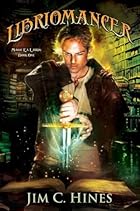
Libriomancer, by Jim C. Hines.
First in a fantasy series with a really clever concept for its magic--basically, books make magic by the collective belief of readers in the stories' worlds, and libriomancers can pull objects out of those books temporarily. This doesn't give the unlimited power you might think--among other things, too much magic use wrecks both the libriomancer and the book, and you can only pull out objects that would fit through an ordinary-sized physical copy of the book. E.g. if I were a libriomancer carrying a copy of a book from the Sharpe series, I could pull out Sharpe's sword or the telescope Wellington gave him, but a cannon wouldn't fit. The story and characters are as good as the concept, and I'll be eagerly awaiting the sequels. I've already preordered the sequel,
Codex Born.
3)
A Year of Biblical Womanhood, by Rachel Held Evans
I'm easily hooked by the type of memoir where someone spends a year trying to live a lifestyle that's foreign to them, cooks their way through a famous cookbook, or whatever. This one was both hilarious and unexpectedly moving. Evans comes from a background almost identical to my own--I'm ~10 years older, but we grew up within 40 or 50 miles of each other, and the biggest obvious difference between our good Alabama Baptist families is that mine roots for Auburn in college football while hers supports Alabama. (I was really disappointed that the month she was trying not to be contentious was October 2010 rather than November of that year, because she talked about her struggles during the South Carolina game rather than the epic Auburn comeback. And yes, I know Bama has since won two more national championships. 2010 was still awesome.)
Anyway, Evans is also like me in having wrestled with the increasing conservatism of the evangelical church, though AFAIK she hasn't yet gone as far as I have in running away from it--I'm now Episcopalian, which I suspect has some of my Baptist ancestors spinning in their graves. So for this book she spends each month of a year trying to live out one of the biblical commands to women literally, both to show the absurdity of a hyper-literal approach and to find God in unexpected places. She also talks a lot about women's power and strength, in the Bible and through history to the present. I think what will stick with me most is her discussion of the Proverbs 31 woman, which I was taught to think of as the perfect homemaker--someone I hoped to become during my more conservative days and now rebel against. But Evans discovers that in the Jewish tradition, that text isn't used prescriptively, but as praise for whenever a woman shows courage, generosity, integrity, and like virtues. In Hebrew the words the King James Bible translates as "a virtuous woman" are "eshet chayil"--a woman of valor. I'll never be a Proverbs 31 homemaker, but on my best days I can be a woman of valor.
4)
Miss Jacobson's Journey, by Carola Dunn
This one is a traditional Regency, with a PG, kisses-only sensuality rating, but with a decidedly non-traditional heroine and setting. The heroine, Miriam Jacobson, is an English Jew who's been living on the Continent with her doctor uncle for nine years after having become estranged from the rest of her family by rudely rejecting the suitor the matchmaker brought for her. Now she wants to go home, but at the height of the Napoleonic Wars, journeying from France to England isn't a simple task. She and her maid/duenna are recruited by Jakob Rothschild to help two men smuggle gold to Wellington in Spain, with the promise of help getting home once she completes her mission. Naturally, one of the men in her party is the suitor she rejected all those years ago, and he's grown and matured in the intervening years into a far more attractive man than she ever would've dreamed possible...
From the time I started reading traditional Regencies in high school, I've always loved any non-traditional setting. (Not that I don't love a nice country house party or London Season tale, too.) Following the drum in the Peninsular War? I'm there. Congress of Vienna? Fascinating. Canada? More, please. Brussels just before Waterloo? Wonderful! America, before, during, or after the War of 1812? Why not? So this book had me halfway to hooked from the beginning because of the setting, and the story delivered on its promise. I enjoyed all the characters, the sweet romance worked beautifully for me, and I've already bought more of Dunn's backlist.
5)
Whose Names Are Unknown, by Sanora Babb.
I heard about this book while watching Ken Burns' Dust Bowl documentary. It was originally written and accepted for publication in the 1930's, then rejected after The Grapes of Wrath came out because the acquiring editor figured there wasn't room for TWO Dust Bowl/Okie migrant stories. (Which is so laughably different from today's market, where every hit spawns a dozen imitators.)
I'm glad I read this book. It's more literary than my usual taste, but it has a kind of subtle, deceptively simple beauty, and it sort of rounded out my understanding of the Dust Bowl era, I think, in the way that good fiction can bring the past to life better than documentary alone.
6)
Things I Can't Forget, by Miranda Kenneally.
I've been a Kenneally fan ever since I read the query letter for her first YA romance, Catching Jordan, (her agent posted it on a blog as an example of an effective query), but I think this book may be my favorite so far just because I identified with the heroine so much. I've been told that's a simplistic reason to enjoy a book, but oh well. I was Kate when I was 18, and for several years afterward. Painfully good, afraid to break the rules, convinced that my beliefs were the only right ones and therefore pretty dang judgmental even if I was better than Kate at keeping my mouth shut about it. So I enjoyed watching Kate begin to come to terms with life's complexities and ambiguities, and I loved seeing a character like her (and my younger self) grow and change.
7)
Help, Thanks, Wow: The Three Essential Prayers, by Anne Lamott.
Anne Lamott's books don't always work for me, but this one blew me away. The Thanks and Wow chapters in particular helped me remember to stop and revel in the Eternal Now of the current moment, instead of always straining toward a longed-for future when I might be able to quit my day job and write full-time, or else flinching away from the inevitable future in which someday I must die. I found myself reveling in the life all around me, even in the spring pollen that makes me sneeze and coats my pretty black car with an unsightly yellow film. I remembered my favorite lines from For I will Consider My Cat Jeoffry:
For he counteracts the Devil, who is death, by brisking about the life.
For in his morning orisons he loves the sun and the sun loves him.
For he is of the tribe of Tiger.
For the Cherub Cat is a term of the Angel Tiger.
...and also quoting one of my favorite lines from a character in the Vorkosigan saga: "Every day is a gift. Me, I tear open the package and wolf it down on the spot," not to mention, of all people, Bon Jovi: "I just want to live while I'm alive."
So I guess you might say the book made an impression on me. Thanks, Anne Lamott!
8)
Sacred Games, by Gary Corby.
Third in a series of light, fun, yet richly researched mysteries based in Periclean Athens. This entry is set at the Games of the 80th Olympiad in 460 BCE, and our sleuth, Nicolaos, a fictional elder brother to Socrates, has to pair up with a Spartan to investigate the death of a star Spartan athlete the night after the opening ceremonies. (The primary suspect is an Athenian, and everyone agrees the only fair solution is to have one man from each city investigate, because at that point in history there was no such thing as a neutral city in any dispute between the two rival powers.) Corby does an excellent job bringing the bloodthirsty, superstitious, and quirky aspects of Greek culture to life, while simultaneously making his characters and their world human and relatable. I recommend this especially for fans of Lindsey Davis's Falco series, as the tone is quite similar.
9)
The Strange History of the American Quadroon, by Emily Clark.
The book that made me withdraw a submitted manuscript so I could fix its utter historical inaccuracy.
See more detail here.
10)
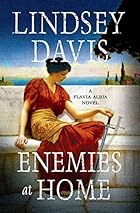
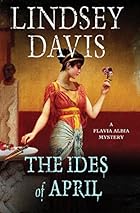
The Ides of April, by Lindsey Davis.
First in a new series of mysteries set in Ancient Rome, this book is linked to the Davis's Falco series, but it takes place about a dozen years after the last one, and we never actually see Falco and Helena. The sleuth is their adopted daughter, Flavia Albia, an independent young widow who's taken up her father's old profession and lives on her own. Falco and Helena are evidently doing fine, and Albia drops in to visit regularly--it's just that all those meeting are told rather than shown. Hopefully that won't be the case throughout the series, though I can understand wanting to establish Albia as an interesting character in her own right.

The book got off to rather a slow start, and I might not have stuck with it were it not for my long-standing love for the Falco series. But about 40% in, the story took off and I started caring about Albia for her own sake. I guessed the whodunnit fairly quickly, not to mention the love interest, though there was a sort of mini-mystery about the latter I must confess to being totally oblivious to until it was spelled out for me. In any case, I'm looking forward to book two next year.
(Incidentally, this one wins my favorite
cover of the year to date. So pretty!)