136) The Devil's Cave by Martin Walker
Another entry in a series I've become fond of because, as with many of my favorite mystery series, the discovery of a corpse serves as an excuse to visit the sleuth and his friends, enemies, and lovers again. Sure, there's a mystery to be solved. But more importantly, Bruno has a new puppy! And is still torn between Isabelle and Pamela, though I'm starting to suspect he might end up with someone else, like maybe Florence. (FWIW, I'm Team Pamela. So I guess I ship Bramela. Or maybe Pamuno.) Oh, and there are many delicious meals. I can hardly wait to get to the Dordogne region next summer myself so I can eat a bit like that myself.
137) Faith Shift by Kathy Escobar
Not quite a memoir, not quite a self-help book, and not quite a book of theology, this book explores the kind of faith crisis many Christians, especially those from an evangelical or fundamentalist background, go through when we/they discover that the world doesn't necessarily match up to their carefully held, carefully taught beliefs. I wish I'd had it when I was first beginning to go through my own faith shift, and even now it felt a bit freeing to be given permission to doubt, question, not got to church EVERY Sunday, etc. That said, for someone trying to avoid Christianese, she sure talks about "seasons" a lot for stages/phases. (It's total Christian-speak: "I'm going through a season of doubt/joy/grief/etc. right now," where "season" has nothing to do with its conventional calendar/climatological meaning.)
138) A Bollywood Affair by Sonali Dev
This book has been getting a lot of raves in the romance blogosphere of late, and I'd say those raves are deserved, though I'm not sure yet whether it's going to make it onto the Top 10 list for 2014 reads that I'll be making sometime next weekend. But it's a book that manages the neat trick of being laugh-out-loud funny without being at all slight, the characters are human and relatable, and reading it felt a bit like being an invited guest at an Indian wedding.
Showing posts with label France. Show all posts
Showing posts with label France. Show all posts
Sunday, December 28, 2014

Sunday, December 7, 2014
2014 Reading, Books 127-129
127) Word Myths: Debunking Linguistic Urban Legends by David Wilton
A quick, fun read that debunks almost everything you've ever read on Facebook about the origins of words and phrases. E.g. "Ring Around the Rosie" is not based on folk memory of the bubonic plague, a word which I will politely leave untyped (on Twitter I'm wont to use "rhymes with yuck!" when things go poorly for my chosen sportsball teams) is not an acronym of For Unlawful Carnal Knowledge, etc. Little of it was new to me, but it was an enjoyable read nonetheless.
128) Shades of Milk and Honey by Mary Robinette Kowal
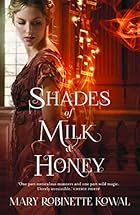 The first book in Kowal's Glamourist Histories fantasy series is very much a Austen pastiche--down to using old-fashioned spellings like "chuse" for "choose" and "shewed" for "showed." The characters and situations feel very similar, too. The heroine's parents are very Bennet-like, the villain reminds me of both Willoughby and Wickham, etc. I found myself wishing it was less Austenian in spots, since the voice made the occasional small anachronisms stand out more. That said, I enjoyed this book and plan to continue with the series.
129) Bruno and the Carol Singers by Martin Walker
A Christmas short story in the Bruno Courreges mystery series set in the French countryside. As a story it's quick, slight, and straightforward, but it was a pleasant visit with the characters and setting (these things are straight-up food and rural French living porn--reading them made me add the Dordogne to the itinerary for our Europe trip next summer). It also reminded me to search for any new full-length entries since I last read the series. There are two, and I'll be reading them soon.
A quick, fun read that debunks almost everything you've ever read on Facebook about the origins of words and phrases. E.g. "Ring Around the Rosie" is not based on folk memory of the bubonic plague, a word which I will politely leave untyped (on Twitter I'm wont to use "rhymes with yuck!" when things go poorly for my chosen sportsball teams) is not an acronym of For Unlawful Carnal Knowledge, etc. Little of it was new to me, but it was an enjoyable read nonetheless.
128) Shades of Milk and Honey by Mary Robinette Kowal
129) Bruno and the Carol Singers by Martin Walker
A Christmas short story in the Bruno Courreges mystery series set in the French countryside. As a story it's quick, slight, and straightforward, but it was a pleasant visit with the characters and setting (these things are straight-up food and rural French living porn--reading them made me add the Dordogne to the itinerary for our Europe trip next summer). It also reminded me to search for any new full-length entries since I last read the series. There are two, and I'll be reading them soon.
Wednesday, November 13, 2013
2013 Reading, Books 100-102
My reading pace has slowed down with the fall, but I'm finally past the century mark!
100) Avatar: The Last Airbender: The Search, Part 3, by Gene Luen Yang, Michael Dante, Bryan Konietzko, Dave Marshall (Editor).
The biggest mystery left open at the end of the original Avatar: the Last Airbender series was the fate of Zuko's mother. It was SUCH a mystery, and speculated about SO much by fans of the show, that its ultimate resolution in this graphic novel series was all but doomed to disappointment. And...I was a little disappointed. I'm glad her story wasn't as dark as it could be, but the resolution felt almost too easy--except for the part where there was no sign of resolution for Azula's character. But maybe there will be another series that redeems her, or at least reveals her eventual fate.
Non-Avatar viewers, I'm sorry for all the random babble, but this is the kind of story you'd only be into if you know the series backwards and forwards.
Incidentally, when I went to Amazon for the link, I saw that the book has an average rating of 2 stars. At first I thought, "Wow, people must've been SERIOUSLY disappointed with the ending," but it turned out lots of people who preordered the Kindle version got an entirely different book delivered. Which...that's extremely annoying, but is the star system really the right way to deliver that message? It seems to me the rating is about the quality of the product, and that it's not fair to the creators to have their rating dragged down because Amazon bollixed its delivery. That said, as an author I'm not without bias in how I evaluate rating systems, their purpose, and their effects.
101) Blood of Tyrants, by Naomi Novik.

Eighth in what apparently will be a nine-book series. I raced through it breathlessly in two days. It's always good to see Temeraire again, and I was fascinated to see how Novik kept the general outline of Napoleon's Russian campaign while working in both sides' dragon armies. It was also cool to finally meet American dragons, though I did question her world-building a bit. We've seen all along that dragons in the non-European world are better treated than the Aerial Corps of the European powers (at least before Temeraire and Lien came along), and I can sort of buy that even by the early 19th century the British wouldn't have a clear understanding of how the draconic and human communities coexisted in, say, Africa or East Asia. But since it's clear America's colonial history played out at least somewhat similar to that of the real world (albeit clearly with Native Americans maintaining more power and autonomy because of their alliance with American dragons), I can't see why Britain and France couldn't have learned to treat dragons better from their experiences here.
But that's nitpicking, and I do love this series. I'm only annoyed at Novik for ending on such a cliffhanger! I hope Book 9 won't be too long in coming.
Incidentally, isn't that a beautiful cover?
102) French Napoleonic Infantry Tactics 1792-1815, by Paddy Griffith.
I realized early on upon starting to draft my current work-in-progress, which is set during the French invasion of Russia in 1812, that due to my relative lack of knowledge about the French army compared to the British army of the same era, I'm floundering for humanizing details of my French military characters' lives. So I've set my manuscript aside for the time being and am giving myself a crash course on all things French and Napoleonic. This particular book is as basic a survey as you could find, but it busts some of the myths about the French army (they did not inevitably attack in column rather than line!), and gives me a sense of what my French hero would've experienced serving during the heights of the Grande Armee's glory 1805-07 and how much it had gone downhill by 1812.
100) Avatar: The Last Airbender: The Search, Part 3, by Gene Luen Yang, Michael Dante, Bryan Konietzko, Dave Marshall (Editor).
The biggest mystery left open at the end of the original Avatar: the Last Airbender series was the fate of Zuko's mother. It was SUCH a mystery, and speculated about SO much by fans of the show, that its ultimate resolution in this graphic novel series was all but doomed to disappointment. And...I was a little disappointed. I'm glad her story wasn't as dark as it could be, but the resolution felt almost too easy--except for the part where there was no sign of resolution for Azula's character. But maybe there will be another series that redeems her, or at least reveals her eventual fate.
Non-Avatar viewers, I'm sorry for all the random babble, but this is the kind of story you'd only be into if you know the series backwards and forwards.
Incidentally, when I went to Amazon for the link, I saw that the book has an average rating of 2 stars. At first I thought, "Wow, people must've been SERIOUSLY disappointed with the ending," but it turned out lots of people who preordered the Kindle version got an entirely different book delivered. Which...that's extremely annoying, but is the star system really the right way to deliver that message? It seems to me the rating is about the quality of the product, and that it's not fair to the creators to have their rating dragged down because Amazon bollixed its delivery. That said, as an author I'm not without bias in how I evaluate rating systems, their purpose, and their effects.
101) Blood of Tyrants, by Naomi Novik.
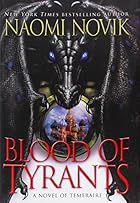
Eighth in what apparently will be a nine-book series. I raced through it breathlessly in two days. It's always good to see Temeraire again, and I was fascinated to see how Novik kept the general outline of Napoleon's Russian campaign while working in both sides' dragon armies. It was also cool to finally meet American dragons, though I did question her world-building a bit. We've seen all along that dragons in the non-European world are better treated than the Aerial Corps of the European powers (at least before Temeraire and Lien came along), and I can sort of buy that even by the early 19th century the British wouldn't have a clear understanding of how the draconic and human communities coexisted in, say, Africa or East Asia. But since it's clear America's colonial history played out at least somewhat similar to that of the real world (albeit clearly with Native Americans maintaining more power and autonomy because of their alliance with American dragons), I can't see why Britain and France couldn't have learned to treat dragons better from their experiences here.
But that's nitpicking, and I do love this series. I'm only annoyed at Novik for ending on such a cliffhanger! I hope Book 9 won't be too long in coming.
Incidentally, isn't that a beautiful cover?
102) French Napoleonic Infantry Tactics 1792-1815, by Paddy Griffith.
I realized early on upon starting to draft my current work-in-progress, which is set during the French invasion of Russia in 1812, that due to my relative lack of knowledge about the French army compared to the British army of the same era, I'm floundering for humanizing details of my French military characters' lives. So I've set my manuscript aside for the time being and am giving myself a crash course on all things French and Napoleonic. This particular book is as basic a survey as you could find, but it busts some of the myths about the French army (they did not inevitably attack in column rather than line!), and gives me a sense of what my French hero would've experienced serving during the heights of the Grande Armee's glory 1805-07 and how much it had gone downhill by 1812.
Tuesday, November 5, 2013
2013 Reading, Books 97-99
97) Deadly Heat, by "Richard Castle."
This series continues to be enjoyable meta-fun for fans of the Castle TV series, though I doubt I'd find it particularly interesting if I didn't watch the show. This particular entry got a little convoluted for my taste, but it was still a quick, entertaining read.
98) Pauline Bonaparte: Venus of Empire, by Flora Fraser.

My research book collection, purchased to aid me in my fiction-writing career, fills a tall bookshelf and spills onto a second one. This would all be very well were it not for the fact I've only read maybe half of its contents. It's not that I don't spend a lot of time researching my manuscripts--I do. It's just that I'm greedy when it comes to used bookstores, bargain book catalogs, and the like, and I'll pick up anything even vaguely related to something I might want to write about someday. The new acquisitions get alphabetized neatly by subject, then all but forgotten about, given how busy I am.
Only lately I've been working out three times a week in front of my main research bookshelf, which happens to be right next to the computer I'm using to stream exercise videos. And all those unread research books are TAUNTING me, I swear. So one evening after my workout I made a quick list, divided into six loose subject categories, of my research TBR pile, leaving out books that aren't really designed to be read, like map collections, who's who lists, and the like. I plan to draw random books from each list, rotating through the subject divisions for variety's sake, until I've either made it through the collection or given up and accepted the lack of world enough and time to Read All the Books. While I'm shooting for two books a month, it isn't a hard and fast schedule, since some of these books are far longer and denser than others.
My first unread research book turned out to be a quick read. Pauline Bonaparte would've fit right in to a certain niche of modern celebrity culture. If she hadn't been Napoleon's sister she would've lived and died in obscurity, not having any particular greatness, intelligence, or accomplishments in her own right. But she was extremely beautiful by the neoclassical standard of her day, not to mention as well-connected as it was possible to be while her brother's power lasted. And for the most part she was just a shrewd, selfish party girl. Today she'd be all over People and Us Weekly, being famous for being famous.
I don't think I would've liked her even a tiny bit, but her life was a window into the upper echelons of Napoleonic society, and who knows when that might come in handy as I write?
99) Midnight Blue-Light Special, by Seanan McGuire.
I loved the first book in this series so much I didn't wait long to read the next one. This one expands the focus a bit away from Verity alone to include more about her family and the paranormal community of New York, especially her adopted cousin Sarah, who looks human but isn't. I enjoyed it, though I missed All Verity All the Time, and my anticipation of the next book in the series is muted a little now that I've learned the focus is to shift from her to her brother, whom we haven't met on the page yet.
Wednesday, August 21, 2013
2013 TBR Challenge - The Bookseller's Daughter
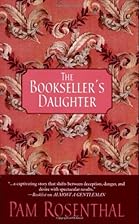
The Bookseller's Daughter, by Pam Rosenthal.

This month's theme for my romance TBR challenge is Steamy Reads, so I chose this erotic historical romance. It's an unusual romance on many levels, starting with its setting--France in 1783-84. The hero is an aristocrat, the heroine a bookseller's daughter (of course) turned servant in the hero's family home after her father's death left her penniless. The writing is lush and dreamy, with a tangible fairytale mood of "once upon a time"...and yet you're never allowed to forget the gathering storm of the Revolution just over the horizon. I'm very glad I read this book for its sheer uniqueness even though I'm normally a fan of a sparer writing style.
I feel like I should be saying more, but the above is what it came down to for me. It's lush. Evocative. The setting is off the historical romance beaten path, which is always a plus for me. And it's available now as a reasonably priced ebook.
This month's theme for my romance TBR challenge is Steamy Reads, so I chose this erotic historical romance. It's an unusual romance on many levels, starting with its setting--France in 1783-84. The hero is an aristocrat, the heroine a bookseller's daughter (of course) turned servant in the hero's family home after her father's death left her penniless. The writing is lush and dreamy, with a tangible fairytale mood of "once upon a time"...and yet you're never allowed to forget the gathering storm of the Revolution just over the horizon. I'm very glad I read this book for its sheer uniqueness even though I'm normally a fan of a sparer writing style.
I feel like I should be saying more, but the above is what it came down to for me. It's lush. Evocative. The setting is off the historical romance beaten path, which is always a plus for me. And it's available now as a reasonably priced ebook.
Friday, May 17, 2013
2013 reading, books 46-48
46) Rick Steves' France 2013
More early scouting for my 2015 European trip, which continues to fill me with wistfulness that my 4-6 week dream trip of a lifetime (at least half of which will be spent in France) is going to fly by in an instant, and at best I'll see a tiny fraction of what I'd like. At this point the France plan, assuming I'll be coming in from Spain and working my way up to Belgium in time for the Waterloo anniversary, is to settle in to the Dordogne for at least 4 days, where I will eat amazing food and tour every prehistoric cave site open to visitors, head to Paris for another several days of museum and sightseeing, and then see either Normandy and the D-Day beaches or WWI battlefields around Verdun, because I probably won't have time for both. Maybe if money and work leave allow the 6-week trip, I'll be able to add Provence...or just spend more time in Paris!
47) The Way Back Home, by Barbara Freethy.
Chosen for my 2013 Rita-finalist reading challenge. Detailed commentary here.
48) Bloodlands: Europe Between Hitler and Stalin, by Timothy Snyder.
A dense, dark recounting of the mass murder of fourteen million people in twelve years (between 1932 and 1945) by Stalin's Soviet Union and Hitler's Germany in what the author describes as "the bloodlands"--i.e. those parts of Eastern Europe that fell under both Hitler's and Stalin's sway over the course of the era, basically Poland, the Ukraine, Belarus, Lithuania, Latvia, Estonia, and western Russia. Where most histories treat the various waves of murder as separate events, Snyder shows them as a kind of continuous flow from the collectivism famine in the Ukraine in the early 30's on through to the Holocaust. It's hard to take in, too horrific to make sense of, but I'm glad I read it nonetheless. And I like Snyder's closing point that it's not so much fourteen million victims dead as fourteen million times one lives ended--that each one of those people was an individual with a unique life and aspirations cut short, and the best way to honor them is to remember that, to not let them become a mass of dead as Stalin and Hitler wanted them to be.
Friday, April 26, 2013
2013 Reading, Books 40-42 (and medical adventures)
I woke up yesterday with a racing heart (120 beats/minute) and elevated blood pressure (150/90). I have a strong family history of hypertension, which first reared its head in my own life when I was pregnant with Miss Fraser and ended up on bed rest for the last two months. Even though my non-pregnant blood pressure was at worst borderline high, I've been on a low-dose blood pressure med for years now in hopes of staving off my strong family history of stroke and heart disease. My doctor hopes my current weight loss and exercise program will ultimately end my need for such meds, but given that my oldest brother runs marathons and takes the same medication that I do, I have my doubts. Sometimes your worst genes trump your best behavior.
Anyway, my meds do such a good job of keeping my bp stable and normal that 150/90 was enough to freak me out a little, especially when coupled with the racing heart and an off-and-on dizzy, wobbly sensation. When I didn't feel any better after eating breakfast and when my blood pressure at a podiatrist appointment was something like 155/100, I freaked out seriously and went to my regular doctor. She did a quick EKG and reassured me that my heart sounded healthy and normal, just excessively fast, but she couldn't figure out what was going on and ultimately advised that I go to the ER for my own peace of mind, because otherwise I was just going to keep making myself feel even worse worrying.
So, I ended up spending about 2 1/2 hours in the ER, most of which was curled up in my room by myself with a book. Which made me feel better all by itself, since clearly they weren't too worried about me. Indeed, the doctor said that there are people who walk around with bp like mine was yesterday for decades. Which amazed me, because I feel like my everyday, medicated 125/80 or so isn't anywhere near good enough, and I can't count myself truly healthy unless I get it down to 120/70 or even lower. But they did agree that a suddenly elevated pulse and bp with no obvious cause was worth investigating and did the usual assortment of tests, ultimately diagnosing me with a UTI and sending me home with an antibiotic prescription. (Which I can forgive my regular doctor for missing, since I didn't have the obvious symptom of burning when I pee, and the symptoms I did have were subtle enough that I interpreted them as other things.)
All of which is a very long-winded way of saying that between the afternoon at the ER and staying home from the day job today to rest and recuperate, I had more reading time than usual this week.
40) Escape from Camp 14, by Blaine Harden.
The true story of a young man who was born and raised inside a brutal labor camp in North Korea and escaped at age 23--at least, it's true insofar as you choose to trust Shin Dong-Hyuk's possibly unreliable narration (and it's clear Harden, a journalist, has his doubts in spots). It's harrowing and horrifying, to put it mildly. Shin was raised in circumstances designed to break down all the natural social and familial bonds, so he never learned trust, compassion, sympathy, and the like as a child. It's clear he's trying as an adult living in America and South Korea, but I finished the book by no means certain he'd ever figure it out.
41) The French Revolution: A Very Short Introduction, by William Doyle.
A quick, high-level overview of the French Revolution, but it's not at all simple--it's not the kind of thing I'd recommend to someone with no familiarity with the period, but it was a good refresher.
42) A Plague of Zombies, by Diana Gabaldon.
The newest novella featuring Lord John Grey set in the Outlander world. While it's not the strongest of the novellas, Lord John has become my favorite character in the entire series, so I enjoyed his latest adventure quite a bit. As you'd expect from the title, it does indeed have zombies (in 1761 in Jamaica), in a revenge plot that Lord John is ultimately able to untangle before it becomes an outright bloodbath.
Wednesday, March 13, 2013
2013 Reading, Books 25-27
I'm overdue to respond to Veronica Scott's tagging me for a Five Favorite Books post, but it'll have to wait until I a) finalize and submit a manuscript that's due on Friday and b) write my next Risky Regencies post, also due on Friday.
Meanwhile, I've managed to squeeze in a few reading hours--nonfiction, because that's what my library holds list has been hitting me with of late:
25) Rick Steves' Portugal.
As with other travel books I'm counting toward my total this year, I didn't read this one cover to cover. I figure I'll have about a week, maybe a little less, for Portugal on my big 2015 trip, and that I'll therefore have to focus on Lisbon, Porto, and the Douro Valley, so those are the parts I read about in detail. Rick Steves was my go-to writer for figuring out where to visit in Britain and Ireland the year I lived in England, mostly because he assume you're not rich (correct!) and therefore provides a lot of budget options, and also because he's thorough without being encyclopedic. Anyway, I now feel like I know where to begin planning the Portuguese leg of the trip, which is all I need two years in advance. Once it's six months away I'll buy the most current guidebooks and start booking hotels.
26) The Wild Life of Our Bodies, by Rob Dunn.
A wide-ranging survey of the current state of the science about how humans evolved as part of an ecology that still impacts us today--from the more-or-less beneficial bacteria that live in our guts to having a fear response more suited to our ancestral status as prey than to our current role as ultimate apex predator to the speculative, but suggestive, theory that the reasons humans, along with other African primates, see so very well and in such a wide, discerning range of color relative to most mammals is that the African forest where those primates evolved teemed with a wide variety of poisonous snakes. (Sounds wacky, I know, but think about it--unlike, say, a lion or leopard that you might smell or hear coming from a distance, the primary defense against snakes is being able to see them in time. And the primates with the best color vision are the ones from the snakiest environments--there are no poisonous snakes native to Madagascar, for example, and lemurs have poor color vision compared to primates from the African mainland.)
Anyway, this is a fascinating, thought-provoking book I'd recommend to anyone interested in evolutionary biology or ecology.
27) French by Heart, by Rebecca Ramsey.
This memoir of an American family spending four years in France after the husband gets a job there is fun, though I wish there'd been a bit less focus on one irascible neighbor with a heart of gold and a bit more, well, France.
Subscribe to:
Posts (Atom)