Showing posts with label historical fiction. Show all posts

Wednesday, October 29, 2014

2014 Reading, Books 109-11

109) The World of Jennie G. by Elisabeth Ogilvie

A re-read of a childhood favorite that holds up quite well, all things considered. It's the middle book of a trilogy, but it's always been my favorite because it's the one where the protagonists fall in love.

110) Organizing from the Inside Out by Julie Morgenstern

Another re-read, this time of a book I first read in 2010 when we were in the process of buying and moving into our current home. I could tell it had great principles, but Morgenstern advised NOT applying them in the midst of a move, because you need to settle in to your new space a bit to get a feel for how best to organize it. Mind you, I don't think she would've advocated waiting 4+ years, but here we are. I'm thinking of making 2015 the Year of Getting Organized, and maybe even beginning with my office or a closet or two this year. OTOH, next month is NaNoWriMo, then there's Christmas, AND I have books releasing 11/24/14 and 1/5/15...so maybe January is soon enough to start.

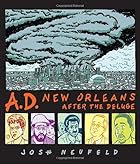
111) A.D.: New Orleans After the Deluge by Josh Neufeld


A nonfiction graphic novel (which sounds like nonsense, but calling it a "graphic history" makes it sound like it's a particularly gory history instead of one told largely through illustrations, you know?) following the experiences of several survivors of Hurricane Katrina--both those who evacuated and those who stayed and rode out the storm. A short but intense read, and one that brought the nine-year-old memories of watching the storm from afar vividly back to life.

Saturday, August 9, 2014

2014 Reading, Books 79-84

79) Avatar: The Last Airbender - The Rift Part 2 by Gene Luen Yang


The latest graphic novel showcasing the further adventures of Aang, Katara, Sokka, Toph, and Zuko (though Zuko has so far been absent from this trilogy). Deeply interesting if you're a fan of Avatar and The Legend of Korra, but would undoubtably be baffling if you aren't.

80) Thank You For Your Service by David Finkel

A harrowing, heartbreaking book following several soldiers who served multiple deployments in Iraq as they struggle to reintegrate into society and cope with PTSD, traumatic brain injury, and their impacts on their families and futures. I'm glad I read it, though a big part of me hated it.

81) The Improbable Primate by Clive Finlayson

A quick read, though I wouldn't recommend it if you haven't read anything else on the current state of the science with respect to human evolution since it assumes a certain familiarity with major fossil finds and the various theories about humanity's spread across Africa, Eurasia, and Australia. Finlayson's main focus is on our species' preference for environments combining access to fresh water, some trees and/or rocks/caves, and some open space, and how the most successful early humans were those who developed lighter builds and longer limbs for covering longer distances between water sources. I'm not sure I agree with all his theories, but he raises some interesting points. He takes what I believe is the unusual view of seeing every hominid from Homo erectus on as the same species. I'll admit my gut reaction is, "But we can't be the same species as H. erectus. They had TINY LITTLE BRAINS."

82) The Rise of Rome by Anthony Everitt

A history of Rome from its legendary foundations to the fall of the Republic. I think it would be good for a reader unfamiliar with the history in question (though it would help to have a broad sense of the course of ancient history). I found it a useful refresher on what I learned from listening to the early sections of Mike Duncan's wonderful History of Rome podcast.

83) The Little Girl Who Fought the Great Depression by John F. Kasson

This one is more interesting than I expected, really. It's a blend of celebrity biography and social history of the Depression and Shirley Temple's impact as the biggest child celebrity of the age by far. To me the most interesting chapter was the one about Bill "Bojangles" Robinson and the complex racial issues of his career and his dances with blonde little Shirley.

84) Written in My Own Heart's Blood by Diana Gabaldon

If I had to describe this book in one word, I'd choose "rambly." If you've been following the series, enjoy Gabaldon's voice, and are interested in the doings of the extended and often interwoven Fraser, Mackenzie, and Grey families, you will happily plow through this book (as I did). If not...give the first book a try and see if you want to keep going from there. This is NOT a series you'd want to start in the middle. In some ways I wish these books had more focus...OTOH, there's something to be said for a good chatty ramble through characters' lives.

Thursday, July 3, 2014

2014 reading, books 67-69

67) The Internal Enemy: Slavery and War in Virginia, 1772-1832 by Alan Taylor

The 2014 Pulitzer Prize winner for History focuses on a little-known side of one of America's lesser-known wars, the War of 1812, and how Virginian slaves escaped to British ships during Britain's naval raids in the Chesapeake. An illuminating look at the American South a few decades after the Revolution and before the Civil War, not to mention British and American concepts of freedom.

68) The Serpent Garden by Judith Merkle Riley

I adore Riley's Margaret of Ashbury trilogy--in fact, it's one of my comfort re-reads--but I'd never read any of her other books before. This book, set early in the reign of Henry VIII, was enjoyable but not as good as the Margaret books. I felt like it focused too much on the plot and the various villains dabbling in demonology and court intrigue and not enough on the protagonist, who as a result didn't seem as alive and compelling as Margaret. (Incidentally, I'd class it as more historical fantasy than historical fiction, since the supernatural is even more unambiguous and prominent than in the Margaret books.)

69) Dare to Kiss by Jo Beverley

A short novella set in Beverley's Georgian Malloren world about a widow and her five children taken in on a freezing winter night by a reclusive bachelor. She has a scandalous past, and his reclusiveness springs from a physical deformity, and I liked that both the scandal and the deformity are REAL, and not a case of her being falsely accused nor him having scars he thinks are disfiguring but that many women would find sexy.

Sunday, March 2, 2014

Relatively quiet on the blog, and 2014 reading, books 25-27

As you may have noticed, this blog has been quiet of late. That's likely to continue through April 30, when my next manuscript is due to my editor. At that point, I plan to return to my Random Cookbook feature, and possibly also to posts about everyday cooking and how I try to balance nutrition and convenience as a busy author, wife, and mom with a full-time day job.

But to keep this place from going utterly silent, I will at least keep up my reading diary:

25) Rita Book #7: A particularly frustrating read, because despite being from a major print publisher it was very poorly edited. This is the first year self-published books have been allowed in the contest, and I was dreading the possibility of getting a sloppily written, unedited self-pub. But I was even more dismayed to find repeated grammatical errors and generally awkward writing in a traditionally published work. I know some readers don't mind that kind of thing as long as the story is compelling, but to me that's like saying it doesn't matter if the soloist can't carry a tune as long as the song is good.

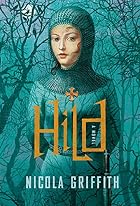
26) Hild, by Nicola Griffith.


Hild is historical fiction, but set in an era so unfamiliar to me as to feel more like fantasy. Griffith has taken what very little is know about the early life of St Hilda of Whitby, paired it with what appears to be exhaustive research into the cultures, politics, and lifeways of 7th century Britain, and woven it into a lush, meandering, and ultimately captivating story.

27) Rita Book #8: Nice voice, but the pacing dragged and dragged.

I am finally done with my judging for the year! For the next 11 months, I get to CHOOSE what to read again! Don't get me wrong, I enjoy judging the contest, and this year I found two authors whose work I'll probably seek out in the future. But it's still a bit of a slog to push through eight books not of my choosing in as many weeks, and to be obliged to finish them even if I'm ready to set them aside by the end of the first chapter.

Tuesday, July 30, 2013

2013 Reading, Books 73-75

73) Mothers of Invention: Women of the Slaveholding South in the American Civil War, by Drew Gilpin Faust.

Drew Faust is currently the president of Harvard, but she was an AmCiv professor at Penn back when I was an undergraduate there. Her two classes on the American South, one covering 1607-1861, the other 1861-present, were among the most popular and highly rated in the entire university. I took the first and found it an eye-opening look at my own roots.

This book in its own way was the same kind of experience. Faust looks at the diaries and letters of elite white Southern women (who AREN'T part of my roots--my Civil-War-era antecedents fell into the "poor white" category and were probably marginally literate at best) and how the four years of the Civil War impacted their views on everything from gender roles to religion to race relations, leading, among other things, to a feminism that was both more pessimistic and conservative than that of the rest of the country during the fight for women's suffrage.

74) Blindspot: Hidden Biases of Good People, by Mahzarin R. Banaji and Anthony G. Greenwald.

This quick but thought-provoking read is all about the measure the authors, a Harvard and a UW* professor, developed to measure unconscious biases of various kinds. It's a deceptively simple measure of whether you associate a particular group with positive or negative qualities. For a sample test, the book had you go through lists of insect and flower nouns (e.g. wasp, roach, rose, lily) and negative and positive traits/things (e.g. vomit, fear, peace, heaven). On one round you sort flowers and pleasant things into Column A, insects and negative ones into Column B, while on the next you have to put flowers and negative things in Column A, insects and positive ones in Column B. Since almost everyone prefers flowers to insects, they're able to perform the first round much more quickly. (Though I noticed the insect list didn't include "honeybee" or "butterfly." I caught myself hesitating on "moth" compared to the other insects, because it's not like they're ugly or gross or fill me with a desire to either run away or squash them. I have a feeling I would've wanted to class bees and butterflies with flowers, since I expect to see them AROUND flowers and have wholly positive associations with them. Butterflies are pretty! Bees make honey and pollinate our crops, and colony collapse disorder is so scary I'm downright thrilled whenever I see honeybees at work.)

Anyway, the test takes on more serious implications as soon as you turn it to sorting human categories. It turns out that even people who wouldn't be considered racist or bigoted by any conscious measure tend to associate whites with more positive qualities than blacks or with more American traits than Hispanics or Asians. Even committed feminists associate women more with home and men more with work, and so forth. I'm appalled but not exactly surprised to say that despite trying my best to perform on the tests as the unbiased, egalitarian person I aspire to be, I showed my share of unconscious bias--though at least my anti-bug bias is stronger than any of my human ones. :-/

The book raises more questions than it answers, but the author's main points are that A) these biases matter, because even though most of us want to be unbiased and therefore wouldn't consciously discriminate, our unconscious biases show up in small ways that over time add up to real harm in peoples lives, and B) if we know our biases exist, we can take conscious steps to counteract them.

*Since I live in Seattle and actually work at the U-Dub in question for my day job, this means University of Washington, not Wisconsin or Wyoming. When I was at the RWA conference, a couple of lunch tablemates, strangers to me, were talking about UW and its hospital system, and I was all ready to jump in with my insider opinion until I took a closer look at their name tags and saw they were from Wisconsin.

75) The Turncoat, by Donna Thorland.

A fast-paced, sexy spy novel set mostly in British-occupied Philadelphia in 1777-78. Recommended for fans of Lauren Willig's Pink Carnation books, with the caveat that it's darker and grittier--if you like Willig but also like, say, Diana Gabaldon or Bernard Cornwell, you should definitely pick this book up. (Though it comes with a trigger warning for depictions of rape, mostly off-page but in one case fairly graphic.)

Friday, April 26, 2013

2013 Reading, Books 40-42 (and medical adventures)

I woke up yesterday with a racing heart (120 beats/minute) and elevated blood pressure (150/90). I have a strong family history of hypertension, which first reared its head in my own life when I was pregnant with Miss Fraser and ended up on bed rest for the last two months. Even though my non-pregnant blood pressure was at worst borderline high, I've been on a low-dose blood pressure med for years now in hopes of staving off my strong family history of stroke and heart disease. My doctor hopes  my current weight loss and exercise program will ultimately end my need for such meds, but given that my oldest brother runs marathons and takes the same medication that I do, I have my doubts. Sometimes your worst genes trump your best behavior.

Anyway, my meds do such a good job of keeping my bp stable and normal that 150/90 was enough to freak me out a little, especially when coupled with the racing heart and an off-and-on dizzy, wobbly sensation. When I didn't feel any better after eating breakfast and when my blood pressure at a podiatrist appointment was something like 155/100, I freaked out seriously and went to my regular doctor. She did a quick EKG and reassured me that my heart sounded healthy and normal, just excessively fast, but she couldn't figure out what was going on and ultimately advised that I go to the ER for my own peace of mind, because otherwise I was just going to keep making myself feel even worse worrying.

So, I ended up spending about 2 1/2 hours in the ER, most of which was curled up in my room by myself with a book. Which made me feel better all by itself, since clearly they weren't too worried about me. Indeed, the doctor said that there are people who walk around with bp like mine was yesterday for decades. Which amazed me, because I feel like my everyday, medicated 125/80 or so isn't anywhere near good enough, and I can't count myself truly healthy unless I get it down to 120/70 or even lower. But they did agree that a suddenly elevated pulse and bp with no obvious cause was worth investigating and did the usual assortment of tests, ultimately diagnosing me with a UTI and sending me home with an antibiotic prescription. (Which I can forgive my regular doctor for missing, since I didn't have the obvious symptom of burning when I pee, and the symptoms I did have were subtle enough that I interpreted them as other things.)

All of which is a very long-winded way of saying that between the afternoon at the ER and staying home from the day job today to rest and recuperate, I had more reading time than usual this week.


40) Escape from Camp 14, by Blaine Harden.

The true story of a young man who was born and raised inside a brutal labor camp in North Korea and escaped at age 23--at least, it's true insofar as you choose to trust Shin Dong-Hyuk's possibly unreliable narration (and it's clear Harden, a journalist, has his doubts in spots). It's harrowing and horrifying, to put it mildly. Shin was raised in circumstances designed to break down all the natural social and familial bonds, so he never learned trust, compassion, sympathy, and the like as a child. It's clear he's trying as an adult living in America and South Korea, but I finished the book by no means certain he'd ever figure it out.

41) The French Revolution: A Very Short Introduction, by William Doyle.

A quick, high-level overview of the French Revolution, but it's not at all simple--it's not the kind of thing I'd recommend to someone with no familiarity with the period, but it was a good refresher.


42) A Plague of Zombies, by Diana Gabaldon.

The newest novella featuring Lord John Grey set in the Outlander world. While it's not the strongest of the novellas, Lord John has become my favorite character in the entire series, so I enjoyed his latest adventure quite a bit. As you'd expect from the title, it does indeed have zombies (in 1761 in Jamaica), in a revenge plot that Lord John is ultimately able to untangle before it becomes an outright bloodbath.

Sunday, February 17, 2013

2013 Reading, Books 16-18


16) The Accidental City, by Lawrence Powell.

This was research for one of my works-in-progress, which isn't yet contracted but I hope will be a first half of 2014 release. My book starts in the aftermath of the Battle of New Orleans, and my heroine is a fourth-generation native of the city, so this book on New Orleans' first century of existence was extremely useful research and reasonably interesting to boot. If nothing else, I learned a lot more about French and Spanish 18th century imperial concerns than I ever knew before, not to mention some ripple effects of events I already knew well--e.g. a big part of the French population of New Orleans originated not from the original 18th century settlement, but from early 19th century refugees from the Haitian Revolution. They'd gone to Cuba first and were welcome there until Napoleon invaded Spain and set his brother on the throne, at which point French nationals were persona non grata in Spanish colonies, so they fled to the culturally familiar but by then American-held refuge of New Orleans.


17) The Caves of Perigord, by Martin Walker

An unusual book, sort of a braided novel set in the present (well, really around 2002, when the book was published), in the spring of 1944, and 17,000 years ago. It opens with a 30-something British officer, the son of a WWII veteran, turning up in an art auction house with a small rock painting of a bull he found among his late father's effects. The ancient art specialist recognizes it as being of the style and on the same type of stone as the Lascaux cave paintings, but no known cave is missing such a painting. As the modern characters investigate the mystery, we go back in time to see how the bull was painted and how it came to be in the possession of a British war hero.

I enjoyed it, but the interwoven story lines had the strange effect of slowing my reading by making it easier to put the book down between chapters, somehow. Though at the 2/3 point I did skip forward just to see how the prehistoric plot line would come out (semi-spoiler: not as tragically as I feared, but not happily enough to please my romantic side, either), then going back to catch up the two more modern threads.


18) The British at the Gates, by Robin Reilly.

More research for my work-in-progress, a detailed study of the New Orleans campaign of the War of 1812 and a solid general overview of the war as a whole. I liked this book because it seemed more sober and grounded in reality than most sources I've read on the battle--mostly they run to very pro-American, very eager to lionize Andrew Jackson as a human being as well as a general (which, American that I am, I still tend to gag on because of his role in Indian removal and the Trail of Tears), and to portraying the British as a bunch of bumbling incompetent idiots. (Which doesn't make much sense, because then where would the glory be in defeating them?)

This book's more measured approach left me far more willing to acknowledge that Jackson managed the defense of the city brilliantly. As for the British...well, the soldiers didn't lack for courage, and there are a few times where with 20-20 hindsight, one can imagine them winning. But what it comes down to is there are only so many brilliant commanders around at any given time, and I'd say Britain and America had one apiece in 1815. America's was in New Orleans, while Britain's, fortunately, was right where he needed to be in Europe, since Waterloo was a hell of a lot more important for Britain to win.


Monday, December 31, 2012

Best reads of 2012

When I looked over the 109 books I read in 2012, I couldn't come up with a tidy top ten. Instead, here are some books I especially enjoyed and would recommend to anyone who likes the genre in question. Note that few of them are 2012 releases. Except in a few cases, e.g. a new book by a favorite author in a series I love, I don't make it a priority to read books immediately after release.

Favorite Historical Romance (New)
My Fair Concubine, by Jeannie Lin (2012). My Fair Lady in Tang Dynasty China, and my favorite of Lin's books to date.

Favorite Historical Romance (Old But Now Available as an Ebook)
The Wives of Bowie Stone, by Maggie Osborne (1994). The hero is the most heroic and admirable bigamist you'll ever meet.

Favorite Contemporary Romance 
Doukakis's Apprentice, by Sarah Morgan (2011). I'm not usually a Harlequin Presents reader--I'm just not into wildly rich, wildly alpha heroes outside of SF or history, and even then I want them to be extra-awesome, brave, honorable, and brainy--we're talking Aral Vorkosigan or the Duke of Wellington here. But I've enjoyed Morgan's medical romances, and this book came so highly recommended that I tried it anyway. And I'm glad I did, hence its placement on this list.


Favorite YA Romance/Debut Book
Catching Jordan, by Miranda Kenneally (2011). Just a well-written book all around, and one of the few sports-themed romances I've read where I came away convinced the author thoroughly knows and loves the sport in question.

Wildly Popular Book That Actually Didn't Disappoint Me
The Hunger Games, by Suzanne Collins (2008). No need to say more, since I figure y'all have already heard of this one...


Favorite Mystery Discovered Randomly When I Heard Its Author Interviewed on NPR
Bruno, Chief of Police, by Martin Walker (2009). Lovely, leisurely-paced mystery that will make you wish yourself in France.

Favorite New Entries in Long-Running Series
Captain Vorpatril's Alliance, by Lois McMaster Bujold (2012). A lovely science fiction romance, albeit one that I doubt would have the same impact for readers lacking a long history with the characters and their world. Those readers should go grab Shards of Honor or The Warrior's Apprentice and start building that history!

The Scottish Prisoner, by Diana Gabaldon (2012). I really appreciate how Gabaldon writes soldiers. Jamie Fraser and John Grey remind me of the officers in my family and the ones I meet in my historical research in a way military heroes in historical romances often do not.

Most Useful Psychology/Self-Help Book
The Willpower Instinct, by Kelly McGonigal (2011). Explains why it's so hard to change and ways you can make it easier.

Best Food for My Inner History Geek
Moscow 1812, by Adam Zamoyski (2004). Gripping tale of Napoleon's invasion and retreat.

Guest of Honor, by Deborah Davis (2012). Race relations 100 years ago viewed through the lens of Teddy Roosevelt and Booker T Washington.

1493, by Charles C. Mann (2011). A history of the Columbian exchange and how it altered the course of the world in the past 500 years.

The Worst Hard Time, by Timothy Egan (2006). If you watched Ken Burns' The Dust Bowl and want to learn more, go here.


Friday, August 10, 2012

Weekly reading, 8/10/12

I've got some vacation coming up next week, so there's a good chance I'll be able to reach my initial goal of 75 books read this year by Friday.

67) Guest of Honor, by Deborah Davis. An extremely readable work of nonfiction history about Theodore Roosevelt, Booker T Washington, and the scandal they inadvertently created when Roosevelt asked Washington to a spur-of-the-moment White House dinner and Washington accepted. (No African-American had ever dined at the White House as the President's guest before.) It's a fascinating look at a point in history I haven't much studied, though I was a bit depressed by how familiar the racism of the time seemed. We haven't changed as much in 100+ years as we should've.

68) I'm Not Her, by Janet Gurtler. A gritty, raw YA about a girl who finds herself the only strong one in her dysfunctional family when her beautiful, popular older sister is diagnosed with cancer. Not an easy read, but impossible to put down.

69) The Custom of the Army, by Diana Gabaldon. A short novella featuring Lord John Grey at the Battle of Quebec. That's mostly its reason for being, and to set up The Scottish Prisoner, but I enjoy Lord John and Gabaldon's writing in general, so that's good enough for me.

Monday, July 2, 2012

Six months of reading

Now that we're halfway through 2012, I thought I'd list my top five reads of the year so far.  I feel like I've been reading a lot that, were I to grade them, would get B's--good, enjoyable books, or I wouldn't be finishing them but not memorable "wow" reads.  These five, however, are solid A's.  I'll have to see how many make my top ten at the end of the year.

In the order I read them...

1. Catching Jordan, by Miranda Kenneally. YA romance, about a girl who happens to be the best high school quarterback in Tennessee (her football pedigree reads like a fictionalized version of the Manning family) and dreams of landing a college scholarship--only to have her plans for her senior year put in jeopardy when one of the best h.s. quarterbacks in Texas moves to her town. As a tomboy (albeit a klutzy, non-athletic one) who grew up in SEC country, I'm the target audience for this one, but I'd recommend it for anyone, teen or adult, who enjoys YA romance.

2. The Hunger Games, by Suzanne Collins. Post-apocalyptic YA. I'm late to the party on this one, so I'll just say this was a case where I thought a wildly hyped book fully deserved its popularity.

3. Moscow 1812, by Adam Zamoyski. Nonfiction (history). Dense with human detail and never dry, this is what historical nonfiction should be, IMO.

4. The Scottish Prisoner, by Diana Gabaldon. Historical fiction with a touch of mystery. I blogged about this one just the other week, so all I'll say here is that Jamie Fraser and Lord John Grey are something I rarely encounter in fiction--officers and combat veterans who actually remind me of the Army men in my family and those I've read about in my military history research--and that I love the way they work together with grudging respect despite all the tensions and fault lines in their relationship.

5. Captain Vorpatril's Alliance, by Lois McMaster Bujold. Science fiction with a touch of crime caper and more than a touch of romance. This book doesn't officially release until November, but as soon as I heard Baen had the eARC up for purchase, I bought it. While it didn't topple Memory or A Civil Campaign from my all-time-favorite Vorkosigan books pedestal, it's a lovely, fun story and a worthy entry in one of the best series that's out there.

Saturday, June 23, 2012

Books read - more summer reading

52) The Scottish Prisoner, by Diana Gabaldon. This is a book you'll love if you're already well acquainted with Jamie Fraser and Lord John Grey. If not, you'd just be lost and confused. But I first read Outlander in 1995 or so and have been following the series ever since, so I was hooked. Gabaldon doesn't always get every tiny historical detail right (in this volume I found myself wanting to give her a wee lecture on how to address baronets and their children), but she weaves such a richly imagined historical world that I'm happy to set my inner nitpicker aside for the duration.

One reason I can turn off my nitpickery for Gabaldon is that Jamie and Lord John feel more realistic than most military men I run across in fictional versions of the 18th and 19th centuries.  While battle has marked them--they're different men than either would've been if they'd never seen combat--they're neither too shattered and broken to function nor hardened into heartless killing machines.  If either had Claire's ability to travel through time, I can readily imagine them fitting right in with the Napoleonic-era officers and soldiers I've researched, or, for that matter, with my brother the lieutenant colonel or my nephew the captain.  

53) The Information Diet: A Case for Conscious Consumption, by Clay Johnson. A quick read, making a surprisingly convincing analogy between the obesity problem--living with bodies that evolved to survive times of famine in an age of abundant food--and the way we consume and process information in a world of constant internet access and hundreds of cable channels. I wish it had had a better copy editor, though. E.g. a military trial is a court-martial, not a Court Marshall, and there was a palpable that would've made more sense as a palatable.

54) Mockingjay. I didn't intend to read the whole thing in one evening, but somehow I did. I was spoiled going in for its grimness and bleakness, and for the major character death, so it ended up being more bearable than I expected. And, obviously, I couldn't put it down. Still, I'm feeling the urge to read something really fluffy and optimistic next.

Sunday, December 18, 2011

Buried Treasures

Just in time for the last-minute holiday shopper (or anyone looking for a good airplane read), I thought I'd do a post recommending some of my favorite buried treasures. This isn't a Best Reads of 2011 list--I'm saving that for January, since I typically get a lot of reading in over the last two weeks of December between long plane rides and being away from work. These are just books I think deserve more buzz and a wider audience.

I didn't give myself any hard and fast rules for what constitutes a buried treasure. Most of them are little-known books by little-known authors, but I threw in a few lesser-known works by popular or classic authors, especially when my favorite isn't the book or series that gets all the buzz.

However, since this is meant to be a shopping guide of sorts, I limited myself to books readily available new in either print or electronic form, priced no higher than $12 or so. Which meant saying no to Clyde Edgerton's Raney, though I love his Southern voice and reading it is like stepping back into my 70's and 80's Alabama childhood. It also ruled out Pat of Silver Bush and Mistress Pat, though I swear everything else LM Montgomery wrote is readily available.

In no particular order:

Assiniboin Girl, by Kathi Wallace
Buy for Kindle

This book was originally published by the now-defunct Drollerie Press, but it looks like Wallace has re-released it as a self-published Kindle book. It's a YA coming-of-age story about a Native American girl who's grown up in New York knowing little about her heritage, but, after being orphaned and sent to live with an aunt and then her extended family on the reservation, develops a deeper connection to her past. With a certain amount of what I guess could be described as magic realism. It's a difficult book to describe or categorize, and it's not the most polished work I've ever read, but I couldn't put it down.

No Quarter, by Broos Campbell
Buy for Kindle
Buy for Nook
Buy the paperback from Powell's (though the price is above my target range)


Age of Sail (1799, to be specific), but in the American navy. First in a series following Matty Graves, a young midshipman just setting out on his career. Campbell has a wonderful American historical voice and a way for bringing little-known corners of history to light. I'd love to see the three books that are out so far become big hits so he can keep writing and follow Graves all the way through the War of 1812. If you like Patrick O'Brian or Bernard Cornwell (very different voices, I know, but Campbell's voice is different from both), do give this series a try.

And, doesn't the second book in the series, The War of Knives, have a gorgeous cover, in a badass war story way?

In This House of Brede, by Rumer Godden. (not available in ebook)
Buy from Amazon
Buy from Barnes & Noble
Buy from Powell's

If you looked at the rest of my bookshelf (or even just the rest of this list), you'd never guess that one of my favorite books of all time is this quiet, rambling story of Benedictine nuns in mid-20th century England. But it is. Almost all my favorite books share a strong sense of place and communities of characters who seem so real to me I feel like I could step into the story and know how to fit into its world. Brede Abbey and Dame Philippa, Sister Cecily, Sister Hilary, Dame Catherine, and the rest are one of those communities to me, just like Narnia, Barrayar, Terre d'Ange, Peter Wimsey's London, or Marcus Didius Falco's Rome.

Captive Bride, by Bonnie Dee
Buy for Kindle
Buy for Nook
Buy from Carina Press


(Speaking of covers, isn't this one a beauty?)

I will always at least try a historical romance with an unusual setting, and this interracial romance set in 1870 San Francisco worked for me. Dee made me completely believe her hero and heroine found true love and deep knowledge of each other despite lacking a common language at first, and also that they would find a way to make their cross-cultural relationship work despite all the challenges they would face in their place and time. Also, I would love to see more historical romances set on the West Coast, as opposed to the conventional Westerns with deserts and cowboys. Give me more of the early days of places like Seattle, Portland, and San Francisco, please!

Eight Cousins/Rose in Bloom, by Louisa May Alcott
Both free for Kindle.
Or $0.99 for both for Nook
Or you can pay a little more for the paperbacks

Not that obscure a pair of books, obviously, but I think fewer people have read them than Little Women or An Old-Fashioned Girl. They're actually my favorite Alcott books, I think because they're the only ones in which the heroine marries the same man I would've chosen myself.

The Golden Key, by Melanie Rawn, Jennifer Roberson, and Kate Elliott (not available for Kindle)
Buy from Amazon
Buy for the Nook
Buy from Tattered Cover


This book blew my mind when I first read it over a decade ago. You mean fantasy isn't just swords and sorcery? Fantasy cultures are allowed to evolve and change technologically and politically just like real ones? You mean magic could take a form other than potions or wands and spells? (In this case, paints.) Now that I've also discovered Guy Gavriel Kay, Jacqueline Carey, George RR Martin, and Lois McMaster Bujold, to name just a few, it no longer seems so unique and revolutionary, but it's still an excellent book.

The Winter King, by Bernard Cornwell (print only)
Buy from Amazon
Buy from Barnes & Noble
Buy from the Tattered Cover

Don't get me wrong, I love Sharpe and wish Cornwell would get back to the Starbuck series. But I think his Arthurian trilogy, which begins with this book, is the best thing he's ever written.

Lady Elizabeth's Comet, by Sheila Simonson
Buy for Kindle
Buy for Nook

One of the many traditional Regency romances that's gained a new lease on life as an e-book, and the most delightful and freshly written one I've found.

The Old Buzzard Had it Coming, by Donis Casey
Buy for Kindle
Buy for Nook
Buy the paperback from Powell's

First in one of my all-time favorite historical mystery series. The heroine, Alafair Tucker, a farmer's wife in early 20th century Oklahoma, is a surprisingly effective amateur sleuth, and the books have what I always love in my historical fiction, a vivid sense of place and time. The first book is only $0.99 for Kindle and Nook, so if you enjoy mystery at all, give this one a try.