Showing posts with label romance. Show all posts

Sunday, March 15, 2015

2015 Reading, Books 28-33

Wow, I hadn't realized it had been THIS long since I'd updated. Life has been a little crazy of late, especially the past week after a misstep on uneven pavement led to a faceplant, three hours in the ER, five stitches holding my lip together, and a face full of scabs.

But I'm now mostly recovered and trying to get caught up on everything that took a back seat to napping between doses of the good Tylenol. I'll have more to blog about later, but for now here's six books instead of three:

28. Rita book #8

This one came out in a near-tie with #4 as my favorite of this year's slate--and, as it happens, both are from the same imprint of the same publisher. Neither was necessarily the kind of book I rush to read in terms of setting, character type, etc., but both were strong enough that I think I'll be looking to the imprint in question for change-of-pace/palate cleanser reads in the future.

And that's it for Rita reads for the year, though I expect to be back in 2016 with more vaguely worded and cryptic contest commentary.

29. Ancillary Justice by Ann Leckie

Well, that took forever, but I finally completed my first book for March. (It wasn't this book that bogged me down--I spent too long on a book that just wasn't working for me because it's one enough other people have raved about that I kept plugging along thinking I'd eventually appreciate it. Didn't happen.)

But this book proved fascinating. It's a complex and intriguing debut SF novel, a bit more cerebral than my ideal for leisure reading, but compelling and impossible to put down for all that.


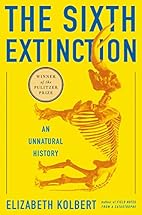
30. The Sixth Extinction by Elizabeth Kolbert

A book that manages the neat trick of being a compelling page turner despite its depressing subject matter--how we as humans are driving an extinction event that's beginning to rival that of the asteroid that killed the dinosaurs.

31. The Nile by Toby Wilkinson

A sort of historical travelogue traversing the Nile from Aswan to Cairo. The book assumes a certain familiarity with the basic outline of Egyptian history, but as long as you have that I recommend it as a way to better tie that history to the geography. And it will never not blow my mind to reflect on the fact that the pyramids are more distant and time from Jesus and Julius Caesar than we are from them.

32. The Oldest Living Things in the World by Rachel Sussman

This is more of a coffee table book than the kind you'd ordinarily read straight through. I did read it quickly, but only because A) I got it from the library, and B) in my current wounded state, a book like this hits just the right spot. It's a photography book, with each set of pictures accompanied by a short essay on the ancient subjects and Sussman's experiences visiting and photographing them. Most of the life forms--trees, along with some lichens, mosses, corals, and the like--aren't all that impressive to gaze upon, though there are some striking exceptions, like the sequoia and baobab trees. And it's striking how many of the long-lived organisms are in bleak environments like deserts or the Arctic/Antarctic. Overall, the book is a testament to both the endurance and fragility of life, since many of the ancient lives recorded here are threatened by climate change.

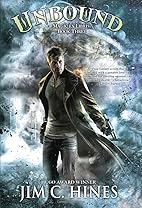
33. Unbound by Jim C. Hines

Third in the Magic Ex Libris series, which continues to be one of my favorite current fantasy series. Hines continues to expand his world and bring added nuance to his core characters even while the plot races along at breakneck speed. And he's finally convinced me to wish I had a fire spider like Smudge even though I hate hate HATE spiders.

Sunday, February 22, 2015

2015 Reading, Books 25-27

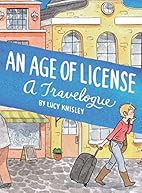
25. An Age of License by Lucy Knisley


The Year of the Memoir continues with a graphic memoir of a month Knisley spent in Europe in 2011. It's something of a coming-of-age travel diary, and one that I liked but didn't love. I got it to see if it might be a good read for my daughter as we're preparing for our month in Europe this summer and ended up concluding it wouldn't work for her. I'm fine with her reading above her age level--best and safest way to try on adulthood IMHO--but I don't think she'd connect with Knisley's writings the way she does with, say, Liz Prince.


26. Rita book #7

Not the best nor the worst of my slate this year. I only have one left, which I'm saving for next weekend--it's one that was already on my wish list by an author I've never read before but have heard nothing but good things about, so I'm hopeful.

27. The Just City by Jo Walton

Jo Walton writes thinky, idea-driven books, and this fantasy novel about a time-travel attempt to build Plato's ideal city of philosopher-kings (with the backing and participation of Athena and Apollo) is no exception. But unlike many idea-driven writers, she creates characters who are believable and human, not just mouthpieces for her Big Idea, and I enjoyed this very much, with two caveats:

1) It ends abruptly, though I've been told a sequel is in the works.

2) Much is made out of a robot spelling out the word "No"--whether it really happened, or was a prank by one of the teenaged "children" being raised according to Platonic ideals. There's talk of it being the English word, which none of the children should know, as they were brought from around the Mediterranean from no later than the Renaissance...only the kid everyone suspects most is Italian, and from late enough that he considers himself and his native language Italian rather than Roman/Latin. And the word for "no" in Italian? Is "no." Just like Spanish, another Mediterranean language. I'm stunned to think someone as well-educated as Walton wouldn't know that. Maybe there's some detail I'm missing, and she's right and I'm wrong. I'd be glad to hear it, if so.

Tuesday, February 17, 2015

2015 Reading, Books 22-24

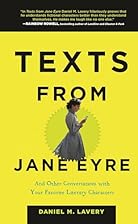
22. Texts from Jane Eyre by Mallory Ortberg


A fun and occasionally laugh-out-loud hilarious imagining of assorted literary characters conversing via text. I think my favorites were Hermione frantically trying to keep Ron from disaster via hopeless cluelessness and gullibility WRT such Muggle matters as credit cards and Nigerian prince spam schemes and the idea that Prissy of Gone With the Wind was faking her stupidity all along in the interests of sabotage.

23. Rita book #6

I am not the target market for this book. Which made it a challenge to judge, because my not being its intended audience doesn't necessarily make it a bad book, you know? But I did my best to evaluate how well it succeeded at what it was trying to do, and to imagine how a reader who was looking for something different from a love story than I am might perceive it, so hopefully I was fair.

24. Getting Lucky by Beth Bolden

A fun, sweet read that I especially appreciated for having likable characters not prone to overreacting or misunderstanding each other just to drive the plot along. That said, I didn't like it as much as Bolden's previous book in the same series because it's not so much a baseball romance as a small town romance about a character who happens to be a baseball player, and contemporary American-set small-town romances are not my personal catnip.

Saturday, February 14, 2015

2015 Reading, Books 19-21 (plus why you should watch Monday's Sleepy Hollow!)

19. Rita book #5

A tough one to rate. There were things I loved about it and things I hated. If this had been the kind of contest where you offer critique as opposed to just a numerical score, I would've filled the scoresheet with my rants and raves. As it was, I ended up assigning it a middling score, though unlike most of my midrange scores, I never thought "meh" at any point.

20. Sleepy Hollow #1-4 by Marguerite Bennett

I'm choosing to count these four comics as a single graphic novel, since they have a linked story arc and they're about the length/number of issues I usually see bound into book format.

OMG these are SO much fun. Far better than average for a TV tie-in, and filled with everything I loved about Season 1 of the show that's been too often lacking in the current season--focus on Ichabod and Abbie working together with wit, intelligence and loyalty, Katrina used minimally but effectively, plenty of Jenny and Irving. As with most tie-ins, not what you'd want as an introduction to the story and characters, but if you enjoy the show, you MUST read these.

...And if you're a Sleepy Hollow viewer who's stepped away over the way the show occasionally dragged this season with way too much Crane Family Drama and focus on extraneous characters like Nick Hawley to the exclusion of established favorite supporting characters like Jenny and Frank, I encourage you to come back for the two-part finale that starts Monday night. For that matter, I'd encourage you to tune in if you'd never seen the show before and want to know what I'm constantly babbling about of late. IMHO the writers have righted the ship and the show is moving in the right direction again. Plus we get Evil!Katrina. FINALLY.

Look, I've got excerpts from Monday! You want to watch this! You want to know what happens! I know it all sounds crazy, but that's what makes it so awesome!


21. Does Jesus Really Love Me? by Jeff Chu

Arguably yet another entry in my Year of the Memoir, but I decided to count it as a religion book, since I felt like I learned more about the churches Chu visited and the people he met than I did about his personal journey--though that was in there, too. The balance felt like 60-40, or maybe 70-30.

Homosexuality is arguably the most contentious issue in modern American Christianity. My native state of Alabama is currently making something of an exhibition of itself over it, and as someone who's evolved into a theologically liberal Christian, I feel a certain satisfaction that my chosen home state of Washington didn't have to wait for a court order, we voted for same-sex marriage. But as a straight woman, I'll always have an outsider's perspective on the issue. Chu provides an insider's view as a gay Christian from an evangelical background as he explores everything from the most extreme of extremists (he actually meets the Westboro Baptist Church people) to the most open and accepting congregations. A readable, gracious, and generous book.

Monday, February 9, 2015

2015 Reading, Books 16-18

16. Rita book #4

Excellent, unique, and moving. I hope the other judges agree with me and it earns a place in the finals.

17. Without You, There Is No Us by Suki Kim

For whatever reason I find North Korea endlessly and horrifically fascinating--something about how it's endured and tightened its hold on its people's lives and minds as other totalitarian states have collapsed or at least become more open, especially with South Korea and Japan and China right there surrounding it, with all their prosperity, vibrance, and, you know, plentiful food. This memoir by a journalist who teaches for two semesters in a school for the sons of Pyongyang's elite is a bit of a different view insofar as these boys aren't dealing with hunger and physical privation...but in a way it makes their intellectual, political, and spiritual deprivation stand out all the more.

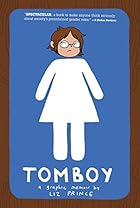
18. Tomboy by Liz Prince


This is turning into quite the year for memoir reading for me so far. This one is a graphic memoir/nonfiction comic borrowed from my 10-year-old daughter, who's read it multiple times. Miss Fraser has never been a girly girl--I vividly remember the day when she was just learning to talk and I offered her a choice of a plain denim jumper or pink floral print overalls and she pushed away the latter, saying "No flowflers! No pink!" A vow she's pretty much stuck to ever since. She found this book tremendously helpful as Prince relates her childhood and adolescence and how she eventually found her own "tribe" and identity in her late teens. And I'm glad she has books like this, and the confidence to be herself even when that means looking and acting different from the norm.

Monday, February 2, 2015

2015 Reading, Books 13-15

Here's a little more detail on the two nonfiction books I mentioned in my latest Making Me Happy post.

13. Rita book #3

Much better than #2. I don't hope or expect it to be among the finalists, since the writing quality didn't wow me and some of the characters and situations were on the cliched side, but it was a tightly plotted, well-paced, and enjoyable read.

14. Over Here by Edward Humes

A highly readable account of the G.I. Bill and its lasting impact on American society told through extended anecdotes of veterans' lives and accomplishments used to illustrate the larger principles and trends. The several decades between WWII and my being alive and aware enough to pay attention to world and national events are something of a gap in my historical knowledge--I think in part because my teachers and parents didn't think of them as history that needed to be taught any more than I do the 80's and the 90's. This book helped fill that gap, showing how we went from the struggles of the Great Depression to the prosperity and burgeoning middle class of the 50's and 60's...and how we began to lose that starting in the 70's as income inequality ticked up when we began to pull back from public investment in our future like that of the G.I. Bill.

Good book. Strongly recommended.


15. Promise Land by Jessica Lamb-Shapiro

A hybrid between a memoir (the author is the daughter of a self-help author) and critical analysis of self-help culture, but heavier on the memoir elements. As someone who's managed to, um, help herself through carefully selected self-help books, but who rolls her eyes forever at the likes of The Secret or The Rules, I found this an enjoyable and often laugh-out-loud funny read.

Monday, January 19, 2015

2015 Reading, Books 7-9

7. Family Plot by Sheri Cobb South

Third in a charming series of cozy mysteries set in Regency England (well, this entry is mostly set in Scotland) featuring young Bow Street Runner John Pickett and Julia, Lady Fieldhurst, the woman he clears from a murder charge in the first book. A lovely light, quick read with a strong sense of period, and the slow burn romance between John and Julia remains delightful.

8. Rita book #1

It's that time of year again! I just got my box of books to judge for the Romance Writers of America annual Rita contest to pick the best book of the previous year in an assortment of romance sub-genres. I'm not allowed to give out any identifying information about said books, but I do count them toward my tally of books read for the year, so...

My first entry was quite average. I liked the characters, but the pacing felt a bit off and some plot elements toward the end seemed to come out of left field and get resolved too quickly.


The story of Polish scientists fighting typhus against the backdrop of Nazi occupation and the Holocaust. A fascinating read, if a little scattered at times--I wished the author had kept his focus more narrowly on 2 or 3 people.

Monday, February 17, 2014

2014 Reading, Books 19-21

19) The War that Ended Peace: the Road to 1914, by Margaret MacMillan.

One of the many, many books on WWI coming out of late because of the war's centenary, this one looks at the twenty years or so leading up to the war, how the alliances among Britain, France, and Russia and between Germany and Austria-Hungary were built up and hardened to the point that fighting any one became fighting all, and the many crises that could've led to war but somehow just missed it. It still seems almost a uniquely pointless war, but I feel like I have a better understanding now of the tensions and instabilities that made it, if not inevitable, very difficult to avoid. That said, it could've been shorter and still gotten the point across--my eyes were starting to glaze over by the end as yet another not-competent-enough foreign minister of one power or another was introduced.

20) Shakespeare's Restless World: A Portrait of an Era in Twenty Objects, by Neil MacGregor.

This relatively quick read looks at a series of objects found in England around the turn of the 17th century--a rapier and dagger set, a glass goblet, a communion chalice, a clock, etc.--for how they illuminate the world of Shakespeare's plays. I enjoyed it and thought it gave interesting insights into the lives and mindsets of the English people as they were beginning the transition from a kingdom somewhat on the fringes of Europe to a great seafaring empire.

21) Rita Book #6: An entry I dreaded based on the cover art and back cover blurb that turned out to be the best book I've judged so far because it took tropes that normally leave me rolling my eyes and made them work.

Monday, January 27, 2014

2014 Reading, Books 10-12

Apparently a typical American adult reads 5 books per year. I sometimes feel like a slacker when I know readers who regularly manage 200 or more in a year, but that article puts my ~100-120/year pace in perspective...

10) Rita Book #2: Not as fun a read as Book #1, unfortunately.

11) Rilla of Ingleside, by LM Montgomery.


I've read this book multiple times, but I decided I could count up to one re-read per month this year as long as it's a true beginning-to-end re-read rather than dipping in and out to read a few favorite scenes. Rilla is the 8th book of the well-beloved Anne of Green Gables series, but it's unique within the series for its strong and specific grounding in world events--specifically, World War I and the Canadian homefront experience.

The heroine, Anne's youngest daughter Rilla, turns 15 on the eve of the Great War's outbreak. She's finally old enough for dances, beaux, and the like and can hardly wait to experience the joys of almost-grown-up life. But instead she spends four years waiting at home while her brothers, sweetheart, and childhood playmates one by one go off to war. Over the course of the war she's transformed from a rather lazy and frivolous girl into a hardworking, capable young woman as she runs her village's Junior Red Cross and brings up a "war baby" whose mother dies while her husband is away fighting.

Reading this Kindle version, I kept encountering little snippets of description and dialogue I couldn't remember from my old paperback copy. I gave it to the library years ago, so I couldn't compare to confirm, but I was pretty sure I would've remembered exchanges like this one, where Anne is describing the time she tried to dye her hair black as a child:

"I bought a bottle of dye from a German Jew peddler. I fondly expected it would turn my hair black--and it turned it green. So it had to be cut off." 
"You had a narrow escape, Mrs. Dr. dear," exclaimed Susan. "Of course you were too young then to know what a German was. It was a special mercy of Providence that it was only green dye and not poison."

That's not the kind of thing you'd read and forget, to put it mildly, and one can easily see why it would've been cut from post-WWII editions! But there were other sections I couldn't quite remember, either--some of them additional expressions of anti-German bigotry, but others that were just LM Montgomery's typical lush descriptions. So I did some googling and discovered the versions most Gen X and Gen Y girls grew up reading were indeed abridged, but the original full text is now available in both the bargain Kindle version I have and in a new print edition released in 2010.

I've had friends tell me they dislike this book because of its false portrayal of WWI--the characters swallow whole every bit of anti-German propaganda their government dishes out, both author and characters are brutal to the village's one outspoken pacifist, and the soldiers and their families somehow fondly believe despite everything that their sacrifice is worthwhile and will lead to the building of a new and better world. But to me that's why this is an important book beyond its place as part of a classic childhood series. Of course you wouldn't want to get your entire history of WWI from it, but when you remember that it was published in 1921, you see it as almost as much a primary source document as a story. It becomes poignant and heartbreaking how very wrong these brave, well-intentioned people are about the war and its aftermath.

But for all that, I still read Rilla of Ingleside as a story, too. And I'm almost embarrassed to admit it, but anything to do with Dog Monday (Rilla's brother's dog who decides to wait for him at the train station after he goes off with the very first batch of Canadian recruits) makes me get all misty-eyed.

12) Rita Book #3: Again, not a book I would've picked up on my own, but I wish all my Rita books were this strongly written.

Thursday, January 23, 2014

2014 Reading, Books 7-9

I'm judging Romance Writers of America's Rita awards again this year, which means I have a whole box full of books I'm counting toward my tally, but that I can't say much about without violating the contest's confidentiality rules. So...

7) Rita Book #1. In a subset of a subgenre I've never read before and wouldn't have picked up on my own, but a sweet, thoroughly enjoyable story. If all my books turn out this well, it'll be my best judging year ever.

8) Thief of Shadows, by Elizabeth Hoyt.


I was home sick the day I read this book--and frankly, procrastinating, when I wasn't so sick I couldn't have been writing or doing any number of other practical things--so I read yet another book. I've heard nothing but good things about Elizabeth Hoyt's writing, but somehow hadn't gotten around to reading any of her books. I had this one on hand from what I'm pretty sure was a goodie bag giveaway at the 2012 RWA conference, and I thought I'd give it a try.

I'm glad I did. This is a fun, romantic, and sexy historical romance with a somewhat unusual setting (1730's London, and at least as concerned with the rookeries of St. Giles as high society ballrooms), a hero who's a masked avenger fighting crime by night, and a heroine with subtle masks of her own. It was a good romance to read soon after The Three Musketeers. The style and tone are obviously very different, but they're alike in not being afraid to swing for the fences in historical swashbuckling. Since if anything I think I err on the side of being too subtle as a writer, big stories are an inspiration and a challenge.

9) Rick Steves' Spain 2014, by Rick Steves.

I'm preparing for a big, month-long European trip in the summer of 2015. We're going to fly into London (or possibly Paris or Amsterdam--have to research fares and such, but those are the three best options for our itinerary where you can get direct flights from Seattle), be in Belgium in time for the June 18 bicentennial of the Battle of Waterloo, then make our way through France (Paris, then several days in the Dordogne region to unwind, eat VERY well, and see prehistoric sites) before crossing into Spain and Portugal. So I'll be reading lots of guidebooks this year, for values of "read" that equal "read the information for the places on our tentative itinerary in great detail, while skimming the rest of the country to determine what to try to fit in if we have a little more time."

For Spain, we expect to start out in Basque Country, based in either San Sebastian or Bilbao, then Madrid and Salamanca before crossing into Portugal--unless we decide to stay strictly in northern Spain and more or less follow the pilgrim route to Santiago de Compostela and then go down the coast into Portugal. I wish we had world enough and time for Granada, and my husband feels the same about Barcelona, but I know we won't want to cut the French portion of the trip short, and here's hoping there will be other chances in the future.

As always, Rick Steves writes a friendly guide for the traveler who's maybe aged out of the starving student backpacker at youth hostels stage, but who wants to avoid tourist traps and thereby save some cash while having a more authentic and intimate travel experience.

Thursday, July 4, 2013

Favorite reads of the year so far

Happy Independence Day to my fellow Americans! I'm off from the day job today, but I have to work Friday--which, looking on the bright side, means this week feels like it has two Fridays. I'll be having a low-key celebration with my family. Mr. Fraser is making waffles for breakfast, a tradition for almost every holiday we're not traveling, since they taste just as good on Labor Day or Presidents' Day as they do in July. Then we'll grill hot dogs and I'll bake Miss Fraser's favorite cake, which has white icing transformed into an American flag with strawberry stripes and blueberry stars.

It just occurred to me that the year is half over. (Insert ritual "How did THAT happen?" comment here.)  That means it's time to post my top ten reads of the year so far, in the order I read them:

1) Julie's Wolf Pack

Third in Jean Craighead George's beautiful YA series about a young Inuit girl who finds refuge among a wolf pack and keeps ties with them even after being reunited with her family, this one is almost all from the POV of the wolves themselves, and it works surprisingly well. She doesn't quite anthropomorphize them but still makes them extremely relatable, somehow.


2) Libriomancer, by Jim C. Hines.

First in a fantasy series with a really clever concept for its magic--basically, books make magic by the collective belief of readers in the stories' worlds, and libriomancers can pull objects out of those books temporarily. This doesn't give the unlimited power you might think--among other things, too much magic use wrecks both the libriomancer and the book, and you can only pull out objects that would fit through an ordinary-sized physical copy of the book. E.g. if I were a libriomancer carrying a copy of a book from the Sharpe series, I could pull out Sharpe's sword or the telescope Wellington gave him, but a cannon wouldn't fit. The story and characters are as good as the concept, and I'll be eagerly awaiting the sequels. I've already preordered the sequel, Codex Born.

3) A Year of Biblical Womanhood, by Rachel Held Evans

I'm easily hooked by the type of memoir where someone spends a year trying to live a lifestyle that's foreign to them, cooks their way through a famous cookbook, or whatever. This one was both hilarious and unexpectedly moving. Evans comes from a background almost identical to my own--I'm ~10 years older, but we grew up within 40 or 50 miles of each other, and the biggest obvious difference between our good Alabama Baptist families is that mine roots for Auburn in college football while hers supports Alabama. (I was really disappointed that the month she was trying not to be contentious was October 2010 rather than November of that year, because she talked about her struggles during the South Carolina game rather than the epic Auburn comeback. And yes, I know Bama has since won two more national championships. 2010 was still awesome.)

Anyway, Evans is also like me in having wrestled with the increasing conservatism of the evangelical church, though AFAIK she hasn't yet gone as far as I have in running away from it--I'm now Episcopalian, which I suspect has some of my Baptist ancestors spinning in their graves. So for this book she spends each month of a year trying to live out one of the biblical commands to women literally, both to show the absurdity of a hyper-literal approach and to find God in unexpected places. She also talks a lot about women's power and strength, in the Bible and through history to the present. I think what will stick with me most is her discussion of the Proverbs 31 woman, which I was taught to think of as the perfect homemaker--someone I hoped to become during my more conservative days and now rebel against. But Evans discovers that in the Jewish tradition, that text isn't used prescriptively, but as praise for whenever a woman shows courage, generosity, integrity, and like virtues. In Hebrew the words the King James Bible translates as "a virtuous woman" are "eshet chayil"--a woman of valor. I'll never be a Proverbs 31 homemaker, but on my best days I can be a woman of valor.

4) Miss Jacobson's Journey, by Carola Dunn

This one is a traditional Regency, with a PG, kisses-only sensuality rating, but with a decidedly non-traditional heroine and setting. The heroine, Miriam Jacobson, is an English Jew who's been living on the Continent with her doctor uncle for nine years after having become estranged from the rest of her family by rudely rejecting the suitor the matchmaker brought for her. Now she wants to go home, but at the height of the Napoleonic Wars, journeying from France to England isn't a simple task. She and her maid/duenna are recruited by Jakob Rothschild to help two men smuggle gold to Wellington in Spain, with the promise of help getting home once she completes her mission. Naturally, one of the men in her party is the suitor she rejected all those years ago, and he's grown and matured in the intervening years into a far more attractive man than she ever would've dreamed possible...

From the time I started reading traditional Regencies in high school, I've always loved any non-traditional setting. (Not that I don't love a nice country house party or London Season tale, too.) Following the drum in the Peninsular War? I'm there. Congress of Vienna? Fascinating. Canada? More, please. Brussels just before Waterloo? Wonderful! America, before, during, or after the War of 1812? Why not? So this book had me halfway to hooked from the beginning because of the setting, and the story delivered on its promise. I enjoyed all the characters, the sweet romance worked beautifully for me, and I've already bought more of Dunn's backlist.


5) Whose Names Are Unknown, by Sanora Babb.

I heard about this book while watching Ken Burns' Dust Bowl documentary. It was originally written and accepted for publication in the 1930's, then rejected after The Grapes of Wrath came out because the acquiring editor figured there wasn't room for TWO Dust Bowl/Okie migrant stories. (Which is so laughably different from today's market, where every hit spawns a dozen imitators.)

I'm glad I read this book. It's more literary than my usual taste, but it has a kind of subtle, deceptively simple beauty, and it sort of rounded out my understanding of the Dust Bowl era, I think, in the way that good fiction can bring the past to life better than documentary alone.

6) Things I Can't Forget, by Miranda Kenneally.

I've been a Kenneally fan ever since I read the query letter for her first YA romance, Catching Jordan, (her agent posted it on a blog as an example of an effective query), but I think this book may be my favorite so far just because I identified with the heroine so much. I've been told that's a simplistic reason to enjoy a book, but oh well. I was Kate when I was 18, and for several years afterward. Painfully good, afraid to break the rules, convinced that my beliefs were the only right ones and therefore pretty dang judgmental even if I was better than Kate at keeping my mouth shut about it. So I enjoyed watching Kate begin to come to terms with life's complexities and ambiguities, and I loved seeing a character like her (and my younger self) grow and change.

7) Help, Thanks, Wow: The Three Essential Prayers, by Anne Lamott.

Anne Lamott's books don't always work for me, but this one blew me away. The Thanks and Wow chapters in particular helped me remember to stop and revel in the Eternal Now of the current moment, instead of always straining toward a longed-for future when I might be able to quit my day job and write full-time, or else flinching away from the inevitable future in which someday I must die. I found myself reveling in the life all around me, even in the spring pollen that makes me sneeze and coats my pretty black car with an unsightly yellow film. I remembered my favorite lines from For I will Consider My Cat Jeoffry:

For he counteracts the Devil, who is death, by brisking about the life.
For in his morning orisons he loves the sun and the sun loves him.
For he is of the tribe of Tiger.
For the Cherub Cat is a term of the Angel Tiger.

...and also quoting one of my favorite lines from a character in the Vorkosigan saga: "Every day is a gift. Me, I tear open the package and wolf it down on the spot," not to mention, of all people, Bon Jovi: "I just want to live while I'm alive."

So I guess you might say the book made an impression on me. Thanks, Anne Lamott!


8) Sacred Games, by Gary Corby.

Third in a series of light, fun, yet richly researched mysteries based in Periclean Athens. This entry is set at the Games of the 80th Olympiad in 460 BCE, and our sleuth, Nicolaos, a fictional elder brother to Socrates, has to pair up with a Spartan to investigate the death of a star Spartan athlete the night after the opening ceremonies. (The primary suspect is an Athenian, and everyone agrees the only fair solution is to have one man from each city investigate, because at that point in history there was no such thing as a neutral city in any dispute between the two rival powers.) Corby does an excellent job bringing the bloodthirsty, superstitious, and quirky aspects of Greek culture to life, while simultaneously making his characters and their world human and relatable. I recommend this especially for fans of Lindsey Davis's Falco series, as the tone is quite similar.

9) The Strange History of the American Quadroon, by Emily Clark.

The book that made me withdraw a submitted manuscript so I could fix its utter historical inaccuracy. See more detail here.

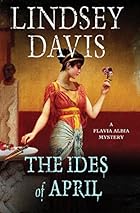
10) The Ides of April, by Lindsey Davis.

First in a new series of mysteries set in Ancient Rome, this book is linked to the Davis's Falco series, but it takes place about a dozen years after the last one, and we never actually see Falco and Helena. The sleuth is their adopted daughter, Flavia Albia, an independent young widow who's taken up her father's old profession and lives on her own. Falco and Helena are evidently doing fine, and Albia drops in to visit regularly--it's just that all those meeting are told rather than shown. Hopefully that won't be the case throughout the series, though I can understand wanting to establish Albia as an interesting character in her own right.

The book got off to rather a slow start, and I might not have stuck with it were it not for my long-standing love for the Falco series. But about 40% in, the story took off and I started caring about Albia for her own sake. I guessed the whodunnit fairly quickly, not to mention the love interest, though there was a sort of mini-mystery about the latter I must confess to being totally oblivious to until it was spelled out for me. In any case, I'm looking forward to book two next year.

(Incidentally, this one wins my favorite cover of the year to date. So pretty!)
Saturday, March 2, 2013

2013 Reading, Books 19-21


19) What's the Matter with White People? Why We Long for a Golden Age that Never Was, by Joan Walsh.

Basically, a history of American politics from the Kennedy years to the present, from a Democratic perspective, filtered through the author's urban Irish-American family and their experiences. I was surprised to see how much resonance there was with my own family, which is more Scots-Irish and rural Southern than anything else. And that's all I'll say on this one, lest I get more political than I like on my writer blog...

20) Book Which Shall Not Be Named #4. My final Rita contest entry for the year, and another strong one. I'll be rooting for it and #3 to show up in the finals.


21) France (Eyewitness Travel)

Because I really am that much of a planner, I'm already reading travel guides to prepare for my Summer 2015 trip. While I'm overwhelmed by how much there is to see in France--the only way to really make it work would be to move there for several years--I finished the book with a rough idea of where I'm going to go in the few weeks I have to devote to France, and what wonderful places will have to wait for some future visit. (Must arrange to be Healthy Old Lady in 25-30 years, so I can spend my retirement years puttering around Europe!)

While I didn't read this entire book in the sense of finishing every single page (no point in reading, say, long lists of hotel rooms for a trip that's still two years away, or spending much time on the sights of parts of France I know I can't fit in my itinerary), I'm counting it anyway.

Monday, February 4, 2013

2013 Reading - Books 13-15

I had a good reading weekend, adding three more books to my annual tally.

13) Miss Jacobson's Journey, by Carola Dunn. This was my February selection for my TBR challenge, so I'll be posting about it in more detail later in the month. Suffice it to say I liked it a lot and will be reading more by the author.


14) Broken Words: The Abuse of Science and Faith in American Politics, by Jonathan Dudley.

A quick read--it only took me 3-4 hours--which surveys how the American evangelical church's beliefs about abortion, gay rights, environmentalism, and evolution developed. Dudley doesn't have the page count to go into any of these topics in detail, but he makes a convincing case that the views much of the church considers "the plain sense of Scripture," are recent innovations, and that rejection of evolution is particularly problematic because it's led so many evangelicals to distrust ANY science that's inconvenient for their worldview--such as the evidence for global warming or the innateness of sexual orientation. I wish I'd had this book years ago when I was wrestling with some of these very issues.


15) Book Which Shall Not Be Named, #3 - Let's just say that if every Rita judge likes this one as much as I did, it'll be a finalist. The author was new to me, but I'll be reading more of her work in the future.

Saturday, February 2, 2013

2013 Reading, Books 10-12

10) Book Which Shall Not Be Named, #2. My second Rita book, which I won't describe except to say I enjoyed it more than my first. 


11) Libriomancer, by Jim C. Hines. 

My favorite read of the year to date, first in a fantasy series with a really clever concept for its magic--basically, books make magic by the collective belief of readers in the stories' worlds, and libriomancers can pull objects out of those books temporarily. This doesn't give the unlimited power you might think--among other things, too much magic use wrecks both the libriomancer and the book, and you can only pull out objects that would fit through an ordinary-sized physical copy of the book. E.g. if I were a libriomancer carrying a copy of a book from the Sharpe series, I could pull out Sharpe's sword or the telescope Wellington gave him, but a cannon wouldn't fit. The story and characters are as good as the concept, and I'll be eagerly awaiting the sequels.


12) A Year of Biblical Womanhood, by Rachel Held Evans

I'm easily hooked by the type of memoir where someone spends a year trying to live a lifestyle that's foreign to them, cooks their way through a famous cookbook, or whatever. This one was both hilarious and unexpectedly moving. Evans comes from a background almost identical to my own--I'm ~10 years older, but we grew up within 40 or 50 miles of each other, and the biggest obvious difference between our good Alabama families is that mine roots for Auburn in college football while hers supports Alabama. (I was really disappointed that the month she was trying not to be contentious was October 2010 rather than November of that year, because she talked about her struggles during the South Carolina game rather than the epic Auburn comeback. And yes, I know Bama has since won two more national championships while Auburn has fallen apart. 2010 was still awesome.)

Anyway, Evans is also like me in having wrestled with the increasing conservatism of the evangelical church, though AFAIK she hasn't yet gone as far as I have in running away from it--I'm now Episcopalian, which I suspect has some of my Baptist ancestors spinning in their graves. So for this book she spends each month of a year trying to live out one of the biblical commands to women literally, both to show the absurdity of a hyper-literal approach and to find God in unexpected places. She also talks a lot about women's power and strength, in the Bible and through history to the present. I think what will stick with me most is her discussion of the Proverbs 31 woman, which I was taught to think of as the perfect homemaker--someone I hoped to become during my more conservative days and now rebel against. But Evans discovers that in the Jewish tradition, that text isn't used prescriptively, but as praise for whenever a woman shows courage, generosity, integrity, and like virtues. In Hebrew the words the King James Bible translates as "a virtuous woman" are "eshet chayil"--a woman of valor. I'll never be a Proverbs 31 homemaker, but on my best days I can be a woman of valor.

Sunday, January 20, 2013

2013 Reading - Books 7-9

Three more books--two YA and the beginning of my Rita judging:

7) Julie's Wolf Pack

Third in Jean Craighead George's beautiful YA series about a young Inuit girl who finds refuge among a wolf pack and keeps ties with them even after being reunited with her family, this one is almost all from the POV of the wolves themselves, and it works surprisingly well. She doesn't quite anthropomorphize them but still makes them extremely relatable, somehow.


8) Team Human, by Justine Larbalestier and Sarah Rees Brennan.

I was a huge fan of Buffy and Angel back in the day, but all the vampire stories from the last ten years or so haven't appealed so much. But I'm glad I read this book--it's a smart, suspenseful, and fun YA, and a little bit thought-provoking, too.

9) Book Which Shall Not Be Named, #1.

Again this year I'm judging Romance Writers of America's Rita contest. Over the next month or so, I will be reading four books whose details I'm not allowed to discuss because judging must be kept confidential. So all I'll say about this one was I found it a bit of a slog, and I hope the next three will prove more enjoyable.