Showing posts with label historical romance. Show all posts

Saturday, April 30, 2016

Recommended Reads, April 2016

(Insert standard cliche here about the year flying by, can't believe it's May tomorrow, etc.)

I finished 11 books in April, three of which I'm recommending today. And unlike last month, none of these are deep into a series where you'd need to read at least three other books just to know what's going on!

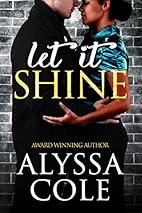
Let it Shine by Alyssa Cole


This is one of the finalists for this year's Rita Awards in the novella category, and IMHO it's extremely worthy of the honor. It's an interracial romance set in the 1960's South with a black heroine and a Jewish hero, both of them active in the Civil Rights Movement, and it's so romantic and moving, and feels so complete despite its short length. And, in a way, it made the history from ~10 years before my own birth feel more real to me than all the serious nonfiction I've read, or that college class on 1960's protest movements, just by reminding me that most of the men and women involved were very young, with all the personal dreams and passions that entails, none of which stop just because you're fighting for justice and earning a place in history.


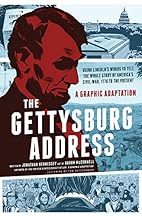
The Gettysburg Address: A Graphic Adaptation by Jonathan Hennessey

I wasn't expecting much when I picked up this book--I was mainly looking at it to see if it was accurate and interesting enough to be worth giving to my 12-year-old daughter as part of my ongoing plan to trick her into becoming a history geek like Mama and generally get a little more American history into her than the Seattle Public Schools seem to be bothering with. (I have a whole rant on that. Seattle schools are actually quite good as big city public schools go, but thus far my 6th grader has learned almost no history in school. And how do you expect kids who don't have history geek parents to even learn the basics, much less develop the nuanced understanding of how our past informs our present they need to be wise citizens and voters?)

Anyway, I ended up enjoying this book a whole lot myself for being the kind of nuanced lens on history I think we need more of--it uses Lincoln's address to look at slavery and racism, states' rights, and the ongoing tension between those rights and the need for a strong federal government, both before and after 1863.


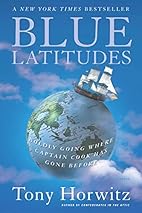
Blue Latitudes: Boldly Going Where Captain Cook Has Gone Before by Tony Horwitz


Half 21st-century travelogue, half 18th century history, and a wholly compelling read.

Monday, February 29, 2016

Recommended Reads, February 2016

I missed last week's recipe and happiness posts because my daughter and I have been fighting the Lingering Cold of Doom 2016, and I spent from Tuesday night through midday Sunday doing as little as possible. This illness, however, led to me getting more reading done than I expected in February, a total of 15 books.

Here are my favorites from those books, in the order I read them. As far as I know, none were actually February releases--I'm rarely quite that up-to-date in my reading--but if your curiosity is piqued, they're all available as ebooks and/or at your local library.

Accidental Saints by Nadia Bolz-Weber

A memoir of faith by an unconventional Lutheran pastor (her congregation is the House for All Sinners and Saints in Denver) that was the perfect read for me at the beginning of Lent. It follows the rhythm of the liturgical church year--which is a big part of what drew me from my very non-liturgical Baptist roots all the way to the Episcopal Church, that whole sense of following an ancient rhythm and set of traditions to mark the patterns of the year--and also features the life-affirming grace and humor that have been a source of joy to me as a newbie Episcopalian. (Episcopalians and Lutherans have wildly different Protestant origin stories, but at least in America have grown quite a bit alike, so there's a certain similarity in style and approach, and our congregations often work together.)


The Aeronaut's Windlass by Jim Butcher

I'd never read anything by Butcher before, though I knew him for a popular and prolific author. So I didn't quite know what to expect from this book.

What I found was purely delightful. Steampunk fantasy with airships engaging in duels a la Hornblower or Aubrey/Maturin in the clouds! Swashbuckling! Talking cats! (The talking cats were my favorite part of all.)

This book is first in a new series which I expect to follow all the way through, and I plan to check out Butcher's backlist as well. There are few things more delightful as a reader than discovering a new-to-you author whose "also by..." list takes up an entire page.


In Her Wildest Dreams by Farrah Rochon

A contemporary romance novella that packed a lot of romance and character develop into a story you can read in an afternoon. It features one of my all-time favorite tropes--friends to lovers--in a pair of New Orleans entrepreneurs (he's a computer programmer turned chocolatier, and she's a high-end event planner) who support and advise each other as they struggle to balance their longing for independence and self-sufficiency with their needs for community, to care for and accept care from friends and family.

I love that this is a city story, and one where love goes hand in hand with work, ambition, and finding a sense of vocation and fulfillment in their careers for both the hero and heroine.


Forgotten: The Untold Story of D-Day's Black Heroes, at Home and at War by Linda Hervieux

This account of black American soldiers during WWII, focusing on the experience of a barrage balloon battalion who landed at Omaha Beach on D-Day, was fascinating, and it left me gibbering with rage at the culture I was born into--that of the rural white South--for the way those soldiers, American citizens fighting to defend our country and to liberate Europe from tyranny and genocide, were treated. Yes, much has changed (though much still needs to change). But the fact that German POWs were regularly given privileges, kindness, and leisure opportunities that black AMERICAN SOLDIERS were denied? It's sickening. Not surprising, sadly, but sickening. (Not that I'm saying the POWs should've been treated badly, please understand.) And it also made me realize that we're almost as far removed from WWII now as WWII was removed from the Civil War. It seems weird that we're so many decades past WWII that it's starting to feel both distant from our world and close enough to the Civil War that you can clearly see the through-lines connecting them in American race relations and military history.

Listen to the Moon by Rose Lerner

While In Her Wildest Dreams was a delicious example of one of my favorite tropes, Listen to the Moon took a trope I usually struggle with--a large age gap between the hero and heroine--and made it work for me. (He's 40 and she's 22.) It helped that they met as adults, and she was never in any sense his ward or otherwise a daughter figure to him, so while there was a gap in their maturity and life experience, they still felt like equals in their relationship.

It's also an unusual historical romance in that the hero and heroine are both servants and stay that way throughout the story. In addition to being a sexy love story is something of a meditation on work, community, and finding your true vocation--so in that way it has a lot in common with my other romance recommendation. More romances like these, please!
Sunday, January 18, 2015

What's been making me happy this week, 1-18-15

I had a tough time coming up with anything to say for this post, since it's been, in a quiet way, a very sad week for me. One of the key members of an online community that was my internet home for many a year died suddenly last weekend, and though I hadn't been an active participant on the board in a long time and she and I weren't close, it was still a blow.

But there have been some happy things nonetheless. I'm excited that my Seahawks are going back to the Super Bowl. And that was some game, too! Best ending I've seen since the Kick Six.

I got to go to the farmers market yesterday, which sounds like a summer thing, but Seattle has a couple of year-round markets. If you have access to a year-round farmers market, do make time to go. There isn't the ridiculous abundance you see in July and August, but I was able to get local, organic hazelnuts and carrots, some beautiful fingerling potatoes and apples in unusual, not-found-in-supermarket varieties, and the local bacon I adore.

In book news, my critique partner Rose Lerner has a new release, True Pretenses, which I can highly recommend from having read it as she was getting ready to send it to her publisher.

I'll be back next weekend, hopefully with more happiness.

Tuesday, January 13, 2015

2015 Reading, Books 4-6

4. The Marshmallow Test by Walter Mischel

Mischel is a psychology professor well-known for his studies on willpower and self-control--including a famous study where children who as preschoolers were able to wait 15-20 minutes for two marshmallows rather than eat one marshmallow immediately tend to achieve more and get in less trouble as adolescents and young adults. Here he summarizes his lifetime of research and the current state of the science on willpower, self-control, and executive function, with the helpful and encouraging message that it's never too late to change. I'm already applying some of the book's lessons to sticking to my diet in the new year.

5. Just Mercy by Bryan Stevenson

I became so angry while reading this book. Not over anything Stevenson said or did--he is on the side of the angels and I fully support his work--but over the wrongful conviction that forms the core of the narrative. Walter McMillian's joke of a trial and the first part of his six years on death row before his exoneration happened in my home state, Alabama, when I was in high school and still living there. Which means it was in some degree done in my name. Now, since I'm not stupid and I study history, I know Alabama has a terrible history when it comes to race relations. But I did NOT know that such a ridiculous travesty of justice had happened in my lifetime, well after the days of Selma and fire hoses and church bombings and bus boycotts. I don't have words for how furious it makes me.

It will be a tiny drop in the bucket, but at least for the next year and possibly beyond I will tithe the royalty checks from my writing income to Stevenson's organization, the Equal Justice Initiative. Because I have to do something.

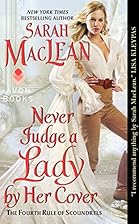
6. Never Judge a Lady By Her Cover by Sarah MacLean


My first historical romance read of the year, and the conclusion to a series about a group of scandalous lords (and one lady) who run a casino in 1830's London. The lady in question is the heroine of this entry--though all London thinks she's the mysterious, never-seen, MALE fourth partner in the business. While this isn't the book for you if you're craving historical realism, it's intense and romantic. And I do love the cover, which is something I almost never say about Avon romances. As I've seen pointed out elsewhere, that's a heroine in a hero pose--which is perfect for the character and the story.

Sunday, December 21, 2014

2013 Reading, Books 130-135

130) The Ocean at the End of the Lane by Neil Gaiman

A beautifully written fantasy novel with a mythic, fairytale feel. It's more literary in feel than my usual reading, but a pleasure to read for variety. I came away from it thinking that while I don't envy Gaiman's talent in the sense of wishing I wrote like him, I wish I was as good a writer like me as Neil Gaiman is a writer like Neil Gaiman.

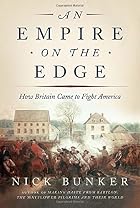
131) An Empire on the Edge: How Britain Came to Fight America by Nick Bunker


A history of the years immediately preceding the American Revolution told mostly from the point of view of the British, and one that places the Revolution in the larger context of worldwide economic and political events--e.g. you can make a case that the Revolution occurred when and how it did because in the midst of an economic crisis the British East India Company was deemed Too Big to Fail. :-/ A worthwhile read if you're interested in this corner of history, and one that makes clear that far from being a tyrannical power, if anything Britain lost the initiative and arguably the war by being too cautious and divided to take decisive action before it was too late.

132) The Lucky Coin by Barbara Metzger

An agreeable Christmas story with a fairytale feel--you have to accept the notions of lucky coins and love at first sight, something I'm not always willing to do, but found enjoyable for a lunch hour read at the end of a busy week.

133) Wired for Story by Lisa Cron

A writing craft book, and a pretty good one IMHO. I consider it worth the purchase price just for the advice in the chapter on editing to create a timeline for your story and to include what each character knows and DOESN'T know in every scene.

134) The Golem and the Jinni by Helene Wecker

An unusual historical fantasy about the unlikely friendship between a golem and a jinni in turn-of-the-20th-century New York as both of them struggle to make sense of their new surroundings (Chava the golem is recently created, while Ahmad the jinni is recently released from a long imprisonment in a flask). It's well-written, with an intricate if slow-paced plot, and somewhat in the Star Trek tradition of exploring what it means to be human through the eyes of those who aren't quite.

(Incidentally, its current Kindle price is just $2.99, way lower than its print price and a good deal for a book of its length and quality IMHO.)


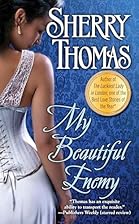
135) My Beautiful Enemy by Sherry Thomas

A fast-paced, sweeping adventure romance set in China and England, and so compelling I read it in a single afternoon.

Saturday, November 29, 2014

2014 Reading, Books 121-123

Ah, the joys of a long holiday weekend with plenty of time to read!

121) A Countess Below Stairs (aka The Secret Countess) by Eva Ibbotson

A fairytale of a historical romance originally published in 1981. By fairytale I mean that the good people are too good to be true while the villains are cartoonishly evil, but the writing is so elegant I was able to accept the story on its own terms and enjoy it thoroughly. If you enjoy stories set in Britain during the interwar period (this one is in 1919-20, so immediately after WWI), give this one a try.

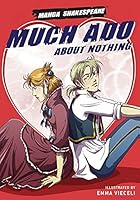
122) Manga Shakespeare: Much Ado About Nothing adapted by Richard Appignanesi and illustrated by Emma Vieceli

A fun adaptation of my favorite of Shakespeare's comedies. The graphic novel format works well with the sheer exuberant absurdity of the story and with Beatrice and Benedick's banter.

123) Eight Tiny Flames by Crista McHugh

Yesterday afternoon I chose to read the Hannukah novella from this holiday historical anthology. Set in 1944 with a nurse heroine and a doctor hero sharing the celebration of Hannukah just a few miles from the front lines in WWII Belgium, it's a well-executed, romantic take on an unusual setting.

Wednesday, November 5, 2014

2014 Reading, Books 112-114

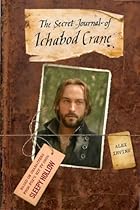
112) The Secret Journal of Ichabod Crane by Alex Irvine


Sleepy Hollow is my latest obsession (though I was not happy with this Monday's episode!), and this book is a quick, pleasant companion read to the first season. I thought the voice and writing were quite strong. That said, it was like episode commentary--Ichabod's thoughts on the battles and monsters we saw him face on the show and his musings on Katrina and Jeremy--where I was hoping for more of a deleted scenes approach. My favorite parts of the show are Ichabod's sometimes baffled and reliably snarky commentary on 21st century life and his relationship with Abbie, so I wanted more of that. If anything, the book had less. Ah, well. That's what fanfic is for!

113) Losing Our Way by Bob Herbert

This isn't the book I'd recommend if you're looking for something happy and hopeful. It's about the mistakes America has been making as a nation for almost my whole life, and certainly for as long as I've been politically active and aware. Growing income inequality. Aging infrastructure. Endless wars going on below most Americans' radar. Education "reform" that does more harm than good and doesn't address the true problem--namely that we have the highest child poverty rate of any advanced nation.

I see all this. I know all this. Mr Fraser and I are doing well, in the big scheme of things. We're far from the 1%, but we're well above the median income for our city, which is above the U.S. median. I don't worry about money on a day-to-day basis. We've never been hungry. And yet I don't feel truly secure, since we've arrived at this comfortable position fairly recently, and I know both of our industries could suffer greatly in another downturn. And Seattle is a rich city, and we live in a good if not especially tony neighborhood--yet I still see decaying infrastructure all around me, from tire-eating potholes to bridges that probably should've been replaced a decade or two ago, but we'll just keep our fingers crossed and hope the maintenance crews know what they're doing, given that we live in earthquake country.

When the Great Recession first started, I had hopes that people would look back to the 30's and see an opportunity to revive the WPA or something like it. Rebuild those bridges. Shore up the levees. Reinvest in the basic science that will save lives 20 or 40 years down the line or see our great-grandchildren colonizing Mars. Acknowledge that Keynes was right and deficit-spend now to see the dividends in a more prosperous future. I don't know why I was so naive. I'd like to hope things will change--and Herbert tries to end on a hopeful note, calling for citizen action--but I don't think enough people are listening.

114) Once Upon a Winter's Eve by Tessa Dare

And on a much lighter note, this Christmas novella is a quick, engaging read about lovers reunited. It isn't a history geek historical romance--I don't think anyone was all that worried about the French invading England by 1813. If it'd been 1803, sure. But it's fun and well-written, and I always enjoy a good holiday novella at this time of year. When you're busy with your own end-of-year responsibilities, the short reads hit the spot.

Thursday, October 16, 2014

2014 Reading, Books 103-105

My pace of reading has slowed considerably of late because for the past two weeks or so much of my spare time has gone to first watching the TV series Sleepy Hollow in its entirety from the premiere up to this Monday's episode, then reading Sleepy Hollow fanfic and watching the first few episodes again with Miss Fraser. It's an addiction, but a fun one. I should really do a post on how Tom Mison's Ichabod Crane is a perfect historical romance hero (all the charm, gentility, and ability to work boots and a long coat of the past with none of the bigotry and misogyny!), but for now here's some eye candy:


So. I've been behind on my reading. But I haven't stopped, to wit:

103) The Shelf by Phyllis Rose

Another entry in a memoir genre I tend to find enjoyable--author takes on a quirky project, anything from cooking her way through a cookbook to living out a literal interpretation of some sacred text, and writes about her experiences. Rose takes a library shelf--fiction, with a mix of classics, modern literary fiction, and mysteries--and reads her way through it. Along the way she describes her reactions, researches the authors (even meeting two of the living ones), and digresses interestingly about issues ranging from the continued bias against women's writing to how library collections are weeded. Even though my reading tastes and Rose's don't match much beyond Harry Potter and Jane Austen, I still enjoyed her voice. I definitely recommend this for anyone who likes books about books and reading.

104) Unraveled by Courtney Milan

The final book in Milan's Turner family series--I'd read the other two brothers' stories, but awhile back, so my memory needed some jogging on their backstories. As is always the case, I enjoyed Milan's strong writing, gift for characterization, and ability to make standard romance tropes entirely her own. I tend to buy her books and hoard them on my Kindle against the point I'll be, say, stuck on an airplane or in a waiting room, because I know I'll get an excellent reading experience.

105) Sparrow Hill Road by Seanan McGuire

This book, while engaging, is structured almost like a series of linked short stories, so it was easy to put down after a chapter or two and take up later, at least until the last third or so when the overall narrative picks up pace. The protagonist, Rose, is the "Phantom Prom Date," a girl killed in a car accident on the way to her prom in 1952 who's been a ghost ever since, a ghost of the road who helps travelers when she can--even if it's only easing them into the world of the dead--and who's looking for revenge against...well, the man who killed her, only it's a bit more complex than that and he's not exactly a man.

Monday, September 29, 2014

A Christmas Reunion and Freedom to Love - now available for preorder!

It's been almost a year now since my last new release, but I'm about to have two in very quick succession. Both are now available for preorder at most major ebook retailers!

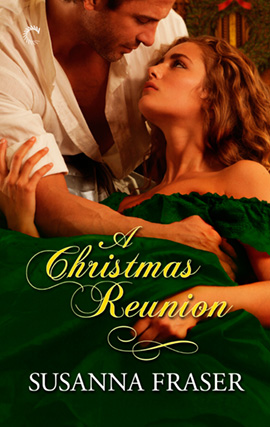
A Christmas Reunion - November 24, 2014

A Christmas Reunion is a 29,000-word Regency romance novella about a pair of star-crossed lovers reunited after a five-year separation--and just days before Cat, the heroine, is due to marry another man.

My goal with this story was to create something romantic, festive, and just the perfect length to read while flying home for the holidays or waiting for that Thanksgiving or Christmas turkey to cook.

I wrote it during January and February, when the weather was still dark and wintry but after the Christmas carols were supposed to be put away until December rolls back around. My iPhone holds a large collection of Christmas music, running heavily to carols, wassail songs, and choral pieces. I kept myself in the right mood to write the holiday by listening to carols like "The Holly and the Ivy," "Bring a Torch, Jeannette, Isabella," and "Gaudete", but only in my car when I was completely alone.

If you'd like to learn more about this story, read an excerpt, and/or preorder your copy, visit A Christmas Reunion's page at my website.

Freedom to Love - January 5, 2015

Freedom to Love releases the same week as the 200th anniversary of the Battle of New Orleans--which is only fitting, since it opens in the immediate aftermath of that conflict. My hero, Henry Farlow (whom some of you may remember as Elijah Cameron's officer friend from A Dream Defiant) is wounded and knocked unconscious during the battle. When he awakens, he wanders away in a daze, only to be taken in by Therese Bondurant, a free woman of color, and her enslaved half-sister Jeannette. They save his life--and a few days later he's able to return the favor, but in a way that forces the trio to flee into the American wilderness lest they find themselves charged with murder.

This is a full-length, 99,000-word historical romance, and among other things it has pirate treasure, a voyage aboard the steamboat Enterprize (once I saw that name, I had to get my characters aboard her), alligators, a Methodist circuit rider, and a tornado.

For more information, an excerpt, and preorder links, visit my Freedom to Love page.

Sunday, September 21, 2014

2014 Reading, Books 100-102

So I made it to 100 books on the year! I'm on pace for something like 140, but I'm going to try to push for 150 by 12/31.

100) The Scorpion's Sting by James Oakes.

This book was taken from a series of lectures the author gave at LSU, and it reads like it--quick, scholarly yet informal, and a good read if you come into it with a reasonably strong background on the American 19th century, in particular the Civil War and all the battles of abolitionism vs. slave state expansionism that made it inevitable.

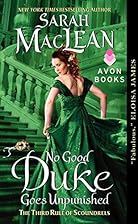
101) No Good Duke Goes Unpunished by Sarah MacLean


This isn't my usual kind of historical romance. I tend to prefer realistic, history-geek historicals, while this is more of a fantasy romp (though with enough angst that "romp" isn't quite the right word). I'm even wary of cute play-on-words titles and monochromatic covers featuring really big dresses--though I know very well how little control most authors have over titles and cover design, so that's not really fair of me.

But I decided to read it anyway, since it won this year's Rita for Best Historical Romance and because I enjoyed an interview the author gave on the Dear Bitches, Smart Author podcast. And I'm glad I did. It's a big, romantic, angsty story where the hero and heroine's chemistry and attraction are perfectly balanced by the difficult history between them (she went missing, presumed dead, and he fell under heavy suspicion for her murder). As such it was the perfect read for unwinding after a hectic week at work.

102) On Killing by Dave Grossman

Lately I've been listening to some of Dan Carlin's Hardcore History podcasts, and he recommended this book. I'm glad I read it, though I took some of the author's conclusions with a grain of salt based on multiple reviewer comments stating that his statistics on infantry soldiers not firing their weapons in WWII are dubious and/or subject to more than one interpretation. (And I'm really, REALLY inclined to disagree with the amount of blame he lays on video games and violent movies and TV for desensitizing civilians to violence. I think in some cases it may be AMONG the factors, but I doubt it's the major one leading to Columbine, VA Tech, etc.) But I found the many quotes from soldiers on their memories of combat illuminating, especially as someone who writes a lot of soldier characters in my fiction.

Tuesday, September 9, 2014

2014 Reading, Books 94-96

I've spent the past week fighting off some kind of viral crud that kept me home from work and made me sleepy, breathless, and lethargic. I'm now a week behind on all those lovely "September New Year" projects I blogged about last Monday, but on the positive side I got a lot of reading done! I'm finally feeling better, though, and about ready to dive back in to writing, exercising, cooking healthy foods, and all that important and virtuous stuff.

94) And the Band Played On: Politics, People, and the AIDS Epidemic by Randy Shilts

This was one of the most harrowing and compelling reads I can remember. It focuses on the early years of the AIDS epidemic, mostly from the point of view of the gay men in L.A. and San Francisco who were among its early casualties and of the scientists and clinicians who tried to figure out what was going on despite political stonewalling from all sides. It brought back memories for me of the early to mid 80's, when I was pretty far removed from the crisis--as a heterosexual adolescent girl growing up in the rural South--but still hyper-aware of this strange and terrifying new disease.

There's so much I could say about this book, but what struck me more than anything else is how terrible we are as a species about responding to a slow-moving crisis. Our fight-or-flight mechanisms serve us pretty well with immediate threats, but it's stunning how long it took pretty much everyone involved to take the obvious steps when it was more than clear that AIDS was a blood-borne and sexually transmitted illness with a long incubation period. It reminded me, of all things, of some of the current controversy over climate change--that clinging to a minuscule possibility that the overwhelming preponderance of evidence is wrong because accepting that evidence means you need to make big changes.

95) Code Name Verity by Elizabeth Wein

This book took a few chapters for me to get into it, but after that I couldn't put it down. It's an unusual book, at least for me, but I enjoyed the combination of spy adventure, friendship, courage, and sacrifice it contained.


96) Sweet Disorder by Rose Lerner

Full disclosure: Rose Lerner is one of my critique partners and a very good friend. All that said, if you enjoy historical romances written in a strong voice, with a deep grounding in history that only adds to the richness of characterization, the poignancy of the romance, and the sexiness of the love scenes, you should read this book.

Monday, September 1, 2014

Happy Labor Day (and Happy Second New Year)!

Happy Labor Day to my American readers, and I hope you're having a relaxing weekend as you prepare to head into the fall season.

To me, September has always felt more like the start of a new year than January, no matter what the calendar, not to mention my own January 1 birthday, tells me. I was a student for seventeen years, after all, for most of my working life my day job has been in academia, and now I have a fifth grade daughter. So September is all about new beginnings.

It just so happens that this year it's fresh start time for me, too. I spent June and July up to my ears in edits for my January release, Freedom to Love. It was far more intense a process than editing usually is for me after the editorial team and I agreed that the book would be better if I took some of the events I'd been planning to use in its sequel and made them part of this book's ending. The manuscript grew a good 20,000 words longer, and by the time I'd turned the almost-final manuscript in about a month ago, I needed a break, so I took most of August off from writing and the business aspects of my writing career.

So today I'm starting a brand new manuscript, in a brand-new-to-me genre, contemporary romance. I've been saying jokingly for years that I'm going to write a series about small-town girls who moved to the big city for work and DON'T go back to their hometowns only to realize they never should've left and their high school sweetheart was the only man for them after all. Since every time I mention the idea, I get a chorus of "Do it!" from friends, I decided to make that my project for the next two months.

That's right, two months. I'm going to try to complete my rough draft by 10/31. I'm trying out Book in a Month, only stretched over two months because I also have to get ready for my November and January releases and avoid over-stressing my still-fragile neck and shoulder. Assuming it goes well, I'll do the same thing in November and December for Freedom to Love's sequel and have two manuscripts to edit and submit come early 2015.

I'll keep you all posted on how it goes. Good luck with your own fall projects!

Thursday, July 24, 2014

2014 Reading, Books 73-78

73) The Third Plate: Field Notes on the Future of Food by Dan Barber

At first I wasn't sure whether I wanted to read yet another book about sustainable agriculture, getting back to our culinary roots, etc., but I'm glad I did. I found this book both illuminating and moving, and it strengthened my commitment to eating mindfully, being a patron of my local farmer's market, and generally supporting organic and/or sustainable agriculture whenever I can.

74) Enemies at Home by Lindsey Davis


The second book in the Flavia Albia series about Marcus Didius Falco's adopted daughter still doesn't have the wit and energy of the original series...but I still enjoy Albia as a character and visiting Davis's Rome, even this darker version under the Emperor Domitian. (The Falco books are set during Vespasian's reign.)

75) War! What is it Good For? by Ian Morris

An interesting and often thought-provoking "big picture" history whose basic thesis is that there's such a thing as "productive war" that despite its violence and atrocities leads to the formation of large, stable states and empires in which subjects/citizens are less likely to die violent deaths than they were in the tribal or small-state societies that preceded them. I'm not sure I agree with everything he says, but I'm glad to have his ideas added to my own big picture view of the world.

76) Sisterhood Everlasting by Ann Brashares

A "10 years later" sequel to the Sisterhood of the Traveling Pants YA series. At 29, the girls are still figuring out how to be adults--and while in some ways this made them feel unrealistically immature, hell, I'm...a fair bit older than 29, even if a really kind waitress at 74th Street Ale House did card me last month, and some days I feel like I'm still sorting it out. Anyway, it was good to drop in on these characters and see how they're doing with their lives, though I can't say much more than that without venturing into spoiler territory. And as for spoilers, I'll just say that while it has what we romance writers call an emotionally optimistic ending, it has enough sadness in it that the best the ending can do is be bittersweet.

77) The Shambling Guide to New York City by Mur Lafferty

There are so many urban fantasy and/or paranormal romance series out there these days wherein a human discovers a varied community of paranormal beings that it takes some doing to make such a series fresh and interesting, but this one about a human travel writer who goes to work for a vampire publisher to produce travel guides for the paranormal community pulls it off.

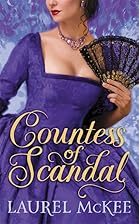
78) Countess of Scandal by Laurel McKee.


This is one of the best historical romances I've read in quite awhile. Set against the backdrop of the Irish Rebellion of 1798, it's a poignant, gritty and gripping tale of star-crossed lovers.

I just wish the cover and title gave any hint of that. If I hadn't known the author (Laurel also writes as Amanda McCabe, and we both blog at Risky Regencies), I never would've picked up this book because nothing about the branding and packaging says Ireland, poignant, or strongly grounded in real history. Which I feel does the book a disservice, because it's not finding readers like me, while it maybe would draw readers who enjoy the lighter, frothier historical romances, who'd then be disappointed to get something so gritty and angsty.

Thursday, July 3, 2014

2014 reading, books 67-69

67) The Internal Enemy: Slavery and War in Virginia, 1772-1832 by Alan Taylor

The 2014 Pulitzer Prize winner for History focuses on a little-known side of one of America's lesser-known wars, the War of 1812, and how Virginian slaves escaped to British ships during Britain's naval raids in the Chesapeake. An illuminating look at the American South a few decades after the Revolution and before the Civil War, not to mention British and American concepts of freedom.

68) The Serpent Garden by Judith Merkle Riley

I adore Riley's Margaret of Ashbury trilogy--in fact, it's one of my comfort re-reads--but I'd never read any of her other books before. This book, set early in the reign of Henry VIII, was enjoyable but not as good as the Margaret books. I felt like it focused too much on the plot and the various villains dabbling in demonology and court intrigue and not enough on the protagonist, who as a result didn't seem as alive and compelling as Margaret. (Incidentally, I'd class it as more historical fantasy than historical fiction, since the supernatural is even more unambiguous and prominent than in the Margaret books.)

69) Dare to Kiss by Jo Beverley

A short novella set in Beverley's Georgian Malloren world about a widow and her five children taken in on a freezing winter night by a reclusive bachelor. She has a scandalous past, and his reclusiveness springs from a physical deformity, and I liked that both the scandal and the deformity are REAL, and not a case of her being falsely accused nor him having scars he thinks are disfiguring but that many women would find sexy.

Sunday, April 6, 2014

2014 Reading, Books 37-42

Still plugging away at the manuscript that's due April 30, but forcing myself to make time to read so I get the occasional brain break:

37) Half-Off Ragnarok by Seanan McGuire.

This book was just plain fun. At first I missed Verity, the protagonist of the two previous InCryptid novels, but once I got used to her more serious science geek brother Alex, I enjoyed this story of paranormal murders at an Ohio zoo.

38) An Heir of Uncertainty by Alyssa Everett.


Alyssa is one of my critique partners and Carina one of my publishers, so I can't be totally objective about her books. With that caveat, this book shows Alyssa's deep understanding of the Regency era and her elegant voice. It's a well-paced, romantic story with relatable characters. My one caveat is I wish there had been a little more space in the denouement to show the hero and heroine coming to terms with the identity of the murderer.

39) The Twilight of the American Enlightenment: The 1950s and the Crisis of Liberal Belief by George M. Marsden.

Marsden looks at the subtle fault lines in American culture in the 1950s--ways the consensus worldview, a mix of Protestant faith and Enlightenment philosophy, was starting to break down, ultimately creating the culture war of the past three decades. I don't usually delve so deeply into philosophy, theology, or psychology, but I'm glad I read this book. I feel like it gave me a deeper insight into the events and ideas that created the world I was born into.

40) The Luckiest Lady in London by Sherry Thomas.

A beautifully written historical romance set in late Victorian England. The hero is that staple of romance fiction, the man who won't let himself love because his parents' terrible relationship made him afraid to trust love in general or women in particular, but Thomas made the resulting conflict feel more human and believable than this trope usually is for me. That said, the heroine forgives him a lot quicker than I would've done...

41) Newton's Football: The Science Behind America's Game by Allen St. John & Ainissa Ramirez.

A quick, interesting read on some of the science behind football--everything from the West Coast offense to how improved tackling technique and better helmets could reduce concussion risk.

42) The Mountains of Mourning by Lois McMaster Bujold.

I've read this novella once before, but I'd forgotten what a strong punch it packs. It's such a perfect encapsulation of everything important about the world of the Vorkosigan series and beautifully written and constructed to boot. I...I just wish I could write like that.

Sunday, March 23, 2014

2014 Reading, Books 31-33

31) Cooked: A Natural History of Transformation, by Michael Pollan.

Michael Pollan is known for his writings about food, but before writing this book he didn't consider himself much of a cook. So he apprenticed himself to an assortment of culinary masters of the ancient elements of fire (in the form of whole-hog barbecue), water (braised meats and stews), air (yeast bread), and earth (fermented foods, e.g. sauerkraut, cheese, and beer). As always, he's an engaging storyteller, and reading his description of North Carolina whole-hog barbecue while eating a particularly dire Healthy Choice meal at lunch was almost enough to make me weep. (Don't try the Healthy Choice spaghetti and meatballs. It's disgusting--the pasta is mush and the meatballs are all but flavorless.)


The book is a giant hymn to the joys of slow food. Pollan understands we can't cook like this all the time, but I still would've liked to see him acknowledge how fast-but-real food is also a legitimate use of say, fire and water--I can do a nice quick stir-fry, f'rex. I'd also LOVE to see one of these writers who claim you can cook a meal in the time it would take to heat enough frozen meals for a family or wait for your pizza to be delivered factor in the time it takes to clean up your kitchen afterward. I love cooking. I hate cleaning up and washing dishes.

All that said, I did enjoy this book quite a bit. I can hardly wait till my current writing deadline is past, not least because I'll have time to do a lot of cooking again. And one of these days I want to invest in the right technology and take the time to learn to make my own barbecue. There is NO place in Seattle that makes 'cue that fully lives up to my Alabama definition of the word.

32) A Song at Twilight, by Pamela Sherwood.

One of the better historical romances I've read in a long time. It's set in the 1890's, an era that doesn't inherently grab my interest--if I go outside my Regency home turf I'd rather go earlier than later--but this is just a lovely, romantic story with beautiful writing. I especially liked the three-dimensional feel of the hero and heroine's world. They and the secondary characters felt solid and developed, and there was more to the characters' lives than just their romance--something you don't always get in the genre, but that I always appreciate for making the story feel more textured and plausible.

33) Catching Fire: How Cooking Made Us Human by Richard Wrangham.

Wrangam posits that the key to our transformation from relatively small-brained upright apes to humans may have been triggered by learning to master fire and use it to cook food. Cooked food is much easier to digest than raw--which means we spend less time chewing and digesting to get the calories we need. This allows us to "afford" a small gut and use that energy toward big brains instead. He also sees cooking as a key to the human social structure and as possibly more important to the development of marriage than sexual exclusivity. I.e. men may have wanted wives not so much to be sure of the paternity of their children (since that's never reliably worked and isn't even important in some hunter-gatherer societies) as to be sure of having a cooked meal waiting for them regardless of how the hunting went that day. By the same token, the woman with a husband gained a protector of her hearth and a share of any big kills the hunters made for herself and her children.

Certainly thought-provoking, and it's a short, quick read for a book on science.

Thursday, March 13, 2014

2014 Reading, Books 28-30

Most of my energies continue to be focused on the post-Battle of New Orleans book, but I do manage to squeeze in some reading time.

28) Daughter of the Sky, by Michelle Diener.

I tend to be wary of self-published books unless I have a lot of experience with the author. There's too much poorly edited or downright unedited work out there, and I'm sensitive to such things. As noted in my post on Rita Book #7, for me bad grammar or inept writing in a good story is like a singer who doesn't have the range for it attempting "O Holy Night" or "The Star-Spangled Banner." It's nails-on-a-chalkboard painful, and I can't hear past the voice to the story or song.

But Daughter of the Sky got a positive review from a site I trust, and I decided to give it a try largely for the sake of the unusual setting. I'm glad I did. While my inner copyeditor "tsk-tsked" in a few spots, it was smoothly written overall, and the story of an English girl orphaned in a shipwreck, taken in by the Zulu, and then caught in the middle of the Anglo-Zulu war is thoughtfully told. At least to my white, American eyes it seemed to avoid the most obvious pitfalls--the British are clearly in the wrong as the colonialist power invading a sovereign nation under a flimsy pretext, but the individual British characters are varied and often sympathetic, and the Zulu are portrayed sympathetically without ever seeming like Noble Savages.

My one major issue with the book echoes that of the review I linked above--the resolution feels a bit too hasty, and I would've liked to see more about how the hero and heroine coped with the trauma they experienced in the war and built a life together.

29) Journal of a Residence on a Georgian Plantation - 1838-1839, by Fanny Kemble.

In 1834 the noted English actress Fanny Kemble left her stage career behind to marry an American, Pierce Butler, apparently unaware that he was heir to plantations in Georgia, and therefore to slaves--or at least without having fully thought through the implications. I'm not clear on that part. In any case, they spent the winter and spring of 1838-39 on their rice and cotton plantations on the Georgia Sea Islands, and Kemble was appalled by what she saw and learned. I don't have time or space to do the book justice here, but I'd recommend it to anyone interested in a first-person account of American plantation life and the conditions of slavery by a thoughtful, sensitive observer. (Though in proper 19th-century style, she often stereotypes and patronizes even when she's being remarkably forward-thinking. E.g. when she's saying there's every reason to believe blacks could take their place as equal, self-supporting and upstanding free citizens if only they had more education, better nutrition, etc., she says something along the lines of, "Look at the Irish! You should hear how they're talked about in England, and just a generation or two in your country makes them a thrifty, industrious addition to your laboring class!" And as a descendant of Southern "poor whites" myself, I bristled a bit at some of her descriptions of my people.)


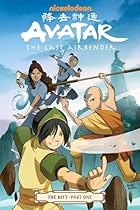
30) Avatar: The Last Airbender - The Rift Part 1, by Gene Luen Yang, Michael Dante DiMartino, Bryan Konietzko, Dave Marshall.

An altogether lighter read...albeit still focused on culture clashes. More filling in the gaps between Avatar and The Legend of Korra, and it looks as though this series will focus on Toph as the previous one did on Zuko.

Saturday, February 15, 2014

Still on sale!

Just a quick post to remind everyone that my debut novel, The Sergeant's Lady, is still on sale for $0.99 from the vendors listed below through tomorrow, February 16. Take advantage of this bargain while it lasts!


Carina Press

Amazon
Barnes & Noble
iTunes
All Romance eBooks

Tuesday, February 11, 2014

2014 Reading, Books 13-18

13) Rick Steves' Amsterdam, Bruges & Brussels by Rick Steves.

More preparation for the 2015 European trip. Though we'll likely fly into London, then take the Chunnel over to Brussels in time for the Waterloo bicentennial, if the airfares are better we may go in through Amsterdam instead. Either way, this will very much be the military history part of the trip, since in addition to Waterloo we'd like to visit Flanders Fields.


14) Lysistrata, by Aristophanes.

I picked this Dover Thrift Edition up years ago, but only just now got around to reading it. I knew broadly what it was about--the women of Greece going on a sex strike to force an end to the Peloponnesian War--but I was surprised how laugh-out-loud funny it is nearly 2500 years later. (It helps that I've read enough on 5th-century BCE Greece to have a decent grasp on the cultural context.) The best comparison I can come up with is that it felt like I was reading the Daily Show or Colbert Report of ancient Athens.

15) A Summer Affair, by Susan Wiggs.

An enjoyable historical romance with a rather unusual setting--San Francisco in the late 19th century. A doctor who blames himself for the tragic death of his young wife a decade earlier and hasn't found a way to move on finds his life upended when he treats a self-described "lady adventurer" for a gunshot wound received in an incident she refuses to discuss.

16) Rita Book #4: This one got off to a bumpy start, and I never would've stuck with it past the first chapter if I hadn't been obliged to finish it because of my judging responsibilities. But around about p. 60 the story hooked me. Some might say the moral is that I should stop giving up on books a few pages in if I don't like the writing or characters, but in my experience this book is an exception, and books that start out dull, badly written, or otherwise problematic stay that way.

17) In This House of Brede, by Rumer Godden.

This book is my February re-read, of a book I initially read back in the mid-90's. I found it through the Hypatia recommender on Alexandria Digital Literature, a site I believe is now defunct, but that led me to several favorites--this book in particular, but also Dorothy Sayers, Lindsey Davis, and Diana Gabaldon. It also kept insisting I needed to read the Vorkosigan Saga, but I ignored it because I wasn't a science fiction reader. It took me over ten years to give in, but ever since I've been an evangelist for the series. (Have YOU met Miles Vorkosigan and accepted him as your personal Vor-lord and savior yet?)

But I digress. When I first read this book, I didn't expect to be hooked by a story about Benedictine nuns. I'm not Catholic, and at the time I'd never even met anyone in a religious order. (That's since changed due to my stint as office manager for the Spiritual Care department in one of the Seattle hospitals, since some of our chaplain trainees were nuns.) But I was drawn in by the vivid portrayals of the characters. I've always enjoyed stories about communities, whether they be towns, ships' crews, extended families, or whatever, and you can't get a much more focused community than a monastery of enclosed nuns. And it's that sense of community--of revisiting well-known friends--that makes the book so re-readable for me.

18) Rita Book #5: Average.

Thursday, January 23, 2014

2014 Reading, Books 7-9

I'm judging Romance Writers of America's Rita awards again this year, which means I have a whole box full of books I'm counting toward my tally, but that I can't say much about without violating the contest's confidentiality rules. So...

7) Rita Book #1. In a subset of a subgenre I've never read before and wouldn't have picked up on my own, but a sweet, thoroughly enjoyable story. If all my books turn out this well, it'll be my best judging year ever.

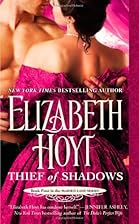
8) Thief of Shadows, by Elizabeth Hoyt.


I was home sick the day I read this book--and frankly, procrastinating, when I wasn't so sick I couldn't have been writing or doing any number of other practical things--so I read yet another book. I've heard nothing but good things about Elizabeth Hoyt's writing, but somehow hadn't gotten around to reading any of her books. I had this one on hand from what I'm pretty sure was a goodie bag giveaway at the 2012 RWA conference, and I thought I'd give it a try.

I'm glad I did. This is a fun, romantic, and sexy historical romance with a somewhat unusual setting (1730's London, and at least as concerned with the rookeries of St. Giles as high society ballrooms), a hero who's a masked avenger fighting crime by night, and a heroine with subtle masks of her own. It was a good romance to read soon after The Three Musketeers. The style and tone are obviously very different, but they're alike in not being afraid to swing for the fences in historical swashbuckling. Since if anything I think I err on the side of being too subtle as a writer, big stories are an inspiration and a challenge.

9) Rick Steves' Spain 2014, by Rick Steves.

I'm preparing for a big, month-long European trip in the summer of 2015. We're going to fly into London (or possibly Paris or Amsterdam--have to research fares and such, but those are the three best options for our itinerary where you can get direct flights from Seattle), be in Belgium in time for the June 18 bicentennial of the Battle of Waterloo, then make our way through France (Paris, then several days in the Dordogne region to unwind, eat VERY well, and see prehistoric sites) before crossing into Spain and Portugal. So I'll be reading lots of guidebooks this year, for values of "read" that equal "read the information for the places on our tentative itinerary in great detail, while skimming the rest of the country to determine what to try to fit in if we have a little more time."

For Spain, we expect to start out in Basque Country, based in either San Sebastian or Bilbao, then Madrid and Salamanca before crossing into Portugal--unless we decide to stay strictly in northern Spain and more or less follow the pilgrim route to Santiago de Compostela and then go down the coast into Portugal. I wish we had world enough and time for Granada, and my husband feels the same about Barcelona, but I know we won't want to cut the French portion of the trip short, and here's hoping there will be other chances in the future.

As always, Rick Steves writes a friendly guide for the traveler who's maybe aged out of the starving student backpacker at youth hostels stage, but who wants to avoid tourist traps and thereby save some cash while having a more authentic and intimate travel experience.