(Insert standard cliche here about the year flying by, can't believe it's May tomorrow, etc.)
I finished 11 books in April, three of which I'm recommending today. And unlike last month, none of these are deep into a series where you'd need to read at least three other books just to know what's going on!
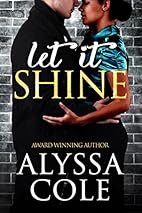
Let it Shine by Alyssa Cole
This is one of the finalists for this year's Rita Awards in the novella category, and IMHO it's extremely worthy of the honor. It's an interracial romance set in the 1960's South with a black heroine and a Jewish hero, both of them active in the Civil Rights Movement, and it's so romantic and moving, and feels so complete despite its short length. And, in a way, it made the history from ~10 years before my own birth feel more real to me than all the serious nonfiction I've read, or that college class on 1960's protest movements, just by reminding me that most of the men and women involved were very young, with all the personal dreams and passions that entails, none of which stop just because you're fighting for justice and earning a place in history.
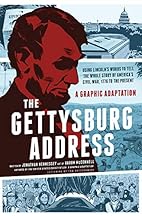
The Gettysburg Address: A Graphic Adaptation by Jonathan Hennessey
I wasn't expecting much when I picked up this book--I was mainly looking at it to see if it was accurate and interesting enough to be worth giving to my 12-year-old daughter as part of my ongoing plan to trick her into becoming a history geek like Mama and generally get a little more American history into her than the Seattle Public Schools seem to be bothering with. (I have a whole rant on that. Seattle schools are actually quite good as big city public schools go, but thus far my 6th grader has learned almost no history in school. And how do you expect kids who don't have history geek parents to even learn the basics, much less develop the nuanced understanding of how our past informs our present they need to be wise citizens and voters?)
Anyway, I ended up enjoying this book a whole lot myself for being the kind of nuanced lens on history I think we need more of--it uses Lincoln's address to look at slavery and racism, states' rights, and the ongoing tension between those rights and the need for a strong federal government, both before and after 1863.
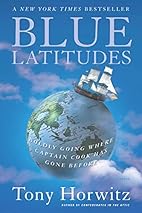
Blue Latitudes: Boldly Going Where Captain Cook Has Gone Before by Tony Horwitz
Half 21st-century travelogue, half 18th century history, and a wholly compelling read.
Showing posts with label American history. Show all posts
Saturday, April 30, 2016
Monday, February 29, 2016
Recommended Reads, February 2016
I missed last week's recipe and happiness posts because my daughter and I have been fighting the Lingering Cold of Doom 2016, and I spent from Tuesday night through midday Sunday doing as little as possible. This illness, however, led to me getting more reading done than I expected in February, a total of 15 books.
Here are my favorites from those books, in the order I read them. As far as I know, none were actually February releases--I'm rarely quite that up-to-date in my reading--but if your curiosity is piqued, they're all available as ebooks and/or at your local library.
Accidental Saints by Nadia Bolz-Weber
A memoir of faith by an unconventional Lutheran pastor (her congregation is the House for All Sinners and Saints in Denver) that was the perfect read for me at the beginning of Lent. It follows the rhythm of the liturgical church year--which is a big part of what drew me from my very non-liturgical Baptist roots all the way to the Episcopal Church, that whole sense of following an ancient rhythm and set of traditions to mark the patterns of the year--and also features the life-affirming grace and humor that have been a source of joy to me as a newbie Episcopalian. (Episcopalians and Lutherans have wildly different Protestant origin stories, but at least in America have grown quite a bit alike, so there's a certain similarity in style and approach, and our congregations often work together.)
The Aeronaut's Windlass by Jim Butcher
I'd never read anything by Butcher before, though I knew him for a popular and prolific author. So I didn't quite know what to expect from this book.
What I found was purely delightful. Steampunk fantasy with airships engaging in duels a la Hornblower or Aubrey/Maturin in the clouds! Swashbuckling! Talking cats! (The talking cats were my favorite part of all.)
This book is first in a new series which I expect to follow all the way through, and I plan to check out Butcher's backlist as well. There are few things more delightful as a reader than discovering a new-to-you author whose "also by..." list takes up an entire page.
In Her Wildest Dreams by Farrah Rochon
A contemporary romance novella that packed a lot of romance and character develop into a story you can read in an afternoon. It features one of my all-time favorite tropes--friends to lovers--in a pair of New Orleans entrepreneurs (he's a computer programmer turned chocolatier, and she's a high-end event planner) who support and advise each other as they struggle to balance their longing for independence and self-sufficiency with their needs for community, to care for and accept care from friends and family.
I love that this is a city story, and one where love goes hand in hand with work, ambition, and finding a sense of vocation and fulfillment in their careers for both the hero and heroine.
Forgotten: The Untold Story of D-Day's Black Heroes, at Home and at War by Linda Hervieux
This account of black American soldiers during WWII, focusing on the experience of a barrage balloon battalion who landed at Omaha Beach on D-Day, was fascinating, and it left me gibbering with rage at the culture I was born into--that of the rural white South--for the way those soldiers, American citizens fighting to defend our country and to liberate Europe from tyranny and genocide, were treated. Yes, much has changed (though much still needs to change). But the fact that German POWs were regularly given privileges, kindness, and leisure opportunities that black AMERICAN SOLDIERS were denied? It's sickening. Not surprising, sadly, but sickening. (Not that I'm saying the POWs should've been treated badly, please understand.) And it also made me realize that we're almost as far removed from WWII now as WWII was removed from the Civil War. It seems weird that we're so many decades past WWII that it's starting to feel both distant from our world and close enough to the Civil War that you can clearly see the through-lines connecting them in American race relations and military history.
Listen to the Moon by Rose Lerner
While In Her Wildest Dreams was a delicious example of one of my favorite tropes, Listen to the Moon took a trope I usually struggle with--a large age gap between the hero and heroine--and made it work for me. (He's 40 and she's 22.) It helped that they met as adults, and she was never in any sense his ward or otherwise a daughter figure to him, so while there was a gap in their maturity and life experience, they still felt like equals in their relationship.
It's also an unusual historical romance in that the hero and heroine are both servants and stay that way throughout the story. In addition to being a sexy love story is something of a meditation on work, community, and finding your true vocation--so in that way it has a lot in common with my other romance recommendation. More romances like these, please!
Sunday, May 31, 2015
2015 Reading catch-up post, books 46-54
So, getting ready for the Europe trip, along with some personal writing projects, has taken over my life for the past month. My reading pace has slowed down, way down, though I'm hoping to be able to make up some time what with all the hours I'll be spending on airplanes and the occasional train in June and July!
46. The Lowland by Jhumpa Lahiri
With this book I ventured into the rare-for-me genre of literary fiction as part of a recent commitment of mine to seek out more books by nonwhite authors. As part of a discussion about people trying to read more books by women, I reflected that that wasn't an issue for me, given that almost all of the fiction I read is woman-authored, along with maybe half the nonfiction. But I could easily go months without ever reading a nonwhite author and not even notice I'm doing it.
So, at least once a month, I plan to read a book by an author of color. And I can't count the same author more than once a year, since it would kind of defeat the purpose of exposing myself to a broader range of voices if I find an author with, say, a nice long mystery series and read one per month.
Anyway, while this was a fascinating book, it was also dark and depressing enough to remind me why I generally prefer genre to literary fiction. I am glad I read it, though.
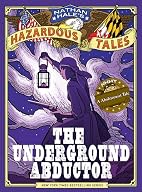
47. The Underground Abductor by Nathan Hale
The latest in Nathan Hale's series of graphic novels for upper elementary readers about American history looks at Harriet Tubman's childhood and youth, her escape from slavery, and her work on the Underground Railroad. This wasn't my favorite in the series--Donner Dinner Party has a tighter narrative arc (probably because it covers a shorter time period and was just a more linear historical incident), and Treaties, Trenches, Mud, and Blood impressed me by actually making WWI comprehensible to young readers like my daughter without trivializing it. But an average Nathan Hale's Hazardous Tale is still an awesome book, and I learned quite a bit from it, since I didn't know much about Harriet Tubman beyond her name and the fact she was involved with the Underground Railroad.
48. How We Got to Now by Steven Johnson
A quick, fascinating read looking at how innovations in six different areas have built on each other in unexpected ways over the past few centuries. Definitely recommended for those who like history of science books.
(As a side note, I'm way too prone to describing books as "fascinating." Memo to self: find new adjectives for "this book was cool and really held my attention.")
49. In Real Life by Cory Doctorow & Jen Wang
Another graphic novel read to be shared with my daughter, though this one was a Message Book, and one that was too heavy-handed for my taste despite my agreeing with its views.
50. The Dirt on Clean by Katherine Ashenburg
An interesting, readable social history on the history of cleanliness in the western world from ancient Greek days to the present.
51. Pocket Apocalypse by Seanan McGuire
Fourth in the InCryptid series. I haven't liked the last two books as much as the first two--I enjoyed Verity Price's New York adventures more than her brother Alex's role as zookeeper to creatures both ordinary and paranormal--but this one did have a good bit of the family's Aeslin Mice, which are my favorite magical creatures EVER.
52. Cheated by Jay Smith and Mary Willingham
A detailed account of a long-running academic scandal at the University of North Carolina involving the funneling of academically ill-prepared athletes, especially in the "money" sports of football and men's basketball, into courses whose requirements were basically nonexistent. Basically, it's the kind of thing I always kinda assumed was going on with elite collegiate sports programs, but it's depressing to see it spelled out.
I love football especially so much, but lately between the head injury issues, the stunted educations of young men who are unlikely to ever see the NFL (or play long enough to amass a fortune to last them their lifetimes if they do), and the fact the sport's powers that be seem to think I should be happy to ignore rampant domestic violence and sexual assault issues, I'm finding it harder and harder to justify that love.
53. Heirs to Forgotten Kingdoms by Gerard Russell
What with how busy and travel-focused I've been, it took me two weeks to finish this book, though it's fascinating--an account of the (mostly) obscure minority religions of the Middle East--Druze, Samaritans, Yazidi, Zoroastrians, etc.
54. Dead Wake by Erik Larson
An account of the last Atlantic crossing and sinking of the Lusitania. A good read if you like historical disaster tales, and IMHO Larson's best work to date. It's remarkable in a way that the loss of so many American civilian lives didn't expedite our entry into WWI--and, I have to admit, it speaks well of Woodrow Wilson, who isn't my favorite of the well-known POTUSes for several reasons. But the book's focus, and where it shines, is in the stories of all the individuals aboard the ship (mostly the survivors, though in some cases I guessed wrong about who was going to survive because some particularly vivid account turned out to be from a survivor's memory of a dead companion or from papers recovered from a body).
Sunday, April 19, 2015
2015 Reading, Books 43-45
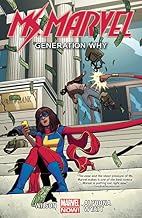
43. Ms. Marvel Volume 2: Generation Why by G. Willow Wilson, Jacob Wyatt (Illustrator), Adrian Alphona (Illustrator)
What a fun series, and how awesome to have something like this to share with my geeky tomboy 11-year-old daughter!
44. Roller Girl by Victoria Jamieson
...And I continue to raid my daughter's graphic novel collection. This one got me right in the feels. I seriously almost cried reading it. It's about a 12-year-old girl navigating changing friendships and trying to forge her own identity...and between having a preteen daughter and my own vivid memories of that age, this one was a direct hit.
45. American Apocalypse by Matthew Avery Sutton
A history of fundamentalist and evangelical Christianity in America from the late 19th century through the present day (though the strongest focus is ~1900-1950). Sutton focuses heavily on the importance of apocalyptic belief in an imminent Tribulation and Second Coming and its impact on fundamentalist political engagement. It's a dense but fascinating read. I was surprised to see how deeply rooted the criticisms I've seen of current politicians and policies are--e.g. I hadn't realized FDR came in for similar venom to what Clinton and Obama have been on the receiving end of in my lifetime.
Labels:
American history,
graphic novels,
reading,
religion,
superheroes
Monday, March 23, 2015
2015 Reading, Books 34-36
34. Animal Weapons: The Evolution of Battle by Douglas Emlen
More popular biology, this time comparing animal weapons to human weapons across military history. An interesting, quick read, though not the best book of its kind I've ever read. I could've done with fewer pictures and realistic line drawings of insects (you know how I mentioned above that I hate spiders? I really prefer my animals with four legs or fewer, thank you), but that was unavoidable given that the author's research specializes in dung beetles!
35. When Britain Burned the White House by Peter Snow
And my non-fiction binge continues, though I really need to get on the stick if I'm going to make ten books on the month... ::looks around for some SHORT books, whether fictional or otherwise::
Anyway, I recommend this book for anyone who'd like to know more about the War of 1812--though it doesn't get into the causes, the overall sweep of the war, or the peace negotiations except tangentially--it's strictly about the invasion of Washington and the bombardment of Baltimore. It's even-handed and sympathetic to both sides, which you'd think would be easy to do 200 years after the fact when writing about countries who are now firm allies, but you'd be surprised how many War of 1812/Napoleonic histories can't pull it off.
It's also a contrast to a lot of the military histories and biographies I've read because both sides were so plagued with indecisiveness, mediocre or downright incompetent commanders, etc. A nice reminder that the Napoleons and Wellingtons, the Hannibals and Scipio Africanuses, etc. are the exception rather than the rule! (Though it's an interesting exercise to imagine how the campaign would've played out if Andrew Jackson had commanded the American forces and Wellington had been persuaded to take on the British command. IMHO Wellington was by far the better commander, but Jackson was no slouch and home-field advantage counts for a lot in war.)
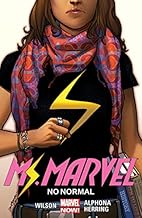
36. Ms. Marvel Vol 1: No Normal by G. Willow Wilson and Adrian Alphona
Maybe I'm finally getting the hang of reading graphic novels, because this one completely blew me away. It's about a 16-year-old Pakistani-American girl in Jersey City who's suddenly bestowed with shape-shifting superpowers--and then has to figure out how to control them and make use of them even while grounded. And the characters and setting are SO vivid.
Monday, February 2, 2015
2015 Reading, Books 13-15
Here's a little more detail on the two nonfiction books I mentioned in my latest Making Me Happy post.
13. Rita book #3
Much better than #2. I don't hope or expect it to be among the finalists, since the writing quality didn't wow me and some of the characters and situations were on the cliched side, but it was a tightly plotted, well-paced, and enjoyable read.
14. Over Here by Edward Humes
A highly readable account of the G.I. Bill and its lasting impact on American society told through extended anecdotes of veterans' lives and accomplishments used to illustrate the larger principles and trends. The several decades between WWII and my being alive and aware enough to pay attention to world and national events are something of a gap in my historical knowledge--I think in part because my teachers and parents didn't think of them as history that needed to be taught any more than I do the 80's and the 90's. This book helped fill that gap, showing how we went from the struggles of the Great Depression to the prosperity and burgeoning middle class of the 50's and 60's...and how we began to lose that starting in the 70's as income inequality ticked up when we began to pull back from public investment in our future like that of the G.I. Bill.
Good book. Strongly recommended.
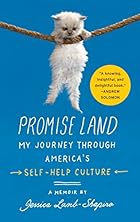
15. Promise Land by Jessica Lamb-Shapiro
A hybrid between a memoir (the author is the daughter of a self-help author) and critical analysis of self-help culture, but heavier on the memoir elements. As someone who's managed to, um, help herself through carefully selected self-help books, but who rolls her eyes forever at the likes of The Secret or The Rules, I found this an enjoyable and often laugh-out-loud funny read.
Labels:
American history,
contests,
memoir,
romance,
self-help
Sunday, December 21, 2014
2013 Reading, Books 130-135
130) The Ocean at the End of the Lane by Neil Gaiman
A beautifully written fantasy novel with a mythic, fairytale feel. It's more literary in feel than my usual reading, but a pleasure to read for variety. I came away from it thinking that while I don't envy Gaiman's talent in the sense of wishing I wrote like him, I wish I was as good a writer like me as Neil Gaiman is a writer like Neil Gaiman.
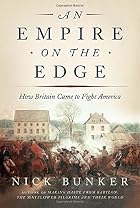
131) An Empire on the Edge: How Britain Came to Fight America by Nick Bunker
A history of the years immediately preceding the American Revolution told mostly from the point of view of the British, and one that places the Revolution in the larger context of worldwide economic and political events--e.g. you can make a case that the Revolution occurred when and how it did because in the midst of an economic crisis the British East India Company was deemed Too Big to Fail. :-/ A worthwhile read if you're interested in this corner of history, and one that makes clear that far from being a tyrannical power, if anything Britain lost the initiative and arguably the war by being too cautious and divided to take decisive action before it was too late.
132) The Lucky Coin by Barbara Metzger
An agreeable Christmas story with a fairytale feel--you have to accept the notions of lucky coins and love at first sight, something I'm not always willing to do, but found enjoyable for a lunch hour read at the end of a busy week.
133) Wired for Story by Lisa Cron
A writing craft book, and a pretty good one IMHO. I consider it worth the purchase price just for the advice in the chapter on editing to create a timeline for your story and to include what each character knows and DOESN'T know in every scene.
134) The Golem and the Jinni by Helene Wecker
An unusual historical fantasy about the unlikely friendship between a golem and a jinni in turn-of-the-20th-century New York as both of them struggle to make sense of their new surroundings (Chava the golem is recently created, while Ahmad the jinni is recently released from a long imprisonment in a flask). It's well-written, with an intricate if slow-paced plot, and somewhat in the Star Trek tradition of exploring what it means to be human through the eyes of those who aren't quite.
(Incidentally, its current Kindle price is just $2.99, way lower than its print price and a good deal for a book of its length and quality IMHO.)
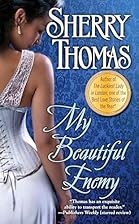
135) My Beautiful Enemy by Sherry Thomas
A fast-paced, sweeping adventure romance set in China and England, and so compelling I read it in a single afternoon.
Labels:
American history,
British history,
fantasy,
historical romance,
writing
Thursday, December 4, 2014
2014 Reading, Books 124-126
124) Manga Shakespeare: A Midsummer Night's Dream adapted by Richard Appignanesi and illustrated by Kate Brown
This one didn't work quite so well for me as the manga Much Ado About Nothing because the adaptation choice seemed to fight with the glorious language rather than enhance it--a sort of classical yet futuristic version of Athens that just didn't quite work for me. Still, Shakespeare.
125) All the Truth is Out by Matt Bai
I was a teen when the Gary Hart scandal broke in 1987, too young to vote still but more than old enough to pay attention. The scandal horrified me to the depths of my young Baptist soul--I didn't have any idea then just how commonplace adultery was among the powerful throughout history.
Now...what would appall me as a wife I can tolerate as a voter. Hart was certainly no worse morally than earlier politicians whose affairs were ignored by the press (Kennedy, etc.), or than later ones who survived scandal and were forgiven by enough voters to win elections (Clinton, etc.). He was just caught at the exact point in history WRT journalism, mass media, and celebrity culture to be destroyed by it, and we probably lost a capable president in the process. At the very least, the last quarter century or so would look very different if Hart rather than Bush Sr. had been elected in '88.
Bai also makes a case that we've lost something in how the Hart scandal led to much more packaged and trained candidates--it makes it easier for shallower, less competent men and women to win high office, because anyone can learn the right sound bites, and it's probably easier for someone who isn't that intelligent, thoughtful, or insightful to stay "on message" and consistent.
126) Avatar: The Last Airbender - The Rift Part 3 by Gene Luen Yang and Gurihiru
The final book in a trilogy and therefore interesting to fans of the series but utterly obscure to anyone else. I enjoyed this outing for a glimpse into the kind of mature avatar Aang became and some more hints at the roots of the technological and political changes that led to Korra's world decades later.
Labels:
American history,
Avatar,
graphic novels,
Legend of Korra,
politics,
Shakespeare
Sunday, September 21, 2014
2014 Reading, Books 100-102
So I made it to 100 books on the year! I'm on pace for something like 140, but I'm going to try to push for 150 by 12/31.
100) The Scorpion's Sting by James Oakes.
This book was taken from a series of lectures the author gave at LSU, and it reads like it--quick, scholarly yet informal, and a good read if you come into it with a reasonably strong background on the American 19th century, in particular the Civil War and all the battles of abolitionism vs. slave state expansionism that made it inevitable.
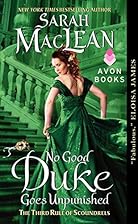
101) No Good Duke Goes Unpunished by Sarah MacLean
This isn't my usual kind of historical romance. I tend to prefer realistic, history-geek historicals, while this is more of a fantasy romp (though with enough angst that "romp" isn't quite the right word). I'm even wary of cute play-on-words titles and monochromatic covers featuring really big dresses--though I know very well how little control most authors have over titles and cover design, so that's not really fair of me.
But I decided to read it anyway, since it won this year's Rita for Best Historical Romance and because I enjoyed an interview the author gave on the Dear Bitches, Smart Author podcast. And I'm glad I did. It's a big, romantic, angsty story where the hero and heroine's chemistry and attraction are perfectly balanced by the difficult history between them (she went missing, presumed dead, and he fell under heavy suspicion for her murder). As such it was the perfect read for unwinding after a hectic week at work.
102) On Killing by Dave Grossman
Lately I've been listening to some of Dan Carlin's Hardcore History podcasts, and he recommended this book. I'm glad I read it, though I took some of the author's conclusions with a grain of salt based on multiple reviewer comments stating that his statistics on infantry soldiers not firing their weapons in WWII are dubious and/or subject to more than one interpretation. (And I'm really, REALLY inclined to disagree with the amount of blame he lays on video games and violent movies and TV for desensitizing civilians to violence. I think in some cases it may be AMONG the factors, but I doubt it's the major one leading to Columbine, VA Tech, etc.) But I found the many quotes from soldiers on their memories of combat illuminating, especially as someone who writes a lot of soldier characters in my fiction.
Saturday, August 9, 2014
2014 Reading, Books 79-84
79) Avatar: The Last Airbender - The Rift Part 2 by Gene Luen Yang
The latest graphic novel showcasing the further adventures of Aang, Katara, Sokka, Toph, and Zuko (though Zuko has so far been absent from this trilogy). Deeply interesting if you're a fan of Avatar and The Legend of Korra, but would undoubtably be baffling if you aren't.
80) Thank You For Your Service by David Finkel
A harrowing, heartbreaking book following several soldiers who served multiple deployments in Iraq as they struggle to reintegrate into society and cope with PTSD, traumatic brain injury, and their impacts on their families and futures. I'm glad I read it, though a big part of me hated it.
81) The Improbable Primate by Clive Finlayson
A quick read, though I wouldn't recommend it if you haven't read anything else on the current state of the science with respect to human evolution since it assumes a certain familiarity with major fossil finds and the various theories about humanity's spread across Africa, Eurasia, and Australia. Finlayson's main focus is on our species' preference for environments combining access to fresh water, some trees and/or rocks/caves, and some open space, and how the most successful early humans were those who developed lighter builds and longer limbs for covering longer distances between water sources. I'm not sure I agree with all his theories, but he raises some interesting points. He takes what I believe is the unusual view of seeing every hominid from Homo erectus on as the same species. I'll admit my gut reaction is, "But we can't be the same species as H. erectus. They had TINY LITTLE BRAINS."
82) The Rise of Rome by Anthony Everitt
A history of Rome from its legendary foundations to the fall of the Republic. I think it would be good for a reader unfamiliar with the history in question (though it would help to have a broad sense of the course of ancient history). I found it a useful refresher on what I learned from listening to the early sections of Mike Duncan's wonderful History of Rome podcast.
83) The Little Girl Who Fought the Great Depression by John F. Kasson
This one is more interesting than I expected, really. It's a blend of celebrity biography and social history of the Depression and Shirley Temple's impact as the biggest child celebrity of the age by far. To me the most interesting chapter was the one about Bill "Bojangles" Robinson and the complex racial issues of his career and his dances with blonde little Shirley.
84) Written in My Own Heart's Blood by Diana Gabaldon
If I had to describe this book in one word, I'd choose "rambly." If you've been following the series, enjoy Gabaldon's voice, and are interested in the doings of the extended and often interwoven Fraser, Mackenzie, and Grey families, you will happily plow through this book (as I did). If not...give the first book a try and see if you want to keep going from there. This is NOT a series you'd want to start in the middle. In some ways I wish these books had more focus...OTOH, there's something to be said for a good chatty ramble through characters' lives.
Thursday, July 3, 2014
2014 reading, books 67-69
67) The Internal Enemy: Slavery and War in Virginia, 1772-1832 by Alan Taylor
The 2014 Pulitzer Prize winner for History focuses on a little-known side of one of America's lesser-known wars, the War of 1812, and how Virginian slaves escaped to British ships during Britain's naval raids in the Chesapeake. An illuminating look at the American South a few decades after the Revolution and before the Civil War, not to mention British and American concepts of freedom.
68) The Serpent Garden by Judith Merkle Riley
I adore Riley's Margaret of Ashbury trilogy--in fact, it's one of my comfort re-reads--but I'd never read any of her other books before. This book, set early in the reign of Henry VIII, was enjoyable but not as good as the Margaret books. I felt like it focused too much on the plot and the various villains dabbling in demonology and court intrigue and not enough on the protagonist, who as a result didn't seem as alive and compelling as Margaret. (Incidentally, I'd class it as more historical fantasy than historical fiction, since the supernatural is even more unambiguous and prominent than in the Margaret books.)
69) Dare to Kiss by Jo Beverley
A short novella set in Beverley's Georgian Malloren world about a widow and her five children taken in on a freezing winter night by a reclusive bachelor. She has a scandalous past, and his reclusiveness springs from a physical deformity, and I liked that both the scandal and the deformity are REAL, and not a case of her being falsely accused nor him having scars he thinks are disfiguring but that many women would find sexy.
Tuesday, May 13, 2014
2014 Reading, Books 49-54
49. Secrets of a Bollywood Marriage by Susanna Carr.
A quick, relaxing read that hit the spot during a stressful, busy time. That said, it's definitely a "fight-fight-kiss" romance, and the last fight came so close to the end of the book I wasn't sure I believed they'd learned how to communicate well enough for the kissing to be more frequent than the fighting in their future.
50) Time Warped: Unlocking the Mysteries of Time Perception by Claudia Hammond
If you like popular science or psychology books, I recommend this exploration of how we experience time. It's fun and readable without feeling dumbed down, and it closes with a practical chapter on how to better manage your experience of time, if not time itself.
51) Range of Ghosts by Elizabeth Bear.
Epic fantasy (which I love) with a twist (something I also generally love). The setting is recognizably similar to our world--something like Jacqueline Carey's Kushiel series in that the map will look really familiar, though the fantastical elements are more forward. However, rather than being set in an alternate Europe, this story centers on an alternate central Asia. It ranges across a large chunk of its globe through the eyes of multiple characters, but its focus is a young man named Temur, grandson of a Genghis Khan-like figure, though he's surrounded by a cast of strong women. I enjoyed it very much and plan to read the sequels.
52) Only Human by Gareth Roberts.
A Doctor Who novel, and one that felt like reading an average episode of the show...in a good way. Another fun, relaxing read as I fight my way through my current writing deadline.
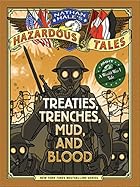
53) Nathan Hale's Hazardous Tales: Treaties, Trenches, Mud, and Blood by Nathan Hale.
The fourth in this series of graphic novels about American history manages, at least in my opinion, to make WWI palatable and understandable for its middle grade audience without dumbing down the material or treating the war lightly. FWIW, my 10-year-old pronounced it good, though not as funny as the previous three. If you've got a child in the right age group, get them these books. Schools don't teach enough history these days, in my not at all humble opinion, and this series strikes the perfect balance of informative and fun.
54) The Marathon Conspiracy by Gary Corby.
This must be my week for just-released Books 4. I enjoyed this latest entry in Corby's series about Nicolaos, a fictional elder brother of Socrates solving crime in Periclean Athens. Especially recommended for fans of Lindsey Davis's Falco series, since it has a similar combination of humor and modern tone with rich historical detail.
Sunday, April 6, 2014
2014 Reading, Books 37-42
Still plugging away at the manuscript that's due April 30, but forcing myself to make time to read so I get the occasional brain break:
37) Half-Off Ragnarok by Seanan McGuire.
This book was just plain fun. At first I missed Verity, the protagonist of the two previous InCryptid novels, but once I got used to her more serious science geek brother Alex, I enjoyed this story of paranormal murders at an Ohio zoo.
38) An Heir of Uncertainty by Alyssa Everett.
Alyssa is one of my critique partners and Carina one of my publishers, so I can't be totally objective about her books. With that caveat, this book shows Alyssa's deep understanding of the Regency era and her elegant voice. It's a well-paced, romantic story with relatable characters. My one caveat is I wish there had been a little more space in the denouement to show the hero and heroine coming to terms with the identity of the murderer.
39) The Twilight of the American Enlightenment: The 1950s and the Crisis of Liberal Belief by George M. Marsden.
Marsden looks at the subtle fault lines in American culture in the 1950s--ways the consensus worldview, a mix of Protestant faith and Enlightenment philosophy, was starting to break down, ultimately creating the culture war of the past three decades. I don't usually delve so deeply into philosophy, theology, or psychology, but I'm glad I read this book. I feel like it gave me a deeper insight into the events and ideas that created the world I was born into.
40) The Luckiest Lady in London by Sherry Thomas.
A beautifully written historical romance set in late Victorian England. The hero is that staple of romance fiction, the man who won't let himself love because his parents' terrible relationship made him afraid to trust love in general or women in particular, but Thomas made the resulting conflict feel more human and believable than this trope usually is for me. That said, the heroine forgives him a lot quicker than I would've done...
41) Newton's Football: The Science Behind America's Game by Allen St. John & Ainissa Ramirez.
A quick, interesting read on some of the science behind football--everything from the West Coast offense to how improved tackling technique and better helmets could reduce concussion risk.
42) The Mountains of Mourning by Lois McMaster Bujold.
I've read this novella once before, but I'd forgotten what a strong punch it packs. It's such a perfect encapsulation of everything important about the world of the Vorkosigan series and beautifully written and constructed to boot. I...I just wish I could write like that.
Labels:
American history,
fantasy,
football,
historical romance,
reading,
religion,
science fiction
Thursday, March 13, 2014
2014 Reading, Books 28-30
Most of my energies continue to be focused on the post-Battle of New Orleans book, but I do manage to squeeze in some reading time.
28) Daughter of the Sky, by Michelle Diener.
I tend to be wary of self-published books unless I have a lot of experience with the author. There's too much poorly edited or downright unedited work out there, and I'm sensitive to such things. As noted in my post on Rita Book #7, for me bad grammar or inept writing in a good story is like a singer who doesn't have the range for it attempting "O Holy Night" or "The Star-Spangled Banner." It's nails-on-a-chalkboard painful, and I can't hear past the voice to the story or song.
But Daughter of the Sky got a positive review from a site I trust, and I decided to give it a try largely for the sake of the unusual setting. I'm glad I did. While my inner copyeditor "tsk-tsked" in a few spots, it was smoothly written overall, and the story of an English girl orphaned in a shipwreck, taken in by the Zulu, and then caught in the middle of the Anglo-Zulu war is thoughtfully told. At least to my white, American eyes it seemed to avoid the most obvious pitfalls--the British are clearly in the wrong as the colonialist power invading a sovereign nation under a flimsy pretext, but the individual British characters are varied and often sympathetic, and the Zulu are portrayed sympathetically without ever seeming like Noble Savages.
My one major issue with the book echoes that of the review I linked above--the resolution feels a bit too hasty, and I would've liked to see more about how the hero and heroine coped with the trauma they experienced in the war and built a life together.
29) Journal of a Residence on a Georgian Plantation - 1838-1839, by Fanny Kemble.
In 1834 the noted English actress Fanny Kemble left her stage career behind to marry an American, Pierce Butler, apparently unaware that he was heir to plantations in Georgia, and therefore to slaves--or at least without having fully thought through the implications. I'm not clear on that part. In any case, they spent the winter and spring of 1838-39 on their rice and cotton plantations on the Georgia Sea Islands, and Kemble was appalled by what she saw and learned. I don't have time or space to do the book justice here, but I'd recommend it to anyone interested in a first-person account of American plantation life and the conditions of slavery by a thoughtful, sensitive observer. (Though in proper 19th-century style, she often stereotypes and patronizes even when she's being remarkably forward-thinking. E.g. when she's saying there's every reason to believe blacks could take their place as equal, self-supporting and upstanding free citizens if only they had more education, better nutrition, etc., she says something along the lines of, "Look at the Irish! You should hear how they're talked about in England, and just a generation or two in your country makes them a thrifty, industrious addition to your laboring class!" And as a descendant of Southern "poor whites" myself, I bristled a bit at some of her descriptions of my people.)
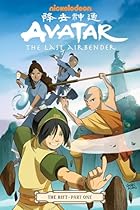
30) Avatar: The Last Airbender - The Rift Part 1, by Gene Luen Yang, Michael Dante DiMartino, Bryan Konietzko, Dave Marshall.
An altogether lighter read...albeit still focused on culture clashes. More filling in the gaps between Avatar and The Legend of Korra, and it looks as though this series will focus on Toph as the previous one did on Zuko.
Labels:
American history,
Avatar,
graphic novels,
historical romance,
reading,
research
Tuesday, July 30, 2013
2013 Reading, Books 73-75
73) Mothers of Invention: Women of the Slaveholding South in the American Civil War, by Drew Gilpin Faust.
Drew Faust is currently the president of Harvard, but she was an AmCiv professor at Penn back when I was an undergraduate there. Her two classes on the American South, one covering 1607-1861, the other 1861-present, were among the most popular and highly rated in the entire university. I took the first and found it an eye-opening look at my own roots.
This book in its own way was the same kind of experience. Faust looks at the diaries and letters of elite white Southern women (who AREN'T part of my roots--my Civil-War-era antecedents fell into the "poor white" category and were probably marginally literate at best) and how the four years of the Civil War impacted their views on everything from gender roles to religion to race relations, leading, among other things, to a feminism that was both more pessimistic and conservative than that of the rest of the country during the fight for women's suffrage.
74) Blindspot: Hidden Biases of Good People, by Mahzarin R. Banaji and Anthony G. Greenwald.
This quick but thought-provoking read is all about the measure the authors, a Harvard and a UW* professor, developed to measure unconscious biases of various kinds. It's a deceptively simple measure of whether you associate a particular group with positive or negative qualities. For a sample test, the book had you go through lists of insect and flower nouns (e.g. wasp, roach, rose, lily) and negative and positive traits/things (e.g. vomit, fear, peace, heaven). On one round you sort flowers and pleasant things into Column A, insects and negative ones into Column B, while on the next you have to put flowers and negative things in Column A, insects and positive ones in Column B. Since almost everyone prefers flowers to insects, they're able to perform the first round much more quickly. (Though I noticed the insect list didn't include "honeybee" or "butterfly." I caught myself hesitating on "moth" compared to the other insects, because it's not like they're ugly or gross or fill me with a desire to either run away or squash them. I have a feeling I would've wanted to class bees and butterflies with flowers, since I expect to see them AROUND flowers and have wholly positive associations with them. Butterflies are pretty! Bees make honey and pollinate our crops, and colony collapse disorder is so scary I'm downright thrilled whenever I see honeybees at work.)
Anyway, the test takes on more serious implications as soon as you turn it to sorting human categories. It turns out that even people who wouldn't be considered racist or bigoted by any conscious measure tend to associate whites with more positive qualities than blacks or with more American traits than Hispanics or Asians. Even committed feminists associate women more with home and men more with work, and so forth. I'm appalled but not exactly surprised to say that despite trying my best to perform on the tests as the unbiased, egalitarian person I aspire to be, I showed my share of unconscious bias--though at least my anti-bug bias is stronger than any of my human ones. :-/
The book raises more questions than it answers, but the author's main points are that A) these biases matter, because even though most of us want to be unbiased and therefore wouldn't consciously discriminate, our unconscious biases show up in small ways that over time add up to real harm in peoples lives, and B) if we know our biases exist, we can take conscious steps to counteract them.
*Since I live in Seattle and actually work at the U-Dub in question for my day job, this means University of Washington, not Wisconsin or Wyoming. When I was at the RWA conference, a couple of lunch tablemates, strangers to me, were talking about UW and its hospital system, and I was all ready to jump in with my insider opinion until I took a closer look at their name tags and saw they were from Wisconsin.
75) The Turncoat, by Donna Thorland.
A fast-paced, sexy spy novel set mostly in British-occupied Philadelphia in 1777-78. Recommended for fans of Lauren Willig's Pink Carnation books, with the caveat that it's darker and grittier--if you like Willig but also like, say, Diana Gabaldon or Bernard Cornwell, you should definitely pick this book up. (Though it comes with a trigger warning for depictions of rape, mostly off-page but in one case fairly graphic.)
Thursday, July 4, 2013
Favorite reads of the year so far
Happy Independence Day to my fellow Americans! I'm off from the day job today, but I have to work Friday--which, looking on the bright side, means this week feels like it has two Fridays. I'll be having a low-key celebration with my family. Mr. Fraser is making waffles for breakfast, a tradition for almost every holiday we're not traveling, since they taste just as good on Labor Day or Presidents' Day as they do in July. Then we'll grill hot dogs and I'll bake Miss Fraser's favorite cake, which has white icing transformed into an American flag with strawberry stripes and blueberry stars.
It just occurred to me that the year is half over. (Insert ritual "How did THAT happen?" comment here.) That means it's time to post my top ten reads of the year so far, in the order I read them:
1) Julie's Wolf Pack
Third in Jean Craighead George's beautiful YA series about a young Inuit girl who finds refuge among a wolf pack and keeps ties with them even after being reunited with her family, this one is almost all from the POV of the wolves themselves, and it works surprisingly well. She doesn't quite anthropomorphize them but still makes them extremely relatable, somehow.
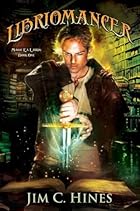
2) Libriomancer, by Jim C. Hines.
First in a fantasy series with a really clever concept for its magic--basically, books make magic by the collective belief of readers in the stories' worlds, and libriomancers can pull objects out of those books temporarily. This doesn't give the unlimited power you might think--among other things, too much magic use wrecks both the libriomancer and the book, and you can only pull out objects that would fit through an ordinary-sized physical copy of the book. E.g. if I were a libriomancer carrying a copy of a book from the Sharpe series, I could pull out Sharpe's sword or the telescope Wellington gave him, but a cannon wouldn't fit. The story and characters are as good as the concept, and I'll be eagerly awaiting the sequels. I've already preordered the sequel, Codex Born.
3) A Year of Biblical Womanhood, by Rachel Held Evans
I'm easily hooked by the type of memoir where someone spends a year trying to live a lifestyle that's foreign to them, cooks their way through a famous cookbook, or whatever. This one was both hilarious and unexpectedly moving. Evans comes from a background almost identical to my own--I'm ~10 years older, but we grew up within 40 or 50 miles of each other, and the biggest obvious difference between our good Alabama Baptist families is that mine roots for Auburn in college football while hers supports Alabama. (I was really disappointed that the month she was trying not to be contentious was October 2010 rather than November of that year, because she talked about her struggles during the South Carolina game rather than the epic Auburn comeback. And yes, I know Bama has since won two more national championships. 2010 was still awesome.)
Anyway, Evans is also like me in having wrestled with the increasing conservatism of the evangelical church, though AFAIK she hasn't yet gone as far as I have in running away from it--I'm now Episcopalian, which I suspect has some of my Baptist ancestors spinning in their graves. So for this book she spends each month of a year trying to live out one of the biblical commands to women literally, both to show the absurdity of a hyper-literal approach and to find God in unexpected places. She also talks a lot about women's power and strength, in the Bible and through history to the present. I think what will stick with me most is her discussion of the Proverbs 31 woman, which I was taught to think of as the perfect homemaker--someone I hoped to become during my more conservative days and now rebel against. But Evans discovers that in the Jewish tradition, that text isn't used prescriptively, but as praise for whenever a woman shows courage, generosity, integrity, and like virtues. In Hebrew the words the King James Bible translates as "a virtuous woman" are "eshet chayil"--a woman of valor. I'll never be a Proverbs 31 homemaker, but on my best days I can be a woman of valor.
4) Miss Jacobson's Journey, by Carola Dunn
This one is a traditional Regency, with a PG, kisses-only sensuality rating, but with a decidedly non-traditional heroine and setting. The heroine, Miriam Jacobson, is an English Jew who's been living on the Continent with her doctor uncle for nine years after having become estranged from the rest of her family by rudely rejecting the suitor the matchmaker brought for her. Now she wants to go home, but at the height of the Napoleonic Wars, journeying from France to England isn't a simple task. She and her maid/duenna are recruited by Jakob Rothschild to help two men smuggle gold to Wellington in Spain, with the promise of help getting home once she completes her mission. Naturally, one of the men in her party is the suitor she rejected all those years ago, and he's grown and matured in the intervening years into a far more attractive man than she ever would've dreamed possible...
From the time I started reading traditional Regencies in high school, I've always loved any non-traditional setting. (Not that I don't love a nice country house party or London Season tale, too.) Following the drum in the Peninsular War? I'm there. Congress of Vienna? Fascinating. Canada? More, please. Brussels just before Waterloo? Wonderful! America, before, during, or after the War of 1812? Why not? So this book had me halfway to hooked from the beginning because of the setting, and the story delivered on its promise. I enjoyed all the characters, the sweet romance worked beautifully for me, and I've already bought more of Dunn's backlist.
5) Whose Names Are Unknown, by Sanora Babb.
I heard about this book while watching Ken Burns' Dust Bowl documentary. It was originally written and accepted for publication in the 1930's, then rejected after The Grapes of Wrath came out because the acquiring editor figured there wasn't room for TWO Dust Bowl/Okie migrant stories. (Which is so laughably different from today's market, where every hit spawns a dozen imitators.)
I'm glad I read this book. It's more literary than my usual taste, but it has a kind of subtle, deceptively simple beauty, and it sort of rounded out my understanding of the Dust Bowl era, I think, in the way that good fiction can bring the past to life better than documentary alone.
6) Things I Can't Forget, by Miranda Kenneally.
I've been a Kenneally fan ever since I read the query letter for her first YA romance, Catching Jordan, (her agent posted it on a blog as an example of an effective query), but I think this book may be my favorite so far just because I identified with the heroine so much. I've been told that's a simplistic reason to enjoy a book, but oh well. I was Kate when I was 18, and for several years afterward. Painfully good, afraid to break the rules, convinced that my beliefs were the only right ones and therefore pretty dang judgmental even if I was better than Kate at keeping my mouth shut about it. So I enjoyed watching Kate begin to come to terms with life's complexities and ambiguities, and I loved seeing a character like her (and my younger self) grow and change.
7) Help, Thanks, Wow: The Three Essential Prayers, by Anne Lamott.
Anne Lamott's books don't always work for me, but this one blew me away. The Thanks and Wow chapters in particular helped me remember to stop and revel in the Eternal Now of the current moment, instead of always straining toward a longed-for future when I might be able to quit my day job and write full-time, or else flinching away from the inevitable future in which someday I must die. I found myself reveling in the life all around me, even in the spring pollen that makes me sneeze and coats my pretty black car with an unsightly yellow film. I remembered my favorite lines from For I will Consider My Cat Jeoffry:
For he counteracts the Devil, who is death, by brisking about the life.
For in his morning orisons he loves the sun and the sun loves him.
For he is of the tribe of Tiger.
For the Cherub Cat is a term of the Angel Tiger.
...and also quoting one of my favorite lines from a character in the Vorkosigan saga: "Every day is a gift. Me, I tear open the package and wolf it down on the spot," not to mention, of all people, Bon Jovi: "I just want to live while I'm alive."
So I guess you might say the book made an impression on me. Thanks, Anne Lamott!
8) Sacred Games, by Gary Corby.
Third in a series of light, fun, yet richly researched mysteries based in Periclean Athens. This entry is set at the Games of the 80th Olympiad in 460 BCE, and our sleuth, Nicolaos, a fictional elder brother to Socrates, has to pair up with a Spartan to investigate the death of a star Spartan athlete the night after the opening ceremonies. (The primary suspect is an Athenian, and everyone agrees the only fair solution is to have one man from each city investigate, because at that point in history there was no such thing as a neutral city in any dispute between the two rival powers.) Corby does an excellent job bringing the bloodthirsty, superstitious, and quirky aspects of Greek culture to life, while simultaneously making his characters and their world human and relatable. I recommend this especially for fans of Lindsey Davis's Falco series, as the tone is quite similar.
9) The Strange History of the American Quadroon, by Emily Clark.
The book that made me withdraw a submitted manuscript so I could fix its utter historical inaccuracy. See more detail here.
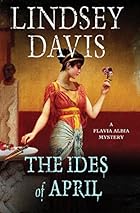
10) The Ides of April, by Lindsey Davis.
First in a new series of mysteries set in Ancient Rome, this book is linked to the Davis's Falco series, but it takes place about a dozen years after the last one, and we never actually see Falco and Helena. The sleuth is their adopted daughter, Flavia Albia, an independent young widow who's taken up her father's old profession and lives on her own. Falco and Helena are evidently doing fine, and Albia drops in to visit regularly--it's just that all those meeting are told rather than shown. Hopefully that won't be the case throughout the series, though I can understand wanting to establish Albia as an interesting character in her own right.
The book got off to rather a slow start, and I might not have stuck with it were it not for my long-standing love for the Falco series. But about 40% in, the story took off and I started caring about Albia for her own sake. I guessed the whodunnit fairly quickly, not to mention the love interest, though there was a sort of mini-mystery about the latter I must confess to being totally oblivious to until it was spelled out for me. In any case, I'm looking forward to book two next year.
(Incidentally, this one wins my favorite cover of the year to date. So pretty!)
It just occurred to me that the year is half over. (Insert ritual "How did THAT happen?" comment here.) That means it's time to post my top ten reads of the year so far, in the order I read them:
1) Julie's Wolf Pack
Third in Jean Craighead George's beautiful YA series about a young Inuit girl who finds refuge among a wolf pack and keeps ties with them even after being reunited with her family, this one is almost all from the POV of the wolves themselves, and it works surprisingly well. She doesn't quite anthropomorphize them but still makes them extremely relatable, somehow.
2) Libriomancer, by Jim C. Hines.
First in a fantasy series with a really clever concept for its magic--basically, books make magic by the collective belief of readers in the stories' worlds, and libriomancers can pull objects out of those books temporarily. This doesn't give the unlimited power you might think--among other things, too much magic use wrecks both the libriomancer and the book, and you can only pull out objects that would fit through an ordinary-sized physical copy of the book. E.g. if I were a libriomancer carrying a copy of a book from the Sharpe series, I could pull out Sharpe's sword or the telescope Wellington gave him, but a cannon wouldn't fit. The story and characters are as good as the concept, and I'll be eagerly awaiting the sequels. I've already preordered the sequel, Codex Born.
3) A Year of Biblical Womanhood, by Rachel Held Evans
I'm easily hooked by the type of memoir where someone spends a year trying to live a lifestyle that's foreign to them, cooks their way through a famous cookbook, or whatever. This one was both hilarious and unexpectedly moving. Evans comes from a background almost identical to my own--I'm ~10 years older, but we grew up within 40 or 50 miles of each other, and the biggest obvious difference between our good Alabama Baptist families is that mine roots for Auburn in college football while hers supports Alabama. (I was really disappointed that the month she was trying not to be contentious was October 2010 rather than November of that year, because she talked about her struggles during the South Carolina game rather than the epic Auburn comeback. And yes, I know Bama has since won two more national championships. 2010 was still awesome.)
Anyway, Evans is also like me in having wrestled with the increasing conservatism of the evangelical church, though AFAIK she hasn't yet gone as far as I have in running away from it--I'm now Episcopalian, which I suspect has some of my Baptist ancestors spinning in their graves. So for this book she spends each month of a year trying to live out one of the biblical commands to women literally, both to show the absurdity of a hyper-literal approach and to find God in unexpected places. She also talks a lot about women's power and strength, in the Bible and through history to the present. I think what will stick with me most is her discussion of the Proverbs 31 woman, which I was taught to think of as the perfect homemaker--someone I hoped to become during my more conservative days and now rebel against. But Evans discovers that in the Jewish tradition, that text isn't used prescriptively, but as praise for whenever a woman shows courage, generosity, integrity, and like virtues. In Hebrew the words the King James Bible translates as "a virtuous woman" are "eshet chayil"--a woman of valor. I'll never be a Proverbs 31 homemaker, but on my best days I can be a woman of valor.
4) Miss Jacobson's Journey, by Carola Dunn
This one is a traditional Regency, with a PG, kisses-only sensuality rating, but with a decidedly non-traditional heroine and setting. The heroine, Miriam Jacobson, is an English Jew who's been living on the Continent with her doctor uncle for nine years after having become estranged from the rest of her family by rudely rejecting the suitor the matchmaker brought for her. Now she wants to go home, but at the height of the Napoleonic Wars, journeying from France to England isn't a simple task. She and her maid/duenna are recruited by Jakob Rothschild to help two men smuggle gold to Wellington in Spain, with the promise of help getting home once she completes her mission. Naturally, one of the men in her party is the suitor she rejected all those years ago, and he's grown and matured in the intervening years into a far more attractive man than she ever would've dreamed possible...
From the time I started reading traditional Regencies in high school, I've always loved any non-traditional setting. (Not that I don't love a nice country house party or London Season tale, too.) Following the drum in the Peninsular War? I'm there. Congress of Vienna? Fascinating. Canada? More, please. Brussels just before Waterloo? Wonderful! America, before, during, or after the War of 1812? Why not? So this book had me halfway to hooked from the beginning because of the setting, and the story delivered on its promise. I enjoyed all the characters, the sweet romance worked beautifully for me, and I've already bought more of Dunn's backlist.
5) Whose Names Are Unknown, by Sanora Babb.
I heard about this book while watching Ken Burns' Dust Bowl documentary. It was originally written and accepted for publication in the 1930's, then rejected after The Grapes of Wrath came out because the acquiring editor figured there wasn't room for TWO Dust Bowl/Okie migrant stories. (Which is so laughably different from today's market, where every hit spawns a dozen imitators.)
I'm glad I read this book. It's more literary than my usual taste, but it has a kind of subtle, deceptively simple beauty, and it sort of rounded out my understanding of the Dust Bowl era, I think, in the way that good fiction can bring the past to life better than documentary alone.
6) Things I Can't Forget, by Miranda Kenneally.
I've been a Kenneally fan ever since I read the query letter for her first YA romance, Catching Jordan, (her agent posted it on a blog as an example of an effective query), but I think this book may be my favorite so far just because I identified with the heroine so much. I've been told that's a simplistic reason to enjoy a book, but oh well. I was Kate when I was 18, and for several years afterward. Painfully good, afraid to break the rules, convinced that my beliefs were the only right ones and therefore pretty dang judgmental even if I was better than Kate at keeping my mouth shut about it. So I enjoyed watching Kate begin to come to terms with life's complexities and ambiguities, and I loved seeing a character like her (and my younger self) grow and change.
7) Help, Thanks, Wow: The Three Essential Prayers, by Anne Lamott.
Anne Lamott's books don't always work for me, but this one blew me away. The Thanks and Wow chapters in particular helped me remember to stop and revel in the Eternal Now of the current moment, instead of always straining toward a longed-for future when I might be able to quit my day job and write full-time, or else flinching away from the inevitable future in which someday I must die. I found myself reveling in the life all around me, even in the spring pollen that makes me sneeze and coats my pretty black car with an unsightly yellow film. I remembered my favorite lines from For I will Consider My Cat Jeoffry:
For he counteracts the Devil, who is death, by brisking about the life.
For in his morning orisons he loves the sun and the sun loves him.
For he is of the tribe of Tiger.
For the Cherub Cat is a term of the Angel Tiger.
...and also quoting one of my favorite lines from a character in the Vorkosigan saga: "Every day is a gift. Me, I tear open the package and wolf it down on the spot," not to mention, of all people, Bon Jovi: "I just want to live while I'm alive."
So I guess you might say the book made an impression on me. Thanks, Anne Lamott!
8) Sacred Games, by Gary Corby.
Third in a series of light, fun, yet richly researched mysteries based in Periclean Athens. This entry is set at the Games of the 80th Olympiad in 460 BCE, and our sleuth, Nicolaos, a fictional elder brother to Socrates, has to pair up with a Spartan to investigate the death of a star Spartan athlete the night after the opening ceremonies. (The primary suspect is an Athenian, and everyone agrees the only fair solution is to have one man from each city investigate, because at that point in history there was no such thing as a neutral city in any dispute between the two rival powers.) Corby does an excellent job bringing the bloodthirsty, superstitious, and quirky aspects of Greek culture to life, while simultaneously making his characters and their world human and relatable. I recommend this especially for fans of Lindsey Davis's Falco series, as the tone is quite similar.
9) The Strange History of the American Quadroon, by Emily Clark.
The book that made me withdraw a submitted manuscript so I could fix its utter historical inaccuracy. See more detail here.
10) The Ides of April, by Lindsey Davis.
First in a new series of mysteries set in Ancient Rome, this book is linked to the Davis's Falco series, but it takes place about a dozen years after the last one, and we never actually see Falco and Helena. The sleuth is their adopted daughter, Flavia Albia, an independent young widow who's taken up her father's old profession and lives on her own. Falco and Helena are evidently doing fine, and Albia drops in to visit regularly--it's just that all those meeting are told rather than shown. Hopefully that won't be the case throughout the series, though I can understand wanting to establish Albia as an interesting character in her own right.
The book got off to rather a slow start, and I might not have stuck with it were it not for my long-standing love for the Falco series. But about 40% in, the story took off and I started caring about Albia for her own sake. I guessed the whodunnit fairly quickly, not to mention the love interest, though there was a sort of mini-mystery about the latter I must confess to being totally oblivious to until it was spelled out for me. In any case, I'm looking forward to book two next year.
(Incidentally, this one wins my favorite cover of the year to date. So pretty!)
Sunday, June 30, 2013
2013 Reading, Books 61-63
First of all, my apologies for the light posting of late. I'm ultra-busy between now and RWA, really between now and A Dream Defiant's release date on 7/29. Starting in August, I plan to resume my regular posting schedule, including re-starting my Random Cookbook of the Week project.
Anyway, I've managed to squeeze in some reading time, albeit not as much as usual.
61) The New Mind of the South, by Tracy Thompson.
Thompson, like me, has deep roots in the Deep South--her family has been in Georgia for many generations while mine has been in Alabama since there was an Alabama, longer if the tradition that we have Creek blood is true. (Though this book brings up something I've long suspected--that a lot of white Southerners who believe they're part Cherokee or Creek are actually part black. One of these days I'd like to go through 23 and Me to get my ancestry composition just to see how true my family tree and family legends actually are. I'm less curious about the health risk genetic testing, because I don't need to see my DNA to know I'm at high cardiac risk. Simple family history and the fact my blood pressure already runs borderline high tell me that for free.)
Anyway, Thompson and I are also alike in that we've chosen to live our adult lives away from our native soil--she's a reporter living near Washington DC, while in Seattle I'm as far from the Deep South as you can be in the Lower 48. She's a bit older, so her youthful memories are of the 60's, while mine are of the 70's and 80's, but the South is no longer the place we grew up in, for better and for worse. I'm not sure how interesting this book would be for someone without Southern roots, but I found it a fascinating exploration of the less racist but more conservative, more diverse but less rural and sadly sprawl-plagued South of today.
62) A Natural History of Dragons, by Marie Brennan.
A charming fantasy novel--I especially loved the narrative voice--set in a world resembling and obviously based on the Victorian era--the technology is at the steamship level--but with dragons. The heroine and narrator is an aristocratic woman willing to defy society's strictures on women to study dragons, and in this volume (I expect there will be more) we see her childhood, youth, and first expedition.
63) Bounded Lives, Bounded Places: Free Black Society in Colonial New Orleans, 1769-1803, by Kimberly S. Hanger.
More research for the New Orleans WIP, mostly confirming and adding detail to my previous reading on the subject. Surprisingly, the decades of Spanish colonial rule were the best time for the free black community in a lot of ways, compared to earlier French and especially later American rule--their numbers grew through liberal manumission laws, and they were treated with a fair amount of respect, if never quite equality, within the community.
Labels:
American history,
current issues,
fantasy,
history,
New Orleans,
reading
Wednesday, June 19, 2013
2013 Reading, Books 58-60
58) The Fall of the House of Dixie, by Bruce Levine.
An excellent history of the Civil War focusing not on military strategy and tactics, but on how the conflict ultimately hastened the end of slavery even though that wasn't the Union's initial goal. I'd heard it before, but it still amazes me that so many people on both sides were surprised that blacks made as good soldiers as whites, fighting with just the courage and tenacity you'd expect of men fighting for their own and their families' freedom, and that black children given the opportunity to learn picked up reading and writing just as quickly as white children.
59) Defiant, by Pamela Clare.
For my personal 2013 Rita reading challenge, blogged about here.
60) The Ides of April, by Lindsey Davis.
Isn't that a gorgeous cover?
First in a new series of mysteries set in Ancient Rome, this book is linked to the Davis's Falco series, but it takes place about a dozen years after the last one, and we never actually see Falco and Helena. The sleuth is their adopted daughter, Flavia Albia, an independent young widow who's taken up her father's old profession and lives on her own. Falco and Helena are evidently doing fine, and Albia drops in to visit regularly--it's just that all those meeting are told rather than shown. Hopefully that won't be the case throughout the series, though I can understand wanting to establish Albia as an interesting character in her own right.
The book got off to rather a slow start, and I might not have stuck with it were it not for my long-standing love for the Falco series. But about 40% in, the story took off and I started caring about Albia for her own sake. I guessed the whodunnit fairly quickly, not to mention the love interest, though there was a sort of mini-mystery about the latter I must confess to being totally oblivious to until it was spelled out for me. In any case, I'm looking forward to book two next year.
Friday, May 31, 2013
2013 Reading, Books 52-54 (wherein Susanna decides to withdraw a manuscript from submission)
52) Sacred Games, by Gary Corby.
Third in a series of light, fun, yet richly researched mysteries based in Periclean Athens. This entry is set at the Games of the 80th Olympiad in 460 BCE, and our sleuth, Nicolaos, a fictional elder brother to Socrates, has to pair up with a Spartan to investigate the death of a star Spartan athlete the night of the opening ceremonies. (The primary suspect is an Athenian, and everyone agrees the only fair solution is to have one man from each city investigate, because at that point in history there was no such thing as a neutral city in any dispute between the two rival powers.) Corby does an excellent job bringing the bloodthirsty, superstitious, and quirky aspects of Greek culture to life, while simultaneously making his characters and their world human and relatable. I recommend this especially for fans of Lindsey Davis's Falco series, as the tone is quite similar.
53) 2K to 10K: How to Write Faster, Write Better, and Write More of What You Love, by Rachel Aaron.
I bought this on a whim a few days ago (since one can afford to be whimsical with $0.99 e-books), because I'm always interested in ways to improve my writing efficiency and generally make better use of my limited time. And I happen to be sort of between projects, waiting for my editor's feedback on a recently sold novella while researching two new ideas, so it's a timely read.
I've been known to disagree vehemently with writing advice, since there is no One True Path, but I'm going to try Aaron's methods with my next story. I tend to be what's known as a "pantser"--i.e. I just sort of plunge into my first draft, flying by the seat of my pants, with a lot of backtracking and rewriting upon discovering my first idea or two doesn't really work. The opposite type of writer is a plotter, whose techniques I've always found off-putting, at least in the extreme versions, like the writing class I heard about where the instructor wouldn't let the writers start actual drafting until they'd produced fifty-page outlines.
Aaron is a plotter, but not at the extreme end of the scale. She seems to take an organic approach to plot and character development, letting them sort of feed off each other, which feels right to me, like an extension of how I already write the last quarter or so of my manuscripts. There's usually this point I describe as "And DOWN the stretch they come!" (you have to imagine this in an excited, racetrack caller voice), where I can suddenly see everything that needs to happen between where I am now and the end. I jot down every scene, every emotional turning point, on post-it notes, slap them on my office door, and write them, one after the other. I know exactly what I need to do and do it FAST, but it doesn't feel robotic or paint-by-numbers at all. Aaron's advice feels like it might give me a way to write entire manuscripts in Down the Stretch They Come mode. I just need to get past my self-identity as a pantser, along with my bad habit of thinking that only time spent drafting is Real Writing, even if spending a particular hour researching or planning would've enabled me to write faster and better the next day.
54) The Strange History of the American Quadroon, by Emily Clark.
This is by the same author who wrote Masterless Mistresses, which I read at the beginning of the month. I stumbled across this brand-new book--I'm the first person to check out the UW Library's copy--by accident on Amazon, and I'm glad I did. You see, I started a manuscript set in the aftermath of the Battle of New Orleans whose heroine was a free woman of color, a fourth-generation native of the city, and I made her a placee (i.e. a white planter's mistress with a long-term contract for an almost marital relationship) who had followed in her mother's footsteps in adopting such a life. I'd heard about such arrangements all my life, and I found info in my initial research that seemed to confirm what I'd been told. So I started writing, figuring I'd research as I wrote to flesh out my setting and my character's background.
I went ahead and submitted a proposal (i.e. opening chapters and synopsis) to my publisher, but the more I researched, the more nervous I felt about my heroine's placee status. While there were plenty of interracial relationships going on in 18th and early 19th century New Orleans, I just wasn't finding anything that matched the backstory I'd written for my heroine. And this book turned out to be the final nail in my manuscript's coffin. By the time I'd read a few chapters, I knew I had to withdraw my proposal from consideration, and I emailed my editor to do so. Because it turns out the whole placee system is little more than an urban legend, and insofar as it existed at all, it wasn't a long-established local tradition in 1815. And while I don't claim perfect historical accuracy (what novelist could?), I'm not so brazen as to try to tell a story I know couldn't have happened, especially not when the false foundation is a lurid, titillating, racist stereotype.
What really happened? Well, there were quite a few life partnerships, marriages in all but name, between white men and free women of color in early New Orleans. Both groups had skewed sex ratios, with white men far outnumbering white women and free black women outnumbering free black men in similar proportions, so such pairings were all but inevitable. But there wasn't a formalized system for how the relationships were managed, and the women didn't groom their daughters to follow in their footsteps. If anything, as the sex ratios started to even out among the free black population, they encouraged them to marry and live in middle-class respectability with free black men--all the more so as American inheritance law made it harder for white fathers to leave property to their illegitimate mixed-race children from 1808 forward. There was an uptick in concubinage and high-class prostitution among free black women in the early decades of the 19th century, but it mostly took place among the Haitian refugees who came to the city starting around 1809--another group where women outnumbered men, and one lacking the long-term connections within the city and dowries to make them desirable brides. It still didn't look quite like placage as it's been handed down to us in fiction and legend, but it was close enough to start that legend--and by the middle of the 19th century to create in a self-fulfilling prophecy a particularly unsavory sort of sex tourism. E.g. if you were a slave dealer in, say, Virginia, and you happened to have in your inventory a beautiful, light-skinned young slave woman, why would you sell her locally when she'd fetch a far higher price in New Orleans?
I'm still going to write a post-Battle of New Orleans story, and its heroine will still be a free woman of color. But I'm aiming for a far less stereotypical portrayal--I'm thinking I'll take advantage of those troublesome inheritance laws--and will hopefully write a far better book as a result.
Sunday, May 5, 2013
2013 reading, books 43-45
43) Masterless Mistresses, by Emily Clark.
A history of the Ursuline convent established in New Orleans in the early 18th century from its founding through the early 19th century. An academic work, though not as dry as many of its ilk--if you're interested in early New Orleans or women religious, you'll probably enjoy it. Clark focuses on how the Ursulines as women operating autonomously, without a father or a husband as their patriarchal head, challenged the social order of the time.
44) Sweet Awakening, by Marjorie Farrell.
For the 2013 TBR Challenge. Detailed post to come on May 15.
45) River of Stars, by Guy Gavriel Kay.
A sweeping, epic historical fantasy (light on the fantastical elements--there's really only one sequence that's undeniably otherworldly) set in what is obviously an alternate-world version of China. I was caught up in it, staying up till almost 1 AM last night to finish it even though I usually prefer even my doorstopper fantasy sagas to concentrate more intently on one or two characters. (E.g. I love Jacqueline Carey's first-person Kushiel epics.)
That said, I hated the ending. HATED it. I raced through the last 100 pages waiting for the moment everything turned around--and it never did. It's not a wholly depressing ending by any means, and Kay doesn't kill off characters with the abandon of a George RR Martin or even a Joss Whedon. But I was still hoping for something, shall we say, more traditionally satisfying and cathartic. I can be old-school like that. But this morning I looked up the historical events Kay based the story on, and now his choices make a lot more sense. So if you're like me in that you A) are fond of traditionally happy endings and B) know very little about Chinese history, I recommend giving the "History" section of the Wikipedia article on the Song Dynasty a quick read.
Labels:
American history,
fantasy,
historical romance,
New Orleans,
reading
Subscribe to:
Posts (Atom)