Showing posts with label ancient Greece. Show all posts

Tuesday, May 13, 2014

2014 Reading, Books 49-54

49. Secrets of a Bollywood Marriage by Susanna Carr.

A quick, relaxing read that hit the spot during a stressful, busy time. That said, it's definitely a "fight-fight-kiss" romance, and the last fight came so close to the end of the book I wasn't sure I believed they'd learned how to communicate well enough for the kissing to be more frequent than the fighting in their future.

50) Time Warped: Unlocking the Mysteries of Time Perception by Claudia Hammond

If you like popular science or psychology books, I recommend this exploration of how we experience time. It's fun and readable without feeling dumbed down, and it closes with a practical chapter on how to better manage your experience of time, if not time itself.

51) Range of Ghosts by Elizabeth Bear.


Epic fantasy (which I love) with a twist (something I also generally love). The setting is recognizably similar to our world--something like Jacqueline Carey's Kushiel series in that the map will look really familiar, though the fantastical elements are more forward. However, rather than being set in an alternate Europe, this story centers on an alternate central Asia. It ranges across a large chunk of its globe through the eyes of multiple characters, but its focus is a young man named Temur, grandson of a Genghis Khan-like figure, though he's surrounded by a cast of strong women. I enjoyed it very much and plan to read the sequels.

52) Only Human by Gareth Roberts.

A Doctor Who novel, and one that felt like reading an average episode of the show...in a good way. Another fun, relaxing read as I fight my way through my current writing deadline.

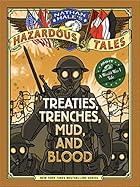
53) Nathan Hale's Hazardous Tales: Treaties, Trenches, Mud, and Blood by Nathan Hale.


The fourth in this series of graphic novels about American history manages, at least in my opinion, to make WWI palatable and understandable for its middle grade audience without dumbing down the material or treating the war lightly. FWIW, my 10-year-old pronounced it good, though not as funny as the previous three. If you've got a child in the right age group, get them these books. Schools don't teach enough history these days, in my not at all humble opinion, and this series strikes the perfect balance of informative and fun.

54) The Marathon Conspiracy by Gary Corby.

This must be my week for just-released Books 4. I enjoyed this latest entry in Corby's series about Nicolaos, a fictional elder brother of Socrates solving crime in Periclean Athens. Especially recommended for fans of Lindsey Davis's Falco series, since it has a similar combination of humor and modern tone with rich historical detail.

Tuesday, February 11, 2014

2014 Reading, Books 13-18

13) Rick Steves' Amsterdam, Bruges & Brussels by Rick Steves.

More preparation for the 2015 European trip. Though we'll likely fly into London, then take the Chunnel over to Brussels in time for the Waterloo bicentennial, if the airfares are better we may go in through Amsterdam instead. Either way, this will very much be the military history part of the trip, since in addition to Waterloo we'd like to visit Flanders Fields.


14) Lysistrata, by Aristophanes.

I picked this Dover Thrift Edition up years ago, but only just now got around to reading it. I knew broadly what it was about--the women of Greece going on a sex strike to force an end to the Peloponnesian War--but I was surprised how laugh-out-loud funny it is nearly 2500 years later. (It helps that I've read enough on 5th-century BCE Greece to have a decent grasp on the cultural context.) The best comparison I can come up with is that it felt like I was reading the Daily Show or Colbert Report of ancient Athens.

15) A Summer Affair, by Susan Wiggs.

An enjoyable historical romance with a rather unusual setting--San Francisco in the late 19th century. A doctor who blames himself for the tragic death of his young wife a decade earlier and hasn't found a way to move on finds his life upended when he treats a self-described "lady adventurer" for a gunshot wound received in an incident she refuses to discuss.

16) Rita Book #4: This one got off to a bumpy start, and I never would've stuck with it past the first chapter if I hadn't been obliged to finish it because of my judging responsibilities. But around about p. 60 the story hooked me. Some might say the moral is that I should stop giving up on books a few pages in if I don't like the writing or characters, but in my experience this book is an exception, and books that start out dull, badly written, or otherwise problematic stay that way.

17) In This House of Brede, by Rumer Godden.

This book is my February re-read, of a book I initially read back in the mid-90's. I found it through the Hypatia recommender on Alexandria Digital Literature, a site I believe is now defunct, but that led me to several favorites--this book in particular, but also Dorothy Sayers, Lindsey Davis, and Diana Gabaldon. It also kept insisting I needed to read the Vorkosigan Saga, but I ignored it because I wasn't a science fiction reader. It took me over ten years to give in, but ever since I've been an evangelist for the series. (Have YOU met Miles Vorkosigan and accepted him as your personal Vor-lord and savior yet?)

But I digress. When I first read this book, I didn't expect to be hooked by a story about Benedictine nuns. I'm not Catholic, and at the time I'd never even met anyone in a religious order. (That's since changed due to my stint as office manager for the Spiritual Care department in one of the Seattle hospitals, since some of our chaplain trainees were nuns.) But I was drawn in by the vivid portrayals of the characters. I've always enjoyed stories about communities, whether they be towns, ships' crews, extended families, or whatever, and you can't get a much more focused community than a monastery of enclosed nuns. And it's that sense of community--of revisiting well-known friends--that makes the book so re-readable for me.

18) Rita Book #5: Average.

Monday, January 20, 2014

2014 Reading, Books 4-6

4) Marathon: How One Battle Changed Western Civilization, by Richard A. Billows.

It's no longer the fashion in history to talk about one person or event changing the fate of the world--most of the time that's determined by larger, less personal forces. But Billows makes a good case that the Battle of Marathon in 490 BCE is an exception. If Athens is defeated at Marathon, most likely the Persians sack the city and carry away its leadership into anonymous exile--and ultimately conquer all of Greece, because the victories of 480 BCE required the Spartan army and the Athenian navy. Break Athens, and its democracy becomes a short-lived failure, and any number of the great accomplishments in architecture, philosophy, theater, etc. that took place there over the next century or so may never have a chance to happen.

Billows doesn't idealize Athens--it was a terrible place to be a woman, much of its wealth was based on slave labor in its silver mines, and in its heyday it was as ruthless a colonial power as any. He also doesn't demonize Persia. As conquering empires go, it was one of the better ones to live under, since it allowed its subject peoples considerable local autonomy in governance, religious observance, etc. But he portrays Athens as innovative and important (correctly, in my view), and I'm always happy to see Athens get its due relative to Sparta.

5) Pugetopolis: A Mossback Takes on Growth Addicts, Weather Wimps, and the Myth of Seattle Nice, by Knute Berger.

This is a collection of Seattle journalist Knute Berger's columns about various local topics. The earliest was from 1992, I think, and the most recent from 2007 and '08, when the book was published. I moved here in 1999 and took awhile to get oriented and feel at home, so only the most recent ones recalled personal experience for me. And while some parts of the book made me laugh with rueful recognition at the foibles of my adopted city, others caused me to realize that I'm STILL a newcomer even though I'll have been here 15 years as of next month.

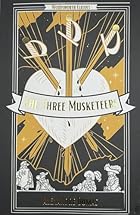
6) The Three Musketeers, by Alexandre Dumas.


One of my favorite reads in 2013 was The Black Count, Tom Reiss's biography of Alexandre Dumas's father. It left me curious enough to seek out Dumas's work, and I started with the most famous one. I didn't come into the book with strong expectations or anything beyond the vaguest notion of what the story was about, and I found it fun, readable, and full of sly wit.

Friday, May 31, 2013

2013 Reading, Books 52-54 (wherein Susanna decides to withdraw a manuscript from submission)


52) Sacred Games, by Gary Corby.

Third in a series of light, fun, yet richly researched mysteries based in Periclean Athens. This entry is set at the Games of the 80th Olympiad in 460 BCE, and our sleuth, Nicolaos, a fictional elder brother to Socrates, has to pair up with a Spartan to investigate the death of a star Spartan athlete the night of the opening ceremonies. (The primary suspect is an Athenian, and everyone agrees the only fair solution is to have one man from each city investigate, because at that point in history there was no such thing as a neutral city in any dispute between the two rival powers.) Corby does an excellent job bringing the bloodthirsty, superstitious, and quirky aspects of Greek culture to life, while simultaneously making his characters and their world human and relatable. I recommend this especially for fans of Lindsey Davis's Falco series, as the tone is quite similar.


53) 2K to 10K: How to Write Faster, Write Better, and Write More of What You Love, by Rachel Aaron.

I bought this on a whim a few days ago (since one can afford to be whimsical with $0.99 e-books), because I'm always interested in ways to improve my writing efficiency and generally make better use of my limited time. And I happen to be sort of between projects, waiting for my editor's feedback on a recently sold novella while researching two new ideas, so it's a timely read.

I've been known to disagree vehemently with writing advice, since there is no One True Path, but I'm going to try Aaron's methods with my next story. I tend to be what's known as a "pantser"--i.e. I just sort of plunge into my first draft, flying by the seat of my pants, with a lot of backtracking and rewriting upon discovering my first idea or two doesn't really work. The opposite type of writer is a plotter, whose techniques I've always found off-putting, at least in the extreme versions, like the writing class I heard about where the instructor wouldn't let the writers start actual drafting until they'd produced fifty-page outlines.

Aaron is a plotter, but not at the extreme end of the scale. She seems to take an organic approach to plot and character development, letting them sort of feed off each other, which feels right to me, like an extension of how I already write the last quarter or so of my manuscripts. There's usually this point I describe as "And DOWN the stretch they come!" (you have to imagine this in an excited, racetrack caller voice), where I can suddenly see everything that needs to happen between where I am now and the end. I jot down every scene, every emotional turning point, on post-it notes, slap them on my office door, and write them, one after the other. I know exactly what I need to do and do it FAST, but it doesn't feel robotic or paint-by-numbers at all. Aaron's advice feels like it might give me a way to write entire manuscripts in Down the Stretch They Come mode. I just need to get past my self-identity as a pantser, along with my bad habit of thinking that only time spent drafting is Real Writing, even if spending a particular hour researching or planning would've enabled me to write faster and better the next day.


54) The Strange History of the American Quadroon, by Emily Clark.

This is by the same author who wrote Masterless Mistresses, which I read at the beginning of the month. I stumbled across this brand-new book--I'm the first person to check out the UW Library's copy--by accident on Amazon, and I'm glad I did. You see, I started a manuscript set in the aftermath of the Battle of New Orleans whose heroine was a free woman of color, a fourth-generation native of the city, and I made her a placee (i.e. a white planter's mistress with a long-term contract for an almost marital relationship) who had followed in her mother's footsteps in adopting such a life. I'd heard about such arrangements all my life, and I found info in my initial research that seemed to confirm what I'd been told. So I started writing, figuring I'd research as I wrote to flesh out my setting and my character's background.

I went ahead and submitted a proposal (i.e. opening chapters and synopsis) to my publisher, but the more I researched, the more nervous I felt about my heroine's placee status. While there were plenty of interracial relationships going on in 18th and early 19th century New Orleans, I just wasn't finding anything that matched the backstory I'd written for my heroine. And this book turned out to be the final nail in my manuscript's coffin. By the time I'd read a few chapters, I knew I had to withdraw my proposal from consideration, and I emailed my editor to do so. Because it turns out the whole placee system is little more than an urban legend, and insofar as it existed at all, it wasn't a long-established local tradition in 1815. And while I don't claim perfect historical accuracy (what novelist could?), I'm not so brazen as to try to tell a story I know couldn't have happened, especially not when the false foundation is a lurid, titillating, racist stereotype.

What really happened? Well, there were quite a few life partnerships, marriages in all but name, between white men and free women of color in early New Orleans. Both groups had skewed sex ratios, with white men far outnumbering white women and free black women outnumbering free black men in similar proportions, so such pairings were all but inevitable. But there wasn't a formalized system for how the relationships were managed, and the women didn't groom their daughters to follow in their footsteps. If anything, as the sex ratios started to even out among the free black population, they encouraged them to marry and live in middle-class respectability with free black men--all the more so as American inheritance law made it harder for white fathers to leave property to their illegitimate mixed-race children from 1808 forward. There was an uptick in concubinage and high-class prostitution among free black women in the early decades of the 19th century, but it mostly took place among the Haitian refugees who came to the city starting around 1809--another group where women outnumbered men, and one lacking the long-term connections within the city and dowries to make them desirable brides. It still didn't look quite like placage as it's been handed down to us in fiction and legend, but it was close enough to start that legend--and by the middle of the 19th century to create in a self-fulfilling prophecy a particularly unsavory sort of sex tourism. E.g. if you were a slave dealer in, say, Virginia, and you happened to have in your inventory a beautiful, light-skinned young slave woman, why would you sell her locally when she'd fetch a far higher price in New Orleans?

I'm still going to write a post-Battle of New Orleans story, and its heroine will still be a free woman of color. But I'm aiming for a far less stereotypical portrayal--I'm thinking I'll take advantage of those troublesome inheritance laws--and will hopefully write a far better book as a result.

Sunday, November 18, 2012

Blog tour, reading, and no more NaNo

Just a few stops on the blog tour this week, since I'm taking the four-day Thanksgiving weekend off from promo:


In other writing news, my 2013 novella now has a release date--July 29.  That's a bit earlier than my editor and I had been anticipating, which is entirely a Good Thing. Between my shoulder and hand issues and my full-time day job, I'm just not going to be the world's fastest writer, but I'm trying to put myself in a position where my new releases are no more than 8-9 months apart.

However, it also means editing the novella is now my highest writing priority, with completing a proposal for its sequel a close second, so I'm abandoning my goal of 25,000 new words this month. One of the hardest lessons I've had to learn as a writer is the importance of flexibility, of being able to change plans when your circumstances change. In this case it makes no sense to pursue an arbitrary goal at the expense of focusing my energy on what my publisher needs next from me.

One personal goal I am continuing to pursue is that of reading 100 books this year. Here's what I completed this week:

94) The Dark Vineyard, by Martin Walker. Second in Walker's mystery series, and while I didn't like it quite as much as the first book, Bruno, Chief of Police, I expect I'll keep reading these, if for nothing else to see what happens to Bruno and his assorted friends and lovers and to take more mental vacations to the Perigord.

95) The Wrong Hill to Die On, by Donis Casey. Sixth in a series of mysteries featuring early 20th century Oklahoma farmwife and mother of many, Alafair Tucker. While this isn't my favorite of the series--that would be either Hornswoggled or Crying Blood--I still enjoyed visiting the familiar characters again.


96) A Case for Solomon: Bobby Dunbar and the Kidnapping that Haunted a Nation, by Tal McThenia and Margaret Dunbar Cutright. 100 years ago, 4-year-old Bobby Dunbar disappeared on a family camping trip in Louisiana swamp country. Though the most logical explanation was that the child drowned or fell prey to an alligator, no body or sign of a struggle was ever found, so the grieving parents clung to the possibility that he'd been kidnapped instead. Then, many months later, a little boy who looked a bit like their son turned up in the company of a wandering piano tuner and repairman, so the Dunbars claimed him as their own.

I'd heard a version of this story on This American Life, so I already knew the outline and what a DNA test on the boy's descendants would bring to light. But I enjoyed reading the more fleshed-out version, though it's for the most part just a detailed history that leaves it to the reader to draw conclusions about the motivations of all involved and the role politics and class divisions played.

97) Marathon, by Boaz Yakin and Joe Infurnari. A graphic novel account of the Battle of Marathon and the legendary messenger whose feats gave rise to the race that bears that battle's name. I enjoyed it, and was glad to see a story of the Greco-Persian Wars where Athens gets her due--I'm sick of it being all about Sparta and Thermopylae, when Athens managed to be pretty dang badass without having to be a completely militaristic state to do so.

Thursday, September 8, 2011

What I've been reading lately

My library's summer reading challenge is over, but of course that doesn't mean I'll stop reading (though I probably won't try as hard as I did during the challenge to never read two books from the same genre in the same week, because sometimes I get in a mood where I only want nonfiction, or where nothing hits the spot like reading six trad Regencies in a row).

Anyway, here's my reading from the last week or so:

1) Rules of Attraction, by Simone Elkeles
Genre: YA romance

A sequel to 2010's Perfect Chemistry, also featuring a Mexican hero with gang ties he'd like to break and a privileged white girl heroine. A quick, page-turning read, and I liked how the hero and heroine sort of unpacked each other's protective layers to find the real person underneath.

2) You Are What You Speak, by Robert Lane Greene
Genre: Nonfiction (linguistics/history/current events)

I'll always pick up a book on linguistics, and I found this book especially interesting in discussing how language interacts with political identity, social class, and the like.

3) In the Garden of Beasts, by Erik Larson
Genre: Nonfiction (history)

Larson looks at Nazi Germany before WWII through the eyes of the American ambassador at the time (a history professor with no previous diplomatic experience) and his family. Reading it, I was for the first time able to do something with 1930's Germany I've been able to do fairly easily for other places and times--put myself in the place of people living through it who had no idea how it would turn out.

4) The Olympic Games: The First Thousand Years, by MI Finley & HW Pleket
Genre: Nonfiction (ancient history)

I've been renewing my interest in classical Greek history of late, hence this book. I liked it, but it'd be a bit dry for someone just starting to explore the period. If that's you, I'd suggest The Naked Olympics if you're interested in the early Games, or Persian Fire for the Greco-Persian Wars, or Lords of the Sea for the rise and fall of Athens.

Saturday, July 23, 2011

Summer reading dances with dragons

It took me two weeks to finish three books for the Seattle library's adult summer reading program this time, because one of them was George RR Martin's A Dance With Dragons. Dance is, of course, a very long book, but that wasn't the issue, or at least not all of it. The first two books I tried to read after finishing it were by authors whose work I've enjoyed in the past, but I just couldn't connect to their stories this time round. I don't think it was the authors' fault. I just needed some space to pull my brain out of Westeros before I could commit to a different book's world. So I finished the nonfiction book I'd been reading on the side, re-read some Bujold, and then found I could connect to a new book with no problems.

1. A Dance With Dragons, by George RR Martin
Genre: Fantasy
Format/source: Kindle, bought

I was completely absorbed by this latest entry in A Song of Ice and Fire as I read it, but now, over a week later, I find myself wishing more had been resolved. I don't want to give spoilers...but surely those two characters everyone thought were going to meet in this book COULD'VE met instead of merely being within yards of each other that one time. And that other character, the one who's probably not dead, at least not permanently, but might be--was that cliffhanger absolutely necessary? To name just the two most obvious cases. Still, whenever Book 6 comes out, I'm going to be pre-ordering and clearing space on my schedule to read it, I guarantee you.

2. The Naked Olympics, by Tony Perrottet
Genre: Nonfiction (history)
Format/source: Kindle, bought

A fun, readable history of the ancient Olympics and the inventive, competitive, exhibitionist Greek culture that invented them.

3. Can't Stand the Heat, by Louisa Edwards
Genre: Contemporary romance
Format/source: Kindle, bought

I've found so many good contemporary romances lately that I think I'm going to have to stop calling it a subgenre I don't read. As a foodie, or at least a foodie wannabe, I enjoyed this romance between a chef and a food critic and plan to seek out the rest of Edwards' work. And maybe try the Pork Belly With Candied Walnuts and Apples recipe she included at the end.

Friday, October 22, 2010

Friday Find: The Pericles Commission

When I started this blog post early Thursday evening, it was all about how I was going to take the risk of talking about a book I was only halfway through. In the interim several hours I’ve mowed my way to the end, even though it’s now late Thursday night and I still have to write this blog post, add 400 words to my current manuscript to meet my daily quota, pack lunches for my daughter and myself, and finish our weekly grocery order before I can sleep. (We get our groceries delivered by Amazon Fresh, a lovely time-saving perk of living in the Seattle metropolitan area.)

The book in question is The Pericles Commission, by Gary Corby, a historical mystery with a fictional sleuth working to solve a real-life murder, that of Ephialtes, a statesman who helped establish Athenian democracy nearly 2500 years ago. Our sleuth is Nicolaos, the ambitious 20-year-old son of a sculptor who gets pulled into the investigation when the corpse literally lands at his feet, having fallen from the Areopagus (a rocky bluff in Athens, later known as Mars Hill).

I discovered Gary’s blog months and months before the book came out, because I follow his agent, Janet Reid. I kept going back because Gary always has interesting things to say and because he writes about one of my favorite historical eras, Greece in the 5th century BCE. My interests focus on the Greco-Persian Wars, just a smidge before Corby’s setting, but I’ve read stacks of nonfiction on the era. (I particularly recommend Persian Fire and Lords of the Sea.) So I was delighted to find an author bringing that world to life through fiction.

As you can guess by my speedy reading, I thoroughly enjoyed the result. Nicolaos is an appealing narrator who does a good job introducing the reader to the complex customs of ancient Athens, there’s a nice romantic subplot with a perfect partner in crime-solving, well-developed secondary characters, and a good mix of humor with action and political scheming. I look forward to Book Two next year.

Oh, if you’re planning to read The Pericles Commission, don’t look up Ephialtes on Wikipedia. The result is mildly spoilery.