Showing posts with label current issues. Show all posts

Sunday, January 31, 2016

Recommended Reads, January 2016

Jumping right back into the blogosphere with my recommended reads from this month, in the order I read them. (Note that only one is actually a January 2016 release--I'm rarely quite that timely in my reading. But in a world of ebooks and libraries, all of these should still be readily available for your reading pleasure.)

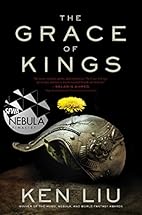
The Grace of Kings by Ken Liu.

Recommended for: Anyone who enjoys epic fantasy about the fall and rise of kingdoms, especially if they like settings outside the standard medieval European-ish swords & sorcery. (Which, thankfully, is becoming less standard. Though I enjoy a good faux-Western medieval fantasy as much as the next reader, I also enjoy variety in the genre.)

While this isn't an all-time favorite for me--I tend to prefer a somewhat tighter POV approach, either first-person narration or a limited third person with an intimate focus on just a few characters (think Jacqueline Carey, Lois McMaster Bujold, or Naomi Novik), I loved the world-building and setting, which is based on the rise of the Han dynasty and China with elements of other cultures, including Japan and Polynesia, and I plan to read more in the series as it comes out.

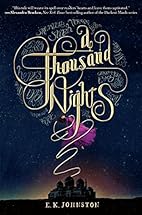
A Thousand Nights by E.K. Johnston

Recommended for: Readers of YA and fantasy who like strong world-building, strong women and girls, and fairytale and legend retellings. (And also beautiful covers. Isn't that just gorgeous?)

I noticed a couple chapters in that I didn't know the first person narrator's name, nor that of most of the other characters--it was all my sister, my mother, my great-grandmother, etc. You'd think that would make it hard to keep track of characters or feel connected to them, but it didn't at all.

I enjoyed the heroine and her sister's resilience and determination. And the part of the world-building that stood out most to me was the character's form of ancestor worship where notable ancestors were set up as "smallgods," who both answered their family's prayers and drew power from being worshipped.

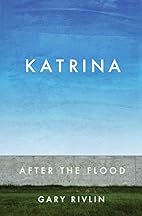
Katrina: After the Flood by Gary Rivlin

Because of the subject matter, I wouldn't say I enjoyed this book, exactly, but I found it readable and engrossing, and alternately encouraging and infuriating.

I followed Hurricane Katrina and its immediate aftermath as closely as anyone living far away from New Orleans, and I thought I knew a decent amount about the recovery and the current state of the city. This book showed me how much I didn't know, and made me think long and hard about how we as a nation handle disaster and recovery--and how our culture's biases with respect to race and class come out all the more strongly in the face of disaster. Have we learned anything that will make us better prepared the next time a major hurricane or big earthquake hits the US? I'd like to think so, but I have my doubts.

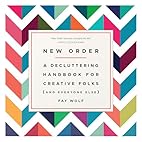
New Order: A Decluttering Handbook for Creative Folks (And Everyone Else) by Fay Wolf


I heard about this book on a recent DBSA podcast. Since I am eternally looking to improve my level of organization and time management, I decided to give it a try, especially given that bringing my house's chaos level down to something more manageable is one of my chief goals for 2016. (So far my clothes, bookshelves, and pantry have been decluttered, and it really does make me feel better about life.) This book gave me some great new ideas as I start to tackle some of the tougher projects, like kitchen tools, all the stuff we've shoved into our closets, the piles and boxes of papers, most of which are probably past their retention periods, etc.

Saturday, February 14, 2015

2015 Reading, Books 19-21 (plus why you should watch Monday's Sleepy Hollow!)

19. Rita book #5

A tough one to rate. There were things I loved about it and things I hated. If this had been the kind of contest where you offer critique as opposed to just a numerical score, I would've filled the scoresheet with my rants and raves. As it was, I ended up assigning it a middling score, though unlike most of my midrange scores, I never thought "meh" at any point.

20. Sleepy Hollow #1-4 by Marguerite Bennett

I'm choosing to count these four comics as a single graphic novel, since they have a linked story arc and they're about the length/number of issues I usually see bound into book format.

OMG these are SO much fun. Far better than average for a TV tie-in, and filled with everything I loved about Season 1 of the show that's been too often lacking in the current season--focus on Ichabod and Abbie working together with wit, intelligence and loyalty, Katrina used minimally but effectively, plenty of Jenny and Irving. As with most tie-ins, not what you'd want as an introduction to the story and characters, but if you enjoy the show, you MUST read these.

...And if you're a Sleepy Hollow viewer who's stepped away over the way the show occasionally dragged this season with way too much Crane Family Drama and focus on extraneous characters like Nick Hawley to the exclusion of established favorite supporting characters like Jenny and Frank, I encourage you to come back for the two-part finale that starts Monday night. For that matter, I'd encourage you to tune in if you'd never seen the show before and want to know what I'm constantly babbling about of late. IMHO the writers have righted the ship and the show is moving in the right direction again. Plus we get Evil!Katrina. FINALLY.

Look, I've got excerpts from Monday! You want to watch this! You want to know what happens! I know it all sounds crazy, but that's what makes it so awesome!


21. Does Jesus Really Love Me? by Jeff Chu

Arguably yet another entry in my Year of the Memoir, but I decided to count it as a religion book, since I felt like I learned more about the churches Chu visited and the people he met than I did about his personal journey--though that was in there, too. The balance felt like 60-40, or maybe 70-30.

Homosexuality is arguably the most contentious issue in modern American Christianity. My native state of Alabama is currently making something of an exhibition of itself over it, and as someone who's evolved into a theologically liberal Christian, I feel a certain satisfaction that my chosen home state of Washington didn't have to wait for a court order, we voted for same-sex marriage. But as a straight woman, I'll always have an outsider's perspective on the issue. Chu provides an insider's view as a gay Christian from an evangelical background as he explores everything from the most extreme of extremists (he actually meets the Westboro Baptist Church people) to the most open and accepting congregations. A readable, gracious, and generous book.

Tuesday, January 13, 2015

2015 Reading, Books 4-6

4. The Marshmallow Test by Walter Mischel

Mischel is a psychology professor well-known for his studies on willpower and self-control--including a famous study where children who as preschoolers were able to wait 15-20 minutes for two marshmallows rather than eat one marshmallow immediately tend to achieve more and get in less trouble as adolescents and young adults. Here he summarizes his lifetime of research and the current state of the science on willpower, self-control, and executive function, with the helpful and encouraging message that it's never too late to change. I'm already applying some of the book's lessons to sticking to my diet in the new year.

5. Just Mercy by Bryan Stevenson

I became so angry while reading this book. Not over anything Stevenson said or did--he is on the side of the angels and I fully support his work--but over the wrongful conviction that forms the core of the narrative. Walter McMillian's joke of a trial and the first part of his six years on death row before his exoneration happened in my home state, Alabama, when I was in high school and still living there. Which means it was in some degree done in my name. Now, since I'm not stupid and I study history, I know Alabama has a terrible history when it comes to race relations. But I did NOT know that such a ridiculous travesty of justice had happened in my lifetime, well after the days of Selma and fire hoses and church bombings and bus boycotts. I don't have words for how furious it makes me.

It will be a tiny drop in the bucket, but at least for the next year and possibly beyond I will tithe the royalty checks from my writing income to Stevenson's organization, the Equal Justice Initiative. Because I have to do something.

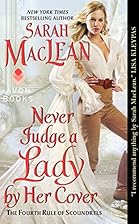
6. Never Judge a Lady By Her Cover by Sarah MacLean


My first historical romance read of the year, and the conclusion to a series about a group of scandalous lords (and one lady) who run a casino in 1830's London. The lady in question is the heroine of this entry--though all London thinks she's the mysterious, never-seen, MALE fourth partner in the business. While this isn't the book for you if you're craving historical realism, it's intense and romantic. And I do love the cover, which is something I almost never say about Avon romances. As I've seen pointed out elsewhere, that's a heroine in a hero pose--which is perfect for the character and the story.

Thursday, November 27, 2014

2014 Reading, Books 118-120

118) The American Way of Poverty: How the Other Half Still Lives by Sasha Abramsky

The second book I've read this month about growing poverty and income inequality in America, over the course of my entire 40-something year lifetime and especially in the wake of the Great Recession, and it draws much the same conclusions as Bob Herbert's Losing Our Way. Basically, it's not that we lack the resources as a nation to combat poverty, decaying infrastructure, persistent unemployment and the like--we lack the political will, empathy, compassion, and general sense that we're all in it together as a nation. And I wish I felt optimism that we could regain all those fine qualities, but I don't.

119) The Time Traveler's Guide to Elizabethan England by Ian Mortimer

A fun look at what everyday life was like in Elizabethan England, more broad than deep in its scope.

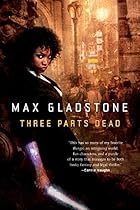
120) Three Parts Dead by Max Gladstone


An engaging, unusual fantasy novel that I recommend highly, with the caveat that this is a book that engrossed my head rather than my heart. I found myself thinking, "This is fantasy, but it feels like science fiction." When I asked myself what I meant by that (yeah, I know that sounds weird), I realized that I think of science fiction as technologically driven, while fantasy is more about sociology and/or spirituality. Which also explains why I think of the Vorkosigan Saga as being science fiction that reads like fantasy--sure, it's 1000 years into the future and humanity has colonized a bunch of planets linked by a "wormhole nexus," but the books are about people, their cultures, and where they find meaning. Whereas this book is gods and magic--as a technology. It's very well-done with intricate world-building and plotting. As such I expect to read more, but since I was reading with the head and not the heart, I doubt I'll ever turn into the kind of one-woman street team for these books that I am for the Vorkosigan series.

Wednesday, November 5, 2014

2014 Reading, Books 112-114

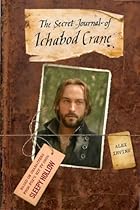
112) The Secret Journal of Ichabod Crane by Alex Irvine


Sleepy Hollow is my latest obsession (though I was not happy with this Monday's episode!), and this book is a quick, pleasant companion read to the first season. I thought the voice and writing were quite strong. That said, it was like episode commentary--Ichabod's thoughts on the battles and monsters we saw him face on the show and his musings on Katrina and Jeremy--where I was hoping for more of a deleted scenes approach. My favorite parts of the show are Ichabod's sometimes baffled and reliably snarky commentary on 21st century life and his relationship with Abbie, so I wanted more of that. If anything, the book had less. Ah, well. That's what fanfic is for!

113) Losing Our Way by Bob Herbert

This isn't the book I'd recommend if you're looking for something happy and hopeful. It's about the mistakes America has been making as a nation for almost my whole life, and certainly for as long as I've been politically active and aware. Growing income inequality. Aging infrastructure. Endless wars going on below most Americans' radar. Education "reform" that does more harm than good and doesn't address the true problem--namely that we have the highest child poverty rate of any advanced nation.

I see all this. I know all this. Mr Fraser and I are doing well, in the big scheme of things. We're far from the 1%, but we're well above the median income for our city, which is above the U.S. median. I don't worry about money on a day-to-day basis. We've never been hungry. And yet I don't feel truly secure, since we've arrived at this comfortable position fairly recently, and I know both of our industries could suffer greatly in another downturn. And Seattle is a rich city, and we live in a good if not especially tony neighborhood--yet I still see decaying infrastructure all around me, from tire-eating potholes to bridges that probably should've been replaced a decade or two ago, but we'll just keep our fingers crossed and hope the maintenance crews know what they're doing, given that we live in earthquake country.

When the Great Recession first started, I had hopes that people would look back to the 30's and see an opportunity to revive the WPA or something like it. Rebuild those bridges. Shore up the levees. Reinvest in the basic science that will save lives 20 or 40 years down the line or see our great-grandchildren colonizing Mars. Acknowledge that Keynes was right and deficit-spend now to see the dividends in a more prosperous future. I don't know why I was so naive. I'd like to hope things will change--and Herbert tries to end on a hopeful note, calling for citizen action--but I don't think enough people are listening.

114) Once Upon a Winter's Eve by Tessa Dare

And on a much lighter note, this Christmas novella is a quick, engaging read about lovers reunited. It isn't a history geek historical romance--I don't think anyone was all that worried about the French invading England by 1813. If it'd been 1803, sure. But it's fun and well-written, and I always enjoy a good holiday novella at this time of year. When you're busy with your own end-of-year responsibilities, the short reads hit the spot.

Tuesday, September 9, 2014

2014 Reading, Books 94-96

I've spent the past week fighting off some kind of viral crud that kept me home from work and made me sleepy, breathless, and lethargic. I'm now a week behind on all those lovely "September New Year" projects I blogged about last Monday, but on the positive side I got a lot of reading done! I'm finally feeling better, though, and about ready to dive back in to writing, exercising, cooking healthy foods, and all that important and virtuous stuff.

94) And the Band Played On: Politics, People, and the AIDS Epidemic by Randy Shilts

This was one of the most harrowing and compelling reads I can remember. It focuses on the early years of the AIDS epidemic, mostly from the point of view of the gay men in L.A. and San Francisco who were among its early casualties and of the scientists and clinicians who tried to figure out what was going on despite political stonewalling from all sides. It brought back memories for me of the early to mid 80's, when I was pretty far removed from the crisis--as a heterosexual adolescent girl growing up in the rural South--but still hyper-aware of this strange and terrifying new disease.

There's so much I could say about this book, but what struck me more than anything else is how terrible we are as a species about responding to a slow-moving crisis. Our fight-or-flight mechanisms serve us pretty well with immediate threats, but it's stunning how long it took pretty much everyone involved to take the obvious steps when it was more than clear that AIDS was a blood-borne and sexually transmitted illness with a long incubation period. It reminded me, of all things, of some of the current controversy over climate change--that clinging to a minuscule possibility that the overwhelming preponderance of evidence is wrong because accepting that evidence means you need to make big changes.

95) Code Name Verity by Elizabeth Wein

This book took a few chapters for me to get into it, but after that I couldn't put it down. It's an unusual book, at least for me, but I enjoyed the combination of spy adventure, friendship, courage, and sacrifice it contained.


96) Sweet Disorder by Rose Lerner

Full disclosure: Rose Lerner is one of my critique partners and a very good friend. All that said, if you enjoy historical romances written in a strong voice, with a deep grounding in history that only adds to the richness of characterization, the poignancy of the romance, and the sexiness of the love scenes, you should read this book.

Sunday, August 24, 2014

2014 Reading, Books 88-90

88) What I Talk About When I Talk About Running by Haruki Murakami

My husband recommended this book to me. It's about both distance running--a new obsession of his--and writing--my own obsession and vocation. As such it's something of a meditation on the focus and perseverance it takes to finish a marathon (or a novel) and then keep doing it again and again, and it's also a book about finding a way to keep pursuing such grueling and challenging passions as one ages--something of increasing interest to me now that I'm having to acknowledge that whether I like it or not, I am getting to be middle-aged, and I have to listen to my body's limits.

89) A Fighting Chance by Elizabeth Warren


So, I read this book. To say what I thought of it would be to get more political than I like to do on my author blog, especially because I wouldn't be able to resist talking about the 2016 election...so let's just not go there.

90) The Spirit Ring by Lois McMaster Bujold

This is one of Bujold's earliest works, and probably her least-known book. I've had sitting on my TBR shelf for ages but just never quite got around to reading it, because no one was telling me, "OMG you must read this!" the way they did with the Vorkosigan Saga or her more recent fantasy novels.

While it's not her best work--she's definitely an author whose work improved over time--I'm very glad I read it. My favorite kind of fantasy reads like historical fiction, but with a few twists to keep it from being tethered to what actually happened, whether it's something like Naomi Novik where it's our world, but with dragons, or more like Jacqueline Carey or Guy Gavriel Kay where the map is the same but the names are changed. This is the first time--the story is set in a recognizable Renaissance Italy, only one with magic, in its more benign forms sanctioned by the Catholic church and society as a whole. But of course magic isn't always benign...

Definitely an enjoyable read, and one with a nice romantic subplot for its young protagonists.

Wednesday, August 20, 2014

2014 Reading, Books 85-87

85) Six Amendments: How and Why We Should Change the Constitution by John Paul Stevens

Wherein retired Supreme Court Justice Stevens reviews what's broken in the American political system from his unique judicial perspective and proposes some constitutional remedies--e.g. undoing Citizens United, classing the death penalty as cruel and unusual punishment, and finding a way to limit gerrymandering. While I don't disagree with any of his ideas, I found the book dry going at times. And, I sadly doubt there are enough people with the power and will to make a difference who'll listen to him.

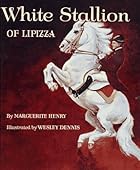
86) White Stallion of Lipizza by Marguerite Henry


I started this book a time or two as a child but never got through it. It had nothing to do with racehorses, after all, unlike my favorite Henrys, King of the Wind and Black Gold. Now I want to go back and re-read those books with an adult's eyes, because this isn't just a horse book--it's a book about dedicating yourself to an art and a craft, to creating beauty for its own sake, to perseverance, to keeping alive your culture's best traditions.

87) The Regency Underworld by Donald A. Low

A readable introduction to crime and punishment in Regency England, with a heavy focus on London.

Saturday, August 9, 2014

2014 Reading, Books 79-84

79) Avatar: The Last Airbender - The Rift Part 2 by Gene Luen Yang


The latest graphic novel showcasing the further adventures of Aang, Katara, Sokka, Toph, and Zuko (though Zuko has so far been absent from this trilogy). Deeply interesting if you're a fan of Avatar and The Legend of Korra, but would undoubtably be baffling if you aren't.

80) Thank You For Your Service by David Finkel

A harrowing, heartbreaking book following several soldiers who served multiple deployments in Iraq as they struggle to reintegrate into society and cope with PTSD, traumatic brain injury, and their impacts on their families and futures. I'm glad I read it, though a big part of me hated it.

81) The Improbable Primate by Clive Finlayson

A quick read, though I wouldn't recommend it if you haven't read anything else on the current state of the science with respect to human evolution since it assumes a certain familiarity with major fossil finds and the various theories about humanity's spread across Africa, Eurasia, and Australia. Finlayson's main focus is on our species' preference for environments combining access to fresh water, some trees and/or rocks/caves, and some open space, and how the most successful early humans were those who developed lighter builds and longer limbs for covering longer distances between water sources. I'm not sure I agree with all his theories, but he raises some interesting points. He takes what I believe is the unusual view of seeing every hominid from Homo erectus on as the same species. I'll admit my gut reaction is, "But we can't be the same species as H. erectus. They had TINY LITTLE BRAINS."

82) The Rise of Rome by Anthony Everitt

A history of Rome from its legendary foundations to the fall of the Republic. I think it would be good for a reader unfamiliar with the history in question (though it would help to have a broad sense of the course of ancient history). I found it a useful refresher on what I learned from listening to the early sections of Mike Duncan's wonderful History of Rome podcast.

83) The Little Girl Who Fought the Great Depression by John F. Kasson

This one is more interesting than I expected, really. It's a blend of celebrity biography and social history of the Depression and Shirley Temple's impact as the biggest child celebrity of the age by far. To me the most interesting chapter was the one about Bill "Bojangles" Robinson and the complex racial issues of his career and his dances with blonde little Shirley.

84) Written in My Own Heart's Blood by Diana Gabaldon

If I had to describe this book in one word, I'd choose "rambly." If you've been following the series, enjoy Gabaldon's voice, and are interested in the doings of the extended and often interwoven Fraser, Mackenzie, and Grey families, you will happily plow through this book (as I did). If not...give the first book a try and see if you want to keep going from there. This is NOT a series you'd want to start in the middle. In some ways I wish these books had more focus...OTOH, there's something to be said for a good chatty ramble through characters' lives.

Sunday, December 29, 2013

2013 Reading, Books 112-115

I'm closing out 2013 with a bang, as I expect 2 of the 4 books I've finished in the last week or so to make my Best Reads of the Year list.

112) Fangirl, by Rainbow Rowell.

This book got such good buzz online that I almost expected to be disappointed by it, but I wasn't, not at all. It's a beautifully written YA coming of age novel with a good helping of romance. The heroine is a college freshman whose identical twin doesn't want to room with her and in general thinks it's high time they struck out on their own as individuals. Cath, who has intense social anxiety, struggles to cope, and we watch a year in her life as she figures it out and comes to terms with her thorny, dysfunctional-to-say-the-least family history.

The title references the fact Cath is an obsessive fan and fanfic writer within the fictional Simon Snow fandom (think Harry Potter, pretty much), and one of the best aspects of the book, IMHO, is how accurately and lovingly Rowell portrays what it's like to be part of fandom. And, best of all, she allows Cath to build a happy collegiate life and find a voice for original fiction without having to leave fandom and fanfic behind. She can still look forward to the 8th and final Simon Snow book's debut. She can still finish her slashy version of Book 8. It's such a treat to see an author understand and respect that.

113) The Fortune Cookie Chronicles, by Jennifer 8. Lee.

More a series of essays than a single unified narrative, this book looks at Chinese food and restaurants, especially in their Americanized form. (Fortune cookies and General Tso's Chicken? Not things you'd find in China.) I almost wish it had been two books, one light-hearted culinary history and a second serious look at the life of Chinese men and women working abroad in the restaurant industry, especially illegal immigrants.

114) Cracking Up: A Postpartum Faith Crisis, by Kimberlee Conway Ireton.


Full disclosure: the author is a friend of mine, or at least a friendly acquaintance, though we've lost touch since I stopped going to the same church as she does. I was a very distant observer of some of the events in this memoir, though by that point my family and I were already starting to drift out of the congregation. (Long story, and nothing to do with this book--suffice it to say I revisited my faith after my mother passed away, and ended up on a path that took me to the Episcopal Church.)

As the mother of two young children and a debut author of a struggling book, Kimberlee found herself pregnant with twins and overwhelmed with the changes coming into her life. She takes the reader along with her on a rawly honest journey through an often difficult pregnancy, one twin's stay in the NICU, and the first six months of the boys' lives as she struggles with often crippling anxiety and severe postpartum depression it took her a long time to recognize for what it was.

It's an excellent read, and one I'd recommend to anyone who's struggled with anxiety or depression, especially Christians, since so much of Kimberlee's struggle is about hanging onto God and staying grounded in her faith. And hers is a very rare book I'd recommend equally to my Baptist high school classmates and my fellow Episcopalians--the faith and doubts expressed in this book are of a kind any of us in Christianity's very big tent can relate to.

115) Fortune's Pawn, by Rachel Bach.

I picked up this book because it was described as a cross between Firefly and the Vorkosigan Saga. This intrigued me because as different as Whedon and Bujold are in many aspects, there's a certain je ne sais quoi about their work, the way the communities they create feel so multi-dimensional and tangible that Serenity and her crew and the Vorkosigan family and their friends and allies on Barrayar are almost as real to me as my own family, friends, and coworkers. I don't know what it says about me, but one of the things I love most in fiction is being able to acquire new imaginary friends, especially when they come in whole imaginary communities. There's something about that sense that if I found myself at a party at Vorkosigan House, I'd feel right at home

So. A chapter or two in to Fortune's Pawn, I was ready to set it aside, because it didn't remind me of Whedon and Bujold at all. But I've been trying to give books a longer chance lately. I'll still set a book down for awkward, inept writing or if I can tell right away I'm not going to click with the plot or characters. But I have a feeling I've been missing some good stories for not giving myself a chance to adjust to a new author's voice or to accept that a book wasn't what I was expecting and give it a chance to succeed on its own terms.

In this case, I'm very glad I gave the book another chance. I remembered that Firefly and the early Vorkosigan books are both about space mercenaries, as is Fortune's Pawn, so I stopped hoping to find another set of imaginary friends and read it as a space opera adventure story. Taken on those terms, it's a cracking good read. Devi is an excellent kick-ass heroine, ambitious and straightforward, the world-building feels well thought out, the plot rolls along at a relentless pace, and the ending left me with just the right number of questions that I'm looking forward to the sequel, which is due out in February.

And, you know, that's probably all the Twitter recommender meant. "Like stories about space mercenaries like Mal Reynolds or Miles Vorkosigan? Give this one a try!" Which is always a challenge with "Like X? Try Y!" recs--you have to figure out what it is the other reader/viewer likes about X, and whether it's the same thing you get out of it. Like, I thought about recommending Cracking Up to Anne Lamott readers, because Kimberlee also writes about motherhood with wry honesty and humor, not to mention struggling to be a writer in the face of doubt and failure and clinging to faith by one's fingernails. But I'm wary of doing so, because Lamott has such a distinctive voice, and she's Christian left while Kimberlee is more Christian center. I don't want to disappoint anyone by recommending something a book doesn't deliver, you know?
Tuesday, December 3, 2013

2013 Reading, Books 103-108

I spent much of November in something of a reading drought, but managed to break it over Thanksgiving week. We visited my in-laws in Tulsa, so I had the whole week off work with two long flights on either end--perfect reading time!

103) Women in English Society 1500-1800, Mary Prior (ed.).

My next randomly chosen research selection, this one had less to do with the world I write about than I expected because it would've been bettered titled Women in English Society 1500-1700. Only one of the chapters had much to say about the 18th century. (My books are set in the opening decades of the 19th century, but the Regency has more in common with the Georgian 18th century than the Victorian heart of the 19th.) That said, it was informative and interesting in a dry, academic sort of way. I was particularly intrigued by the chapter on Tudor bishops' wives, because I so take for granted the respected role of a Protestant pastor's wife that I'd never properly considered how unprecedented and even scandalous married clergy would've seemed to the people of England just after the break with Rome.

104) The Black Count: Glory, Revolution, Betrayal, and the Real Count of Monte Cristo, by Tom Reiss.


The fascinating biography of Thomas-Alexandre Dumas (father of the famous author), son of a French marquis and a Haitian slave, brought to France as a teenager by his father a few years prior to the French Revolution. He enlisted in the cavalry as a common soldier, but after the Revolution he rose to the rank of General D'Armee. Toussaint Louverture held the same rank, but the next black officer to hold an equivalent rank in a western army? Colin Powell.

He died relatively young, in 1806. Still, I'm surprised that with my years of reading about his era I'd never heard of him before. Partly that's because my focus is more on later parts of the Napoleonic Wars, but I've read about the invasion of Egypt and the Italian campaigns he was involved in without encountering him, either. Turns out Dumas, who held strong republican beliefs, didn't like Napoleon, who returned the contempt with interest...and when it was in Napoleon's interest to curry favor with slaveholders and reinstate racist laws, there wasn't a place for a commander like Alex Dumas. Hence his small place in the history books...

105) 250 Things You Should Know About Writing, by Chuck Wendig.

I enjoy Wendig's blog and Twitter commentary on writing and writers, and this short book was a good set of quick reminders about various aspects of the fiction-writing process. I expect to refer to the character and plotting sections in the future.

106) Eat, Play, Lust, by Tawna Fenske.

Another very short read (do you sense a theme here?), a fun quick romance where a yoga instructor heroine with food issues begins a promising relationship with a chef who helps her enjoy the pleasures of food along with other pleasures of the flesh.

107) This Wicked Gift, by Courtney Milan.

For my last read in my romance TBR challenge for 2013--theme, holiday reads--I read Courtney Milan's first published work. More detailed post to come later in the month.

108) Game Change, by John Heilemann and Mark Halperin.

Gossipy account of the 2008 election. In political terms that now feels like ancient history, but reading it brought back some of the intensity of living through it. Confirmed and intensified my already emphatic opinion that the Democrats dodged a major bullet by not nominating John Edwards. And I like Hillary and am ready to support her if she runs in 2016, but she'd sure better pick a better team to run her campaign.

Sunday, June 30, 2013

2013 Reading, Books 61-63

First of all, my apologies for the light posting of late. I'm ultra-busy between now and RWA, really between now and A Dream Defiant's release date on 7/29. Starting in August, I plan to resume my regular posting schedule, including re-starting my Random Cookbook of the Week project.

Anyway, I've managed to squeeze in some reading time, albeit not as much as usual.

61) The New Mind of the South, by Tracy Thompson.

Thompson, like me, has deep roots in the Deep South--her family has been in Georgia for many generations while mine has been in Alabama since there was an Alabama, longer if the tradition that we have Creek blood is true. (Though this book brings up something I've long suspected--that a lot of white Southerners who believe they're part Cherokee or Creek are actually part black. One of these days I'd like to go through 23 and Me to get my ancestry composition just to see how true my family tree and family legends actually are. I'm less curious about the health risk genetic testing, because I don't need to see my DNA to know I'm at high cardiac risk. Simple family history and the fact my blood pressure already runs borderline high tell me that for free.)

Anyway, Thompson and I are also alike in that we've chosen to live our adult lives away from our native soil--she's a reporter living near Washington DC, while in Seattle I'm as far from the Deep South as you can be in the Lower 48. She's a bit older, so her youthful memories are of the 60's, while mine are of the 70's and 80's, but the South is no longer the place we grew up in, for better and for worse. I'm not sure how interesting this book would be for someone without Southern roots, but I found it a fascinating exploration of the less racist but more conservative, more diverse but less rural and sadly sprawl-plagued South of today.

62) A Natural History of Dragons, by Marie Brennan.

A charming fantasy novel--I especially loved the narrative voice--set in a world resembling and obviously based on the Victorian era--the technology is at the steamship level--but with dragons. The heroine and narrator is an aristocratic woman willing to defy society's strictures on women to study dragons, and in this volume (I expect there will be more) we see her childhood, youth, and first expedition.

63) Bounded Lives, Bounded Places: Free Black Society in Colonial New Orleans, 1769-1803, by Kimberly S. Hanger.

More research for the New Orleans WIP, mostly confirming and adding detail to my previous reading on the subject. Surprisingly, the decades of Spanish colonial rule were the best time for the free black community in a lot of ways, compared to earlier French and especially later American rule--their numbers grew through liberal manumission laws, and they were treated with a fair amount of respect, if never quite equality, within the community.

Saturday, June 23, 2012

Books read - more summer reading

52) The Scottish Prisoner, by Diana Gabaldon. This is a book you'll love if you're already well acquainted with Jamie Fraser and Lord John Grey. If not, you'd just be lost and confused. But I first read Outlander in 1995 or so and have been following the series ever since, so I was hooked. Gabaldon doesn't always get every tiny historical detail right (in this volume I found myself wanting to give her a wee lecture on how to address baronets and their children), but she weaves such a richly imagined historical world that I'm happy to set my inner nitpicker aside for the duration.

One reason I can turn off my nitpickery for Gabaldon is that Jamie and Lord John feel more realistic than most military men I run across in fictional versions of the 18th and 19th centuries.  While battle has marked them--they're different men than either would've been if they'd never seen combat--they're neither too shattered and broken to function nor hardened into heartless killing machines.  If either had Claire's ability to travel through time, I can readily imagine them fitting right in with the Napoleonic-era officers and soldiers I've researched, or, for that matter, with my brother the lieutenant colonel or my nephew the captain.  

53) The Information Diet: A Case for Conscious Consumption, by Clay Johnson. A quick read, making a surprisingly convincing analogy between the obesity problem--living with bodies that evolved to survive times of famine in an age of abundant food--and the way we consume and process information in a world of constant internet access and hundreds of cable channels. I wish it had had a better copy editor, though. E.g. a military trial is a court-martial, not a Court Marshall, and there was a palpable that would've made more sense as a palatable.

54) Mockingjay. I didn't intend to read the whole thing in one evening, but somehow I did. I was spoiled going in for its grimness and bleakness, and for the major character death, so it ended up being more bearable than I expected. And, obviously, I couldn't put it down. Still, I'm feeling the urge to read something really fluffy and optimistic next.

Tuesday, January 17, 2012

Another week's reading

I've been neglecting this blog shamefully of late, largely due to a pinched nerve flareup. I'm trying to save my best computer time for my writing. But I never stop reading, and here are books 7-9 toward my goal of reading 75 books in 2012:

7) Margarita, by Joan Wolf. This is a traditional Regency romance--i.e. a subgenre with less sex and often a bit more history than you generally find in historical romance. They're rare in print publishing nowadays, but more and more trad authors are reviving their backlists as ebooks, as is the case with this book, originally released in 1982.

Wolf delves deeply into the actual history of the time period even by the standards of the subgenre. In this case the heroine is the daughter of a Venezuelan man and an English woman, and she loses all her family fighting in Bolivar's revolution. She goes to her English grandfather for lack of any other options, and after he dies she finds herself married to the cousin who inherited his title and estates. It contains multiple elements that would be a tough sell in today's market--very young heroine (17 when she marries), a rather distant omniscient POV, a hero who doesn't give up his mistresses until long after marrying the heroine, and a hero and heroine who are cousins (anathema to your typical American reader, though I've read Mansfield Park and Rose in Bloom often enough that I can put on a 19th century brain for the duration of the read and not be bothered by it). I enjoyed it, though I don't think I'd want omniscient POV in most of my romance reading.

8) Cinderella Ate my Daughter, by Peggy Orenstein. I heard Orenstein interviewed on Fresh Air a few weeks ago and knew I had to read this book. She's a few years older than I am, and her daughter is about the same age as mine, so we're both experiencing a certain disconnect in seeing the very pink, princessy, and girlie-girl culture our daughters are pushed to conform to--one that's in many ways more constricting than what we knew in the 70's despite all the strides women have made in the past 30-40 years.

It's a quick read, and one that doesn't pretend to have all the answers, either to why the cultural shift happened or how to raise a confident, true-to-herself daughter in the midst of it. (For the former, she points to similar moves to shelter and cherish daughters during previous economic and cultural crises.) Speaking from personal experience, one of the persistent and unexpected challenges of parenting Miss Fraser has been the fact she DOESN'T embrace her surrounding culture. She's a tomboy--not unusually so, but she reminds me of myself at the same age, more interested in animals and animal stories than dolls or fairy tales, and she doesn't like pastels or fussy, dressy clothes. One day when she was barely 2 and just starting to get really verbal, she pushed away a pink floral-print set of overalls I was trying to dress her in and said, "No flow-flers! No pink!" And she has stuck to that line ever since, though she'll wear fuchsia or raspberry shades. When her grandmother or aunts and uncles try to call her princess, she frowns and says, "I'm NOT a PRINCESS!" I wouldn't have her any other way, but it makes her surprisingly hard to shop for, given how gender-coded and branded so much children's merchandise is these days.

Obviously, this isn't a major problem. My daughter is happy and has plenty of friends at school. It just bugs me that this pattern exists and is so strong. Miss Fraser is fully aware that the mold exists and she doesn't quite fit it. We've talked a lot, at her initiation, about the different ways of being a girl, and how it's fine for her to be, as she puts it, "a little bit girlie," because she enjoys Littlest Pet Shop and My Little Pony and the like, but that above all she needs to be herself and accept other people for being themselves.

9) The Hundred Days, by Antony Brett-James. More Waterloo research, this one a compilation of various eyewitness accounts. In many cases I wished I could know more--e.g. the young Prussian volunteer who talked in a matter-of-fact way about his female sergeant, who was so brave that when she married another sergeant after the war she had three military honors pinned to her gown. And I was flabbergasted by the account of the woman hosting the ball where the Prince Regent was when the officer bringing the victory dispatches and captured French eagles caught up with him--she called it a dreadful night because everyone deserted her ball to either celebrate or try to get hold of a casualty list. She actually said she thought it would've been better for the messenger to wait quietly until the morning!