Showing posts with label YA. Show all posts

Sunday, January 31, 2016

Recommended Reads, January 2016

Jumping right back into the blogosphere with my recommended reads from this month, in the order I read them. (Note that only one is actually a January 2016 release--I'm rarely quite that timely in my reading. But in a world of ebooks and libraries, all of these should still be readily available for your reading pleasure.)

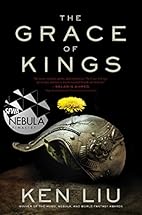
The Grace of Kings by Ken Liu.

Recommended for: Anyone who enjoys epic fantasy about the fall and rise of kingdoms, especially if they like settings outside the standard medieval European-ish swords & sorcery. (Which, thankfully, is becoming less standard. Though I enjoy a good faux-Western medieval fantasy as much as the next reader, I also enjoy variety in the genre.)

While this isn't an all-time favorite for me--I tend to prefer a somewhat tighter POV approach, either first-person narration or a limited third person with an intimate focus on just a few characters (think Jacqueline Carey, Lois McMaster Bujold, or Naomi Novik), I loved the world-building and setting, which is based on the rise of the Han dynasty and China with elements of other cultures, including Japan and Polynesia, and I plan to read more in the series as it comes out.

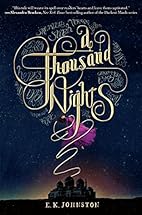
A Thousand Nights by E.K. Johnston

Recommended for: Readers of YA and fantasy who like strong world-building, strong women and girls, and fairytale and legend retellings. (And also beautiful covers. Isn't that just gorgeous?)

I noticed a couple chapters in that I didn't know the first person narrator's name, nor that of most of the other characters--it was all my sister, my mother, my great-grandmother, etc. You'd think that would make it hard to keep track of characters or feel connected to them, but it didn't at all.

I enjoyed the heroine and her sister's resilience and determination. And the part of the world-building that stood out most to me was the character's form of ancestor worship where notable ancestors were set up as "smallgods," who both answered their family's prayers and drew power from being worshipped.

Katrina: After the Flood by Gary Rivlin

Because of the subject matter, I wouldn't say I enjoyed this book, exactly, but I found it readable and engrossing, and alternately encouraging and infuriating.

I followed Hurricane Katrina and its immediate aftermath as closely as anyone living far away from New Orleans, and I thought I knew a decent amount about the recovery and the current state of the city. This book showed me how much I didn't know, and made me think long and hard about how we as a nation handle disaster and recovery--and how our culture's biases with respect to race and class come out all the more strongly in the face of disaster. Have we learned anything that will make us better prepared the next time a major hurricane or big earthquake hits the US? I'd like to think so, but I have my doubts.

New Order: A Decluttering Handbook for Creative Folks (And Everyone Else) by Fay Wolf


I heard about this book on a recent DBSA podcast. Since I am eternally looking to improve my level of organization and time management, I decided to give it a try, especially given that bringing my house's chaos level down to something more manageable is one of my chief goals for 2016. (So far my clothes, bookshelves, and pantry have been decluttered, and it really does make me feel better about life.) This book gave me some great new ideas as I start to tackle some of the tougher projects, like kitchen tools, all the stuff we've shoved into our closets, the piles and boxes of papers, most of which are probably past their retention periods, etc.

Tuesday, April 7, 2015

2015 Reading, Books 37-42

37. An Invitation to Sin by Sarah Morgan

Harlequin Presents aren't my usual thing, but I do love Sarah Morgan's because she's so good at writing heroines who can stand up to the powerful, rich, sexy alpha heroes required by the line. In this one I enjoyed how the heroine's toughness and confidence upended all the hero's stereotypes and expectations about women without ever crossing the line (IMHO) into the dreaded "I love you because you're nothing like other women" trope.

38. What Matters in Jane Austen by John Mullan

A recommended read for anyone with at least moderately high familiarity with the Austen canon. (If you haven't read the books or maybe read Pride & Prejudice once 20 year ago, you'll be lost and bored.) Over 20 chapters, Mullan looks at how Austen handles topics such as marriage proposals, money, and characters' reading habits across her novels, along with aspects of her literary technique in point of view, dialogue, etc.

39. Pioneer Girl: The Annotated Autobiography by Laura Ingalls Wilder


When the South Dakota Historical Society Press decided to put out an annotated version of the autobiography that became the root of Laura Ingalls Wilder's Little House series, apparently they expected it to be of interest to a few historians and scholars, and then had to rush to print copies for all the people like me who read their Little House books into tatters as children!

And if you were also such a child, you should read this book. It's interesting to see how Wilder streamlined her real life into the fictional account. The real Ingalls family was less iconic--e.g. De Smet in the novels seems a lot more isolated than it really was. (Except during the Long Winter. The trains really couldn't get through the snow for months, the settlement really was that unprepared due to the early onset of that year's snows and the fact it was newly settled and therefore no one had managed a large crop that year or had much livestock, and you get the impression people did come damn close to starving. I even wonder if Laura was so very short as an adult, 4'11", partly because of enduring such an experience during her prime growth spurt period in early adolescence, though she probably would've been petite regardless.) But in some ways the real Ingalls family struggled more, since in the novels Wilder left out the worst of the poverty they occasionally fell into, the death of her baby brother, and sundry other incidents that wouldn't seem right for a kids' book.

40. Rose Sees Red by Cecil Castellucci

A YA novel set in the early 80's at the height of the Cold War (and HOW weird is it to see my own youth become an era that gets the retro treatment) about a teenager depressed over her childhood best friend's betrayal who goes out adventuring one night with the Russian girl next door (the daughter of Soviet diplomats). A quick, engaging read.

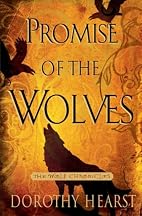
41. Promise of the Wolves by Dorothy Hearst

First in a fantasy trilogy about a young wolf 14,000 years ago destined to become a bridge between wolfkind and humankind, and by extension between humanity and the natural world. While I wasn't absolutely blown away by it, I did enjoy it and was sufficiently intrigued to put the second book on hold at my library.

Incidentally, I thought of buying this book as a birthday present for my 11-year-old daughter. It's not YA per se, but it's a coming-of-age story, the reading level is well within her above-grade-level capacity, and she loves animal fantasies.

However, the Kindle edition is $13.99. I'm not normally one to whine about ebook pricing--to me, it's about the content, not the format, and I'm happy to pay the same price I would for a print edition, or very slightly lower because I can't give the ebook away or donate it to the library when I'm done, which lowers the value somewhat. But for a book that's been out since 2008, I don't want to pay more than a normal MMPB price, say $5.99 or $6.99 or so. Maybe I'm somewhat biased by the fact that before I was an ebook reader I was a MMPB reader for almost anything that wasn't a new release by an absolute favorite author--and even then I was willing to wait for the paperback or wait out the hold list for the library hardcover unless the prior book had ended on a cliffhanger. But that still seems high to me.

42. The Nine Tailors by Dorothy Sayers

This was a re-read of a Lord Peter Wimsey mystery I'd only read once, so many years ago that at first I barely remembered any of the plot, though it came back to me as I went along, enough so to give me the pleasant sensation of being ahead of the sleuth for a change. :-) Not my favorite Lord Peter book by a long shot--the story gets bogged down in the minutia of fen drainage and bell-ringing, IMHO--but a lesser Lord Peter book is still better than most of what's out there.

Sunday, October 26, 2014

2014 Reading, Books 106-108

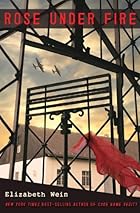
106) Rose Under Fire by Elizabeth Wein


I think this book is even better than Code Name Verity, which I read last month. The heroine, Rose, is a an American girl just out of high school who uses family connections (she has an English uncle who's a high-ranking officer) to get a job with the British Air Transport Auxiliary in 1944. After she's captured in France, she's taken to Ravensbruck--in what's probably an unlikely scenario, but one that makes a certain sense given the chaos of the late stages of the war. What follows is a moving story of survival and then bearing witness.

107) City of God: Faith in the Streets by Sara Miles

Sara Miles is one of my favorite Christian writers, not least because she found the Episcopal Church a few years before I did, albeit coming from the opposite direction--she wasn't a believer of any kind, while I was raised Southern Baptist and spent some time as two different flavors of Presbyterian along the way.

While I didn't love this book as much as I did Take This Bread or Jesus Freak, I still found it a very moving account of finding God in the midst of a city (San Francisco) all culminating in a public Ash Wednesday service--after all, in the Bible, Heaven is the city of God, not the floaty cloud-land of popular imagination nor the cross between New Zealand, the Scottish Highlands, and the more spectacular bits of the Pacific Coast I tend to picture.

108) Cat Sense by John Bradshaw

I got this book from the library after hearing the author interviewed on NPR because it sounded like the kind of practical science-geeky book I enjoy. And it proved to be what I was expecting--an account of how the domestic cat has evolved to live alongside humans, along with biological explanations of their behavior. The only downside is it left me a little wistful, because Mr Fraser is so severely allergic to cats that we can't have one in our household. (And yes, I know there are hairless cats. I just don't think it'd be that satisfying to own a cat without nice soft fur to stroke.)

Wednesday, September 17, 2014

2014 Reading, Books 97-99

97) Good God, Lousy World & Me by Holly Burkhalter

This was a quick read, sort of a faith memoir of a human rights activist who grew up Christian, but lost her faith over the problem of believing in a powerful, loving God in a world full of suffering an evil. She came back to the church in midlife even though she still doesn't feel she has all the answers, basically because she came to see God's presence in fighting for justice and against suffering. I'm always interested in such books because of my own faith journey (though I struggle more with the problem of the vastness of the universe and the insignificance of this one tiny planet), though this book didn't resonate so strongly with me as, say, Take This Bread.

98) The Napoleonic Revolution by Robert B. Holtman

Short enough to be a quick read, dry enough that you'll spread that quick read across multiple sessions, this is an overview on Napoleon's impact on 19th and 20th century France, Europe, and the wider world. While it's not going to make any of my best-reads lists, it was a useful reminder to me as someone who tends to come at the Napoleonic era with a military historian's bias and an Anglocentric perspective that I'm often only looking at one section of the puzzle.

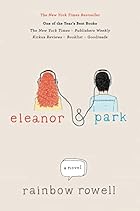
99) Eleanor & Park by Rainbow Rowell

This book received so many rave reviews I was almost afraid to try it lest my high expectations be disappointed. I shouldn't have worried. This is a beautifully written story of first love, heartbreaking but with just enough hope that I finished it smiling rather than weeping. I was looking at my reading list for the year and thinking I'd read a lot of enjoyable books but very few that had blown me away. This blew me away. Definitely will be on my top ten list for the year.

Tuesday, September 9, 2014

2014 Reading, Books 94-96

I've spent the past week fighting off some kind of viral crud that kept me home from work and made me sleepy, breathless, and lethargic. I'm now a week behind on all those lovely "September New Year" projects I blogged about last Monday, but on the positive side I got a lot of reading done! I'm finally feeling better, though, and about ready to dive back in to writing, exercising, cooking healthy foods, and all that important and virtuous stuff.

94) And the Band Played On: Politics, People, and the AIDS Epidemic by Randy Shilts

This was one of the most harrowing and compelling reads I can remember. It focuses on the early years of the AIDS epidemic, mostly from the point of view of the gay men in L.A. and San Francisco who were among its early casualties and of the scientists and clinicians who tried to figure out what was going on despite political stonewalling from all sides. It brought back memories for me of the early to mid 80's, when I was pretty far removed from the crisis--as a heterosexual adolescent girl growing up in the rural South--but still hyper-aware of this strange and terrifying new disease.

There's so much I could say about this book, but what struck me more than anything else is how terrible we are as a species about responding to a slow-moving crisis. Our fight-or-flight mechanisms serve us pretty well with immediate threats, but it's stunning how long it took pretty much everyone involved to take the obvious steps when it was more than clear that AIDS was a blood-borne and sexually transmitted illness with a long incubation period. It reminded me, of all things, of some of the current controversy over climate change--that clinging to a minuscule possibility that the overwhelming preponderance of evidence is wrong because accepting that evidence means you need to make big changes.

95) Code Name Verity by Elizabeth Wein

This book took a few chapters for me to get into it, but after that I couldn't put it down. It's an unusual book, at least for me, but I enjoyed the combination of spy adventure, friendship, courage, and sacrifice it contained.


96) Sweet Disorder by Rose Lerner

Full disclosure: Rose Lerner is one of my critique partners and a very good friend. All that said, if you enjoy historical romances written in a strong voice, with a deep grounding in history that only adds to the richness of characterization, the poignancy of the romance, and the sexiness of the love scenes, you should read this book.

Thursday, July 24, 2014

2014 Reading, Books 73-78

73) The Third Plate: Field Notes on the Future of Food by Dan Barber

At first I wasn't sure whether I wanted to read yet another book about sustainable agriculture, getting back to our culinary roots, etc., but I'm glad I did. I found this book both illuminating and moving, and it strengthened my commitment to eating mindfully, being a patron of my local farmer's market, and generally supporting organic and/or sustainable agriculture whenever I can.

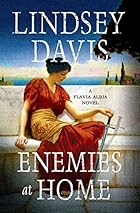
74) Enemies at Home by Lindsey Davis


The second book in the Flavia Albia series about Marcus Didius Falco's adopted daughter still doesn't have the wit and energy of the original series...but I still enjoy Albia as a character and visiting Davis's Rome, even this darker version under the Emperor Domitian. (The Falco books are set during Vespasian's reign.)

75) War! What is it Good For? by Ian Morris

An interesting and often thought-provoking "big picture" history whose basic thesis is that there's such a thing as "productive war" that despite its violence and atrocities leads to the formation of large, stable states and empires in which subjects/citizens are less likely to die violent deaths than they were in the tribal or small-state societies that preceded them. I'm not sure I agree with everything he says, but I'm glad to have his ideas added to my own big picture view of the world.

76) Sisterhood Everlasting by Ann Brashares

A "10 years later" sequel to the Sisterhood of the Traveling Pants YA series. At 29, the girls are still figuring out how to be adults--and while in some ways this made them feel unrealistically immature, hell, I'm...a fair bit older than 29, even if a really kind waitress at 74th Street Ale House did card me last month, and some days I feel like I'm still sorting it out. Anyway, it was good to drop in on these characters and see how they're doing with their lives, though I can't say much more than that without venturing into spoiler territory. And as for spoilers, I'll just say that while it has what we romance writers call an emotionally optimistic ending, it has enough sadness in it that the best the ending can do is be bittersweet.

77) The Shambling Guide to New York City by Mur Lafferty

There are so many urban fantasy and/or paranormal romance series out there these days wherein a human discovers a varied community of paranormal beings that it takes some doing to make such a series fresh and interesting, but this one about a human travel writer who goes to work for a vampire publisher to produce travel guides for the paranormal community pulls it off.

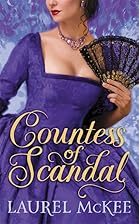
78) Countess of Scandal by Laurel McKee.


This is one of the best historical romances I've read in quite awhile. Set against the backdrop of the Irish Rebellion of 1798, it's a poignant, gritty and gripping tale of star-crossed lovers.

I just wish the cover and title gave any hint of that. If I hadn't known the author (Laurel also writes as Amanda McCabe, and we both blog at Risky Regencies), I never would've picked up this book because nothing about the branding and packaging says Ireland, poignant, or strongly grounded in real history. Which I feel does the book a disservice, because it's not finding readers like me, while it maybe would draw readers who enjoy the lighter, frothier historical romances, who'd then be disappointed to get something so gritty and angsty.

Monday, May 26, 2014

2014 Reading, Books 55-57

FYI, I've at long last turned in the manuscript for my January 2015 historical romance (title and exact release date TBD), so I hope to resume a more regular blogging schedule from here.

55) Servants: A Downstairs History of Britain from the Nineteenth Century to Modern Times by Lucy Lethbridge

I'd hoped based on the title that there would be a lot more of the 19th century in this book. Since I write the Regency, that's my primary area of interest, after all. But this book is basically about how the role of domestic servants in British society declined from its Edwardian peak, with special attention to how the wars of the 20th century shook up the British class system. Fascinating, but not quite what I was hoping for. If you're a big Downton Abbey fan, you'd probably love this.

56) The Tyrant's Daughter by J.C. Carleson


A YA novel about a 15-year-old girl living with her mother and little brother as refugees near Washington DC after her father is overthrown in a coup in her unnamed Middle Eastern native country. We watch her deal with PTSD and culture shock and try to navigate her mother's ongoing political scheming. Above all, she has to come to terms with the fact her beloved, doting father was in fact an oppressive tyrant. Very well-written and compelling, though those who hate first person and/or present tense narration should stay away.

57) What Makes This Book So Great by Jo Walton.

This book is a compilation of author Jo Walton's blog posts at tor.com, mostly on her experiences re-reading classic science fiction and fantasy. (Though "classic" is a relative term--many of the books she discusses are from the 90's or the first decade of this century, so they haven't stood the test of much time yet.)

I read the book because I greatly enjoy Walton's posts about Lois McMaster Bujold and the Vorkosigan Saga--i.e. my favorite books by my current favorite author--even if we don't read them in quite the same way. E.g. I found the Miles-Ekaterin romance entirely convincing and moving, but I couldn't connect as well to Mark and Kareen. We're not total Vorkosigan-opposites, though. Like me, she's most interested in the Barrayar-focused parts of the series. I once ran across a reviewer whose rankings for the series was almost exactly the opposite of mine--he preferred the more space-operatic entries, while I prefer the Barrayar books.

Anyway. Walton's discussions of Bujold made her someone whose opinions on books I take notice of, even knowing her tastes don't entirely overlap mine. I saw a recent thread on tor.com where she was asking for recommendations, but very politely asked people to stop suggesting she read Naomi Novik's Temeraire books or Jacqueline Carey's Kushiel's Legacy, because they're just not her thing. I adore both of those series, and for me that adoration inhabits a similar region of my reader-brain as my love for Bujold, or for Walton's own Tooth and Claw. So color me baffled. It's not like I'd expect someone who shares my taste in, say, historical romance, to also like the same nonfiction popular science I'm into, but I'm used to a bit more within-genre overlap. OTOH, there are authors out there you'd think I adore who leave me cold--I can think of one whose characters spend too much time feeling sorry for themselves and wallowing in self-abasement, and another whose heroines are too passive, and WHY ARE THOSE BOOKS SO POPULAR?! and WHY CAN'T ANYONE ELSE *SEE*?!...so Walton is allowed to have a similar reaction to authors I love.

All that said, I think the best way I can review this book is to list all the "book bullets" that got added to my TBR as I read along:

Random Acts of Senseless Violence - Jack Womack
Biting the Sun - Tanith Lee
Janissaries - Jerry Pournelle
Tam Lin - Pamela Dean (this one I've read before, but it's been years)
Kalpa Imperial - Angélica Gorodischer
A Shadow in Summer - Daniel Abraham
Kindred - Octavia Butler
Fire on the Mountain - Terry Bisson
The Left Hand of Darkness - Ursula LeGuin
Midnight's Children - Salman Rushdie
Midshipman's Hope - David Feintuch
The Dragon Waiting - John M. Ford
Jhereg - Steven Brust
The Interior Life - Katherine Blake
The Discovery of France - Graham Robb (nonfiction, but sounds fascinating and relevant to some of my research interests)
Planet of Exile - Ursula LeGuin
The Chronoliths - Robert Charles Wilson

The good news is that most of these seem to be available either as reasonably-priced ebooks or at my local library. Unfortunately, I couldn't find The Dragon Waiting or The Interior Life at either place, and Planet of Exile seems to be only available as an audiobook. I don't do audiobooks, at least not for fiction. I listen to nonfiction podcasts all the time, but for fiction I want to dive in, and I can't do that just listening to something. That said, it looks like I could get all three as used mass market paperbacks. Back when Amazon, eBay, and the like were newer things, I used to order used paperbacks all the time, but I've gotten out of the habit since so many authors started putting their backlists out as ebooks.

Sunday, April 27, 2014

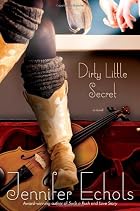
2014 Reading, Books 43-45 (or, is a booted woman from the waist down the latest thing in cover design?)

43) Dirty Little Secret by Jennifer Echols.

YA romance about a girl brought up touring the bluegrass festival circuit who turns rebellious after her sister gets a big Nashville recording contract and their family and her recording label want her to give up her own music and lie low to facilitate her sister's solo career. But she finds giving up her fiddle easier said than done, especially after she meets an attractive boy who needs a fiddler for what sounds like a sort of punk rockabilly band. (The name they settle on is "Redneck Death Wish.") It's a well-written book, and I loved how music and musicianship is handled in the story, though I found the heroine's parents' behavior a bit over-the-top in spots.


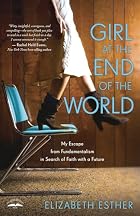
44) Girl at the End of the World by Elizabeth Esther.

Incidentally, I'm kinda fascinated by the similarity in design and look in these two book covers when they're in completely different genres. (This one is a memoir.) I guess they're both about young women struggling to break free of controlling family environments and assert their own identities, but I doubt that explains the similarities in cover and design as much as the fact they're both very recent books (2013 and 2014 respectively). I guess browns and blues/gray-blues and booted women viewed from ~ waist down are trendy...

Anyway, about the book. Elizabeth Esther is one of several ex-fundamentalist bloggers whose work I read because her experience resonates with my own, though her upbringing was FAR more extreme. I was just a garden-variety Southern Baptist who then got involved in a ultra-conservative chapter of InterVarsity Christian Fellowship in college, leading me to almost break my brain trying to not believe in evolution, to accept that women were supposed to have a subservient role, only that was actually wonderful because Jesus was a servant, making it actually better and close to God to serve, etc. But in Esther's word all these beliefs and more were enforced in an abusive, cultish environment.

Her memoir mostly covers her childhood and youth, but in the last fifth or so she and her husband gradually step away from the environment and rebuild their lives and faiths in a more mainstream environment.

45) The Purity Myth: How America's Obsession with Virginity Is Hurting Young Women by Jessica Valenti.

I'm having a flareup of my recurring neck and back pain issues, so I can't write about this book in as much detail as I'd like to right now. Suffice it to say that Valenti makes a great case for how terrible it is to treat chastity as not just a virtue but the most important virtue a young woman can have--i.e. a "good girl" isn't one who is compassionate, thoughtful, brave, generous, hard-working, etc. but one who doesn't sleep around. She also shows how purity culture and rape culture are two sides of the same coin. A depressing but nonetheless thought-provoking read.

Sunday, December 29, 2013

2013 Reading, Books 112-115

I'm closing out 2013 with a bang, as I expect 2 of the 4 books I've finished in the last week or so to make my Best Reads of the Year list.

112) Fangirl, by Rainbow Rowell.

This book got such good buzz online that I almost expected to be disappointed by it, but I wasn't, not at all. It's a beautifully written YA coming of age novel with a good helping of romance. The heroine is a college freshman whose identical twin doesn't want to room with her and in general thinks it's high time they struck out on their own as individuals. Cath, who has intense social anxiety, struggles to cope, and we watch a year in her life as she figures it out and comes to terms with her thorny, dysfunctional-to-say-the-least family history.

The title references the fact Cath is an obsessive fan and fanfic writer within the fictional Simon Snow fandom (think Harry Potter, pretty much), and one of the best aspects of the book, IMHO, is how accurately and lovingly Rowell portrays what it's like to be part of fandom. And, best of all, she allows Cath to build a happy collegiate life and find a voice for original fiction without having to leave fandom and fanfic behind. She can still look forward to the 8th and final Simon Snow book's debut. She can still finish her slashy version of Book 8. It's such a treat to see an author understand and respect that.

113) The Fortune Cookie Chronicles, by Jennifer 8. Lee.

More a series of essays than a single unified narrative, this book looks at Chinese food and restaurants, especially in their Americanized form. (Fortune cookies and General Tso's Chicken? Not things you'd find in China.) I almost wish it had been two books, one light-hearted culinary history and a second serious look at the life of Chinese men and women working abroad in the restaurant industry, especially illegal immigrants.

114) Cracking Up: A Postpartum Faith Crisis, by Kimberlee Conway Ireton.


Full disclosure: the author is a friend of mine, or at least a friendly acquaintance, though we've lost touch since I stopped going to the same church as she does. I was a very distant observer of some of the events in this memoir, though by that point my family and I were already starting to drift out of the congregation. (Long story, and nothing to do with this book--suffice it to say I revisited my faith after my mother passed away, and ended up on a path that took me to the Episcopal Church.)

As the mother of two young children and a debut author of a struggling book, Kimberlee found herself pregnant with twins and overwhelmed with the changes coming into her life. She takes the reader along with her on a rawly honest journey through an often difficult pregnancy, one twin's stay in the NICU, and the first six months of the boys' lives as she struggles with often crippling anxiety and severe postpartum depression it took her a long time to recognize for what it was.

It's an excellent read, and one I'd recommend to anyone who's struggled with anxiety or depression, especially Christians, since so much of Kimberlee's struggle is about hanging onto God and staying grounded in her faith. And hers is a very rare book I'd recommend equally to my Baptist high school classmates and my fellow Episcopalians--the faith and doubts expressed in this book are of a kind any of us in Christianity's very big tent can relate to.

115) Fortune's Pawn, by Rachel Bach.

I picked up this book because it was described as a cross between Firefly and the Vorkosigan Saga. This intrigued me because as different as Whedon and Bujold are in many aspects, there's a certain je ne sais quoi about their work, the way the communities they create feel so multi-dimensional and tangible that Serenity and her crew and the Vorkosigan family and their friends and allies on Barrayar are almost as real to me as my own family, friends, and coworkers. I don't know what it says about me, but one of the things I love most in fiction is being able to acquire new imaginary friends, especially when they come in whole imaginary communities. There's something about that sense that if I found myself at a party at Vorkosigan House, I'd feel right at home

So. A chapter or two in to Fortune's Pawn, I was ready to set it aside, because it didn't remind me of Whedon and Bujold at all. But I've been trying to give books a longer chance lately. I'll still set a book down for awkward, inept writing or if I can tell right away I'm not going to click with the plot or characters. But I have a feeling I've been missing some good stories for not giving myself a chance to adjust to a new author's voice or to accept that a book wasn't what I was expecting and give it a chance to succeed on its own terms.

In this case, I'm very glad I gave the book another chance. I remembered that Firefly and the early Vorkosigan books are both about space mercenaries, as is Fortune's Pawn, so I stopped hoping to find another set of imaginary friends and read it as a space opera adventure story. Taken on those terms, it's a cracking good read. Devi is an excellent kick-ass heroine, ambitious and straightforward, the world-building feels well thought out, the plot rolls along at a relentless pace, and the ending left me with just the right number of questions that I'm looking forward to the sequel, which is due out in February.

And, you know, that's probably all the Twitter recommender meant. "Like stories about space mercenaries like Mal Reynolds or Miles Vorkosigan? Give this one a try!" Which is always a challenge with "Like X? Try Y!" recs--you have to figure out what it is the other reader/viewer likes about X, and whether it's the same thing you get out of it. Like, I thought about recommending Cracking Up to Anne Lamott readers, because Kimberlee also writes about motherhood with wry honesty and humor, not to mention struggling to be a writer in the face of doubt and failure and clinging to faith by one's fingernails. But I'm wary of doing so, because Lamott has such a distinctive voice, and she's Christian left while Kimberlee is more Christian center. I don't want to disappoint anyone by recommending something a book doesn't deliver, you know?

Tuesday, September 3, 2013

2013 Reading - Books 82-84

82) Cockpit Confidential, by Patrick Smith.

Patrick Smith is a commercial pilot and the author of the Ask the Pilot blog (formerly a column at salon.com). I've always been fascinated by his columns even though I'm not really a frequent flyer, typically flying 2-3 times a year for family, vacation, and writers' conferences. (I'm just frequent enough to get impatient when I'm stuck behind truly infrequent flyers who don't have the check-in and security line process down cold.) He's made me a much less nervous flyer--I finally believe that turbulence won't knock my plane out of the sky. Anyway, this book is much like his blog, informative and snarky, and I recommend it for anyone who'd like a behind-the-scenes look at air travel.


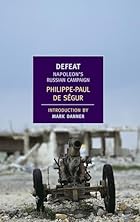
83) Defeat: Napoleon's Russian Campaign, by Philippe-Paul De Segur.

As I continue researching Napoleon's invasion of Russia for my next manuscript, I've moved on to campaign memoirs. This, written more than a decade after the fact by one of Napoleon's aides-de-camp from the campaign, is a fascinating and often horrifying read. It's a self-consciously literary saga of the Fall of the Hero, Occasioned by Hubris, but not made any less valuable as a primary source thereby--if anything, it's especially useful to see how the men of the Grande Armee made sense of their experiences, both at the time and in retrospect.

But what is up with that cover image? Would it have been so hard to find an image of a Napoleonic-era cannon?

84) Divergent, by Veronica Roth.

This seems to be the second-most popular dystopian YA series after The Hunger Games, and I picked it up out of curiosity after hearing about the upcoming movie. While I didn't completely buy into the concept of the faction-based social order (basically, your life is determined by whether you're more inclined to see courage, kindness, honesty, selflessness, or the pursuit of knowledge as the key virtue), I was able to accept the premise and let the story run with it, and me. It's compelling, and I've already put the second and upcoming third books in the series on my library holds list. That said, though I let my daughter read The Hunger Games and its sequels over the summer, I'm not going to tell her about these. It's not so much that they're more violent as that Tris feels less remorse about her kills than Katniss, and I'd rather my fourth grader stick to the latter as a role model for now.

Saturday, July 27, 2013

2013 Reading, Books 64-72

Catching up on everything I read while traveling...

64) Decisive, by Chip Heath & Dan Heath.

An extremely useful look at how to short-circuit some of the issues that commonly lead to bad decision-making. It gave me some good ideas for how to evaluate my writing career and whether my current path will take me where I want to go and how to balance competing priorities in my life as a whole. This was a library copy, but I'll definitely be buying my own soon.

65) Sprig Muslin, by Georgette Heyer.

For the 2013 TBR Challenge. Detailed comments here.

66) My Life Next Door, by Huntley Fitzpatrick.

A sweet YA romance about the daughter of a perfectionist single mother (who also happens to be a state senator) who falls for the boy next door--from the big, crazy, chaotic family with 8 kids her mother completely disapproves of. A fun story, though I found the heroine's mother and her campaign manager just a bit over-the-top compared to the other characters.

67) An Heiress at Heart, by Jennifer Delamere.

For my Rita finalists challenge. Detailed comments here.

68) Always and Forever, by Farrah Rochon.

An enjoyable contemporary romance set in a small Louisiana town that managed to get past my "no small American towns" filter with its engaging hero and heroine and by not forcing the hero to give up his dream of opening a business in New Orleans to show that Real, Authentic American Life belongs in a small town.

69) Captain Ingram's Inheritance, by Carola Dunn.

Old-school Regency romance that focuses as much on the hero and heroine's community and families as their relationship. I liked it a lot, but if you haven't read Lord Roworth's Reward you'll be pretty lost.

70) What Kings Ate and Wizards Drank, by Krista D. Ball.

A guide to help writers of historical fiction and historically based fantasy write more realistically about what their characters would've eaten and how they would've obtained and prepared it.

71) Swept Off Her Stilettos, by Fiona Harper.

A perfectly delightful confection of a friends-to-lovers story. I couldn't imagine a better book to while away several hours of a long, turbulent plane ride.

72) Avatar: The Last Airbender - The Search, Part 2, by Gene Luen Yang, Michael Dante DiMartino, Bryan Konietzko, Dave Marshall.

The latest entry in the graphic novels filling in some of the gaps between Avatar: The Last Airbender and The Legend of Korra. It didn't give me as many answers as I'd hoped for about Zuko's mother, but it's visually beautiful and kept me interested enough to immediately go preorder the final book in the trilogy.

Thursday, July 4, 2013

Favorite reads of the year so far

Happy Independence Day to my fellow Americans! I'm off from the day job today, but I have to work Friday--which, looking on the bright side, means this week feels like it has two Fridays. I'll be having a low-key celebration with my family. Mr. Fraser is making waffles for breakfast, a tradition for almost every holiday we're not traveling, since they taste just as good on Labor Day or Presidents' Day as they do in July. Then we'll grill hot dogs and I'll bake Miss Fraser's favorite cake, which has white icing transformed into an American flag with strawberry stripes and blueberry stars.

It just occurred to me that the year is half over. (Insert ritual "How did THAT happen?" comment here.)  That means it's time to post my top ten reads of the year so far, in the order I read them:

1) Julie's Wolf Pack

Third in Jean Craighead George's beautiful YA series about a young Inuit girl who finds refuge among a wolf pack and keeps ties with them even after being reunited with her family, this one is almost all from the POV of the wolves themselves, and it works surprisingly well. She doesn't quite anthropomorphize them but still makes them extremely relatable, somehow.


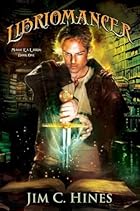
2) Libriomancer, by Jim C. Hines.

First in a fantasy series with a really clever concept for its magic--basically, books make magic by the collective belief of readers in the stories' worlds, and libriomancers can pull objects out of those books temporarily. This doesn't give the unlimited power you might think--among other things, too much magic use wrecks both the libriomancer and the book, and you can only pull out objects that would fit through an ordinary-sized physical copy of the book. E.g. if I were a libriomancer carrying a copy of a book from the Sharpe series, I could pull out Sharpe's sword or the telescope Wellington gave him, but a cannon wouldn't fit. The story and characters are as good as the concept, and I'll be eagerly awaiting the sequels. I've already preordered the sequel, Codex Born.

3) A Year of Biblical Womanhood, by Rachel Held Evans

I'm easily hooked by the type of memoir where someone spends a year trying to live a lifestyle that's foreign to them, cooks their way through a famous cookbook, or whatever. This one was both hilarious and unexpectedly moving. Evans comes from a background almost identical to my own--I'm ~10 years older, but we grew up within 40 or 50 miles of each other, and the biggest obvious difference between our good Alabama Baptist families is that mine roots for Auburn in college football while hers supports Alabama. (I was really disappointed that the month she was trying not to be contentious was October 2010 rather than November of that year, because she talked about her struggles during the South Carolina game rather than the epic Auburn comeback. And yes, I know Bama has since won two more national championships. 2010 was still awesome.)

Anyway, Evans is also like me in having wrestled with the increasing conservatism of the evangelical church, though AFAIK she hasn't yet gone as far as I have in running away from it--I'm now Episcopalian, which I suspect has some of my Baptist ancestors spinning in their graves. So for this book she spends each month of a year trying to live out one of the biblical commands to women literally, both to show the absurdity of a hyper-literal approach and to find God in unexpected places. She also talks a lot about women's power and strength, in the Bible and through history to the present. I think what will stick with me most is her discussion of the Proverbs 31 woman, which I was taught to think of as the perfect homemaker--someone I hoped to become during my more conservative days and now rebel against. But Evans discovers that in the Jewish tradition, that text isn't used prescriptively, but as praise for whenever a woman shows courage, generosity, integrity, and like virtues. In Hebrew the words the King James Bible translates as "a virtuous woman" are "eshet chayil"--a woman of valor. I'll never be a Proverbs 31 homemaker, but on my best days I can be a woman of valor.

4) Miss Jacobson's Journey, by Carola Dunn

This one is a traditional Regency, with a PG, kisses-only sensuality rating, but with a decidedly non-traditional heroine and setting. The heroine, Miriam Jacobson, is an English Jew who's been living on the Continent with her doctor uncle for nine years after having become estranged from the rest of her family by rudely rejecting the suitor the matchmaker brought for her. Now she wants to go home, but at the height of the Napoleonic Wars, journeying from France to England isn't a simple task. She and her maid/duenna are recruited by Jakob Rothschild to help two men smuggle gold to Wellington in Spain, with the promise of help getting home once she completes her mission. Naturally, one of the men in her party is the suitor she rejected all those years ago, and he's grown and matured in the intervening years into a far more attractive man than she ever would've dreamed possible...

From the time I started reading traditional Regencies in high school, I've always loved any non-traditional setting. (Not that I don't love a nice country house party or London Season tale, too.) Following the drum in the Peninsular War? I'm there. Congress of Vienna? Fascinating. Canada? More, please. Brussels just before Waterloo? Wonderful! America, before, during, or after the War of 1812? Why not? So this book had me halfway to hooked from the beginning because of the setting, and the story delivered on its promise. I enjoyed all the characters, the sweet romance worked beautifully for me, and I've already bought more of Dunn's backlist.


5) Whose Names Are Unknown, by Sanora Babb.

I heard about this book while watching Ken Burns' Dust Bowl documentary. It was originally written and accepted for publication in the 1930's, then rejected after The Grapes of Wrath came out because the acquiring editor figured there wasn't room for TWO Dust Bowl/Okie migrant stories. (Which is so laughably different from today's market, where every hit spawns a dozen imitators.)

I'm glad I read this book. It's more literary than my usual taste, but it has a kind of subtle, deceptively simple beauty, and it sort of rounded out my understanding of the Dust Bowl era, I think, in the way that good fiction can bring the past to life better than documentary alone.

6) Things I Can't Forget, by Miranda Kenneally.

I've been a Kenneally fan ever since I read the query letter for her first YA romance, Catching Jordan, (her agent posted it on a blog as an example of an effective query), but I think this book may be my favorite so far just because I identified with the heroine so much. I've been told that's a simplistic reason to enjoy a book, but oh well. I was Kate when I was 18, and for several years afterward. Painfully good, afraid to break the rules, convinced that my beliefs were the only right ones and therefore pretty dang judgmental even if I was better than Kate at keeping my mouth shut about it. So I enjoyed watching Kate begin to come to terms with life's complexities and ambiguities, and I loved seeing a character like her (and my younger self) grow and change.

7) Help, Thanks, Wow: The Three Essential Prayers, by Anne Lamott.

Anne Lamott's books don't always work for me, but this one blew me away. The Thanks and Wow chapters in particular helped me remember to stop and revel in the Eternal Now of the current moment, instead of always straining toward a longed-for future when I might be able to quit my day job and write full-time, or else flinching away from the inevitable future in which someday I must die. I found myself reveling in the life all around me, even in the spring pollen that makes me sneeze and coats my pretty black car with an unsightly yellow film. I remembered my favorite lines from For I will Consider My Cat Jeoffry:

For he counteracts the Devil, who is death, by brisking about the life.
For in his morning orisons he loves the sun and the sun loves him.
For he is of the tribe of Tiger.
For the Cherub Cat is a term of the Angel Tiger.

...and also quoting one of my favorite lines from a character in the Vorkosigan saga: "Every day is a gift. Me, I tear open the package and wolf it down on the spot," not to mention, of all people, Bon Jovi: "I just want to live while I'm alive."

So I guess you might say the book made an impression on me. Thanks, Anne Lamott!


8) Sacred Games, by Gary Corby.

Third in a series of light, fun, yet richly researched mysteries based in Periclean Athens. This entry is set at the Games of the 80th Olympiad in 460 BCE, and our sleuth, Nicolaos, a fictional elder brother to Socrates, has to pair up with a Spartan to investigate the death of a star Spartan athlete the night after the opening ceremonies. (The primary suspect is an Athenian, and everyone agrees the only fair solution is to have one man from each city investigate, because at that point in history there was no such thing as a neutral city in any dispute between the two rival powers.) Corby does an excellent job bringing the bloodthirsty, superstitious, and quirky aspects of Greek culture to life, while simultaneously making his characters and their world human and relatable. I recommend this especially for fans of Lindsey Davis's Falco series, as the tone is quite similar.

9) The Strange History of the American Quadroon, by Emily Clark.

The book that made me withdraw a submitted manuscript so I could fix its utter historical inaccuracy. See more detail here.

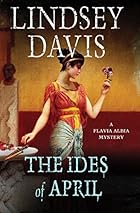
10) The Ides of April, by Lindsey Davis.

First in a new series of mysteries set in Ancient Rome, this book is linked to the Davis's Falco series, but it takes place about a dozen years after the last one, and we never actually see Falco and Helena. The sleuth is their adopted daughter, Flavia Albia, an independent young widow who's taken up her father's old profession and lives on her own. Falco and Helena are evidently doing fine, and Albia drops in to visit regularly--it's just that all those meeting are told rather than shown. Hopefully that won't be the case throughout the series, though I can understand wanting to establish Albia as an interesting character in her own right.

The book got off to rather a slow start, and I might not have stuck with it were it not for my long-standing love for the Falco series. But about 40% in, the story took off and I started caring about Albia for her own sake. I guessed the whodunnit fairly quickly, not to mention the love interest, though there was a sort of mini-mystery about the latter I must confess to being totally oblivious to until it was spelled out for me. In any case, I'm looking forward to book two next year.

(Incidentally, this one wins my favorite cover of the year to date. So pretty!)
Tuesday, April 23, 2013

2013 Reading, Books 37-39


37) Things I Can't Forget, by Miranda Kenneally.

I've been a Kenneally fan ever since I read the query letter for her first YA romance, Catching Jordan, (her agent posted it on a blog as an example of an effective query), but I think this book may be my favorite so far just because I identified with the heroine so much. I've been told that's a simplistic reason to enjoy a book, but oh well. I was Kate when I was 18, and for several years afterward. Painfully good, afraid to break the rules, convinced that my beliefs were the only right ones and therefore pretty dang judgmental even if I was better than Kate at keeping my mouth shut about it. So I enjoyed watching Kate begin to come to terms with life's complexities and ambiguities, and I loved seeing a character like her (and my younger self) grow and change.


38) Consider the Fork, by Bee Wilson.

If you enjoy culinary history or the history of everyday things, you'll probably love this book. It's a history not of what we eat, but of the technology we use to prepare and consume our food, from pots to refrigerators to the kitchen space itself. It's too general an overview if you're looking for, say, what a French kitchen was like in 1780, but it's packed with fascinating anecdotes, and it made me think about any number of things I usually take for granted.


39) Lord Roworth's Reward, by Carola Dunn.

This is a sequel to Miss Jacobson's Journey, which I read earlier in the year. It's a sweet, chaste traditional Regency romance set during and immediately after the Waterloo campaign and featuring a hero who's so sure he's found his perfect future countess that he doesn't notice just how much love is involved in his friendship for another, less suitable, young lady until it's almost too late. I enjoyed it a lot, with two small caveats: 1) The sheer number of famous Waterloo quotes and incidents referenced in the story came across as a bit of an infodump, especially since the hero heard about most of them secondhand and they weren't necessary to move the plot forward. 2) The story treats the urban legend that Nathan Mayer Rothschild used his advance knowledge of the outcome of the battle to make a fortune on the London stock exchange as fact, when actually there's no contemporary evidence for it and it seems to be an anti-Semitic tale that sprang up later in the 19th century. That said, a lot of histories cite it as fact, Dunn herself clearly isn't anti-Semitic, and Rothschild is portrayed in a positive light. So I don't hold it against her--I just feel compelled to point out the issue, since I'm pedantic like that, especially given the roots of this particular legend.


Sunday, January 20, 2013

2013 Reading - Books 7-9

Three more books--two YA and the beginning of my Rita judging:

7) Julie's Wolf Pack

Third in Jean Craighead George's beautiful YA series about a young Inuit girl who finds refuge among a wolf pack and keeps ties with them even after being reunited with her family, this one is almost all from the POV of the wolves themselves, and it works surprisingly well. She doesn't quite anthropomorphize them but still makes them extremely relatable, somehow.


8) Team Human, by Justine Larbalestier and Sarah Rees Brennan.

I was a huge fan of Buffy and Angel back in the day, but all the vampire stories from the last ten years or so haven't appealed so much. But I'm glad I read this book--it's a smart, suspenseful, and fun YA, and a little bit thought-provoking, too.

9) Book Which Shall Not Be Named, #1.

Again this year I'm judging Romance Writers of America's Rita contest. Over the next month or so, I will be reading four books whose details I'm not allowed to discuss because judging must be kept confidential. So all I'll say about this one was I found it a bit of a slog, and I hope the next three will prove more enjoyable.

Monday, December 31, 2012

Best reads of 2012

When I looked over the 109 books I read in 2012, I couldn't come up with a tidy top ten. Instead, here are some books I especially enjoyed and would recommend to anyone who likes the genre in question. Note that few of them are 2012 releases. Except in a few cases, e.g. a new book by a favorite author in a series I love, I don't make it a priority to read books immediately after release.

Favorite Historical Romance (New)
My Fair Concubine, by Jeannie Lin (2012). My Fair Lady in Tang Dynasty China, and my favorite of Lin's books to date.

Favorite Historical Romance (Old But Now Available as an Ebook)
The Wives of Bowie Stone, by Maggie Osborne (1994). The hero is the most heroic and admirable bigamist you'll ever meet.

Favorite Contemporary Romance 
Doukakis's Apprentice, by Sarah Morgan (2011). I'm not usually a Harlequin Presents reader--I'm just not into wildly rich, wildly alpha heroes outside of SF or history, and even then I want them to be extra-awesome, brave, honorable, and brainy--we're talking Aral Vorkosigan or the Duke of Wellington here. But I've enjoyed Morgan's medical romances, and this book came so highly recommended that I tried it anyway. And I'm glad I did, hence its placement on this list.


Favorite YA Romance/Debut Book
Catching Jordan, by Miranda Kenneally (2011). Just a well-written book all around, and one of the few sports-themed romances I've read where I came away convinced the author thoroughly knows and loves the sport in question.

Wildly Popular Book That Actually Didn't Disappoint Me
The Hunger Games, by Suzanne Collins (2008). No need to say more, since I figure y'all have already heard of this one...


Favorite Mystery Discovered Randomly When I Heard Its Author Interviewed on NPR
Bruno, Chief of Police, by Martin Walker (2009). Lovely, leisurely-paced mystery that will make you wish yourself in France.

Favorite New Entries in Long-Running Series
Captain Vorpatril's Alliance, by Lois McMaster Bujold (2012). A lovely science fiction romance, albeit one that I doubt would have the same impact for readers lacking a long history with the characters and their world. Those readers should go grab Shards of Honor or The Warrior's Apprentice and start building that history!

The Scottish Prisoner, by Diana Gabaldon (2012). I really appreciate how Gabaldon writes soldiers. Jamie Fraser and John Grey remind me of the officers in my family and the ones I meet in my historical research in a way military heroes in historical romances often do not.

Most Useful Psychology/Self-Help Book
The Willpower Instinct, by Kelly McGonigal (2011). Explains why it's so hard to change and ways you can make it easier.

Best Food for My Inner History Geek
Moscow 1812, by Adam Zamoyski (2004). Gripping tale of Napoleon's invasion and retreat.

Guest of Honor, by Deborah Davis (2012). Race relations 100 years ago viewed through the lens of Teddy Roosevelt and Booker T Washington.

1493, by Charles C. Mann (2011). A history of the Columbian exchange and how it altered the course of the world in the past 500 years.

The Worst Hard Time, by Timothy Egan (2006). If you watched Ken Burns' The Dust Bowl and want to learn more, go here.


Final reading update of 2012

Favorite reads of 2012 to follow in a separate post...

106) Black Diamond, by Martin Walker. Third in the Bruno Courreges mystery series, which like its predecessors makes me want to hop on a plane for France asap. This one involves rival Chinese and Vietnamese gangs, buried state secrets, truffle market tampering, and some particularly sordid goings-on that appear late enough in the book that mentioning them here would be a spoiler. But for all that, it's still a fairly cozy and leisurely mystery, and the biggest surprise for me was that it introduced yet a third potential love interest for Bruno.

107) Dream More, by Dolly Parton. I admire Dolly Parton for her guts, sense of humor, and the fact she's used her brains, talents, and all-around gumption to build a successful life from an unpromising background (and one not unlike my own family's, though I think compared to the Partons we were a relatively rich and educated bunch of hillbillies. This book, based on a commencement address she gave at the University of Tennessee a few years ago, made a nice read for reflecting on the year that's ending and the new one about to begin.

108) The Hundred Thousand Kingdoms, by N.K. Jemisin. This fantasy novel was recommended to me by any number of readers whose taste I trust, and I have to say I found the worldbuilding original and compelling, and I was intrigued enough by the plot to finish the book in a day. Yet for all that, the characters didn't quite come to life for me, so I never developed that undefinable connection that makes me want to revisit fictional places ranging from Terre d'Ange to Barrayar to Anne Shirley's Avonlea.

109) Julie, by Jean Craighead George. These are just delightful books, though I get depressed thinking how the Arctic environment they're set in is being wrecked by global warming.

Sunday, November 11, 2012

Updates--reading, half NaNo, and blog tour

Wow, last week was quite a ride. Having a book release on Monday and a presidential election on Tuesday is...kind stressful, actually. I didn't get as much writing done as I'd hoped, though I've plenty of time to catch up and meet my November goal of 25,000 new words.

I did, however, get quite a bit of reading time in. Here are the latest on my trek to 100 books read in 2012:

90) Off Balance: A Memoir by Dominique Moceanu. Back when I was watching the 1996 Olympics, I remember disliking Dominique Moceanu because she came across in the media coverage somehow as a cutesy little spoiled brat. I feel like I should apologize for how severely I misjudged her, when actually she was stuck in an abusive coaching and home situation. I'm happy that she's developed a remarkable amount of resilience and seems to have a happy, stable life with her husband and two young children. I'm impressed, too, that she still loves gymnastics in spite of how its luminaries treated her and is trying to make it a better, healthier sport for the next generation.

91) New Orleans 1815: Andrew Jackson Crushes the British, by Tim Pickles. Research, as my current WIP features a British officer wounded at the Battle of New Orleans. A basic overview, heavily focused on the British experience and POV, which happens to be useful for my purposes.

92) Stealing Parker, by Miranda Kenneally. Earlier this year I read, and raved about, Kenneally's debut novel, Catching Jordan, about a girl quarterback good enough to realistically strive for a football scholarship. This book worked for me in a big way, too. I don't think I loved it quite as much--the whole "elite girl QB" plot of Catching Jordan gave me the same "somebody wrote a book just for ME?!" happiness I got when I first heard about His Majesty's Dragon. But Stealing Parker moved me. We meet the heroine in full crisis mode. Her mother left her father for a woman, and in their small, Southern, deeply religious town, the resulting scandal has thrown Parker's life into a tailspin. In some ways this is a painful read--17-year-old Parker gets involved with a 23-year-old teacher, and it's very much a slow motion train wreck on the page--but there's a certain saving grace and humor that kept it from ever getting unbearably dark.

93) Julie of the Wolves, by Jean Craighead George. A Newberry Award winner that I somehow missed reading in my own childhood--I read it yesterday to try to judge if it would be appropriate for my wolf-loving 8-year-old daughter. I think she's still a bit too young to understand and appreciate it, but in another year or two I bet she'll love such a tale of survival and finding your identity. I'm intrigued enough myself that I think I'll seek out the sequels.

As for writing...well, let's just say I didn't get any done Monday-Thursday, between An Infamous Marriage finally being out and the election. And when I went back to it this weekend, I realized the second scene had wandered off into the weeds, so I went back and rewrote.


Doesn't look too impressive, I know, but there's still plenty of time to get to 25K, especially with the 4-day holiday weekend coming up. We don't have any big plans--we live so far from our extended families that it's become a tradition to do a restaurant Thanksgiving dinner as our little family of three and travel at Christmas--so then I can write, write, write.

And, last but not least, the blog tour continues this week.

Monday 11/12 - Manga Maniac Cafe

Tuesday 11/13 - History Hoydens

Wednesday 11/14 - The Season for Romance

Thursday 11/15 - Book Lovers, Inc.

Friday 11/16 - The Romance Dish

Friday, August 10, 2012

Weekly reading, 8/10/12

I've got some vacation coming up next week, so there's a good chance I'll be able to reach my initial goal of 75 books read this year by Friday.

67) Guest of Honor, by Deborah Davis. An extremely readable work of nonfiction history about Theodore Roosevelt, Booker T Washington, and the scandal they inadvertently created when Roosevelt asked Washington to a spur-of-the-moment White House dinner and Washington accepted. (No African-American had ever dined at the White House as the President's guest before.) It's a fascinating look at a point in history I haven't much studied, though I was a bit depressed by how familiar the racism of the time seemed. We haven't changed as much in 100+ years as we should've.

68) I'm Not Her, by Janet Gurtler. A gritty, raw YA about a girl who finds herself the only strong one in her dysfunctional family when her beautiful, popular older sister is diagnosed with cancer. Not an easy read, but impossible to put down.

69) The Custom of the Army, by Diana Gabaldon. A short novella featuring Lord John Grey at the Battle of Quebec. That's mostly its reason for being, and to set up The Scottish Prisoner, but I enjoy Lord John and Gabaldon's writing in general, so that's good enough for me.

Monday, July 2, 2012

Six months of reading

Now that we're halfway through 2012, I thought I'd list my top five reads of the year so far.  I feel like I've been reading a lot that, were I to grade them, would get B's--good, enjoyable books, or I wouldn't be finishing them but not memorable "wow" reads.  These five, however, are solid A's.  I'll have to see how many make my top ten at the end of the year.

In the order I read them...

1. Catching Jordan, by Miranda Kenneally. YA romance, about a girl who happens to be the best high school quarterback in Tennessee (her football pedigree reads like a fictionalized version of the Manning family) and dreams of landing a college scholarship--only to have her plans for her senior year put in jeopardy when one of the best h.s. quarterbacks in Texas moves to her town. As a tomboy (albeit a klutzy, non-athletic one) who grew up in SEC country, I'm the target audience for this one, but I'd recommend it for anyone, teen or adult, who enjoys YA romance.

2. The Hunger Games, by Suzanne Collins. Post-apocalyptic YA. I'm late to the party on this one, so I'll just say this was a case where I thought a wildly hyped book fully deserved its popularity.

3. Moscow 1812, by Adam Zamoyski. Nonfiction (history). Dense with human detail and never dry, this is what historical nonfiction should be, IMO.

4. The Scottish Prisoner, by Diana Gabaldon. Historical fiction with a touch of mystery. I blogged about this one just the other week, so all I'll say here is that Jamie Fraser and Lord John Grey are something I rarely encounter in fiction--officers and combat veterans who actually remind me of the Army men in my family and those I've read about in my military history research--and that I love the way they work together with grudging respect despite all the tensions and fault lines in their relationship.

5. Captain Vorpatril's Alliance, by Lois McMaster Bujold. Science fiction with a touch of crime caper and more than a touch of romance. This book doesn't officially release until November, but as soon as I heard Baen had the eARC up for purchase, I bought it. While it didn't topple Memory or A Civil Campaign from my all-time-favorite Vorkosigan books pedestal, it's a lovely, fun story and a worthy entry in one of the best series that's out there.

Saturday, June 23, 2012

Books read - more summer reading

52) The Scottish Prisoner, by Diana Gabaldon. This is a book you'll love if you're already well acquainted with Jamie Fraser and Lord John Grey. If not, you'd just be lost and confused. But I first read Outlander in 1995 or so and have been following the series ever since, so I was hooked. Gabaldon doesn't always get every tiny historical detail right (in this volume I found myself wanting to give her a wee lecture on how to address baronets and their children), but she weaves such a richly imagined historical world that I'm happy to set my inner nitpicker aside for the duration.

One reason I can turn off my nitpickery for Gabaldon is that Jamie and Lord John feel more realistic than most military men I run across in fictional versions of the 18th and 19th centuries.  While battle has marked them--they're different men than either would've been if they'd never seen combat--they're neither too shattered and broken to function nor hardened into heartless killing machines.  If either had Claire's ability to travel through time, I can readily imagine them fitting right in with the Napoleonic-era officers and soldiers I've researched, or, for that matter, with my brother the lieutenant colonel or my nephew the captain.  

53) The Information Diet: A Case for Conscious Consumption, by Clay Johnson. A quick read, making a surprisingly convincing analogy between the obesity problem--living with bodies that evolved to survive times of famine in an age of abundant food--and the way we consume and process information in a world of constant internet access and hundreds of cable channels. I wish it had had a better copy editor, though. E.g. a military trial is a court-martial, not a Court Marshall, and there was a palpable that would've made more sense as a palatable.

54) Mockingjay. I didn't intend to read the whole thing in one evening, but somehow I did. I was spoiled going in for its grimness and bleakness, and for the major character death, so it ended up being more bearable than I expected. And, obviously, I couldn't put it down. Still, I'm feeling the urge to read something really fluffy and optimistic next.