127) Word Myths: Debunking Linguistic Urban Legends by David Wilton
A quick, fun read that debunks almost everything you've ever read on Facebook about the origins of words and phrases. E.g. "Ring Around the Rosie" is not based on folk memory of the bubonic plague, a word which I will politely leave untyped (on Twitter I'm wont to use "rhymes with yuck!" when things go poorly for my chosen sportsball teams) is not an acronym of For Unlawful Carnal Knowledge, etc. Little of it was new to me, but it was an enjoyable read nonetheless.
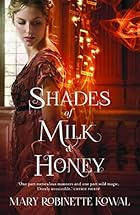
128) Shades of Milk and Honey by Mary Robinette Kowal
The first book in Kowal's Glamourist Histories fantasy series is very much a Austen pastiche--down to using old-fashioned spellings like "chuse" for "choose" and "shewed" for "showed." The characters and situations feel very similar, too. The heroine's parents are very Bennet-like, the villain reminds me of both Willoughby and Wickham, etc. I found myself wishing it was less Austenian in spots, since the voice made the occasional small anachronisms stand out more. That said, I enjoyed this book and plan to continue with the series.
129) Bruno and the Carol Singers by Martin Walker
A Christmas short story in the Bruno Courreges mystery series set in the French countryside. As a story it's quick, slight, and straightforward, but it was a pleasant visit with the characters and setting (these things are straight-up food and rural French living porn--reading them made me add the Dordogne to the itinerary for our Europe trip next summer). It also reminded me to search for any new full-length entries since I last read the series. There are two, and I'll be reading them soon.
Showing posts with label alternative history. Show all posts
Sunday, December 7, 2014
Sunday, May 4, 2014
2014 Reading, Books 46-48
46) Katie's Redemption by Patricia Davids.
Amish romance fiction is one of those things I thought I'd never be interested in, but I happened across one of this author's other books earlier and enjoyed it enough to want to try her again. And while I don't know if it's an accurate portrayal of Amish life, I found it worked surprisingly well for me. For one thing, it reminds me of my mother. She passed away four years ago, and she loved gentle, sweet inspirational romances. Our reading tastes diverged more than they converged as I grew up, but I miss her, and reading something she would love feels good, you know?
Also, I don't read a lot of inspirational romance for the same reason I'm not a big fan of small-town contemporary romance--I'm a city-dwelling Episcopalian who grew up a rural Southern Baptist. I don't necessarily want to read books set in a world I chose to walk away from because they so often condemn people who've made such choices, whether overtly or covertly. But I was never anything close to Amish. It's not my world, so when, as in this book, a heroine chooses to return to the Amish church after some time in the "English" world, I don't react to it personally.
And finally, it's nice every once in awhile to read a gentle, quiet story where the stakes and characters aren't so over-the-top. Don't get me wrong. I like the big, the epic, the superlative. But sometimes I enjoy a story like this where the hero and heroine are just striving for a happy ordinary life. It's relaxing, and that's exactly what I needed this weekend.
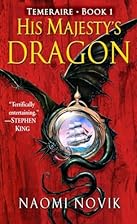
47) His Majesty's Dragon by Naomi Novik.
I read this book when it first came out--in fact, my reaction upon hearing someone had written a book reminiscent of the Aubrey-Maturin series, but with dragons, was, "Someone wrote a book just for ME?!?" I love it, and I've given it to someone almost every year in SantaThing, but this is the first time I've re-read it from cover to cover, and it's even better than I remembered. Reading it from the vantage of having read all its sequels, I can see how well Novik set up Temeraire's intelligence and independence and hinted at all the change and disruption he'll cause just by being himself. Wonderful, wonderful book.
48) On the Map by Simon Garfield.
A history of maps, mapmaking, and exploration. Interesting, but episodic, with brief chapters that almost stand alone--it would be the perfect book to have around in the bathroom, of if you want to read for 15-20 minutes at bedtime, without the fear of getting so hooked you'll be up at 3 AM before you know it.
Amish romance fiction is one of those things I thought I'd never be interested in, but I happened across one of this author's other books earlier and enjoyed it enough to want to try her again. And while I don't know if it's an accurate portrayal of Amish life, I found it worked surprisingly well for me. For one thing, it reminds me of my mother. She passed away four years ago, and she loved gentle, sweet inspirational romances. Our reading tastes diverged more than they converged as I grew up, but I miss her, and reading something she would love feels good, you know?
Also, I don't read a lot of inspirational romance for the same reason I'm not a big fan of small-town contemporary romance--I'm a city-dwelling Episcopalian who grew up a rural Southern Baptist. I don't necessarily want to read books set in a world I chose to walk away from because they so often condemn people who've made such choices, whether overtly or covertly. But I was never anything close to Amish. It's not my world, so when, as in this book, a heroine chooses to return to the Amish church after some time in the "English" world, I don't react to it personally.
And finally, it's nice every once in awhile to read a gentle, quiet story where the stakes and characters aren't so over-the-top. Don't get me wrong. I like the big, the epic, the superlative. But sometimes I enjoy a story like this where the hero and heroine are just striving for a happy ordinary life. It's relaxing, and that's exactly what I needed this weekend.
47) His Majesty's Dragon by Naomi Novik.
I read this book when it first came out--in fact, my reaction upon hearing someone had written a book reminiscent of the Aubrey-Maturin series, but with dragons, was, "Someone wrote a book just for ME?!?" I love it, and I've given it to someone almost every year in SantaThing, but this is the first time I've re-read it from cover to cover, and it's even better than I remembered. Reading it from the vantage of having read all its sequels, I can see how well Novik set up Temeraire's intelligence and independence and hinted at all the change and disruption he'll cause just by being himself. Wonderful, wonderful book.
48) On the Map by Simon Garfield.
A history of maps, mapmaking, and exploration. Interesting, but episodic, with brief chapters that almost stand alone--it would be the perfect book to have around in the bathroom, of if you want to read for 15-20 minutes at bedtime, without the fear of getting so hooked you'll be up at 3 AM before you know it.
Labels:
alternative history,
Amish romance,
fantasy,
geography,
history,
inspirational romance,
maps
Wednesday, November 13, 2013
2013 Reading, Books 100-102
My reading pace has slowed down with the fall, but I'm finally past the century mark!
100) Avatar: The Last Airbender: The Search, Part 3, by Gene Luen Yang, Michael Dante, Bryan Konietzko, Dave Marshall (Editor).
The biggest mystery left open at the end of the original Avatar: the Last Airbender series was the fate of Zuko's mother. It was SUCH a mystery, and speculated about SO much by fans of the show, that its ultimate resolution in this graphic novel series was all but doomed to disappointment. And...I was a little disappointed. I'm glad her story wasn't as dark as it could be, but the resolution felt almost too easy--except for the part where there was no sign of resolution for Azula's character. But maybe there will be another series that redeems her, or at least reveals her eventual fate.
Non-Avatar viewers, I'm sorry for all the random babble, but this is the kind of story you'd only be into if you know the series backwards and forwards.
Incidentally, when I went to Amazon for the link, I saw that the book has an average rating of 2 stars. At first I thought, "Wow, people must've been SERIOUSLY disappointed with the ending," but it turned out lots of people who preordered the Kindle version got an entirely different book delivered. Which...that's extremely annoying, but is the star system really the right way to deliver that message? It seems to me the rating is about the quality of the product, and that it's not fair to the creators to have their rating dragged down because Amazon bollixed its delivery. That said, as an author I'm not without bias in how I evaluate rating systems, their purpose, and their effects.
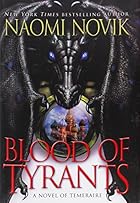
101) Blood of Tyrants, by Naomi Novik.
Eighth in what apparently will be a nine-book series. I raced through it breathlessly in two days. It's always good to see Temeraire again, and I was fascinated to see how Novik kept the general outline of Napoleon's Russian campaign while working in both sides' dragon armies. It was also cool to finally meet American dragons, though I did question her world-building a bit. We've seen all along that dragons in the non-European world are better treated than the Aerial Corps of the European powers (at least before Temeraire and Lien came along), and I can sort of buy that even by the early 19th century the British wouldn't have a clear understanding of how the draconic and human communities coexisted in, say, Africa or East Asia. But since it's clear America's colonial history played out at least somewhat similar to that of the real world (albeit clearly with Native Americans maintaining more power and autonomy because of their alliance with American dragons), I can't see why Britain and France couldn't have learned to treat dragons better from their experiences here.
But that's nitpicking, and I do love this series. I'm only annoyed at Novik for ending on such a cliffhanger! I hope Book 9 won't be too long in coming.
Incidentally, isn't that a beautiful cover?
102) French Napoleonic Infantry Tactics 1792-1815, by Paddy Griffith.
I realized early on upon starting to draft my current work-in-progress, which is set during the French invasion of Russia in 1812, that due to my relative lack of knowledge about the French army compared to the British army of the same era, I'm floundering for humanizing details of my French military characters' lives. So I've set my manuscript aside for the time being and am giving myself a crash course on all things French and Napoleonic. This particular book is as basic a survey as you could find, but it busts some of the myths about the French army (they did not inevitably attack in column rather than line!), and gives me a sense of what my French hero would've experienced serving during the heights of the Grande Armee's glory 1805-07 and how much it had gone downhill by 1812.
100) Avatar: The Last Airbender: The Search, Part 3, by Gene Luen Yang, Michael Dante, Bryan Konietzko, Dave Marshall (Editor).
The biggest mystery left open at the end of the original Avatar: the Last Airbender series was the fate of Zuko's mother. It was SUCH a mystery, and speculated about SO much by fans of the show, that its ultimate resolution in this graphic novel series was all but doomed to disappointment. And...I was a little disappointed. I'm glad her story wasn't as dark as it could be, but the resolution felt almost too easy--except for the part where there was no sign of resolution for Azula's character. But maybe there will be another series that redeems her, or at least reveals her eventual fate.
Non-Avatar viewers, I'm sorry for all the random babble, but this is the kind of story you'd only be into if you know the series backwards and forwards.
Incidentally, when I went to Amazon for the link, I saw that the book has an average rating of 2 stars. At first I thought, "Wow, people must've been SERIOUSLY disappointed with the ending," but it turned out lots of people who preordered the Kindle version got an entirely different book delivered. Which...that's extremely annoying, but is the star system really the right way to deliver that message? It seems to me the rating is about the quality of the product, and that it's not fair to the creators to have their rating dragged down because Amazon bollixed its delivery. That said, as an author I'm not without bias in how I evaluate rating systems, their purpose, and their effects.
101) Blood of Tyrants, by Naomi Novik.
Eighth in what apparently will be a nine-book series. I raced through it breathlessly in two days. It's always good to see Temeraire again, and I was fascinated to see how Novik kept the general outline of Napoleon's Russian campaign while working in both sides' dragon armies. It was also cool to finally meet American dragons, though I did question her world-building a bit. We've seen all along that dragons in the non-European world are better treated than the Aerial Corps of the European powers (at least before Temeraire and Lien came along), and I can sort of buy that even by the early 19th century the British wouldn't have a clear understanding of how the draconic and human communities coexisted in, say, Africa or East Asia. But since it's clear America's colonial history played out at least somewhat similar to that of the real world (albeit clearly with Native Americans maintaining more power and autonomy because of their alliance with American dragons), I can't see why Britain and France couldn't have learned to treat dragons better from their experiences here.
But that's nitpicking, and I do love this series. I'm only annoyed at Novik for ending on such a cliffhanger! I hope Book 9 won't be too long in coming.
Incidentally, isn't that a beautiful cover?
102) French Napoleonic Infantry Tactics 1792-1815, by Paddy Griffith.
I realized early on upon starting to draft my current work-in-progress, which is set during the French invasion of Russia in 1812, that due to my relative lack of knowledge about the French army compared to the British army of the same era, I'm floundering for humanizing details of my French military characters' lives. So I've set my manuscript aside for the time being and am giving myself a crash course on all things French and Napoleonic. This particular book is as basic a survey as you could find, but it busts some of the myths about the French army (they did not inevitably attack in column rather than line!), and gives me a sense of what my French hero would've experienced serving during the heights of the Grande Armee's glory 1805-07 and how much it had gone downhill by 1812.
Labels:
alternative history,
Avatar,
fantasy,
France,
graphic novels,
Napoleonic Wars,
research,
Temeraire
Wednesday, October 16, 2013
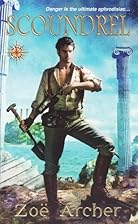
2013 TBR Challenge - Scoundrel
I read Warrior, the first book in this series, ages and ages ago, and bought the whole series as a "boxed" set when it was on sale for Kindle, again quite awhile back. And I've been hoarding it ever since, as I often do with books I know I'll enjoy, but where the author didn't leave me with a strong enough cliffhanger that I have to read the newest book the nanosecond it comes out. (I'm looking at you, Diana Gabaldon, for leaving poor Jem Mackenzie literally in the dark! And you too, George RR Martin, not to name any names lest I spoil TV viewers, but that last major character maybe-death!) Having a few hoarded books gives me a sense of security that I'll never be trapped on a long flight or, worse, holed up in an airport under a weather delay and lack for something entertaining to read.
Anyway, Archer's Blades of the Rose series is fantasy romance with steampunk elements, set in an alternate late 19th century where magic exists and the Blades of the Rose fight to ensure that each nation gets to keep their own magical legacy against the Heirs of Albion, who want to control all the world's magic so the sun will really REALLY never set on the British Empire. They're sort of Indiana Jones with lots of sexytimes--rollicking swashbucklers where good is good, evil is evil, and the characters hurtle from one death-defying adventure to the next.
I picked up Scoundrel now because the October theme for the 2013 Romance TBR Challenge is Paranormal Romance. I didn't like it quite so much as Warrior because of the different hero archetypes involved--Warrior's hero is a rough-around-the-edges soldier who falls for a highborn woman, which I love. (Mmm, Sharpe!) Bennett Day in Scoundrel is more your typical romance novel womanizing rogue, which is much less a fantasy of mine. That said, I loved the heroine, and the swashbuckling was dandy. And speaking of dandies, I'm looking forward to Catullus Graves' story in Stranger. He's the inventor of all the handy gadgets the Blades team uses, and he's a black Briton, which draws my interest since two of my own most recent manuscripts have featured black British characters.
Anyway, Archer's Blades of the Rose series is fantasy romance with steampunk elements, set in an alternate late 19th century where magic exists and the Blades of the Rose fight to ensure that each nation gets to keep their own magical legacy against the Heirs of Albion, who want to control all the world's magic so the sun will really REALLY never set on the British Empire. They're sort of Indiana Jones with lots of sexytimes--rollicking swashbucklers where good is good, evil is evil, and the characters hurtle from one death-defying adventure to the next.
I picked up Scoundrel now because the October theme for the 2013 Romance TBR Challenge is Paranormal Romance. I didn't like it quite so much as Warrior because of the different hero archetypes involved--Warrior's hero is a rough-around-the-edges soldier who falls for a highborn woman, which I love. (Mmm, Sharpe!) Bennett Day in Scoundrel is more your typical romance novel womanizing rogue, which is much less a fantasy of mine. That said, I loved the heroine, and the swashbuckling was dandy. And speaking of dandies, I'm looking forward to Catullus Graves' story in Stranger. He's the inventor of all the handy gadgets the Blades team uses, and he's a black Briton, which draws my interest since two of my own most recent manuscripts have featured black British characters.
Sunday, September 15, 2013
2013 Reading - Books 85-87
85) Lawrence in Arabia, by Scott Anderson.
Even though it took me a week and a half to complete and was a bit of a slog at points, I'm glad I finished this history of WWI in the Middle East. It isn't exclusively about T.E. Lawrence, though his outsized personality carries the narrative--we follow a multinational assortment of historical figures all jockeying for power and influence as the Ottoman Empire loses control of the Arab world over the course of the war. The author at once raises some intriguing what-ifs that might've given us a better and more peaceful world even today while acknowledging that even a best-case scenario would've had its share of simmering sectarian tension.
86) Sunrise Over Texas, by M.J. Frederick.
For the 2013 romance TBR challenge. Detailed post to come next week.
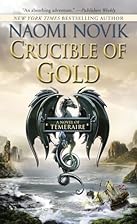
87) Crucible of Gold, by Naomi Novik.
The first book in this series, His Majesty's Dragon, is one of my favorite reads of all time, but I took a break from it after Victory of Eagles, for reasons that have more to do with me as with the book itself. You see, my proverbial Book Under the Bed (which of course does not live under an actual bed, not in 2013, but is instead a file on my hard drive and backed up to Dropbox that I get out and look at every year or two, because someday I mean to go back to it) is an alternative history/adventure story of the Napoleonic Era. And Victory of Eagles is the closest Novik's story comes to overlapping mine. Not in a way that would prevent me from publishing the Book Under the Bed--our approaches and plots are very different. No, it's more that I spent the entire read arguing with the book, particularly with her portrayal of Wellington. As those of you who've followed me around the blogosphere may know, I'm kinda fond of the Great Duke. As in, historical crush fond. He's one of the three protagonists of the BUtB, and while I hope my portrayal is true to the sarcastic, snobby, and all-around-difficult aspects of his personality, he also comes across as badass and awesomesauce (which I think is also justified by the historical record).
Which probably sounds a bit petty of me, to say I didn't like Victory as much as previous entries because I didn't like Novik's Wellington. But that's just the surface reaction. It's more that I find it weird and a little disconcerting to read anything too similar to what I'm writing--and when Victory came out, the BUtB was my beloved work-in-progress, which I was polishing for submission to editors and agents. I'm not one of those authors who can't read the same genre I write, but I find myself reading fewer Regencies now than before I started writing them. When I hear about a book that's very similar to something I'm writing or planning to write, I'm more likely to avoid it than read it--if it's too close to my approach, I worry about accidental influences, and if it's too different, I know I'll be too busy arguing with the story to really sink into it properly. With Victory, I think I had a weirdly strong reaction to the book because it was simultaneously too much like the BUtB and too different from it, unlike any book I've read before or since, so reading it induced a kind of mental whiplash.
Anyway, after reading a strong review of the latest book, I decided to go back to the series, and I'm glad I did. I got exasperated with Laurence a few times, but the dragon interactions were delightful, I liked seeing more of Emily Roland, who's always been one of my favorite secondary characters, and I was fascinated by how Novik developed an Incan society where the human population had been decimated by European diseases as in real history, but the Incan dragons had prevented European conquest. And...I certainly wasn't expecting that twist with the Incan empress. I can't wait to see what happens in the next book.
Even though it took me a week and a half to complete and was a bit of a slog at points, I'm glad I finished this history of WWI in the Middle East. It isn't exclusively about T.E. Lawrence, though his outsized personality carries the narrative--we follow a multinational assortment of historical figures all jockeying for power and influence as the Ottoman Empire loses control of the Arab world over the course of the war. The author at once raises some intriguing what-ifs that might've given us a better and more peaceful world even today while acknowledging that even a best-case scenario would've had its share of simmering sectarian tension.
86) Sunrise Over Texas, by M.J. Frederick.
For the 2013 romance TBR challenge. Detailed post to come next week.
87) Crucible of Gold, by Naomi Novik.
The first book in this series, His Majesty's Dragon, is one of my favorite reads of all time, but I took a break from it after Victory of Eagles, for reasons that have more to do with me as with the book itself. You see, my proverbial Book Under the Bed (which of course does not live under an actual bed, not in 2013, but is instead a file on my hard drive and backed up to Dropbox that I get out and look at every year or two, because someday I mean to go back to it) is an alternative history/adventure story of the Napoleonic Era. And Victory of Eagles is the closest Novik's story comes to overlapping mine. Not in a way that would prevent me from publishing the Book Under the Bed--our approaches and plots are very different. No, it's more that I spent the entire read arguing with the book, particularly with her portrayal of Wellington. As those of you who've followed me around the blogosphere may know, I'm kinda fond of the Great Duke. As in, historical crush fond. He's one of the three protagonists of the BUtB, and while I hope my portrayal is true to the sarcastic, snobby, and all-around-difficult aspects of his personality, he also comes across as badass and awesomesauce (which I think is also justified by the historical record).
Which probably sounds a bit petty of me, to say I didn't like Victory as much as previous entries because I didn't like Novik's Wellington. But that's just the surface reaction. It's more that I find it weird and a little disconcerting to read anything too similar to what I'm writing--and when Victory came out, the BUtB was my beloved work-in-progress, which I was polishing for submission to editors and agents. I'm not one of those authors who can't read the same genre I write, but I find myself reading fewer Regencies now than before I started writing them. When I hear about a book that's very similar to something I'm writing or planning to write, I'm more likely to avoid it than read it--if it's too close to my approach, I worry about accidental influences, and if it's too different, I know I'll be too busy arguing with the story to really sink into it properly. With Victory, I think I had a weirdly strong reaction to the book because it was simultaneously too much like the BUtB and too different from it, unlike any book I've read before or since, so reading it induced a kind of mental whiplash.
Anyway, after reading a strong review of the latest book, I decided to go back to the series, and I'm glad I did. I got exasperated with Laurence a few times, but the dragon interactions were delightful, I liked seeing more of Emily Roland, who's always been one of my favorite secondary characters, and I was fascinated by how Novik developed an Incan society where the human population had been decimated by European diseases as in real history, but the Incan dragons had prevented European conquest. And...I certainly wasn't expecting that twist with the Incan empress. I can't wait to see what happens in the next book.
Labels:
alternative history,
fantasy,
history,
Napoleonic Wars,
nonfiction,
World War I
Subscribe to:
Posts (Atom)