37. An Invitation to Sin by Sarah Morgan
Harlequin Presents aren't my usual thing, but I do love Sarah Morgan's because she's so good at writing heroines who can stand up to the powerful, rich, sexy alpha heroes required by the line. In this one I enjoyed how the heroine's toughness and confidence upended all the hero's stereotypes and expectations about women without ever crossing the line (IMHO) into the dreaded "I love you because you're nothing like other women" trope.
38. What Matters in Jane Austen by John Mullan
A recommended read for anyone with at least moderately high familiarity with the Austen canon. (If you haven't read the books or maybe read Pride & Prejudice once 20 year ago, you'll be lost and bored.) Over 20 chapters, Mullan looks at how Austen handles topics such as marriage proposals, money, and characters' reading habits across her novels, along with aspects of her literary technique in point of view, dialogue, etc.
39. Pioneer Girl: The Annotated Autobiography by Laura Ingalls Wilder
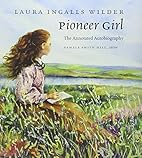
When the South Dakota Historical Society Press decided to put out an annotated version of the autobiography that became the root of Laura Ingalls Wilder's Little House series, apparently they expected it to be of interest to a few historians and scholars, and then had to rush to print copies for all the people like me who read their Little House books into tatters as children!
And if you were also such a child, you should read this book. It's interesting to see how Wilder streamlined her real life into the fictional account. The real Ingalls family was less iconic--e.g. De Smet in the novels seems a lot more isolated than it really was. (Except during the Long Winter. The trains really couldn't get through the snow for months, the settlement really was that unprepared due to the early onset of that year's snows and the fact it was newly settled and therefore no one had managed a large crop that year or had much livestock, and you get the impression people did come damn close to starving. I even wonder if Laura was so very short as an adult, 4'11", partly because of enduring such an experience during her prime growth spurt period in early adolescence, though she probably would've been petite regardless.) But in some ways the real Ingalls family struggled more, since in the novels Wilder left out the worst of the poverty they occasionally fell into, the death of her baby brother, and sundry other incidents that wouldn't seem right for a kids' book.
40. Rose Sees Red by Cecil Castellucci
A YA novel set in the early 80's at the height of the Cold War (and HOW weird is it to see my own youth become an era that gets the retro treatment) about a teenager depressed over her childhood best friend's betrayal who goes out adventuring one night with the Russian girl next door (the daughter of Soviet diplomats). A quick, engaging read.
41. Promise of the Wolves by Dorothy Hearst
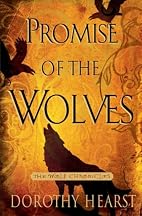
First in a fantasy trilogy about a young wolf 14,000 years ago destined to become a bridge between wolfkind and humankind, and by extension between humanity and the natural world. While I wasn't absolutely blown away by it, I did enjoy it and was sufficiently intrigued to put the second book on hold at my library.
Incidentally, I thought of buying this book as a birthday present for my 11-year-old daughter. It's not YA per se, but it's a coming-of-age story, the reading level is well within her above-grade-level capacity, and she loves animal fantasies.
However, the Kindle edition is $13.99. I'm not normally one to whine about ebook pricing--to me, it's about the content, not the format, and I'm happy to pay the same price I would for a print edition, or very slightly lower because I can't give the ebook away or donate it to the library when I'm done, which lowers the value somewhat. But for a book that's been out since 2008, I don't want to pay more than a normal MMPB price, say $5.99 or $6.99 or so. Maybe I'm somewhat biased by the fact that before I was an ebook reader I was a MMPB reader for almost anything that wasn't a new release by an absolute favorite author--and even then I was willing to wait for the paperback or wait out the hold list for the library hardcover unless the prior book had ended on a cliffhanger. But that still seems high to me.
42. The Nine Tailors by Dorothy Sayers
This was a re-read of a Lord Peter Wimsey mystery I'd only read once, so many years ago that at first I barely remembered any of the plot, though it came back to me as I went along, enough so to give me the pleasant sensation of being ahead of the sleuth for a change. :-) Not my favorite Lord Peter book by a long shot--the story gets bogged down in the minutia of fen drainage and bell-ringing, IMHO--but a lesser Lord Peter book is still better than most of what's out there.
Showing posts with label biography. Show all posts
Tuesday, April 7, 2015
Tuesday, December 3, 2013
2013 Reading, Books 103-108
I spent much of November in something of a reading drought, but managed to break it over Thanksgiving week. We visited my in-laws in Tulsa, so I had the whole week off work with two long flights on either end--perfect reading time!
103) Women in English Society 1500-1800, Mary Prior (ed.).
My next randomly chosen research selection, this one had less to do with the world I write about than I expected because it would've been bettered titled Women in English Society 1500-1700. Only one of the chapters had much to say about the 18th century. (My books are set in the opening decades of the 19th century, but the Regency has more in common with the Georgian 18th century than the Victorian heart of the 19th.) That said, it was informative and interesting in a dry, academic sort of way. I was particularly intrigued by the chapter on Tudor bishops' wives, because I so take for granted the respected role of a Protestant pastor's wife that I'd never properly considered how unprecedented and even scandalous married clergy would've seemed to the people of England just after the break with Rome.
104) The Black Count: Glory, Revolution, Betrayal, and the Real Count of Monte Cristo, by Tom Reiss.
The fascinating biography of Thomas-Alexandre Dumas (father of the famous author), son of a French marquis and a Haitian slave, brought to France as a teenager by his father a few years prior to the French Revolution. He enlisted in the cavalry as a common soldier, but after the Revolution he rose to the rank of General D'Armee. Toussaint Louverture held the same rank, but the next black officer to hold an equivalent rank in a western army? Colin Powell.
He died relatively young, in 1806. Still, I'm surprised that with my years of reading about his era I'd never heard of him before. Partly that's because my focus is more on later parts of the Napoleonic Wars, but I've read about the invasion of Egypt and the Italian campaigns he was involved in without encountering him, either. Turns out Dumas, who held strong republican beliefs, didn't like Napoleon, who returned the contempt with interest...and when it was in Napoleon's interest to curry favor with slaveholders and reinstate racist laws, there wasn't a place for a commander like Alex Dumas. Hence his small place in the history books...
105) 250 Things You Should Know About Writing, by Chuck Wendig.
I enjoy Wendig's blog and Twitter commentary on writing and writers, and this short book was a good set of quick reminders about various aspects of the fiction-writing process. I expect to refer to the character and plotting sections in the future.
106) Eat, Play, Lust, by Tawna Fenske.
Another very short read (do you sense a theme here?), a fun quick romance where a yoga instructor heroine with food issues begins a promising relationship with a chef who helps her enjoy the pleasures of food along with other pleasures of the flesh.
107) This Wicked Gift, by Courtney Milan.
For my last read in my romance TBR challenge for 2013--theme, holiday reads--I read Courtney Milan's first published work. More detailed post to come later in the month.
108) Game Change, by John Heilemann and Mark Halperin.
Gossipy account of the 2008 election. In political terms that now feels like ancient history, but reading it brought back some of the intensity of living through it. Confirmed and intensified my already emphatic opinion that the Democrats dodged a major bullet by not nominating John Edwards. And I like Hillary and am ready to support her if she runs in 2016, but she'd sure better pick a better team to run her campaign.
103) Women in English Society 1500-1800, Mary Prior (ed.).
My next randomly chosen research selection, this one had less to do with the world I write about than I expected because it would've been bettered titled Women in English Society 1500-1700. Only one of the chapters had much to say about the 18th century. (My books are set in the opening decades of the 19th century, but the Regency has more in common with the Georgian 18th century than the Victorian heart of the 19th.) That said, it was informative and interesting in a dry, academic sort of way. I was particularly intrigued by the chapter on Tudor bishops' wives, because I so take for granted the respected role of a Protestant pastor's wife that I'd never properly considered how unprecedented and even scandalous married clergy would've seemed to the people of England just after the break with Rome.
104) The Black Count: Glory, Revolution, Betrayal, and the Real Count of Monte Cristo, by Tom Reiss.
The fascinating biography of Thomas-Alexandre Dumas (father of the famous author), son of a French marquis and a Haitian slave, brought to France as a teenager by his father a few years prior to the French Revolution. He enlisted in the cavalry as a common soldier, but after the Revolution he rose to the rank of General D'Armee. Toussaint Louverture held the same rank, but the next black officer to hold an equivalent rank in a western army? Colin Powell.
He died relatively young, in 1806. Still, I'm surprised that with my years of reading about his era I'd never heard of him before. Partly that's because my focus is more on later parts of the Napoleonic Wars, but I've read about the invasion of Egypt and the Italian campaigns he was involved in without encountering him, either. Turns out Dumas, who held strong republican beliefs, didn't like Napoleon, who returned the contempt with interest...and when it was in Napoleon's interest to curry favor with slaveholders and reinstate racist laws, there wasn't a place for a commander like Alex Dumas. Hence his small place in the history books...
105) 250 Things You Should Know About Writing, by Chuck Wendig.
I enjoy Wendig's blog and Twitter commentary on writing and writers, and this short book was a good set of quick reminders about various aspects of the fiction-writing process. I expect to refer to the character and plotting sections in the future.
106) Eat, Play, Lust, by Tawna Fenske.
Another very short read (do you sense a theme here?), a fun quick romance where a yoga instructor heroine with food issues begins a promising relationship with a chef who helps her enjoy the pleasures of food along with other pleasures of the flesh.
107) This Wicked Gift, by Courtney Milan.
For my last read in my romance TBR challenge for 2013--theme, holiday reads--I read Courtney Milan's first published work. More detailed post to come later in the month.
108) Game Change, by John Heilemann and Mark Halperin.
Gossipy account of the 2008 election. In political terms that now feels like ancient history, but reading it brought back some of the intensity of living through it. Confirmed and intensified my already emphatic opinion that the Democrats dodged a major bullet by not nominating John Edwards. And I like Hillary and am ready to support her if she runs in 2016, but she'd sure better pick a better team to run her campaign.
Friday, April 26, 2013
2013 Reading, Books 40-42 (and medical adventures)
I woke up yesterday with a racing heart (120 beats/minute) and elevated blood pressure (150/90). I have a strong family history of hypertension, which first reared its head in my own life when I was pregnant with Miss Fraser and ended up on bed rest for the last two months. Even though my non-pregnant blood pressure was at worst borderline high, I've been on a low-dose blood pressure med for years now in hopes of staving off my strong family history of stroke and heart disease. My doctor hopes my current weight loss and exercise program will ultimately end my need for such meds, but given that my oldest brother runs marathons and takes the same medication that I do, I have my doubts. Sometimes your worst genes trump your best behavior.
Anyway, my meds do such a good job of keeping my bp stable and normal that 150/90 was enough to freak me out a little, especially when coupled with the racing heart and an off-and-on dizzy, wobbly sensation. When I didn't feel any better after eating breakfast and when my blood pressure at a podiatrist appointment was something like 155/100, I freaked out seriously and went to my regular doctor. She did a quick EKG and reassured me that my heart sounded healthy and normal, just excessively fast, but she couldn't figure out what was going on and ultimately advised that I go to the ER for my own peace of mind, because otherwise I was just going to keep making myself feel even worse worrying.
So, I ended up spending about 2 1/2 hours in the ER, most of which was curled up in my room by myself with a book. Which made me feel better all by itself, since clearly they weren't too worried about me. Indeed, the doctor said that there are people who walk around with bp like mine was yesterday for decades. Which amazed me, because I feel like my everyday, medicated 125/80 or so isn't anywhere near good enough, and I can't count myself truly healthy unless I get it down to 120/70 or even lower. But they did agree that a suddenly elevated pulse and bp with no obvious cause was worth investigating and did the usual assortment of tests, ultimately diagnosing me with a UTI and sending me home with an antibiotic prescription. (Which I can forgive my regular doctor for missing, since I didn't have the obvious symptom of burning when I pee, and the symptoms I did have were subtle enough that I interpreted them as other things.)
All of which is a very long-winded way of saying that between the afternoon at the ER and staying home from the day job today to rest and recuperate, I had more reading time than usual this week.
40) Escape from Camp 14, by Blaine Harden.
The true story of a young man who was born and raised inside a brutal labor camp in North Korea and escaped at age 23--at least, it's true insofar as you choose to trust Shin Dong-Hyuk's possibly unreliable narration (and it's clear Harden, a journalist, has his doubts in spots). It's harrowing and horrifying, to put it mildly. Shin was raised in circumstances designed to break down all the natural social and familial bonds, so he never learned trust, compassion, sympathy, and the like as a child. It's clear he's trying as an adult living in America and South Korea, but I finished the book by no means certain he'd ever figure it out.
41) The French Revolution: A Very Short Introduction, by William Doyle.
A quick, high-level overview of the French Revolution, but it's not at all simple--it's not the kind of thing I'd recommend to someone with no familiarity with the period, but it was a good refresher.
42) A Plague of Zombies, by Diana Gabaldon.
The newest novella featuring Lord John Grey set in the Outlander world. While it's not the strongest of the novellas, Lord John has become my favorite character in the entire series, so I enjoyed his latest adventure quite a bit. As you'd expect from the title, it does indeed have zombies (in 1761 in Jamaica), in a revenge plot that Lord John is ultimately able to untangle before it becomes an outright bloodbath.
Anyway, my meds do such a good job of keeping my bp stable and normal that 150/90 was enough to freak me out a little, especially when coupled with the racing heart and an off-and-on dizzy, wobbly sensation. When I didn't feel any better after eating breakfast and when my blood pressure at a podiatrist appointment was something like 155/100, I freaked out seriously and went to my regular doctor. She did a quick EKG and reassured me that my heart sounded healthy and normal, just excessively fast, but she couldn't figure out what was going on and ultimately advised that I go to the ER for my own peace of mind, because otherwise I was just going to keep making myself feel even worse worrying.
So, I ended up spending about 2 1/2 hours in the ER, most of which was curled up in my room by myself with a book. Which made me feel better all by itself, since clearly they weren't too worried about me. Indeed, the doctor said that there are people who walk around with bp like mine was yesterday for decades. Which amazed me, because I feel like my everyday, medicated 125/80 or so isn't anywhere near good enough, and I can't count myself truly healthy unless I get it down to 120/70 or even lower. But they did agree that a suddenly elevated pulse and bp with no obvious cause was worth investigating and did the usual assortment of tests, ultimately diagnosing me with a UTI and sending me home with an antibiotic prescription. (Which I can forgive my regular doctor for missing, since I didn't have the obvious symptom of burning when I pee, and the symptoms I did have were subtle enough that I interpreted them as other things.)
All of which is a very long-winded way of saying that between the afternoon at the ER and staying home from the day job today to rest and recuperate, I had more reading time than usual this week.
40) Escape from Camp 14, by Blaine Harden.
The true story of a young man who was born and raised inside a brutal labor camp in North Korea and escaped at age 23--at least, it's true insofar as you choose to trust Shin Dong-Hyuk's possibly unreliable narration (and it's clear Harden, a journalist, has his doubts in spots). It's harrowing and horrifying, to put it mildly. Shin was raised in circumstances designed to break down all the natural social and familial bonds, so he never learned trust, compassion, sympathy, and the like as a child. It's clear he's trying as an adult living in America and South Korea, but I finished the book by no means certain he'd ever figure it out.
41) The French Revolution: A Very Short Introduction, by William Doyle.
A quick, high-level overview of the French Revolution, but it's not at all simple--it's not the kind of thing I'd recommend to someone with no familiarity with the period, but it was a good refresher.
42) A Plague of Zombies, by Diana Gabaldon.
The newest novella featuring Lord John Grey set in the Outlander world. While it's not the strongest of the novellas, Lord John has become my favorite character in the entire series, so I enjoyed his latest adventure quite a bit. As you'd expect from the title, it does indeed have zombies (in 1761 in Jamaica), in a revenge plot that Lord John is ultimately able to untangle before it becomes an outright bloodbath.
Labels:
biography,
France,
historical fiction,
history,
North Korea,
reading
Sunday, March 17, 2013
Five favorite books you've (probably) never heard of
A couple of weeks back, fellow Carina author Veronica Scott challenged me to a Five Favorite Books meme. Since I find it all but impossible to narrow it down to just five for all time out of all the books I've ever read, I toyed with various ways to limit the list. Five Favorite Historical Romances. Five Favorite Non-Historical Romances. Five Favorite Classics. Five Favorite Kids' Books. Five Favorite Research Sources. Etc. (And now that I think about it, I can do just that for future posts, whenever I'm stuck for something to blog about. Win!)
But for this challenge I decided to do Five Favorite Books You've (Probably) Never Heard Of. OK, it's not like I'm the only literary omnivore out there, so you may have heard of some of them. But if anyone else out there has read and loved all these books, you're my long-lost sister or brother, and I want to compare libraries with you next time I'm stuck for what to read next.
1) In This House of Brede, by Rumer Godden.
I'm a married Episcopalian romance novelist, so you wouldn't expect me to be the target market for a book about a woman who leaves behind a high-powered career (at least, by 1950's standards) in her 40's to become a Benedictine nun. But this is a gorgeously written book whose characters and their community spring to life on the page. I've re-read it more times than I can count, and I expect to go back to it again and again in the years to come.
2) The Jennie trilogy, by Elisabeth Ogilvie.
But for this challenge I decided to do Five Favorite Books You've (Probably) Never Heard Of. OK, it's not like I'm the only literary omnivore out there, so you may have heard of some of them. But if anyone else out there has read and loved all these books, you're my long-lost sister or brother, and I want to compare libraries with you next time I'm stuck for what to read next.
1) In This House of Brede, by Rumer Godden.
I'm a married Episcopalian romance novelist, so you wouldn't expect me to be the target market for a book about a woman who leaves behind a high-powered career (at least, by 1950's standards) in her 40's to become a Benedictine nun. But this is a gorgeously written book whose characters and their community spring to life on the page. I've re-read it more times than I can count, and I expect to go back to it again and again in the years to come.
2) The Jennie trilogy, by Elisabeth Ogilvie.
This trilogy, sadly, is out-of-print and unavailable as e-books, but there seem to be plenty of affordable used copies on Amazon. I read and adored the first two books from my hometown library when I was in high school and later picked up the whole trilogy at a library book sale.
If you like my books (and maybe you do, since you're reading my blog!), there's a good chance you'll like these, even though they're historical fiction with romantic elements rather than romance. They're Regency in time period but not in tone, the heroine is gentry rather than aristocratic, and the hero...well, I'm not going to give you spoilers! The first book is largely set in Scotland, and Scottish culture pervades all three.
3) Wellington: The Years of the Sword, by Elizabeth Longford.
My favorite Wellington biography. (Between being a military history geek and research I did for the alternative history that's my book-under-the-bed, I own several. I know. I'm quite aware what a big geek I am.) It's a beautifully written, human portrait of a fascinating man.
4) The Old Buzzard Had It Coming, by Donis Casey.
This one you can buy for your Kindle or Nook, and right now it's only $0.99 as an e-book! First in a mystery series set in rural Oklahoma in the early 20th century, with an amateur sleuth who's the mother of nine children on a farm. It sounds too unlikely to work, but IMHO it does. The voice is lovely, with lots of historical detail and texture.
5) Nathan Hale's Hazardous Tales, by Nathan Hale (and yes, that's his real name).
Donner Dinner Party (available for preorder)
These fall into the select category of books Miss Fraser and I love equally, though at age 8 she's the one in their target market. They're graphic novels about American history, with the conceit that Nathan Hale (the spy one, not the author) as he's about to be hanged is taken up into a history book, where he sees what's to come for the new nation. With his newfound knowledge, he delays his execution by telling stories to his hangman and the British officer there to supervise. They're equal parts hilarious and historical. I'm not sure I'd recommend them if you don't have a kid (or niece, nephew, grandchild, etc.) to share them with, but if you do, buy them now.
Subscribe to:
Posts (Atom)

