Most of my energies continue to be focused on the post-Battle of New Orleans book, but I do manage to squeeze in some reading time.
28) Daughter of the Sky, by Michelle Diener.
I tend to be wary of self-published books unless I have a lot of experience with the author. There's too much poorly edited or downright unedited work out there, and I'm sensitive to such things. As noted in my post on Rita Book #7, for me bad grammar or inept writing in a good story is like a singer who doesn't have the range for it attempting "O Holy Night" or "The Star-Spangled Banner." It's nails-on-a-chalkboard painful, and I can't hear past the voice to the story or song.
But Daughter of the Sky got a positive review from a site I trust, and I decided to give it a try largely for the sake of the unusual setting. I'm glad I did. While my inner copyeditor "tsk-tsked" in a few spots, it was smoothly written overall, and the story of an English girl orphaned in a shipwreck, taken in by the Zulu, and then caught in the middle of the Anglo-Zulu war is thoughtfully told. At least to my white, American eyes it seemed to avoid the most obvious pitfalls--the British are clearly in the wrong as the colonialist power invading a sovereign nation under a flimsy pretext, but the individual British characters are varied and often sympathetic, and the Zulu are portrayed sympathetically without ever seeming like Noble Savages.
My one major issue with the book echoes that of the review I linked above--the resolution feels a bit too hasty, and I would've liked to see more about how the hero and heroine coped with the trauma they experienced in the war and built a life together.
29) Journal of a Residence on a Georgian Plantation - 1838-1839, by Fanny Kemble.
In 1834 the noted English actress Fanny Kemble left her stage career behind to marry an American, Pierce Butler, apparently unaware that he was heir to plantations in Georgia, and therefore to slaves--or at least without having fully thought through the implications. I'm not clear on that part. In any case, they spent the winter and spring of 1838-39 on their rice and cotton plantations on the Georgia Sea Islands, and Kemble was appalled by what she saw and learned. I don't have time or space to do the book justice here, but I'd recommend it to anyone interested in a first-person account of American plantation life and the conditions of slavery by a thoughtful, sensitive observer. (Though in proper 19th-century style, she often stereotypes and patronizes even when she's being remarkably forward-thinking. E.g. when she's saying there's every reason to believe blacks could take their place as equal, self-supporting and upstanding free citizens if only they had more education, better nutrition, etc., she says something along the lines of, "Look at the Irish! You should hear how they're talked about in England, and just a generation or two in your country makes them a thrifty, industrious addition to your laboring class!" And as a descendant of Southern "poor whites" myself, I bristled a bit at some of her descriptions of my people.)
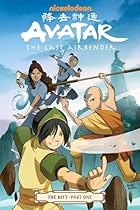
30) Avatar: The Last Airbender - The Rift Part 1, by Gene Luen Yang, Michael Dante DiMartino, Bryan Konietzko, Dave Marshall.
An altogether lighter read...albeit still focused on culture clashes. More filling in the gaps between Avatar and The Legend of Korra, and it looks as though this series will focus on Toph as the previous one did on Zuko.
Showing posts with label research. Show all posts
Thursday, March 13, 2014
Tuesday, December 3, 2013
2013 Reading, Books 103-108
I spent much of November in something of a reading drought, but managed to break it over Thanksgiving week. We visited my in-laws in Tulsa, so I had the whole week off work with two long flights on either end--perfect reading time!
103) Women in English Society 1500-1800, Mary Prior (ed.).
My next randomly chosen research selection, this one had less to do with the world I write about than I expected because it would've been bettered titled Women in English Society 1500-1700. Only one of the chapters had much to say about the 18th century. (My books are set in the opening decades of the 19th century, but the Regency has more in common with the Georgian 18th century than the Victorian heart of the 19th.) That said, it was informative and interesting in a dry, academic sort of way. I was particularly intrigued by the chapter on Tudor bishops' wives, because I so take for granted the respected role of a Protestant pastor's wife that I'd never properly considered how unprecedented and even scandalous married clergy would've seemed to the people of England just after the break with Rome.
104) The Black Count: Glory, Revolution, Betrayal, and the Real Count of Monte Cristo, by Tom Reiss.
The fascinating biography of Thomas-Alexandre Dumas (father of the famous author), son of a French marquis and a Haitian slave, brought to France as a teenager by his father a few years prior to the French Revolution. He enlisted in the cavalry as a common soldier, but after the Revolution he rose to the rank of General D'Armee. Toussaint Louverture held the same rank, but the next black officer to hold an equivalent rank in a western army? Colin Powell.
He died relatively young, in 1806. Still, I'm surprised that with my years of reading about his era I'd never heard of him before. Partly that's because my focus is more on later parts of the Napoleonic Wars, but I've read about the invasion of Egypt and the Italian campaigns he was involved in without encountering him, either. Turns out Dumas, who held strong republican beliefs, didn't like Napoleon, who returned the contempt with interest...and when it was in Napoleon's interest to curry favor with slaveholders and reinstate racist laws, there wasn't a place for a commander like Alex Dumas. Hence his small place in the history books...
105) 250 Things You Should Know About Writing, by Chuck Wendig.
I enjoy Wendig's blog and Twitter commentary on writing and writers, and this short book was a good set of quick reminders about various aspects of the fiction-writing process. I expect to refer to the character and plotting sections in the future.
106) Eat, Play, Lust, by Tawna Fenske.
Another very short read (do you sense a theme here?), a fun quick romance where a yoga instructor heroine with food issues begins a promising relationship with a chef who helps her enjoy the pleasures of food along with other pleasures of the flesh.
107) This Wicked Gift, by Courtney Milan.
For my last read in my romance TBR challenge for 2013--theme, holiday reads--I read Courtney Milan's first published work. More detailed post to come later in the month.
108) Game Change, by John Heilemann and Mark Halperin.
Gossipy account of the 2008 election. In political terms that now feels like ancient history, but reading it brought back some of the intensity of living through it. Confirmed and intensified my already emphatic opinion that the Democrats dodged a major bullet by not nominating John Edwards. And I like Hillary and am ready to support her if she runs in 2016, but she'd sure better pick a better team to run her campaign.
103) Women in English Society 1500-1800, Mary Prior (ed.).
My next randomly chosen research selection, this one had less to do with the world I write about than I expected because it would've been bettered titled Women in English Society 1500-1700. Only one of the chapters had much to say about the 18th century. (My books are set in the opening decades of the 19th century, but the Regency has more in common with the Georgian 18th century than the Victorian heart of the 19th.) That said, it was informative and interesting in a dry, academic sort of way. I was particularly intrigued by the chapter on Tudor bishops' wives, because I so take for granted the respected role of a Protestant pastor's wife that I'd never properly considered how unprecedented and even scandalous married clergy would've seemed to the people of England just after the break with Rome.
104) The Black Count: Glory, Revolution, Betrayal, and the Real Count of Monte Cristo, by Tom Reiss.
The fascinating biography of Thomas-Alexandre Dumas (father of the famous author), son of a French marquis and a Haitian slave, brought to France as a teenager by his father a few years prior to the French Revolution. He enlisted in the cavalry as a common soldier, but after the Revolution he rose to the rank of General D'Armee. Toussaint Louverture held the same rank, but the next black officer to hold an equivalent rank in a western army? Colin Powell.
He died relatively young, in 1806. Still, I'm surprised that with my years of reading about his era I'd never heard of him before. Partly that's because my focus is more on later parts of the Napoleonic Wars, but I've read about the invasion of Egypt and the Italian campaigns he was involved in without encountering him, either. Turns out Dumas, who held strong republican beliefs, didn't like Napoleon, who returned the contempt with interest...and when it was in Napoleon's interest to curry favor with slaveholders and reinstate racist laws, there wasn't a place for a commander like Alex Dumas. Hence his small place in the history books...
105) 250 Things You Should Know About Writing, by Chuck Wendig.
I enjoy Wendig's blog and Twitter commentary on writing and writers, and this short book was a good set of quick reminders about various aspects of the fiction-writing process. I expect to refer to the character and plotting sections in the future.
106) Eat, Play, Lust, by Tawna Fenske.
Another very short read (do you sense a theme here?), a fun quick romance where a yoga instructor heroine with food issues begins a promising relationship with a chef who helps her enjoy the pleasures of food along with other pleasures of the flesh.
107) This Wicked Gift, by Courtney Milan.
For my last read in my romance TBR challenge for 2013--theme, holiday reads--I read Courtney Milan's first published work. More detailed post to come later in the month.
108) Game Change, by John Heilemann and Mark Halperin.
Gossipy account of the 2008 election. In political terms that now feels like ancient history, but reading it brought back some of the intensity of living through it. Confirmed and intensified my already emphatic opinion that the Democrats dodged a major bullet by not nominating John Edwards. And I like Hillary and am ready to support her if she runs in 2016, but she'd sure better pick a better team to run her campaign.
Wednesday, November 13, 2013
2013 Reading, Books 100-102
My reading pace has slowed down with the fall, but I'm finally past the century mark!
100) Avatar: The Last Airbender: The Search, Part 3, by Gene Luen Yang, Michael Dante, Bryan Konietzko, Dave Marshall (Editor).
The biggest mystery left open at the end of the original Avatar: the Last Airbender series was the fate of Zuko's mother. It was SUCH a mystery, and speculated about SO much by fans of the show, that its ultimate resolution in this graphic novel series was all but doomed to disappointment. And...I was a little disappointed. I'm glad her story wasn't as dark as it could be, but the resolution felt almost too easy--except for the part where there was no sign of resolution for Azula's character. But maybe there will be another series that redeems her, or at least reveals her eventual fate.
Non-Avatar viewers, I'm sorry for all the random babble, but this is the kind of story you'd only be into if you know the series backwards and forwards.
Incidentally, when I went to Amazon for the link, I saw that the book has an average rating of 2 stars. At first I thought, "Wow, people must've been SERIOUSLY disappointed with the ending," but it turned out lots of people who preordered the Kindle version got an entirely different book delivered. Which...that's extremely annoying, but is the star system really the right way to deliver that message? It seems to me the rating is about the quality of the product, and that it's not fair to the creators to have their rating dragged down because Amazon bollixed its delivery. That said, as an author I'm not without bias in how I evaluate rating systems, their purpose, and their effects.
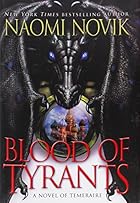
101) Blood of Tyrants, by Naomi Novik.
Eighth in what apparently will be a nine-book series. I raced through it breathlessly in two days. It's always good to see Temeraire again, and I was fascinated to see how Novik kept the general outline of Napoleon's Russian campaign while working in both sides' dragon armies. It was also cool to finally meet American dragons, though I did question her world-building a bit. We've seen all along that dragons in the non-European world are better treated than the Aerial Corps of the European powers (at least before Temeraire and Lien came along), and I can sort of buy that even by the early 19th century the British wouldn't have a clear understanding of how the draconic and human communities coexisted in, say, Africa or East Asia. But since it's clear America's colonial history played out at least somewhat similar to that of the real world (albeit clearly with Native Americans maintaining more power and autonomy because of their alliance with American dragons), I can't see why Britain and France couldn't have learned to treat dragons better from their experiences here.
But that's nitpicking, and I do love this series. I'm only annoyed at Novik for ending on such a cliffhanger! I hope Book 9 won't be too long in coming.
Incidentally, isn't that a beautiful cover?
102) French Napoleonic Infantry Tactics 1792-1815, by Paddy Griffith.
I realized early on upon starting to draft my current work-in-progress, which is set during the French invasion of Russia in 1812, that due to my relative lack of knowledge about the French army compared to the British army of the same era, I'm floundering for humanizing details of my French military characters' lives. So I've set my manuscript aside for the time being and am giving myself a crash course on all things French and Napoleonic. This particular book is as basic a survey as you could find, but it busts some of the myths about the French army (they did not inevitably attack in column rather than line!), and gives me a sense of what my French hero would've experienced serving during the heights of the Grande Armee's glory 1805-07 and how much it had gone downhill by 1812.
100) Avatar: The Last Airbender: The Search, Part 3, by Gene Luen Yang, Michael Dante, Bryan Konietzko, Dave Marshall (Editor).
The biggest mystery left open at the end of the original Avatar: the Last Airbender series was the fate of Zuko's mother. It was SUCH a mystery, and speculated about SO much by fans of the show, that its ultimate resolution in this graphic novel series was all but doomed to disappointment. And...I was a little disappointed. I'm glad her story wasn't as dark as it could be, but the resolution felt almost too easy--except for the part where there was no sign of resolution for Azula's character. But maybe there will be another series that redeems her, or at least reveals her eventual fate.
Non-Avatar viewers, I'm sorry for all the random babble, but this is the kind of story you'd only be into if you know the series backwards and forwards.
Incidentally, when I went to Amazon for the link, I saw that the book has an average rating of 2 stars. At first I thought, "Wow, people must've been SERIOUSLY disappointed with the ending," but it turned out lots of people who preordered the Kindle version got an entirely different book delivered. Which...that's extremely annoying, but is the star system really the right way to deliver that message? It seems to me the rating is about the quality of the product, and that it's not fair to the creators to have their rating dragged down because Amazon bollixed its delivery. That said, as an author I'm not without bias in how I evaluate rating systems, their purpose, and their effects.
101) Blood of Tyrants, by Naomi Novik.
Eighth in what apparently will be a nine-book series. I raced through it breathlessly in two days. It's always good to see Temeraire again, and I was fascinated to see how Novik kept the general outline of Napoleon's Russian campaign while working in both sides' dragon armies. It was also cool to finally meet American dragons, though I did question her world-building a bit. We've seen all along that dragons in the non-European world are better treated than the Aerial Corps of the European powers (at least before Temeraire and Lien came along), and I can sort of buy that even by the early 19th century the British wouldn't have a clear understanding of how the draconic and human communities coexisted in, say, Africa or East Asia. But since it's clear America's colonial history played out at least somewhat similar to that of the real world (albeit clearly with Native Americans maintaining more power and autonomy because of their alliance with American dragons), I can't see why Britain and France couldn't have learned to treat dragons better from their experiences here.
But that's nitpicking, and I do love this series. I'm only annoyed at Novik for ending on such a cliffhanger! I hope Book 9 won't be too long in coming.
Incidentally, isn't that a beautiful cover?
102) French Napoleonic Infantry Tactics 1792-1815, by Paddy Griffith.
I realized early on upon starting to draft my current work-in-progress, which is set during the French invasion of Russia in 1812, that due to my relative lack of knowledge about the French army compared to the British army of the same era, I'm floundering for humanizing details of my French military characters' lives. So I've set my manuscript aside for the time being and am giving myself a crash course on all things French and Napoleonic. This particular book is as basic a survey as you could find, but it busts some of the myths about the French army (they did not inevitably attack in column rather than line!), and gives me a sense of what my French hero would've experienced serving during the heights of the Grande Armee's glory 1805-07 and how much it had gone downhill by 1812.
Labels:
alternative history,
Avatar,
fantasy,
France,
graphic novels,
Napoleonic Wars,
research,
Temeraire
Sunday, April 14, 2013
2013 Reading, Books 34-36
34) Ghost Planet, by Sharon Lynn Fisher. Part of my Rita-finalist reading project, and already blogged about here.
35) Race, Sex, and Social Order in Early New Orleans, by Jennifer Spear.
Friday night I left this book on the dining room table while I was getting dinner ready, and as I brought my 9-year-old daughter's plate to the table, she looked at me in some indignation and pointed to the book. I got it from the University of Washington library, and it's in the dullest academic binding imaginable, with no cover image at all. So I asked her what was wrong, and she pointed more specifically to the word "Sex" printed on the spine. I informed her that in this case "sex" just meant gender, whether you're a man or a woman, and that the book was about how being male or female and the color of your skin impacted your life in 18th century New Orleans. At that point she looked suitably bored.
That said, the book didn't bore me. It covers how interracial relationships evolved and how they were conceptualized from New Orleans' earliest years on into the mid-19th century, an extremely relevant topic for my current work-in-progress set in 1815, whose heroine is a mixed-race fourth generation native of the city. However, it is a dryly academic work that assumes its reader has a decent grounding in the city's colonial history, so it's hardly a general-interest book.
36) Hominids, by Robert J. Sawyer.
A fascinating science fiction novel wherein, in a parallel world, Neanderthals rather than Homo sapiens are the sole surviving hominids. Neanderthal physicist Ponter Boddit accidentally passes through a portal to our Earth, leading to parallel plots as our world tries to figure out what to make of him (and he, of us) and his family and friends try to figure out what happened to him--his partner is accused of murder. I read the book in one sitting this morning, and I'll definitely get the sequel. That said, I thought the Neanderthal society was almost too ideal to be believed, in contrast to our species' warring, overpopulating, and environment-degrading ways, and I thought the use of rape as a plot device was much too heavy-handed. (One of the major Homo sapiens characters is raped by a stranger early in the book, in a scene graphic enough that I expect it would be triggering for quite a few readers.)
35) Race, Sex, and Social Order in Early New Orleans, by Jennifer Spear.
Friday night I left this book on the dining room table while I was getting dinner ready, and as I brought my 9-year-old daughter's plate to the table, she looked at me in some indignation and pointed to the book. I got it from the University of Washington library, and it's in the dullest academic binding imaginable, with no cover image at all. So I asked her what was wrong, and she pointed more specifically to the word "Sex" printed on the spine. I informed her that in this case "sex" just meant gender, whether you're a man or a woman, and that the book was about how being male or female and the color of your skin impacted your life in 18th century New Orleans. At that point she looked suitably bored.
That said, the book didn't bore me. It covers how interracial relationships evolved and how they were conceptualized from New Orleans' earliest years on into the mid-19th century, an extremely relevant topic for my current work-in-progress set in 1815, whose heroine is a mixed-race fourth generation native of the city. However, it is a dryly academic work that assumes its reader has a decent grounding in the city's colonial history, so it's hardly a general-interest book.
36) Hominids, by Robert J. Sawyer.
A fascinating science fiction novel wherein, in a parallel world, Neanderthals rather than Homo sapiens are the sole surviving hominids. Neanderthal physicist Ponter Boddit accidentally passes through a portal to our Earth, leading to parallel plots as our world tries to figure out what to make of him (and he, of us) and his family and friends try to figure out what happened to him--his partner is accused of murder. I read the book in one sitting this morning, and I'll definitely get the sequel. That said, I thought the Neanderthal society was almost too ideal to be believed, in contrast to our species' warring, overpopulating, and environment-degrading ways, and I thought the use of rape as a plot device was much too heavy-handed. (One of the major Homo sapiens characters is raped by a stranger early in the book, in a scene graphic enough that I expect it would be triggering for quite a few readers.)
Sunday, February 17, 2013
2013 Reading, Books 16-18
16) The Accidental City, by Lawrence Powell.
This was research for one of my works-in-progress, which isn't yet contracted but I hope will be a first half of 2014 release. My book starts in the aftermath of the Battle of New Orleans, and my heroine is a fourth-generation native of the city, so this book on New Orleans' first century of existence was extremely useful research and reasonably interesting to boot. If nothing else, I learned a lot more about French and Spanish 18th century imperial concerns than I ever knew before, not to mention some ripple effects of events I already knew well--e.g. a big part of the French population of New Orleans originated not from the original 18th century settlement, but from early 19th century refugees from the Haitian Revolution. They'd gone to Cuba first and were welcome there until Napoleon invaded Spain and set his brother on the throne, at which point French nationals were persona non grata in Spanish colonies, so they fled to the culturally familiar but by then American-held refuge of New Orleans.
17) The Caves of Perigord, by Martin Walker
An unusual book, sort of a braided novel set in the present (well, really around 2002, when the book was published), in the spring of 1944, and 17,000 years ago. It opens with a 30-something British officer, the son of a WWII veteran, turning up in an art auction house with a small rock painting of a bull he found among his late father's effects. The ancient art specialist recognizes it as being of the style and on the same type of stone as the Lascaux cave paintings, but no known cave is missing such a painting. As the modern characters investigate the mystery, we go back in time to see how the bull was painted and how it came to be in the possession of a British war hero.
I enjoyed it, but the interwoven story lines had the strange effect of slowing my reading by making it easier to put the book down between chapters, somehow. Though at the 2/3 point I did skip forward just to see how the prehistoric plot line would come out (semi-spoiler: not as tragically as I feared, but not happily enough to please my romantic side, either), then going back to catch up the two more modern threads.
18) The British at the Gates, by Robin Reilly.
More research for my work-in-progress, a detailed study of the New Orleans campaign of the War of 1812 and a solid general overview of the war as a whole. I liked this book because it seemed more sober and grounded in reality than most sources I've read on the battle--mostly they run to very pro-American, very eager to lionize Andrew Jackson as a human being as well as a general (which, American that I am, I still tend to gag on because of his role in Indian removal and the Trail of Tears), and to portraying the British as a bunch of bumbling incompetent idiots. (Which doesn't make much sense, because then where would the glory be in defeating them?)
This book's more measured approach left me far more willing to acknowledge that Jackson managed the defense of the city brilliantly. As for the British...well, the soldiers didn't lack for courage, and there are a few times where with 20-20 hindsight, one can imagine them winning. But what it comes down to is there are only so many brilliant commanders around at any given time, and I'd say Britain and America had one apiece in 1815. America's was in New Orleans, while Britain's, fortunately, was right where he needed to be in Europe, since Waterloo was a hell of a lot more important for Britain to win.
Labels:
historical fiction,
military history,
mystery,
nonfiction,
research
Monday, January 14, 2013
2013 reading, books 4-6
4) The Natchez Trace Historic Trail in American History, by William R. Sanford.
I'm working on a not-yet-contracted book where, among other adventures, my hero and heroine will travel up the Natchez Trace in 1815. I just figured out this part of their journey last week, so I promptly reserved all the books on the Trace I could find from the Seattle Public Library. Since this one is a short, basic introduction that looks to have been designed for middle or high school students doing research papers, it's where I started. It's a simple history, but it did give me enough of a sense of what challenges my characters might encounter on that part of their journey to flesh out my synopsis. I trust the other two more detailed books I brought home today will flesh out the actual book. :-)
5) The Crowded Grave, by Martin Walker.
I'm now caught up on everything from this series that's been released in America, though I understand the UK is a book ahead of us. As usual, it made me wish myself in France RIGHT NOW, and because of these books I've added the Perigord to my tentative itinerary for the big European trip I'm planning for the spring/summer of 2015. (I mean to be at Waterloo for the 200th anniversary of the battle, and before and/or after to spend some time in France, Spain, and Portugal, and hopefully England, too. Oh, and I'd love to go to Italy, but I'll probably have to save that for a different trip.) Anyway, this book ended in a darker place than previous entries in the series, and I really wish I didn't have to wait for the next one.
6) Wyrd Sisters, by Terry Pratchett.
I decided to give Pratchett a try after enough of my friends expressed amazement that I hadn't already read and loved all his works. And I enjoyed it very much, but it was more a matter of liking, admiration, and extreme amusement than love. I read it with my head rather than my heart, basically. I expect I'll read more Pratchett, but I'm not feeling the same frantic hunger to read the whole series NOW that I got when I finally gave in and read the Vorkosigan books (to name another set of books my friends were always urging me to read, but I put off because surely no books could be THAT good).
I'm working on a not-yet-contracted book where, among other adventures, my hero and heroine will travel up the Natchez Trace in 1815. I just figured out this part of their journey last week, so I promptly reserved all the books on the Trace I could find from the Seattle Public Library. Since this one is a short, basic introduction that looks to have been designed for middle or high school students doing research papers, it's where I started. It's a simple history, but it did give me enough of a sense of what challenges my characters might encounter on that part of their journey to flesh out my synopsis. I trust the other two more detailed books I brought home today will flesh out the actual book. :-)
5) The Crowded Grave, by Martin Walker.
I'm now caught up on everything from this series that's been released in America, though I understand the UK is a book ahead of us. As usual, it made me wish myself in France RIGHT NOW, and because of these books I've added the Perigord to my tentative itinerary for the big European trip I'm planning for the spring/summer of 2015. (I mean to be at Waterloo for the 200th anniversary of the battle, and before and/or after to spend some time in France, Spain, and Portugal, and hopefully England, too. Oh, and I'd love to go to Italy, but I'll probably have to save that for a different trip.) Anyway, this book ended in a darker place than previous entries in the series, and I really wish I didn't have to wait for the next one.
6) Wyrd Sisters, by Terry Pratchett.
I decided to give Pratchett a try after enough of my friends expressed amazement that I hadn't already read and loved all his works. And I enjoyed it very much, but it was more a matter of liking, admiration, and extreme amusement than love. I read it with my head rather than my heart, basically. I expect I'll read more Pratchett, but I'm not feeling the same frantic hunger to read the whole series NOW that I got when I finally gave in and read the Vorkosigan books (to name another set of books my friends were always urging me to read, but I put off because surely no books could be THAT good).
Labels:
American history,
fantasy,
mystery,
Natchez Trace,
research
Sunday, November 11, 2012
Updates--reading, half NaNo, and blog tour
Wow, last week was quite a ride. Having a book release on Monday and a presidential election on Tuesday is...kind stressful, actually. I didn't get as much writing done as I'd hoped, though I've plenty of time to catch up and meet my November goal of 25,000 new words.
I did, however, get quite a bit of reading time in. Here are the latest on my trek to 100 books read in 2012:
90) Off Balance: A Memoir by Dominique Moceanu. Back when I was watching the 1996 Olympics, I remember disliking Dominique Moceanu because she came across in the media coverage somehow as a cutesy little spoiled brat. I feel like I should apologize for how severely I misjudged her, when actually she was stuck in an abusive coaching and home situation. I'm happy that she's developed a remarkable amount of resilience and seems to have a happy, stable life with her husband and two young children. I'm impressed, too, that she still loves gymnastics in spite of how its luminaries treated her and is trying to make it a better, healthier sport for the next generation.
91) New Orleans 1815: Andrew Jackson Crushes the British, by Tim Pickles. Research, as my current WIP features a British officer wounded at the Battle of New Orleans. A basic overview, heavily focused on the British experience and POV, which happens to be useful for my purposes.
92) Stealing Parker, by Miranda Kenneally. Earlier this year I read, and raved about, Kenneally's debut novel, Catching Jordan, about a girl quarterback good enough to realistically strive for a football scholarship. This book worked for me in a big way, too. I don't think I loved it quite as much--the whole "elite girl QB" plot of Catching Jordan gave me the same "somebody wrote a book just for ME?!" happiness I got when I first heard about His Majesty's Dragon. But Stealing Parker moved me. We meet the heroine in full crisis mode. Her mother left her father for a woman, and in their small, Southern, deeply religious town, the resulting scandal has thrown Parker's life into a tailspin. In some ways this is a painful read--17-year-old Parker gets involved with a 23-year-old teacher, and it's very much a slow motion train wreck on the page--but there's a certain saving grace and humor that kept it from ever getting unbearably dark.
93) Julie of the Wolves, by Jean Craighead George. A Newberry Award winner that I somehow missed reading in my own childhood--I read it yesterday to try to judge if it would be appropriate for my wolf-loving 8-year-old daughter. I think she's still a bit too young to understand and appreciate it, but in another year or two I bet she'll love such a tale of survival and finding your identity. I'm intrigued enough myself that I think I'll seek out the sequels.
As for writing...well, let's just say I didn't get any done Monday-Thursday, between An Infamous Marriage finally being out and the election. And when I went back to it this weekend, I realized the second scene had wandered off into the weeds, so I went back and rewrote.
Doesn't look too impressive, I know, but there's still plenty of time to get to 25K, especially with the 4-day holiday weekend coming up. We don't have any big plans--we live so far from our extended families that it's become a tradition to do a restaurant Thanksgiving dinner as our little family of three and travel at Christmas--so then I can write, write, write.
And, last but not least, the blog tour continues this week.
Monday 11/12 - Manga Maniac Cafe
Tuesday 11/13 - History Hoydens
Wednesday 11/14 - The Season for Romance
Thursday 11/15 - Book Lovers, Inc.
Friday 11/16 - The Romance Dish
I did, however, get quite a bit of reading time in. Here are the latest on my trek to 100 books read in 2012:
90) Off Balance: A Memoir by Dominique Moceanu. Back when I was watching the 1996 Olympics, I remember disliking Dominique Moceanu because she came across in the media coverage somehow as a cutesy little spoiled brat. I feel like I should apologize for how severely I misjudged her, when actually she was stuck in an abusive coaching and home situation. I'm happy that she's developed a remarkable amount of resilience and seems to have a happy, stable life with her husband and two young children. I'm impressed, too, that she still loves gymnastics in spite of how its luminaries treated her and is trying to make it a better, healthier sport for the next generation.
91) New Orleans 1815: Andrew Jackson Crushes the British, by Tim Pickles. Research, as my current WIP features a British officer wounded at the Battle of New Orleans. A basic overview, heavily focused on the British experience and POV, which happens to be useful for my purposes.
92) Stealing Parker, by Miranda Kenneally. Earlier this year I read, and raved about, Kenneally's debut novel, Catching Jordan, about a girl quarterback good enough to realistically strive for a football scholarship. This book worked for me in a big way, too. I don't think I loved it quite as much--the whole "elite girl QB" plot of Catching Jordan gave me the same "somebody wrote a book just for ME?!" happiness I got when I first heard about His Majesty's Dragon. But Stealing Parker moved me. We meet the heroine in full crisis mode. Her mother left her father for a woman, and in their small, Southern, deeply religious town, the resulting scandal has thrown Parker's life into a tailspin. In some ways this is a painful read--17-year-old Parker gets involved with a 23-year-old teacher, and it's very much a slow motion train wreck on the page--but there's a certain saving grace and humor that kept it from ever getting unbearably dark.
93) Julie of the Wolves, by Jean Craighead George. A Newberry Award winner that I somehow missed reading in my own childhood--I read it yesterday to try to judge if it would be appropriate for my wolf-loving 8-year-old daughter. I think she's still a bit too young to understand and appreciate it, but in another year or two I bet she'll love such a tale of survival and finding your identity. I'm intrigued enough myself that I think I'll seek out the sequels.
As for writing...well, let's just say I didn't get any done Monday-Thursday, between An Infamous Marriage finally being out and the election. And when I went back to it this weekend, I realized the second scene had wandered off into the weeds, so I went back and rewrote.
Doesn't look too impressive, I know, but there's still plenty of time to get to 25K, especially with the 4-day holiday weekend coming up. We don't have any big plans--we live so far from our extended families that it's become a tradition to do a restaurant Thanksgiving dinner as our little family of three and travel at Christmas--so then I can write, write, write.
And, last but not least, the blog tour continues this week.
Monday 11/12 - Manga Maniac Cafe
Tuesday 11/13 - History Hoydens
Wednesday 11/14 - The Season for Romance
Thursday 11/15 - Book Lovers, Inc.
Friday 11/16 - The Romance Dish
Sunday, August 26, 2012
Books read, week of 8/25/12
Last week ended up being a slow reading week. There's a bug of some kind making the rounds of the office at my day job. While I got a mild enough case that I didn't have to miss any work, I found myself sleeping away hours I ordinarily would've spent reading, writing, blogging, and the like.
So I'm still not quite to 75 books on the year, though I should get there next week.
73) Cetaganda, by Lois McMaster Bujold. I don't always count re-reads, but in this case I read from beginning to end, rather than skipping and skimming for the "good parts." It's funny how Ivan seems like an entirely different character to me after reading Captain Vorpatril's Alliance. Now I'm a lot more alert to the intelligence he so carefully hides, and aware that in 90% of all situations, I'd be acting like Ivan--smart but kinda lazy, doing very good work but staying in the background, and avoiding danger and trouble--rather than hyper-brainy, manic, attention-seeking Miles.
Anyway, while this isn't the best of the Vorkosigan Saga, it's a fun space opera/mystery, and a welcome chance to visit some of my favorite characters and their world.
74) Hogarth's Blacks, by David Dabydeen. More research for my current work-in-progress. Dabydeen analyzes how William Hogarth and other 18th century artists used images of blacks as social commentary--to oversimplify, in contrast to then-conventional images of Africans and other people of color in their "savage" natural state, he often shows black servants observing the corruption and savagery of wealthy British society. Reading it had the interesting side effect of making me more alert to ways I could use symbolism--my own, not Hogarth's--in my WIP.
So I'm still not quite to 75 books on the year, though I should get there next week.
73) Cetaganda, by Lois McMaster Bujold. I don't always count re-reads, but in this case I read from beginning to end, rather than skipping and skimming for the "good parts." It's funny how Ivan seems like an entirely different character to me after reading Captain Vorpatril's Alliance. Now I'm a lot more alert to the intelligence he so carefully hides, and aware that in 90% of all situations, I'd be acting like Ivan--smart but kinda lazy, doing very good work but staying in the background, and avoiding danger and trouble--rather than hyper-brainy, manic, attention-seeking Miles.
Anyway, while this isn't the best of the Vorkosigan Saga, it's a fun space opera/mystery, and a welcome chance to visit some of my favorite characters and their world.
74) Hogarth's Blacks, by David Dabydeen. More research for my current work-in-progress. Dabydeen analyzes how William Hogarth and other 18th century artists used images of blacks as social commentary--to oversimplify, in contrast to then-conventional images of Africans and other people of color in their "savage" natural state, he often shows black servants observing the corruption and savagery of wealthy British society. Reading it had the interesting side effect of making me more alert to ways I could use symbolism--my own, not Hogarth's--in my WIP.
Labels:
art history,
reading,
research,
science fiction,
social history
Sunday, November 20, 2011
Trading with the enemy
One of the more surprising things I've learned in my recent study of the War of 1812 was that, before the war, America was a major supplier of grain to Wellington's army in Portugal and Spain...and that this commerce continued DURING the war, with the approval of both governments. The British kept buying because their Peninsular army needed to eat, and a series of bad harvests in Europe around that time made America the most reliable supplier available. And the Americans kept selling because the government didn't want to turn its farmers against the war by depriving them of a valuable market for their crops. Also, just because they were at war with Britain didn't make them allied with France, and they were perfectly happy to help keep the bulk of Britain's army and its best commander in the field in Europe, fighting someone else. Makes sense, once you understand their reasoning.
However, in reading Adam Hochschild's book on World War I, To End All Wars, I discovered a far more baffling case of trading with the enemy. The British, you see, found themselves short of binoculars for their officers and NCOs, and lacking the capacity to manufacture them quickly, since it wasn't an industry they specialized in. At the same time, the British naval blockade cut the Germans off from their sources of rubber, also an important military commodity by that time. Germany, however, was well set up to make binoculars. So they set up a top-secret trade. Um...Whiskey? Tango? Foxtrot? Actively trading military technology with your direct enemy in a war brutal beyond example?
(Though I can't confirm the truth of the WWI story. Hochschild's research seems thorough to me, but googling turns up nothing but debates over whether it really happened. I hope it didn't, because WWI really doesn't need another level of senselessness. Sure, the War of 1812 was as pointless a conflict as was ever fought, but at least it was relatively small-scale, and the combatant nations have been at peace ever since. As for World War I...well, the British had more casualties on the first day of the Battle of the Somme than they had regular soldiers in the War of 1812. And we all know how well the Treaty of Versailles worked out...)
However, in reading Adam Hochschild's book on World War I, To End All Wars, I discovered a far more baffling case of trading with the enemy. The British, you see, found themselves short of binoculars for their officers and NCOs, and lacking the capacity to manufacture them quickly, since it wasn't an industry they specialized in. At the same time, the British naval blockade cut the Germans off from their sources of rubber, also an important military commodity by that time. Germany, however, was well set up to make binoculars. So they set up a top-secret trade. Um...Whiskey? Tango? Foxtrot? Actively trading military technology with your direct enemy in a war brutal beyond example?
(Though I can't confirm the truth of the WWI story. Hochschild's research seems thorough to me, but googling turns up nothing but debates over whether it really happened. I hope it didn't, because WWI really doesn't need another level of senselessness. Sure, the War of 1812 was as pointless a conflict as was ever fought, but at least it was relatively small-scale, and the combatant nations have been at peace ever since. As for World War I...well, the British had more casualties on the first day of the Battle of the Somme than they had regular soldiers in the War of 1812. And we all know how well the Treaty of Versailles worked out...)
Labels:
Peninsular War,
research,
War of 1812,
World War I
Sunday, November 13, 2011
More on the War of 1812
Still researching the War of 1812, and still looking back at James Madison et al. and asking them, "What the HELL were you thinking picking that fight? Do you have any IDEA how lucky you were to get away with a draw?"
Though, to give my countrymen of 200 years ago credit, a lot of that is my 20-20 hindsight talking. They went into it with the not-at-all-illogical assumption that Napoleon was going to continue as master of Europe, and that he'd either gradually wear the British down or that the European wars would keep going and going and going. Fighting to get some trade and territorial concessions out of an apparently weakened and certainly distracted Britain made all kinds of sense. It's easy to see now that Napoleon was already past his peak as a commander, and that the cracks were starting to show in his empire. While it was actually happening, from the other side of the Atlantic? Probably not so much.
American declared war on 18 June 1812. Three years to the day before Waterloo. And less than a week before Napoleon crossed the Niemen River into Russia--and if there's a single event that sealed his doom, it's that invasion. It's kinda hard to come back from a campaign where you lose over 80% of the army you went in with.
So, yeah, my fellow Americans guessed wrong on that one. Oops.
Though, to give my countrymen of 200 years ago credit, a lot of that is my 20-20 hindsight talking. They went into it with the not-at-all-illogical assumption that Napoleon was going to continue as master of Europe, and that he'd either gradually wear the British down or that the European wars would keep going and going and going. Fighting to get some trade and territorial concessions out of an apparently weakened and certainly distracted Britain made all kinds of sense. It's easy to see now that Napoleon was already past his peak as a commander, and that the cracks were starting to show in his empire. While it was actually happening, from the other side of the Atlantic? Probably not so much.
American declared war on 18 June 1812. Three years to the day before Waterloo. And less than a week before Napoleon crossed the Niemen River into Russia--and if there's a single event that sealed his doom, it's that invasion. It's kinda hard to come back from a campaign where you lose over 80% of the army you went in with.
So, yeah, my fellow Americans guessed wrong on that one. Oops.
Tuesday, November 8, 2011
Books read, week of 11/8
I finished two books in the last week, both of them on the depressing/tragic side.
Tecumseh: A Life, by John Sugden, is a biography of the Shawnee leader who tried to create a confederation of Native Americans from the Great Lakes to the Gulf, and who died in the War of 1812 fighting in alliance with the British. I read it as research for the WIP, and found it slow going because Sugden was so determined to stick to facts over speculation that much of the first 2/3 of the book was necessarily vague. The War of 1812 section, being better documented, was more compelling.
History is full of what-ifs for me, but what makes Tecumseh's story such a tragedy is that I can't find any way for it to have ended differently. The man was brilliant--charismatic, politically savvy, far-seeing, courageous. He was probably the equal in ability to just about any man of his generation (and he was born in the late 1760's, like Napoleon, Wellington, and Andrew Jackson, to name just three of his most famous peers). But there was just no way it could've been enough. The odds were far too stacked against his confederacy. They didn't have the numbers, the divisions between and within tribes were too strong, America was insatiably land-hungry, and Tecumseh's cause was never going to be that high of a priority for his British allies. There is no What Might Have Been. But I still admire what he was and what he tried to bring into being.
An Unquiet Mind, by Kay Redfield Jamison, is a memoir of the author's life as a professor of psychiatry who has bipolar disorder. I read it as part of my grieving process for a friend...and it was as harrowing and difficult as I expected it to be, though I'm glad I got through it.
Tecumseh: A Life, by John Sugden, is a biography of the Shawnee leader who tried to create a confederation of Native Americans from the Great Lakes to the Gulf, and who died in the War of 1812 fighting in alliance with the British. I read it as research for the WIP, and found it slow going because Sugden was so determined to stick to facts over speculation that much of the first 2/3 of the book was necessarily vague. The War of 1812 section, being better documented, was more compelling.
History is full of what-ifs for me, but what makes Tecumseh's story such a tragedy is that I can't find any way for it to have ended differently. The man was brilliant--charismatic, politically savvy, far-seeing, courageous. He was probably the equal in ability to just about any man of his generation (and he was born in the late 1760's, like Napoleon, Wellington, and Andrew Jackson, to name just three of his most famous peers). But there was just no way it could've been enough. The odds were far too stacked against his confederacy. They didn't have the numbers, the divisions between and within tribes were too strong, America was insatiably land-hungry, and Tecumseh's cause was never going to be that high of a priority for his British allies. There is no What Might Have Been. But I still admire what he was and what he tried to bring into being.
An Unquiet Mind, by Kay Redfield Jamison, is a memoir of the author's life as a professor of psychiatry who has bipolar disorder. I read it as part of my grieving process for a friend...and it was as harrowing and difficult as I expected it to be, though I'm glad I got through it.
Sunday, November 6, 2011
At Romancing the Past
No new post here today because it's my day to post at Romancing the Past. I'm talking about how just about every topic becomes interesting to me once I have to research it, and how I expect that even sheep will be no exception.
Sunday, October 16, 2011
Her Grace, the Duchess of Pedantry
One summer evening at a Mariners game, I pointed out an error on the scoreboard display. I think it was a misplaced apostrophe or something. Mr. Fraser said something like, "Well spotted, Lady Pedantic." I replied, "That's Her Grace, the Duchess of Pedantry to you."
I know I can be a bit over-pedantic as a reader. I have no patience whatsoever for major historical errors--e.g. Europeans eating New World food in stories set well before they stumbled across the Americas. And don't get me started on the time I tried to read a baseball-themed book where the author evidently didn't understand how a starting rotation works.
I can be picky about much smaller things, too. I never name names, because I figure it's bad karma. Nobody is a perfect researcher. I'm sure I make my share of inadvertent mistakes, so I'm not going to sit around smugly pointing out those of others all over Twitter or Amazon reviews. But I've set aside many a book after 2 or 3 subtle errors in the first few pages because I've lost trust in the author and her story's world.
I'm not consistent, however. Recently I read two books that made horse errors. The first one was fairly subtle, but the equestrian world was a major part of the setting. The other was HUGE, but the horses' presence was incidental.
With the first book, I paused for a few seconds and thought, "Aw, man, she should've caught that." But the writing was strong overall, I liked the heroine, and I was so caught up in the plot there was no way I was going to stop reading just because she'd missed a small, breed-specific detail.
With the second, I was already annoyed with the hero for being melodramatic and self-absorbed and wondering how the author was going to stretch what to my eyes was a simplistic conflict out for another 40,000 words or so. So the horse error was the last straw, and I was glad to have a good excuse to stop reading.
Shorter Duchess of Pedantry: If you want me to finish your book, don't make errors of fact in the first few pages, before I'm properly hooked. Once you make me care what happens to your characters, I'll forgive you anything short of potatoes in ancient Rome or machine guns at Waterloo.
I know I can be a bit over-pedantic as a reader. I have no patience whatsoever for major historical errors--e.g. Europeans eating New World food in stories set well before they stumbled across the Americas. And don't get me started on the time I tried to read a baseball-themed book where the author evidently didn't understand how a starting rotation works.
I can be picky about much smaller things, too. I never name names, because I figure it's bad karma. Nobody is a perfect researcher. I'm sure I make my share of inadvertent mistakes, so I'm not going to sit around smugly pointing out those of others all over Twitter or Amazon reviews. But I've set aside many a book after 2 or 3 subtle errors in the first few pages because I've lost trust in the author and her story's world.
I'm not consistent, however. Recently I read two books that made horse errors. The first one was fairly subtle, but the equestrian world was a major part of the setting. The other was HUGE, but the horses' presence was incidental.
With the first book, I paused for a few seconds and thought, "Aw, man, she should've caught that." But the writing was strong overall, I liked the heroine, and I was so caught up in the plot there was no way I was going to stop reading just because she'd missed a small, breed-specific detail.
With the second, I was already annoyed with the hero for being melodramatic and self-absorbed and wondering how the author was going to stretch what to my eyes was a simplistic conflict out for another 40,000 words or so. So the horse error was the last straw, and I was glad to have a good excuse to stop reading.
Shorter Duchess of Pedantry: If you want me to finish your book, don't make errors of fact in the first few pages, before I'm properly hooked. Once you make me care what happens to your characters, I'll forgive you anything short of potatoes in ancient Rome or machine guns at Waterloo.
Tuesday, October 4, 2011
Weekly book post
Now that I'm settling in to my new day job, I've decided to shoot for three blog posts per week, on Sundays, Tuesdays, and Thursdays. The Sunday post will be whatever is on my mind, usually writing or research-related, or a guest post. Thursdays will be food and cooking, as I try to work my way through at least one new recipe from every cookbook I own. And Tuesdays will be my reading updates.
So, here's what I've read since the last time I blogged my reading. It's a bit heavy on the nonfiction and research books, partly because I'm working out my hero's backstory of service in and around Upper Canada during the War of 1812 and partly because my library holds list suddenly spat out a pile of nonfiction all at once.
1) The War of 1812: A Forgotten Conflict, by Donald Hickey
A fairly in-depth history. It focuses on the American point-of-view but was still useful for giving me an overview of how the war played out. At the risk of letting my contemporary political views show a bit, the War of 1812 comes across as depressingly reminiscent of the Iraq War in some ways--the party in power pulled the country into it for rather dubious reasons and damned anyone who disagreed as traitors, for example.
2) Crown and Calumet: British-Indian Relations, 1783-1815, by Colin Calloway
As the title says, a book all about relations between the British and Native Americans from the end of the American Revolution through the War of 1812. Fascinating, at least for me, because it's an aspect of Native American history I'd never run across before.
3) Love Story, by Jennifer Echols
A YA romance where the hero and heroine work out their feelings for each other and complex history together over the course of a writing seminar as college freshmen. I enjoyed it, as I always do Echols' books, though I have to admit I would've liked to see a longer last chapter or an epilogue or something just to sort of enjoy the couple together after all they went through to get there.
4) This Republic of Suffering: Death and the American Civil War, by Drew Gilpin Faust
I was lucky enough to take Drew Faust's class on the American South 1607-1861 lo these many years ago as a Penn undergrad, so when I saw this book mentioned on a blog (more than likely Ta-Nehisi Coates' place), I sought it out. It's a depressing read--naturally, since it's a book about death--but I couldn't put it down all the same. It's about how the massive carnage of the Civil War changed how Americans related to war deaths in particular and mortality in general. One of the many things that struck me was that in the 19th century, a dead soldier's family wouldn't have found any consolation in hearing that their son/husband/brother died so suddenly that he didn't have time to suffer. Instead, they valued the "Good Death," wherein the dying person knows what's happening, accepts it with a show of faith and resignation (so consoling to the family as reassurance they'll see him again in heaven), and passes on loving messages and words of wisdom for those left behind. So when soldiers did die instantly, their friends would write their families these reassuring messages about how Joe saw this coming, he had a premonition and was perfectly resigned to the possibility and had been living a good and prayerful life, and so on.
So, here's what I've read since the last time I blogged my reading. It's a bit heavy on the nonfiction and research books, partly because I'm working out my hero's backstory of service in and around Upper Canada during the War of 1812 and partly because my library holds list suddenly spat out a pile of nonfiction all at once.
1) The War of 1812: A Forgotten Conflict, by Donald Hickey
A fairly in-depth history. It focuses on the American point-of-view but was still useful for giving me an overview of how the war played out. At the risk of letting my contemporary political views show a bit, the War of 1812 comes across as depressingly reminiscent of the Iraq War in some ways--the party in power pulled the country into it for rather dubious reasons and damned anyone who disagreed as traitors, for example.
2) Crown and Calumet: British-Indian Relations, 1783-1815, by Colin Calloway
As the title says, a book all about relations between the British and Native Americans from the end of the American Revolution through the War of 1812. Fascinating, at least for me, because it's an aspect of Native American history I'd never run across before.
3) Love Story, by Jennifer Echols
A YA romance where the hero and heroine work out their feelings for each other and complex history together over the course of a writing seminar as college freshmen. I enjoyed it, as I always do Echols' books, though I have to admit I would've liked to see a longer last chapter or an epilogue or something just to sort of enjoy the couple together after all they went through to get there.
4) This Republic of Suffering: Death and the American Civil War, by Drew Gilpin Faust
I was lucky enough to take Drew Faust's class on the American South 1607-1861 lo these many years ago as a Penn undergrad, so when I saw this book mentioned on a blog (more than likely Ta-Nehisi Coates' place), I sought it out. It's a depressing read--naturally, since it's a book about death--but I couldn't put it down all the same. It's about how the massive carnage of the Civil War changed how Americans related to war deaths in particular and mortality in general. One of the many things that struck me was that in the 19th century, a dead soldier's family wouldn't have found any consolation in hearing that their son/husband/brother died so suddenly that he didn't have time to suffer. Instead, they valued the "Good Death," wherein the dying person knows what's happening, accepts it with a show of faith and resignation (so consoling to the family as reassurance they'll see him again in heaven), and passes on loving messages and words of wisdom for those left behind. So when soldiers did die instantly, their friends would write their families these reassuring messages about how Joe saw this coming, he had a premonition and was perfectly resigned to the possibility and had been living a good and prayerful life, and so on.
Labels:
Civil War,
reading,
research,
War of 1812,
YA
Sunday, September 25, 2011
A mind full of new things
I survived my first week at my new job. It's going pretty well so far, but the nature of the work is such that I'll have little weekday daytime internet access. So I won't be spending as much time in the Twitterverse and blogosphere as I've been used to doing.
I'm also in deep research mode for my 2012 novel. For reasons that would take too long to go into here, my editor asked me to change my hero's background from service in India and then in the Peninsular War to the War of 1812. Which is fine, except for the tiny obstacle that until the last ten days or so ago I knew next to nothing about the conflict in question. Seriously, if you'd asked me what I knew about it, I would've said something along the lines of, "I think it was mostly about impressment of American citizens into the British navy. Oh, and Francis Scott Key wrote 'The Star-Spangled Banner' while watching the bombardment of Fort McHenry, the British burned the White House, and Andrew Jackson won the Battle of New Orleans, which was fought after the peace treaty was signed, only of course no one could've known because there hadn't been enough time for the news to cross the Atlantic." In other words, not nearly enough to give my hero a proper backstory.
Why, you may ask, do I know so much about the Napoleonic Wars and next to nothing about a war my own country actually fought in? Well, my dirty little secret is I started researching the military side of the era because I had a crush on this guy:

And the more I researched, the more I became an admirer of this genteman:

...neither of whom were at all involved in the War of 1812. Though the government did ask Wellington if he'd go in late 1814. He said, basically, that he had no objections to going, but he'd like to wait till spring in hopes of finishing business at the Congress of Vienna, and, besides, unless the British could reestablish naval superiority in the Great Lakes, another general and more soldiers wouldn't help all that much. There's probably a counterfactual or two to be had there--what if Wellington had been in command of the British forces at New Orleans? No WAY would he have attacked such a well-chosen and well-defended position. Half of Wellington's considerable battlefield genius was choosing his ground well, whether on offense or defense, and only giving battle when his forces were in a position to prevail. If Andrew Jackson never got the prestige he garnered at New Orleans, it's doubtful he would've been elected president, and American history would be much different. And if Wellington hadn't been at Waterloo, I still don't think Napoleon would've gotten to keep his throne--Europe was too united against him--but he probably would've lasted longer, and the different manner of his defeat would've reshaped European history.
So, yeah. You can probably already tell that, ten days of researching in, I've become fascinated by the War of 1812 in spite of myself. It really ought to be taught more thoroughly in schools--that bit I'd learned about American sailors getting impressed into the Royal Navy is a GROSS oversimplification of the causes of the war. It's really appalling how the then-ruling Democratic-Republican Party maneuvered the US into the war despite being ill-prepared for it, suppressed dissent, and somehow came out even MORE powerful and claiming victory despite the fact we were lucky to escape with a draw. I'm still no admirer of Andrew Jackson.

Mr. Fraser and therefore Miss Fraser are members of the Cherokee Nation, so Jackson was no friend of my family's ancestors. Of course, I'm definitely a Scots-Irish Southerner and almost certainly part Creek myself...so history is complicated. But when I think Jackson, I think Indian Removal and the Trail of Tears first.
I was quickly reminded that Tecumseh was also involved in the War of 1812, though, and I think my hero is going to meet him. Because Tecumseh was AWESOME.
I'm such a research geek. But it's so FUN.
I'm also in deep research mode for my 2012 novel. For reasons that would take too long to go into here, my editor asked me to change my hero's background from service in India and then in the Peninsular War to the War of 1812. Which is fine, except for the tiny obstacle that until the last ten days or so ago I knew next to nothing about the conflict in question. Seriously, if you'd asked me what I knew about it, I would've said something along the lines of, "I think it was mostly about impressment of American citizens into the British navy. Oh, and Francis Scott Key wrote 'The Star-Spangled Banner' while watching the bombardment of Fort McHenry, the British burned the White House, and Andrew Jackson won the Battle of New Orleans, which was fought after the peace treaty was signed, only of course no one could've known because there hadn't been enough time for the news to cross the Atlantic." In other words, not nearly enough to give my hero a proper backstory.
Why, you may ask, do I know so much about the Napoleonic Wars and next to nothing about a war my own country actually fought in? Well, my dirty little secret is I started researching the military side of the era because I had a crush on this guy:

And the more I researched, the more I became an admirer of this genteman:

...neither of whom were at all involved in the War of 1812. Though the government did ask Wellington if he'd go in late 1814. He said, basically, that he had no objections to going, but he'd like to wait till spring in hopes of finishing business at the Congress of Vienna, and, besides, unless the British could reestablish naval superiority in the Great Lakes, another general and more soldiers wouldn't help all that much. There's probably a counterfactual or two to be had there--what if Wellington had been in command of the British forces at New Orleans? No WAY would he have attacked such a well-chosen and well-defended position. Half of Wellington's considerable battlefield genius was choosing his ground well, whether on offense or defense, and only giving battle when his forces were in a position to prevail. If Andrew Jackson never got the prestige he garnered at New Orleans, it's doubtful he would've been elected president, and American history would be much different. And if Wellington hadn't been at Waterloo, I still don't think Napoleon would've gotten to keep his throne--Europe was too united against him--but he probably would've lasted longer, and the different manner of his defeat would've reshaped European history.
So, yeah. You can probably already tell that, ten days of researching in, I've become fascinated by the War of 1812 in spite of myself. It really ought to be taught more thoroughly in schools--that bit I'd learned about American sailors getting impressed into the Royal Navy is a GROSS oversimplification of the causes of the war. It's really appalling how the then-ruling Democratic-Republican Party maneuvered the US into the war despite being ill-prepared for it, suppressed dissent, and somehow came out even MORE powerful and claiming victory despite the fact we were lucky to escape with a draw. I'm still no admirer of Andrew Jackson.

Mr. Fraser and therefore Miss Fraser are members of the Cherokee Nation, so Jackson was no friend of my family's ancestors. Of course, I'm definitely a Scots-Irish Southerner and almost certainly part Creek myself...so history is complicated. But when I think Jackson, I think Indian Removal and the Trail of Tears first.
I was quickly reminded that Tecumseh was also involved in the War of 1812, though, and I think my hero is going to meet him. Because Tecumseh was AWESOME.
I'm such a research geek. But it's so FUN.
Labels:
research,
War of 1812,
Waterloo book,
writing
Friday, August 5, 2011
Summer reading continues
I've slowed up a bit on summer reading for grown-ups, not to mention blog posting, because I've got a pair of deadlines, semi-self-imposed but important to me, this month. I'm pushing myself to write harder than I have since first developing my pinched nerve issues last November. So wish me health, and the sense to know just how much I can push myself before causing a serious setback.
But, I've still been reading. I never really stop. My latest three books:
1. The Domestic Servant Class in 18th Century England, by Jean Hecht
Genre: Nonfiction (history)
Format/source: hardcover, UW library
Purely a research rather than a leisure read, but an engaging one. (I find reading about the 18th century more useful to me as a Napoleonic/Regency writer than the 19th because most 19th century sources skew heavily Victorian. Many historians agree with me, for what it's worth, writing of a "long 18th century" spanning the period between the Glorious Revolution in 1688 and Waterloo in 1815.) It gave me a much better sense of why someone who had options might choose to go into service over what to my mind would be a much freer and therefore better way of life as an artisan or shopkeeper--namely good pay, job security that included food, clothing, and shelter, the chance to travel, and the fact that when I think ANYTHING would be better than servility, FREEEEEDOMMMM! etc., I'm projecting a bit too much of my own cultural biases onto a different place and time.
2. Lost in My Own Backyard, by Tim Cahill
Genre: Nonfiction (travel)
Format/source: Hardcover, library
This was recommended to me by the Seattle library's "your next five books" service, which gives you personalized, reader's advisory-type recommendations if you tell them a little about what you do and don't like. I mentioned Bill Bryson as a nonfiction favorite, so the librarian thought I might like Cahill's travel writing. He's not as funny and doesn't have as strong a voice as Bryson, but I enjoyed this book. It reminded me of a childhood trip to Yellowstone and made me want to go back.
3. The Masque of the Black Tulip, by Lauren Willig
Genre: Historical romance/chick lit/spy fiction
Format/source: hardcover, library
I read The Secret History of the Pink Carnation, first book in this series, ages ago, but the reader's advisory librarian reminded me of the series. (The rest of her romance recommendations didn't really work--I'd either already read the author and liked them but hadn't loved them enough to include on my list of favorites, or they were VERY old school. Like, rapist hero old school, you really thought a fan of Loretta Chase, Jo Beverley, Courtney Milan, and Rose Lerner would want to read THAT old school? Seriously, I think the romance side of their reader's advisory could use some work. Maybe I'll even mention it, politely, of course.)
But anyway, Black Tulip. Fun book. I definitely need to catch up on this series. In some ways they're not my usual thing, since my tastes skew realistic and even a bit gritty, while this series is frothy, deliberately OTT, and slyly anachronistic. I think it's the "deliberately" and "slyly" parts that make it work for me. I can tell Willig knows and loves her history and enjoys playing with it. Anachronisms and inaccuracies only bug me when I feel like the author doesn't know and/or doesn't care.
But, I've still been reading. I never really stop. My latest three books:
1. The Domestic Servant Class in 18th Century England, by Jean Hecht
Genre: Nonfiction (history)
Format/source: hardcover, UW library
Purely a research rather than a leisure read, but an engaging one. (I find reading about the 18th century more useful to me as a Napoleonic/Regency writer than the 19th because most 19th century sources skew heavily Victorian. Many historians agree with me, for what it's worth, writing of a "long 18th century" spanning the period between the Glorious Revolution in 1688 and Waterloo in 1815.) It gave me a much better sense of why someone who had options might choose to go into service over what to my mind would be a much freer and therefore better way of life as an artisan or shopkeeper--namely good pay, job security that included food, clothing, and shelter, the chance to travel, and the fact that when I think ANYTHING would be better than servility, FREEEEEDOMMMM! etc., I'm projecting a bit too much of my own cultural biases onto a different place and time.
2. Lost in My Own Backyard, by Tim Cahill
Genre: Nonfiction (travel)
Format/source: Hardcover, library
This was recommended to me by the Seattle library's "your next five books" service, which gives you personalized, reader's advisory-type recommendations if you tell them a little about what you do and don't like. I mentioned Bill Bryson as a nonfiction favorite, so the librarian thought I might like Cahill's travel writing. He's not as funny and doesn't have as strong a voice as Bryson, but I enjoyed this book. It reminded me of a childhood trip to Yellowstone and made me want to go back.
3. The Masque of the Black Tulip, by Lauren Willig
Genre: Historical romance/chick lit/spy fiction
Format/source: hardcover, library
I read The Secret History of the Pink Carnation, first book in this series, ages ago, but the reader's advisory librarian reminded me of the series. (The rest of her romance recommendations didn't really work--I'd either already read the author and liked them but hadn't loved them enough to include on my list of favorites, or they were VERY old school. Like, rapist hero old school, you really thought a fan of Loretta Chase, Jo Beverley, Courtney Milan, and Rose Lerner would want to read THAT old school? Seriously, I think the romance side of their reader's advisory could use some work. Maybe I'll even mention it, politely, of course.)
But anyway, Black Tulip. Fun book. I definitely need to catch up on this series. In some ways they're not my usual thing, since my tastes skew realistic and even a bit gritty, while this series is frothy, deliberately OTT, and slyly anachronistic. I think it's the "deliberately" and "slyly" parts that make it work for me. I can tell Willig knows and loves her history and enjoys playing with it. Anachronisms and inaccuracies only bug me when I feel like the author doesn't know and/or doesn't care.
Labels:
historical romance,
research,
summer reading program,
travel
Monday, May 30, 2011
Reading update
My latest "appointment television" show is HBO's A Game of Thrones. I watched the first episode simply because as a fantasy fan I was glad to see a network take the genre seriously and attempt to make quality TV from it. By the second episode I was so hooked I had to read the books too, and I'm still trying to figure out how, as a fan of Jacqueline Carey, Guy Gavriel Kay, and Lois McMaster Bujold, I hadn't noticed them before.

I'm about halfway through Book Three, A Storm of Swords, now. This is fantasy at its best, for sure, epic and high-stakes but above all human. There's some magic, walking dead, dragons, and strange gods, but it's the honor and ambition, loyalty and betrayal, hope and horror, that keep me coming back for more. That said, I have a love/hate relationship with the fact that unlike a lot of fantasy novels, you can't count on the good staying good, the evil staying straightforwardly bad, and the most appealing characters staying alive. It's realistic, and it adds an unusual amount of suspense to the reading experience, but I wish I could trust that, say, Arya and Danaerys will both stay A) alive and B) appealing enough that I'll continue to WANT them alive. I don't always want to be quite this harrowed by my leisure reading. But on the other other hand, when a character does something awesome and heroic, it's all the more thrilling when you're half expecting them to chicken out or choose the dark side, as it were.

My goal is to catch up on the series in time for A Dance With Dragons' release in July, but I'm finding I need a palate cleanser or two between books. Last week I read Kathleen Eagle's In Care of Sam Beaudry. I'm not generally a fan of small-town contemporary romances, since they often seem to carry the implicit or even explicit assumption that small towns are BETTER than cities. As someone who grew up in a small town but went to college in Philadelphia and am raising a family in Seattle, I just can't relate. But Eagle's books aren't like that. Her small town, rural, and Indian reservation settings come across as not better than my world, but fascinatingly different. And I go to books for different.

In my research reading, I just finished Richard Holmes' Redcoat: The British Soldier in the Age of Horse and Musket. It's an overview of all aspects of life in the British army roughly 1750-1850. For me it was mostly a review of what I learned researching The Sergeant's Lady, but a most useful review on points where I'd grown rusty, since both my current manuscripts have an army setting. It's readable and well-researched, and I'd recommend it to any author looking to write a military setting or hero of its era.

I'm about halfway through Book Three, A Storm of Swords, now. This is fantasy at its best, for sure, epic and high-stakes but above all human. There's some magic, walking dead, dragons, and strange gods, but it's the honor and ambition, loyalty and betrayal, hope and horror, that keep me coming back for more. That said, I have a love/hate relationship with the fact that unlike a lot of fantasy novels, you can't count on the good staying good, the evil staying straightforwardly bad, and the most appealing characters staying alive. It's realistic, and it adds an unusual amount of suspense to the reading experience, but I wish I could trust that, say, Arya and Danaerys will both stay A) alive and B) appealing enough that I'll continue to WANT them alive. I don't always want to be quite this harrowed by my leisure reading. But on the other other hand, when a character does something awesome and heroic, it's all the more thrilling when you're half expecting them to chicken out or choose the dark side, as it were.

My goal is to catch up on the series in time for A Dance With Dragons' release in July, but I'm finding I need a palate cleanser or two between books. Last week I read Kathleen Eagle's In Care of Sam Beaudry. I'm not generally a fan of small-town contemporary romances, since they often seem to carry the implicit or even explicit assumption that small towns are BETTER than cities. As someone who grew up in a small town but went to college in Philadelphia and am raising a family in Seattle, I just can't relate. But Eagle's books aren't like that. Her small town, rural, and Indian reservation settings come across as not better than my world, but fascinatingly different. And I go to books for different.

In my research reading, I just finished Richard Holmes' Redcoat: The British Soldier in the Age of Horse and Musket. It's an overview of all aspects of life in the British army roughly 1750-1850. For me it was mostly a review of what I learned researching The Sergeant's Lady, but a most useful review on points where I'd grown rusty, since both my current manuscripts have an army setting. It's readable and well-researched, and I'd recommend it to any author looking to write a military setting or hero of its era.
Tuesday, May 24, 2011
Of Wimseys and Wellesleys: No Title for You!
Today I'm going to focus on the critical role of legitimacy in determining who can and can't inherit a title.
Legitimacy in this case cannot be conferred retroactively, and is based on one's parents' marital status at one's birth, not conception. If a duke marries his pregnant mistress as she's going into labor, the child (if a son!) can inherit as long as the vicar completes the ceremony before the birth. If they marry when the infant is a few hours old, that baby is out of luck. This is one of the most common fictional errors with respect to titles and inheritance--a peer legitimizing a bastard son or grandson. Couldn't happen. The law made no provision for it.
A case in point is Wellington's oldest brother Richard. As a young man, he took up with a French actress, with whom he had five children...and only afterward married her. The fact that he eventually married their mother did nothing whatsoever to confer legitimacy upon those children. It probably made them more socially acceptable--both of the daughters made reasonably good marriages, one to a baron, the other first to a baronet and second to the younger son of a duke. But there was no way the eldest son could inherit his father's titles. Once illegitimate, always illegitimate.
Richard Wellesley held two titles: that of Earl of Mornington, which he'd inherited from his father, and Marquess Wellesley, granted for his services as Governor-General of India at the end of the 18th century. Upon his death, the latter title became extinct, since he had no legitimate sons to pass it on to. But since the Mornington title came from his father, it did not die out but went to Richard's brother, William, second oldest of the family, and then to his son and grandson. At that point, in 1863, William's direct male line died out, and the earldom passed to the descendants of the third Wellesley brother, Wellington himself. And there it remains to this day--as mentioned a few weeks ago, the eldest son of the eldest son of the present Duke of Wellington uses Earl of Mornington as his courtesy title.
Legitimacy in this case cannot be conferred retroactively, and is based on one's parents' marital status at one's birth, not conception. If a duke marries his pregnant mistress as she's going into labor, the child (if a son!) can inherit as long as the vicar completes the ceremony before the birth. If they marry when the infant is a few hours old, that baby is out of luck. This is one of the most common fictional errors with respect to titles and inheritance--a peer legitimizing a bastard son or grandson. Couldn't happen. The law made no provision for it.
A case in point is Wellington's oldest brother Richard. As a young man, he took up with a French actress, with whom he had five children...and only afterward married her. The fact that he eventually married their mother did nothing whatsoever to confer legitimacy upon those children. It probably made them more socially acceptable--both of the daughters made reasonably good marriages, one to a baron, the other first to a baronet and second to the younger son of a duke. But there was no way the eldest son could inherit his father's titles. Once illegitimate, always illegitimate.
Richard Wellesley held two titles: that of Earl of Mornington, which he'd inherited from his father, and Marquess Wellesley, granted for his services as Governor-General of India at the end of the 18th century. Upon his death, the latter title became extinct, since he had no legitimate sons to pass it on to. But since the Mornington title came from his father, it did not die out but went to Richard's brother, William, second oldest of the family, and then to his son and grandson. At that point, in 1863, William's direct male line died out, and the earldom passed to the descendants of the third Wellesley brother, Wellington himself. And there it remains to this day--as mentioned a few weeks ago, the eldest son of the eldest son of the present Duke of Wellington uses Earl of Mornington as his courtesy title.
Labels:
inheritance,
legitimacy,
Of Wimseys and Wellesleys,
research,
titles,
writing
Thursday, May 19, 2011
Of Wimseys and Wellesleys: Dukes
This week we at last reach dukes, the highest rank short of royalty in the British peerage. (I'm going to leave royal dukes out of it, because A) the Wellington and Denver dukedoms that are the subject of this series aren't royal, and B) they're not generally an issue in fiction, because most authors of, say, Regency romances aren't going to create fictional royal dukes.)
The first thing you need to know about dukes is that they're rare. Currently there are only twenty-seven extant dukedoms in the British peerage (you can find a list of them here). To become a duke, in general you either needed to be an extraordinarily influential and powerful aristocrat...or else have the good fortune to be Charles II's bastard son. (He created the Dukedoms of Monmouth, Richmond, Lennox, Southampton, Grafton, and St Albans for his offspring.) The closest thing to merit-based dukedoms that I know of are Wellington and Marlborough, and it's not like the first holders of those titles were of anything approaching humble birth.
Dukes, being a cut above the rest of the peerage, are addressed differently. They are not called "my lord," and if you encounter a reference to "Lord Wellington" in a novel set during the Waterloo campaign (i.e. after he was granted his dukedom in 1814), the author missed that detail. If you someday have the chance to, say, travel in the TARDIS to observe the Battle of Waterloo (a fantasy of mine, I admit), you should address Wellington as "Your Grace," unless you feel yourself to be on familiar, equal terms with him, in which case "Duke" or "Wellington" would be appropriate. Or "sir," but in the "Yes, sir" sense, not the knightly one.
The first thing you need to know about dukes is that they're rare. Currently there are only twenty-seven extant dukedoms in the British peerage (you can find a list of them here). To become a duke, in general you either needed to be an extraordinarily influential and powerful aristocrat...or else have the good fortune to be Charles II's bastard son. (He created the Dukedoms of Monmouth, Richmond, Lennox, Southampton, Grafton, and St Albans for his offspring.) The closest thing to merit-based dukedoms that I know of are Wellington and Marlborough, and it's not like the first holders of those titles were of anything approaching humble birth.
Dukes, being a cut above the rest of the peerage, are addressed differently. They are not called "my lord," and if you encounter a reference to "Lord Wellington" in a novel set during the Waterloo campaign (i.e. after he was granted his dukedom in 1814), the author missed that detail. If you someday have the chance to, say, travel in the TARDIS to observe the Battle of Waterloo (a fantasy of mine, I admit), you should address Wellington as "Your Grace," unless you feel yourself to be on familiar, equal terms with him, in which case "Duke" or "Wellington" would be appropriate. Or "sir," but in the "Yes, sir" sense, not the knightly one.
Labels:
aristocracy,
dukes,
forms of address,
Of Wimseys and Wellesleys,
research,
titles,
writing
Tuesday, May 17, 2011
Of Wimseys and Wellesleys: Heirs' Courtesy Titles
This post was up for at least a few hours last week but disappeared during Blogger's issues, so I'm reposting it now.
First of all, a quick clarification from my previous post about heirs apparent vs. heirs presumptive. I stated that an heir apparent is the eldest legitimate son, or occasionally the eldest son's eldest son, of the current title holder. I should've said eldest living legitimate son. If a duke has two sons, and the elder dies without fathering a legitimate son of his own, the younger son then becomes the heir apparent. They key is that the heir apparent has to be the direct descendant of the current title holder, who will definitely inherit as long as he doesn't predecease him. If the current peer is your brother or uncle, you can only be the heir presumptive, because it's at least theoretically possible you could be displaced by your brother or uncle's son.
But...if you are the heir apparent of a duke, marquess, or earl, you probably have an heir's courtesy title derived from one of your father's subsidiary titles. High-ranking peers almost always have more than one title, generally through accumulating lower-ranking titles on their family's climb through the ranks of the peerage. So the peer's heir apparent bears the next highest of his father's titles and is addressed accordingly. And if the heir apparent has an eldest son of his own, he gets the next title on the list as his courtesy title, and so on.
It's probably simpler to give an example, and the currently living generations of the Wellington family provide an extensive and tidy one:
- The current Duke of Wellington (the 8th duke) was born in 1915 (the Wellesleys are a long-lived bunch--"the" Wellington lived to be 83, pretty impressive for his time).
- His eldest son, the current heir apparent, was born in 1945 and is styled the Marquess of Douro.
- Lord Douro's eldest son, born in 1978, is styled the Earl of Mornington. If you've been following this series and have a good head for details, you'll recall that was the title of the original Duke of Wellington's father. Wellington's oldest brother had no legitimate children, and his second brother's legitimate male line died out at some point in the 19th century (YES, I'm feeling too lazy to look up the exact date--there are limits to even my pedantry), so the title fell to the Wellington branch of the family.
- Last year Lord Mornington's wife had twins, one of whom is a boy, styled Viscount Wellesley.
Probably a good thing they have so many titles to go around, since all the men above are named Arthur Wellesley. (Of course they are. Feel free to hum "Tradition.")
Note that there is no rule that a duke's heir apparent must be a marquess, that a marquess's must be an earl, and so on. In our fictional example, Lord Peter's nephew, the heir apparent of his brother the Duke of Denver, is Viscount Saint-George. The heir's courtesy title is just the next highest ranking of his father's titles, whatever that happens to be.
Make sense?
First of all, a quick clarification from my previous post about heirs apparent vs. heirs presumptive. I stated that an heir apparent is the eldest legitimate son, or occasionally the eldest son's eldest son, of the current title holder. I should've said eldest living legitimate son. If a duke has two sons, and the elder dies without fathering a legitimate son of his own, the younger son then becomes the heir apparent. They key is that the heir apparent has to be the direct descendant of the current title holder, who will definitely inherit as long as he doesn't predecease him. If the current peer is your brother or uncle, you can only be the heir presumptive, because it's at least theoretically possible you could be displaced by your brother or uncle's son.
But...if you are the heir apparent of a duke, marquess, or earl, you probably have an heir's courtesy title derived from one of your father's subsidiary titles. High-ranking peers almost always have more than one title, generally through accumulating lower-ranking titles on their family's climb through the ranks of the peerage. So the peer's heir apparent bears the next highest of his father's titles and is addressed accordingly. And if the heir apparent has an eldest son of his own, he gets the next title on the list as his courtesy title, and so on.
It's probably simpler to give an example, and the currently living generations of the Wellington family provide an extensive and tidy one:
- The current Duke of Wellington (the 8th duke) was born in 1915 (the Wellesleys are a long-lived bunch--"the" Wellington lived to be 83, pretty impressive for his time).
- His eldest son, the current heir apparent, was born in 1945 and is styled the Marquess of Douro.
- Lord Douro's eldest son, born in 1978, is styled the Earl of Mornington. If you've been following this series and have a good head for details, you'll recall that was the title of the original Duke of Wellington's father. Wellington's oldest brother had no legitimate children, and his second brother's legitimate male line died out at some point in the 19th century (YES, I'm feeling too lazy to look up the exact date--there are limits to even my pedantry), so the title fell to the Wellington branch of the family.
- Last year Lord Mornington's wife had twins, one of whom is a boy, styled Viscount Wellesley.
Probably a good thing they have so many titles to go around, since all the men above are named Arthur Wellesley. (Of course they are. Feel free to hum "Tradition.")
Note that there is no rule that a duke's heir apparent must be a marquess, that a marquess's must be an earl, and so on. In our fictional example, Lord Peter's nephew, the heir apparent of his brother the Duke of Denver, is Viscount Saint-George. The heir's courtesy title is just the next highest ranking of his father's titles, whatever that happens to be.
Make sense?
Labels:
aristocracy,
courtesy titles,
heirs,
Of Wimseys and Wellesleys,
research,
titles,
writing
Subscribe to:
Posts (Atom)