This month felt like a bit of a reading drought for me, largely because too much of it got eaten up the audiobook version of Ron Chernow's Washington. Which is an interesting biography, don't get me wrong--it's just that it takes me at least four times as long to LISTEN to a book as to READ one, so what was meant to be a commute diversion to keep me from being annoyed by traffic took over my life for 10 days or so just so I could finish it before it was due back at the library. Suffice it to say I'm going back to baseball and podcasts to get me through my commutes.
That said, I did finish 10 books this month (including that interminable audiobook), and I have a few recommendations. All nonfiction this time:
The Caped Crusade: Batman and the Rise of Nerd Culture by Glen Weldon
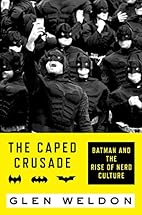
Glen Weldon is one of my favorite panelists on the Pop Culture Happy Hour podcast, so I grabbed this book despite my not being that big of a fan of Batman per se. And it's an interesting look at geek pop culture over the past 80 years or so, and how the same basic story can be extremely mutable based on how the surrounding culture changes and what fans bring to it, both as individuals and as part of generations and/or subcultures within fandom. It happened to be a particularly timely read for me, as for the past two months I've been going through what amounts to a protracted breakup with my former favorite TV show and current fandom home, Sleepy Hollow. (The short version: They killed the female lead in the finale because the actress apparently wanted to leave the show, though it's at least arguable she wanted out because of frustration with her character's role being diminished from the original concept. Her death wouldn't have been so infuriating, except that how it was framed and her last words transformed her from an equal partner to the male protagonist into one of a series of helpers whose job had been to carry him forward. And just when I'd pretty much come to terms with the situation, they renewed the show, despite the storm of fan and critical outrage over the finale.) Basically, Weldon's approach to Batman feels like a validation of what I'm trying to do with Sleepy Hollow--take the version of the story that speaks to me and keep that while throwing out what it turned into.
Pastrix by Nadia Bolz-Weber
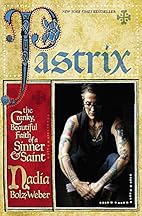
A sort of faith memoir by the author of Accidental Saints, and an encouraging read for someone like me who shares the author's background of having been raised evangelical, with all the political and theological conservatism that usually entails, who worked their way over to liturgical mainline Protestantism (although her story is considerably more dramatic than mine). A definite recommendation for people who have something of a troubled relationship with their Christianity but don't want to walk away from it. (And I should go back to church soon, since I haven't been since Easter--I mean to every weekend, but I keep having severe introvert fatigue lately and wanting to stay home as much as possible Saturdays and Sundays.)
Eruption by Steve Olson
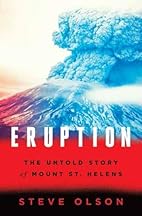
From the other side of the country, as a child of 9 I was fascinated by the eruption of Mount St Helens. As an adult, I see it every time we drive down to Portland unless it happens to be cloudy (which, this being the Pacific Northwest, it admittedly often is), and we spent an afternoon there on vacation a few years ago. This book helped me picture what it would've been like to live in the region then as it gave a history of land use around the mountain (lots of Weyerhauser logging) and events in the two months or so between the first rumblings and the big Plinian eruption on 5-18-80. Excellent read (though the bits about the history of Weyerhauser dragged a bit), highly recommended for readers who enjoy the intersection of science and history.
As a side note, one thing I've noted since moving to Washington is our governors tend to be a boring lot, at least compared to the ones we had in my time in Alabama and Pennsylvania. They're boring in a good way--competent technocrats with no major scandals--just not very colorful or with the kind of charisma and ambition that would land them on a presidential ticket. About halfway through my reading, I commented to my husband that I think I knew WHY we pick such boring leaders now. He said, "Ah, I see you've met Dixy Lee Ray." She was...colorful, to say the least.
Showing posts with label fandom. Show all posts
Tuesday, May 31, 2016
Monday, February 16, 2015
On enthusiasm
Instead of a What's Making Me Happy post for this week, I decided to write something about the importance of allowing yourself to be happy--especially when that involves being a fan.
I’m by nature an enthusiastic person. Even an intense one. If I care about something at all, I throw my whole heart into it. If you’ve ever been on Twitter while I’m live-tweeting an Auburn football game or if you’ve seen my recent gushing about Sleepy Hollow, none of this will be a surprise to you. Given the right prompting, I can wax equally enthusiastic about the pizza at Serious Pie, my mother’s stuffing recipe, the military merits of the Duke of Wellington, or the beauty of the Episcopalian liturgy. In my world, if it’s worth liking, it’s worth loving.
And yet until very recently I was trying to suppress that side of my personality. That suppression grew out of a laudable desire to maintain a professional and self-disciplined persona, especially while wearing my writer hat, and especially but not exclusively online. While I don’t have any truly embarrassing internet incidents in my past, in my younger days I had a bad habit, albeit one hardly unique to me, of treating the internet as a sort of diary that talks back. I overshared. I spoke without thinking first.
Once I realized what I was doing, I over-corrected. It’s good that I’ve learned that the internet is public and forever, and that I should therefore step away from it when I’m feeling ranty or needy. It’s even better that I didn’t become published until I was mature enough to force myself to stay offline at all costs upon receiving bad reviews, at least until the urge to rage and cry has passed.
But somehow as a side effect of all that praiseworthy self-control, I started holding in my passions and enthusiasms too. Part of that is my habit of defensive pessimism that I use to protect myself from heartbreak by expecting the worst--like how if the Mariners are ever up by 10 runs with 2 outs in the bottom of the 9th of Game 7 of the World Series, I’m STILL going to be cautioning everyone not to jinx things by celebrating before the final out, and honey you better put that champagne right back in the fridge because remember Super Bowl 49? Of course you do.
Yet it wasn’t just a coping mechanism. Somehow I’d got it into my head--though I never quite spelled it out to myself--that I should’ve outgrown my enthusiasm by now. I’m over 40, after all. Shouldn’t have I outgrown the urge to scream for joy over a football game, or being so caught up in a TV show that I race downstairs to catch it the instant it airs, DVR notwithstanding? Is it really seemly to get a physical rush from singing Handel? And isn’t everyone kind of tired of foodies now? So I tried to deny that part of myself, or at least to keep it under a tight rein.
Only I recently realized that holding back my fangirl enthusiasm was hurting my passion for my own life and creativity. If I didn’t let myself care too deeply about the season-long real-life saga of a beloved sports team or get caught up in shipping characters on a favorite TV show, I struggled to awaken that passion when I was the one inventing the saga and the romance. And my love of cooking and trying new things in the kitchen is at least in part fueled by my passion for eating, of being That Person Who Tweets Her Restaurant Meals in the most cliched of foodie fashions.
Which is where that CS Lewis quote at the top of the post comes into play. Sure, fan-love isn’t on the same level as love for family, friends, God, or the greater good of humanity...but it still matters. It’s part of what gives joy to all those deeper loves. And there’s vulnerability in being a committed fan. Maybe some people are shaking their heads and thinking, “Aren’t you too old for this?” And, you know, FOX might cancel your favorite show, or your baseball team might miss the playoffs by one game, or your football team might pass on 2nd and goal at the one when they could’ve just handed the ball to Marshawn Lynch. None of that would hurt if you didn’t let yourself care. But I don’t want to live like that--it’s as flat as room-temperature soda that’s been sitting out in a half-drunk open can for days. So I’ll keep caring even if sometimes it makes me look like a fool or drives me to rage and weep. Life is better that way.
“To love at all is to be vulnerable. Love anything and your heart will be wrung and possibly broken. If you want to make sure of keeping it intact you must give it to no one, not even an animal. Wrap it carefully round with hobbies and little luxuries; avoid all entanglements. Lock it up safe in the casket or coffin of your selfishness. But in that casket, safe, dark, motionless, airless, it will change. It will not be broken; it will become unbreakable, impenetrable, irredeemable.”
--C.S. Lewis, The Four Loves
I’m by nature an enthusiastic person. Even an intense one. If I care about something at all, I throw my whole heart into it. If you’ve ever been on Twitter while I’m live-tweeting an Auburn football game or if you’ve seen my recent gushing about Sleepy Hollow, none of this will be a surprise to you. Given the right prompting, I can wax equally enthusiastic about the pizza at Serious Pie, my mother’s stuffing recipe, the military merits of the Duke of Wellington, or the beauty of the Episcopalian liturgy. In my world, if it’s worth liking, it’s worth loving.
And yet until very recently I was trying to suppress that side of my personality. That suppression grew out of a laudable desire to maintain a professional and self-disciplined persona, especially while wearing my writer hat, and especially but not exclusively online. While I don’t have any truly embarrassing internet incidents in my past, in my younger days I had a bad habit, albeit one hardly unique to me, of treating the internet as a sort of diary that talks back. I overshared. I spoke without thinking first.
Once I realized what I was doing, I over-corrected. It’s good that I’ve learned that the internet is public and forever, and that I should therefore step away from it when I’m feeling ranty or needy. It’s even better that I didn’t become published until I was mature enough to force myself to stay offline at all costs upon receiving bad reviews, at least until the urge to rage and cry has passed.
But somehow as a side effect of all that praiseworthy self-control, I started holding in my passions and enthusiasms too. Part of that is my habit of defensive pessimism that I use to protect myself from heartbreak by expecting the worst--like how if the Mariners are ever up by 10 runs with 2 outs in the bottom of the 9th of Game 7 of the World Series, I’m STILL going to be cautioning everyone not to jinx things by celebrating before the final out, and honey you better put that champagne right back in the fridge because remember Super Bowl 49? Of course you do.
Yet it wasn’t just a coping mechanism. Somehow I’d got it into my head--though I never quite spelled it out to myself--that I should’ve outgrown my enthusiasm by now. I’m over 40, after all. Shouldn’t have I outgrown the urge to scream for joy over a football game, or being so caught up in a TV show that I race downstairs to catch it the instant it airs, DVR notwithstanding? Is it really seemly to get a physical rush from singing Handel? And isn’t everyone kind of tired of foodies now? So I tried to deny that part of myself, or at least to keep it under a tight rein.
Only I recently realized that holding back my fangirl enthusiasm was hurting my passion for my own life and creativity. If I didn’t let myself care too deeply about the season-long real-life saga of a beloved sports team or get caught up in shipping characters on a favorite TV show, I struggled to awaken that passion when I was the one inventing the saga and the romance. And my love of cooking and trying new things in the kitchen is at least in part fueled by my passion for eating, of being That Person Who Tweets Her Restaurant Meals in the most cliched of foodie fashions.
Which is where that CS Lewis quote at the top of the post comes into play. Sure, fan-love isn’t on the same level as love for family, friends, God, or the greater good of humanity...but it still matters. It’s part of what gives joy to all those deeper loves. And there’s vulnerability in being a committed fan. Maybe some people are shaking their heads and thinking, “Aren’t you too old for this?” And, you know, FOX might cancel your favorite show, or your baseball team might miss the playoffs by one game, or your football team might pass on 2nd and goal at the one when they could’ve just handed the ball to Marshawn Lynch. None of that would hurt if you didn’t let yourself care. But I don’t want to live like that--it’s as flat as room-temperature soda that’s been sitting out in a half-drunk open can for days. So I’ll keep caring even if sometimes it makes me look like a fool or drives me to rage and weep. Life is better that way.
Sunday, December 29, 2013
2013 Reading, Books 112-115
I'm closing out 2013 with a bang, as I expect 2 of the 4 books I've finished in the last week or so to make my Best Reads of the Year list.
112) Fangirl, by Rainbow Rowell.
This book got such good buzz online that I almost expected to be disappointed by it, but I wasn't, not at all. It's a beautifully written YA coming of age novel with a good helping of romance. The heroine is a college freshman whose identical twin doesn't want to room with her and in general thinks it's high time they struck out on their own as individuals. Cath, who has intense social anxiety, struggles to cope, and we watch a year in her life as she figures it out and comes to terms with her thorny, dysfunctional-to-say-the-least family history.
The title references the fact Cath is an obsessive fan and fanfic writer within the fictional Simon Snow fandom (think Harry Potter, pretty much), and one of the best aspects of the book, IMHO, is how accurately and lovingly Rowell portrays what it's like to be part of fandom. And, best of all, she allows Cath to build a happy collegiate life and find a voice for original fiction without having to leave fandom and fanfic behind. She can still look forward to the 8th and final Simon Snow book's debut. She can still finish her slashy version of Book 8. It's such a treat to see an author understand and respect that.
113) The Fortune Cookie Chronicles, by Jennifer 8. Lee.
More a series of essays than a single unified narrative, this book looks at Chinese food and restaurants, especially in their Americanized form. (Fortune cookies and General Tso's Chicken? Not things you'd find in China.) I almost wish it had been two books, one light-hearted culinary history and a second serious look at the life of Chinese men and women working abroad in the restaurant industry, especially illegal immigrants.
114) Cracking Up: A Postpartum Faith Crisis, by Kimberlee Conway Ireton.
Full disclosure: the author is a friend of mine, or at least a friendly acquaintance, though we've lost touch since I stopped going to the same church as she does. I was a very distant observer of some of the events in this memoir, though by that point my family and I were already starting to drift out of the congregation. (Long story, and nothing to do with this book--suffice it to say I revisited my faith after my mother passed away, and ended up on a path that took me to the Episcopal Church.)
As the mother of two young children and a debut author of a struggling book, Kimberlee found herself pregnant with twins and overwhelmed with the changes coming into her life. She takes the reader along with her on a rawly honest journey through an often difficult pregnancy, one twin's stay in the NICU, and the first six months of the boys' lives as she struggles with often crippling anxiety and severe postpartum depression it took her a long time to recognize for what it was.
It's an excellent read, and one I'd recommend to anyone who's struggled with anxiety or depression, especially Christians, since so much of Kimberlee's struggle is about hanging onto God and staying grounded in her faith. And hers is a very rare book I'd recommend equally to my Baptist high school classmates and my fellow Episcopalians--the faith and doubts expressed in this book are of a kind any of us in Christianity's very big tent can relate to.
115) Fortune's Pawn, by Rachel Bach.
I picked up this book because it was described as a cross between Firefly and the Vorkosigan Saga. This intrigued me because as different as Whedon and Bujold are in many aspects, there's a certain je ne sais quoi about their work, the way the communities they create feel so multi-dimensional and tangible that Serenity and her crew and the Vorkosigan family and their friends and allies on Barrayar are almost as real to me as my own family, friends, and coworkers. I don't know what it says about me, but one of the things I love most in fiction is being able to acquire new imaginary friends, especially when they come in whole imaginary communities. There's something about that sense that if I found myself at a party at Vorkosigan House, I'd feel right at home
So. A chapter or two in to Fortune's Pawn, I was ready to set it aside, because it didn't remind me of Whedon and Bujold at all. But I've been trying to give books a longer chance lately. I'll still set a book down for awkward, inept writing or if I can tell right away I'm not going to click with the plot or characters. But I have a feeling I've been missing some good stories for not giving myself a chance to adjust to a new author's voice or to accept that a book wasn't what I was expecting and give it a chance to succeed on its own terms.
In this case, I'm very glad I gave the book another chance. I remembered that Firefly and the early Vorkosigan books are both about space mercenaries, as is Fortune's Pawn, so I stopped hoping to find another set of imaginary friends and read it as a space opera adventure story. Taken on those terms, it's a cracking good read. Devi is an excellent kick-ass heroine, ambitious and straightforward, the world-building feels well thought out, the plot rolls along at a relentless pace, and the ending left me with just the right number of questions that I'm looking forward to the sequel, which is due out in February.
And, you know, that's probably all the Twitter recommender meant. "Like stories about space mercenaries like Mal Reynolds or Miles Vorkosigan? Give this one a try!" Which is always a challenge with "Like X? Try Y!" recs--you have to figure out what it is the other reader/viewer likes about X, and whether it's the same thing you get out of it. Like, I thought about recommending Cracking Up to Anne Lamott readers, because Kimberlee also writes about motherhood with wry honesty and humor, not to mention struggling to be a writer in the face of doubt and failure and clinging to faith by one's fingernails. But I'm wary of doing so, because Lamott has such a distinctive voice, and she's Christian left while Kimberlee is more Christian center. I don't want to disappoint anyone by recommending something a book doesn't deliver, you know?
Labels:
Christianity,
current issues,
fandom,
fanfic,
food,
memoir,
new adult,
science fiction,
space opera,
YA
Subscribe to:
Posts (Atom)


