But I'm now mostly recovered and trying to get caught up on everything that took a back seat to napping between doses of the good Tylenol. I'll have more to blog about later, but for now here's six books instead of three:
28. Rita book #8
This one came out in a near-tie with #4 as my favorite of this year's slate--and, as it happens, both are from the same imprint of the same publisher. Neither was necessarily the kind of book I rush to read in terms of setting, character type, etc., but both were strong enough that I think I'll be looking to the imprint in question for change-of-pace/palate cleanser reads in the future.
And that's it for Rita reads for the year, though I expect to be back in 2016 with more vaguely worded and cryptic contest commentary.
29. Ancillary Justice by Ann Leckie
Well, that took forever, but I finally completed my first book for March. (It wasn't this book that bogged me down--I spent too long on a book that just wasn't working for me because it's one enough other people have raved about that I kept plugging along thinking I'd eventually appreciate it. Didn't happen.)
But this book proved fascinating. It's a complex and intriguing debut SF novel, a bit more cerebral than my ideal for leisure reading, but compelling and impossible to put down for all that.
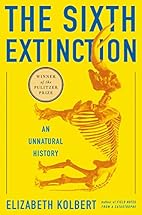
30. The Sixth Extinction by Elizabeth Kolbert
A book that manages the neat trick of being a compelling page turner despite its depressing subject matter--how we as humans are driving an extinction event that's beginning to rival that of the asteroid that killed the dinosaurs.
31. The Nile by Toby Wilkinson
A sort of historical travelogue traversing the Nile from Aswan to Cairo. The book assumes a certain familiarity with the basic outline of Egyptian history, but as long as you have that I recommend it as a way to better tie that history to the geography. And it will never not blow my mind to reflect on the fact that the pyramids are more distant and time from Jesus and Julius Caesar than we are from them.
32. The Oldest Living Things in the World by Rachel Sussman
This is more of a coffee table book than the kind you'd ordinarily read straight through. I did read it quickly, but only because A) I got it from the library, and B) in my current wounded state, a book like this hits just the right spot. It's a photography book, with each set of pictures accompanied by a short essay on the ancient subjects and Sussman's experiences visiting and photographing them. Most of the life forms--trees, along with some lichens, mosses, corals, and the like--aren't all that impressive to gaze upon, though there are some striking exceptions, like the sequoia and baobab trees. And it's striking how many of the long-lived organisms are in bleak environments like deserts or the Arctic/Antarctic. Overall, the book is a testament to both the endurance and fragility of life, since many of the ancient lives recorded here are threatened by climate change.
33. Unbound by Jim C. Hines
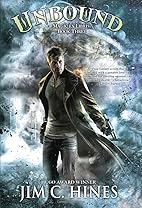
Third in the Magic Ex Libris series, which continues to be one of my favorite current fantasy series. Hines continues to expand his world and bring added nuance to his core characters even while the plot races along at breakneck speed. And he's finally convinced me to wish I had a fire spider like Smudge even though I hate hate HATE spiders.
