Showing posts with label urban fantasy. Show all posts

Thursday, March 31, 2016

Recommended Reads, March 2016

I know I've been neglecting my planned weekly recipe and making-me-happy posts--currently the issue is I've caught yet another Doom Cold, one that's had me laid up since last Saturday night.

I am, however, starting to improve, at least enough to sit up at the computer for a few minutes to pass along my recommended reads from March, in the order I read them:

Revisionary by Jim C. Hines

The final entry in Hines's Magic Ex Libris series. If you haven't read any of it yet, you'll want to go back to the beginning and start with Libriomancer. And if you're a fan of the series but hadn't realized this book was out, now you know.

It's hard to say much about a book deep in a series without giving too much away, but the general concept is our contemporary world, but with magic fueled by the shared belief of readers in fictional worlds--i.e. a magic wielder could pull Lucy's healing cordial from the Chronicles of Narnia, the invisibility cloak from the Harry Potter series, and so on. If that sounds intriguing to you, you'll most likely love these books.


The Horse by Wendy Williams

If, like me, you were the kind of kid who read all the Black Stallion books and all your hometown library's Marguerite Henry (my favorites were King of the Wind and Black Gold because RACEHORSES), you'll love this book. Especially if, also like me, you have a lifelong interest in evolutionary biology and like to keep up with its latest developments. Maybe a narrow target market after all? But if you're in it, read this book.


Chaos Choreography by Seanan McGuire


Like Revisionary, I only recommend this book if you've read what's gone before--it's Book 5 in a series about a family from a society of monster hunters gone rogue after they realized that not all, nor even most, of said "monsters" were actually deserving of slaughter. Instead, they're cryptozoologists, who study and protect the cryptids of the world, but with plenty of action fighting their old monster-hunting colleagues and such cryptids as really do pose a threat. The books are funny, playful, fast-paced and exuberantly inventive. If you're a fan of Buffy the Vampire Slayer or Sleepy Hollow (especially in its crazy-good Season 1 incarnation), you need to read these books. Start with Discount Armageddon.

This latest entry returns to Verity, protagonist of the first two books, after spending Books 3 & 4 with her brother Alex, and IMHO it's the strongest story yet. 

Thursday, July 24, 2014

2014 Reading, Books 73-78

73) The Third Plate: Field Notes on the Future of Food by Dan Barber

At first I wasn't sure whether I wanted to read yet another book about sustainable agriculture, getting back to our culinary roots, etc., but I'm glad I did. I found this book both illuminating and moving, and it strengthened my commitment to eating mindfully, being a patron of my local farmer's market, and generally supporting organic and/or sustainable agriculture whenever I can.

74) Enemies at Home by Lindsey Davis


The second book in the Flavia Albia series about Marcus Didius Falco's adopted daughter still doesn't have the wit and energy of the original series...but I still enjoy Albia as a character and visiting Davis's Rome, even this darker version under the Emperor Domitian. (The Falco books are set during Vespasian's reign.)

75) War! What is it Good For? by Ian Morris

An interesting and often thought-provoking "big picture" history whose basic thesis is that there's such a thing as "productive war" that despite its violence and atrocities leads to the formation of large, stable states and empires in which subjects/citizens are less likely to die violent deaths than they were in the tribal or small-state societies that preceded them. I'm not sure I agree with everything he says, but I'm glad to have his ideas added to my own big picture view of the world.

76) Sisterhood Everlasting by Ann Brashares

A "10 years later" sequel to the Sisterhood of the Traveling Pants YA series. At 29, the girls are still figuring out how to be adults--and while in some ways this made them feel unrealistically immature, hell, I'm...a fair bit older than 29, even if a really kind waitress at 74th Street Ale House did card me last month, and some days I feel like I'm still sorting it out. Anyway, it was good to drop in on these characters and see how they're doing with their lives, though I can't say much more than that without venturing into spoiler territory. And as for spoilers, I'll just say that while it has what we romance writers call an emotionally optimistic ending, it has enough sadness in it that the best the ending can do is be bittersweet.

77) The Shambling Guide to New York City by Mur Lafferty

There are so many urban fantasy and/or paranormal romance series out there these days wherein a human discovers a varied community of paranormal beings that it takes some doing to make such a series fresh and interesting, but this one about a human travel writer who goes to work for a vampire publisher to produce travel guides for the paranormal community pulls it off.

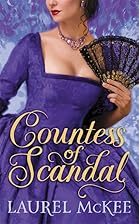
78) Countess of Scandal by Laurel McKee.


This is one of the best historical romances I've read in quite awhile. Set against the backdrop of the Irish Rebellion of 1798, it's a poignant, gritty and gripping tale of star-crossed lovers.

I just wish the cover and title gave any hint of that. If I hadn't known the author (Laurel also writes as Amanda McCabe, and we both blog at Risky Regencies), I never would've picked up this book because nothing about the branding and packaging says Ireland, poignant, or strongly grounded in real history. Which I feel does the book a disservice, because it's not finding readers like me, while it maybe would draw readers who enjoy the lighter, frothier historical romances, who'd then be disappointed to get something so gritty and angsty.

Sunday, January 5, 2014

2014 Reading, Books 1-3

Time to start a brand new year's reading log! My goal this year is to read 120 books, so I'm shooting for 10/month. And since I had Thursday and Friday off as well as New Year's Day, I'm off to a good start for January. 

My only other goal is to have as much fun with reading as possible this year. Unless it's part of my judging assignment for the Ritas or something I need to research for one of my manuscripts, everything I read will be chosen because it's entertaining and/or fascinating.

This is a reading log rather than my book reviews. I personally don't feel comfortable wearing a reviewer's hat as well as an author's--if you give a scathing review to a best-seller, you come across as jealous, while if you're hard on a newbie, it feels like punching down. So on this blog I'm just listing what I finish, with a few short notes on what I got out of the reading experience. Since I don't finish books unless I enjoy them, you can assume that if I was reviewing, any book listed would at least get a 3.5 stars/B- grade.

1) The Sharing Spoon, by Kathleen Eagle.


I'm not a big fan of small town/rural or Western romance, but Kathleen Eagle is one of my exceptions. Her husband is Lakota, she lives in Minnesota, and for the most part she writes the world she lives in--which means her Native American characters feel like real human beings from a real culture rather than Mystical Fonts of New Age Wisdom. This book is a collection of three holiday novellas (one Thanksgiving and two Christmas), and all of them worked well for me, though the historical "The Wolf and the Lamb" was my favorite. All in all, a good read to say farewell to the holiday season and usher in the new year.

2) Rosemary and Rue, by Seanan McGuire.

Since my introduction to McGuire was the far lighter-toned Discount Armageddon, I was surprised and initially taken aback by how much darker and grimmer this urban fantasy world is. Rosemary and Rue introduces half-human, half-fae San Francisco detective Toby Daye, who lost fourteen years of her life by being transformed into a fish while investigating a case for her faerie liege lord. Back in her own form, she doesn't want anything more to do with her old career or her fae connections. But of course she's not really going to be able to escape...

I don't think I'll ever love urban fantasy as much as I do epic and historical fantasy, but this was an intriguing page-turner, and I expect I'll keep reading the series from here.

3) Hyperbole and a Half, by Allie Brosh.

I've been a fan of Allie Brosh ever since my first encounter with Clean All the Things! So naturally her book was at the top of my Christmas wish list. It's a series of illustrated essays, a mix of blog posts and new material that's both laugh-out-loud funny and thoughtfully self-aware. The essays on depression are especially illuminating. I'm not very prone to depression myself--my personal demons tend to take the form of anxiety and panic instead--so her description helps me see and connect to what my friends and relatives who do live with depression are going through.

Tuesday, November 5, 2013

2013 Reading, Books 97-99

97) Deadly Heat, by "Richard Castle."

This series continues to be enjoyable meta-fun for fans of the Castle TV series, though I doubt I'd find it particularly interesting if I didn't watch the show. This particular entry got a little convoluted for my taste, but it was still a quick, entertaining read.

98) Pauline Bonaparte: Venus of Empire, by Flora Fraser.


My research book collection, purchased to aid me in my fiction-writing career, fills a tall bookshelf and spills onto a second one. This would all be very well were it not for the fact I've only read maybe half of its contents. It's not that I don't spend a lot of time researching my manuscripts--I do. It's just that I'm greedy when it comes to used bookstores, bargain book catalogs, and the like, and I'll pick up anything even vaguely related to something I might want to write about someday. The new acquisitions get alphabetized neatly by subject, then all but forgotten about, given how busy I am.

Only lately I've been working out three times a week in front of my main research bookshelf, which happens to be right next to the computer I'm using to stream exercise videos. And all those unread research books are TAUNTING me, I swear. So one evening after my workout I made a quick list, divided into six loose subject categories, of my research TBR pile, leaving out books that aren't really designed to be read, like map collections, who's who lists, and the like. I plan to draw random books from each list, rotating through the subject divisions for variety's sake, until I've either made it through the collection or given up and accepted the lack of world enough and time to Read All the Books. While I'm shooting for two books a month, it isn't a hard and fast schedule, since some of these books are far longer and denser than others.

My first unread research book turned out to be a quick read. Pauline Bonaparte would've fit right in to a certain niche of modern celebrity culture. If she hadn't been Napoleon's sister she would've lived and died in obscurity, not having any particular greatness, intelligence, or accomplishments in her own right. But she was extremely beautiful by the neoclassical standard of her day, not to mention as well-connected as it was possible to be while her brother's power lasted. And for the most part she was just a shrewd, selfish party girl. Today she'd be all over People and Us Weekly, being famous for being famous.

I don't think I would've liked her even a tiny bit, but her life was a window into the upper echelons of Napoleonic society, and who knows when that might come in handy as I write?

99) Midnight Blue-Light Special, by Seanan McGuire.

I loved the first book in this series so much I didn't wait long to read the next one. This one expands the focus a bit away from Verity alone to include more about her family and the paranormal community of New York, especially her adopted cousin Sarah, who looks human but isn't. I enjoyed it, though I missed All Verity All the Time, and my anticipation of the next book in the series is muted a little now that I've learned the focus is to shift from her to her brother, whom we haven't met on the page yet.

Tuesday, October 22, 2013

2013 Reading, Books 94-96

94) Discount Armageddon, by Seanan McGuire.

Wow, that was fun. Not to mention smart, sexy, hilarious, and adventurous, and generally everything you'd look for in the best kind of escapist read. If you like Buffy the Vampire Slayer, read this book. Though McGuire has her own strong voice, there's a similar sensibility at work.

For the rest of my reading in the past ten days or so, I went with nonfiction of the "We're doomed! DOOMED, I say!" variety:

95) The Attacking Ocean: The Past, Present, and Future of Rising Sea Levels, by Brian Fagan.

This book started out fascinating, with an account of how various ancient civilizations interacted with their shifting rivers and coastlines, and then turned depressing as it reached the modern era, where population growth crowds more and more people against coasts where rising sea levels lead to increased floods and deadly storm surges. I happened to read this during the waning days of the government shutdown, when it honestly looked my country was going to default on its debts and drag the world economy down with it for no good reason, which made it extra depressing. I try to feel optimistic about the world I'm bequeathing to my daughter, but sometimes it's hard.

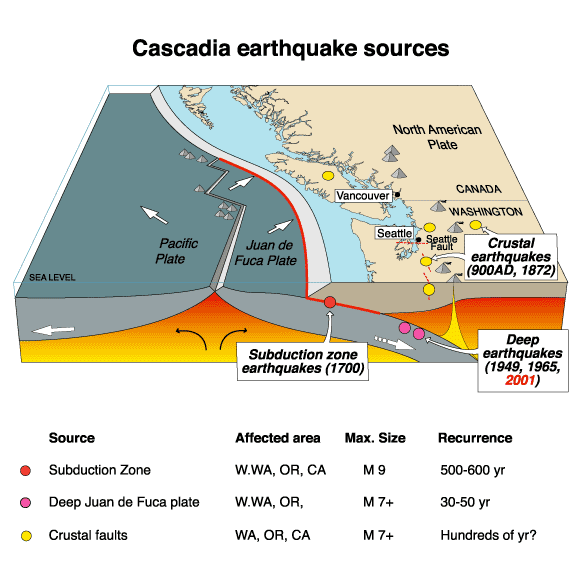
96) Full Rip 9.0: The Next Big Earthquake in the Pacific Northwest, by Sandi Doughton.

I meant to go with something nice and light for my next book, but somehow ended up with "Oh God, Oh God, we're all gonna die," Local Edition. (It's due back at the library in a few days, so I needed to get to it.)

I moved to Seattle from the all but seismically dormant eastern half of the country in 1999 (grew up in Alabama, spent a good chunk of my 20's in Philadelphia), and experienced my first earthquake, the 6.8 Nisqually quake, in early 2001. It was scary, for sure, but did relatively light damage for its magnitude because its epicenter was so deep. We get that type of high-6/low-7 magnitude quake every few decades here, and up until very recently scientists thought that was the worst the Northwest had to worry about.

But then scientists started noticing signs of violent coastal upheaval (sand layers carried far inland by a tsunami, "ghost forests" of trees that had clearly been killed together when the ground beneath them heaved) and paying attention to Native American oral histories that hinted at a massive quake and flooding less than ten generations back. Eventually they used tree-ring analysis of the ghost forests to show that the trees had died between the 1699 and 1700 growing seasons, and found a record of an "orphan tsunami" that struck Japan on January 26, 1700. Between the local evidence in the landscape and the size of the tsunami that made it all the way across the Pacific, the 1700 quake is estimated as between 8.7 and 9.2. Very comparable to the 2011 Tohoku quake, in other words. Evidence suggests major subduction zone quakes of this type every 200-500 years.


To add to the fun, scientists also observed evidence of shallow faults all around the region, including the Seattle Fault, which cuts right through the south end of the city. These faults slip very rarely--the last Seattle Fault quake was over 1000 years ago--but are capable of producing a 7.0 or so that would do far more damage than our "usual" sort-of-big ones because it's a shallow fault. Think something similar to the 1995 Kobe quake.

So, the Northwest's worst-case scenarios are pretty damn bad. A repeat of the 1700 quake and tsunami would probably have a lower death toll than Tohoku because our coastal population density is lower, but it could easily rival the 1900 Galveston Hurricane for the deadliest natural disaster to strike the US--and it's by no means certain Portland, Seattle, and Vancouver wouldn't sustain severe damage of their own from the distant, sustained shake of a 9.0 off the coast. When our cities were built, no one even knew such disasters were a possibility, and as a region we're less prepared than Japan, either in terms of building codes or public awareness and education. But living in Seattle as I do, the Seattle Fault is my true doomsday scenario. We are SO not ready for a Kobe-equivalent quake here.

Still, this book didn't depress me as much as my last read, I think because it's such a local disaster. Even living here, I'm less spooked by "The Northwest could be DOOMED!" than "Mankind could be DOOMED, and it's our own short-sighted, over-populating, carbon-emitting fault!" After all, we're at least trying to understand the seismic hazards and mitigate them. I hope I never live to see either of our Really Truly Big Ones--not least because of the non-zero chance I wouldn't live to see anything AFTER that!--but if I do, I'll get through and rebuild. Like people do.

Wednesday, May 1, 2013

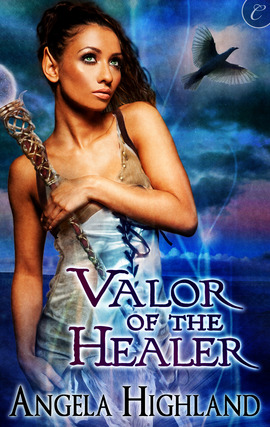
Guest Post - Angela Highland on science fiction and fantasy for romance readers


Today I'd like to welcome my fellow Carina author Angela Highland, whose epic fantasy novel Valor of the Healer was released in April.


Greetings, Susanna's readers! You all know Susanna as an author of historical romance, and I'm right there with you on that; I've quite enjoyed her books. Particularly after discovering that she was a fellow Browncoat. Which meant I got to spend all of The Sergeant's Lady imagining her hero looking like Nathan Fillion. This did not suck.

And that leads me into what I wanted to post about, which is to say, what romance readers and SF/F readers can have in common, and what books might appeal to both!

Science fiction and fantasy novels got my reading attention very early on in my life. But on the other hand, so did the author who wrote under the names of Barbara Michaels and Elizabeth Peters. Michaels/Peters gave me a very strong introduction to Gothic-style romance via the one pen name, and mysteries with romantic elements via the other. It didn't take long at all for novels that incorporated both fantastic and romantic elements to shoot to the top of my favorites list.

Anne McCaffrey was probably the first SF author to pull this off for me. F'lar and Lessa in the Pern series were a classic romance for me early on in my reading, as were Killashandra Ree and Lars Dahl in the Crystal Singer novels. On the fantasy side of things, one name similarly leaps out: Mercedes Lackey. Her Valdemar series gave me not only Talia and Dirk as a romantic couple, but one of the earliest male couples to show up in modern fantasy: Vanyel and Tylendel.

As urban fantasy started getting its feet under it as a genre, Tanya Huff's Victory Nelson books staked their claim hard for my affections as well, with the love triangle of Vicki, her former police partner Mike, and the vampire Henry. (This remains one of my favorite romantic scenarios as well, in no small part because it is in fact eventually resolved, and not in the way I would have expected reading it at the time!)

For more modern releases, I'll give some love to Patricia Briggs and Doranna Durgin--both of whom had excellent fantasy novels before they jumped over to writing urban fantasy and paranormal romance, respectively. I'll give particular shoutouts to Briggs' When Demons Walk and Durgin's A Feral Darkness. I specifically highly recommend A Feral Darkness; not only does it have a lovely little romance in it, it's got a delightful plot, a positively adorable Corgi, and the distinction of being a contemporary fantasy not actually set in an urban setting.

Julie E. Czerneda is hands down my favorite SF author, not only for her ability to create vivid and memorable alien species from her own real-life biology expertise, but also because she tells compelling love stories as well. Her debut novel A Thousand Words for Stranger is one I return to time and again.

Now, you'll notice that these are all female authors, so let me give shoutouts to some male authors as well. J.R.R. Tolkien might not seem an obvious candidate for fantasy accessible to romance readers, but the tale of Beren and Luthien that appears in The Silmarillion remains my favorite love story in all of Tolkien's works ever. Close behind that comes Eowyn and Faramir in Return of the King.

Terry Brooks may have shamelessly ripped off Tolkien in the original Shannara trilogy, but I do have to give him props for having strong love stories in all three of those books: The Sword of Shannara, The Elfstones of Shannara, and The Wishsong of Shannara.

And in current-day releases, I'm totally shipping Harry Dresden and Murphy in Jim Butcher's The Dresden Files. Anton Strout has set up some fun romance in both of the series of his that I've read. And Chaz Brenchley has delivered me some truly lovely little romances in the fantasy novel Bridge of Dreams and his more recent horror release, House of Doors.

These are all some pretty gigantic shoes for me to fill in my own book, Valor of the Healer, Book 1 of the Rebels of Adalonia trilogy. All of them, though, have taught me that the kind of book I want to write is one that combines the excellent worldbuilding of SF/F with a love story that will resonate with readers. If you'd like to let me know if I made it work, you can pick up Valor of the Healer from Carina Press, or from any of the other places I've called out on Valor's official page!

If any of you are also SF/F readers, tell me about your own favorite love stories in that genre, won't you? I'll be taking comments for a week after this post goes up, and I'll choose someone to win a free copy of Valor of the Healer in either EPUB or PDF form!

Thanks to Susanna for hosting me!

Susanna again: Thanks for being a guest on my blog, Angela! Your list has given me some great ideas for future reads. As for my own favorite love stories in the genre, I'm fond of many couples from Lois McMaster Bujold's Vorkosigan saga--Aral/Cordelia is probably my favorite pairing, but Miles/Ekaterin, Ivan/Tej, and Alys/Simon are right up there, too. I love Jacqueline Carey's D'Angeline series, with Joscelin/Phedre as my favorite couple, though I like Moirin/Bao too. Ilya and Tess in Kate Elliott's Jaran are also among my favorites. I really wish there was more chance she'd go back to that series someday...

Tuesday, October 18, 2011

Weekly book post, 10/18/11

I'm writing this blog using dear old Dragon Dictate because I'm having the worst pinched nerve/carpal tunnel flareup I've had in months. Something about the ergonomic arrangements at the new job. I wish I could figure out what. We've swapped my chair, so now I think it's either the keyboard tray, the keyboard itself, or the fact that I'm at a fairly small L-shaped desk that I think may be kind of jamming my left elbow. Here's hoping I figure it out before they either get tired of me as an employee or I end up in full-on, pain-all-the-time, can't-write-or-cook-at-all misery.

(The writing is the highest priority, by the way. With a novel under contract, I'm going to finish the thing if I have to do every word in Dragon Dictate or write longhand and hire someone to type it in for me. But I like my new job, except for the hand pain thing, and it pays very well, so something's gotta give.)

In any case, I finished two books in the last week.

Faerie Blood, by Angela Korra'ti, is an urban fantasy set in my home city of Seattle. I enjoyed seeing familiar places magically transformed. The heroine is appealing, the magical peril alternately hilarious and terrifying, and I cared about what happened to the characters even though the writing is a little more lush than I'm used to in a contemporary setting. As best as I can tell, the book isn't available for purchase now because the author asked for her rights back due to some problems at her publisher, and I wish her all the best in finding a new home for her work, because I want to find out what happens to Kendis and Christopher next.

Marriage and Other Acts of Charity, by Kate Braestrup, is the second memoir/book of spiritual wisdom by this Unitarian minister who serves as chaplain to the Maine Warden Service. (In other words, she provides spiritual support when the wardens are involved in search-and-rescue missions, much like a hospital chaplain but with more varied scenery.) Here she talks about love and marriage, and the risk of love in a world where all marriages end–it's just that the successful ones end with one of the parties dead. Which sounds morbid, but it isn't really–at least not much.