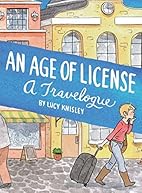
25. An Age of License by Lucy Knisley
The Year of the Memoir continues with a graphic memoir of a month Knisley spent in Europe in 2011. It's something of a coming-of-age travel diary, and one that I liked but didn't love. I got it to see if it might be a good read for my daughter as we're preparing for our month in Europe this summer and ended up concluding it wouldn't work for her. I'm fine with her reading above her age level--best and safest way to try on adulthood IMHO--but I don't think she'd connect with Knisley's writings the way she does with, say, Liz Prince.
26. Rita book #7
Not the best nor the worst of my slate this year. I only have one left, which I'm saving for next weekend--it's one that was already on my wish list by an author I've never read before but have heard nothing but good things about, so I'm hopeful.
27. The Just City by Jo Walton
Jo Walton writes thinky, idea-driven books, and this fantasy novel about a time-travel attempt to build Plato's ideal city of philosopher-kings (with the backing and participation of Athena and Apollo) is no exception. But unlike many idea-driven writers, she creates characters who are believable and human, not just mouthpieces for her Big Idea, and I enjoyed this very much, with two caveats:
1) It ends abruptly, though I've been told a sequel is in the works.
2) Much is made out of a robot spelling out the word "No"--whether it really happened, or was a prank by one of the teenaged "children" being raised according to Platonic ideals. There's talk of it being the English word, which none of the children should know, as they were brought from around the Mediterranean from no later than the Renaissance...only the kid everyone suspects most is Italian, and from late enough that he considers himself and his native language Italian rather than Roman/Latin. And the word for "no" in Italian? Is "no." Just like Spanish, another Mediterranean language. I'm stunned to think someone as well-educated as Walton wouldn't know that. Maybe there's some detail I'm missing, and she's right and I'm wrong. I'd be glad to hear it, if so.
Showing posts with label memoir. Show all posts
Sunday, February 22, 2015
Saturday, February 14, 2015
2015 Reading, Books 19-21 (plus why you should watch Monday's Sleepy Hollow!)
19. Rita book #5
A tough one to rate. There were things I loved about it and things I hated. If this had been the kind of contest where you offer critique as opposed to just a numerical score, I would've filled the scoresheet with my rants and raves. As it was, I ended up assigning it a middling score, though unlike most of my midrange scores, I never thought "meh" at any point.
20. Sleepy Hollow #1-4 by Marguerite Bennett
I'm choosing to count these four comics as a single graphic novel, since they have a linked story arc and they're about the length/number of issues I usually see bound into book format.
OMG these are SO much fun. Far better than average for a TV tie-in, and filled with everything I loved about Season 1 of the show that's been too often lacking in the current season--focus on Ichabod and Abbie working together with wit, intelligence and loyalty, Katrina used minimally but effectively, plenty of Jenny and Irving. As with most tie-ins, not what you'd want as an introduction to the story and characters, but if you enjoy the show, you MUST read these.
...And if you're a Sleepy Hollow viewer who's stepped away over the way the show occasionally dragged this season with way too much Crane Family Drama and focus on extraneous characters like Nick Hawley to the exclusion of established favorite supporting characters like Jenny and Frank, I encourage you to come back for the two-part finale that starts Monday night. For that matter, I'd encourage you to tune in if you'd never seen the show before and want to know what I'm constantly babbling about of late. IMHO the writers have righted the ship and the show is moving in the right direction again. Plus we get Evil!Katrina. FINALLY.
Look, I've got excerpts from Monday! You want to watch this! You want to know what happens! I know it all sounds crazy, but that's what makes it so awesome!
21. Does Jesus Really Love Me? by Jeff Chu
Arguably yet another entry in my Year of the Memoir, but I decided to count it as a religion book, since I felt like I learned more about the churches Chu visited and the people he met than I did about his personal journey--though that was in there, too. The balance felt like 60-40, or maybe 70-30.
Homosexuality is arguably the most contentious issue in modern American Christianity. My native state of Alabama is currently making something of an exhibition of itself over it, and as someone who's evolved into a theologically liberal Christian, I feel a certain satisfaction that my chosen home state of Washington didn't have to wait for a court order, we voted for same-sex marriage. But as a straight woman, I'll always have an outsider's perspective on the issue. Chu provides an insider's view as a gay Christian from an evangelical background as he explores everything from the most extreme of extremists (he actually meets the Westboro Baptist Church people) to the most open and accepting congregations. A readable, gracious, and generous book.
A tough one to rate. There were things I loved about it and things I hated. If this had been the kind of contest where you offer critique as opposed to just a numerical score, I would've filled the scoresheet with my rants and raves. As it was, I ended up assigning it a middling score, though unlike most of my midrange scores, I never thought "meh" at any point.
20. Sleepy Hollow #1-4 by Marguerite Bennett
I'm choosing to count these four comics as a single graphic novel, since they have a linked story arc and they're about the length/number of issues I usually see bound into book format.
OMG these are SO much fun. Far better than average for a TV tie-in, and filled with everything I loved about Season 1 of the show that's been too often lacking in the current season--focus on Ichabod and Abbie working together with wit, intelligence and loyalty, Katrina used minimally but effectively, plenty of Jenny and Irving. As with most tie-ins, not what you'd want as an introduction to the story and characters, but if you enjoy the show, you MUST read these.
...And if you're a Sleepy Hollow viewer who's stepped away over the way the show occasionally dragged this season with way too much Crane Family Drama and focus on extraneous characters like Nick Hawley to the exclusion of established favorite supporting characters like Jenny and Frank, I encourage you to come back for the two-part finale that starts Monday night. For that matter, I'd encourage you to tune in if you'd never seen the show before and want to know what I'm constantly babbling about of late. IMHO the writers have righted the ship and the show is moving in the right direction again. Plus we get Evil!Katrina. FINALLY.
Look, I've got excerpts from Monday! You want to watch this! You want to know what happens! I know it all sounds crazy, but that's what makes it so awesome!
Arguably yet another entry in my Year of the Memoir, but I decided to count it as a religion book, since I felt like I learned more about the churches Chu visited and the people he met than I did about his personal journey--though that was in there, too. The balance felt like 60-40, or maybe 70-30.
Homosexuality is arguably the most contentious issue in modern American Christianity. My native state of Alabama is currently making something of an exhibition of itself over it, and as someone who's evolved into a theologically liberal Christian, I feel a certain satisfaction that my chosen home state of Washington didn't have to wait for a court order, we voted for same-sex marriage. But as a straight woman, I'll always have an outsider's perspective on the issue. Chu provides an insider's view as a gay Christian from an evangelical background as he explores everything from the most extreme of extremists (he actually meets the Westboro Baptist Church people) to the most open and accepting congregations. A readable, gracious, and generous book.
Labels:
comics,
contests,
current issues,
memoir,
reading,
religion,
romance,
Sleepy Hollow
Monday, February 9, 2015
2015 Reading, Books 16-18
16. Rita book #4
Excellent, unique, and moving. I hope the other judges agree with me and it earns a place in the finals.
17. Without You, There Is No Us by Suki Kim
For whatever reason I find North Korea endlessly and horrifically fascinating--something about how it's endured and tightened its hold on its people's lives and minds as other totalitarian states have collapsed or at least become more open, especially with South Korea and Japan and China right there surrounding it, with all their prosperity, vibrance, and, you know, plentiful food. This memoir by a journalist who teaches for two semesters in a school for the sons of Pyongyang's elite is a bit of a different view insofar as these boys aren't dealing with hunger and physical privation...but in a way it makes their intellectual, political, and spiritual deprivation stand out all the more.
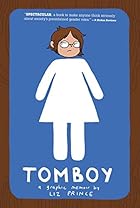
18. Tomboy by Liz Prince
This is turning into quite the year for memoir reading for me so far. This one is a graphic memoir/nonfiction comic borrowed from my 10-year-old daughter, who's read it multiple times. Miss Fraser has never been a girly girl--I vividly remember the day when she was just learning to talk and I offered her a choice of a plain denim jumper or pink floral print overalls and she pushed away the latter, saying "No flowflers! No pink!" A vow she's pretty much stuck to ever since. She found this book tremendously helpful as Prince relates her childhood and adolescence and how she eventually found her own "tribe" and identity in her late teens. And I'm glad she has books like this, and the confidence to be herself even when that means looking and acting different from the norm.
Excellent, unique, and moving. I hope the other judges agree with me and it earns a place in the finals.
17. Without You, There Is No Us by Suki Kim
For whatever reason I find North Korea endlessly and horrifically fascinating--something about how it's endured and tightened its hold on its people's lives and minds as other totalitarian states have collapsed or at least become more open, especially with South Korea and Japan and China right there surrounding it, with all their prosperity, vibrance, and, you know, plentiful food. This memoir by a journalist who teaches for two semesters in a school for the sons of Pyongyang's elite is a bit of a different view insofar as these boys aren't dealing with hunger and physical privation...but in a way it makes their intellectual, political, and spiritual deprivation stand out all the more.
18. Tomboy by Liz Prince
This is turning into quite the year for memoir reading for me so far. This one is a graphic memoir/nonfiction comic borrowed from my 10-year-old daughter, who's read it multiple times. Miss Fraser has never been a girly girl--I vividly remember the day when she was just learning to talk and I offered her a choice of a plain denim jumper or pink floral print overalls and she pushed away the latter, saying "No flowflers! No pink!" A vow she's pretty much stuck to ever since. She found this book tremendously helpful as Prince relates her childhood and adolescence and how she eventually found her own "tribe" and identity in her late teens. And I'm glad she has books like this, and the confidence to be herself even when that means looking and acting different from the norm.
Labels:
contests,
gender,
graphic nonfiction,
memoir,
North Korea,
romance
Monday, February 2, 2015
2015 Reading, Books 13-15
Here's a little more detail on the two nonfiction books I mentioned in my latest Making Me Happy post.
13. Rita book #3
Much better than #2. I don't hope or expect it to be among the finalists, since the writing quality didn't wow me and some of the characters and situations were on the cliched side, but it was a tightly plotted, well-paced, and enjoyable read.
14. Over Here by Edward Humes
A highly readable account of the G.I. Bill and its lasting impact on American society told through extended anecdotes of veterans' lives and accomplishments used to illustrate the larger principles and trends. The several decades between WWII and my being alive and aware enough to pay attention to world and national events are something of a gap in my historical knowledge--I think in part because my teachers and parents didn't think of them as history that needed to be taught any more than I do the 80's and the 90's. This book helped fill that gap, showing how we went from the struggles of the Great Depression to the prosperity and burgeoning middle class of the 50's and 60's...and how we began to lose that starting in the 70's as income inequality ticked up when we began to pull back from public investment in our future like that of the G.I. Bill.
Good book. Strongly recommended.
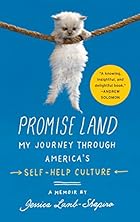
15. Promise Land by Jessica Lamb-Shapiro
A hybrid between a memoir (the author is the daughter of a self-help author) and critical analysis of self-help culture, but heavier on the memoir elements. As someone who's managed to, um, help herself through carefully selected self-help books, but who rolls her eyes forever at the likes of The Secret or The Rules, I found this an enjoyable and often laugh-out-loud funny read.
13. Rita book #3
Much better than #2. I don't hope or expect it to be among the finalists, since the writing quality didn't wow me and some of the characters and situations were on the cliched side, but it was a tightly plotted, well-paced, and enjoyable read.
14. Over Here by Edward Humes
A highly readable account of the G.I. Bill and its lasting impact on American society told through extended anecdotes of veterans' lives and accomplishments used to illustrate the larger principles and trends. The several decades between WWII and my being alive and aware enough to pay attention to world and national events are something of a gap in my historical knowledge--I think in part because my teachers and parents didn't think of them as history that needed to be taught any more than I do the 80's and the 90's. This book helped fill that gap, showing how we went from the struggles of the Great Depression to the prosperity and burgeoning middle class of the 50's and 60's...and how we began to lose that starting in the 70's as income inequality ticked up when we began to pull back from public investment in our future like that of the G.I. Bill.
Good book. Strongly recommended.
15. Promise Land by Jessica Lamb-Shapiro
A hybrid between a memoir (the author is the daughter of a self-help author) and critical analysis of self-help culture, but heavier on the memoir elements. As someone who's managed to, um, help herself through carefully selected self-help books, but who rolls her eyes forever at the likes of The Secret or The Rules, I found this an enjoyable and often laugh-out-loud funny read.
Labels:
American history,
contests,
memoir,
romance,
self-help
Sunday, January 4, 2015
Closing the book on 2014 reading and starting my 2015 reading
I spent last week visiting Mr. Fraser's family in Tulsa, Oklahoma. Between travel time and the odd quiet moment, I was able to finish 6 books--3 in 2014 and 3 in the new year:
The last of the 2014 reading:
140) Lighting the Flames by Sarah Wendell
A Hanukkah romance set at a Jewish summer camp trying to make a go of a winter break camp to build enthusiasm between terms. The hero and heroine have known each other since childhood, but almost exclusively as campers and then counselors. They're now in their twenties, just stepping into their careers and feeling out a newfound attraction and what it means in their outside-of-camp worlds. Definitely the first book I've read where the hero is a mortician, and by the end of the book I found his career awesome rather than off-putting.
141) Yours Forever by Farrah Rochon
A fun, quick romance about an aspiring politician who wants to keep family scandals going back generations buried and a history professor who needs his family records to keep her faculty position.
142) Ancestral Journeys by Jean Manco
The simple summary: People have constantly been migrating, as DNA increasingly reveals. A little on the dry side, but worth a read if the topic is of interest to you.
And the first of 2015:
1. Yes Please by Amy Poehler
A generally entertaining and occasionally laugh-out-loud funny memoir (though it gets a bit rambly at times). The chapters on focusing on creativity above career had a lot of resonance for me.
2. The Resistance Man by Martin Walker
The latest in Walker's endearing, food-porny mystery series. I pretty much guessed the murderer--at least, I suspected him before the sleuth did, which left me feeling clever.
The last of the 2014 reading:
140) Lighting the Flames by Sarah Wendell
A Hanukkah romance set at a Jewish summer camp trying to make a go of a winter break camp to build enthusiasm between terms. The hero and heroine have known each other since childhood, but almost exclusively as campers and then counselors. They're now in their twenties, just stepping into their careers and feeling out a newfound attraction and what it means in their outside-of-camp worlds. Definitely the first book I've read where the hero is a mortician, and by the end of the book I found his career awesome rather than off-putting.
141) Yours Forever by Farrah Rochon
A fun, quick romance about an aspiring politician who wants to keep family scandals going back generations buried and a history professor who needs his family records to keep her faculty position.
142) Ancestral Journeys by Jean Manco
The simple summary: People have constantly been migrating, as DNA increasingly reveals. A little on the dry side, but worth a read if the topic is of interest to you.
And the first of 2015:
1. Yes Please by Amy Poehler
A generally entertaining and occasionally laugh-out-loud funny memoir (though it gets a bit rambly at times). The chapters on focusing on creativity above career had a lot of resonance for me.
2. The Resistance Man by Martin Walker
The latest in Walker's endearing, food-porny mystery series. I pretty much guessed the murderer--at least, I suspected him before the sleuth did, which left me feeling clever.
3. Gunpowder Alchemy by Jeannie Lin
A really excellent steampunk alternative history set in 1840's China. Plenty of adventure and a nice thread of romance.
It's already feeling a bit late to do a "best reads of 2014" list, but I might do one anyway sometime in the next week for the sake of reviewing the year and in case anyone is looking for some recommendations and, like me, doesn't have any particular compulsion to read new books the instant they appear. (Unless they're sequels to books that ended on cliffhangers, in which case GIVE GIVE GIVE NOW NOW NOW.)
For 2015, my reading goals are the same as always--read a lot, and read a good variety of genres and topics.
Labels:
anthropology,
comedy,
contemporary romance,
fantasy,
fantasy romance,
genetics,
goals,
Hanukkah,
memoir,
mystery,
reading,
steampunk
Sunday, October 26, 2014
2014 Reading, Books 106-108
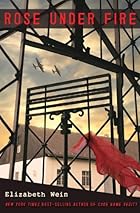
106) Rose Under Fire by Elizabeth Wein
I think this book is even better than Code Name Verity, which I read last month. The heroine, Rose, is a an American girl just out of high school who uses family connections (she has an English uncle who's a high-ranking officer) to get a job with the British Air Transport Auxiliary in 1944. After she's captured in France, she's taken to Ravensbruck--in what's probably an unlikely scenario, but one that makes a certain sense given the chaos of the late stages of the war. What follows is a moving story of survival and then bearing witness.
107) City of God: Faith in the Streets by Sara Miles
Sara Miles is one of my favorite Christian writers, not least because she found the Episcopal Church a few years before I did, albeit coming from the opposite direction--she wasn't a believer of any kind, while I was raised Southern Baptist and spent some time as two different flavors of Presbyterian along the way.
While I didn't love this book as much as I did Take This Bread or Jesus Freak, I still found it a very moving account of finding God in the midst of a city (San Francisco) all culminating in a public Ash Wednesday service--after all, in the Bible, Heaven is the city of God, not the floaty cloud-land of popular imagination nor the cross between New Zealand, the Scottish Highlands, and the more spectacular bits of the Pacific Coast I tend to picture.
108) Cat Sense by John Bradshaw
I got this book from the library after hearing the author interviewed on NPR because it sounded like the kind of practical science-geeky book I enjoy. And it proved to be what I was expecting--an account of how the domestic cat has evolved to live alongside humans, along with biological explanations of their behavior. The only downside is it left me a little wistful, because Mr Fraser is so severely allergic to cats that we can't have one in our household. (And yes, I know there are hairless cats. I just don't think it'd be that satisfying to own a cat without nice soft fur to stroke.)
I think this book is even better than Code Name Verity, which I read last month. The heroine, Rose, is a an American girl just out of high school who uses family connections (she has an English uncle who's a high-ranking officer) to get a job with the British Air Transport Auxiliary in 1944. After she's captured in France, she's taken to Ravensbruck--in what's probably an unlikely scenario, but one that makes a certain sense given the chaos of the late stages of the war. What follows is a moving story of survival and then bearing witness.
107) City of God: Faith in the Streets by Sara Miles
Sara Miles is one of my favorite Christian writers, not least because she found the Episcopal Church a few years before I did, albeit coming from the opposite direction--she wasn't a believer of any kind, while I was raised Southern Baptist and spent some time as two different flavors of Presbyterian along the way.
While I didn't love this book as much as I did Take This Bread or Jesus Freak, I still found it a very moving account of finding God in the midst of a city (San Francisco) all culminating in a public Ash Wednesday service--after all, in the Bible, Heaven is the city of God, not the floaty cloud-land of popular imagination nor the cross between New Zealand, the Scottish Highlands, and the more spectacular bits of the Pacific Coast I tend to picture.
108) Cat Sense by John Bradshaw
I got this book from the library after hearing the author interviewed on NPR because it sounded like the kind of practical science-geeky book I enjoy. And it proved to be what I was expecting--an account of how the domestic cat has evolved to live alongside humans, along with biological explanations of their behavior. The only downside is it left me a little wistful, because Mr Fraser is so severely allergic to cats that we can't have one in our household. (And yes, I know there are hairless cats. I just don't think it'd be that satisfying to own a cat without nice soft fur to stroke.)
Thursday, October 16, 2014
2014 Reading, Books 103-105
My pace of reading has slowed considerably of late because for the past two weeks or so much of my spare time has gone to first watching the TV series Sleepy Hollow in its entirety from the premiere up to this Monday's episode, then reading Sleepy Hollow fanfic and watching the first few episodes again with Miss Fraser. It's an addiction, but a fun one. I should really do a post on how Tom Mison's Ichabod Crane is a perfect historical romance hero (all the charm, gentility, and ability to work boots and a long coat of the past with none of the bigotry and misogyny!), but for now here's some eye candy:
So. I've been behind on my reading. But I haven't stopped, to wit:
103) The Shelf by Phyllis Rose
Another entry in a memoir genre I tend to find enjoyable--author takes on a quirky project, anything from cooking her way through a cookbook to living out a literal interpretation of some sacred text, and writes about her experiences. Rose takes a library shelf--fiction, with a mix of classics, modern literary fiction, and mysteries--and reads her way through it. Along the way she describes her reactions, researches the authors (even meeting two of the living ones), and digresses interestingly about issues ranging from the continued bias against women's writing to how library collections are weeded. Even though my reading tastes and Rose's don't match much beyond Harry Potter and Jane Austen, I still enjoyed her voice. I definitely recommend this for anyone who likes books about books and reading.
104) Unraveled by Courtney Milan
The final book in Milan's Turner family series--I'd read the other two brothers' stories, but awhile back, so my memory needed some jogging on their backstories. As is always the case, I enjoyed Milan's strong writing, gift for characterization, and ability to make standard romance tropes entirely her own. I tend to buy her books and hoard them on my Kindle against the point I'll be, say, stuck on an airplane or in a waiting room, because I know I'll get an excellent reading experience.
105) Sparrow Hill Road by Seanan McGuire
This book, while engaging, is structured almost like a series of linked short stories, so it was easy to put down after a chapter or two and take up later, at least until the last third or so when the overall narrative picks up pace. The protagonist, Rose, is the "Phantom Prom Date," a girl killed in a car accident on the way to her prom in 1952 who's been a ghost ever since, a ghost of the road who helps travelers when she can--even if it's only easing them into the world of the dead--and who's looking for revenge against...well, the man who killed her, only it's a bit more complex than that and he's not exactly a man.
So. I've been behind on my reading. But I haven't stopped, to wit:
103) The Shelf by Phyllis Rose
Another entry in a memoir genre I tend to find enjoyable--author takes on a quirky project, anything from cooking her way through a cookbook to living out a literal interpretation of some sacred text, and writes about her experiences. Rose takes a library shelf--fiction, with a mix of classics, modern literary fiction, and mysteries--and reads her way through it. Along the way she describes her reactions, researches the authors (even meeting two of the living ones), and digresses interestingly about issues ranging from the continued bias against women's writing to how library collections are weeded. Even though my reading tastes and Rose's don't match much beyond Harry Potter and Jane Austen, I still enjoyed her voice. I definitely recommend this for anyone who likes books about books and reading.
104) Unraveled by Courtney Milan
The final book in Milan's Turner family series--I'd read the other two brothers' stories, but awhile back, so my memory needed some jogging on their backstories. As is always the case, I enjoyed Milan's strong writing, gift for characterization, and ability to make standard romance tropes entirely her own. I tend to buy her books and hoard them on my Kindle against the point I'll be, say, stuck on an airplane or in a waiting room, because I know I'll get an excellent reading experience.
105) Sparrow Hill Road by Seanan McGuire
This book, while engaging, is structured almost like a series of linked short stories, so it was easy to put down after a chapter or two and take up later, at least until the last third or so when the overall narrative picks up pace. The protagonist, Rose, is the "Phantom Prom Date," a girl killed in a car accident on the way to her prom in 1952 who's been a ghost ever since, a ghost of the road who helps travelers when she can--even if it's only easing them into the world of the dead--and who's looking for revenge against...well, the man who killed her, only it's a bit more complex than that and he's not exactly a man.
Labels:
fantasy,
historical romance,
horror,
memoir,
reading,
Sleepy Hollow
Wednesday, September 17, 2014
2014 Reading, Books 97-99
97) Good God, Lousy World & Me by Holly Burkhalter
This was a quick read, sort of a faith memoir of a human rights activist who grew up Christian, but lost her faith over the problem of believing in a powerful, loving God in a world full of suffering an evil. She came back to the church in midlife even though she still doesn't feel she has all the answers, basically because she came to see God's presence in fighting for justice and against suffering. I'm always interested in such books because of my own faith journey (though I struggle more with the problem of the vastness of the universe and the insignificance of this one tiny planet), though this book didn't resonate so strongly with me as, say, Take This Bread.
98) The Napoleonic Revolution by Robert B. Holtman
Short enough to be a quick read, dry enough that you'll spread that quick read across multiple sessions, this is an overview on Napoleon's impact on 19th and 20th century France, Europe, and the wider world. While it's not going to make any of my best-reads lists, it was a useful reminder to me as someone who tends to come at the Napoleonic era with a military historian's bias and an Anglocentric perspective that I'm often only looking at one section of the puzzle.
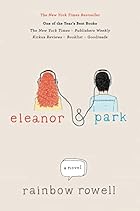
99) Eleanor & Park by Rainbow Rowell
This book received so many rave reviews I was almost afraid to try it lest my high expectations be disappointed. I shouldn't have worried. This is a beautifully written story of first love, heartbreaking but with just enough hope that I finished it smiling rather than weeping. I was looking at my reading list for the year and thinking I'd read a lot of enjoyable books but very few that had blown me away. This blew me away. Definitely will be on my top ten list for the year.
This was a quick read, sort of a faith memoir of a human rights activist who grew up Christian, but lost her faith over the problem of believing in a powerful, loving God in a world full of suffering an evil. She came back to the church in midlife even though she still doesn't feel she has all the answers, basically because she came to see God's presence in fighting for justice and against suffering. I'm always interested in such books because of my own faith journey (though I struggle more with the problem of the vastness of the universe and the insignificance of this one tiny planet), though this book didn't resonate so strongly with me as, say, Take This Bread.
98) The Napoleonic Revolution by Robert B. Holtman
Short enough to be a quick read, dry enough that you'll spread that quick read across multiple sessions, this is an overview on Napoleon's impact on 19th and 20th century France, Europe, and the wider world. While it's not going to make any of my best-reads lists, it was a useful reminder to me as someone who tends to come at the Napoleonic era with a military historian's bias and an Anglocentric perspective that I'm often only looking at one section of the puzzle.
99) Eleanor & Park by Rainbow Rowell
This book received so many rave reviews I was almost afraid to try it lest my high expectations be disappointed. I shouldn't have worried. This is a beautifully written story of first love, heartbreaking but with just enough hope that I finished it smiling rather than weeping. I was looking at my reading list for the year and thinking I'd read a lot of enjoyable books but very few that had blown me away. This blew me away. Definitely will be on my top ten list for the year.
Labels:
Christianity,
memoir,
Napoleon,
Napoleonic Wars,
YA
Sunday, April 27, 2014
2014 Reading, Books 43-45 (or, is a booted woman from the waist down the latest thing in cover design?)
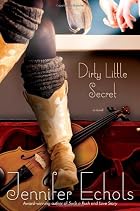
43) Dirty Little Secret by Jennifer Echols.
YA romance about a girl brought up touring the bluegrass festival circuit who turns rebellious after her sister gets a big Nashville recording contract and their family and her recording label want her to give up her own music and lie low to facilitate her sister's solo career. But she finds giving up her fiddle easier said than done, especially after she meets an attractive boy who needs a fiddler for what sounds like a sort of punk rockabilly band. (The name they settle on is "Redneck Death Wish.") It's a well-written book, and I loved how music and musicianship is handled in the story, though I found the heroine's parents' behavior a bit over-the-top in spots.


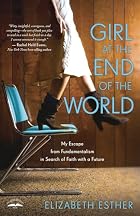
44) Girl at the End of the World by Elizabeth Esther.
Incidentally, I'm kinda fascinated by the similarity in design and look in these two book covers when they're in completely different genres. (This one is a memoir.) I guess they're both about young women struggling to break free of controlling family environments and assert their own identities, but I doubt that explains the similarities in cover and design as much as the fact they're both very recent books (2013 and 2014 respectively). I guess browns and blues/gray-blues and booted women viewed from ~ waist down are trendy...
Anyway, about the book. Elizabeth Esther is one of several ex-fundamentalist bloggers whose work I read because her experience resonates with my own, though her upbringing was FAR more extreme. I was just a garden-variety Southern Baptist who then got involved in a ultra-conservative chapter of InterVarsity Christian Fellowship in college, leading me to almost break my brain trying to not believe in evolution, to accept that women were supposed to have a subservient role, only that was actually wonderful because Jesus was a servant, making it actually better and close to God to serve, etc. But in Esther's word all these beliefs and more were enforced in an abusive, cultish environment.
Her memoir mostly covers her childhood and youth, but in the last fifth or so she and her husband gradually step away from the environment and rebuild their lives and faiths in a more mainstream environment.
45) The Purity Myth: How America's Obsession with Virginity Is Hurting Young Women by Jessica Valenti.
I'm having a flareup of my recurring neck and back pain issues, so I can't write about this book in as much detail as I'd like to right now. Suffice it to say that Valenti makes a great case for how terrible it is to treat chastity as not just a virtue but the most important virtue a young woman can have--i.e. a "good girl" isn't one who is compassionate, thoughtful, brave, generous, hard-working, etc. but one who doesn't sleep around. She also shows how purity culture and rape culture are two sides of the same coin. A depressing but nonetheless thought-provoking read.


44) Girl at the End of the World by Elizabeth Esther.
Incidentally, I'm kinda fascinated by the similarity in design and look in these two book covers when they're in completely different genres. (This one is a memoir.) I guess they're both about young women struggling to break free of controlling family environments and assert their own identities, but I doubt that explains the similarities in cover and design as much as the fact they're both very recent books (2013 and 2014 respectively). I guess browns and blues/gray-blues and booted women viewed from ~ waist down are trendy...
Anyway, about the book. Elizabeth Esther is one of several ex-fundamentalist bloggers whose work I read because her experience resonates with my own, though her upbringing was FAR more extreme. I was just a garden-variety Southern Baptist who then got involved in a ultra-conservative chapter of InterVarsity Christian Fellowship in college, leading me to almost break my brain trying to not believe in evolution, to accept that women were supposed to have a subservient role, only that was actually wonderful because Jesus was a servant, making it actually better and close to God to serve, etc. But in Esther's word all these beliefs and more were enforced in an abusive, cultish environment.
Her memoir mostly covers her childhood and youth, but in the last fifth or so she and her husband gradually step away from the environment and rebuild their lives and faiths in a more mainstream environment.
45) The Purity Myth: How America's Obsession with Virginity Is Hurting Young Women by Jessica Valenti.
I'm having a flareup of my recurring neck and back pain issues, so I can't write about this book in as much detail as I'd like to right now. Suffice it to say that Valenti makes a great case for how terrible it is to treat chastity as not just a virtue but the most important virtue a young woman can have--i.e. a "good girl" isn't one who is compassionate, thoughtful, brave, generous, hard-working, etc. but one who doesn't sleep around. She also shows how purity culture and rape culture are two sides of the same coin. A depressing but nonetheless thought-provoking read.
Monday, February 24, 2014
2014 Reading, Books 22-24
22) Coriolanus, by William Shakespeare.
Yesterday I saw Tom Hiddleston as Coriolanus in the Donmar Warehouse production that's being shown at various art-house cinemas. Because, Tom Hiddleston. And also Shakespeare. It was a beautiful thing. In any case, I thought it behooved me to read the play first, the better to follow the action on screen.
I can see why this isn't one of Shakespeare's most famous tragedies. To me Coriolanus (the play and character alike) doesn't have the heft of a Hamlet or Macbeth or Othello. He felt more like a caricature than a person on some levels--though, that said, he's a caricature of a recognizable type, namely the brilliant, arrogant leader who feels like his accomplishments should speak for themselves and disdains the political game of appealing to the masses. I've encountered such leaders in history and even in modern politics, and in subtler form I even tend to like them--they're better than smooth-talking demagogues, at least! And now that I've seen the performance, Coriolanus as played by Hiddleston did feel like a person--a young, arrogant aristocrat gifted at war but in over his head in politics. A recognizable type indeed.
23) The Witness Wore Red, by Rebecca Musser with M. Bridget Cook.
I've always felt a certain horrified fascination for the FLDS polygamist cult, and I've read several memoirs of women who've escaped. This was a particularly fascinating account of the young woman who in her late teens became the 19th wife of elderly cult leader Rulon Jeffs, only to decide to escape after his death when his son Warren became the leader of the group and made it even more restrictive and insane. She was a key assistant to the Texas police and witness in the trials that resulted from the raids on the YFZ Ranch a few years ago.
24) The Stolen Luck, by Shawna Reppert.
This male/male fantasy romance is a lovely, well-balanced, well-paced story. The human hero, James, wins elven slave Loren in a game of cards. Even though he is morally opposed to slavery, he needs the elf's help to win back the stolen "Luck" of the title--a talisman that ensures the productivity of his lands and therefore his family and dependents' future. He swears to free Loren so he can return to his own lands and people...but only when the Luck is back in his hands. Attraction and trust very gradually grows between the two men, but neither is willing to act on their feelings while Loren remains a slave.
I love the subtlety of this story. The fantasy world feels lived-in and plausible without a lot of extraneous detail. While the stakes are hugely important to the characters--James needs to save his estates and Loren longs to be free--this isn't a Save the World! story. I enjoy a Save the World! story as much as the next reader, but I also like variety. And I love that James and Loren never let their feelings for each other get the better of their integrity and honor.
Yesterday I saw Tom Hiddleston as Coriolanus in the Donmar Warehouse production that's being shown at various art-house cinemas. Because, Tom Hiddleston. And also Shakespeare. It was a beautiful thing. In any case, I thought it behooved me to read the play first, the better to follow the action on screen.
I can see why this isn't one of Shakespeare's most famous tragedies. To me Coriolanus (the play and character alike) doesn't have the heft of a Hamlet or Macbeth or Othello. He felt more like a caricature than a person on some levels--though, that said, he's a caricature of a recognizable type, namely the brilliant, arrogant leader who feels like his accomplishments should speak for themselves and disdains the political game of appealing to the masses. I've encountered such leaders in history and even in modern politics, and in subtler form I even tend to like them--they're better than smooth-talking demagogues, at least! And now that I've seen the performance, Coriolanus as played by Hiddleston did feel like a person--a young, arrogant aristocrat gifted at war but in over his head in politics. A recognizable type indeed.
23) The Witness Wore Red, by Rebecca Musser with M. Bridget Cook.
I've always felt a certain horrified fascination for the FLDS polygamist cult, and I've read several memoirs of women who've escaped. This was a particularly fascinating account of the young woman who in her late teens became the 19th wife of elderly cult leader Rulon Jeffs, only to decide to escape after his death when his son Warren became the leader of the group and made it even more restrictive and insane. She was a key assistant to the Texas police and witness in the trials that resulted from the raids on the YFZ Ranch a few years ago.
24) The Stolen Luck, by Shawna Reppert.
This male/male fantasy romance is a lovely, well-balanced, well-paced story. The human hero, James, wins elven slave Loren in a game of cards. Even though he is morally opposed to slavery, he needs the elf's help to win back the stolen "Luck" of the title--a talisman that ensures the productivity of his lands and therefore his family and dependents' future. He swears to free Loren so he can return to his own lands and people...but only when the Luck is back in his hands. Attraction and trust very gradually grows between the two men, but neither is willing to act on their feelings while Loren remains a slave.
I love the subtlety of this story. The fantasy world feels lived-in and plausible without a lot of extraneous detail. While the stakes are hugely important to the characters--James needs to save his estates and Loren longs to be free--this isn't a Save the World! story. I enjoy a Save the World! story as much as the next reader, but I also like variety. And I love that James and Loren never let their feelings for each other get the better of their integrity and honor.
Labels:
classics,
fantasy romance,
m/m,
memoir,
Shakespeare
Sunday, January 5, 2014
2014 Reading, Books 1-3
Time to start a brand new year's reading log! My goal this year is to read 120 books, so I'm shooting for 10/month. And since I had Thursday and Friday off as well as New Year's Day, I'm off to a good start for January.
My only other goal is to have as much fun with reading as possible this year. Unless it's part of my judging assignment for the Ritas or something I need to research for one of my manuscripts, everything I read will be chosen because it's entertaining and/or fascinating.
This is a reading log rather than my book reviews. I personally don't feel comfortable wearing a reviewer's hat as well as an author's--if you give a scathing review to a best-seller, you come across as jealous, while if you're hard on a newbie, it feels like punching down. So on this blog I'm just listing what I finish, with a few short notes on what I got out of the reading experience. Since I don't finish books unless I enjoy them, you can assume that if I was reviewing, any book listed would at least get a 3.5 stars/B- grade.
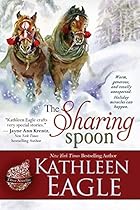
1) The Sharing Spoon, by Kathleen Eagle.
I'm not a big fan of small town/rural or Western romance, but Kathleen Eagle is one of my exceptions. Her husband is Lakota, she lives in Minnesota, and for the most part she writes the world she lives in--which means her Native American characters feel like real human beings from a real culture rather than Mystical Fonts of New Age Wisdom. This book is a collection of three holiday novellas (one Thanksgiving and two Christmas), and all of them worked well for me, though the historical "The Wolf and the Lamb" was my favorite. All in all, a good read to say farewell to the holiday season and usher in the new year.
2) Rosemary and Rue, by Seanan McGuire.
Since my introduction to McGuire was the far lighter-toned Discount Armageddon, I was surprised and initially taken aback by how much darker and grimmer this urban fantasy world is. Rosemary and Rue introduces half-human, half-fae San Francisco detective Toby Daye, who lost fourteen years of her life by being transformed into a fish while investigating a case for her faerie liege lord. Back in her own form, she doesn't want anything more to do with her old career or her fae connections. But of course she's not really going to be able to escape...
I don't think I'll ever love urban fantasy as much as I do epic and historical fantasy, but this was an intriguing page-turner, and I expect I'll keep reading the series from here.
3) Hyperbole and a Half, by Allie Brosh.
I've been a fan of Allie Brosh ever since my first encounter with Clean All the Things! So naturally her book was at the top of my Christmas wish list. It's a series of illustrated essays, a mix of blog posts and new material that's both laugh-out-loud funny and thoughtfully self-aware. The essays on depression are especially illuminating. I'm not very prone to depression myself--my personal demons tend to take the form of anxiety and panic instead--so her description helps me see and connect to what my friends and relatives who do live with depression are going through.
Sunday, December 29, 2013
2013 Reading, Books 112-115
I'm closing out 2013 with a bang, as I expect 2 of the 4 books I've finished in the last week or so to make my Best Reads of the Year list.
112) Fangirl, by Rainbow Rowell.
This book got such good buzz online that I almost expected to be disappointed by it, but I wasn't, not at all. It's a beautifully written YA coming of age novel with a good helping of romance. The heroine is a college freshman whose identical twin doesn't want to room with her and in general thinks it's high time they struck out on their own as individuals. Cath, who has intense social anxiety, struggles to cope, and we watch a year in her life as she figures it out and comes to terms with her thorny, dysfunctional-to-say-the-least family history.
The title references the fact Cath is an obsessive fan and fanfic writer within the fictional Simon Snow fandom (think Harry Potter, pretty much), and one of the best aspects of the book, IMHO, is how accurately and lovingly Rowell portrays what it's like to be part of fandom. And, best of all, she allows Cath to build a happy collegiate life and find a voice for original fiction without having to leave fandom and fanfic behind. She can still look forward to the 8th and final Simon Snow book's debut. She can still finish her slashy version of Book 8. It's such a treat to see an author understand and respect that.
113) The Fortune Cookie Chronicles, by Jennifer 8. Lee.
More a series of essays than a single unified narrative, this book looks at Chinese food and restaurants, especially in their Americanized form. (Fortune cookies and General Tso's Chicken? Not things you'd find in China.) I almost wish it had been two books, one light-hearted culinary history and a second serious look at the life of Chinese men and women working abroad in the restaurant industry, especially illegal immigrants.
114) Cracking Up: A Postpartum Faith Crisis, by Kimberlee Conway Ireton.
Full disclosure: the author is a friend of mine, or at least a friendly acquaintance, though we've lost touch since I stopped going to the same church as she does. I was a very distant observer of some of the events in this memoir, though by that point my family and I were already starting to drift out of the congregation. (Long story, and nothing to do with this book--suffice it to say I revisited my faith after my mother passed away, and ended up on a path that took me to the Episcopal Church.)
As the mother of two young children and a debut author of a struggling book, Kimberlee found herself pregnant with twins and overwhelmed with the changes coming into her life. She takes the reader along with her on a rawly honest journey through an often difficult pregnancy, one twin's stay in the NICU, and the first six months of the boys' lives as she struggles with often crippling anxiety and severe postpartum depression it took her a long time to recognize for what it was.
It's an excellent read, and one I'd recommend to anyone who's struggled with anxiety or depression, especially Christians, since so much of Kimberlee's struggle is about hanging onto God and staying grounded in her faith. And hers is a very rare book I'd recommend equally to my Baptist high school classmates and my fellow Episcopalians--the faith and doubts expressed in this book are of a kind any of us in Christianity's very big tent can relate to.
115) Fortune's Pawn, by Rachel Bach.
I picked up this book because it was described as a cross between Firefly and the Vorkosigan Saga. This intrigued me because as different as Whedon and Bujold are in many aspects, there's a certain je ne sais quoi about their work, the way the communities they create feel so multi-dimensional and tangible that Serenity and her crew and the Vorkosigan family and their friends and allies on Barrayar are almost as real to me as my own family, friends, and coworkers. I don't know what it says about me, but one of the things I love most in fiction is being able to acquire new imaginary friends, especially when they come in whole imaginary communities. There's something about that sense that if I found myself at a party at Vorkosigan House, I'd feel right at home
So. A chapter or two in to Fortune's Pawn, I was ready to set it aside, because it didn't remind me of Whedon and Bujold at all. But I've been trying to give books a longer chance lately. I'll still set a book down for awkward, inept writing or if I can tell right away I'm not going to click with the plot or characters. But I have a feeling I've been missing some good stories for not giving myself a chance to adjust to a new author's voice or to accept that a book wasn't what I was expecting and give it a chance to succeed on its own terms.
In this case, I'm very glad I gave the book another chance. I remembered that Firefly and the early Vorkosigan books are both about space mercenaries, as is Fortune's Pawn, so I stopped hoping to find another set of imaginary friends and read it as a space opera adventure story. Taken on those terms, it's a cracking good read. Devi is an excellent kick-ass heroine, ambitious and straightforward, the world-building feels well thought out, the plot rolls along at a relentless pace, and the ending left me with just the right number of questions that I'm looking forward to the sequel, which is due out in February.
And, you know, that's probably all the Twitter recommender meant. "Like stories about space mercenaries like Mal Reynolds or Miles Vorkosigan? Give this one a try!" Which is always a challenge with "Like X? Try Y!" recs--you have to figure out what it is the other reader/viewer likes about X, and whether it's the same thing you get out of it. Like, I thought about recommending Cracking Up to Anne Lamott readers, because Kimberlee also writes about motherhood with wry honesty and humor, not to mention struggling to be a writer in the face of doubt and failure and clinging to faith by one's fingernails. But I'm wary of doing so, because Lamott has such a distinctive voice, and she's Christian left while Kimberlee is more Christian center. I don't want to disappoint anyone by recommending something a book doesn't deliver, you know?
112) Fangirl, by Rainbow Rowell.
This book got such good buzz online that I almost expected to be disappointed by it, but I wasn't, not at all. It's a beautifully written YA coming of age novel with a good helping of romance. The heroine is a college freshman whose identical twin doesn't want to room with her and in general thinks it's high time they struck out on their own as individuals. Cath, who has intense social anxiety, struggles to cope, and we watch a year in her life as she figures it out and comes to terms with her thorny, dysfunctional-to-say-the-least family history.
The title references the fact Cath is an obsessive fan and fanfic writer within the fictional Simon Snow fandom (think Harry Potter, pretty much), and one of the best aspects of the book, IMHO, is how accurately and lovingly Rowell portrays what it's like to be part of fandom. And, best of all, she allows Cath to build a happy collegiate life and find a voice for original fiction without having to leave fandom and fanfic behind. She can still look forward to the 8th and final Simon Snow book's debut. She can still finish her slashy version of Book 8. It's such a treat to see an author understand and respect that.
113) The Fortune Cookie Chronicles, by Jennifer 8. Lee.
More a series of essays than a single unified narrative, this book looks at Chinese food and restaurants, especially in their Americanized form. (Fortune cookies and General Tso's Chicken? Not things you'd find in China.) I almost wish it had been two books, one light-hearted culinary history and a second serious look at the life of Chinese men and women working abroad in the restaurant industry, especially illegal immigrants.
114) Cracking Up: A Postpartum Faith Crisis, by Kimberlee Conway Ireton.
Full disclosure: the author is a friend of mine, or at least a friendly acquaintance, though we've lost touch since I stopped going to the same church as she does. I was a very distant observer of some of the events in this memoir, though by that point my family and I were already starting to drift out of the congregation. (Long story, and nothing to do with this book--suffice it to say I revisited my faith after my mother passed away, and ended up on a path that took me to the Episcopal Church.)
As the mother of two young children and a debut author of a struggling book, Kimberlee found herself pregnant with twins and overwhelmed with the changes coming into her life. She takes the reader along with her on a rawly honest journey through an often difficult pregnancy, one twin's stay in the NICU, and the first six months of the boys' lives as she struggles with often crippling anxiety and severe postpartum depression it took her a long time to recognize for what it was.
It's an excellent read, and one I'd recommend to anyone who's struggled with anxiety or depression, especially Christians, since so much of Kimberlee's struggle is about hanging onto God and staying grounded in her faith. And hers is a very rare book I'd recommend equally to my Baptist high school classmates and my fellow Episcopalians--the faith and doubts expressed in this book are of a kind any of us in Christianity's very big tent can relate to.
115) Fortune's Pawn, by Rachel Bach.
I picked up this book because it was described as a cross between Firefly and the Vorkosigan Saga. This intrigued me because as different as Whedon and Bujold are in many aspects, there's a certain je ne sais quoi about their work, the way the communities they create feel so multi-dimensional and tangible that Serenity and her crew and the Vorkosigan family and their friends and allies on Barrayar are almost as real to me as my own family, friends, and coworkers. I don't know what it says about me, but one of the things I love most in fiction is being able to acquire new imaginary friends, especially when they come in whole imaginary communities. There's something about that sense that if I found myself at a party at Vorkosigan House, I'd feel right at home
So. A chapter or two in to Fortune's Pawn, I was ready to set it aside, because it didn't remind me of Whedon and Bujold at all. But I've been trying to give books a longer chance lately. I'll still set a book down for awkward, inept writing or if I can tell right away I'm not going to click with the plot or characters. But I have a feeling I've been missing some good stories for not giving myself a chance to adjust to a new author's voice or to accept that a book wasn't what I was expecting and give it a chance to succeed on its own terms.
In this case, I'm very glad I gave the book another chance. I remembered that Firefly and the early Vorkosigan books are both about space mercenaries, as is Fortune's Pawn, so I stopped hoping to find another set of imaginary friends and read it as a space opera adventure story. Taken on those terms, it's a cracking good read. Devi is an excellent kick-ass heroine, ambitious and straightforward, the world-building feels well thought out, the plot rolls along at a relentless pace, and the ending left me with just the right number of questions that I'm looking forward to the sequel, which is due out in February.
And, you know, that's probably all the Twitter recommender meant. "Like stories about space mercenaries like Mal Reynolds or Miles Vorkosigan? Give this one a try!" Which is always a challenge with "Like X? Try Y!" recs--you have to figure out what it is the other reader/viewer likes about X, and whether it's the same thing you get out of it. Like, I thought about recommending Cracking Up to Anne Lamott readers, because Kimberlee also writes about motherhood with wry honesty and humor, not to mention struggling to be a writer in the face of doubt and failure and clinging to faith by one's fingernails. But I'm wary of doing so, because Lamott has such a distinctive voice, and she's Christian left while Kimberlee is more Christian center. I don't want to disappoint anyone by recommending something a book doesn't deliver, you know?
Labels:
Christianity,
current issues,
fandom,
fanfic,
food,
memoir,
new adult,
science fiction,
space opera,
YA
Saturday, December 21, 2013
2013 Reading, Books 109-111
109) Through the Evil Days, by Julia Spencer-Fleming.
After two and a half years, finally another entry in one of my favorite mystery series. I loved it, and was especially impressed how Spencer-Fleming switched POVs among five or six characters without ever tempting me to skip ahead to the next section featuring my favorites. (I tend to do that with George RR Martin, and with Herman Wouk's Winds of War and War and Remembrance it was years before I went back and read all the stuff about the Pacific theater of the war, I was so much more interested in Natalie Jastrow and whether she survived than any of that submarine and battleship stuff.) That said, she ended on ANOTHER cliffhanger, and how many more years will I have to wait before I know if Clare's, um, how to say this without being spoilery, health situation works out OK?
110) Od Magic, by Patricia McKillip.
This is a lushly lyrical fantasy--really MORE lush and lyrical than my usual reading taste that follows several characters through a crisis in how their kingdom manages magic. It's not a big, epic war and/or quest fantasy (which I confess to a certain partiality for), nor does it focus tightly enough on any one character that I connected to the story as much as I like, but I'm glad I read it nonetheless, variety being good for the brain and imagination IMHO.
111) Oh Myyy! There Goes the Internet, by George Takei.
A light, fun look at George Takei's current life as an unlikely septuagenarian internet celebrity. It was the perfect relaxing read for a day when I was home with a bad shoulder and feeling sorry for myself, but it's not pure fluff. Takei doesn't hide his activist side WRT gay rights or building awareness of Japanese-American internment during WWII, and he also has some good thoughts on Facebook and Twitter for those of us who use social media for publicity.
After two and a half years, finally another entry in one of my favorite mystery series. I loved it, and was especially impressed how Spencer-Fleming switched POVs among five or six characters without ever tempting me to skip ahead to the next section featuring my favorites. (I tend to do that with George RR Martin, and with Herman Wouk's Winds of War and War and Remembrance it was years before I went back and read all the stuff about the Pacific theater of the war, I was so much more interested in Natalie Jastrow and whether she survived than any of that submarine and battleship stuff.) That said, she ended on ANOTHER cliffhanger, and how many more years will I have to wait before I know if Clare's, um, how to say this without being spoilery, health situation works out OK?
110) Od Magic, by Patricia McKillip.
This is a lushly lyrical fantasy--really MORE lush and lyrical than my usual reading taste that follows several characters through a crisis in how their kingdom manages magic. It's not a big, epic war and/or quest fantasy (which I confess to a certain partiality for), nor does it focus tightly enough on any one character that I connected to the story as much as I like, but I'm glad I read it nonetheless, variety being good for the brain and imagination IMHO.
111) Oh Myyy! There Goes the Internet, by George Takei.
A light, fun look at George Takei's current life as an unlikely septuagenarian internet celebrity. It was the perfect relaxing read for a day when I was home with a bad shoulder and feeling sorry for myself, but it's not pure fluff. Takei doesn't hide his activist side WRT gay rights or building awareness of Japanese-American internment during WWII, and he also has some good thoughts on Facebook and Twitter for those of us who use social media for publicity.
Wednesday, March 13, 2013
2013 Reading, Books 25-27
I'm overdue to respond to Veronica Scott's tagging me for a Five Favorite Books post, but it'll have to wait until I a) finalize and submit a manuscript that's due on Friday and b) write my next Risky Regencies post, also due on Friday.
Meanwhile, I've managed to squeeze in a few reading hours--nonfiction, because that's what my library holds list has been hitting me with of late:
25) Rick Steves' Portugal.
As with other travel books I'm counting toward my total this year, I didn't read this one cover to cover. I figure I'll have about a week, maybe a little less, for Portugal on my big 2015 trip, and that I'll therefore have to focus on Lisbon, Porto, and the Douro Valley, so those are the parts I read about in detail. Rick Steves was my go-to writer for figuring out where to visit in Britain and Ireland the year I lived in England, mostly because he assume you're not rich (correct!) and therefore provides a lot of budget options, and also because he's thorough without being encyclopedic. Anyway, I now feel like I know where to begin planning the Portuguese leg of the trip, which is all I need two years in advance. Once it's six months away I'll buy the most current guidebooks and start booking hotels.
26) The Wild Life of Our Bodies, by Rob Dunn.
A wide-ranging survey of the current state of the science about how humans evolved as part of an ecology that still impacts us today--from the more-or-less beneficial bacteria that live in our guts to having a fear response more suited to our ancestral status as prey than to our current role as ultimate apex predator to the speculative, but suggestive, theory that the reasons humans, along with other African primates, see so very well and in such a wide, discerning range of color relative to most mammals is that the African forest where those primates evolved teemed with a wide variety of poisonous snakes. (Sounds wacky, I know, but think about it--unlike, say, a lion or leopard that you might smell or hear coming from a distance, the primary defense against snakes is being able to see them in time. And the primates with the best color vision are the ones from the snakiest environments--there are no poisonous snakes native to Madagascar, for example, and lemurs have poor color vision compared to primates from the African mainland.)
Anyway, this is a fascinating, thought-provoking book I'd recommend to anyone interested in evolutionary biology or ecology.
27) French by Heart, by Rebecca Ramsey.
This memoir of an American family spending four years in France after the husband gets a job there is fun, though I wish there'd been a bit less focus on one irascible neighbor with a heart of gold and a bit more, well, France.
Meanwhile, I've managed to squeeze in a few reading hours--nonfiction, because that's what my library holds list has been hitting me with of late:
25) Rick Steves' Portugal.
As with other travel books I'm counting toward my total this year, I didn't read this one cover to cover. I figure I'll have about a week, maybe a little less, for Portugal on my big 2015 trip, and that I'll therefore have to focus on Lisbon, Porto, and the Douro Valley, so those are the parts I read about in detail. Rick Steves was my go-to writer for figuring out where to visit in Britain and Ireland the year I lived in England, mostly because he assume you're not rich (correct!) and therefore provides a lot of budget options, and also because he's thorough without being encyclopedic. Anyway, I now feel like I know where to begin planning the Portuguese leg of the trip, which is all I need two years in advance. Once it's six months away I'll buy the most current guidebooks and start booking hotels.
26) The Wild Life of Our Bodies, by Rob Dunn.
A wide-ranging survey of the current state of the science about how humans evolved as part of an ecology that still impacts us today--from the more-or-less beneficial bacteria that live in our guts to having a fear response more suited to our ancestral status as prey than to our current role as ultimate apex predator to the speculative, but suggestive, theory that the reasons humans, along with other African primates, see so very well and in such a wide, discerning range of color relative to most mammals is that the African forest where those primates evolved teemed with a wide variety of poisonous snakes. (Sounds wacky, I know, but think about it--unlike, say, a lion or leopard that you might smell or hear coming from a distance, the primary defense against snakes is being able to see them in time. And the primates with the best color vision are the ones from the snakiest environments--there are no poisonous snakes native to Madagascar, for example, and lemurs have poor color vision compared to primates from the African mainland.)
Anyway, this is a fascinating, thought-provoking book I'd recommend to anyone interested in evolutionary biology or ecology.
27) French by Heart, by Rebecca Ramsey.
This memoir of an American family spending four years in France after the husband gets a job there is fun, though I wish there'd been a bit less focus on one irascible neighbor with a heart of gold and a bit more, well, France.
Labels:
evolutionary biology,
France,
memoir,
nonfiction,
Portugal,
travel
Saturday, February 2, 2013
2013 Reading, Books 10-12
10) Book Which Shall Not Be Named, #2. My second Rita book, which I won't describe except to say I enjoyed it more than my first.
11) Libriomancer, by Jim C. Hines.
My favorite read of the year to date, first in a fantasy series with a really clever concept for its magic--basically, books make magic by the collective belief of readers in the stories' worlds, and libriomancers can pull objects out of those books temporarily. This doesn't give the unlimited power you might think--among other things, too much magic use wrecks both the libriomancer and the book, and you can only pull out objects that would fit through an ordinary-sized physical copy of the book. E.g. if I were a libriomancer carrying a copy of a book from the Sharpe series, I could pull out Sharpe's sword or the telescope Wellington gave him, but a cannon wouldn't fit. The story and characters are as good as the concept, and I'll be eagerly awaiting the sequels.
12) A Year of Biblical Womanhood, by Rachel Held Evans
I'm easily hooked by the type of memoir where someone spends a year trying to live a lifestyle that's foreign to them, cooks their way through a famous cookbook, or whatever. This one was both hilarious and unexpectedly moving. Evans comes from a background almost identical to my own--I'm ~10 years older, but we grew up within 40 or 50 miles of each other, and the biggest obvious difference between our good Alabama families is that mine roots for Auburn in college football while hers supports Alabama. (I was really disappointed that the month she was trying not to be contentious was October 2010 rather than November of that year, because she talked about her struggles during the South Carolina game rather than the epic Auburn comeback. And yes, I know Bama has since won two more national championships while Auburn has fallen apart. 2010 was still awesome.)
Anyway, Evans is also like me in having wrestled with the increasing conservatism of the evangelical church, though AFAIK she hasn't yet gone as far as I have in running away from it--I'm now Episcopalian, which I suspect has some of my Baptist ancestors spinning in their graves. So for this book she spends each month of a year trying to live out one of the biblical commands to women literally, both to show the absurdity of a hyper-literal approach and to find God in unexpected places. She also talks a lot about women's power and strength, in the Bible and through history to the present. I think what will stick with me most is her discussion of the Proverbs 31 woman, which I was taught to think of as the perfect homemaker--someone I hoped to become during my more conservative days and now rebel against. But Evans discovers that in the Jewish tradition, that text isn't used prescriptively, but as praise for whenever a woman shows courage, generosity, integrity, and like virtues. In Hebrew the words the King James Bible translates as "a virtuous woman" are "eshet chayil"--a woman of valor. I'll never be a Proverbs 31 homemaker, but on my best days I can be a woman of valor.
11) Libriomancer, by Jim C. Hines.
My favorite read of the year to date, first in a fantasy series with a really clever concept for its magic--basically, books make magic by the collective belief of readers in the stories' worlds, and libriomancers can pull objects out of those books temporarily. This doesn't give the unlimited power you might think--among other things, too much magic use wrecks both the libriomancer and the book, and you can only pull out objects that would fit through an ordinary-sized physical copy of the book. E.g. if I were a libriomancer carrying a copy of a book from the Sharpe series, I could pull out Sharpe's sword or the telescope Wellington gave him, but a cannon wouldn't fit. The story and characters are as good as the concept, and I'll be eagerly awaiting the sequels.
12) A Year of Biblical Womanhood, by Rachel Held Evans
I'm easily hooked by the type of memoir where someone spends a year trying to live a lifestyle that's foreign to them, cooks their way through a famous cookbook, or whatever. This one was both hilarious and unexpectedly moving. Evans comes from a background almost identical to my own--I'm ~10 years older, but we grew up within 40 or 50 miles of each other, and the biggest obvious difference between our good Alabama families is that mine roots for Auburn in college football while hers supports Alabama. (I was really disappointed that the month she was trying not to be contentious was October 2010 rather than November of that year, because she talked about her struggles during the South Carolina game rather than the epic Auburn comeback. And yes, I know Bama has since won two more national championships while Auburn has fallen apart. 2010 was still awesome.)
Anyway, Evans is also like me in having wrestled with the increasing conservatism of the evangelical church, though AFAIK she hasn't yet gone as far as I have in running away from it--I'm now Episcopalian, which I suspect has some of my Baptist ancestors spinning in their graves. So for this book she spends each month of a year trying to live out one of the biblical commands to women literally, both to show the absurdity of a hyper-literal approach and to find God in unexpected places. She also talks a lot about women's power and strength, in the Bible and through history to the present. I think what will stick with me most is her discussion of the Proverbs 31 woman, which I was taught to think of as the perfect homemaker--someone I hoped to become during my more conservative days and now rebel against. But Evans discovers that in the Jewish tradition, that text isn't used prescriptively, but as praise for whenever a woman shows courage, generosity, integrity, and like virtues. In Hebrew the words the King James Bible translates as "a virtuous woman" are "eshet chayil"--a woman of valor. I'll never be a Proverbs 31 homemaker, but on my best days I can be a woman of valor.
Sunday, January 6, 2013
2013 reading, books 1-3
I decided this year to post to my reading journal every time I've read three books, so here goes:
1) The Signal and the Noise, by Nate Silver.
I've been a fan of Nate Silver's since the early days of fivethirtyeight.com back in 2008, and I value his commitment to looking at what the data says rather than what he wants to spin it into saying. It's so refreshing in the world of political journalism, and you can't argue with his results.
That said, I expected to find this book mathy and daunting. But it wasn't at all. OK, my eyes may have glazed over a little during the stock market and poker sections, but Silver has a knack for including clarifying charts and analogies, and I found it fascinating to see how predictions succeed and fail across a variety of fields and how we can find commonalities between them.
2) Monsoon Wedding Fever, by Shoma Narayanan.
I chose this for my first book in Wendy the Superlibrarian's 2013 romance reading challenge, and I will post about it in more detail on the 16th.
3) The Fiddler on Pantico Run, by Joe Mozingo.
A memoir/family history about the LA Times journalist author's discovery that his supposedly Italian last name was actually African and had somehow survived all the way from the 17th century even after most of the original American Mozingo's descendants had passed into the white community. A rambling but intriguing journey through the author's family tree, with visits to his distant cousins and excursions to Jamestown, Cameroon, and Angola.
1) The Signal and the Noise, by Nate Silver.
I've been a fan of Nate Silver's since the early days of fivethirtyeight.com back in 2008, and I value his commitment to looking at what the data says rather than what he wants to spin it into saying. It's so refreshing in the world of political journalism, and you can't argue with his results.
That said, I expected to find this book mathy and daunting. But it wasn't at all. OK, my eyes may have glazed over a little during the stock market and poker sections, but Silver has a knack for including clarifying charts and analogies, and I found it fascinating to see how predictions succeed and fail across a variety of fields and how we can find commonalities between them.
2) Monsoon Wedding Fever, by Shoma Narayanan.
I chose this for my first book in Wendy the Superlibrarian's 2013 romance reading challenge, and I will post about it in more detail on the 16th.
3) The Fiddler on Pantico Run, by Joe Mozingo.
A memoir/family history about the LA Times journalist author's discovery that his supposedly Italian last name was actually African and had somehow survived all the way from the 17th century even after most of the original American Mozingo's descendants had passed into the white community. A rambling but intriguing journey through the author's family tree, with visits to his distant cousins and excursions to Jamestown, Cameroon, and Angola.
Labels:
contemporary romance,
history,
India,
memoir,
nonfiction,
prediction,
reading,
statistics
Sunday, November 11, 2012
Updates--reading, half NaNo, and blog tour
Wow, last week was quite a ride. Having a book release on Monday and a presidential election on Tuesday is...kind stressful, actually. I didn't get as much writing done as I'd hoped, though I've plenty of time to catch up and meet my November goal of 25,000 new words.
I did, however, get quite a bit of reading time in. Here are the latest on my trek to 100 books read in 2012:
90) Off Balance: A Memoir by Dominique Moceanu. Back when I was watching the 1996 Olympics, I remember disliking Dominique Moceanu because she came across in the media coverage somehow as a cutesy little spoiled brat. I feel like I should apologize for how severely I misjudged her, when actually she was stuck in an abusive coaching and home situation. I'm happy that she's developed a remarkable amount of resilience and seems to have a happy, stable life with her husband and two young children. I'm impressed, too, that she still loves gymnastics in spite of how its luminaries treated her and is trying to make it a better, healthier sport for the next generation.
91) New Orleans 1815: Andrew Jackson Crushes the British, by Tim Pickles. Research, as my current WIP features a British officer wounded at the Battle of New Orleans. A basic overview, heavily focused on the British experience and POV, which happens to be useful for my purposes.
92) Stealing Parker, by Miranda Kenneally. Earlier this year I read, and raved about, Kenneally's debut novel, Catching Jordan, about a girl quarterback good enough to realistically strive for a football scholarship. This book worked for me in a big way, too. I don't think I loved it quite as much--the whole "elite girl QB" plot of Catching Jordan gave me the same "somebody wrote a book just for ME?!" happiness I got when I first heard about His Majesty's Dragon. But Stealing Parker moved me. We meet the heroine in full crisis mode. Her mother left her father for a woman, and in their small, Southern, deeply religious town, the resulting scandal has thrown Parker's life into a tailspin. In some ways this is a painful read--17-year-old Parker gets involved with a 23-year-old teacher, and it's very much a slow motion train wreck on the page--but there's a certain saving grace and humor that kept it from ever getting unbearably dark.
93) Julie of the Wolves, by Jean Craighead George. A Newberry Award winner that I somehow missed reading in my own childhood--I read it yesterday to try to judge if it would be appropriate for my wolf-loving 8-year-old daughter. I think she's still a bit too young to understand and appreciate it, but in another year or two I bet she'll love such a tale of survival and finding your identity. I'm intrigued enough myself that I think I'll seek out the sequels.
As for writing...well, let's just say I didn't get any done Monday-Thursday, between An Infamous Marriage finally being out and the election. And when I went back to it this weekend, I realized the second scene had wandered off into the weeds, so I went back and rewrote.
Doesn't look too impressive, I know, but there's still plenty of time to get to 25K, especially with the 4-day holiday weekend coming up. We don't have any big plans--we live so far from our extended families that it's become a tradition to do a restaurant Thanksgiving dinner as our little family of three and travel at Christmas--so then I can write, write, write.
And, last but not least, the blog tour continues this week.
Monday 11/12 - Manga Maniac Cafe
Tuesday 11/13 - History Hoydens
Wednesday 11/14 - The Season for Romance
Thursday 11/15 - Book Lovers, Inc.
Friday 11/16 - The Romance Dish
I did, however, get quite a bit of reading time in. Here are the latest on my trek to 100 books read in 2012:
90) Off Balance: A Memoir by Dominique Moceanu. Back when I was watching the 1996 Olympics, I remember disliking Dominique Moceanu because she came across in the media coverage somehow as a cutesy little spoiled brat. I feel like I should apologize for how severely I misjudged her, when actually she was stuck in an abusive coaching and home situation. I'm happy that she's developed a remarkable amount of resilience and seems to have a happy, stable life with her husband and two young children. I'm impressed, too, that she still loves gymnastics in spite of how its luminaries treated her and is trying to make it a better, healthier sport for the next generation.
91) New Orleans 1815: Andrew Jackson Crushes the British, by Tim Pickles. Research, as my current WIP features a British officer wounded at the Battle of New Orleans. A basic overview, heavily focused on the British experience and POV, which happens to be useful for my purposes.
92) Stealing Parker, by Miranda Kenneally. Earlier this year I read, and raved about, Kenneally's debut novel, Catching Jordan, about a girl quarterback good enough to realistically strive for a football scholarship. This book worked for me in a big way, too. I don't think I loved it quite as much--the whole "elite girl QB" plot of Catching Jordan gave me the same "somebody wrote a book just for ME?!" happiness I got when I first heard about His Majesty's Dragon. But Stealing Parker moved me. We meet the heroine in full crisis mode. Her mother left her father for a woman, and in their small, Southern, deeply religious town, the resulting scandal has thrown Parker's life into a tailspin. In some ways this is a painful read--17-year-old Parker gets involved with a 23-year-old teacher, and it's very much a slow motion train wreck on the page--but there's a certain saving grace and humor that kept it from ever getting unbearably dark.
93) Julie of the Wolves, by Jean Craighead George. A Newberry Award winner that I somehow missed reading in my own childhood--I read it yesterday to try to judge if it would be appropriate for my wolf-loving 8-year-old daughter. I think she's still a bit too young to understand and appreciate it, but in another year or two I bet she'll love such a tale of survival and finding your identity. I'm intrigued enough myself that I think I'll seek out the sequels.
As for writing...well, let's just say I didn't get any done Monday-Thursday, between An Infamous Marriage finally being out and the election. And when I went back to it this weekend, I realized the second scene had wandered off into the weeds, so I went back and rewrote.
Doesn't look too impressive, I know, but there's still plenty of time to get to 25K, especially with the 4-day holiday weekend coming up. We don't have any big plans--we live so far from our extended families that it's become a tradition to do a restaurant Thanksgiving dinner as our little family of three and travel at Christmas--so then I can write, write, write.
And, last but not least, the blog tour continues this week.
Monday 11/12 - Manga Maniac Cafe
Tuesday 11/13 - History Hoydens
Wednesday 11/14 - The Season for Romance
Thursday 11/15 - Book Lovers, Inc.
Friday 11/16 - The Romance Dish
Tuesday, October 30, 2012
Reading Update - Memoir, Mystery, and Romance
Still inching toward 100 books read on the year...
86) Evolving in Monkey Town, by Rachel Held Evans. Memoir about how a girl who grew up in the airtight certainty of conservative Christianity discovered she didn't have all the answers after all and learned to live with a faith that has questions and uncertainties. At the risk of talking about religion more than I normally do on this blog...I can relate.
87) The Book of Mormon Girl, by Joanna Brooks. An interesting book to read right after Evolving in Monkey Town, since it's also the story of a woman raised in a conservative religious background who struggles with her faith while deciding to stay within it. I think what struck me most, surprised me, really, was her sense of connection to the history of the Mormon faith. To my eyes, it's an awfully short history--I mean, my native state (Alabama) wasn't even one of the original thirteen, and it's still older than the Mormon church. But I can see how if you're actually descended from people who made the trek to Utah with Brigham Young, it wouldn't be the kind of thing one could lightly walk away from.
88) Bruno, Chief of Police, by Martin Walker. A delightful mystery set in a village in the South of France. It has an unfashionably leisurely pace--the dead body doesn't show up till the end of Chapter 4--which IMHO worked well by mirroring the peaceful, timeless lifestyle Bruno values and strives to protect. I was also impressed with the way Walker balanced the overall loveliness and humor of his story with the darkness of the murder plot (the corpse is found with a swastika carved on his body). I look forward to reading the rest of Walker's fiction and quite possibly some of his nonfiction, too.
89) An Illicit Temptation, by Jeannie Lin. A short novella (or long short story--I'm never sure where these lines are drawn) featuring a secondary character from My Fair Concubine. Like Lin's other books, it's set during the Tang Dynasty, though it takes place among the nomadic Khitan people. (The heroine is a Chinese woman, purportedly royal, on the way to the Khitan ruler as a treaty bride.) A quick read that nonetheless feels satisfying and wholly fleshed out.
Any book I post about on this blog is one I liked enough to finish and therefore enough to recommend...but books #88 and and #89 were especially good reads, contenders for my top ten on the year. If you like mysteries or historical romance, give them a try.
86) Evolving in Monkey Town, by Rachel Held Evans. Memoir about how a girl who grew up in the airtight certainty of conservative Christianity discovered she didn't have all the answers after all and learned to live with a faith that has questions and uncertainties. At the risk of talking about religion more than I normally do on this blog...I can relate.
87) The Book of Mormon Girl, by Joanna Brooks. An interesting book to read right after Evolving in Monkey Town, since it's also the story of a woman raised in a conservative religious background who struggles with her faith while deciding to stay within it. I think what struck me most, surprised me, really, was her sense of connection to the history of the Mormon faith. To my eyes, it's an awfully short history--I mean, my native state (Alabama) wasn't even one of the original thirteen, and it's still older than the Mormon church. But I can see how if you're actually descended from people who made the trek to Utah with Brigham Young, it wouldn't be the kind of thing one could lightly walk away from.
88) Bruno, Chief of Police, by Martin Walker. A delightful mystery set in a village in the South of France. It has an unfashionably leisurely pace--the dead body doesn't show up till the end of Chapter 4--which IMHO worked well by mirroring the peaceful, timeless lifestyle Bruno values and strives to protect. I was also impressed with the way Walker balanced the overall loveliness and humor of his story with the darkness of the murder plot (the corpse is found with a swastika carved on his body). I look forward to reading the rest of Walker's fiction and quite possibly some of his nonfiction, too.
89) An Illicit Temptation, by Jeannie Lin. A short novella (or long short story--I'm never sure where these lines are drawn) featuring a secondary character from My Fair Concubine. Like Lin's other books, it's set during the Tang Dynasty, though it takes place among the nomadic Khitan people. (The heroine is a Chinese woman, purportedly royal, on the way to the Khitan ruler as a treaty bride.) A quick read that nonetheless feels satisfying and wholly fleshed out.
Any book I post about on this blog is one I liked enough to finish and therefore enough to recommend...but books #88 and and #89 were especially good reads, contenders for my top ten on the year. If you like mysteries or historical romance, give them a try.
Labels:
Christianity,
historical romance,
memoir,
mystery,
novellas,
religion
Thursday, May 24, 2012
Reading Update
Time for another reading update! I notice I'm reading more nonfiction than fiction these days. It isn't a deliberate decision, but simply a function of my library holds list. I buy most of my fiction, since ebooks are generally quite affordable, and I'm willing to pay the occasional premium price to get the latest Gabaldon/GRR Martin/Spencer-Fleming/Bujold/etc. release in my hands the nanosecond it releases. But once a book is on my Kindle, unless it's a sequel I've been awaiting for months or years, there's no pressure to read it immediately.
Nonfiction, on the other hand, I generally get from the library. I'll hear an interesting author interview on NPR, whip out my library's iPhone app at the next long stop light, and put the book on hold. Once I get it, I have three weeks to read with no possibility of renewal, since everyone else who heard that interview did the same thing, and you can't renew a book when there's a hold queue awaiting it. So that book on the food of the future must be read now now now, while that romance or mystery I've heard good things about can wait. Really, I need to think through whether I truly need to read every book that catches my interest on NPR (or the Daily Show, or the Economist), because I'd love to bring my fiction-nonfiction ratio back to something like 60-40 fiction, or at least 50-50.
45) Some Assembly Required, by Anne Lamott. Sort of a companion piece to Operating Instructions, Lamott's memoir of motherhood. In this book we see her first year as a grandmother. It's not as raw and gritty a book--you get the sense Lamott is holding back from a too harsh, too honest opinion of her son and his girlfriend and the assorted members of their extended families--but if you like her work, you'll probably enjoy this book, too.
46) Lone Survivors: How We Came to be the Only Humans on Earth, by Chris Stringer. I've been fascinated by paleoanthropology since I was a little kid reading about the Leakeys' discoveries in National Geographic and Time-Life books. Sometimes I think there's a version of me in an alternate universe who got her PhD in the field and hangs out with people like Chris Stringer at conferences. I wouldn't want to be anything but an author, but I do like to keep up with the field. This book is a good summary of the current state of the science from a Recent African Origins perspective.
47) Catching Fire, by Suzanne Collins. I wasn't quite as blown away as I was by the first book in the series, in that I read it over several days rather than a single afternoon. But I'm still hooked, and Katniss makes a wonderful protagonist because she's so difficult despite her courage and resourcefulness. And I think Katniss Everdeen may be the best heroine name ever.
Nonfiction, on the other hand, I generally get from the library. I'll hear an interesting author interview on NPR, whip out my library's iPhone app at the next long stop light, and put the book on hold. Once I get it, I have three weeks to read with no possibility of renewal, since everyone else who heard that interview did the same thing, and you can't renew a book when there's a hold queue awaiting it. So that book on the food of the future must be read now now now, while that romance or mystery I've heard good things about can wait. Really, I need to think through whether I truly need to read every book that catches my interest on NPR (or the Daily Show, or the Economist), because I'd love to bring my fiction-nonfiction ratio back to something like 60-40 fiction, or at least 50-50.
45) Some Assembly Required, by Anne Lamott. Sort of a companion piece to Operating Instructions, Lamott's memoir of motherhood. In this book we see her first year as a grandmother. It's not as raw and gritty a book--you get the sense Lamott is holding back from a too harsh, too honest opinion of her son and his girlfriend and the assorted members of their extended families--but if you like her work, you'll probably enjoy this book, too.
46) Lone Survivors: How We Came to be the Only Humans on Earth, by Chris Stringer. I've been fascinated by paleoanthropology since I was a little kid reading about the Leakeys' discoveries in National Geographic and Time-Life books. Sometimes I think there's a version of me in an alternate universe who got her PhD in the field and hangs out with people like Chris Stringer at conferences. I wouldn't want to be anything but an author, but I do like to keep up with the field. This book is a good summary of the current state of the science from a Recent African Origins perspective.
47) Catching Fire, by Suzanne Collins. I wasn't quite as blown away as I was by the first book in the series, in that I read it over several days rather than a single afternoon. But I'm still hooked, and Katniss makes a wonderful protagonist because she's so difficult despite her courage and resourcefulness. And I think Katniss Everdeen may be the best heroine name ever.
Sunday, February 12, 2012
Another week and a half of reading
I'm a bit behind on blogging thanks to a crazy-busy week, so here's what I've read since last time:
I just got back my favorite parts of Lois McMaster Bujold's Vorkosigan Saga, which I'd loaned to Rose Lerner for several months, so this month so far I've done more re-reading than reading. (Unfortunately, I failed to hook her--apparently my tactic of giving her a summary of the early books and major characters, then handing her Memory, Komarr, and A Civil Campaign backfired, because she wasn't familiar enough with the characters to get excited about them. I see her point, and she's interested enough to want to try again from the beginning of the series. I only tried starting her midway because to me Memory is where the series goes from good fun to flat-out awesome, and also because the more Barrayar-focused books are more fun for those of us who generally read more fantasy, romance, and mystery than science fiction.
I'm not counting re-reads when I just sort of skim a favorite for relaxation, but with these I'm reading almost every word, so...
19) Memory. Not quite a coming-of-age story, more a coming-of-maturity one. With one of my all-time favorite lines: "The one thing you can't trade for your heart's desire is your heart."
20) Book Which Must Not Be Named (5 of 8): Another Rita entry that I ended up enjoying quite a bit and scoring well despite it using certain characters and tropes I normally avoid like the plague.
21) Komarr. I love how Ekaterin's strength gradually reveals itself over the course of the book. I remember the first time I read it thinking, "Really? She's Miles's One True Love?" for the first half of the book, but by the end changing to, "OH, yeah. She's perfect."
22) A Civil Campaign. Just plain fun, and even though it's shelved as science fiction it's one of my favorite romance novels of all time.
23) I am Nujood, Age 10 and Divorced, by Nujood Ali and Delphine Minoui. The story of the girl you may have heard of on the news a few years back, married against her will at age 10 in Yemen, who ran away to a courthouse and successfully petitioned for divorce. A straightforward, harrowing read, all the more so because Nujood is still only 12 or 13, living with her none-too-pleasant or progressive family, so it's by no means certain she'll get the education and independence she longs for.
I just got back my favorite parts of Lois McMaster Bujold's Vorkosigan Saga, which I'd loaned to Rose Lerner for several months, so this month so far I've done more re-reading than reading. (Unfortunately, I failed to hook her--apparently my tactic of giving her a summary of the early books and major characters, then handing her Memory, Komarr, and A Civil Campaign backfired, because she wasn't familiar enough with the characters to get excited about them. I see her point, and she's interested enough to want to try again from the beginning of the series. I only tried starting her midway because to me Memory is where the series goes from good fun to flat-out awesome, and also because the more Barrayar-focused books are more fun for those of us who generally read more fantasy, romance, and mystery than science fiction.
I'm not counting re-reads when I just sort of skim a favorite for relaxation, but with these I'm reading almost every word, so...
19) Memory. Not quite a coming-of-age story, more a coming-of-maturity one. With one of my all-time favorite lines: "The one thing you can't trade for your heart's desire is your heart."
20) Book Which Must Not Be Named (5 of 8): Another Rita entry that I ended up enjoying quite a bit and scoring well despite it using certain characters and tropes I normally avoid like the plague.
21) Komarr. I love how Ekaterin's strength gradually reveals itself over the course of the book. I remember the first time I read it thinking, "Really? She's Miles's One True Love?" for the first half of the book, but by the end changing to, "OH, yeah. She's perfect."
22) A Civil Campaign. Just plain fun, and even though it's shelved as science fiction it's one of my favorite romance novels of all time.
23) I am Nujood, Age 10 and Divorced, by Nujood Ali and Delphine Minoui. The story of the girl you may have heard of on the news a few years back, married against her will at age 10 in Yemen, who ran away to a courthouse and successfully petitioned for divorce. A straightforward, harrowing read, all the more so because Nujood is still only 12 or 13, living with her none-too-pleasant or progressive family, so it's by no means certain she'll get the education and independence she longs for.
Subscribe to:
Posts (Atom)