Showing posts with label evolutionary biology. Show all posts

Monday, March 23, 2015

2015 Reading, Books 34-36

34. Animal Weapons: The Evolution of Battle by Douglas Emlen

More popular biology, this time comparing animal weapons to human weapons across military history. An interesting, quick read, though not the best book of its kind I've ever read. I could've done with fewer pictures and realistic line drawings of insects (you know how I mentioned above that I hate spiders? I really prefer my animals with four legs or fewer, thank you), but that was unavoidable given that the author's research specializes in dung beetles!

35. When Britain Burned the White House by Peter Snow

And my non-fiction binge continues, though I really need to get on the stick if I'm going to make ten books on the month... ::looks around for some SHORT books, whether fictional or otherwise::

Anyway, I recommend this book for anyone who'd like to know more about the War of 1812--though it doesn't get into the causes, the overall sweep of the war, or the peace negotiations except tangentially--it's strictly about the invasion of Washington and the bombardment of Baltimore. It's even-handed and sympathetic to both sides, which you'd think would be easy to do 200 years after the fact when writing about countries who are now firm allies, but you'd be surprised how many War of 1812/Napoleonic histories can't pull it off.

It's also a contrast to a lot of the military histories and biographies I've read because both sides were so plagued with indecisiveness, mediocre or downright incompetent commanders, etc. A nice reminder that the Napoleons and Wellingtons, the Hannibals and Scipio Africanuses, etc. are the exception rather than the rule! (Though it's an interesting exercise to imagine how the campaign would've played out if Andrew Jackson had commanded the American forces and Wellington had been persuaded to take on the British command. IMHO Wellington was by far the better commander, but Jackson was no slouch and home-field advantage counts for a lot in war.)
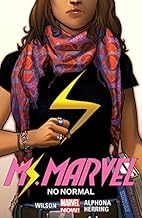

36. Ms. Marvel Vol 1: No Normal by G. Willow Wilson and Adrian Alphona

Maybe I'm finally getting the hang of reading graphic novels, because this one completely blew me away. It's about a 16-year-old Pakistani-American girl in Jersey City who's suddenly bestowed with shape-shifting superpowers--and then has to figure out how to control them and make use of them even while grounded. And the characters and setting are SO vivid.

Saturday, August 9, 2014

2014 Reading, Books 79-84

79) Avatar: The Last Airbender - The Rift Part 2 by Gene Luen Yang


The latest graphic novel showcasing the further adventures of Aang, Katara, Sokka, Toph, and Zuko (though Zuko has so far been absent from this trilogy). Deeply interesting if you're a fan of Avatar and The Legend of Korra, but would undoubtably be baffling if you aren't.

80) Thank You For Your Service by David Finkel

A harrowing, heartbreaking book following several soldiers who served multiple deployments in Iraq as they struggle to reintegrate into society and cope with PTSD, traumatic brain injury, and their impacts on their families and futures. I'm glad I read it, though a big part of me hated it.

81) The Improbable Primate by Clive Finlayson

A quick read, though I wouldn't recommend it if you haven't read anything else on the current state of the science with respect to human evolution since it assumes a certain familiarity with major fossil finds and the various theories about humanity's spread across Africa, Eurasia, and Australia. Finlayson's main focus is on our species' preference for environments combining access to fresh water, some trees and/or rocks/caves, and some open space, and how the most successful early humans were those who developed lighter builds and longer limbs for covering longer distances between water sources. I'm not sure I agree with all his theories, but he raises some interesting points. He takes what I believe is the unusual view of seeing every hominid from Homo erectus on as the same species. I'll admit my gut reaction is, "But we can't be the same species as H. erectus. They had TINY LITTLE BRAINS."

82) The Rise of Rome by Anthony Everitt

A history of Rome from its legendary foundations to the fall of the Republic. I think it would be good for a reader unfamiliar with the history in question (though it would help to have a broad sense of the course of ancient history). I found it a useful refresher on what I learned from listening to the early sections of Mike Duncan's wonderful History of Rome podcast.

83) The Little Girl Who Fought the Great Depression by John F. Kasson

This one is more interesting than I expected, really. It's a blend of celebrity biography and social history of the Depression and Shirley Temple's impact as the biggest child celebrity of the age by far. To me the most interesting chapter was the one about Bill "Bojangles" Robinson and the complex racial issues of his career and his dances with blonde little Shirley.

84) Written in My Own Heart's Blood by Diana Gabaldon

If I had to describe this book in one word, I'd choose "rambly." If you've been following the series, enjoy Gabaldon's voice, and are interested in the doings of the extended and often interwoven Fraser, Mackenzie, and Grey families, you will happily plow through this book (as I did). If not...give the first book a try and see if you want to keep going from there. This is NOT a series you'd want to start in the middle. In some ways I wish these books had more focus...OTOH, there's something to be said for a good chatty ramble through characters' lives.

Sunday, March 23, 2014

2014 Reading, Books 31-33

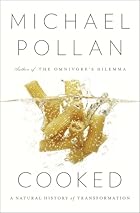
31) Cooked: A Natural History of Transformation, by Michael Pollan.

Michael Pollan is known for his writings about food, but before writing this book he didn't consider himself much of a cook. So he apprenticed himself to an assortment of culinary masters of the ancient elements of fire (in the form of whole-hog barbecue), water (braised meats and stews), air (yeast bread), and earth (fermented foods, e.g. sauerkraut, cheese, and beer). As always, he's an engaging storyteller, and reading his description of North Carolina whole-hog barbecue while eating a particularly dire Healthy Choice meal at lunch was almost enough to make me weep. (Don't try the Healthy Choice spaghetti and meatballs. It's disgusting--the pasta is mush and the meatballs are all but flavorless.)


The book is a giant hymn to the joys of slow food. Pollan understands we can't cook like this all the time, but I still would've liked to see him acknowledge how fast-but-real food is also a legitimate use of say, fire and water--I can do a nice quick stir-fry, f'rex. I'd also LOVE to see one of these writers who claim you can cook a meal in the time it would take to heat enough frozen meals for a family or wait for your pizza to be delivered factor in the time it takes to clean up your kitchen afterward. I love cooking. I hate cleaning up and washing dishes.

All that said, I did enjoy this book quite a bit. I can hardly wait till my current writing deadline is past, not least because I'll have time to do a lot of cooking again. And one of these days I want to invest in the right technology and take the time to learn to make my own barbecue. There is NO place in Seattle that makes 'cue that fully lives up to my Alabama definition of the word.

32) A Song at Twilight, by Pamela Sherwood.

One of the better historical romances I've read in a long time. It's set in the 1890's, an era that doesn't inherently grab my interest--if I go outside my Regency home turf I'd rather go earlier than later--but this is just a lovely, romantic story with beautiful writing. I especially liked the three-dimensional feel of the hero and heroine's world. They and the secondary characters felt solid and developed, and there was more to the characters' lives than just their romance--something you don't always get in the genre, but that I always appreciate for making the story feel more textured and plausible.

33) Catching Fire: How Cooking Made Us Human by Richard Wrangham.

Wrangam posits that the key to our transformation from relatively small-brained upright apes to humans may have been triggered by learning to master fire and use it to cook food. Cooked food is much easier to digest than raw--which means we spend less time chewing and digesting to get the calories we need. This allows us to "afford" a small gut and use that energy toward big brains instead. He also sees cooking as a key to the human social structure and as possibly more important to the development of marriage than sexual exclusivity. I.e. men may have wanted wives not so much to be sure of the paternity of their children (since that's never reliably worked and isn't even important in some hunter-gatherer societies) as to be sure of having a cooked meal waiting for them regardless of how the hunting went that day. By the same token, the woman with a husband gained a protector of her hearth and a share of any big kills the hunters made for herself and her children.

Certainly thought-provoking, and it's a short, quick read for a book on science.

Wednesday, March 13, 2013

2013 Reading, Books 25-27

I'm overdue to respond to Veronica Scott's tagging me for a Five Favorite Books post, but it'll have to wait until I a) finalize and submit a manuscript that's due on Friday and b) write my next Risky Regencies post, also due on Friday.

Meanwhile, I've managed to squeeze in a few reading hours--nonfiction, because that's what my library holds list has been hitting me with of late:


25) Rick Steves' Portugal.

As with other travel books I'm counting toward my total this year, I didn't read this one cover to cover. I figure I'll have about a week, maybe a little less, for Portugal on my big 2015 trip, and that I'll therefore have to focus on Lisbon, Porto, and the Douro Valley, so those are the parts I read about in detail. Rick Steves was my go-to writer for figuring out where to visit in Britain and Ireland the year I lived in England, mostly because he assume you're not rich (correct!) and therefore provides a lot of budget options, and also because he's thorough without being encyclopedic. Anyway, I now feel like I know where to begin planning the Portuguese leg of the trip, which is all I need two years in advance. Once it's six months away I'll buy the most current guidebooks and start booking hotels.


26) The Wild Life of Our Bodies, by Rob Dunn.

A wide-ranging survey of the current state of the science about how humans evolved as part of an ecology that still impacts us today--from the more-or-less beneficial bacteria that live in our guts to having a fear response more suited to our ancestral status as prey than to our current role as ultimate apex predator to the speculative, but suggestive, theory that the reasons humans, along with other African primates, see so very well and in such a wide, discerning range of color relative to most mammals is that the African forest where those primates evolved teemed with a wide variety of poisonous snakes. (Sounds wacky, I know, but think about it--unlike, say, a lion or leopard that you might smell or hear coming from a distance, the primary defense against snakes is being able to see them in time. And the primates with the best color vision are the ones from the snakiest environments--there are no poisonous snakes native to Madagascar, for example, and lemurs have poor color vision compared to primates from the African mainland.)

Anyway, this is a fascinating, thought-provoking book I'd recommend to anyone interested in evolutionary biology or ecology.


27) French by Heart, by Rebecca Ramsey.

This memoir of an American family spending four years in France after the husband gets a job there is fun, though I wish there'd been a bit less focus on one irascible neighbor with a heart of gold and a bit more, well, France.