FYI, I've at long last turned in the manuscript for my January 2015 historical romance (title and exact release date TBD), so I hope to resume a more regular blogging schedule from here.
55) Servants: A Downstairs History of Britain from the Nineteenth Century to Modern Times by Lucy Lethbridge
I'd hoped based on the title that there would be a lot more of the 19th century in this book. Since I write the Regency, that's my primary area of interest, after all. But this book is basically about how the role of domestic servants in British society declined from its Edwardian peak, with special attention to how the wars of the 20th century shook up the British class system. Fascinating, but not quite what I was hoping for. If you're a big Downton Abbey fan, you'd probably love this.
56) The Tyrant's Daughter by J.C. Carleson
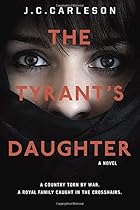
A YA novel about a 15-year-old girl living with her mother and little brother as refugees near Washington DC after her father is overthrown in a coup in her unnamed Middle Eastern native country. We watch her deal with PTSD and culture shock and try to navigate her mother's ongoing political scheming. Above all, she has to come to terms with the fact her beloved, doting father was in fact an oppressive tyrant. Very well-written and compelling, though those who hate first person and/or present tense narration should stay away.
57) What Makes This Book So Great by Jo Walton.
This book is a compilation of author Jo Walton's blog posts at tor.com, mostly on her experiences re-reading classic science fiction and fantasy. (Though "classic" is a relative term--many of the books she discusses are from the 90's or the first decade of this century, so they haven't stood the test of much time yet.)
I read the book because I greatly enjoy Walton's posts about Lois McMaster Bujold and the Vorkosigan Saga--i.e. my favorite books by my current favorite author--even if we don't read them in quite the same way. E.g. I found the Miles-Ekaterin romance entirely convincing and moving, but I couldn't connect as well to Mark and Kareen. We're not total Vorkosigan-opposites, though. Like me, she's most interested in the Barrayar-focused parts of the series. I once ran across a reviewer whose rankings for the series was almost exactly the opposite of mine--he preferred the more space-operatic entries, while I prefer the Barrayar books.
Anyway. Walton's discussions of Bujold made her someone whose opinions on books I take notice of, even knowing her tastes don't entirely overlap mine. I saw a recent thread on tor.com where she was asking for recommendations, but very politely asked people to stop suggesting she read Naomi Novik's Temeraire books or Jacqueline Carey's Kushiel's Legacy, because they're just not her thing. I adore both of those series, and for me that adoration inhabits a similar region of my reader-brain as my love for Bujold, or for Walton's own Tooth and Claw. So color me baffled. It's not like I'd expect someone who shares my taste in, say, historical romance, to also like the same nonfiction popular science I'm into, but I'm used to a bit more within-genre overlap. OTOH, there are authors out there you'd think I adore who leave me cold--I can think of one whose characters spend too much time feeling sorry for themselves and wallowing in self-abasement, and another whose heroines are too passive, and WHY ARE THOSE BOOKS SO POPULAR?! and WHY CAN'T ANYONE ELSE *SEE*?!...so Walton is allowed to have a similar reaction to authors I love.
All that said, I think the best way I can review this book is to list all the "book bullets" that got added to my TBR as I read along:
Random Acts of Senseless Violence - Jack Womack
Biting the Sun - Tanith Lee
Janissaries - Jerry Pournelle
Tam Lin - Pamela Dean (this one I've read before, but it's been years)
Kalpa Imperial - Angélica Gorodischer
A Shadow in Summer - Daniel Abraham
Kindred - Octavia Butler
Fire on the Mountain - Terry Bisson
The Left Hand of Darkness - Ursula LeGuin
Midnight's Children - Salman Rushdie
Midshipman's Hope - David Feintuch
The Dragon Waiting - John M. Ford
Jhereg - Steven Brust
The Interior Life - Katherine Blake
The Discovery of France - Graham Robb (nonfiction, but sounds fascinating and relevant to some of my research interests)
Planet of Exile - Ursula LeGuin
The Chronoliths - Robert Charles Wilson
The good news is that most of these seem to be available either as reasonably-priced ebooks or at my local library. Unfortunately, I couldn't find The Dragon Waiting or The Interior Life at either place, and Planet of Exile seems to be only available as an audiobook. I don't do audiobooks, at least not for fiction. I listen to nonfiction podcasts all the time, but for fiction I want to dive in, and I can't do that just listening to something. That said, it looks like I could get all three as used mass market paperbacks. Back when Amazon, eBay, and the like were newer things, I used to order used paperbacks all the time, but I've gotten out of the habit since so many authors started putting their backlists out as ebooks.
Showing posts with label social class. Show all posts
Monday, May 26, 2014
Wednesday, July 24, 2013
Back from RWA (and July TBR Challenge post)
Yesterday I finally got back into town after my combined RWA National and family reunion trip to Atlanta, so I've got a lot of blogging to catch up on. I also need to post about my RWA experiences at some point. Suffice it to say it was a good conference, and I came out of it with a few new ideas and new connections.
For now, well, I'll start by catching up on July for the 2013 TBR Challenge.
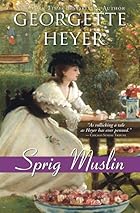
Sprig Muslin, by Georgette Heyer.
This month's theme was the Classics--a classic author, book, trope, or however you choose to interpret it. I ended up going with Georgette Heyer, since the Regency genre as we know it certainly wouldn't exist without her. I read most of her books in high school, since my library had a good collection, but I don't remember this one.
I have a confession to make. Despite her genre pioneer status, I only like Heyer's books--I don't love them. I feel the same way about Tolkien and high fantasy, incidentally, albeit for different reasons. The fact that many of my favorite books wouldn't exist without them doesn't make their books my favorites. With Tolkien, the issue is that I always feel like I'm watching his characters from a distance, that I'm observing the stories rather than connecting to and participating in them. With Heyer...well, ever since I read A Civil Contract I haven't been able to forgive her for what she did to Jenny Chawleigh. Jenny wasn't of the gentry or the aristocracy, therefore she didn't deserve a truly happy ending--at least, that's the subtext of the book as I read it. Ot She didn't get love and devotion; she got respect and contentment. And as someone whose own ancestry is FAR from genteel, I got angry about that.
I know a lot of people love Heyer and love A Civil Contract in particular for its realism. And I can totally understand and respect that. But for whatever reason, that book's ending triggered something personal for me that changed how I look at her work as a whole. And, yes, I realize I'm not being wholly consistent. I read books with aristocratic characters all the time. Two of my favorite fictional crushes are Lord Peter Wimsey and Count Aral Vorkosigan (not that either of them had any trouble conjuring up romantic feelings for a commoner, come to think). The fact that the Duke of Wellington was as elitist as can be doesn't make me admire him any the less--though there are a few quotes of his where I always shake my head in exasperation that anyone that smart could say something that stupid.
But when I'm reading fiction and I feel like the author is endorsing the idea that I ought to regard anyone as superior or inferior because of an accident of birth, I end up, shall we say, in an argument with the text. And, yes, I know, Heyer is a product of her times...but she's a contemporary of Dorothy Sayers, and while the class issues are certainly there in Sayers, they're not on anything like the level of A Civil Contract. And maybe throwing in an American author is apples to oranges, but Louisa May Alcott is decades earlier and has the Phebe-Archie secondary romance in the Rose books, where Phebe is an almost literal nobody. She started out as a servant in the family, and IIRC came from a workhouse and didn't know who her parents were. Mind you, most of Archie's family disapproved of the match just as much as you'd expect of a family with generations of money and status behind it, but you never feel like the text is telling you they're right.
Anyway...all that said, I enjoyed Sprig Muslin. It's a classic Heyer romp--frothy, madcap, and fun. I read it in less than a day, and enjoyed every word. However, I would've liked to see more interaction between the hero and heroine, and I got to arguing with the text again at the end when it was made clear that the secondary heroine, a young, headstrong beauty, belonged with her future husband because he'd keep her in check, which her doting guardians had never managed to do. I got the sense he'd be a benevolent husband/guardian, but it still gave me a bit of a squick.
For now, well, I'll start by catching up on July for the 2013 TBR Challenge.
Sprig Muslin, by Georgette Heyer.
This month's theme was the Classics--a classic author, book, trope, or however you choose to interpret it. I ended up going with Georgette Heyer, since the Regency genre as we know it certainly wouldn't exist without her. I read most of her books in high school, since my library had a good collection, but I don't remember this one.
I have a confession to make. Despite her genre pioneer status, I only like Heyer's books--I don't love them. I feel the same way about Tolkien and high fantasy, incidentally, albeit for different reasons. The fact that many of my favorite books wouldn't exist without them doesn't make their books my favorites. With Tolkien, the issue is that I always feel like I'm watching his characters from a distance, that I'm observing the stories rather than connecting to and participating in them. With Heyer...well, ever since I read A Civil Contract I haven't been able to forgive her for what she did to Jenny Chawleigh. Jenny wasn't of the gentry or the aristocracy, therefore she didn't deserve a truly happy ending--at least, that's the subtext of the book as I read it. Ot She didn't get love and devotion; she got respect and contentment. And as someone whose own ancestry is FAR from genteel, I got angry about that.
I know a lot of people love Heyer and love A Civil Contract in particular for its realism. And I can totally understand and respect that. But for whatever reason, that book's ending triggered something personal for me that changed how I look at her work as a whole. And, yes, I realize I'm not being wholly consistent. I read books with aristocratic characters all the time. Two of my favorite fictional crushes are Lord Peter Wimsey and Count Aral Vorkosigan (not that either of them had any trouble conjuring up romantic feelings for a commoner, come to think). The fact that the Duke of Wellington was as elitist as can be doesn't make me admire him any the less--though there are a few quotes of his where I always shake my head in exasperation that anyone that smart could say something that stupid.
But when I'm reading fiction and I feel like the author is endorsing the idea that I ought to regard anyone as superior or inferior because of an accident of birth, I end up, shall we say, in an argument with the text. And, yes, I know, Heyer is a product of her times...but she's a contemporary of Dorothy Sayers, and while the class issues are certainly there in Sayers, they're not on anything like the level of A Civil Contract. And maybe throwing in an American author is apples to oranges, but Louisa May Alcott is decades earlier and has the Phebe-Archie secondary romance in the Rose books, where Phebe is an almost literal nobody. She started out as a servant in the family, and IIRC came from a workhouse and didn't know who her parents were. Mind you, most of Archie's family disapproved of the match just as much as you'd expect of a family with generations of money and status behind it, but you never feel like the text is telling you they're right.
Anyway...all that said, I enjoyed Sprig Muslin. It's a classic Heyer romp--frothy, madcap, and fun. I read it in less than a day, and enjoyed every word. However, I would've liked to see more interaction between the hero and heroine, and I got to arguing with the text again at the end when it was made clear that the secondary heroine, a young, headstrong beauty, belonged with her future husband because he'd keep her in check, which her doting guardians had never managed to do. I got the sense he'd be a benevolent husband/guardian, but it still gave me a bit of a squick.
Subscribe to:
Posts (Atom)