Showing posts with label psychology. Show all posts

Sunday, September 21, 2014

2014 Reading, Books 100-102

So I made it to 100 books on the year! I'm on pace for something like 140, but I'm going to try to push for 150 by 12/31.

100) The Scorpion's Sting by James Oakes.

This book was taken from a series of lectures the author gave at LSU, and it reads like it--quick, scholarly yet informal, and a good read if you come into it with a reasonably strong background on the American 19th century, in particular the Civil War and all the battles of abolitionism vs. slave state expansionism that made it inevitable.

101) No Good Duke Goes Unpunished by Sarah MacLean
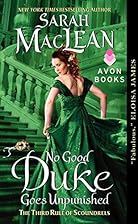

This isn't my usual kind of historical romance. I tend to prefer realistic, history-geek historicals, while this is more of a fantasy romp (though with enough angst that "romp" isn't quite the right word). I'm even wary of cute play-on-words titles and monochromatic covers featuring really big dresses--though I know very well how little control most authors have over titles and cover design, so that's not really fair of me.

But I decided to read it anyway, since it won this year's Rita for Best Historical Romance and because I enjoyed an interview the author gave on the Dear Bitches, Smart Author podcast. And I'm glad I did. It's a big, romantic, angsty story where the hero and heroine's chemistry and attraction are perfectly balanced by the difficult history between them (she went missing, presumed dead, and he fell under heavy suspicion for her murder). As such it was the perfect read for unwinding after a hectic week at work.

102) On Killing by Dave Grossman

Lately I've been listening to some of Dan Carlin's Hardcore History podcasts, and he recommended this book. I'm glad I read it, though I took some of the author's conclusions with a grain of salt based on multiple reviewer comments stating that his statistics on infantry soldiers not firing their weapons in WWII are dubious and/or subject to more than one interpretation. (And I'm really, REALLY inclined to disagree with the amount of blame he lays on video games and violent movies and TV for desensitizing civilians to violence. I think in some cases it may be AMONG the factors, but I doubt it's the major one leading to Columbine, VA Tech, etc.) But I found the many quotes from soldiers on their memories of combat illuminating, especially as someone who writes a lot of soldier characters in my fiction.

Sunday, June 15, 2014

2014 Reading, Books 61-63

61) The Girls of Atomic City by Denise Kiernan

A rambling yet absorbing look at the lives of the women--and some of the men--who helped develop the atomic bomb, focused heavily on Oak Ridge, TN, but with occasional side trips elsewhere. I'd never paid much attention to this aspect of WWII. Most of my interest, such as it is, has focused on the war in Europe and the Holocaust.

Growing up I was taught that the bombings of Hiroshima and Nagasaki were necessary to end the war because Japan just wasn't going to surrender, that the only other alternative was invading Japan at the loss of maybe 100,000 American lives. Now...well, I don't suppose I should be surprised to learn that this history wasn't as simple as I was taught in school and at my very patriotic mother's knee when nothing else is, either. Those weren't the only two alternatives--to name just one simple possibility, there was at least some talk of having Japanese envoys see a test of a nuclear weapon so they'd know what we could do. I suppose once the science was out there, development of atomic bombs was inevitable, and I'm pragmatist enough to accept that meant America had to have its own arsenal. For all the madness of it, Mutually Assured Destruction did keep the Cold War from going hot. But we could've won WWII without unleashing it.

That's not what this book is really about, though. It's a story about young women coming of age and building a community in a time of crisis, and I admired them and their spirit. Still, I set the book down sputtering about how there was a better way, not to mention my indignation at the account of testing the effects of radioactive materials on a patient who neither knew nor consented to such a test (NATURALLY a black construction worker at the site who'd come into the Oak Ridge hospital with broken legs but otherwise healthy), along with disbelief that the general in charge of the project recommended that the bomb's first target be Kyoto.

What a brilliant and appalling species we are.

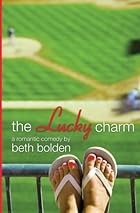
62) The Lucky Charm by Beth Bolden


I tend to be wary of both self-published books by authors without a traditional publishing background and sports romances. Too many of the former don't even have a nodding acquaintance with grammar, and too many of the latter don't seem driven by the love of the game itself. I've read baseball books where the author apparently didn't grasp how a pitching rotation works, and I've read reviews of football books where I'm not sure the author had ever watched an entire football game, much less one featuring the extremely famous team she was writing about.

But this book was talked up a few weeks ago on the Dear Bitches Smart Author podcast, and since I trust Jane and Sarah, I decided to give it a try. I'm glad I did. It's a sweet, engaging romantic comedy about a reluctant sideline reporter and a second baseman desperate to get the (obviously fictional) Portland Pioneers to a playoff spot for the first time. As a fan desperate to see the Seattle Mariners make it to the World Series for the first time, I found the premise entirely relatable, and the baseball felt real enough that I was never thrown out of the story as a serious fan.

63) Quiet: The Power of Introverts in a World That Can't Stop Talking by Susan Cain

I live in an entire household of introverts. I'm not the most extreme introvert in the world--and am arguably the most extroverted member of my immediate family--but I still come home every night exhausted from all the social engagement in my very pleasant job with fun coworkers that happens to be in a noisy, open-plan office. This book is a lovely affirmation of who introverts are and how challenging it can be to function in extroverted Western culture.

Tuesday, July 30, 2013

2013 Reading, Books 73-75

73) Mothers of Invention: Women of the Slaveholding South in the American Civil War, by Drew Gilpin Faust.

Drew Faust is currently the president of Harvard, but she was an AmCiv professor at Penn back when I was an undergraduate there. Her two classes on the American South, one covering 1607-1861, the other 1861-present, were among the most popular and highly rated in the entire university. I took the first and found it an eye-opening look at my own roots.

This book in its own way was the same kind of experience. Faust looks at the diaries and letters of elite white Southern women (who AREN'T part of my roots--my Civil-War-era antecedents fell into the "poor white" category and were probably marginally literate at best) and how the four years of the Civil War impacted their views on everything from gender roles to religion to race relations, leading, among other things, to a feminism that was both more pessimistic and conservative than that of the rest of the country during the fight for women's suffrage.

74) Blindspot: Hidden Biases of Good People, by Mahzarin R. Banaji and Anthony G. Greenwald.

This quick but thought-provoking read is all about the measure the authors, a Harvard and a UW* professor, developed to measure unconscious biases of various kinds. It's a deceptively simple measure of whether you associate a particular group with positive or negative qualities. For a sample test, the book had you go through lists of insect and flower nouns (e.g. wasp, roach, rose, lily) and negative and positive traits/things (e.g. vomit, fear, peace, heaven). On one round you sort flowers and pleasant things into Column A, insects and negative ones into Column B, while on the next you have to put flowers and negative things in Column A, insects and positive ones in Column B. Since almost everyone prefers flowers to insects, they're able to perform the first round much more quickly. (Though I noticed the insect list didn't include "honeybee" or "butterfly." I caught myself hesitating on "moth" compared to the other insects, because it's not like they're ugly or gross or fill me with a desire to either run away or squash them. I have a feeling I would've wanted to class bees and butterflies with flowers, since I expect to see them AROUND flowers and have wholly positive associations with them. Butterflies are pretty! Bees make honey and pollinate our crops, and colony collapse disorder is so scary I'm downright thrilled whenever I see honeybees at work.)

Anyway, the test takes on more serious implications as soon as you turn it to sorting human categories. It turns out that even people who wouldn't be considered racist or bigoted by any conscious measure tend to associate whites with more positive qualities than blacks or with more American traits than Hispanics or Asians. Even committed feminists associate women more with home and men more with work, and so forth. I'm appalled but not exactly surprised to say that despite trying my best to perform on the tests as the unbiased, egalitarian person I aspire to be, I showed my share of unconscious bias--though at least my anti-bug bias is stronger than any of my human ones. :-/

The book raises more questions than it answers, but the author's main points are that A) these biases matter, because even though most of us want to be unbiased and therefore wouldn't consciously discriminate, our unconscious biases show up in small ways that over time add up to real harm in peoples lives, and B) if we know our biases exist, we can take conscious steps to counteract them.

*Since I live in Seattle and actually work at the U-Dub in question for my day job, this means University of Washington, not Wisconsin or Wyoming. When I was at the RWA conference, a couple of lunch tablemates, strangers to me, were talking about UW and its hospital system, and I was all ready to jump in with my insider opinion until I took a closer look at their name tags and saw they were from Wisconsin.

75) The Turncoat, by Donna Thorland.

A fast-paced, sexy spy novel set mostly in British-occupied Philadelphia in 1777-78. Recommended for fans of Lauren Willig's Pink Carnation books, with the caveat that it's darker and grittier--if you like Willig but also like, say, Diana Gabaldon or Bernard Cornwell, you should definitely pick this book up. (Though it comes with a trigger warning for depictions of rape, mostly off-page but in one case fairly graphic.)